The Editor of Kaniva News has strongly denied what he describes as blatant lies and fabrications made by Dr Siosiua Lafitani, founder of the controversial Lo‘au University.
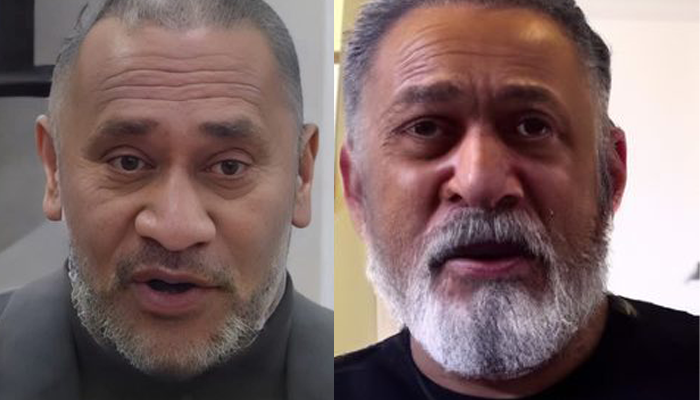
In an interview published on the Lo’au University Facebook page with Lo’au Fualu on October 15, Lafitani made unsubstantiated allegations against Kaniva News, falsely claiming that its Editor, Kalino Latu, had requested his assistance in translating news into the Tongan language.
Mr Latu has denied the allegation, stating that this is part of a pattern by Lafitani to denigrate Kaniva’s reporting. Latu further asserted that the attacks are an attempt to deflect from allegations of Lafitani’s abusive behaviour toward a former student, and to question the validity of Lo’au’s university credentials.
Shortly after enrolling in a course taught by Lafitani, Toki’ukamea Liutai—who also uses the legal name Marshal Cameron—began to question the credibility of the university.
Following his own investigation, he discovered that the institution appeared to lack legal registration and that its qualifications had not been accredited by any recognised authority.
Liutai also questioned the quality of the programme and the professionalism of its delivery.
He subsequently withdrew from the course and demanded a full refund of his tuition fees.
Lafitani immediately took to Facebook and attacked Liutai, publishing personal information and, at one point, referring to him as a “fool” (“vale”). Liutai criticised the behaviour as racist and defamatory.
READ MORE:
- Dr Lafitani refunds fees after student engages lawyer over course quality and alleged academic fraud
- Lawyer Tupou accuses Prof Lafitani of lying about Tonga’s democracy and questions his knowledge of law and the status of Lo’au University
- EDITORIAL: Professor Lafitani continues to attack Kaniva News, but his claims that Tonga’s political reforms in 2010 were not a change for democracy are a lie
- Academic accusations fly as controversial Lo’au University denies fraud allegations
- Former student accuses Lo’au University dean of public racist remarks following tuition fee refund
Following Kaniva News’ reports on Liutai’s withdrawal, Lafitani launched attacks against the outlet and lawyer Nalesoni Tupou, who represented Liutai. He went on to publish multiple articles that were alleged to be defamatory toward both the news organisation and the lawyer.
He accused Kaniva News of fabricating quotes attributed to him, asserting that the outlet had never interviewed him.
However, he has failed to provide any specific examples—no article titles, publication dates, or sources—raising concerns that the accusations are part of a smear campaign rather than a legitimate grievance.
In addition, Lafitani has attempted to undermine the credibility of Kaniva News by alleging that its articles are merely cut-and-pasted from other sources and distributed without proper verification.
Kaniva News has rejected these claims, stating that its editorial standards are based on journalistic integrity and factual reporting.
Editor Denies Translation Request Claim, Labels Allegation as Fabrication
Latu has categorically denied the claim, calling it a complete fabrication.
“There was no such request. It was a lie, pure and simple,” he said.
Latu said: “At no point did the organisation request Dr Lafitani’s assistance with journalism or translation, as it does not consider him a specialist in either field.”
“Lafitani’s expertise lies in social policy, not in translation or journalism.”
Kaniva News described the accusation as part of a broader pattern of baseless claims and an apparent attempt to silence the outlet.
“We understand that Dr Lafitani’s grievances may be connected to his political stance and his long-running campaign to change the public mindset regarding Tonga’s 2010 democratic reform.”
Dr Lafitani, who resides in Australia, one of the largest democracies in the Pacific, has been a vocal critic of the democratic reform. Kaniva News’s extensive reporting on Tonga’s democracy is understood to have been a point of agitation for him.