What was presented to the public as a consultative and unifying process for forming Tonga’s new government is now being described by key participants as a one-way notification rather than a genuine dialogue.
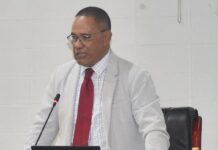
Last week, Prime Minister Lord Fakafanua announced that he had submitted his list of Cabinet ministers to the King for appointment, stating in a press release that the decision followed “careful consideration and consultation, which included members of parliament and the former Prime Minister.”
The statement was also reflected in media reporting, including a Kaniva News article titled “PM Fakafanua seeks rival Dr Eke’s counsel before submitting Cabinet picks to King,” which was based on the Prime Minister’s Office press release.
The statement was issued in English, followed by a Tongan version a few hours later. In the Tongan-language version, the term “consultation” appears to have been translated as “fakataha”, a commonly used Tongan word meaning a meeting or gathering.
It said: “Na’e fakahoko eni hili ‘a hono vakavakai’i lelei mo e ngaahi fakataha ‘o kau ai ‘a e kau mēmipa ‘o e Fale Aleá pea pehē ki he Palēmia malolo.”
Meaning Under Scrutiny
The translation of “consultation” as fakataha has been questioned by critics, who say the term does not clearly convey the idea of seeking advice, a distinction now central to the dispute over whether genuine consultation occurred.
According to the Oxford Dictionary, “consultation” is defined as the action or process of formally consulting or discussing, and also as a meeting with an expert or professional in order to seek advice.
The definition has added to scrutiny over how the term was used in the Prime Minister’s Office statement.
Eke Rejects Characterisation
In a written response sent to Kaniva News, former Prime Minister Dr ‘Aisake Eke said the characterisation of his involvement as “consultation” was inaccurate and “misleading.”
Eke said he met with Prime Minister Fakafanua, but the nobleman only informed him that the Cabinet had already been selected and that no ministerial positions would be allocated to MPs aligned with his team.
Eke said: “When we met he informed me that he had selected his Cabinet ministers consisting of 12 members, with 1 minister to be drawn from outside ( of the 26 MPs), and the rest of the 11 ministers from his supporters ( those MPs who voted for him as PM).”
“He did not seek my counsel nor consult me on the members of his new Cabinet.”
“Given the truth of what happened in my meeting with the PM, it is clear that the PMO press release that I was consulted, and your article, based on PMO Press Release, of seeking my counsel are both “misleading” the public at best,” Eke said.
He said it was “very unfortunate and sad” that the Prime Minister’s Office press release gave the impression that he had provided input into the selection of the new Cabinet when, he said, this was not the case.
Constitutional Right, Ethical Question
Eke acknowledged that the Prime Minister “has the constitutional right to [select] his Cabinet ministers and recommend them to His Majesty,” but said he saw no need for the process to be described in a way that, in his view, suggested broader consultation than had occurred.
He added that, despite his concerns, he wished the Prime Minister and his Cabinet well.
“We all wish to have a good government taking us forward, and our best wishes to the PM and his Cabinet as well,” Eke said.
MP Accounts Differ
While the Prime Minister’s Office said the consultation “included members of parliament”, several MPs told Kaniva News they did not attend any meeting with the Prime Minister regarding the formation of his Cabinet.
Those MPs, who spoke on condition of anonymity, said the statement would have been clearer had it specified that the Prime Minister met with only some members, rather than implying broader consultation across Parliament.
Unite or Divide
Since his election this month, Prime Minister Lord Fakafanua has told the media that he is prioritising the unification of Parliament’s 26 members.
He suggested selecting a merit-based Cabinet, irrespective of how MPs voted for him.
“If we are to unite Tonga we will have to start in parliament,” an RNZ report quoted him as saying.
However, he also told ABC News he considered leaving rivals out to form a strong opposition to hold the government to account.