A massive cocaine seizure in French Polynesia has once again drawn attention to maritime drug trafficking routes across small island states, including the wider region in which Tonga sits, on the way to larger markets such as Australia and New Zealand.
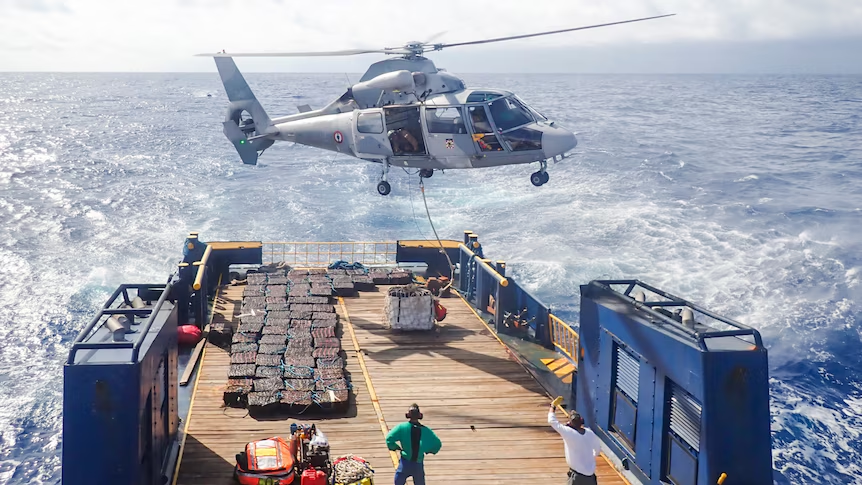
The seizure of 4.87 tonnes of cocaine in French Polynesia’s maritime zone, reportedly bound for Australia, follows an earlier “historic” drug interception claimed by authorities in July.
In that earlier case, a consignment with an estimated €331 million (about NZ $670 million) street value was believed to have transited the Pacific from Mexico toward Australia via island routes that included Tonga.
The Australian Federal Police (AFP) and Australian Border Force (ABF) in a statement released yesterday, stated that they have congratulated authorities in French Polynesia following the reported seizure of about 4.87 tonnes of cocaine in the Pacific Ocean, which was believed to be bound for Australia.
AFP Commander Stephen Jay said the interception had prevented a significant quantity of illicit drugs from reaching Australian communities, crediting strong cooperation between regional and international law‑enforcement agencies.
“The AFP is committed to working closely with our law enforcement partners to deliver maximum impact against transnational criminal syndicates targeting Australia, the Pacific and throughout Europe,” Commander Jay said.
He said the seizure would have a major disruptive effect on organised crime networks, noting that the harm caused by illicit drugs extends beyond individual users to violent and exploitative criminal activity across communities.
Commander Jay said AFP officers posted across the Pacific, together with members of Taskforce Thunder, would work collaboratively with French Polynesian authorities to identify any individuals in Australia linked to the shipment.
Australian Border Force Acting Commander Maritime Border Command Linda Cappello said strong regional partnerships remained Australia’s most effective defence against transnational organised crime.
“Through sustained regional presence, shared awareness of emerging threats and long‑standing partnerships, criminal networks are increasingly detected and disrupted well before they can reach Australian shores,” she said.
She said the seizure sent a clear message to criminal groups seeking to exploit maritime and supply chains.
“Coordinated vigilance across the region significantly increases the risk of detection and disruption.”
Taskforce Thunder was launched in October 2025 to strengthen collaboration with Pacific law‑enforcement agencies and target organised criminal activity. The AFP currently supports 29 transnational crime investigation units across the Pacific, alongside more than 200 AFP officers deployed globally to support intelligence sharing and maritime interdiction efforts.