Tongans planning to travel to the United States on visitor visas will soon face new financial requirements, after the US Department of State confirmed that Tonga has been included in a visa bond pilot programme, effective January 21, 2026.
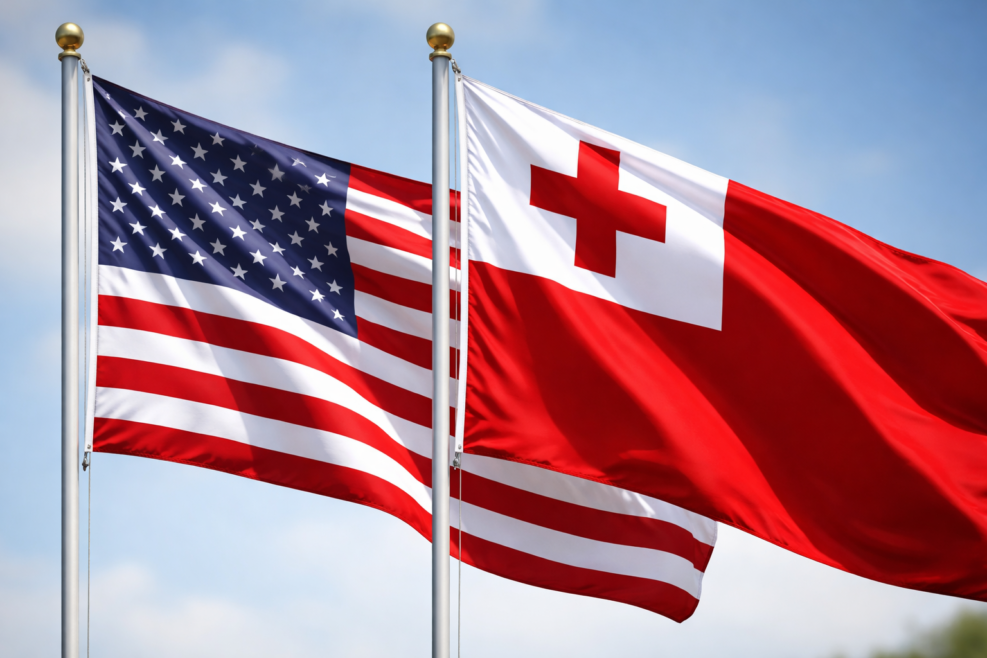
The bond requirement follows earlier U.S. measures imposing so‑called “partial visa restrictions” on Tongans—actions that have already disrupted family, church, and community travel, and drawn criticism over the Tongan government’s lack of a clear response.
As Kaniva News reported previously, the restrictions introduced on January 1 mean that Tongans may still travel to the United States, but only under heightened scrutiny of their visa applications and, in most cases, only in exceptional circumstances where the visit is deemed to be in the US national interest.
Under the new rules, Tongan passport holders applying for B1/B2 visitor visas — typically used for tourism, family visits, and short-term business travel — may be required to post a visa bond of US$5,000, US$10,000, or US$15,000, depending on the outcome of their visa interview.
The bond requirement applies even if an applicant is otherwise eligible for a visa. The amount will be determined by a US consular officer at the time of the interview, and applicants will only be instructed to post a bond if directed to do so by the officer.
The policy is part of a temporary pilot programme established under US immigration law, targeting countries identified as having higher visitor visa overstay rates. Tonga is one of several Pacific nations included in the programme, alongside Tuvalu, Vanuatu, and Fiji.
How the bond works
Applicants required to post a bond must complete Department of Homeland Security Form I-352 and make payment through the US Government’s official platform, Pay.gov.
The Department of State has warned applicants not to use third-party websites, stressing that the US Government is not responsible for money paid outside its official systems.
Officials have also cautioned that paying a bond does not guarantee visa approval. If a person submits payment without being instructed by a consular officer, the money will not be refunded.
Restricted entry and exit points
As a condition of the bond, visa holders must enter and exit the United States through designated airports only. For now, these are:
- Boston Logan International Airport
- John F. Kennedy International Airport (New York)
- Washington Dulles International Airport
Failure to comply with these requirements could result in denied entry or departure records not being properly registered.
When bonds are refunded — and when they are not
The bond will be automatically cancelled and refunded if:
- the traveller leaves the US on or before their authorised stay expires
- the traveller does not use the visa before it expires
- the traveller is refused entry at the US port of entry
However, the bond may be forfeited if US authorities determine that the visa holder breached the terms, including overstaying, remaining unlawfully in the US, or applying to change or adjust immigration status, such as seeking asylum.