Analysis – Tonga is facing heightened risk under the United States’ new visa restrictions, announced at a time when the newly appointed Fakafanua administration has yet to provide detailed public clarification of the situation. Analysis of the policy indicates that the Kingdom now sits in a high-risk position, where failure to act could see the current partial restrictions escalate into a full entry ban in the coming months.

The review reveals a consistent pattern: countries initially placed under warning or partial restriction often face tougher sanctions if Washington believes its security concerns have not been adequately addressed. In several instances, preliminary restrictions have ultimately expanded into full entry bans.
Countries previously placed in a comparable position to Tonga provide important insight. Laos and Sierra Leone were placed under partial restrictions in June 2025 — the same period Tonga was flagged — but were fully banned last month after US authorities determined that issues had not been resolved. In contrast, Turkmenistan, which was also under partial non-immigrant visa restriction, was removed from the list after US officials said the country had cooperated constructively and demonstrated significant progress.
Based on this pattern, the analysis concludes that Tonga is now at a decisive point. The current partial measures can escalate, and if concerns identified by US authorities remain unaddressed, the Kingdom could face a complete ban as early as June.
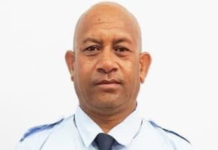
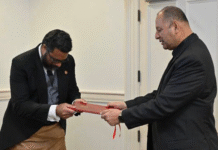
Responsibility for addressing the escalating visa restrictions now falls squarely on Prime Minister Lord Fakafanua and his Minister of Foreign Affairs and His Majesty’s Diplomatic Services, Crown Prince Tupouto‘a. The former government had already tasked the Crown Prince with engaging Washington after Tonga was first warned last year, and the expectation is that the current administration must now demonstrate meaningful action to prevent the situation from worsening.
President Donald Trump, who reinstated stricter immigration controls after returning to the presidency in January, has justified the measures as necessary to address weaknesses in overseas vetting systems. US authorities have cited factors including high visa overstay rates, unreliable civil records, corruption concerns, terrorism risks and a lack of cooperation in accepting deportees.
Case-by-case approvals
Despite the restrictions, travel to the United States is not entirely closed.
According to the US Department of State, travellers from Tonga may still be permitted entry in exceptional circumstances if their visit is deemed to be in the US national interest.
These approvals can be issued on a case-by-case basis by the Secretary of State or Secretary of Homeland Security, while the Attorney General may authorise travel where it supports critical US justice or security needs.
Tighter vetting of applications
The US Department of State said that as of 15 December 2025, enhanced vetting now applies to the visa categories restricted for Tonga, including H-1B visas (skilled foreign workers in speciality occupations) and H-4 visas (their dependent family members).
These categories will now face the same level of scrutiny already applied to F student visas, M vocational visas, and J exchange visas.
Applicants are required to make their social media accounts public so consular officers can verify identity, employment and education records, and assess for potential security risks.
US authorities warn that sudden deletion of posts or major last-minute profile changes may raise concerns. Applicants are advised to ensure their online information is accurate, consistent, and free from material that could be interpreted as supporting unlawful activity.
What this means for Tonga
The United States is home to one of the largest Tongan populations in the world, with more than 48,000 people identifying solely as Tongan in the 2020 US Census and over 78,000 identifying as Tongan in combination with other ethnic backgrounds. Any tightening of U.S. travel policy therefore, has significant implications for families, communities and long-standing people-to-people links.
Much of Tonga’s modern connection to the United States has developed through The Church of Jesus Christ of Latter-day Saints, the Kingdom’s second-largest Christian denomination, and through education pathways such as the church’s Brigham Young University–Hawai‘i, which has traditionally enrolled large numbers of Tongan students each year.
That pathway has already been affected. As Kaniva News previously reported, BYU professor Tevita Ka‘ili said visa restrictions have disrupted enrolment, and there are currently no new Tongan students admitted this year.
The potential impact reaches beyond education. Travel restrictions could affect families, church networks, employment opportunities, remittances, community ties and Tonga’s broader diplomatic relationship with Washington.
The coming months will therefore be critical in determining whether Tonga moves toward relief — like Turkmenistan, which successfully engaged the US — or toward harsher outcomes similar to Laos and Sierra Leone, which shifted from partial restrictions to full entry bans.
Clear, proactive communication from government, supported by practical engagement with US authorities, will be essential in shaping Tonga’s future position under the policy.