The Tongan community erupted with pride across social media this week as Auckland‑born George Hōlani became the first Tongan to feature prominently in a Seattle Seahawks Super Bowl victory.
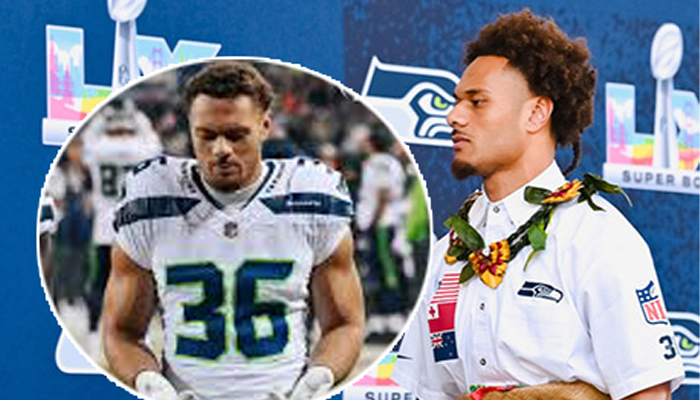
The Seahawks defeated the New England Patriots 29–13 in Super Bowl LX, securing the franchise’s second championship title, with Hōlani contributing in the offensive rotation.
The Super Bowl is one of the world’s most-watched sporting events, drawing over 100 million viewers annually and attracting audiences far beyond the United States.
Its combination of high‑stakes competition, global broadcast reach, and major entertainment elements has elevated it into a cultural spectacle that resonates internationally.
But for Tongans worldwide, George’s win meant far more than a sporting milestone — it activated one of the deepest cultural markers of identity: hohoko, the connecting, mapping and celebration of genealogical ties that define who one is, who one belongs to, and how one’s achievements elevate the collective.
It became a moment of cultural revitalisation, strengthening existing family ties while helping many rediscover or learn their connections anew.
This is why George’s victory resonated so deeply: Tongans were not simply celebrating an athlete, but tracing the ancestral lines that connect his achievement to the broader kāinga.
One exchange illustrated this perfectly. Australia‑based Tongan broadcaster Lavinia‑Naufahu Tunitau responded to a Facebook comment from Caroline T. Fusimālohi, after Fusimālohi initiated George’s hohoko lineage by naming his grandparents Seleti and ‘Ahononou Hōlani:
“Caroline T. Fusimalohi wow! Thank you for letting me know. I know ‘Ahononou was married to Seleti Holani — have I got his name right? Toni Kaihau’s cousin. Pea ko si’ono mokopuna eni (and this is his grandson)… another grandpa namesake. Awww… so proud of him,” Tunitau wrote.
Caroline T. Fusimalohi replied:
“Lavinia Naufahu‑Tunitau, you have elephant memory. ‘Io koe grandson ‘o Seleti Holani mo ‘Ahononou.” In English, Fusimālohi was confirming Tunitau’s comment, agreeing that George is the grandson of Seleti and Ahononou.
Other posts recalled memories from friends in New Zealand who knew George’s parents before the family relocated to the United States.
The Lomu–Hōlani hohoko
New reporting from the New Zealand Herald amplified the significance of the community’s genealogical celebration.
The Herald noted that George, who was born in Auckland before moving to the United States at age three, has become only the second New Zealand‑born player — after Riki Ellison — to win the Vince Lombardi Trophy.
He spent his early years in Onehunga with his Tongan parents Saia and Atelaite, growing up in a tightly knit Polynesian family that shaped the humility and resilience he carries today.
Just as Tongans were tracing their genealogical links to celebrate him, the Herald revealed that George himself belongs to an extraordinary lineage: his father, Saia, and All Blacks legend Jonah Lomu were cousins, both raised in the village of Holopeka in Tonga’s Ha‘apai group.
Hōlani is a large family clan originating from the suburb of Kolomotu‘a in the Nuku‘alofa district.
George was not only representing Tonga on the world stage — he was continuing a family legacy of global sporting excellence, the kind that Tongans instinctively celebrate through hohoko.