Commentary – As Christopher Luxon sets off for Samoa ahead of his visit to Tonga this week, his office is dismissing reports that he sought the Samoan matai title, despite the Samoan Prime Minister publicly suggesting he had.
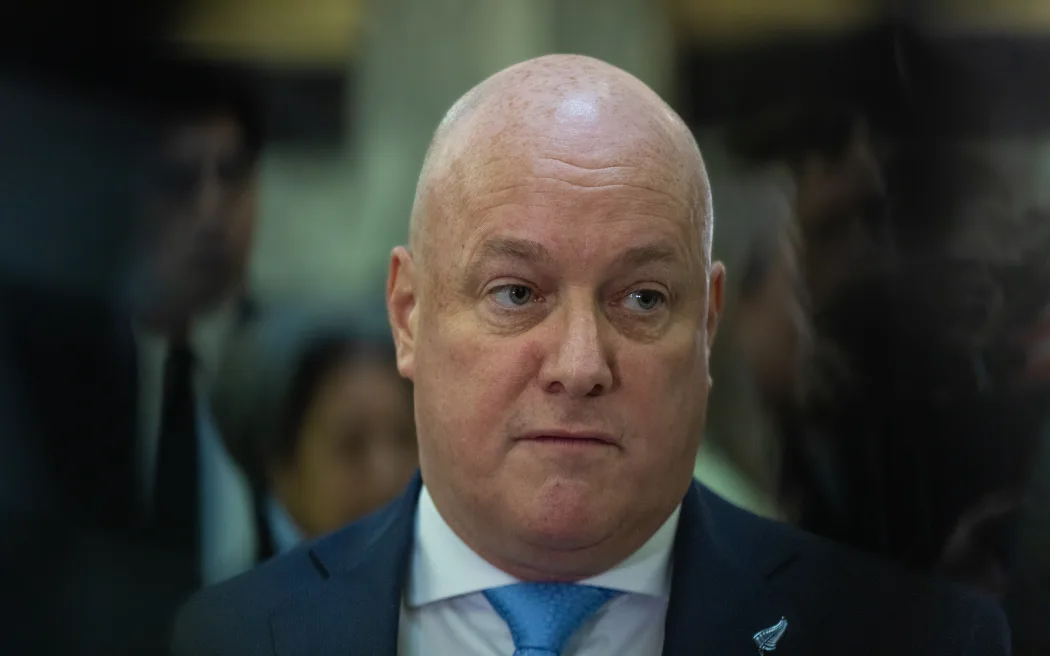
According to a 1News report, the New Zealand Prime Minister is scheduled to receive the title Tui‑Sinave‑ma‑Ulumotootua on Monday morning during a ceremony outside Samoa’s main Government building in Apia.
The Prime Minister’s office has firmly denied claims that Luxon requested a Samoan matai title, calling the reports “incorrect.”
Meanwhile, Samoa’s Prime Minister reportedly joked that if Luxon became a matai, he would be obliged to support visa‑free entry for Pacific peoples—a sensitive issue as a 48,000‑signature petition for visa‑on‑arrival was recently presented to the New Zealand Parliament.
Laaulialemalietoa emphasised that “one’s duty as a matai is to serve Samoa,” and the visa debate is expected to feature in upcoming bilateral talks, though wider Government support remains lukewarm due to concerns about overstayers.
Mr Luxon is travelling with a delegation that includes business leaders and community representatives and is expected to meet with the newly appointed leaders of both countries.
It is understood the delegation included the Police Minister, the Minister for Pacific Peoples, and opposition MPs, led by Savae Sir Michael Jones and Rachel Afeaki.
Luxon says the trip is intended to reinforce New Zealand’s close ties with two key Pacific partners and to meet the new leaders and their cabinets.
A Well‑Established Tradition
Honouring a New Zealand Prime Minister with a matai title is nothing new.
Sir John Key was given the matai title To‘osavili during a 2009 visit to tsunami‑hit Poutasi; later, RNZ noted other PMs, including Robert Muldoon, David Lange, Jim Bolger, Sir Bill English, and Foreign Minister Winston Peters, have been honoured with Samoan titles.
That precedent helps explain why the current rumour resonated so quickly.
A Samoan matai title is a lifetime chiefly honour conferred by one’s ‘aiga to lead and serve within the fa‘amatai system.
In Tonga, Mr Luxon could be granted either a matāpule title or, alternatively, elevated to the status of a nōpele (noble).
A hingoa nōpele (noble title) is reserved solely for conferment by the King, whereas a hingoa matāpule (talking‑chief title) may be bestowed by the King, chiefs, or community leaders to designate an honorary figure connected to a chiefly household or a ceremonial herald responsible for formal speeches and fakapangai protocols.
In that case, if Tonga wanted to bestow a hingoa matāpule on Luxon, it could be done by Prime Minister Lord Fakafanua, since he is a noble of the realm or the Crown Prince, who is also a Cabinet Minister.
Honours Beyond Tonga’s Shores
Historically, the King of Tonga has had the authority to confer noble titles on distinguished individuals, including foreign figures, as honorary holders.
The late King George Tupou V exercised this prerogative by bestowing life peerages on several prominent individuals, such as former Fijian Vice President Ratu Joni Madraiwiwi and former Scottish Chief Justice Ramsay Dalgety, as Lord Dalgety of Sikotilani, appointing them as Law Lords of Tonga.
Their responsibilities included advising the monarch on legal matters, a role carried out through periodic visits to Tonga as well as ongoing digital consultations.
Similarly, the hingoa matāpule has long been bestowed on notable foreigners as well as Tongans recognised for outstanding achievements abroad.
US Citizen Eric B. Shumway, former BYU–Hawaii president and long‑time LDS leader in Tonga, was made a matāpule with the title Faivaola in the early 1960s, recognising his fluency in chiefly language and service.
In sport, Dame Valerie Adams—New Zealand–Tongan Olympic great—was appointed Tongitupe‑ʻO e‑Funga Taua as a herald (matāpule) to Lord Vaea in 2015, a rare honour for a woman and an acknowledgement of her achievements and Tongan roots.
Examples like these highlight a Tongan–foreign cross‑cultural practice that honours individuals from any background, recognising their contributions and drawing on their status and expertise in meaningful ways.
Ties Spanning Two Homelands
According to the 2018 census, New Zealand’s Tongan community has grown to nearly 100,000—making it the largest Tongan diaspora globally and almost equal in size to Tonga’s own population of approximately 103,000 (2026).
The near‑equal population sizes show that New Zealand has become a major centre of Tongan life, with almost as many Tongans living in Aotearoa as in Tonga itself.
This reflects long‑term migration trends and highlights the growing cultural, social, and political influence of the Tongan diaspora, whose size now plays a significant role in shaping New Zealand–Tonga relations.
While a hingoa matāpule or nōpele carries their own cultural authorities and obligations, any appointment—whether for a foreigner or a Tongan—must rest on one crucial foundation: a relationship of exceptional closeness and trust.
Addressing Diaspora Hardship
When such a bond is genuine and upheld over time, it can be respectfully leveraged to support the well-being of Tongans in Aotearoa, including the more than 2,000 who remain in New Zealand as overstayers and face ongoing hardship.
As of 1 July 2025, Immigration New Zealand estimated that 2,599 Tongan nationals were overstayers, the highest number of any nationality and topping the agency’s latest list of overstayers.
Many of these individuals left Tonga in search of better opportunities, as the country’s economy struggles to support its population, with about a quarter of Tongans (25%) living below the poverty line.
Because immigration settings can ultimately be changed only by lawmakers—most notably the Prime Minister and the governing party—any cultural honour extended to them carries symbolic weight.
While Prime Minister Luxon and the National Party have consistently prioritised tougher action on overstayers in the name of border security, rule of law, and protecting public resources, granting a hingoa matāpule or nōpele could serve as a gentle reminder of the human realities behind these policies and the need to consider their impact on the Tongan community in Aotearoa.