New Zealand researchers say humpback whale numbers are showing promising signs of recovery more than half a century after the country ended commercial whaling.
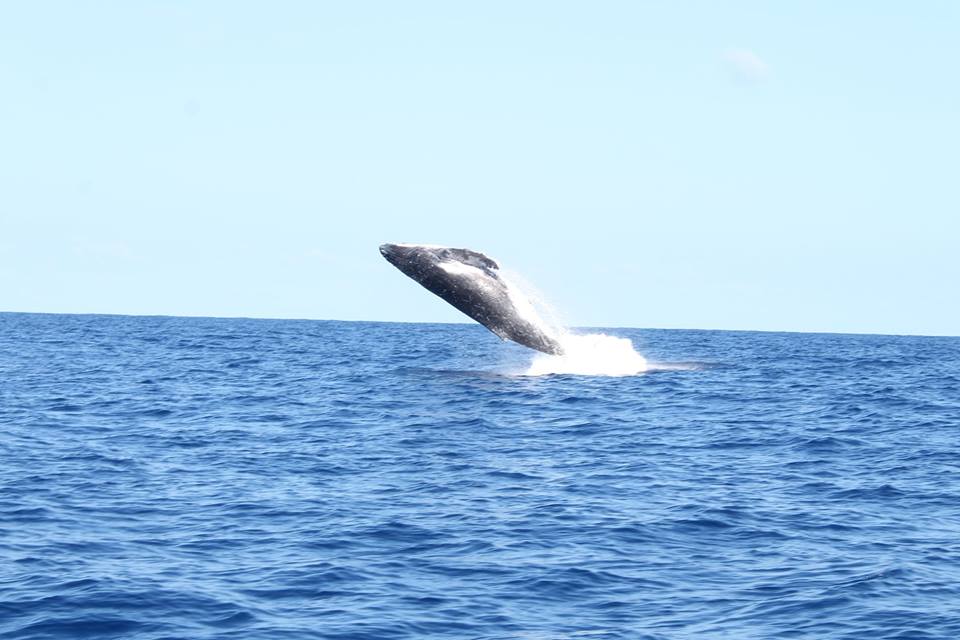
The findings came as Tonga, whose waters host one of the South Pacific’s most important humpback breeding grounds, experiences its own resurgence in whale sightings — prompting renewed debate among some Tongans over whether a controlled whaling should be activated to help address the nation’s escalating non‑communicable disease crisis.
An international study involving scientists from the University of Auckland shows that humpback breeding behaviour in New Zealand has shifted in ways that indicate a growing population.
Dr Emma Carroll and her colleagues say the rise in breeding success among older, larger “super‑males” is a significant development.
Data collected in the 2000s and again in the 2010s allowed Carroll and her colleagues to draw their conclusions.
“For the first part of the study, when the population was really small, young males and old males had the same number of babies or paternities,” she explained.
“But in the second half of the study, as the population is recovering from whaling, we see that older males are actually more dominant.”
Tonga Ban on Whaling
King Taufaʻāhau Tupou IV, who first banned whaling in 1978, issued a decree that safeguarded the marine mammals from hunting and was later strengthened under the Fisheries Conservation and Management Act 1993, laying the foundation for Tonga’s transformation into a major protected humpback‑whale sanctuary.
About half a century later, critics argue that the growth in whale breeding numbers in Tonga could justify introducing a controlled whaling programme.
It is estimated that between 1,500 and 2,000 humpback whales visit Tonga during the peak season from July to October.
Because fatty meats such as hakulā puaka (sword fish)and whale are considered delicacies in Tonga—and even though whale meat has not been eaten in the kingdom since the ban—stories of how ancestors cooked and enjoyed it still surface whenever people talk about whales.
Whale Meat Debate Resurfaces
Some Tongans argue that the national ban on whaling should be reconsidered on cultural and public‑health grounds.
Public reaction to the issue remains strong, with recurring themes appearing across Kaniva News’ public Facebook page whenever whale‑related stories are posted.
Kaniva’s past coverage of whales has included several cases of animals found dead on shore, which many people saw as a waste, arguing that if controlled whaling were permitted, some of these deaths might have been avoided.
Many commenters argue that limited access to traditional whale meat could offer a healthier, culturally familiar alternative to fatty imported meats such as mutton flaps, which they associate with Tonga’s worsening non‑communicable disease crisis.
Others maintain that conservation protections and tourism benefits should remain the priority, reflecting a community divided between cultural memory, economic realities, and modern public‑health concerns.
Advocates for controlled whaling in Tonga argue that, because of the animals’ enormous size, harvesting just two or three whales a month could provide ample healthy meat for the population.
However, Tonga’s government has given no indication that it intends to lift its whale‑protection policies. Officials continue to emphasise tourism, conservation, and adherence to international agreements, including the whale sanctuary and IWC regulations.
The late King Tau’āhau Tupou IV’s granddaughter, Princess Angelika Lātūfuipeka, has emerged as a leading voice in global marine conservation, spearheading the “I’m a Person Too” campaign to grant whales legal personhood—a bold initiative she unveiled at the 2025 One Ocean Science Congress in Nice as part of her work with the Huelo Matamoana Trust.
Today, Tonga hosts one of the world’s top regulated “swim‑with‑whales” industries, attracting thousands of visitors annually and contributing millions to the economy.
Recent seasons have been among the most active in years, with more than 50 confirmed sightings across Vavaʻu, Haʻapai and Tongatapu in just the first weeks of the 2025 season.
As Kaniva News reported recently, Tonga even drew global attention when a rare white humpback calf — Māhina — was photographed in Vavaʻu, with photographer Jono Allan winning the World Nature Photo of the Year for the image.
While international conservationists see whale recovery as a success story, the debate inside Tonga is more complicated.