Explainer – As Queen Sālote College (QSC) prepares to mark its historic 100‑year celebration on Wednesday, three major cultural practices have taken centre stage in the lead‑up to the event: fakahā teu, tā lahi, and ‘ave ‘o e hala.
These traditions are core elements of Tongan ceremonial protocol and are always observed before major national or royal occasions.
Last week, cultural festivities signalled the celebration’s momentum as students and ex‑students from Tonga and abroad streamed into the Royal Palace in Nuku‘alofa to make their presentations.
Fakahā teu (literally, formal showcasing of cultural attire) is the formal display of cultural attire, adornments, and ceremonial regalia crafted for the main day, particularly the garments worn by the faiva performers.
Tā lahi or tā lahi ‘o e faiva’ (literally, the big rehearsal) is the full-scale performance that takes place just before the main event. It ensures that performers, dancers, choir members, and cultural groups are aligned in timing, movement, formation, and protocol.
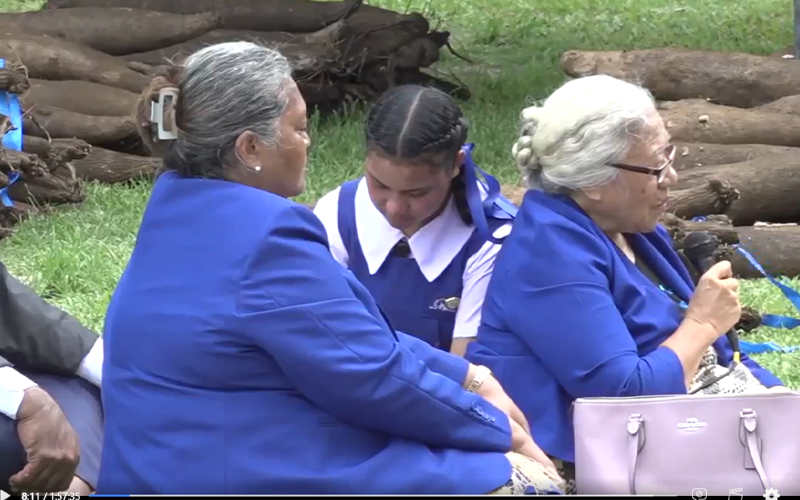
‘Ave ‘o e hala (literally, carry on the path) – refers to the customary act of presenting goods—such as handicrafts, yams, and a hog—carried along a designated space leading to the place (hala) where the event is taking place.
It serves as a way of fakahoko fatongia or updating the most important figures in the nofo ‘a kāinga—in this case, the King and Queen, who is also a QSC ex‑student, and their daughter—on the progress of the main preparations. Although they do not take part in these activities, they are formally informed as they look ahead and prepare for the celebration.
The presentations were also a tribute to the King and Queen, whose attendance on the centennial day will give the kātoanga a uniquely powerful cultural prestige.
This means these cultural activities were not ceremonial events in themselves, but they formed essential components of the larger celebration, demonstrating the practices of feveitokai‘aki (respectful conduct shaped by cultural expectations) and fefuafatongia‘aki (mutual cultural obligations).
It also highlights the custom of mu‘aki e ngāue—the publicly announcing of the finest and most important items among all the goods, food, performance and kava presented. This practice reflects the hierarchical structure at the heart of the nofo ‘a kāinga, where the ‘eiki (the king, nobles, or senior or leading kāinga) hold the cultural right to receive the first and best of everything the community produces.
For the QSC centennial, this practice has showcased the meticulous work of students, families, alumni, and church groups who have contributed their finest garments and cultural wear for the celebration.
The events held last week drew significant online attention as videos circulated showing the fakatū‘uta—the ceremonial arrival of food, pigs, kava, and woven goods at the Palace—followed by the coordinated presentation of the faiva, including the mā‘ulu‘ulu that will feature prominently in the centennial programme.