Home Blog

COMMENTARY: Prime Minister Pōhiva warned about use of circulars, said they muzzled Opposition MPs

EDITOR’S NOTE: This commentary was edited to reflect the fact that the response from the Deputy Clerk was meant to say that the Parliament using the circular was a normal means of communication.

COMMENTARY: It is time for the practice of using circulars to make decisions in Parliament was reviewed.

Circulars should only be used on agendas that are urgent.

They should not be used on important issues such as pay rises for Parliamentarians.

Such issues should be properly debated in the House so that they can be recorded in the minutes for the public to read and also broadcast for people to listen.

As Kaniva News reported yesterday, the government’s use of a circular to canvas MPs’ views on a pay rise has been called into question.

However, the Legislative Assembly’s Deputy Clerk, Dr Sione Vikilani, said the circular was a normal means of communication approved by the House and any information sent through it was legal.

In Tongan he said: “Ko e tohi ‘avetakai ko e founga ngāue pe ‘oku ‘ataa ke ngaue’aki pea ‘oku ‘ikai ke ta’efakalao ha tu’utu’uni ‘i hono fakahoko ‘i he founga koia”.

Dr Vikilani did not respond to a question asking why a circular was used to ballot the pay hike and not a face-to-face voting in the House.

READ MORE

In 2018 Tonga’s former Prime Minister, the late ‘Akilisi Pōhiva, warned that using circulars in Parliament was open to abuse.

Speaking to Kaniva News, Pōhiva said the use of circulars was normal but did not allow for discussion.

MPs, especially the Opposition, could not debate whatever agenda was being circulated.

He said that traditionally Speakers and the Noble’s representatives, who were mostly the majority  in the House, used it to ballot issues they wanted to be decided in their favour.

The late Prime Minister’s comments were made during an interview in 2018 about the decision to approve an invitation from the Tonga Rugby League for a Parliament delegation to attend a match.

The decision was adopted through a circular, by collective resolution of Parliament.

Prime Minister Pōhiva’s concerns are just as relevant today as they were four years ago.

Debates and voting in the House must be open so that all citizens can see how their MPs voted and debate can be held in public.

This was illustrated in our story yesterday when Dr Vikilani would not say how MPs voted on the circular. 

A Parliament with secrets is not truly democratic.
Two packages of ‘ice’ discovered at Vavaʻu beach, site of $2.3m cocaine find in 2021

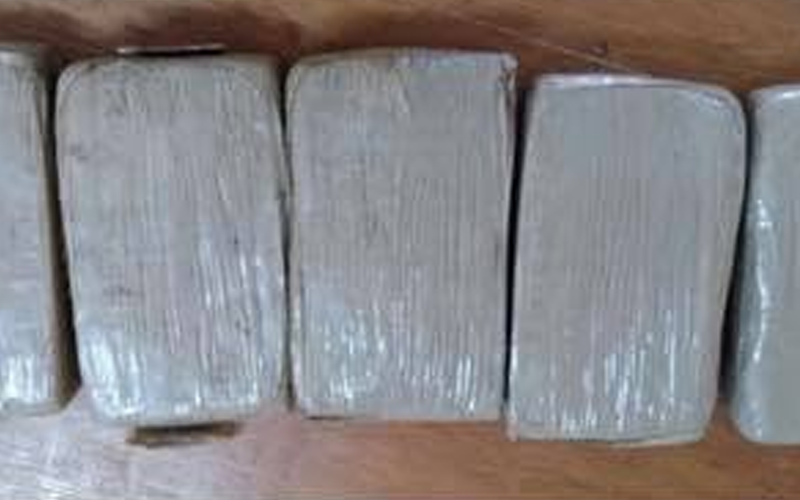
Nearly five years after cocaine packages washed ashore at Hōleva and Haʻalaufuli beaches in Vavaʻu, two bags of what has been described as “ice” were discovered on Sunday.

Photo released by Tonga Police in July 2021 showing cocaine packages worth about $2.3 million paʻanga that washed up on beaches at Hōleva and Haʻalaufuli in Vavaʻu, prompting a major police search. Photo/Tonga Police

Neiafu town officer Vava Lapota claimed that the two packages of “ice” were discovered by residents and later handed over to the Neiafu Police.

Kaniva News has contacted Police for comment.

The details of the items and how they ended up on the beach are still unknown.

The discovery follows a major cocaine shipment that washed ashore in July 2021 at what is believed to be the same location.

In that incident, more than 14 kilograms of cocaine—estimated to have a street value of $2.3 million—washed up along the beaches of Hōleva and Haʻalaufuli, triggering a large-scale search by Tonga Police and the Navy.

At the time, Police warned: “There is possibility that more packages may turn up on the beach and we ask any members of the public to immediately contact Police if they found or knew anyone to have found further drugs,” said Detective Acting Deputy Commissioner Halatoa Taufa.

Taufa strongly reminded that anyone who has in their possession any of the washed-up drugs and failing to hand over to Police is a serious offence.

Eight people were later sentenced to prison terms ranging from three to 13.5 years for their opportunistic roles in handling blocks of cocaine from a large shipment that washed ashore at Ha’alaufuli’s ‘Otualea Beach.

PM Fakafanua warning

The reported drugs washing ashore come after suspected cocaine packages were found across islands in Fiji’s Lau Group last week.

Reports said the latest discovery adds to earlier finds in Moala, Kabara, and Moce.

Authorities believe recent rough sea conditions may have dislodged concealed packages, causing them to surface and wash ashore.

The developments in Fiji come shortly after Tonga’s Prime Minister, Lord Fakafanua, warned that Tonga must step up its alertness and preparedness to combat illicit drugs, citing increased trafficking in nearby Fiji.

Minister of Lands found guilty of breaching electoral law

The Minister of Lands, Dr Taniela Fusimālohi, has been found guilty under the Electoral Act for electoral bribery, in a ruling expected to carry significant political and legal implications, according to a report by Kele‘a Voice.

While details of the case proceedings are yet to be fully released, the conviction signals the judiciary’s firm stance on upholding electoral integrity. .

Under the Electoral Act, a conviction for an electoral offence may result in penalties including fines, removal from office, or disqualification from holding public office, depending on the court’s final orders.

As the situation develops, more information is expected regarding sentencing and any potential appeals.

Pentagon revises religious codes, reclassifies LDS after backlash

The United States Department of Defence has revised its religious affiliation policy following backlash from lawmakers and faith leaders, issuing an updated framework that removes a broad “Christian” umbrella label and instead lists individual denominations — including The Church of Jesus Christ of Latter-day Saints — as distinct categories.

The update, released Monday, follows days of criticism after the Pentagon initially unveiled a streamlined list of religious affiliation codes that reduced more than 200 recognised faith categories to just 31.

The changes stem from a broader administrative overhaul aimed at simplifying how the military tracks the religious identities of service members. Defence officials said the previous system — which included more than 200 categories — had become “unmanageable” and inefficient for chaplain services.

Under the new framework, the number of classifications was dramatically reduced, with many smaller or less commonly used belief systems consolidated into broader categories such as “Other Religions” or “No Religion.”

Pentagon officials emphasised that the revision is intended to improve how chaplains anticipate and meet service members’ spiritual needs rather than determine the legitimacy of any faith.

Initial classification sparks controversy

In its initial announcement, the Pentagon grouped 21 denominations under a single “Christian” umbrella category. However, The Church of Jesus Christ of Latter-day Saints (LDS) — despite being included in the overall list — was not placed within that Christian grouping.

The omission drew immediate criticism, particularly from members of the Utah congressional delegation and other Latter-day Saint leaders, who argued the designation misrepresented the faith’s identity.

Utah lawmakers, including Sens. Mike Lee and John Curtis, publicly challenged the classification, calling it “unacceptable” and urging the Pentagon to correct what they described as a mischaracterisation of a Christian faith tradition.

In public statements, lawmakers emphasised that Latter-day Saints identify as Christians and objected to what they viewed as government involvement in defining religious doctrine.

Following the backlash, members of the Utah delegation engaged directly with Pentagon officials and raised concerns at the highest levels, including conversations involving the president, according to reports surrounding the policy dispute.

The pressure led to a rapid reassessment within the Defence Department, culminating in a revised list of religious affiliation codes.

In its updated version, the Pentagon eliminated the overarching “Christian” category altogether and instead organised all faiths — including previously grouped denominations — as standalone entries.

The change effectively resolves the immediate dispute over classification by treating each denomination equally without assigning them to umbrella religious labels.

Under the revised structure, The Church of Jesus Christ of Latter-day Saints remains one of the officially recognised categories, alongside other Christian denominations such as Baptist, Catholic, and Methodist, as well as non-Christian faiths including Islam, Judaism, Hinduism, Buddhism, and Sikhism.

The controversy highlights broader tensions surrounding religious representation within the U.S. military, particularly as the Pentagon seeks to balance administrative efficiency with the diversity of beliefs among service members.

Rising Fiji drug busts and ‘proximity’ put Tonga on high alert, PM Fakafanua says

Prime Minister Lord Fakafanua has raised concerns about Tonga’s vulnerability to regional drug trafficking, warning that a surge in large-scale drug busts in nearby Fiji highlights the need for heightened vigilance in Tonga.

Lord Fakafanua, the Prime Minister of Tonga

Speaking to local media last week, the Prime Minister said Pacific leaders had agreed to collaborate as a “network” to combat high levels of drug trafficking across regional waters.

He said the partnership would involve sharing information and intelligence among countries to strengthen enforcement efforts.

Lord Fakafanua added that regional attention is increasingly focused on the surge in drug trafficking in Fiji, noting that “Tonga’s proximity underscores the need for heightened preparedness.”

Tonga Escalates Drug Fight

The kingdom is continuing its ongoing battle against an illicit drugs crisis, which has led Parliament to pass legislation imposing the harshest penalties, including life imprisonment without parole for drug offenders.

The King also took a leading role by convening a national symposium and warning Parliament of its responsibility to address the drug crisis seriously.

Tonga is also introducing wastewater-based epidemiology, or sewage testing, to measure illicit drug use and track trafficking patterns within the country.

A recent ABC documentary on drug trafficking in the Pacific, which included Tonga, revealed that Tongan police conduct around 150 tactical operations each year targeting illicit drug activity.

It comes in the wake of a warning from the Prison Commissioner that Hu‘atolitoli Prison is facing mounting pressure, as a sharp rise in drug-related offences pushes inmate numbers beyond manageable levels.

Fiji Drug Crackdown Intensifies

Meanwhile, Fiji has become a focal point of major regional and international anti-drug operations amid a surge in transnational trafficking.

Recent developments include a 2.64-tonne cocaine seizure, a joint military crackdown that destroyed more than 47,000 marijuana plants, and ongoing court proceedings involving prominent local businessmen allegedly linked to international cartels.

While several Fijian nationals are awaiting court hearings on charges involving tonnes of cocaine and other illicit drugs, local media have reported growing concern over suspected cocaine packages washing ashore across islands in the Lau group last week.

The reports said the latest discovery adds to earlier finds in Moala, Kabara, and Moce.

Authorities believe recent rough sea conditions may have dislodged the hidden packages, causing them to surface and wash ashore.

Police investigate ‘Eua death as body sent to Tongatapu for post-mortem

Authorities have confirmed that a police investigation is now underway into a recent death in ‘Eua, with no arrests made at this stage.

Po’ulia Lavelua

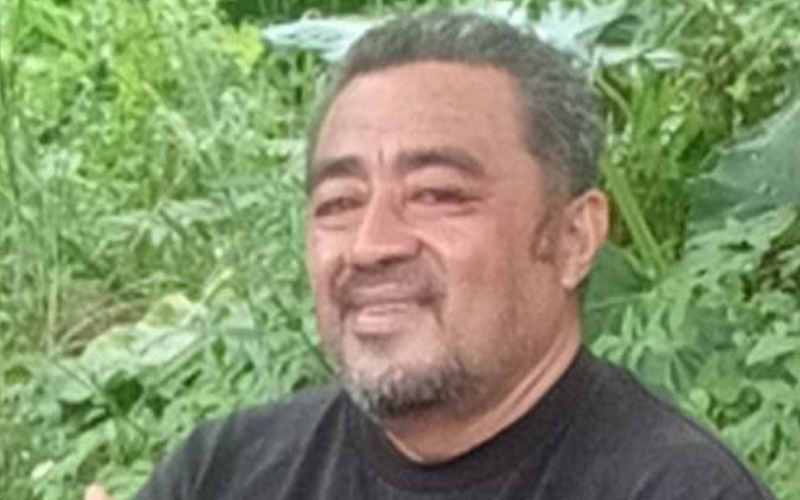
The deceased, identified as Po‘ulia Lavelua, a 46-year-old man, was found dead in ‘Esia village on the island of ‘Eua in late May 2026.

His body was reportedly discovered outside a community hall, prompting police to launch an investigation into the circumstances surrounding his death, according to a source close to the deceased who spoke to Kaniva News.

As reported on May 30, an outpouring of tributes from family, friends, and members of the public flooded social media in the wake of his death.

He has been remembered as a devoted father and a loving husband, with many expressing their condolences and support for his family.

Police have confirmed that the case remains under active investigation, with no individuals taken into custody at this stage.

“The body of the deceased has since been transferred from ‘Eua to Tongatapu to undergo a post-mortem examination,” Police Chief Superintendent Halatoa Taufa told Kaniva News.

He said the results of the post-mortem will be crucial in determining the exact cause of death and are expected to provide further details surrounding the circumstances of the incident.

Meanwhile, tributes continue to pour in, with family members sharing photos and updates on Facebook as they mourn the loss of their loved one.

Police are expected to provide updates as they continue efforts to establish the full circumstances surrounding Lavelua’s death.

Cook Strait ferry sailings cancelled, residents told to stay off beaches as swells up to 10.5m forecast in Wellington

Anya Fielding of RNZ

A state of emergency has been declared for Wellington’s Southern and Eastern wards ahead of huge swells expected to hit the coast over the next few days.

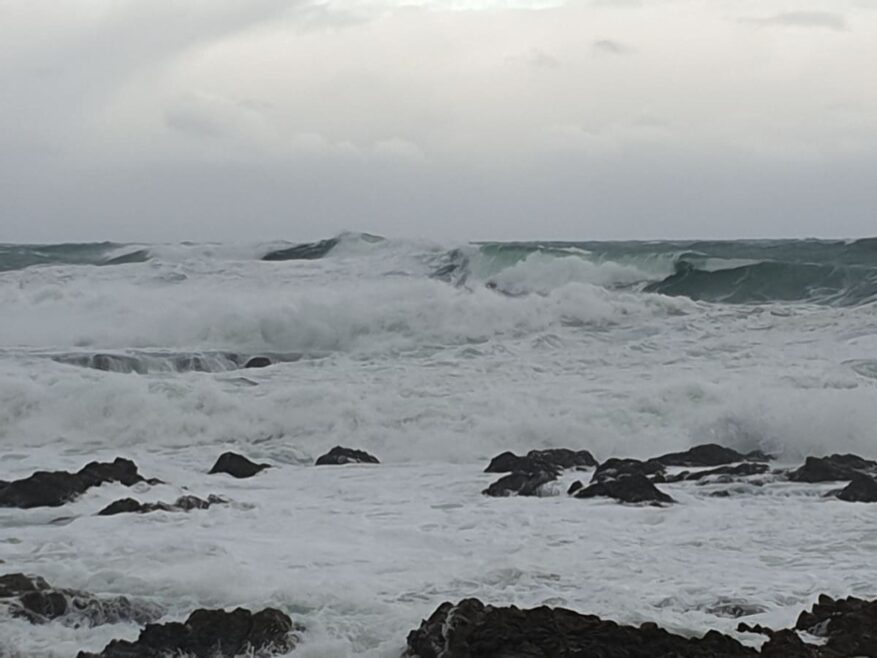
Swells on Wellington’s south coast in 2020.

MetService has issued a Heavy Swell Warning for Cape Terawhiti to Turakirae Head in Wellington and Turakirae Head to Mataikona in the Wairarapa.

A southerly weather system moving up the country is bringing the swells to Cook Strait from Monday evening through to Wednesday morning.

It says southerly combined waves could rise to 9.5-10.5 metres late Tuesday morning, before easing midday Wednesday, with a peak period of 13-15 seconds.

Cook Strait ferry sailings have been cancelled ahead of the swells.

Wellington City mayor Andrew Little declared the State of Emergency for the region’s Southern and Eastern wards late this afternoon.

In a statement, the Wellington City Council said it recommended that residents of South Coast waterfront properties and those who are concerned about flooding stay somewhere else tonight.

“Residents of the South Coast can expect extensive road closures on Tuesday 9 June. We require those in affected areas including pets be out of properties no later than 9am on Tuesday 9 June.

“An Emergency Assistance Centre has been set up at Wellington South Baptist church, 284 The Parade will be open from 9pm Monday 8 June for those who don’t have a place to go tonight.

Wellington Civil Defence spokesperson Dan Neely said the public should stay out of the water and avoid beaches and coastal areas, even if the weather looks fine.

“In 2020 a heavy swell event struck Wellington’s south coast with 5.5-metre waves pounding coastal suburbs, causing widespread damage and evacuations. Tomorrow, we expect the swells could be up to 8m around Wellington’s south coast, so we are preparing for a significant swell event and asking the public to do the same.

“The sun might be shining but these swells could bring debris and surface flooding to roads, especially around high tide at midday. The public is urged to avoid Wellington’s south coast roads, as well as coastal roads around Wairarapa. Extreme caution should be taken if you have to drive on these roads.”

Have you been affected? Share your stories and pictures with us at: iwitness@rnz.co.nz

Neely said emergency services, councils and partner agencies were working together to respond to the event.

All people living in affected areas have been issued the following advice:

If your home has been impacted by past swell and storm events or are in exposed coastlines prepare to self evacuate.
If you cannot arrange accommodation, call your local council for assistance.
If you are planning to say, prepare a grab bag with supplies relevant to your family in case you have to leave with short notice.
People living close to swell and surf exposed coastlines should be prepared for the possibility of waves flooding roads and leaving debris, with potential for road closures, and potential damage to property.
Move important items out of harm’s way, particularly if they are in low-lying garages. Bring pets inside.
Check on neighbours who might need some support.

‘Don’t take the dog for a walk’

Meteorologist Lewis Ferris said the weather system will affect the south coast of Wellington and Wairarapa and parts of the eastern coast of South Island.

The height and long period of the swells would cause them to carry a lot of energy and a greater potential to run up the beaches, he said.

“Tomorrow won’t be a good day to go out on any sort of southern coastlines, especially around Wellington. Don’t take the dog for a walk; don’t go just to see the large waves roll in,” he said.

Residents should heed local authorities’ warnings and not go out to the coast, he said. He said authorities might need to access the coast for sandbagging and other preparations.

The worst of the swells were expected during high tide at midday and early afternoon on Tuesday.

Strong wind watches are in place for parts of the lower North Island and the Otago coast.

Bluebridge’s website says the 8.30pm Wellington to Picton sailing on Monday has been cut, as have three services on Tuesday morning.

Interislander cancelled all its Tuesday sailings.

The ferry companies say they are contacting customers who will be moved onto the next available service.

An orange heavy swell warning kicks in from Cape Terawhiti to Turakirae Head from 6am Tuesday, lasting through to the same time Wednesday.

MetService is forecasting southerly combined waves rising to 7-8 metres by midday Tuesday, easing in the evening.

The same warning starts in Wairarapa from Turakirae Head to Mataikona from midnight on Monday through to noon on Wednesday.

“Southerly swell rising to 4 metres early Tuesday morning, then rapidly rising to 8-9 metres late Tuesday morning, easing below wave warning criteria Wednesday midday,” Metservice said.

A strong wind watch is also in place in coastal parts of Wairarapa and the Tararua District on Tuesday.

It is also in effect in coastal parts of Clutha and Dunedin from 9pm on Monday.

This story was first published on rnz.co.nz

Livestreamed farewell for slain Tongan-born ‘Alaipulotu ‘Ahio

A funeral service for ʻAlaipulotu ʻAhio is currently being livestreamed from Australia, drawing viewers from across the Pacific and beyond following his death in a fatal shooting last month.

‘Alaipulotu ‘Ahio. Photo/Screenshotted

The 28-year-old, a former associate of the Sydney drill rap group OneFour, was killed on the night of May 19, 2026, during what authorities described as a targeted shooting and stabbing ambush.

The attack occurred in the garage of a home in Canley Heights, in Sydney’s south-west. Four other men sustained injuries in the incident.

Police have yet to announce any arrests in connection with the killing, and investigations remain ongoing.

Large Turnout at Livestream

The funeral livestream shows a large gathering of mourners paying their respects, with cultural elements prominently displayed.

The coffin is draped in traditional Tongan fine mats and ngatu (tapa cloth), while many attendees are dressed in black and wearing ta‘ovala, the customary mourning attire.

A steady line of mourners can be seen approaching the casket to farewell the deceased.

The service comes after a legal challenge by ʻAhio’s mother, Savelina Fisiipeau ʻAhio, was dismissed by the New South Wales Supreme Court.

She had sought an urgent injunction to stop a mandatory post-mortem examination on cultural and religious grounds.

In her application, she requested that the autopsy either be blocked entirely or carried out without the removal or dissection of organs and tissue.

However, the court ruled against the application, allowing authorities to proceed with a full forensic examination as part of the homicide investigation.

Weekend crash spate continues into today with power outage in ʻĀhau

A series of vehicle crashes have been reported across Tonga over the weekend, with the latest incident on Monday causing a power outage in parts of Tongatapu.

The most recent crash occurred this afternoon, in the ʻĀhau area, where a vehicle collided with a power pole, disrupting electricity supply to communities stretching towards Haʻatafu.

Tonga Power Limited (TPL) confirmed the outage in an advisory issued around 2pm.

“Please be advised that your power supply is currently experiencing a temporary outage due to a power line fault caused by a vehicle collision in the ʻĀhau area,” the utility stated.

TPL said the impact of the crash extended across the Hihifo network, though most areas have since had power restored. Work is continuing to fix the remaining damage, with restoration expected within approximately three hours.

“Please note that the entire line supplying Hihifo was affected; however, power has now been restored to all areas except those listed above,” the advisory said.

Customers seeking further information were encouraged to contact the utility on 944.

The incident is the latest in a string of crashes reported over the weekend, several of which gained attention on social media.

Crash Livestream Sparks Concern

On Sunday, two separate crashes were widely shared on Facebook livestreams.

In one incident, a vehicle was seen after colliding with another car, with its horn continuously sounding in the aftermath, drawing concern from viewers.

In a separate livestream, a police vehicle was seen stopped in the middle of the road, while another car remained stranded nearby, awkwardly positioned between opposing lanes after the crash.

Details about injuries or the causes of the weekend incidents had not been officially confirmed at the time of reporting.

Kaniva News was unable to independently verify the authenticity of these crashes or the livestreamed videos.

‘Miracle from Heaven’: Solar-powered desalination project brings fresh water to Hunga and Matamaka

Vava’u, Tonga— A groundbreaking desalination project is transforming daily life on two of Tonga’s most remote islands, Hunga and Matamaka, by turning seawater into safe, drinkable water using renewable energy.

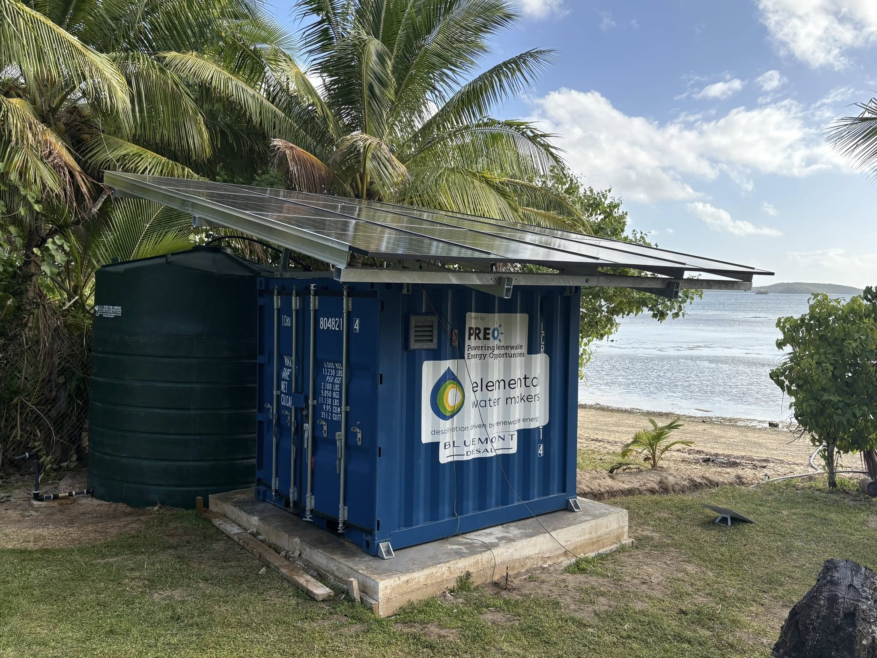
Solar panels are installed atop a containerised desalination unit on Hunga, part of a “miracle from heaven” project bringing sustainable drinking water to remote island communities.Photo/Supplied

The Tonga Desalination Project, funded by Australian company Bluemont Pty Ltd and delivered in partnership with Pacific Technologies NZ, PREO, and the UK Carbon Trust, is now producing up to 4,300 litres of fresh water per day.

Powered entirely by solar energy, the system provides a sustainable solution to chronic water shortages that have long affected outer island communities.

Project manager Siaosi Lepuha Faka’osi, who leads the Tongan team, said the initiative marks a significant milestone in improving the resilience and wellbeing of rural communities.

“For many years, our people have relied on limited rainwater and have struggled through long dry periods. What we are seeing now is a complete change—seawater is being turned into clean, drinkable water that tastes as pure as rain,” Faka’osi told Kaniva News.

The project was developed in response to recurring water crises, including periods when access to freshwater sources was disrupted. Previously, communities depended on costly and logistically difficult water deliveries by boat, often funded by external support.

“This system gives independence back to the people,” Faka’osi said. “Instead of waiting for water to arrive, they can now produce their own supply every day, right on the island.”

The desalinated water is already being used for a wide range of domestic purposes, including drinking, cooking, gardening, livestock care, and hygiene. Residents say the availability of reliable water is expected to bring lasting improvements to health and living standards.

Miracle from Heaven Project

Faka‘osi described the project as “Ko e mana mei langi”—“a miracle from heaven”—a phrase that captures the inspiring leadership of Hunga and Matamaka in bringing the pilot project to life.

It will supply the two islands, among the most remote from Neiafu, the capital of Vava’u, with reliable drinking water, effectively ending water shortages and greatly improving living conditions and overall wellbeing.

The project also highlights the importance of renewable energy in addressing climate and infrastructure challenges across the Pacific. By harnessing solar power, the desalination units are able to operate sustainably without relying on expensive fuel imports.

“The beauty of this system is that it uses the sun—something we have in abundance—to solve one of our biggest challenges,” Lepuha said.

“It’s not just a technical solution, it’s a solution that fits our environment and our future.”

Outer islands such as Hunga and Matamaka face unique challenges due to their limestone geography, which limits natural groundwater availability. During droughts, the absence of reliable water sources can quickly become a humanitarian concern.

“When the water runs out on these islands, the situation becomes very serious very quickly. That’s why this project is so important—it provides security, dignity, and peace of mind for our communities,” Faka’osi added.

Engineering teams have now completed installation on the islands, and the water system is already in use. The project has been delivered in close collaboration with the Tonga Water Board, ensuring alignment with national water management strategies.

Officials hope the success of the pilot will pave the way for similar systems to be deployed across other vulnerable outer islands.

“This is just the beginning,” Faka’osi said. “If we can do this here, we can do it anywhere in Tonga where people are facing the same hardship. Our goal is simple—no community should have to suffer from a lack of clean water.”

The Tonga Desalination Project is being hailed as a practical and innovative step toward climate resilience, offering a model that could be replicated throughout the Pacific region.

Court finds Veas used forgery, fraud to secure Chinese lease of Mataele land

Nuku’alofa, Tonga – The Land Court has ruled that a lease granted over a Kolofo’ou town allotment was obtained through forgery and fraud orchestrated by two family members, although the court has stopped short of cancelling the lease until the remaining defendants have been heard.

In a judgment delivered on 26 May 2026, Justice Tupou KC and Land Assessor Fuiva Kavaliku found that Fatafehi Vea and her son, Siosio Malohi Vea, were responsible for creating and using a false power of attorney to secure a lease over a family-owned allotment known as Mohekonokono.

The case was brought by Penisimani Panuve Mataele and his sister, Filoi Mataele Tu’itupou, who challenged the validity of a lease granted to Chinese national Luo Shi Yun over the 33.5-perch allotment in Kolofo’ou.

The court heard that the land was originally registered in the name of the plaintiffs’ late father, Hameti Mataele, and passed to Penisimani as heir following his death in 2013.

Evidence presented during the formal proof hearing showed that a power of attorney purportedly signed by Penisimani in favour of Fatafehi Vea was used to support an application to lease the land. However, the court accepted evidence that Penisimani had never signed the document and had no knowledge of its existence until 2024.

Forged document irregularities identified

Justice Tupou found significant irregularities in the document, including inconsistencies in dates and the use of a notary public stamp belonging to a Californian notary whose commission had expired years before the document was allegedly executed.

The court concluded that the document had been deliberately created to mislead the Ministry of Lands into believing that Fatafehi Vea had authority to act on Penisimani’s behalf.

“The Plaintiffs have proven on the balance of probabilities and to the required standard, that [the power of attorney] was created and presented by the 3rd and 4th Defendants knowing it was a false document,” Justice Tupou ruled.

The court found that Ministry of Lands officials relied on the false documents when processing the lease application, leading Cabinet approval of the lease and the eventual registration of Lease No. 10234 in favour of Luo Shi Yun in June 2023.

Justice Tupou further held that the actions of Fatafehi Vea and Siosio Vea amounted to both forgery and fraud, finding they intended to deprive Penisimani Mataele of control over the property in order to obtain funds from the lease arrangement.

Evidence before the court included Facebook messages in which Fatafehi Vea acknowledged seeking permission to use the land and later expressed regret over the dispute.

Lease cancellation deferred pending hearing

Although the court found that the lease had been acquired through forgery and fraud, Justice Tupou declined to immediately cancel it. He said natural justice required that the remaining defendants, including the Cabinet, the Minister of Lands and the leaseholder, be given the opportunity to present their cases before such an order could be made.

The court also deferred consideration of damages sought by the plaintiffs, finding that those claims should be addressed during a full trial involving all remaining defendants.

Justice Tupou invited the parties to propose a timetable for the continuation of proceedings and awarded costs to the plaintiffs against the third and fourth defendants, with those costs to be taxed if not agreed.

The case will now proceed against the Cabinet of Tonga, the Minister of Lands and the leaseholder, with the future of the disputed lease yet to be finally determined.