Hawai’i – New U.S. travel restrictions are preventing Tongan families from celebrating major academic milestones with their children in Hawai’i, according to a Brigham Young University–Hawaiʻi professor from Tonga.
As Kaniva News reported earlier this week, the Trump administration has imposed partial travel restrictions on Tongan nationals to the United States, six months after warning the kingdom of possible action if it failed to meet specific U.S. requirements.
The proclamation extends partial travel restrictions and entry limitations to 15 additional countries, including Angola, Antigua and Barbuda, Benin, Côte d’Ivoire, Dominica, Gabon, The Gambia, Malawi, Mauritania, Nigeria, Senegal, Tanzania, Tonga, Zambia, and Zimbabwe.
According to the U.S. Overstay Report, Tonga recorded a B-1/B-2 visa overstay rate of 6.45 percent and an F, M, and J student/exchange visa overstay rate of 14.44 percent.
The administration announced that the visa restrictions for Tonga will take effect on January 1, 2026, despite speculation that a form of the ban was already being implemented.
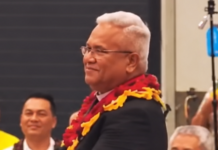
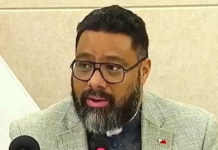
Professor Tevita Kaili, who has taught Tongan students at BYU-Hawaiʻi for 20 years, voiced strong concern about the human impact of the policy.
“I am deeply concerned about the negative impacts of the current travel restrictions on my Tongan students, both those studying now and those in the future,” Kaili stated on Facebook.
While current students on J-1 and F-1 visas can continue their studies, the recently expanded restrictions have blocked their families from obtaining travel visas, the professor said.
Kaili pointed to the university’s December 12 graduation as a recent and painful example of the consequences.
For many Tongan families, attending a graduation is a crowning moment that represents a profound collective sacrifice and immense pride.
“Case in point, at our last BYU Hawaiʻi graduation on December 12th, the parents and relatives of my Tongan students were not granted visas to attend. It was truly disheartening!” Ka’ili said.
The administration cited the need to raise U.S. entry standards and bolster national security, suggesting the expansion was partly in response to the recent arrest of an Afghan national suspected of a shooting attack.
Critics contend the policy is overly broad and unfairly targets individuals from the affected countries.
For educators like Professor Kaili, the effect is direct and deeply personal, creating emotional strain for students and severing a crucial cultural connection at a key moment in their lives.
Brigham Young University–Hawaiʻi, owned by the Mormon Church, has long maintained strong ties with Tonga through the church, which is the second-largest denomination in the kingdom. In Fall 2011, enrollment was reported at 2,600 students, including 78 from Tonga.