Editorial – When Dr Siosiua Lafitani, dean of Lo‘au and founder of his controversially established university, announced more than three months ago that he had allegedly lodged a police complaint against Kaniva News, he did so with confidence and authority.
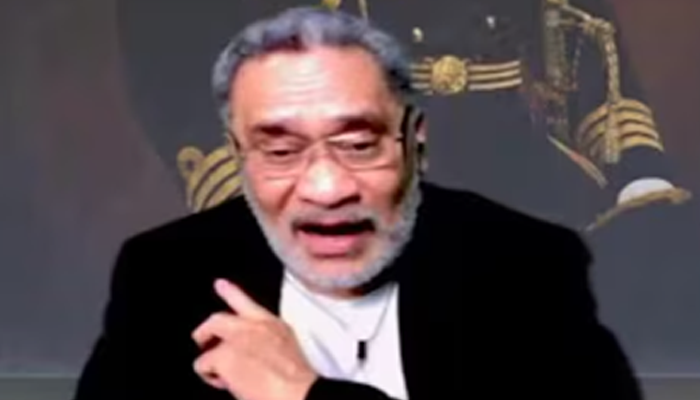
On social media—particularly during a live interview on the VPON Media Facebook page—the announcement drew strong endorsement from his followers.
Upon reviewing the interview, the Kaniva News editor was struck by the number of claims presented to the public that were factually incorrect and fabricated.
Among those claims was Lafitani’s assertion that he had not instigated any dispute with Kaniva News and that the outlet criticised him without cause.
That is demonstrably untrue. Lafitani was fully aware that Kaniva News was responding directly to statements he published on the Lo‘au Facebook page, in which he accused us—alongside other media professionals such as Kalafi Moala and lawyer Nalesoni Tupou—of spreading what he described as “false, unfounded, and dark‑age” ideas about Tonga’s democracy.
For years, he has been widely regarded as an opponent of Tongan democratic reform, notwithstanding the fact that he has been residing in Australia, one of the Pacific’s largest and most established democracies.
Our reporting arose directly from Lafitani’s allegations and constituted a legitimate journalistic response to claims he placed in the public domain.
Another falsehood was his suggestion to the host that Kaniva News had deleted the articles in which we rejected and debunked his statements—articles he described as defamatory—implying that their removal amounted to an admission of error.
That is not correct. Those articles were never removed. They remain published on the Kaniva News website and on our Facebook page, accessible to anyone who searches for them.
READ MORE:
- Dr Lafitani refunds fees after student engages lawyer over course quality and alleged academic fraud
- Lawyer Tupou accuses Prof Lafitani of lying about Tonga’s democracy and questions his knowledge of law and the status of Lo’au University
- EDITORIAL: Professor Lafitani continues to attack Kaniva News, but his claims that Tonga’s political reforms in 2010 were not a change for democracy are a lie
- Academic accusations fly as controversial Lo’au University denies fraud allegations
- Shooting the Messenger: Intimidation won’t stop Kaniva News’ ongoing reporting on Lo’au university controversy
- Explainer: Why Lo‘au’s view of ‘cut and paste’ journalism is wrong
- Kaniva News denies Dr Lafitani’s lies over translation request
- Dr Lafitani refunds fees after student engages lawyer over course quality concerns and alleged academic fraud
- Former student accuses Lo’au University dean of public racist remarks following tuition fee refund
No Legal Action
As hostility among VPON followers escalated during the interview—fuelled by calls for legal action and abusive comments—Kaniva News editor Kalino Latu intervened on Kaniva’s Facebook page to reject what he described as misinformation and scaremongering by Lafitani and VPON Media.
He told followers that Lafitani’s claim of having filed a police complaint was untrue. He explained that the authorities cannot act in the absence of evidence of a legal breach, reaffirming Kaniva News’ confidence that it has violated no law.
That remains true. Since Lafitani claimed in September to have filed a police complaint, Kaniva News has received no contact from police, no investigation, and no verifiable follow‑up.
In the absence of such confirmation, it is paramount for us as journalists to hold those in positions of influence—like Lafitani—accountable for the statements they made and the assurances they gave to the public.
Accusations Shift
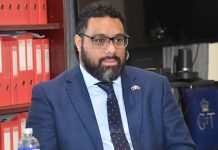
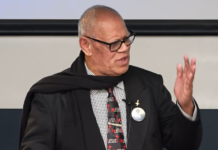
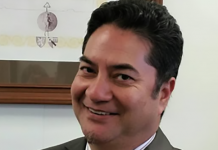
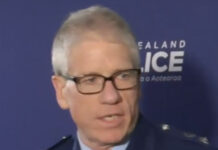
Ironically, the narrative shifted last week. Members of the Lo‘au academic group—identified in accompanying photographs as Dr A. Achilles, Dr P. Williams, Dr B. Thomas, and Dr J. John—announced on Facebook their intention to publish a “critique” this year, responding to what they describe as “Defamatory, Personal, Anti-Educational, and Uneducational Allegations” by Kaniva News and lawyer Nalesoni Tupou.
They said the document would be sold on Amazon. Notably, there was no mention of the police complaints Lafitani claimed to have filed last year.
This shift—from a purported legal dispute to an academic publishing project—without any explanation linking the two or clarifying the status of the police complaint, suggests a disconnect that raises doubts about whether the earlier public statements were genuine or simply intended as scaremongering rather than accountability.
For the Lo‘au Facebook group—which presents itself as a body of academics committed to truth and justice, yet operates as a university whose legal status and online existence have themselves been questioned—this shift raises serious concerns for journalists such as Kaniva News.
Public Accountability Matters
Our primary role is to safeguard the community and hold to account those who act inconsistently—particularly when positions of influence are used to provide services to the public, yet legitimate concerns are met with unprofessional conduct rather than transparency and responsibility.
This became evident when former Lo‘au student Tokiʻukamea Liutai publicly challenged the quality of Lafitani’s teaching and courses, ultimately seeking a refund of his fees—a request Lafitani later agreed to honour.
However, the dispute did not end there. Liutai later accused Lafitani of unprofessional conduct after his personal information was published on Facebook. In the VPON interview in question, Lafitani called Liutai a “fool” and claimed he had met groups in Sydney who allegedly intended to assault Liutai.
Claims Without Evidence
Since Lo‘au first threatened legal action against Kaniva News last year, it has failed to identify a single specific statement in our reporting that is deemed defamatory.
This absence of precision stands in stark contrast to the academic standards Lo‘au professes to uphold. In scholarship, claims are advanced through facts, references, and demonstrable evidence. To allege defamation without pointing to the exact words in question is not only procedurally weak; it is intellectually careless. It risks reducing a serious legal concept to rhetoric.
The lack of these basic scholarly elements raises legitimate questions about Lo‘au’s understanding of defamation—whether it is genuinely apprehended as a legal and ethical standard, or merely invoked as a tactic. In any serious academic or legal context, accusation without specification is not argument; it is bluff.