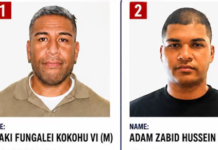
Two men have been sentenced to life imprisonment for their roles in a major methamphetamine importation network, including former prison officer Tohitongi Fetuʻu and Eneasi Taumoefolau, a man linked to the Comanchero motorcycle gang.
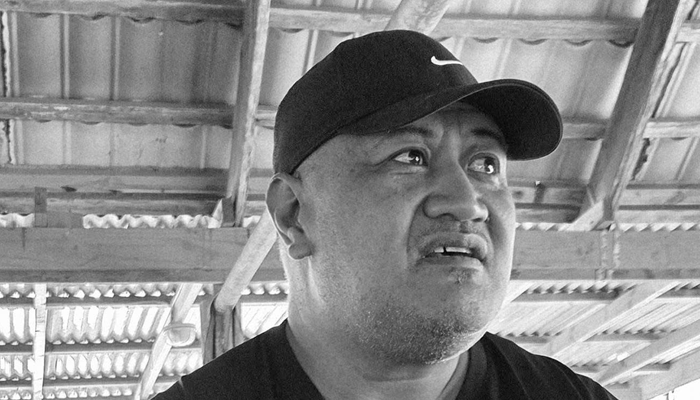
They were sentenced together with four co‑defendants — Mafi Lutui, Toni Tufui, Ta’ufo’ou Fale’ofa and Tevita Shoji — each of whom received lesser terms of imprisonment.
The sentencing followed an extensive ruling in which Lord Chief Justice Bishop KC urged Tongan authorities to cooperate with United States federal agencies after noting evidence of an alleged American supplier and recommending they seek FBI assistance to pursue the individual, Rodney Hala.
The court then set out the individual sentences for the four remaining defendants.
Lutui was sentenced to 18 years’ imprisonment, with the final two years suspended for three years on conditions, for his involvement in importing 3,544.31 grams of methamphetamine.
Tufui is serving 12 years in prison. He was originally sentenced to 15 years, with the last three years suspended, for participating in the same importation operation. Additional convictions for possessing 217.25 grams of methamphetamine and two smoking pipes were ordered to run concurrently.
Shoji was sentenced to 11 years’ imprisonment, with the final two years suspended, after being found with 2,236.08 grams of methamphetamine.
Fale‘ofa received an 11‑year sentence, with the last two years suspended, for importing 897.71 grams of methamphetamine.
Key Communications Revealed
Court documents show that Fetuʻu’s role was uncovered through communications with a U.S.-based informant between 12 and 13 August 2024. They exchanged messages via Facebook Messenger and held a video call discussing the planned shipment of a drug-filled crate to Tonga.
Location data from Fetuʻu’s phone placed it near the SF Oceania office in California when the consignment was dropped off for shipping. Further exchanges indicated that he had packed methamphetamine into a consignment addressed to Toni Sililo Tufui, concealing the drugs inside rice sacks.
Another set of messages from 7.24pm on the same evening revealed logistics being coordinated. Fetuʻu messaged: “If will pick the box tomorrow and you’ll go home and take the food while my brother‑in‑law will go with the box in the truck.”
The informant told the court he believed the crate contained food and was unaware of its true contents or ultimate consignee, but the judge noted that a jury would be entitled to regard this explanation as improbable.
Fetuʻu grew up in ʻEua before moving to Tongatapu, where he married and now has two children. He worked as a prison officer for ten years before being dismissed.
He later supported his family through seasonal manual labour in the United States, reportedly earning about $80,000 paʻanga per six‑month stint. He claimed he believed he was simply helping someone he knew and denied involvement in drug trafficking.
Financier Role Alleged
Court documents stated there was “abundant evidence” that Taumoefolau acted as the financier of the operation, or at least as a conduit for transferring money to the alleged organiser in the United States, Rodney Hala.
On 13 August 2024, a telegraphic transfer of $74,739.09 TOP (about $30,937 USD) was sent from Luxury Car Rental, a business controlled by Taumoefolau, to Hala. Additional payments were also made through members of Taumoefolau’s family.
The court document shows that, despite Hala expressing concern that not all funds had been received, Taumoefolau assured the informant the outstanding money would be paid, told him that the consignment should proceed, and allegedly explained that the transfers were disguised as motorcycle purchases.
When the shipment arrived at Taumoefolau’s residence, drone footage showed him carrying a red bag to Shoji’s vehicle. Police seized the bag when Shoji was arrested, and laboratory analysis confirmed it contained 2,236.08 grams of methamphetamine.
Probation records show Taumoefolau was born in Australia and deported to Tonga in 2022. He and his partner operate businesses in Tonga and overseas. Before returning, he worked as a professional fighter and became involved with the Hells Angels, later associating with the Comancheros through his brother’s senior role. He has no prior criminal convictions in Tonga.
The Chief Judge warned that the scale of the operation reflected a growing threat posed by large quantities of illicit drugs entering the Kingdom. He said the sentences were intended to reflect the seriousness of the offending and the danger such activities pose to the community.