Commentary – Fresh controversy at the Miss Pacific Islands Pageant has reignited anger among Tongan supporters, who say the regional event continues to betray their trust despite public assurances of reform.
Many are again urging the Tongan government to consider withdrawing from future participation unless the pageant delivers credible, transparent change.
The current backlash does not exist in a vacuum.
Just a year ago, allegations surfaced that Samoan lawyer Leiataualesa Jerry Brunt—then the head judge for the 2025 pageant—had interfered with the final results, awarding the crown to Miss Samoa, Litara Ieremia‑Allan, instead of awarding it to Miss Tonga, Racheal Guttenbeil, whom critics argued was the rightful winner.
The claims were serious enough to prompt a police investigation in the Solomon Islands and travel restrictions on Brunt. Authorities there stopped him at the border and questioned him over suspected “fraudulent activities.”
He denied any wrongdoing and was later allowed to leave, but the episode cast a long shadow over the competition and eroded public trust—especially in Tonga.
Tonga’s dilemma: participate or protest?
In the wake of that scandal, Tongan fans called on the government to step back from the pageant. Yet Tonga still sent Miss Heilala, Siosi‘ana Patricia Lavulo Taumoepeau, to compete in Fiji this year.
Some supporters responded with a targeted protest: boycotting the popular online vote.
That threat appears to have materialised. Tonga lost the online voting title—previously held by Miss Guttenbeil—to Miss Papua New Guinea this year, a visible signal of grassroots frustration.
With the 2025 dispute unresolved, the Solomon Islands withdrew from this year’s competition in Fiji, citing concern over the lack of progress in addressing the controversy.
For many Tongan observers, that decision echoed the very trust issues they have been raising for months.
Vow to reform
Media reports during the MPIP contest in Fiji stated that the regional pageant had pledged to reform its judging process, although no details were provided about what those reforms would involve.
During one of the events, some Tongan observers noticed a heavily stapled envelope—apparently containing the scorecards—being presented on stage.
They joked that perhaps this was the “reform,” a tongue‑in‑cheek reference to the 2025 controversy, when it was alleged that the envelope containing the judges’ scores had been opened before reaching the MCs who were meant to announce the winners.
2026 result lights the fuse
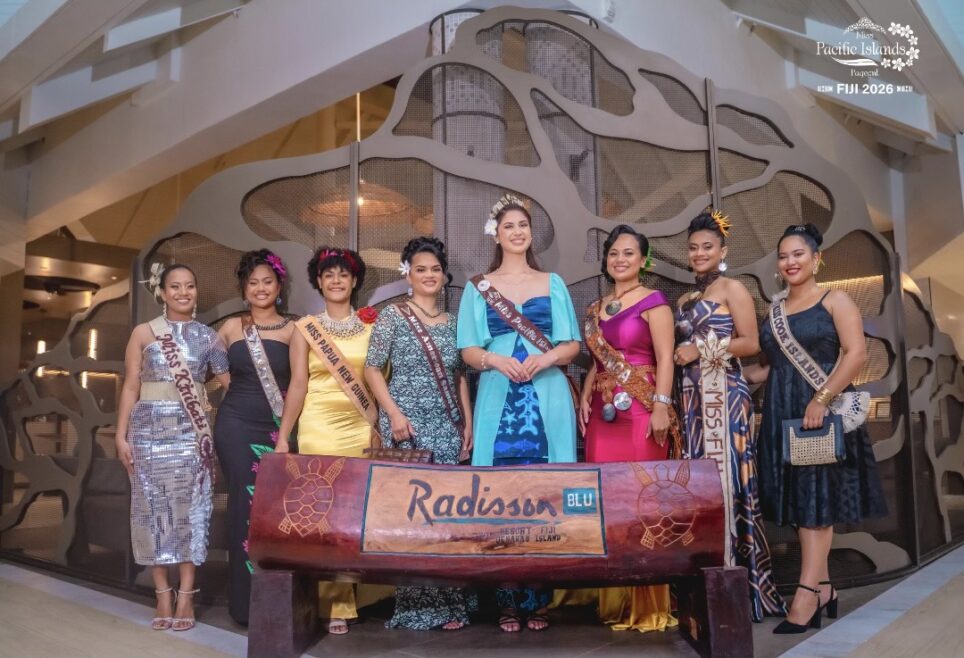
Despite the reform promise, this year’s final result only sharpened the debate. Fiji’s Ailava Samuels was crowned Miss Pacific Islands, with Papua New Guinea’s Iampela Popena and Samoa’s Iliganoa Feagaimali‘i Soti named first and second runner‑up respectively. Miss Tonga became the third runner-up.
Within minutes, viewers across the region erupted online questioning whether the heavy presence of Fiji-affiliated judges gave the host nation an unfair advantage.
From Papua New Guinea, Anna Bais of the Miss PNG team said she was disappointed with the outcome and called on organisers to release the judges’ scorecards, as reported by ABC News.
Critics across the region described the situation as “a bad look for the Pacific,” and renewed calls for stronger oversight and transparency.
What Tonga wants—before next time
For Tongan supporters, the question is no longer who wins a crown, but whether the crown still carries credibility. If the pageant is to regain Tonga’s trust, several concrete steps are expected:
- Publish full scorecards for all rounds, with judge names anonymised but affiliations declared.
- Independent audit of scoring and tabulation, with a public summary report.
- Conflict‑of‑interest rules that clearly govern judge selection, host‑nation affiliations, and backstage access.
- Balanced judging panels with regional representation that avoids host‑nation dominance.
- Appeals and review mechanism for contestants and national committees, with clear timelines.
- A reform timeline published before the next pageant cycle, including who is accountable for delivery.
Until such measures are in place—and demonstrably enforced—Tongan supporters will continue to question the integrity of the competition and the wisdom of remaining involved.
For a pageant meant to celebrate Pacific unity, credibility is the true crown.