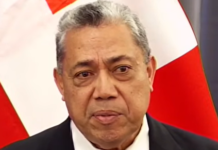
Explainer – Tonga’s Police Commissioner, Geoff Turner, told Matangi Tonga he is seeking government approval to authorise wastewater drug testing in the kingdom.
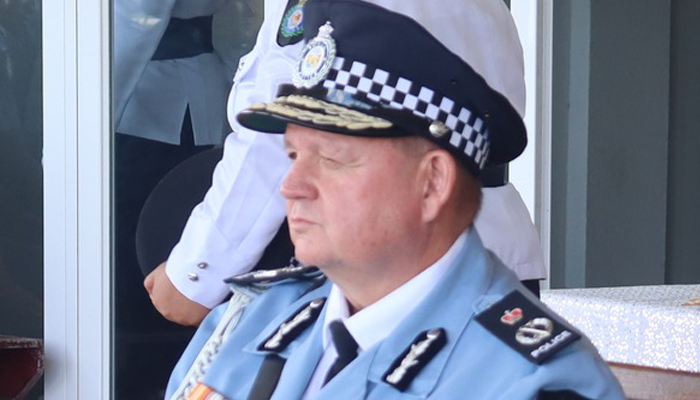
Turner said the approach would help police measure illicit drug consumption trends nationwide.
If approved, he said wastewater testing could initially be carried out at police stations, where officers would be tested first as a lead‑by‑example measure before the programme is expanded to the wider community.
While wastewater testing works best in countries with centralised sewage networks like New Zealand, Tonga lacks such infrastructure.
Instead, local authorities would need to rely on sampling from individual septic systems and other decentralised wastewater sources.
The programme would be backed by the Australian Criminal Intelligence Commission, which has secured funding to carry out wastewater testing initiatives across several Pacific nations.
But what exactly is wastewater testing — and how has it been used overseas?
Wastewater Drug Testing
Wastewater drug testing, known scientifically as wastewater‑based epidemiology (WBE), analyses raw sewage for traces of illicit drugs excreted by users. Daily samples are collected from wastewater systems and examined using advanced laboratory methods such as chromatography‑mass spectrometry.
These tests detect drugs like methamphetamine, cocaine, MDMA, heroin, fentanyl and new synthetic substances. The findings are usually expressed as estimated milligrams per 1,000 people per day, offering an anonymous and real‑time picture of drug use across regions.
The technique can also distinguish whether drugs were consumed or simply dumped into the sewer, using chemical profiling to compare parent drugs with their metabolites.
WBE is now widely used by law enforcement, public‑health agencies and policymakers to identify emerging drug threats and assess the effectiveness of interventions.
How New Zealand Uses Wastewater Testing
New Zealand operates one of the world’s most comprehensive wastewater drug monitoring programmes, covering more than 75% of the population. Regular reports from New Zealand Police show consistently high levels of methamphetamine, MDMA and cocaine across multiple districts.
In late 2024, RNZ reported that wastewater data revealed a sharp increase in methamphetamine, cocaine and MDMA use, prompting police to investigate the cause and consider enforcement responses.
Earlier nationwide testing summarised by Water New Zealand also noted that methamphetamine was the dominant illicit drug detected, with an estimated $20 million per week in associated social harm.
Wastewater Testing Leading to Police Action
In December 2025, The New Zealand Herald reported that three people were arrested and drugs, weapons and cash seized during raids in Hawke’s Bay. According to the report, the arrests followed a six‑month police operation codenamed Operation Tukutuki, which police launched specifically in response to high levels of methamphetamine detected in wastewater testing.
Police said wastewater analysis indicated methamphetamine had “an increasingly strong grip” on the region, prompting targeted enforcement. Multiple search warrants were executed, uncovering methamphetamine, cash, a 3D‑printed firearm and stolen property.
This case is a clear example of how wastewater data can directly influence police operations — not by identifying individual users, but by guiding strategic enforcement in high‑consumption areas.
Why Tonga Must Adopt the Same Method
Turner reportedly said a large proportion of drugs transhipped through the region were not destined for domestic markets.
This assessment is consistent with reports from experts in Fiji and Samoa, who say their islands have become strategic transit points in a wider trafficking network funnelling drugs toward New Zealand and Australia.
While the bulk of these shipments move onward, portions are believed to be left behind as part of the transactional arrangements that enable the smuggling routes to operate.
In Tonga, however, the pattern is becoming harder to ignore. A steady succession of arrests involving alleged illicit drug dealers — including cases brought before the courts as recently as last week and earlier this month — points to a deeper, largely unseen flow of narcotics within the country.
The frequency of these cases raises questions about how much contraband escapes detection and whether Tonga is now facing the domestic consequences of a trade long thought to pass through the region rather than settle in it.
Given the precision and evidentiary strength of wastewater testing, its adoption in Tonga is widely viewed as long overdue.
The system would allow police to better target resources and avoid unnecessary or failed operations that stem from unreliable tip‑offs.