Immigration New Zealand (INZ) has granted a two‑year visitor visa to Jonathan Ta’e’iloa, a Tongan New Zealand‑born toddler whose visa had previously been revoked after authorities argued that allowing him to remain in the country for medical treatment would place an excessive financial burden on taxpayers.
Despite the good news, the family has raised new concerns about Jonathan’s situation and revealed yet another hurdle they face as they continue their fight to secure residency for their son.
Jonathan’s three other siblings, including his twin, all hold valid visas, while both parents hold working holiday visas valid until 2028.
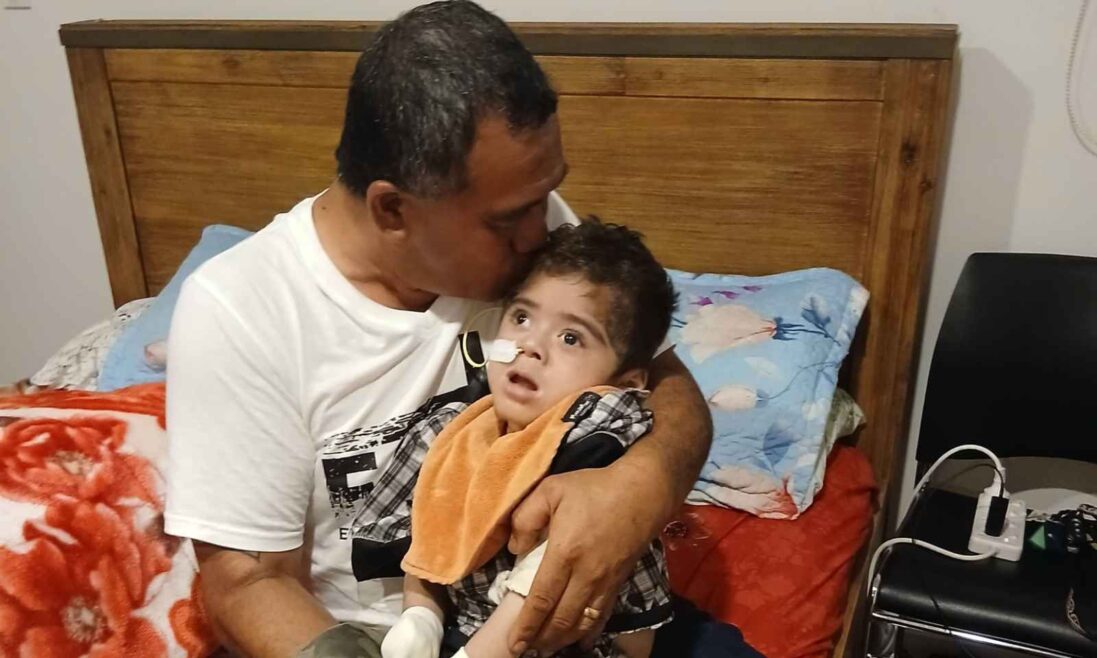
Jonathan has lost his sight, is unable to stand, and now relies on a feeding and medication tube, his mother Kalolaine told ABC in an interview.
He has been repeatedly admitted and discharged from hospital for treatment, which has included several significant surgeries.
In her interview with ABC, Kalolaine alleged that Jonathan “was misdiagnosed” and that no prompt action followed, though she did not specify which medical professional or agency she holds responsible for the alleged misdiagnosis.
Kalolaine expressed concern that a return to Tonga would leave her son without the specialised medical care required to support his condition.
Public Outcry and Policy Questions
Jonathan’s case has drawn widespread attention, with community advocates and members of the Tongan and wider Pacific diaspora questioning INZ’s approach to children with severe medical needs.
It has been reported that, following media coverage of the case, the Children’s Commissioner contacted INZ in an effort to intervene in Jonathan’s visa conditions.
Much of the public frustration stemmed from concerns that the government was prioritising financial thresholds over humanitarian considerations, especially in cases involving New Zealand‑born children.
The media outcry intensified after videos, interviews, and community posts highlighted the severity of Jonathan’s condition and the family’s repeated pleas for help.
Advocacy groups have argued that children in comparable situations should never face deportation risks, while the Green Party’s immigration spokesperson, Ricardo Menéndez March, has cautioned that although the new visa offers temporary relief to Jonathan’s family, significant uncertainty still remains.
The mounting public and political pressure prompted INZ to revisit the case.
Uncertain Future Ahead
INZ operations director Dominic Forde confirmed the granting of the two‑year visitor visa for Jonathan and acknowledged that there were shortcomings in INZ’s initial assessment that led to the decline of his earlier visa application.
Forde apologised and said INZ had failed to take into account that Jonathan’s treatment “is funded through ACC,” PMN reported.
“We acknowledge this has been a difficult situation for the client and his family and apologise for the upset this has caused,” Forde reportedly said.
While it allows Jonathan to remain in New Zealand for ongoing medical treatment, it does not offer a pathway to residency nor guarantee continuing care once the visa expires.
This uncertainty has left the family anxious, with their lawyer and supporters warning that Jonathan’s condition requires long‑term, specialised medical support that is currently unavailable in Tonga.
The family says their fight will continue until Jonathan has a secure immigration status that reflects the seriousness of his condition and the care he requires.