By Tim Brown of rnz.co.nz and is republished with permission
New Zealand’s first full rubber road has been laid in Glentunnel, in the Selwyn district.
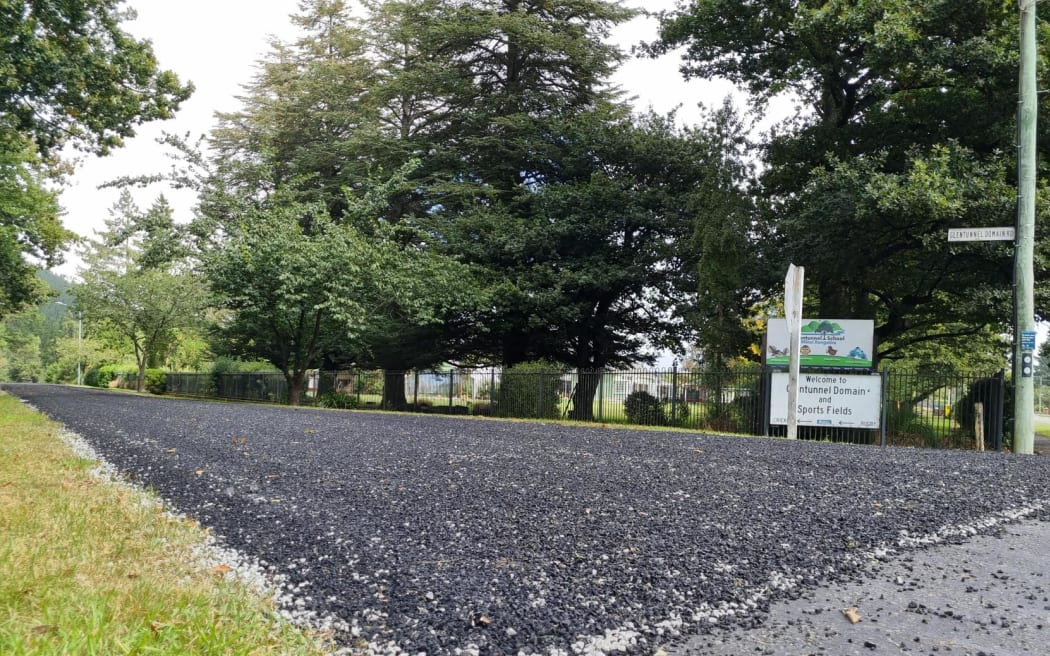
The local council is trialling three rubber surfaces on Glentunnel Domain Road with the possibility of rubber-based roads being used in other parts of the district.
One part of the road uses rubber chips, another uses rubber in the bitumen, and a third combines the two.
Selwyn District Council transportation delivery manager Steve Guy said the rubber came from recycled tyres – a lot of them.
“So this trial is … saving 29 tonnes of waste tyres – so tyres that would normally get sent from here up to the North Island, shredded and sent abroad. So that 29 tonnes of tyres if that had got incinerated, for instance, would equate to between 20 to 30 tonnes of carbon emissions. So we’ve saved that,” he said.

Selwyn District Council transportation delivery manager Steve Guy. Photo: RNZ / Tim Brown
“And ultimately there’s about 1797 mostly truck tyres that have gone into this trial, into this road.”
Cars, trucks, bikes and other road users would put the surfaces to the test over winter.
The rubber-based surface was longer lasting and cheaper over its lifetime despite a higher upfront cost, Guy said.
The product was produced by Treadlite.
Operations and engineering manager Richard Upperton said the company was in a position to rapidly increase production if demand increased.
“We could do hundreds of kilometres now, it’s just a case of how fast can the industry take it up and I’m confident we can keep up,” he said.

Treadlite operations and engineering manager Richard Upperton. Photo: RNZ / Tim Brown
Cost would probably prevent the product from ever becoming the standard surface on state highways, but it had applications due to it producing a quieter road surface, Upperton said.
But Selwyn Mayor Lydia Gliddon said there were financial reasons to be excited about rubber roads.
“If we can take this trial and this can be implemented across the country, there’s savings for everyone,” she said.
“This is a circular economy as well. So we’re not having to export tyres off anywhere else, we can make use of the product we have and we can import less bitumen.”
Gliddon said the project reflected Selwyn’s commitment to smart, innovative thinking.
“Selwyn is always looking for fresh ideas that improve value for money and stronger results for our communities. We are determined to not just be building more infrastructure but building better, smarter infrastructure,” she said.
More than six million tyres reached end of life in New Zealand each year while around 180,000 tonnes of bitumen – almost all imported – was used on roads annually.
The council would look to trial the surfaces in other locations and on wider stretches of road if Glentunnel Domain Road was a success.