By Ella Scott-Fleming, Open Justice reporter, rnz and is republished with permission
Teenager Silas Sims and his underage mates were sold alcohol at three different venues before he jumped into a car, drove drunk and crashed into a power pole.
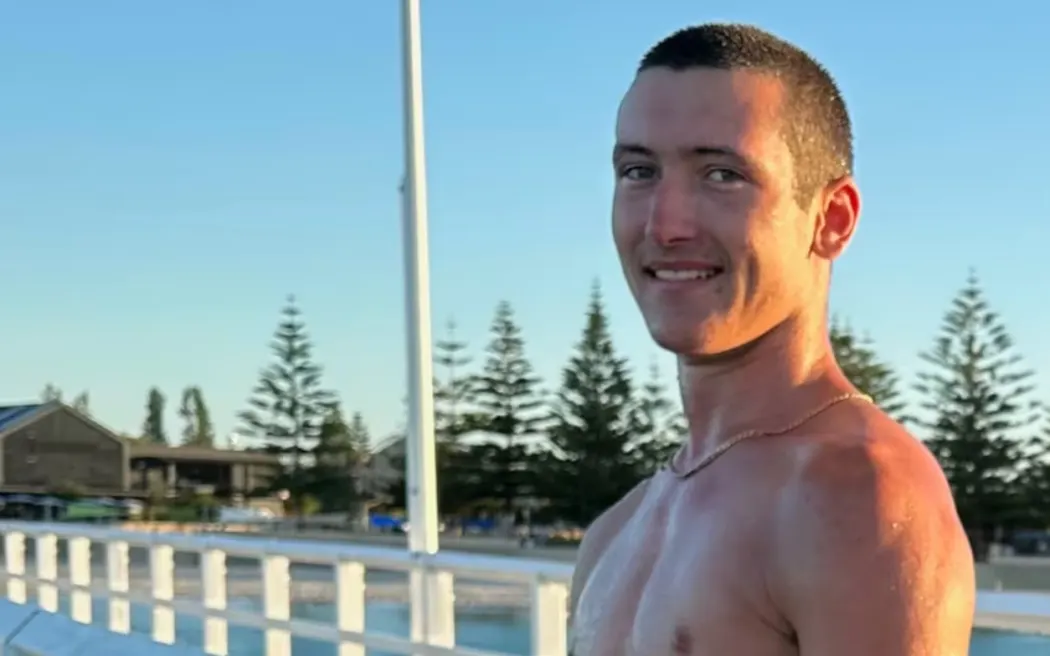
The much-loved 16-year-old was pronounced dead at the scene. His blood contained more than three times the legal alcohol limit for adult drivers.
Last month, eight months on from the fatal crash, the two bars that sold him drinks on 19 July last year had their liquor licences suspended. The liquor shop that sold alcohol to Silas and his friend three times that day has had its licence cancelled.
In making those decisions, the Alcohol Regulatory and Licensing Authority said a “disturbing” if not “alarming” feature of the case was the “apparent ease” with which the young men were able to buy drinks, without any efforts to check their ages.
Silas’ parents, who pushed for the venues to be prosecuted, have told NZME they are glad there have been repercussions.
While they did not want any businesses to be shut down, they were satisfied that the consequences were “part of deterrence”.
“We did want it to be a big case in so much as a wake-up call,” Silas’ father, Benjamin Sims, said.
“Those sentences have been that.”
Day-drinking in Matakana
On the day he died, Silas had made plans to meet up with two friends, whose names are suppressed, in Matakana, north of Auckland, to drink and smoke cannabis.
He first entered the Matakana Liquor Centre alone after 2pm and asked duty manager Tracey Brown where the Jägermeister was.
She showed him, and he bought a 700ml bottle of the 35 percent alcohol spirit. He was not asked for ID.
An hour and a half later, he and a friend arrived at popular music venue the Leigh Sawmill Cafe, in Leigh, 15 minutes’ drive northeast of Matakana.
Silas ordered two beers from owner and duty manager Edward Guinness.
Silas was asked his age; he told Guinness he was 18 and was not asked to prove it.
He failed at buying a second round, however, and was told he had “had enough”.
Then, the pair met up with a third friend and again entered the liquor store.
Silas bought a four-pack of rum and colas, while his friend bought an 18-pack.
They were served by two different staff members, including duty manager Johann Graas. Neither was asked for ID.
At 5.45pm, the pair went to the Matakana Village Pub, where they bought a rum and cola and a Guinness.
Silas’ two friends tried to dissuade him from driving home and tried to take his keys.
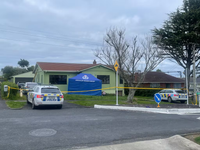
But he persisted and, while driving along Leigh Road, on a left-hand bend, he crossed the centre line, left the road and crashed into a concrete power pole in a paddock.
He was pronounced dead after being removed from his car by paramedics.
An autopsy showed he had 193 micrograms of alcohol per 100 millilitres of blood. Drivers under 20 aren’t allowed to have any alcohol in their system; the adult limit is 50mg.
Without fear

Silas Sims, 16, who died in a drunk-driving accident last year, was never asked for ID when buying alcohol, his mother said. Photo: Open Justice
Silas’ parents described their son as outgoing, charming and fearless.
“He could walk into a room and talk to anybody, from the day he could speak,” his father said.
“He didn’t have enough fear,” his mother, Sarah Sims, added. “… and that’s heartbreaking.
“It was just a lot of bad luck, and I so wish he was here.”
She told NZME her son looked older than he was.
“He is the kid that would get served. He looked 20.”
By the time he was served at the Matakana pub, he was “really, really rotten”, she said.
CCTV footage showed him stumbling around the pub.
His mother became emotional as she said she wished someone at the venue, after taking her son’s money, had also looked out for him.
Denying liability
The venues responded differently to the police applications to have their liquor licences suspended or cancelled.
The owners of the Leigh Sawmill Cafe and the Matakana Village Pub accepted the applications.
However, the Matakana Liquor Centre, owned by Micmat Ltd, denied liability.
Micmat owners John and Louise Walsh told the authority they had taken extensive steps to ensure alcohol was not sold to minors at their store.
There were multiple wall signs at the shop, even for the staff, and rigorous staff training and declarations to ensure that the law was followed.
Despite all these precautions, Silas and his friend were not asked for ID a total of three times in three hours, the authority found.
They were therefore found liable.

Warkworth teenager Silas Sims with his parents Sarah and Benjamin. Photo: Open Justice
The duty managers
Duty manager Brown, who sold Silas the bottle of Jägermeister, had her manager’s certificate suspended for two months.
The certificate of the store’s second manager, Graas, had already lapsed, and he had left the industry, so the application against him was dismissed.
Leigh Sawmill owner Guinness admitted breaching the law and contributing to Silas’ death.
He told the authority he was “embarrassed” and admitted he had “messed this one up”.
His certificate was suspended for eight weeks.
Christopher King, duty manager of the Matakana pub at the time, gave evidence that, when Silas came into the bar, he was complaining of a splinter in his hand.
There was a brief moment, as King shone a torch on Silas’ hand and got him tweezers, when they were in close proximity.
King told the hearing it never crossed his mind that Silas was a minor, as he appeared “broad-shouldered and confident”.
On reflection, he accepted he may have been distracted, but Silas had none of the “red flags” of drunkenness, such as smelling of alcohol.
The authority found it “difficult to understand” how King had not found Silas to be drunk, considering the teen left the pub and was killed 20 minutes later.
King’s certificate was suspended for 12 weeks.
Consequences
Leigh Sawmill’s liquor licence was suspended for two weeks from 14-26 April, and the business has closed for that time.
The Matakana Village Pub, which now has a new owner, had its licence suspended for 21 days, from 29 April to 19 May.
Matakana Liquor Centre’s licence was cancelled, and the company was given 21 days to close the business.
Its lawyer, Andrew Braggins, told NZME an appeal against the cancellation had been lodged.
A representative from Leigh Sawmill Cafe told NZME it felt the matter had been “dealt with” and did not wish to comment any further.
Deborah Body, who owned the Matakana pub at the time, said she deeply regretted the incident.
She had accepted all the applications the police made and co-operated “from the outset”.
“We knew what we had done,” she told NZME. “There was no question for us.”
The liquor store owners declined to comment.
Police said they could not speak about the proceedings as Silas’ death was still before the coroner’s office.
They could not say whether any criminal charges would be laid in future for the same reason.
Actioning change
Meanwhile, Silas’ parents say taking a more “positive” and active approach and effecting change has helped with their grief.
Benjamin Sims, a web developer, said he looked at his son’s bank statements after he died and noticed that purchases at alcohol stores were classed as “restricted” by the bank, because Silas was underage.
He has gathered signatures for a petition that is currently before a parliamentary committee to require banks to restrict or block such payments.
“[Banks] make billions of dollars a year. [They] can afford to do this.
“It’s not about alcohol; it’s about all restricted goods.”