
Vava’u, Tonga— A groundbreaking desalination project is transforming daily life on two of Tonga’s most remote islands, Hunga and Matamaka, by turning seawater into safe, drinkable water using renewable energy.
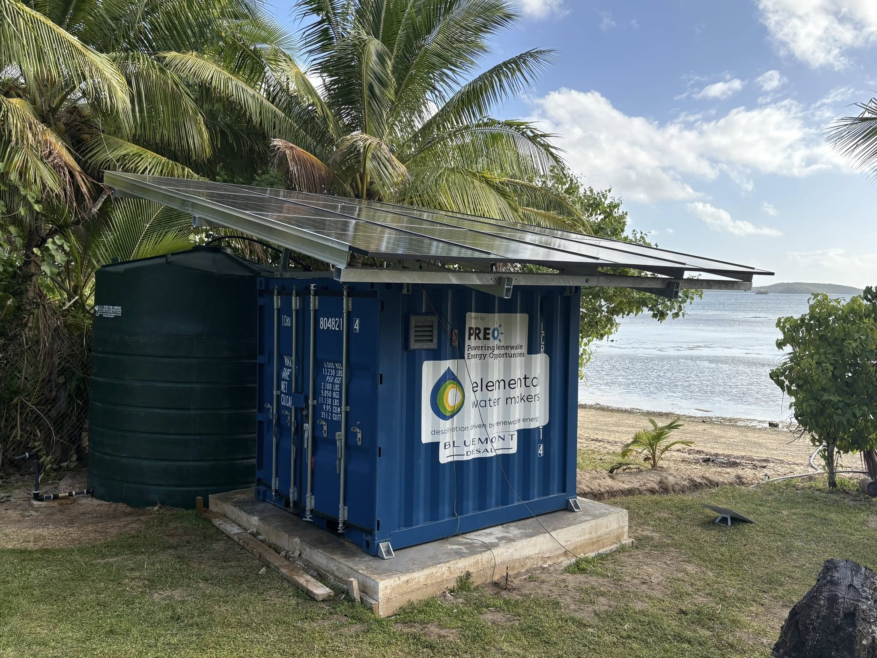
The Tonga Desalination Project, funded by Australian company Bluemont Pty Ltd and delivered in partnership with Pacific Technologies NZ, PREO, and the UK Carbon Trust, is now producing up to 4,300 litres of fresh water per day.
Powered entirely by solar energy, the system provides a sustainable solution to chronic water shortages that have long affected outer island communities.
Project manager Siaosi Lepuha Faka’osi, who leads the Tongan team, said the initiative marks a significant milestone in improving the resilience and wellbeing of rural communities.
“For many years, our people have relied on limited rainwater and have struggled through long dry periods. What we are seeing now is a complete change—seawater is being turned into clean, drinkable water that tastes as pure as rain,” Faka’osi told Kaniva News.
The project was developed in response to recurring water crises, including periods when access to freshwater sources was disrupted. Previously, communities depended on costly and logistically difficult water deliveries by boat, often funded by external support.
“This system gives independence back to the people,” Faka’osi said. “Instead of waiting for water to arrive, they can now produce their own supply every day, right on the island.”
The desalinated water is already being used for a wide range of domestic purposes, including drinking, cooking, gardening, livestock care, and hygiene. Residents say the availability of reliable water is expected to bring lasting improvements to health and living standards.
Miracle from Heaven Project
Faka‘osi described the project as “Ko e mana mei langi”—“a miracle from heaven”—a phrase that captures the inspiring leadership of Hunga and Matamaka in bringing the pilot project to life.
It will supply the two islands, among the most remote from Neiafu, the capital of Vava’u, with reliable drinking water, effectively ending water shortages and greatly improving living conditions and overall wellbeing.
The project also highlights the importance of renewable energy in addressing climate and infrastructure challenges across the Pacific. By harnessing solar power, the desalination units are able to operate sustainably without relying on expensive fuel imports.
“The beauty of this system is that it uses the sun—something we have in abundance—to solve one of our biggest challenges,” Lepuha said.
“It’s not just a technical solution, it’s a solution that fits our environment and our future.”
Outer islands such as Hunga and Matamaka face unique challenges due to their limestone geography, which limits natural groundwater availability. During droughts, the absence of reliable water sources can quickly become a humanitarian concern.
“When the water runs out on these islands, the situation becomes very serious very quickly. That’s why this project is so important—it provides security, dignity, and peace of mind for our communities,” Faka’osi added.
Engineering teams have now completed installation on the islands, and the water system is already in use. The project has been delivered in close collaboration with the Tonga Water Board, ensuring alignment with national water management strategies.
Officials hope the success of the pilot will pave the way for similar systems to be deployed across other vulnerable outer islands.
“This is just the beginning,” Faka’osi said. “If we can do this here, we can do it anywhere in Tonga where people are facing the same hardship. Our goal is simple—no community should have to suffer from a lack of clean water.”
The Tonga Desalination Project is being hailed as a practical and innovative step toward climate resilience, offering a model that could be replicated throughout the Pacific region.