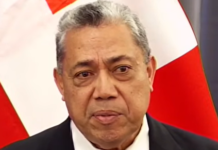
Nku’alofa, Tonga — The Supreme Court has dismissed an election petition challenging the Tongatapu 9 constituency result, ruling that bribery allegations against Member of Parliament Sevenitini Toumo‘ua were not proven.

In a judgment delivered on 17 April 2026, Acting Justice Langi found that petitioner Tevita Tukunga failed to establish beyond reasonable doubt that Toumo‘ua committed bribery during the November 2025 general election campaign.
Tukunga had sought to void the election result, alleging that Toumo‘ua unlawfully influenced voters by promising gifts, including lawn mowers, and by approving financial assistance to a community group.
Lawn mower allegation rejected
The primary allegation centred on claims that Toumo‘ua promised a voter a lawn mower during a campaign meeting in Nakolo shortly before the election.
The court accepted that Toumo‘ua told the voter to check with his secretary to see if any lawn mowers remained from those previously purchased using constituency funds. However, Justice Langi ruled this did not amount to bribery.
While the statement fell within the legal definition of “agreeing to give” a gift, the court found there was a credible and innocent explanation — that the respondent was responding to a request within the context of an existing community distribution programme.
The judge also raised concerns about the reliability of the key witness, pointing to inconsistencies in his evidence and concluding that his complaint appeared influenced by frustration at not receiving the mower.
Because a reasonable innocent interpretation remained open, the allegation did not meet the strict criminal standard required in election bribery cases.
Community funding claim fails
A second allegation involved a $2,000 payment to a local pickleball committee, which the petitioner claimed was intended to influence voters.
However, the court found that the funding had been approved in July 2025—months before the election campaign—and formed part of routine constituency assistance.
Evidence showed the payment was requested by the community and later distributed in September at the group’s request to support a sporting event.
Justice Langi ruled there was no evidence the payment was made to influence votes or targeted at a defined group of electors.
High legal threshold not met
The court emphasised that electoral bribery is treated as a “quasi-criminal” offence and must be proven beyond reasonable doubt.
In both allegations, the judge found the petitioner failed to exclude reasonable alternative explanations consistent with innocence.
Possible appeal under consideration
The court dismissed the petition and upheld Toumo‘ua’s election victory.
Tukunga was also ordered to pay legal costs, to be assessed if not agreed.
Following the decision, petitioner Tukunga told Kaniva News he was working with his lawyer to determine whether to appeal the ruling. No appeal had been filed at the time of publication.