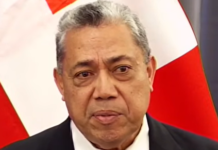
Prime Minister Fakafanua says it is likely that illegal vessels have entered Tonga’s waters undetected in the past due to limited monitoring capacity, as the government rolls out new maritime tracking technology aimed at strengthening surveillance of the kingdom’s vast Exclusive Economic Zone (EEZ).
His comments come amid ongoing concerns over Tonga’s illicit drug crisis, which has fuelled persistent questions about how drugs are entering the country and whether weaknesses in maritime monitoring may have enabled unauthorised vessels to operate undetected.
The revelation also coincides with repeated detections of vessels suspected of illegal fishing activity in and around Tonga’s EEZ by regional surveillance operations and fisheries authorities.
Reports from the Pacific Islands Forum Fisheries Agency (FFA) have identified multiple vessels of interest during monitoring operations across the region, highlighting the challenges Pacific nations face in policing their maritime boundaries.
Limited Maritime Surveillance Capacity
Speaking at a press briefing last week, Lord Fakafanua indicated that Tonga’s limited maritime surveillance capacity may have previously allowed illicit vessel movements within its waters to go undetected.
“I will not provide details, but let’s just say that illegal vessels may have entered our waters in the past and we were unable to detect them,” he said.
He said newly deployed technologies now being used by Police, Customs and Fisheries authorities have significantly strengthened Tonga’s surveillance capabilities, enabling authorities to detect vessels entering the kingdom’s waters and monitor maritime activity more effectively.
He said the new surveillance systems can now detect vessels entering Tonga’s waters, making it far more difficult for those involved in illicit drug trafficking or illegal fishing to operate undetected.
Although Prime Minister Fakafanua did not disclose the specific technologies being deployed, media reports indicate that maritime agencies across the Pacific are increasingly using advanced surveillance tools to combat illegal, unreported and unregulated (IUU) fishing and transnational smuggling.
These include artificial intelligence-powered satellite monitoring, radio frequency (RF) detection systems, and autonomous maritime drones capable of tracking vessel movements across vast ocean areas.
The technologies can help authorities identify and monitor vessels even when they attempt to evade detection by switching off their Automatic Identification System (AIS) transponders and effectively “going dark”.