Commentary – Heavy rainfall in Vavaʻu this week, following the government’s declaration of a nationwide drought emergency, has sparked a debate among Tongans over the relationship between God’s power, scientific knowledge and government responsibility.
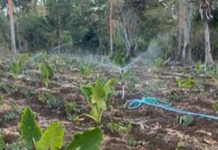
Photographs shared on social media showed residents collecting rainwater, a welcome development amid growing concerns over prolonged dry conditions associated with El Niño. Meanwhile, Haʻapai is reportedly experiencing severe drought conditions, with similar reports emerging from ʻEua, Tongatapu and the Niuas.
Some have ridiculed the government’s announcement, questioning the faith of those who rely on scientific predictions and interpreting the rainfall as evidence that God had proven the authorities wrong.
Others, however, argue that the intelligence and education through which scientists acquire their knowledge are themselves gifts from God.
The debate echoes arguments that emerged within Tongan communities during the COVID-19 pandemic, when religious beliefs, conspiracy theories and mistrust of government advice sometimes came into conflict with scientific evidence.
In March 2023, Kaniva News reported that while some Tongans prayed for God to destroy COVID-19 vaccines and those who developed them, others regarded the availability of vaccines as an answer to their prayers.
What the drought forecasts actually predicted
Speaking at a press conference on November 4, Tonga Meteorological Services director Laitia Fifita warned that the effects of El Niño could continue until June 2027.
“By the end of November, all of Tonga will be declared drought, we will all be under the red zone,” Fifita said, according to Matangi Tonga.
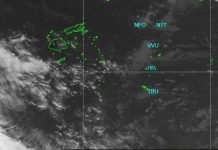
An official drought outlook released on November 9 subsequently forecast an 80–100 percent probability of very dry conditions across the Kingdom through January 2027.
The assessment was consistent with findings published by the World Meteorological Organization, which warned that the current El Niño could be the strongest since reliable records began in 1950.
On November 19, Acting Prime Minister Dr Viliami Uasike Latu declared a nationwide state of emergency, citing damage to water resources, agriculture and livestock, alongside potential threats to public health.
However, the meteorological forecasts concerned below-average rainfall over an extended period rather than a complete absence of rain.
Vavaʻu was also the only island group under a meteorological drought warning rather than a meteorological drought declaration when the November 9 outlook was issued.
An episode of heavy rainfall does not necessarily invalidate a longer-term drought forecast or establish that existing water shortages have ended.
Faith, science and government responsibility
Beyond the meteorological explanation, the controversy raises a theological question about whether reliance on scientific knowledge contradicts Christian faith.
Those emphasising divine intervention maintain that God has ultimate authority over nature and that human knowledge, however advanced, has limitations.
However, Proverbs 22:3 teaches that prudent people recognise danger and take precautions, suggesting that preparedness and faith are not necessarily incompatible.
Had the government disregarded scientific warnings and water shortages subsequently worsened, it could equally have faced criticism for failing to protect its people.
What makes the debate particularly compelling is that both sides invoke belief in God to support their seemingly opposing positions.
Rather than treating faith and science as competing forces, could Tongans give thanks to God for the rain while recognising scientific knowledge as one of the gifts through which humanity understands nature and prepares for its challenges?