Tonga is set to enter a new era of modern air travel, with immigration processing times expected to fall from 30 minutes to just seven and passengers able to board aircraft directly from the terminal through the kingdom’s first airbridge.
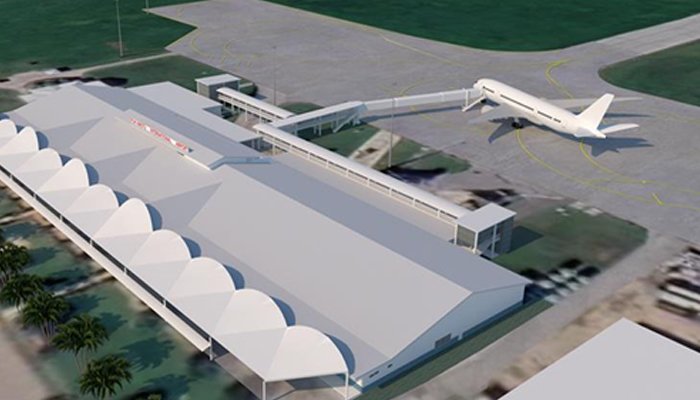
The two developments are key features of a TOP$42 million Japan-funded upgrade of Fuaʻamotu International Airport, designed to bring faster, safer and more convenient services to international travellers.
The project reached a major milestone this week with a groundbreaking ceremony attended by the estate holder Prince Tungi, Prime Minister Lord Fakafanua, members of Parliament and Japanese Ambassador to Tonga Inagaki Hisao.
Japan has committed up to ¥2.549 billion in grant assistance, with Japanese contractor Kitano Construction Corporation undertaking the work in close cooperation with Tonga’s Ministry of Infrastructure.
A preliminary assessment published by Japan’s Ministry of Foreign Affairs in August 2025 outlined several measurable improvements expected from the investment, including a reduction of approximately 77 percent in immigration processing times.
The installation of an airbridge will allow passengers to move directly between the terminal and aircraft through an enclosed passage, protecting them from adverse weather.
By 2031, annual international passenger movements are projected to reach 244,330, compared with 177,767 recorded in 2023, an increase of approximately 37 percent.
Annual international passenger flights are also projected to increase from 1,932 to 2,368, while the departure lounge’s hourly passenger handling capacity is expected to rise from 231 to 318.
The redevelopment will involve expanding and renovating the international passenger terminal, repairing damaged structural columns, extending the aircraft parking apron and constructing covered pedestrian areas outside the terminal.
These improvements address deficiencies identified in the Japanese assessment, including significant corrosion in parts of the terminal’s steel structures and congestion at check-in counters, security screening facilities, departure lounges and immigration checkpoints.
The assessment also found that the international apron could not accommodate two large aircraft simultaneously, creating operational risks in the event of unexpected mechanical problems.
The investment builds on Japan’s longstanding contribution to Tonga’s aviation infrastructure, dating back to 1989, when Japanese grant assistance funded the construction of the international passenger terminal and associated facilities.
Further improvements were undertaken in 2016 with World Bank assistance, including runway resurfacing and the construction of a new air traffic control tower.
However, growing passenger numbers have placed increasing pressure on the airport’s facilities, prompting the need for further expansion.
The latest grant agreement was signed on 19 August 2025 between the Japan International Cooperation Agency (JICA) and the Tongan government under former Prime Minister Dr ʻAisake Valu Eke.
JICA originally outlined a 41-month implementation period, including design and procurement work, with the Japanese government’s assessment anticipating completion in 2028.
Beyond improving passenger convenience and aviation safety, the redevelopment is expected to support Tonga’s economic growth, particularly through the expansion of its international tourism sector.