Tonga’s inter-island ferry, the MV ‘Otuanga’ofa, has departed Auckland this afternoon April 1.
Crowds gathered on the wharf to wave goodbye to crew members of the government’s owned vessel.
Some Tongans in Auckland made use of the opportunity of a shipment fee waiver when the ‘Otuanga’ofa returns to send vehicles, boat and goods to their families in the kingdom.
The ‘Otuanga’ofa arrived in Auckland in September 2022. It is expected to arrive back in Tonga next week Friday 7.
Tonga’s Minister of Transport told a press conference in late January that when the ferry arrived in New Zealand some unforeseen mechanical and electrical issues were identified which were not addressed when the ‘Otuanga’ofa was being repaired in Fiji in 2018.
Ship history
The ‘Otuanga’ofa was given to Tonga by the Japanese Government in October, 2010 to replace the Princess Ashika, which sank with the loss of 74 souls.
In January 2012 the ‘Otuanga’ofa hit the MV Sitka twice at the Queen Salote wharf in Nuku’alofa while trying to dock. Damage was estimated at UAS$50,000.
Last year the Fiji Sun reported that the ferry was having a new rudder fitted at the Industrial & Marine Engineering Limited (IMEL) floating dock in Suva.
Tonga’s Prime Minister Hu’akavameiliku Siaosi Sovaleni is advocating for the issue of sky-high tertiary education fees for Pacific students studying in New Zealand to be addressed.
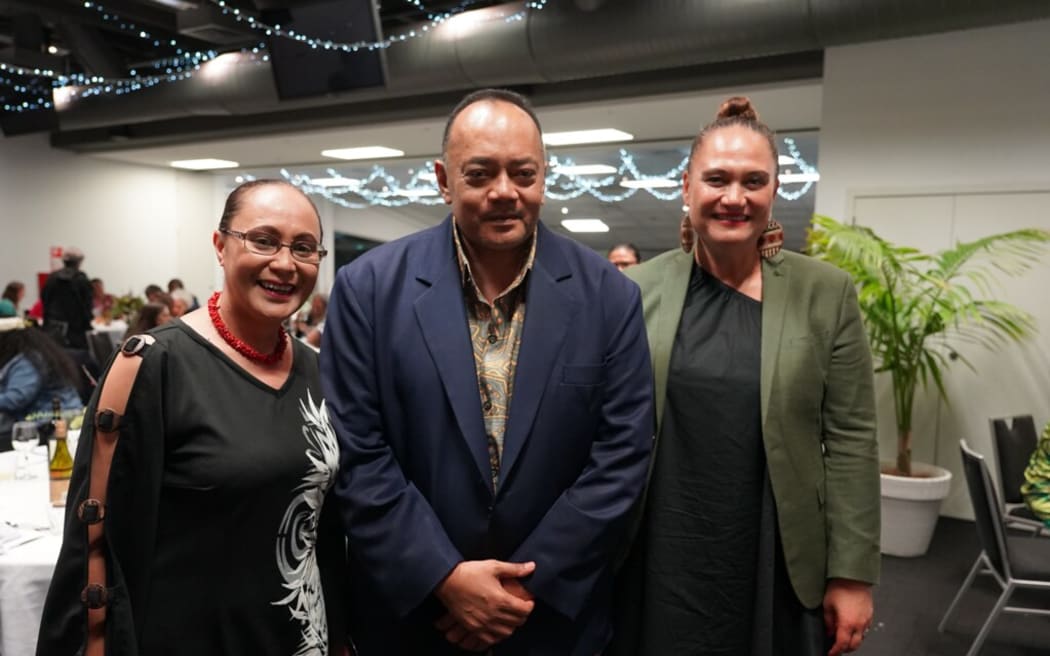
New Zealand MP, Jenny Salesa, Tongan PM Hu’akavameiliku Siaosi Sovaleni and New Zealand Deputy Prime Minister Carmel Sepuloni meet at the Inaugural Conference of Pacific Education Ministers. Photo: Supplied/MFAT
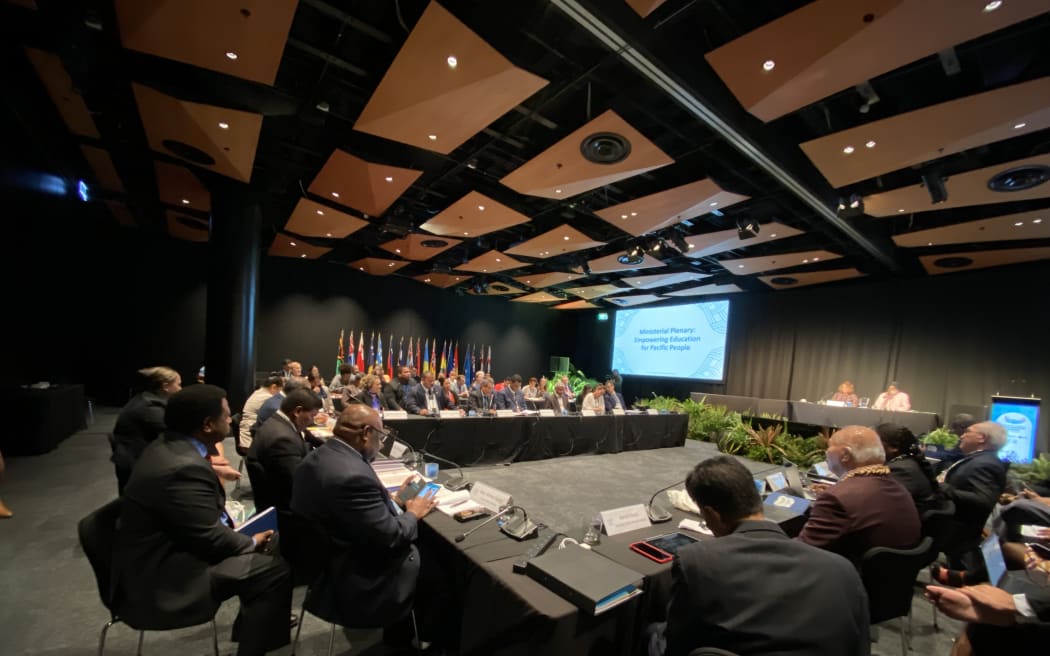
Hu’akavameiliku noted his concerns when he met with New Zealand’s Education Minister Jan Tinetti at the inaugural Conference of Pacific Education Ministers (PEM) held in Auckland last week.
This is not the first time the issue has been brought up by the Tongan leader.
Earlier this year, he told media that he has reservations around tertiary fees with the New Zealand high commissioner.
But now he has escalated the matter to the leaders’ level.
School fees at universities in Australia and New Zealand are high for Pacific students at the moment, Hu’akavameiliku said.
He said different fee structures applied to resident and international students.
Pacific students were on the international list and that meant they had to pay higher fees to be able to access higher education in Australia and New Zealand.
Tinetti said Hu’akavameiliku was not the only leader to have raised similar issues with her.
She said she is not ruling out changes being made to make it more affordable for Pacific students to study in Aotearoa.
But she concedes that it would be a massive change.
“I absolutely understand the issues that he is talking about. Let’s see if we can find a way forward,” she said.
“I have had similar discussions with other ministers here as well. This is something that we have discussed as a collective and I have committed to everyone in this room that we will continue to have those conversations.”
Pacific education ministers talanoa at Inaugural Conference of Pacific Education Ministers in Auckland New Zealand. Photo: RNZ Pacific/Lydia Lewis
Curriculum, teacher shortages, inclusivity
Education ministers from other nations also flagged issues and priority areas which they felt were crucial at the conference.
Curriculum development, inclusive education policies, teacher shortages, and women’s participation were high among the concerns.
Niue’s Education Minister Sauni Tongatule welcomed New Zealand government’s efforts to prioritise inclusive education for Pasifika students.
Last year, the New Zealand government funded the Vagahau Niue language app and progress was made to implement Gagana Tokelau and Vagahau Niue in the New Zealand curricula.
Jan Tinetti said it will be around three years until it is fully operational.
Potential for student exchanges needs to be explored
Papua New Guinea’s education minister Jimmy Uguro wants Pacific nations to ramp up teacher and student exchanges.
Uguro said there have been such programmes in the past but they came to a halt due to the covid pandemic.
He said for Pacific educators to be united, sharing knowledge and culture through exchanges was vital.
“Teachers from PNG can come to New Zealand and the Cook Islands and other places, so we see a culture and we are on the same page. Students can also do the same.”
“Now it is not happening because of covid-19 and the other challenges,” Uguro said.
Tinetti said she would like to explore teacher and student exchanges.
The Pacific Islands Forum Secretary-General Henry Puna said, “without education to drive economic growth, Pacific nations will remain dependent on others to finance development goals”.
Meanwhile, the conference also saw the establishment of an education ministers’ network.
“It’s basically a communication platform whereby we can continue the discussion, there are a whole lot of issues in education that we need to discuss, and we can’t cover it in two or three days,” Hu’akavameiliku said.
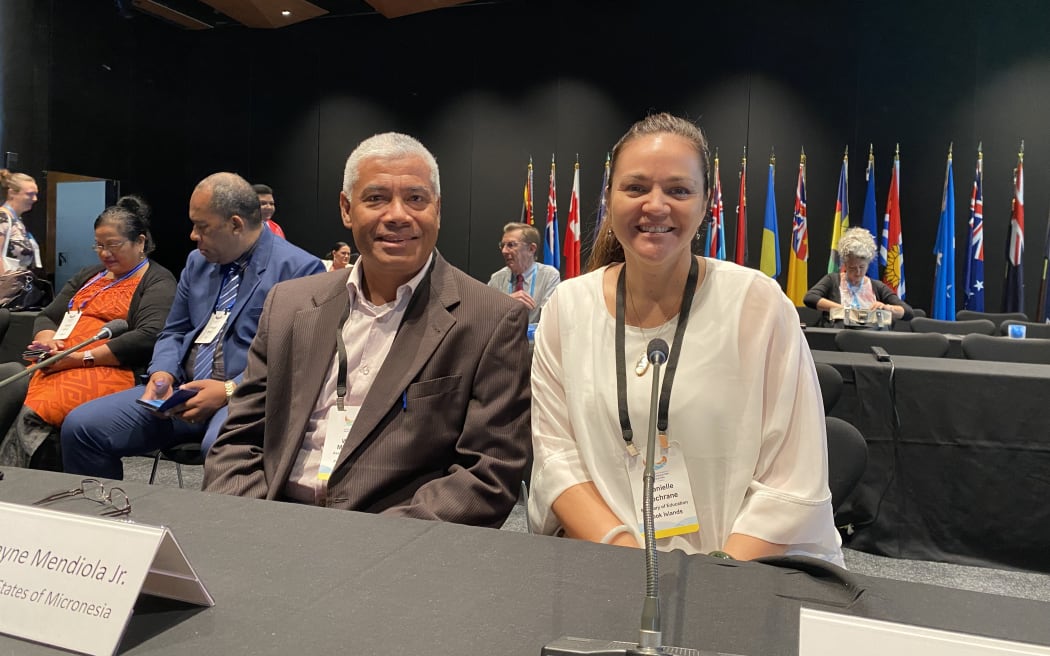
Assistant Secretary at FSM Department of Education Wayne Mendiola and Cook Islands Ministry of Education Secretary, Danielle Cochrane. Photo: RNZ Pacific/Lydia Lewis
Epidemiologist Michael Baker has urged eligible Kiwis to get the new bivalent Covid-19 booster to stay better protected from Omicron as New Zealand heads into winter.
The new booster is available from tomorrow for anyone aged 30 or over, and anyone at an increased risk of severe illness from Covid, provided it’s been six months since their last booster or positive test and they’ve completed their primary course (two doses).
It does not matter how many previous booster doses that person has had.
It has been available since March 1 for people aged 16 or over who hadn’t yet had their first booster, and for people at an increased risk of severe illness from Covid who have not yet had their first or second booster.
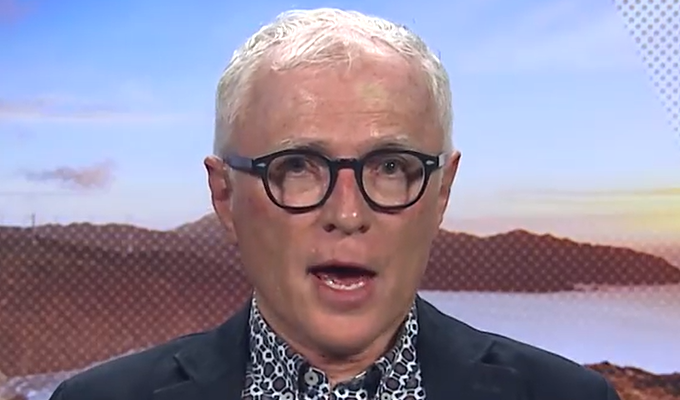
Baker told Breakfast “we’re entering our fourth wave of Covid-19 infection in New Zealand”.
“It’s a smaller wave than the previous three but… it’s the biggest infectious disease killer still in New Zealand,” he said.
“Technically it’s still a pandemic but it’s definitely not an emergency any more,” he added.
But with winter on the way, the new booster is a “welcome advance” in the battle against Omicron, he said.
“It’s got a second component that’s matched to the Omicron variant that’s circulating, so that gives much better protection and it produces a broader range of antibodies, it reduces your chance of getting seriously ill and dying from this infection,” Baker explained.
“A bit like the way the flu vaccine is revised every year or two to keep ahead of the range of flu viruses, this is doing the same thing, and I think we’re moving now to potentially having an annual Omicron injection just like with a flu vaccine.
“That just reflects the fact that we have what’s called waning immunity, so we need to boost that, and also the fact that the virus keeps evolving and we have to modify the vaccines to keep ahead of it.
“I just really hope that people will get this new booster now that it’s available.”
Asked what kind of uptake could be expected, Baker said that ideally 90% of eligible Kiwis would get the additional dose.
“We did very well with the primary course, that’s the two injections, so hopefully we can get there with the booster.”
It comes as this year’s flu vaccine is also available from tomorrow.
Flu vaccines are free for people most likely to get seriously ill. Anyone aged over six months can get one.
FAKAMATALA FAKATONGA
Kuo fakalotolahia ‘e he epitemolosisi ko Michael Baker ‘a e kau Kiwi kuo ‘atā ke nau huhu ‘i he huhu pusita fo’ou bivalent Covid-19 ke malu’i kinautolu mei he omikoloni ‘i he fakaofi mai ko eni ‘a e fa’ahi ta’u momoko.
E ‘atā ‘a e pusita fo’ou ko eni ‘apongipongi kia kinautolu ta’u 30 mo laka hake ha taha ‘oku ‘oku fakalalahi ‘ene puke lahi mei he Koviti, koloa pe ke osi ‘a e mahina ‘e ono mei he’enau pusita fakamuimui, pe tesi positivi ka kuo fakakakato ‘a e ongo ‘uluaki huhu malu’i ‘e ua.
‘E ‘ikai lau ia pe ko e huhu pusita ‘e fiha ‘a e taha ko ia ki mu’a’.
Na’e ‘atā ‘eni talu mei Ma’asi ki he kakai ta’u 16 pe laka hake ka ne teeki ma’u ‘enau fuofua huhu pusitaa’, pea mo e kakai fakalalahi ‘enau puke he Koviti mo kinautolu te’eki fakahoko ‘enau pusita ‘uluaki pe ua.
Ne fakaha ‘e Baker ki he Breakfast kuo hu atu ‘eni ‘a Nu’u Sila ki he kau peau hono fa ‘o e Koviti’.
Ko e ki’i kaupeau si’isi’i ia ‘i he peau ‘e tolu ki mu’a … ko e mahaki pipihi tamate lahi taha ‘eni ‘oku kei Nu’u Sila.
I he lau fakatekinikale ‘oku kei panatemiki ka ‘oku ‘ikai kei hoko ko ha fiema’u fakavavevave, ko ene lau ia.
Ka ‘i he kei fononga mai ‘a e fa’ahi ta’u momoko, kuo hoko ‘a e pusitaa ko hano talitali tomu’a ia ‘i hono tau’i ‘o e ‘omikoloni’.
Oku ne ma’u ‘e ia ‘a e komiponeni hono ua ‘e lava ke ne fakafepaki’i ‘a e fotunga fo’ou e Omikoloni ‘oku kei filo holo, ‘a ia ‘oku lahi ange ai ‘a e malu’i lelei pea ne fakaai ha ‘enitipoti lahi ange, fakasi’isi’i hono faingamalie ki he puke lahi mo mate mei he pipihi’, ko Baker ia.
Oku mei hange pe ia ko e founga ‘oku toe fakafo’ou’aki ‘a e huhu malu’i fuluu’ he ta’u taki taha pe taki ta’u ua, ke tō mu’a ma’u pe teuteu ki he vailasi, pea ‘oku tatau pe ia mo ‘eni, pea oku ou tui ‘oku tau unu atu ‘en ke fakahoko ha huhu malu’i ‘omikoloni fakata’u tatau pe mo e fuluu’.
I hano ‘eke ki ha fakafuofua ki ha tokolahi o kinautolu ‘e ma’u faingamalie ne pehe e Baker i he anga e fakakaukau e ‘i he peseti ‘e 90 o kinautolu kau Kiwi ‘atā ki ha toe huhu tanaki.
Hoko mai foki eni hili e mahino ‘e kamata ‘a pongipongi ‘a e ‘ata ‘a e huhu malu’i fuluu’.
Oku ta’etotongi pe ‘a e huhu malu’i fuluu ki he kakai ngalingali te nau puke lahi. Ko ha taha pe oku laka hake he mahina ono hono ta’u ‘oku ‘atā.
A statement from the Ministry for Infrastructure about the government’s troubled Lulutai airline means there is no hope of replacing it, an aviation industry leader said today.
Minister of Infrastructure and Civil Aviation Seventeen Toumo’ua
The letter, which was leaked to Kaniva News, signed by the Ministry’s chief executive (CEO), Lōpeti Heimuli, contains just three sentences.
“There is currently an ‘Open Markett’ for domestic air services in Tonga. The policy is restricted to Tongan-based air operators.
“As such, the Ministry will not be liable or responsible to any person(s) who may rely on the information provided therein.”
The letter is addressed ‘To Whom it May Concern’ and is dated February 27.
The CEO of Fly Niu, ‘Atu Finau, said of the letter: “It means they will not approve any other airline to compete with them”.
The Minister of Infrastructure, Sevenitini Toumoua, is also Minister for Civil Aviation.
Real Tonga Airlines CEO Tevita Palu said the letter stated there was an open sky policy in Tonga, so anyone could apply to operate an airline in Tonga, but this was restricted to an air service provider who was based in Tonga. He asked whether this meant Lulutai and Real Tonga.
“The person who wrote and signed the letter was under direction from the responsible policy maker, in this case the Minister of Civil Aviation,” Palu said.
“The writer of this letter also made a statement which contradicted the first statement by saying that the Ministry was not responsible and liable to what already stated on this letter.
“Basically, he said do not rely on information provided by Civil Aviation of Tonga. In other words, he said do not count on advice by the Ministry.
“I am disappointed, but not surprise to read such a letter”
Palu said there was a conflict of interest between the airline policy maker and the regulator, who also happened to be the airline operator.
“We need a Government that is transparent, accountable and responsible for their actions and directions,” he said.
As Kaniva News reported recently, Finau and Palu have said they would work together to provide an airline service to replace Lulutai.
In 2020 veteran Tongan journalist Kalafi Moala reported that Finau and Palu’s companies could have put a service into the air in a few days if there had been a joint venture with the government.
“Real Tonga has the expertise and experience, as well as the equipment, and with Government’s deep pockets, there is a high probability of a successful public/private venture,” Moala said.
“But it became clear by the day that Government did not want a joint venture. They wanted to start their own airline.”
Lulutai’s twin-engined Saab passenger aircraft undergoing lengthy repairs and Australia is funding a replacement service operated by Fiji Airlines.
This has reignited questions about the airline’s safety which surfaced when it abruptly replaced Real Tonga.
At the time of its launch Moala alleged that claims by the government that the Pacific Aviation Safety Office (PASO) was involved in certifying Lulutai were false. He said PASO had denied any involvement
Tongatapu 2 MP, Sēmisi Sika questioned the safety of the airline’s aircraft to provide commercial flight in Tonga.
Hon. Sika asked Cabinet about the safety of the airline’s airworthiness. He said he was surprised to learn it took only three months for Lulutai Airline to be issued with an AOC.
The former government issued a press release quoting Finance Minister Tevita Lavemaau saying Lulutai was “safe and reliable to provide air services in Tonga.”
The press release said Lulutai had undergone testing flights, which were required to demonstrate that it could provide safe and reliable flights.
The then Prime Minister, Pōhiva Tu’i’onetoa, said the new airline would be issued with an Air Operation Certificate (AOC).
The three roading contractors involved in a drawn-out dispute with the Ministry of Infrastructure have filed another civil case.
Minister of Infrastructure Seventeen Toumo’ua
The Minister for Infrastructure, Seventeen Toumoua, told Talaki newspaper a court appearance had been set for July.
He would not go into details, saying only that the contractors wanted the court to make a decision on what he described as things to which they have rights.
These proceedings are different from the contempt of court case which Kaniva News reported recently. That will go to court in April.
The Minister told Talaki the Ministry had won a case against a contractor who claimed he was owed $TP1.9 million by the previous government.
The Ministry’s internal auditor reviewed the contractor’s invoice and decided that the Ministry should only pay $TP900,000. The contractor disagreed and took the Ministry to court. The court ordered to pay the contractor only $TP826,000.
Two of the contractors, who had been hired by the previous government, were terminated by the court.
It is understood they were Inter Pacific Ltd owned by ‘Etuate Lavulavu, who had lost his political position and the Island Dredging Ltd owned by former Minister of Police Lord Nuku’s son.
It is believed that Island Dredging Ltd quarry ran out of rocks and Lavulavu was then in prison so his company was inoperative. The Ministry did not terminate the remaining company , the City Engineering and Constructions Ltd since it was still operative. The Ministry paid TP$150 to this contractor rather than the original $TP70 agreed.
The Minister said that under the original contract the government was paying $TP70 for a truck load of rocks, which was too little.
He said he met Miska Tu’ifua, who represented one of the three contractors and told him the government wanted to continue the roading works. Miska suggested increasing the price to $TP150 and the Ministry agreed. The contractors wanted to alter the original contract, which was approved by the former Pohiva Tu’i’onetoa’s government. The Minister suggested to Tu’ifua they should agree to a new contract of their own. After this, negotiations stalled.
The government then turned to the other quarry companies and purchased rocks from them, paying $TP200 per truckload to one company and $TP300 to another.
The three original contractors who signed with the former Tu’i’onetoa government then took the Ministry to court.
The Minister said the Ministry had complied with a Supreme Court order to reinstate the two contractors. The Minister said he then wanted the contractors to measure each truck load of rocks to make sure it agrees with the contract which said it must be a five tonne load of rocks or 3.8 cubic metre.
The Minister also wanted the contractors and the Ministry to reconcile the number of trucks on a daily basis. The Minister said he told the companies not to leave it long before they submitted their number of trucks to be paid to the Ministry.
The Minister confirmed that the original contract allows these contactors to provide rocks only for the government’s roading works.
Displaced families of ‘Atatā Island, who were affected by the 2022 January volcanic eruption and tsunami, faced catastrophic floods this morning.
Homes were flooded and people had no way out of their houses. Photos/Supplied
The newly built homes had been affected by an extreme weather event.
A resident took to Facebook to vent her frustration after her property was overwhelmed by the flooding.
Tolofi Folauhola Folau said she had messaged the Ministry of Infrastructure’s chief executive and invited him to have a chat about the situation.
She asked why the Ministry had removed so much soil and left the area in a pit.
She said the place was “flooded”.
“Although we were in an island, it was clear we lived on dry land”, Folau said.
She said living in their new village during the flooding was just like living in the sea.
She invited the chief executive to look at the photos taken at the flooded scene.
“Thanks for the assistance but it is not safe,” Folau said.
Folau described her reaction to the negative impact of the flooding in Tongan as “I remember Egypt with the straw”, referring to the complaint by the Israeli in the Holy Bible in which they told Prophet Moses it would have been better if the Lord had just killed them in the land of Egypt rather than taking them out into the desert to make them all die from hunger.
Commenters on Folau’s post on Facebook were concerned.
Car stuck in the flood. Photo/Supplied
“The government should urgently address this. And there should have been drainage, spillways and outlets in place. That should have been included in the plan designed for the place”, one commenter wrote.
The commenter said this showed the careless type of works commonly seen in Tonga when it came to incidents like this.
The new village at Masilamea on Tongatapu, on land allocated by the estate holder Prince Ata, was opened in December 2022.
It was 11 months after the destruction caused by the natural disaster before 22 displaced families started moving to this new village.
At the time, the Prime Minister said: “The government has worked with partners and all stakeholders to try and provide homes for the people of ‘Atata”.
Funding came through the Hunga-Tonga Hunga-Ha’apai Reconstruction budget from overseas donors and partners, in partnership with the Government of Tonga.
The Atatā islanders have also received fishing boats to help recover their livelihoods.
The flooding affected most of Tongatapu main island and images uploaded to Facebook showed flood waters entered houses in some other places.
There was no report of injuries.
The flooding came after Tonga Met Services warned earlier during the day that heavy raining and flooding would affect Tongatapu, ‘Eua, Ha’apai and Vava’u.
It announced this evening (March 28) that the weather warning had been cancelled.
It appears that many of our readers are deeply unhappy about the choice of words in the headline of our story reporting the death of former Prime Minister Pohiva Tu’i’onetoa.
Former Prime Minister Pōhiva Tu’i’onetoa. Photo/Kaniva Tonga News
In particular, they were upset by our use of the word “disgraced.”
Kaniva News has been attacked and accused of disrespecting Hon. Tu’i’onetoa because of our headline. Unfortunately, some Tongans have wrongly interpreted the word to mean that Tu’i’onetoa brought disgrace to the country.
This is what the word means: Having fallen from favour or a position of power or honour; discredited.
This is not the first time Kaniva News has used the word “disgraced” and certainly not the first time we have used it to describe the late Hon. Tu’i’onetoa. In this case we have been wrongly criticised by people who thought the word only has one definition which means to discredit or to bring shame
Kaniva News stands by its headline. There is no better word to describe Hon. Tu’i’onetoa’s tenure as Prime Minister, his fall from power and the loss of people’s respect than “disgraced”. While he was Prime Minister we clashed fiercely on a number of issues, especially when it came to his controversial policies. Things reached a point where his political advisor, Etuate Lavulavu, swore at Kaniva’s Editor. The Editor treated his behaviour ethically and professionally.
We have already responded in Tongan on our Facebook account and explained our side of the story, but since some people shared their comments to other Tongan Facebook groups, we thought it would help to explain what we have done here.
Our critics have reacted emotionally to our story. That is their right and they have a right to express their views. The fact is that the former Prime Minister fell from his position in the premiership election and lost the public respects he had received when he was a Prime Minister. However, that was an issue that affected him, not anybody else. His actions did not bring shame or discredit on any other individual, family member or the kingdom.
We understand that the former Prime Minister’s friends and those who were closest to him may feel upset by our use of the word disgraced. We believe we were simply telling the truth. It would be unethical, unprofessional and untruthful for us to pretend that Hon. Tu’i’onetoa had not fallen from grace, that many of his actions had been questioned and that major issues like the roading project had not been mired in controversy.
We do not judge Pōhiva Tu‘i‘onetoa as a man or as an individual. That is a privilege reserved for those closest to him. However, Kaniva News is entitled – and as a news organisation is obliged – to report on Pōhiva Tu‘i‘onetoa as politician and Prime Minister and to pass judgement on how well he discharged his office.
NIWA has been called in to investigate evidence of snapper in the Hauraki Gulf suffering from milky white flesh syndrome.
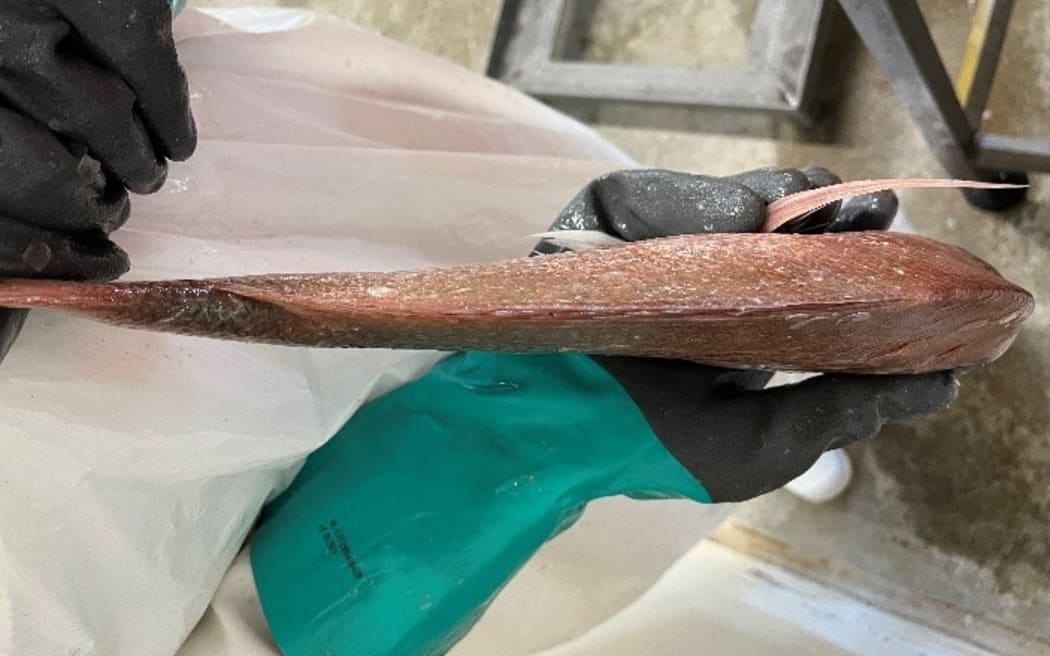
A fish affected by milky white flesh syndrome showing a skinny tail. Photo: NIWA / Rikki Taylor
The Ministry for Primary Industries (MPI) said the syndrome had been affecting snapper in the Hauraki Gulf and East Northland areas, and were reports of it in other finfish species, such as trevally. The condition can cause nutrient deficiencies.
A report from Biosecurity New Zealand, obtained by Newshub, said some snapper were showing signs of prolonged starvation.
MPI has contracted NIWA to investigate commercial catch samples, and recreational catch is also being monitored.
NIWA fisheries scientist Dr Darren Parsons said there had been reports of the syndrome in halibut in Alaska, but it was relatively new in New Zealand.
In August 2022 fishers began reporting the flesh of snapper was white, opaque and in some cases mushy and even slimy, he said.
“We can see externally, when looking at extreme cases of these fish, they’re visibly skinny, the tissue has sunken away.”
Though some have suggested trawling or sediment runoff was to blame, Parsons said the cause wasn’t yet known.
“I don’t see fishing having changed in a way that would contribute to this, but it’s speculation at this stage.”
There was less commercial fishing in the Hauraki Gulf than five years ago, while the syndrome had been reported recently, he said.
One possibility was that it was the result of El Nino and La Nina climate cycles, which change the water mixing and availability of nutrients.
Food safety tests had not shown up any reason why the fish would be unsafe to eat, he said.
“From what I’m hearing from fishers, though, they’re not as palatable … and as a result the commercial fishery has moved away from the areas where these fish have been most commonly caught, which at this stage is the Hauraki Gulf, especially the inner Hauraki Gulf.”
The East Northland coast and a little of the Bay of Plenty were also affected, but snapper stocks on the west coast of the North Island and Nelson were not.
The number of new Covid-19 community cases has remained steady over the past week, while there are 37 more virus-related deaths.
The numbers cover the week from Monday, March 21, to Sunday, March 27.
The rolling average of new daily cases is 1605, as compared to 1593 the week prior. A total of 11,258 new community cases have been reported – up slightly from 11,171 in the previous period.
Thirty-seven more people with the virus have died – compared to 24 deaths last week.
Of the people who have died, one was in their 30s, two were in their 40s, one was in their 50s, two were in their 60s, eight were in their 70s, 13 were in their 80s, and 10 were aged over 90.
Of these people, 18 were women, and 19 were men.
Two were from Northland; 10 were from Auckland region, one was from Bay of Plenty, one was from Lakes, one was from Tairawhiti, one was from Hawke’s Bay, two were from Taranaki, two were from MidCentral, one was from Whanganui, four were from Wellington region, nine were from Canterbury, one was from South Canterbury, two were from Southern.
The number of deaths confirmed as attributable to Covid-19, either as the underlying cause of death or as a contributing factor, is 2662.
Last week’s positive cases are located in Northland (301), Auckland (950), Waikato (757), Bay of Plenty (431), Lakes District (239), Hawke’s Bay (352), MidCentral District (361), Whanganui (116), Taranaki (296), Tairāwhiti (84), Wairarapa (146), Capital and Coast (740), Hutt Valley (353), Nelson Marlborough (440), Canterbury (1970), West Coast (139), South Canterbury (157) and Southern District (1217).
As of midnight Sunday, there were 211 people in hospital with the virus.
Seven people were in an intensive care or high dependency unit.
FAKAMATALA FAKATONGA
‘I he’ene a’u mai ko ia ki he uike kuo ‘osi, ko e toko lahi ko ia ‘o e kau puke ‘i he Kōviti – 19 ‘i he komiunitī ‘oku kei toko lahin pē. pea ko e mate ai ‘e toko tlungofulu mā fitu [37] ‘oku ‘i ai ‘enau fekau’aki mo e vailasi. Ko e toko lahi ko ia ‘oku lau ia mei he Mōnite 21 ‘o Ma’asi ki he Sāpate 27 ‘o Mā’asi ai pē. Ko e toko lahi leva ‘o e kau puke fo’ou faka’aho ko e toko tahaafe onongeau mā nima [ 1605], pea ‘i hono fakattau ki he uike kimu’a ko e toko tahaafe nimangeau hivangofulu mā tolu [1593]. Ko e toko tahamano tahaafe uangeau nimangofulu mā valu ia ‘o e kau puke fo’ou ‘i he komiunitī kuo lipooti mai, ‘a ia ‘oku nga’unu hake ai ki ‘olunga mei he toko tahamano tahaafe teau fitungofulu mā taha ‘i he fo’i vaa’i taimi peheni pē kimu’a. Ko e kau pekia, ko e toko taha na’e ta’u tolungofulu tupu, toko ua ta’u fāngofulu tupu, toko taha ta’u nimangofulu tupu, toko ua ta’u onongofulu tupu, toko valu ta’u fitungofulu tupu, toko hongofulu mā tolu ta’u valungofulu pea toko hongofulu ta’u hivangofulu tupu. Ko e toko hongofulu mā valu ‘o e kau pekia ko ‘eni ko e kakai fefine pea toko hongofulu mā hiva ko e kakai tangata. Ko e toko ua mei Northland, toko hongofulu mei ‘Aokalani, taha mei he Bay of Plenty, toko taha mei he Lakes, taha mei Tairawhiti,, taha mei Hawkes Bay, ua mei Talanaki, ua mei MidCentral, taha mei Fanganui, fā mei Uelingatoni, nima mei Kenitapeuli, taha mei saute Kenitapeuli, pea ua mei Southern, Ko e toko uaafe onongeau onongofulu mā ua [2662] ‘a e toko lahi ‘o e kau mate kuo fakapapau’i na’e fekau’aki ia mo e Kōviti – 19, ko ‘enau mate tu’unga ‘i ai pe ‘i ai ‘ene fekau’aki mo ia. Ko e kakai ‘e toko tolungeau mā taha [301] na’e ma’u kinautolu ‘i Northland, toko hivangeau nimangofulu ‘i ‘Aokalani, fitungeau nimangofulu mā fitu ‘i Waikato, fāngeau tolungofulu mā taha ‘i Bay of Plenty, uangeau tolungofulu mā hiva ‘i he vāhenga Lakes, tolungeau nimangofulu mā ua ‘i Hawkes Bay, tolungeau onongofulu mā taha ‘i he vāhenga MidCentral. teau hongofulu mā ono ‘i Fanganui, uangeau honofulu mā ono ‘i Talanaki, valungofulu mā fā ‘i Tairawhiti, teau fāngofulu mā ono ‘i Wairarapa, fitungeau fāngofulu ‘i Capital mo e Coast, tolungeau nimangofulu mā tolu ‘i Hutt Valley, fāngeau fāngofulu ‘i Nelson Marlbough, tahaafe hivangeau fitungofulu ‘i Kenitapeuli, teau tolungofulu mā hiva ‘i West Coast, teau nimangofulu mā fitu ‘i saute Kenitapeuli, tahaafe uangeau hongofulu mā fitu ‘i he vāhenga fakasaute. ‘i he tuapō ko ia ‘o e pō Sāpate, na’e ‘i ai ‘a e toko uangeau honofulu mā taha ‘i falemahaki ko e ma’u ‘e he vailasi. Ko e toko fitu leva na’e ‘i he ‘iuniti tokanga’i makehe