Toa Samoa players are being hailed for uniting Samoans in Samoa and around the world as they head into the final of the Rugby League World Cup against Australia’s Kangaroos in Manchester this weekend.
Toa Samoa fans in Māngere
Speaking from Apia, the president of Rugby League Samoa, Tagaloa Fa’afouina Su’a, said it’s an “indescribable” feeling since last weekend’s thrilling golden point victory over England in extra time to win 27-26.
“I think the Rugby League World Cup is one of the best things that has happened in the last two or three years for our nation – not just here in Samoa but all around the world. All Samoans around the world and our Pacific island brothers as well and even in New Zealand too because New Zealand is our brother too.”
Tagaloa reflected on Toa Samoa’s dramatic defeat to England 60-6 in the opening game of the tournament.
“It was tough to absorb at the time and you know I think it was a blessing in disguise for us to have that, I would say, very embarrassing situation. But it’s footie. It’s not how we start it, it’s how we end it. It’s always in the boys’ mind, and to move on from that situation after that game.”
The main thing is that everyone in Toa Samoa is “on the same page” with whatever challenges and issues they face.
“We don’t hold any grudges against each other, we just put everything on the table you know – be honest with each other, open-minded and that’s the atmosphere. I think that’s the main thing. No use going into a battle with your mind not free, not relaxed.”
As thousands of Toa Samoa supporters globally gear up to celebrate with car parades and marches, Tagaloa described it as an emotional time and asked fans to celebrate responsibly and respectfully.
“I think that’s how most people feel – very emotional and overwhelmed with what the team has done. It’s just unbelievable.
“In the hearts of Samoan people, the boys are already champions. They don’t have to prove anything else to the world or us. All they need to do is prove it to themselves – that they can go do that extra mile. Just one more.”
The Black Ferns players will each receive a $25,000 bonus payment following their victory in the women’s Rugby World Cup final last week.
New Zealand Rugby said in a statement to RNZ on Friday that it had worked with sponsors to create a bonus pool of almost one million dollars.
It said bonuses were not included in the Black Ferns’ contracts but considered the payments appropriate given the scale of the teams’ success, culminating in an upset of England in the final at Eden Park.
“New Zealand Rugby, with generous contributions from key partners Sky, Adidas and ASB, have created a bonus pool of almost $1m to acknowledge the incredible success of the Black Ferns team and management at the Rugby World Cup,” NZ Rugby chief executive Mark Robinson said in the statement.
“Each member of the Rugby World Cup winning Black Ferns squad will receive a bonus payment of $25,000.
“While bonuses were not built into Black Ferns contracts, NZR considers that they are appropriate given the scale of the Black Ferns’ RWC campaign.
“Accordingly, as we have done previously in respect of All Blacks RWC bonus payments, we have worked with commercial partners to create a pool that rewards the players for their historic and special performance.”
The Black Ferns drew a full house of 42,000 fans to the final at Eden Park on Saturday, which they won 34-31.
A New Zealand audience of more than one million people are reported to have watched the final, although World Rugby confirmed the tournament made a substantial financial loss.
Two police officers have been sent to prison by a Supreme Court judge who said they punched and kicked the 21-year-old man – smashing his tooth out in the process – during an attempt to restrain him.
A Tongan Police officer. Photo/Kaniva Tonga
The Vava’u officers Viliami Halalilo and Tukumo’ui Havea were sentenced at Neiafu Supreme court on November 15 after Justice Nicholas Cooper found them guilty of common assault on October 28 by assaulting Liuaki Fainu.
The officers responded to a call for assistance from Lusinita Fainu at Ha’alaufuli. Lusinita told Police she and her drunken husband had a quarrel and wanted him removed from the address.
The officers arrested Liuaki and took him to the police station.
Liuaki did not want to be placed in the cells so he fled and got to the Taunga residence before he felt two people had grabbed him.
One of the officers punched the back of his head before he fell to the ground dizzy. It was Halalilo who had thrown that punch, the court was told.
Both officers were wearing safety boots.
A witness told the court that ” Viliami Halalilo kicked the person lying down to the top of his head. He saw this with his own eyes. A kick to the head a punch and then stood this person up and used his knee to hit his head”.
The witness said it was at that point that Mr. Havea arrived and kicked and punched the head of Liuaki.
“The punch connected with the top of his head. During that time, the person being assaulted apologised and begged the officers to stop, saying he was their brother”.
Liuaki was later released and he went to a dentist who checked the injuries to his mouth. The dentist told the court one of Liuaki’s permanent teeth at the top and front was missing.
“She agreed that a kick could cause that and the type of force required would have had to be big”, a court judgement read.
Justice Cooper said: “I consider, his tooth was knocked out” but Liuaki “was not best placed to see who was doing exactly what out of the two people he says were present”.
The judge also said that given the circumstances, “it is quite impossible for me to say who kicked his tooth out”.
Both officers denied the witnesses’ accounts and claimed they did not assault Liuaki.
Justice Cooper said the evidence provided by Sila and Liuaki “was totally independent, I am absolutely sure that their accounts are the correct and honest version of what took place”.
In convicting the officers Mr Cooper said: “Both Mr. Halalilo and Mr. Havea I find guilty of common assault by punching and kicking Mr. Fainu”.
Mr Cooper later sentenced the duo to six-months imprisonment each with the last two-months suspended for one-year, on conditions.
As New Zealand faces a third wave of Covid-19 infections, people continue to have questions about the disease and how it affects people. These questions are reflected in research being undertaken by international experts in several countries. These are some of the main questions being looked at around the world.
1. Why do people respond so differently to the virus?
According to research at Georgetown Centre for Global Health Science and Security individual responses are the key to how severely they will react to the virus. This could depend on the amount of virus people are exposed to and any pre-existing health problems they may have.
2. What’s a sufficient level of immunity?
Research at the University of Chicago suggest that knowing how well a partially immune population could transmit the virus at any time could dramatically improve forecasting and the potential for effective policy responses. Work is being done to determine what combination of factors, whether antibodies alone or other physiological factors, help establish the right level of immunity to repel Covid-19 infection and create asymptomatic cases.
3. How common will reinfection be? (Or, how long will immunity last?)
Although Covid-19 reinfection has been rare so far, experts want to know whether it will become more common and how severe those infections will be.
This has led to discussions about whether protection against infection is comparatively short-lived, but protection against severe disease is longer lasting. Work at the University of Florida suggests that vaccine-induced protection lasts for a different period than infection-induced protection.
4. How will variants affect efforts to curb Covid-19?
Like the rest of the world, New Zealand has been subjected to infections by a number of Covid variants. Researchers around the world are looking at what effect variants have on the effectiveness of vaccines and treatment. This includes work at the Institute of Social and Preventive Medicine in Switzerland on whether virus changes will be severe or occur in smaller steps.
5. What is long Covid, and who is most at risk?
Some Covid-19 patients have reported debilitating and varied symptoms weeks and months after recovering. Researchers at Yale University are studying long-term symptoms to help design therapy.
6. How does Covid-19 interact with children?
Most children appear to avoid severe cases of Covid-19 and experts want to know whether the disease is spread more easily and how often among children with asymptomatic infections.
7. What proportion of transmission do asymptomatic people account for?
Because asymptomatic and pre-symptomatic people may unknowingly infect others, some experts have shown interest in discovering how infectious these patients are.
8. Can we pinpoint who may become a superspreader?
Experts at the University of Texas want to know whether it is possible to identify which people are at risk of becoming superspreaders. Although they represent a minority of infections, they account for the majority of viral transmission.
9. What can genetic sequencing tell us about the virus?
A number of international experts are investigating whether it is possible to use genetic sequencing to predict how the virus might change in the future. Dutch experts at the Erasmus Medical Centre are researching the use if genomic markers for key properties that should cause concern.
10. What is the effect of non-medical interventions?
The use of a range of measures to limit the spread of Covid-19 such as social distancing, mask-wearing, and school closures are being investigated at the University of St. Andrews in Scotland. However, because the measures were often put in place at the same time it is hard to determine which were effective.
11. How does SARS-CoV-2 differ from its cousin, SARS-1?
Experts want to know how SARS-CoV-2 differs from its cousin, SARS-1. They are investigating why SARS-2 can replicate in people’s upper airways, making it more easily transmissible than SARS-1, which replicates in cells deeper in the lungs. This could help drug manufacturers learn how to prevent upper airway replication of the virus and determine the risks posed by other coronaviruses that may jump from an animal species
12. Where did SARS-CoV-2 come from?
Although experts largely agree that the source of the virus was almost certainly a bat, they still do not know how a bat virus managed to find its way into humans.
Police in Tonga have asked the public not to comment further on the incident in Vava’u last week in which a house fire claimed the life of a 46-year-old woman.
The victim, Tongan-New Zealand born Tu’imala Unise Moala, died in what an inquest determined as a result of smoke inhalation and severe burning.
Her body was laid to rest last week, a day after her death. But her family said livestreamed videos taken at the scene of the house fire appeared to have hold some important clues about Moala’s cause of death.
Their concerns triggered Police to reinvestigate the incident.
Tonga Police said that a team of investigators from Tongatapu were currently in Vava’u working together with local Vava’u Police in the new investigation.
“We are working closely with our counterparts from NZ Police that are currently part of the capacity development program working with Tonga Police”, it said.
Tonga Police are also in close contact with the deceased’s family members in Tonga and New Zealand.
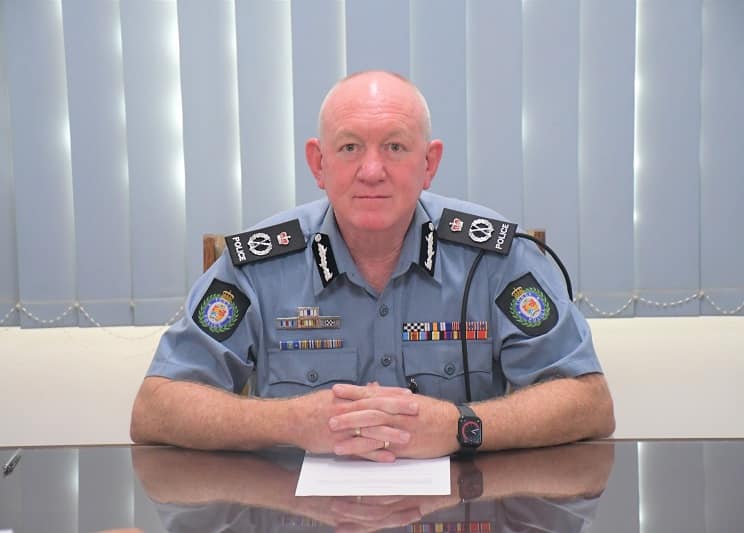
Police Commissioner Shane McLennon has asked the public to refrain from commenting further and sharing misleading and out of context remarks.
“I ask members of the public to please respect the deceased and her family by giving them the respect they deserve at this very difficult time. Investigations are ongoing and we are gathering all necessary information on the matter”, the Commissioner said.
“We are grateful to those members of the public who have come forward and provided information, including video material. I am also asking that if anyone has information that they feel would be useful to assist Tonga Police in this matter, to bring that information forward to the Neiafu Police Station or to contact Tonga Police Headquarters, as opposed to engaging in on-line commentary.
“I would also point out that Tonga Police and local Vava’u officials have followed established procedures as required by the Inquests Act, immediately following the house fire and subsequent loss of life. Having said that, Tonga Police intend consulting with our colleagues at the Attorney General’s Office on options to update legislation as the current Inquests Act dates from 1912 and was last amended in 1988.
“Tonga Police want to ensure that current best practice models are used where sudden deaths occur and which require further investigation or inquiry.
“We need to constantly review and update policy, procedure and legislation to reflect the times in which we live.
“I want the public to have confidence that Tonga Police are open and accountable, that we all need to work together, and that Tonga Police need the help and assistance of the communities that we serve, to keep our communities safe and secure”.
Selaima Fakaosilea is co-accused of importing methamphetamine and participating in an organised criminal group. Photo/DENISE PIPER/STUFF
The family of Jonah Lomu have repeated denials that convicted drug smuggler Selaima Faka’osilea was the late Tongan rugby star’s niece.
Selaima Faka’osilea, 30, and a co-accused, Stevie Norua Cullen, 36, were tried in the High Court at Whangārei on charges of importing methamphetamine and participating in an organised criminal group.
On June 12, 2016, police in the Far North seized 449kg of methamphetamine from a campervan and 52kg buried in sand dunes on Ninety Mile Beach. The haul was worth almost half a billion dollars.
The mainstream media has repeated the claim about Faka’osilea’s alleged relationship in stories this week about a prison guard who resigned after having a relationship with her.
According to the reports the prison guard formed a romantic relationship with the prisoner and smuggled items into the women’s prison in Wiri where she is serving a 12 and-a-half year sentence.
Cousins of Lomu and people who know Lomu and Faka’osilea’s families well from church and cultural communities have said the convict is not Lomu’s niece.
They accused the mainstream media of using Lomu as click bait to attract readers by publishing negative stories about the Pacific Islands community.
They said this was done to gain popularity and ignore the Pacific Islands community’s achievements.
Stories published by Stuff and the New Zealand Herald as well as NewstalkZB have been criticised, with some people telling Kaniva News they were blocked from the Herald’s Facebook page after they questioned its sources.
In 2019 Kaniva News quoted Jonah Lomu’s younger brother Sione as denying the media reports and confirming they had no blood connection with Faka’osilea.
At the time Stuff described Fakaosilea as a first cousin of Lomu, although she referred to him as “uncle.”
It said the mother-of-one “comes from a proud sporting family and was a relative of late rugby star Lomu.”
A 15-year-old driver has been arrested after a 21-year-old man was killed in a hit-and-run in ‘Eua on Friday 11.
Tonga Police. Photo/Kalino Lātū
The victim from Angahā sustained severe head injuries and later died at the hospital around 9.14 pm that night, Police said.
Police arrested the unlicensed driver from Futu not long after the incident.
“He was driving in vehicle L15821 heading east on the main road and had swayed too far to the left side and hit the deceased from behind, who was on foot heading in the same direction, forcing him off the ground, and landed on his head”.
The driver failed to stop after the impact.
The doctor confirmed that the deceased died from the severe injuries to his head.
The driver had been remanded in custody while investigation continues.
This road fatality has pushed Tonga’s road death toll so far this year to 12.
Police said: “We are approaching the festive season and Tonga Police is urging the public to be more responsible for safety on our roads, not only for their safety but also for the safety of other road users. It should always start from home, where parents and adults should never allow unlicensed and/or intoxicated persons to get behind the wheel. Road safety is everyone’s responsibility”.
A woman who allowed her vulnerable husband to die has failed to overturn her conviction in the Court of Appeals.
Last year, Malia Li was sentenced to five years in prison after her husband, Lanitola Epenisa, developed sepsis and died in a filthy room that contained maggots, mice and urine.
Malia ‘Unalotokipea Li. Photo/Facebook
Li was charged with manslaughter for failing to provide Epenisa with the necessities of life, a major departure from the standard of care expected of a reasonable person with her responsibilities.
Witnesses who had visited Epenisa described a “really disgusting smell,” like a “dead animal”. He had suffered multiple strokes in the years before his death in 2016, had serious diabetes, high blood pressure and kidney failure.
The couple had refused assistance from support workers, with Epenisa requesting that his carer not be a stranger. Li accepted responsibility for his care.
Visitors remembered Epenisa looking skinny and smelling of urine, always sat in a La-Z-Boy chair that he rarely left. On multiple occasions, Epenisa’s family had found him home alone, was not fed and looking malnourished.
He had been visited by an aunt and cousin the day before he died, who told the courtroom that the carpet around his chair was soaked. Epenisa’s aunt offered to bathe him, but Li had refused – asking her to come back the next day.
Epenisa passed away in the early hours of the next morning, after his severe bedsores became rapidly infected.
A police investigation found a black plastic bag that contained maggot-infested clothing, and when they moved his La-Z-Boy chair a mouse ran out into the room.
The jury concluded that Li had become aware of the bedsores with enough time to prevent infection, but chose not to do so. Li had also filed an appeal against her sentence, but it was abandoned.
University of Otago epidemiologist professor Michael Baker told First Up it was hard to tell when this wave of Covid-19 would peak.
“This is very much our third Omicron wave. Fortunately, it’s not as intense as the first two but it’s certainly happening.”
Long term effects of Covid-19 were the biggest worry at the moment, he said.
“They’re grouped into Long Covid but there are obviously a whole lot of things that go on and I think the neurological effects can be very severe and quite disabling.”
Every time you are reinfected, you run the risk of Long Covid, he said.
“So I think we still want to minimise the amount of times people get this virus.”
There were three ways people could protect themselves, Baker said: stay up to date with vaccinations, take precautions at social events and isolate and test if you have symptoms.
People were currently missing out on vaccines that they were entitled to, he said.
“We know that over 50 percent of people who are eligible for their fourth dose haven’t had it yet.”
The government said it has no plans yet to launch an annual Covid-19 vaccination booster for the majority of people.
But Baker said he was sure it would look at an additional booster in 2023 before winter, when waning immunity became a “real problem”.
“The big thing is, whatever booster we have next year will probably be called this bivalent vaccine, so it’s going to cover the original strain and Omicron as well.”
“It’s not so surprising to see those [Covid-19] numbers go up at the moment,” Covid-19 modeller Dion O’Neale told Morning Report.
Since restrictions were reduced, a number of new variants which could evade immunity had arrived on NZ shores, O’Neale said.
Currently, about two-thirds of cases would be missed in reporting, he said.
That’s because some cases were asymptomatic and would not be testing, he said.
“Around 30 to 40 percent of infections are asymptomatic.”
Masking, particularly indoors, and good ventilation were important, he said.
“Everything that worked well for us in the past still works well for us, even with those new variants.”