Home Blog Page 36

Crown Prince renominated as Foreign Minister amid failed bid to block US travel sanctions

Crown Prince Tupouto’a ‘Ulukālala has been renominated as Tonga’s Foreign Minister, a decision announced just one day after the United States imposed a travel ban on Tongan nationals last week.
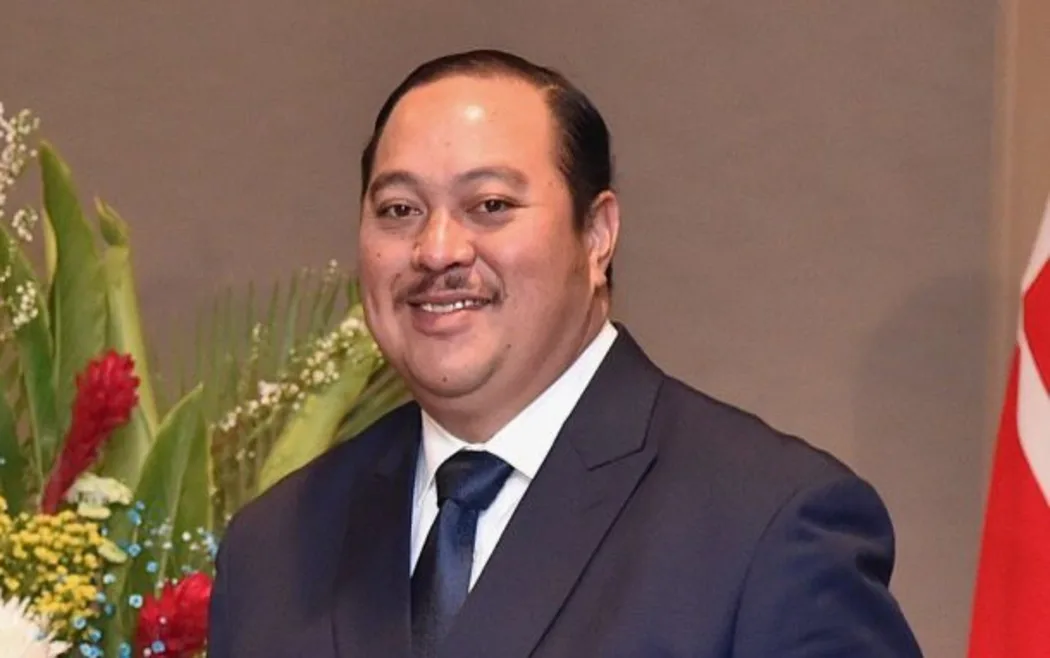
Crown Prince Tupouto’a ‘Ulukālala

In a June advisory to 36 countries including Tonga, the State Department said its concerns included the inability of some governments to produce reliable identity documents due to a lack of competence or cooperation.

It also cited “questionable security” of certain passports and failures to repatriate nationals or accept deportees from the United States, regardless of nationality.

The Trump Administration gave Tonga and these countries 60 days to respond to its demands.

Then Prime Minister Dr ‘Aisake Eke confirmed in July that the government had received warnings and demands from the Trump Administration. He described it as “alarming.”

He said the matter had been referred to the Crown Prince and his Ministry of Foreign Affairs, and that they were working closely with the US Embassy in Nuku’alofa on the issue.

Last week’s US announcement indicated that Tonga did not meet the required standards, and the government’s earlier efforts did not achieve the intended outcome.

The development has prompted questions among observers about what actions the Crown Prince and his ministry took that failed to satisfy the Trump administration, leading the United States to proceed with the travel ban.

Prime Minister Lord Fakafanua confirmed the Prince’s renomination to the media last week, although his full Cabinet lineup was not announced until before Christmas.

Under Tonga’s constitution, the Prime Minister nominates Cabinet Ministers, who are then formally appointed by the King.

The US Partial Restrictions

The restricted visas include B-1 and B-2, which are US non-immigrant visas for temporary visits such as business or tourism. F, M, and J visas are non-immigrant categories for students and exchange visitors.

More than 48,000 people identified as Tongan alone in the United States, according to the 2020 US Census.

When including those who reported Tongan heritage in combination with other races or ancestries, the total exceeds 78,000.

Tonga’s ties to the United States are closely linked to the Mormon Church, the kingdom’s second-largest denomination, which is headquartered in Salt Lake City, Utah. The Church’s Brigham Young University–Hawai‘i enrols about 100 Tongan students each year. In 2011, 78 Tongans were reported to be attending the university.

The administration announced that the visa restrictions will take effect on January 1, 2026, though speculation has emerged that elements of the ban may already be in place.

As Kaniva News reported, Tongan professor Tevita Ka‘ili of Brigham Young University claimed some parents in Tonga were unable to attend the December 12 graduation ceremony because of the travel ban.

Lineup Expected Soon

King Tupou VI of Tonga officially appointed Lord Fakafanua last week as the country’s new head of government.

The appointment of the kingdom’s 20th Prime Minister was confirmed through the presentation of the Royal Warrant at the Royal Palace in Nuku’alofa on the afternoon of December 18, 2025.

Lord Fakafanua secured the premiership with 16 votes, while former Prime Minister Dr ’Aisake Eke received 10.

The Constitution mandates a secret premiership ballot, leaving the public guessing about both the outcome and the allegiances of individual MPs.

The secrecy of the ballot and the absence of public campaigning to identify premiership candidates and what policies they have for the people have long been points of contention.

Lord Fakafanua’s election as premier drew celebration among his supporters, while reports circulated on social media accusing certain People’s Representatives of backing him.

Among those present at the appointment ceremony were People’s MPs, including suspended former Minister of Police MP Piveni Piukala, former Deputy Prime Minister Taniela Fusimalohi (‘Eua 11), former Deputy Prime Minister Semisi Sika (Tt2), MP Mo’ale ‘Otunuku (Vv 14), MP Lata Tangimana (Nu 17)and newly elected MP Fane Fotu Fituafe (Tt 6), the only woman in the current Parliament.

While attendance does not confirm voting patterns and the Prime Minister is expected to announce his Cabinet soon, speculation has intensified that these People’s Representatives were among Lord Fakafanua’s backers in the secret ballot—particularly Fusimālohi and Piukala, who served as ministers in former Prime Minister Eke’s Cabinet.

Unconfirmed reports on social media suggest that the noble bloc was also divided, with three members—allegedly Lord Tu‘ivakano, Lord Ve‘ehala, and Lord Tu‘ilakepa—appearing to have voted for Dr Eke.

Lord Fakafanua has pledged to unite the 26 MPs, saying he intends to reflect this in his Cabinet lineup by nominating the best candidates regardless of whether those MPs supported him in the premiership election.

Video shows guard choking, slamming woman at Tonga Hou’eiki Church feast

A feast at Tonga Hou’eiki Church, held this afternoon to celebrate the opening of its new hall in Tongatapu, descended into chaos after a woman was allegedly attacked for taking food from the feast tables without permission.

Screenshot from a video circulating online shows the moment a woman is grabbed by the neck and forced to the ground by a security guard during a church feast.

Footage circulating online appears to show a woman being grabbed by the neck and slammed to the ground by what appeared to be a security guard.

In a separate footage, the woman is seen interacting with a different man after an apparent attempt to take food. The man approaches, confronts her, and pulls her from her chair. The woman stands and resists, though the confrontation does not escalate further.

The footage also appears to indicate that she approached what was reported to be a front table reserved for VIP guests and took food from it.

It is reported that the woman took packs of bongo from the table, opened them, and spilled their contents while stating they were expired. The owner has reportedly denied this assertion.

One of the videos reviewed by Kaniva News appears to show the woman attempting to take food, while a girl seems to be assisting her, before a person—wearing a hi-vis jacket and reported to be a security guard—approaches and appears to attack her.

According to the video, the guard grabbed the woman by the neck and threw her to the ground.

The incident occurred while a man was delivering a speech during the celebration.

He was overheard urging calm, advising a response that was religiously consistent with church activities in light of the altercation.

It remains unclear whether police were called to the scene following the incident.

Kaniva News was unable to verify the authenticity of the videos independently.

Witnesses claim the altercation began when the woman attempted to fill a bag with food from one of the feasting tables without permission.

The videos have divided opinion on social media, with many questioning the use of force at a religious event, while others criticised the woman for engaging in kaifa‘o—a traditional practice of eating and taking food from tables to bring home for later meals.

“She was so disrespectful,” one user wrote, criticising the woman’s actions on Facebook.

Another defended her, saying, “She was just following our tradition—there was no need for violence.”

One commenter suggested that security guards should have assessed the woman’s psychological condition before using force against her.

“She should have waited until everyone else had the opportunity to eat before taking food away,” one commenter said.

Trump travel restrictions bar Tongan families from graduations, claims BYU-Hawaiʻi professor

Hawai’i – New U.S. travel restrictions are preventing Tongan families from celebrating major academic milestones with their children in Hawai’i, according to a Brigham Young University–Hawaiʻi professor from Tonga.

As Kaniva News reported earlier this week, the Trump administration has imposed partial travel restrictions on Tongan nationals to the United States, six months after warning the kingdom of possible action if it failed to meet specific U.S. requirements.

The proclamation extends partial travel restrictions and entry limitations to 15 additional countries, including Angola, Antigua and Barbuda, Benin, Côte d’Ivoire, Dominica, Gabon, The Gambia, Malawi, Mauritania, Nigeria, Senegal, Tanzania, Tonga, Zambia, and Zimbabwe.

According to the U.S. Overstay Report, Tonga recorded a B-1/B-2 visa overstay rate of 6.45 percent and an F, M, and J student/exchange visa overstay rate of 14.44 percent.

The administration announced that the visa restrictions for Tonga will take effect on January 1, 2026, despite speculation that a form of the ban was already being implemented.

Professor Tevita Kaili, who has taught Tongan students at BYU-Hawaiʻi for 20 years, voiced strong concern about the human impact of the policy.

“I am deeply concerned about the negative impacts of the current travel restrictions on my Tongan students, both those studying now and those in the future,” Kaili stated on Facebook.

While current students on J-1 and F-1 visas can continue their studies, the recently expanded restrictions have blocked their families from obtaining travel visas, the professor said.

Kaili pointed to the university’s December 12 graduation as a recent and painful example of the consequences.

For many Tongan families, attending a graduation is a crowning moment that represents a profound collective sacrifice and immense pride.

“Case in point, at our last BYU Hawaiʻi graduation on December 12th, the parents and relatives of my Tongan students were not granted visas to attend. It was truly disheartening!” Ka’ili said.

The administration cited the need to raise U.S. entry standards and bolster national security, suggesting the expansion was partly in response to the recent arrest of an Afghan national suspected of a shooting attack.

Critics contend the policy is overly broad and unfairly targets individuals from the affected countries.

For educators like Professor Kaili, the effect is direct and deeply personal, creating emotional strain for students and severing a crucial cultural connection at a key moment in their lives.

Brigham Young University–Hawaiʻi, owned by the Mormon Church, has long maintained strong ties with Tonga through the church, which is the second-largest denomination in the kingdom. In Fall 2011, enrollment was reported at 2,600 students, including 78 from Tonga.

Fiji woman lured by false job in Tonga; Trafficker sentenced to 7.5 years

Ashok Kumar, 58, of Fangaloto has been convicted and sentenced to seven and a half years’ imprisonment for trafficking a Fijian woman under the false pretence of employment.

The Supreme Court found Kumar guilty of one count of trafficking in persons for organising the entry of Miliana Raluve, 36, from Fiji to Tonga in October 2024.

He had lured her with a fabricated job offer at the Tanoa Hotel, promising a wage of $10 per hour.

A Desperate Search Exploited

According to evidence presented by Crown Counsel, Kumar contacted the complainant, a mother of three, on Facebook in September 2024. Capitalising on her desperation to support her family, he offered her the hotel job, paid for her airfare, and obtained her passport details under the guise of immigration processing.

Upon her arrival on October 4, the reality was starkly different. The court heard that Kumar did not resemble his Facebook profile, his home was not as described, and no employment existed.

Isolated and with no local contacts, the woman testified to feeling terrified when Kumar made three separate attempts to have sex with her, all of which she refused.

“She was misled by the defendant with false promises of employment,” Crown Counsel stated.

“She discovered upon arrival that the living arrangements were not as described and she had no relatives or friends in Tonga.”

Intervention and Arrest

After enduring several days of fear, the victim sought help from a cousin who is a police officer. Kumar was arrested on October 8 after the victim reported feeling unsafe and fearing for her life when he confronted her about her complaints.

In a police interview, Kumar admitted to arranging her travel but denied promising employment before purchasing the ticket—a claim the court rejected based on the evidence.

In a victim impact statement, the woman expressed her relief at Kumar’s arrest, stating she has since moved on with her life.

While she told the court she had forgiven him, she expressed shock that “someone of his age would act in such a manner.”

Sentencing

The Crown had recommended a starting point of 10 years’ imprisonment. In delivering the sentence, Justice Tupou KC considered the predatory nature of the crime, the victim’s vulnerability, and the breach of trust.

Kumar was ultimately sentenced to seven and half years. The final six months of the sentence are suspended for 12 months on condition that he does not commit any offence punishable by imprisonment. He must report to the probation office within 48 hours of his release and will be placed under probation.

The suspended sentence is intended to serve as a strong incentive for his rehabilitation upon release.

The conviction underscores ongoing regional concerns about human trafficking and the exploitation of vulnerable individuals through false promises of work.

Police close notorious Laulea Beach after tragic drowning of former boxer Semisi Kalu

Tonga Police have announced the temporary closure of Laulea Beach Resort at Fātumu following the death of a Tongan father from New Zealand who drowned while trying to rescue his sons.

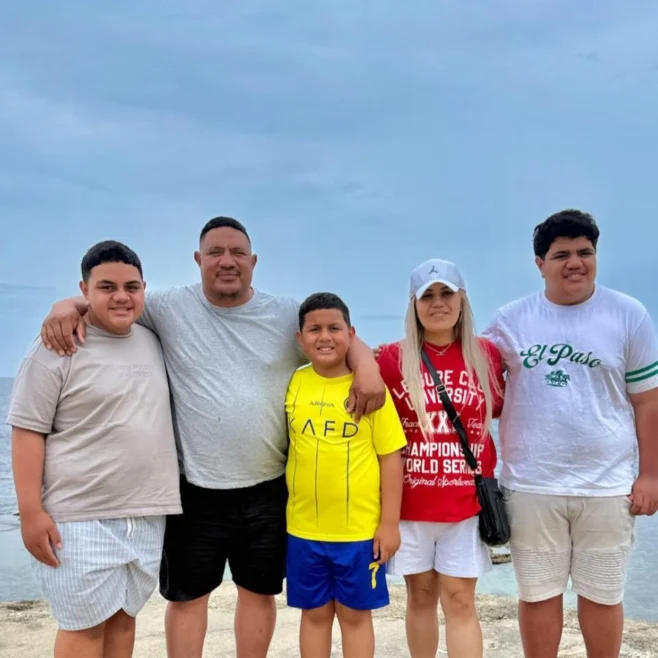
The family were enjoying a “beautiful” holiday before tragedy struck. Photo supplied via Stuff

The beach has been designated a Restricted Zone effective from Wednesday, 17 December 2025, at 4pm, under Section 125 of the Tonga Police Act.

Authorities said the closure will allow the Ministry of Police and the Ministry of Lands, Survey, Planning & Natural Resources to install safety signage and clear directional markers.

Anyone who fails to comply with the directive could face a fine of up to $500, imprisonment for up to six months, or both.

Closure Follows Tragic Drowning

The police move comes after a family holiday in Tonga ended in tragedy in November when former heavyweight boxer Semisi Kalu drowned while saving two of his sons from dangerous surf at the infamous Laulea Beach on eastern Tongatapu.

Kalu, a competitor at the 2010 Commonwealth Games, later settled in Auckland, where he ran a drainage business. He had returned to Tonga with his wife and three children to visit his mother.

According to local reports, Kalu’s sons were swept out to sea while swimming on the family’s final day in Tonga. Kalu managed to reach them and bring one son back to shore, but he succumbed to the sea despite resuscitation efforts.

His wife, Alexandria Ma’ilei Kalu, described him as their family’s “hero,” saying he died protecting his children.

Police said the closure is necessary to prevent further tragedies and ensure public safety.

The beach will remain closed until further notice while safety measures are put in place.

Deadly Beach History

As Kaniva News repeatedly reported, Laulea Beach is one of the most dangerous places in Tonga to go swimming due to powerful rip currents and waves known to sweep people out to sea.  

In May 2024 Puli ki Puloti Jr Afu died at Laulea before his body was found.  

In January 2024, Selomiti Tufui, a young policewoman, died at the beach.  

In 2018 Viliami Vaka’uta, 24, was presumed dead after he attempted to save her wife in the water. 

In 2017 Soane Tangipa ʻAtaʻata died after he went swimming at the beach. 

In 2015  ‘Inoke Mapaleve Mo’unga, 32,  of Kolonga, drowned at the beach after visiting there with his wife and friends. 

In 2012   Catholic priest, Father Mikaele Mateo , 37, died at Laulea Beach while helping to rescue his five young nephews who were swept out to the open sea by the strong currents. 

Bedridden hockey pioneer Hiko Fungavaka honoured as OHF life member for outstanding service

Hiko Fungavaka was awarded Life Membership of the Oceania Hockey Federation (OHF) in November 2025, recognising his exceptional contribution to the development of hockey in Tonga and across the Pacific.

Photo/https://oceaniahockey.com/

Hiko’s journey with OHF began in 2004 when he facilitated Tonga’s first Olympic Solidarity Hockey Coaching Course, where he met Continental Development Officer Gill Gemming for the first time. His passion for the sport grew steadily, and in 2016, he made history as OHF’s first Pacific Island Hockey Development Officer.

Before taking on the regional role, Hiko served as Sport Development Officer for the Tonga Olympic Committee (TASANOC) and was elected to its Board. His expertise in Olympic Solidarity grants helped Tonga Hockey Federation secure annual funding for equipment, coaching and umpiring workshops, and team travel to OHF events. His leadership extended beyond hockey—Hiko was appointed Chef de Mission for Tonga’s national team at the 2023 Pacific Games in the Solomon Islands, a role he managed with distinction while still supporting Tonga Hockey from the bench.

In 2015, Hiko expressed his vision to grow hockey beyond its traditional base of girls and women, expanding opportunities for boys, men, and people with disabilities. He became the first Pacific Island Development Officer to work regularly with athletes with disabilities, championing inclusivity in the sport.

Hiko’s grassroots efforts have left a lasting legacy. He introduced hockey to kindergartens, primary and secondary schools, using national players as role models to inspire young athletes and develop leadership skills. As an OSEP Master Educator, he facilitated numerous coaching and umpiring courses and initiated teacher workshops to ensure hockey remained active in schools.

His strong relationships with TASANOC, government ministries, and other agencies elevated hockey from a minority sport to a recognised activity in Tonga’s sporting landscape. Hiko also played a pivotal role in securing funding for Tongan teams to compete in major events, including four Pacific Games, the FIH World League Series, a Youth Olympic Games Qualifier, and three Oceania Cup Hockey 5s tournaments.

Through dedication and persistence, Hiko overcame challenges to ensure Tonga Hockey reached its potential, transforming it into a growing force in Oceania. His Life Membership award is a fitting tribute to a career defined by vision, commitment, and service.

The award comes as Fungavaka battles serious health issues that have left him bedridden.

His son, Pitikeni Fungavaka, told Kaniva News that while awaiting CT scan results from Vaiola Hospital, he suspected his father may be suffering from some form of cancer.

BG Wealth Sharing declared a scam by Tonga’s National Bank

NUKU’ALOFA, Tonga – The National Reserve Bank of Tonga (NRBT) has issued a formal warning to the public regarding a fraudulent investment scheme circulating on social media.

The scheme, operating under the names “BG Wealth Sharing” and “DSJEX,” impersonates a legitimate cryptocurrency trading service and is targeting individuals across Tonga and its diaspora communities in New Zealand, Australia, and elsewhere.

Authorities report that the scam involves a fake trading platform designed to deceive investors.

Victims are often promised high returns or free cash to invest in cryptocurrencies like Bitcoin or Ether.

These digital currencies, which exist electronically and can be bought through exchanges or apps, carry significant risks in such schemes, as payments are irreversible and lack standard legal protections. The central bank cannot recover funds lost to these scams.

The scam typically follows a pattern. After luring a victim, the fraudulent platform displays fabricated profits to create a false sense of success. Scammers then pressure individuals to invest increasingly larger sums.

When a victim attempts to withdraw their supposed earnings, they are blocked and presented with demands for additional fees or taxes, which never lead to an actual release of funds.

The National Reserve Bank of Tonga urges the public to be vigilant and protect their savings.

It said: “The NRBT urges the public to be vigilant and protect their funds from such scams. The NRBT remains dedicated to protecting financial consumers and maintaining the integrity of Tonga’s financial system.”

Citizens should treat unsolicited investment offers with extreme scepticism, especially those promoted on social media, and verify the legitimacy of any financial service.

The NRBT confirms that “BG Wealth Sharing” or “DSJEX” is not licensed to operate in the Kingdom.

The bank reiterated its commitment to protecting financial consumers and maintaining the integrity of Tonga’s financial system.

The warning in Tonga follows similar alerts issued in the United Kingdom and California regarding the same fraudulent scheme

Trump administration adds Tonga to list of countries facing partial U.S. travel restrictions after June alert

The Trump administration has expanded its travel restrictions, adding Tonga and 14 other countries to a list of nations facing partial entry bans.

The move follows a warning issued in June that countries failing to address security and documentation concerns could face restrictions.

At the time, then-Prime Minister Dr ‘Aisake Eke described the travel ban warning he received from the United States as ‘shocking.’ He said the notice was forwarded to Crown Prince Tupouto‘a and the Ministry of Foreign Affairs. His comments indicated that the Prime Minister’s Office did not play an active role in the response process.

On Tuesday, U.S. officials confirmed that citizens from Burkina Faso, Mali, Niger, South Sudan, and Syria will face full entry bans, while individuals holding Palestinian Authority-issued travel documents are also prohibited from entering the United States.

Partial restrictions will apply to travellers from 15 countries, including Tonga, alongside Angola, Antigua and Barbuda, Benin, Côte d’Ivoire, Dominica, Gabon, Gambia, Malawi, Mauritania, Nigeria, Senegal, Tanzania, Zambia, and Zimbabwe.

The administration said the decision was based on concerns over “widespread corruption, fraudulent or unreliable civil documents, and criminal records” that complicate vetting processes.

READ MORE:

Officials also cited high rates of visa overstays, refusal to accept deportees, and “general lack of stability and government control” as contributing factors

The latest update follows intense debate within Tonga’s online community, where concerns have grown among the nation’s nearly 80,000 Tongans living in the United States, as the June warning could impact their situation.

The expanded travel ban reflects ongoing efforts by the Trump administration to tighten immigration controls and enhance national security.

Critics argue the policy disproportionately affects developing nations and could strain diplomatic relations, while supporters maintain it is necessary to safeguard U.S. borders and prevent security risks.

Leaked $400m passport sale plan becomes flashpoint in Tonga PM vote

A leaked proposal to sell Tongan citizenship for investment—projected to raise up to US$400 million over five years—has become a central issue in next week’s prime ministerial election, reviving concerns over past passport scandals and exposing divisions over the nation’s economic future.

Speaker Lord Fakafanua. Photo/Screenshot

Tonga’s 26-member Parliament will elect a new Prime Minister next week, in a contest now influenced by the apparent involvement of noble MP and Legislative Assembly Speaker Lord Fakafanua in the passport investment proposal.

His potential candidacy has surprised observers, as nobles have not participated in premiership elections for the past three governments—a situation previously linked to the King’s reported advice for them to step back.

Lord Fakafanua did not respond when asked by Kaniva News whether he intends to stand in the upcoming Prime Ministerial election.

The citizenship by investment (CBI) plan, designed and promoted by the prominent investment migration firm Henley & Partners, would allow foreigners to obtain Tongan citizenship through a substantial financial contribution.

The document indicates that the cost of Tongan citizenship for a single applicant is set at USD$190,000, while a family of two to four members would pay USD$220,000. The payment is described as a non-refundable contribution to a government fund or a donation to a charity.

Lord Speaker Fakafanua argues the plan offers a vital solution to chronic budget deficits and donor dependency. However, critics warn the proposal could repeat past mistakes, pointing to passport sales in the 1980s that involved international criminals and generated US$26 million — funds that were later lost in a failed investment scheme in the United States.

Global Firm, Local Lobbying

According to the leaked documents obtained by Kaniva News, lobbyists for the scheme appear to have held meetings with senior royally appointed officials from September 2023 through May 2025.

These included Tonga’s Permanent Representative to the UN, Va’inga Tone, former Prime Minister Hu’akavameiliku, Speaker Lord Fakafanua, and the Attorney General.

A senior official told Kaniva News on condition of anonymity that Lord Fakafanua and lobbyists approached the Eke Cabinet with the proposal and also lobbied ministers individually in an attempt to secure approval, but the plan was ultimately rejected

“My involvement was to introduce a potential solution to governments over reliance on aid dependency, budget deficit and lack of foreign investment opportunities for Tonga,” Lord Fakafanua told Kaniva News.

“The government is over reliant on overseas donor support to balance its budget each year. Unless the government diversifies its revenue sources the future of our finances is uncertain.”

The Lord Speaker said Henley & Partners was introduced to him by a senior councillor. After reviewing the firm’s work, he presented it to successive governments. He acknowledged that the term “passport” sale is politically sensitive, particularly given past Tongan passport scandals, but insisted the new proposal — co-designed with the government — is fundamentally different.

“This scheme has the potential to bring financial independence,” he said, citing potential investments in health, education, crime prevention and infrastructure.

“There is an opportunity to alleviate the local tax payers and lift the population from poverty and hardships.”

The proposal includes safeguards such as rigorous multi-layer vetting, depositing all funds into government accounts, and revoking citizenship for false applications, Lord Fakafanua said.

A Troubled Global Track Record

Henley & Partners’ involvement has raised eyebrows, given its central role in CBI programs now under global scrutiny.

The firm helped establish Malta’s “golden passport” scheme, ruled illegal by the European Court of Justice (ECJ) this year.

The ECJ ruled on April 29, 2025, that Malta’s CBI scheme was illegal and incompatible with EU law, as it commodified citizenship without requiring a genuine link to the country. Henley & Partners was the sole marketing agent for the program and generated significant revenue from it. It opposed the ECJ decision, arguing that it lacks a strong legal basis and reflects a misunderstanding of the socio-economic role of investment migration.

The CBI program also reportedly processed applications for individuals such as fugitive Jho Low, who is accused of embezzling $4.5 billion from Malaysia’s sovereign wealth fund, enabling him to obtain a passport from Cyprus.

Low also obtained economic citizenship from St. Kitts and Nevis in 2011 though he never visited the island; the passport was later revoked in 2018. He used these ‘golden passports’ to facilitate international travel and evade capture while implicated in the multi-billion-dollar fraud.

In the Pacific, Henley & Partners managed Nauru’s Economic and Climate Resilience Citizenship Program (NECRCP), launched in November 2024 during the COP29 climate conference. The firm was appointed as the official agent to design, administer, and promote the program, aimed at attracting investment for climate adaptation initiatives.

Previously, in 2003, Nauru faced strong criticism over its former passport investment scheme’s weak vetting process, which reportedly allowed criminals—including individuals linked to al-Qaeda—and politically exposed persons to obtain passports.

Vanuatu operated a similar passport investment scheme, though not managed by Henley & Partners. The European Union revoked visa-free access for Vanuatu passport holders, citing serious security risks from its ‘golden passport’ program. The scheme lacked adequate vetting, resulting in citizenship being granted to criminals, sanctioned individuals, and those listed by Interpol, posing significant threats to EU security despite years of dialogue and partial suspensions.

Ghosts of the Past

The ongoing debate over Chinese influence in Tonga’s Nukuʻalofa central business district is rooted in the former passport sale program, which allowed more than 400 Chinese citizens to purchase Tongan passports and settle in the country during the early 1990s.

Those documents were also reportedly used for drug smuggling and international travel by figures, including members of the ousted Marcos family of the Philippines.

Anonymous critics cited this history to Kaniva News, warning that without ironclad transparency and governance, any new program risks repeating these failures and threatening regional security.

The proposal, while actively lobbied for, has not been approved by successive cabinets.

Its fate now rests with the incoming government, making the election a de facto referendum on a policy that promises financial independence at the risk of national reputation and integrity.

NRL proposes two-year ban for medics over concussion breaches in Eliesa Katoa case

In an unprecedented and severe crackdown, the National Rugby League (NRL) has proposed suspending three Tonga XIII officials from the sport for two years.

This follows its investigation into the serious injury suffered by forward Eliesa Katoa during a match at Eden Park, New Zealand, on November 2, 2025.

The investigation, launched after the concerning incident, has uncovered “a number of serious concerns regarding possible breaches of the NRL Rules and protocols” in the treatment of the star player.

Central to the findings is what the NRL describes as “a possible breakdown in communication between responsible medical and health professionals” regarding Katoa’s safety.

The league specifically cited “a failure to share and disclose information that was vital to the health of the player.”

“The NRL Rules and protocols exist to protect player safety and wellbeing and must be followed,” the league stated firmly in its release.

As a result, the NRL has issued breach notices to four Tonga XIII officials, proposing heavy sanctions.

The Head Doctor and Assistant Doctor for the Tongan side each face a prohibition from involvement with any NRL club, representative team, or player for “a period of no less than 24 months.”

The Orange Shirt Head Trainer faces an identical 24-month ban.

A fourth official, the Yellow Shirt Medical Assistant, has been issued a formal warning.

All four individuals will also be mandated to undergo further training on concussion protocols and their responsibilities under NRL rules. They have five business days to respond to the breach notices before final determinations are made.

The NRL reiterated that all on-field trainers and medical personnel are required to annually complete the league’s Elite Head Injury/Concussion protocols and maintain strict medical qualifications.

“The NRL is continuing to support Mr Katoa and his family during his important recovery,” the statement concluded, underscoring the human element at the heart of the disciplinary action.

This decisive move signals the NRL’s strongest-ever stance on enforcing its concussion safety standards, setting a new benchmark for accountability among team medical staff.

Tonga coach Kristian Woolf at the time defended team doctors, saying everything was “done by the book”.

“We’ve got two very experienced doctors there,” he said. “They’ve done their usual HIA. He’s passed all that and passed all that well.

“My job is not to question doctors. They were both comfortable with that and comfortable with him coming back onto the field, so I don’t think there’s anything to worry about there in terms of the process.”