Saturday, April 11, 2026
Home Blog Page 37

Professor Sunia Foliaki elected fellow of Pacific Academy of Sciences after securing $3.6million health grant

A leading Tongan public health expert has been elected as a Fellow of the Pacific Academy of Sciences (PAS), marking a major achievement for Pacific-led research and innovation.

Professor Sunia Foliaki

Professor Sunia Foliaki, a public health physician from Ha‘afeva and Kanokupolu, co-leads Pacific health research at Te Kunenga ki Pūrehuroa Massey University’s Centre for Public Health Research (CPHR).

His expertise spans cancer epidemiology, asthma, palliative care, and other non-communicable diseases.

Recognition for Impactful Research

CPHR Director Professor Jeroen Douwes said the Fellowship recognises Professor Foliaki’s outstanding research and its positive impact on Pacific communities.

“I am delighted that Professor Foliaki has been made a Fellow of the Pacific Academy of Sciences. The Fellowship is a tribute to his work and the difference it makes for Pacific people both in New Zealand and across the region,” Professor Douwes said.

He highlighted Professor Foliaki’s recent success in securing a $3.6 million grant from the Ministry of Foreign Affairs and Trade to improve access to timely health services in Tonga, and a $363,000 Ministry of Health grant to strengthen palliative care in Polynesia.

“These achievements demonstrate the real-world impact of his research. We are very proud to work alongside him,” Douwes added.

About the Pacific Academy of Sciences

Established in 2024, PAS brings together leading Pacific researchers, innovators, and knowledge holders to strengthen regional research and ensure Pacific science informs global discussions.

Professor Foliaki said his election was a great honour.

“As Pacific peoples, we must continue to build science beyond the reef – strengthening research, innovation, and collaboration across our small island nations.

By aligning our scientific endeavours with global standards while remaining grounded in Pacific values and wisdom, we can ensure our communities’ aspirations are represented in shaping the world’s scientific future,” he said.

Massey Pacific Leadership

Professor Foliaki joins fellow Massey academics Professor Palatasa (Tasa) Havea, Dean of Pacific, and Professor Jodie Hunter from the Institute of Education, who serve as Founding Fellows and members of the PAS Governing Board.

Professor Havea said the recognition reflects Foliaki’s commitment to improving Pacific health and advancing research that matters for communities.

“Massey Pacific is proud to have high-calibre staff like Sunia leading the way,” Havea said.

The Academy will formally induct its new Fellows at its inaugural Congress in Apia, Samoa, in February 2026.

Human trafficking in Tonga persists: U.S. report 2025 warns as country remains tier 2

Human trafficking remains a serious and persistent problem in Tonga, with the latest U.S. Trafficking in Persons Report warning that the country still falls short of minimum standards to combat exploitation despite recent progress.

Vulnerable young women and girls are increasingly being targeted under the guise of job offers or financial assistance, exposing a hidden trafficking crisis in Tonga, according to information recently obtained by Kaniva News from reliable sources.

It comes after we reported that Philippine authorities recently intercepted two individuals bound for Tonga under the guise of tourism, uncovering a scheme that promised lucrative jobs but led instead to exploitation.

The country’s Bureau of Immigration (BI) stopped the passengers, aged 35 and 31, on October 10 before they could board their flight.

The case highlighted a recurring trafficking modus operandi where victims are recruited with false promises of high-paying work abroad, only to be funnelled into situations of forced labour and severe exploitation.

READ MORE:

Tonga-bound: Philippines foils human trafficking bid, two passengers intercepted

Arrest in human trafficking sting in Tonga

Concerns raised over possible exploitation of schoolgirls in Tonga

In 2010, a Chinese woman residing in Tonga, Lirong Liu, was convicted by the Nukuʻalofa Supreme Court on seven charges, including trafficking in persons, keeping a brothel, and engaging in prostitution.

The court heard that Liu had brought two Chinese women to Tonga under the pretence of restaurant employment.

Upon arrival, they were forced into sex work, primarily servicing Chinese labourers in Tonga.

This case remains a significant legal precedent, underscoring the reality of cross-border trafficking.

Young Woman Lured with Job Offer

A mother and daughter in Nuku’alofa reported that a local woman offered the daughter a job washing dishes and cleaning.

However, upon arriving at the establishment, the girl was directed to a back room and questioned in a way that made her feel unsafe. Realising the job was not as advertised, she escaped, a source familiar with the matter told Kaniva News in August.

The recruiter allegedly pressured her to stay, calling her “foolish” for leaving.

The young woman later disclosed the incident to her mother.

The recruiter denied any wrongdoing, claiming it was a legitimate job offer.

The victim described the encounter as sexually suggestive and predatory.

Girls Seen Leaving Foreign Boats

In another incident, a tip-off was received by phone from a person exercising early in the morning, who reported seeing local Tongan girls disembarking from Chinese fishing boats at the Nukuʻalofa wharf, the source said.

The matter was referred to the police, but the outcome remains unclear.

Tonga Still on Tier 2 Watchlist

The United States Trafficking in Persons Report for 2025 places Tonga on Tier 2, meaning the country does not fully meet the minimum standards for the elimination of trafficking but is making significant efforts to do so.

According to the report:

  • Tonga identified and provided services to a victim for the first time since 2015.
  • Prosecuted a suspected trafficker for the first time since 2011.
  • Cooperated with foreign law enforcement, resulting in the arrest of a suspected trafficker.

However, the report warns that Tonga has not convicted a trafficker since 2011 and still fails to:

  • Criminalise all forms of trafficking.
  • Systematically screen vulnerable populations.
  • Provide funding for victim protection services.

U.S. Report 2025: Prioritised Recommendations

The report urges Tonga to take the following actions immediately:

  • Fully implement standard operating procedures for proactive identification of trafficking victims among vulnerable groups and train all law enforcement and front-line workers on their use.
  • Increase efforts to proactively investigate and prosecute trafficking crimes.
  • Amend trafficking laws to criminalise all forms of trafficking in persons in line with international law, including crimes lacking cross-border movement.
  • Continue to fund and fully implement the National Action Plan (NAP).
  • Provide protections and benefits for victims, such as restitution, legal and medical assistance, and immigration relief.
  • Increase efforts to develop and conduct anti-trafficking information and education campaigns.

These cases reveal that trafficking in Tonga is both internal and international, often involving vulnerable women and girls. Experts warn that exploitation frequently occurs under the guise of employment opportunities, making it harder to detect and prevent.

A Hidden Crisis Demanding Action

Authorities and community leaders are calling for:

  • Stronger enforcement of anti-trafficking laws
  • Public awareness campaigns to educate communities
  • Support systems for victims, including safe houses, counselling, and legal aid

Human trafficking is a hidden crisis in Tonga—one that demands urgent attention before more lives are shattered.

PM confirms Police Minister Piukala suspended over alleged role in Hopoate travel ban

Piveni Piukala has been suspended from his ministerial roles as Minister of Police and Minister for Public Enterprises, effective 8 December 2025, according to confirmation given to Kaniva Tonga News by Prime Minister ‘Aisake Eke.

Piveni Piukala (L), Pita Hopoate and an unidentified individual. Photo/Supplied

The suspension follows allegations that Piukala helped facilitate overseas travel for Mormon leader Pita Hopoate despite a Police Court order prohibiting him from leaving Tonga in October.

As Kaniva News reported at the time, Customs Minister Māteni Tapueluelu, who was responsible for border control, immediately went public and criticised his colleague Minister Piukala for allegedly interfering with Hopoate’s court-imposed travel ban.

At the time, the Prime Minister said he had sought advice from the Attorney General’s Office and was advised that a police investigation must first determine whether Piukala breached the law before any further legal action could proceed.

The Police Commissioner told Kaniva News at the time that, after meeting with the Anti-Corruption Commissioner, they had “determined that the investigation is better suited to be undertaken by the ACC.”

The case has sparked debate over ministerial accountability and the enforcement of court orders in Tonga.

The Prime Minister also drew criticism for what was seen as a failure to move against Piukala promptly.

MP Lord Vaea expressed discontent among the nobles, figuratively noting that the path for handling such matters had already been clearly paved, yet the Prime Minister failed to follow it.

His comments reflect growing pressure on the Prime Minister to act decisively in cases involving alleged breaches of the law.

Transparency, Independence, No Guilt

PM Eke said this afternoon that Piukala’s suspension follows advice from the Anti-Corruption Commission, which described the move as a procedural measure to ensure transparency and independence while evidence is gathered.

The Prime Minister emphasised that the suspension does not imply guilt, noting that Piukala remains innocent unless and until proven otherwise by a court ruling.

During the suspension, Piukala retains his seat as a Member of Parliament and continues to participate in parliamentary duties, including preparations for the Prime Minister’s election.

He also retains MP privileges such as allowances.

Who is Pita Hopoate?

Pita Hopoate, a retired Area Seventy of the Mormon Church, is a high-profile figure who was under a Police Court order barring him from leaving Tonga.

Despite this restriction, Hopoate managed to flee the country and travel to the United States after the alleged assistance of Piukala.

The Minister never denied the allegation; instead, he made inconsistent attempts online to justify his actions.

He reportedly accused the judiciary of misinterpreting the restraining order.

He claimed it was his duty to assist Hopoate as a member of the public who allegedly sought his help to depart despite the court ban.

Critics slam PM Eke for inaction on Police Minister allegations despite his power to act

Commentary – Tonga’s democratic experiment is being tested yet again.

(L-R): Lord Vaea, PM ‘Aisake Eke and Minister of Police Piveni Piukala

Prime Minister Aisake Eke’s refusal to discipline Police Minister Piveni Piukala, who is accused of interfering with a court order restraining a Mormon leader from leaving the country, has sparked alarm among members of the nobility and beyond.

Lord Vaea, speaking last week with John Pulu of PMN Tonga, said the nobles were concerned about what they see as a lack of accountability from the Prime Minister.

He criticised Prime Minister Eke for failing to reach a firm decision on Minister Piukala, despite mounting public pressure over the allegations against him.

Lord Vaea stated that the absence of discipline risks eroding public trust in the government.

The concerns come after Piukala was suspended from Parliament in August following a physical altercation with Lord Tu‘ilakepa, Chairman of the Whole House Committee.

About a month after that incident, the Prime Minister announced he had warned Piukala that any further misconduct would result in his dismissal.

The current incident has intensified calls for stronger leadership and clearer standards of conduct within government ranks.

Legal Shield or Leadership Failure?

As pressure mounts, the question is simple: Will the Prime Minister act to restore confidence in the rule of law and uphold the integrity of Tonga’s democratic institutions?

Prime Minister Eke’s defence so far has been to invoke the principle that “everyone is innocent until proven guilty.” While this is a sacred pillar of criminal justice, it is a flimsy and inappropriate excuse for political inaction.

The Prime Minister is confusing a legal standard with a political imperative. His duty is not to adjudicate guilt but to safeguard the credibility of his administration.

Under Tonga’s Westminster-style system, ministers are held to a higher standard of conduct—one that prioritises public confidence over personal comfort.

Ministerial Responsibility Cannot Wait

The allegations against Piukala strike at the heart of the rule of law. A court order represents the authority of justice itself.

For the very Minister charged with upholding that law to be accused of undermining it creates a crisis of confidence that cannot be deferred.

How can Piukala command respect within the police force—or how can the public trust the justice system—while its chief political steward is under investigation for allegedly sabotaging it?

The ministry is effectively paralysed.

This is not a criminal trial. It is a question of political judgment. The doctrine of ministerial responsibility demands that when a minister’s conduct—confirmed or alleged—brings their office into disrepute, resignation or dismissal is the appropriate course.

The Cost of Delay

An investigation could take months or years. Can the government afford to operate under a cloud of suspicion for that long?

Every day Piukala remains in office signals that the alleged subversion of justice is met with indifference from the highest authority.

Removing Piukala pending the outcome of the investigation is not a declaration of guilt.

It is a necessary act to protect the integrity of the ministerial office and to reassure the nation that no one is above the law—especially those sworn to uphold it.

A Moment of Truth for Eke

Prime Minister Eke now faces a stark choice: hide behind misplaced legalism and watch public trust erode, or demonstrate true leadership by prioritising the health of Tonga’s democracy over the political comfort of one man.

The rule of law demands nothing less.

U.S. grateful as timely fuel delivery from Matson eases Tonga shortage, stabilizes election week

Nuku’alofa – A timely shipment of fuel from a U.S. company is providing critical relief to Tonga as the nation grapples with a severe shortage that threatened to disrupt voter turnout for this week’s general elections.

The U.S. Embassy in Tonga confirmed the arrival of the fuel, expressing gratitude to Matson Shipping for dispatching the vessel Olomana with 50,000 litres of gasoline. The shipment comes after days of long queues and empty pumps at petrol stations across the kingdom.

According to the vessel-tracking website VesselFinder, the Olomana was scheduled to arrive in Tonga on Wednesday, Nov. 19, the day before the general election on Thursday, 20.

According to Tonga’s Consumer Affairs department, the nation’s sole fuel providers—Pacific Energy and Total Energies—have been allocating their diminishing reserves to maintain a supply of petrol for the public.

The measure is intended to last until the arrival of two oil tankers expected on November 25-26.

“The U.S. government is grateful to Matson Shipping for sending their ship the Olomana with 50,000 liters of gasoline to Tonga at a critical moment of need,” an embassy statement read.

It praised the move as “an excellent example of private enterprise stepping in to resolve a crisis for our close partner, friends, and family in Tonga.”

The shortage began last week after supplier Pacific Energy reported a temporary stock outage. The company attributed the crisis to supply chain delays, specifically the postponed arrival of a tanker from Fiji due to undisclosed issues, which left many of its outlets without fuel.

With residents rushing to fill their tanks, the escalating situation raised alarms about the potential impact on the country’s general elections, as voters and officials rely on transportation to reach polling stations.

Matson Shipping, a U.S. company headquartered in Honolulu, Hawaii, has an established history in the region.

It entered the South Pacific trade in 2013 after acquiring the assets of New Zealand-based Reef Shipping.

The company operates its South Pacific services through a wholly-owned subsidiary, Matson South Pacific Ltd.

The delivery from Matson is expected to help stabilise the fuel supply in the short term, alleviating concerns over mobility and election participation.

Joseph Parker risks boxing ban after failed drug test

Former world heavyweight champion Joseph Parker is facing a possible suspension from boxing after testing positive for cocaine.

Joseph Parker

The 33-year-old New Zealander returned an adverse finding in a Voluntary Anti-Doping Association (VADA) test conducted on October 25, the day of his fight against Britain’s Fabio Wardley at London’s O2 Arena.

Parker, who lost the bout in the 11th round, did not test positive for performance-enhancing substances but for a recreational drug, according to sources close to the investigation.

Cocaine is classified as a banned substance under the World Anti-Doping Agency code, and its use during competition can lead to a ban of up to two years.

The British Boxing Board of Control and UK Anti-Doping are now reviewing the case.

Queensberry Promotions, Parker’s British promoter, confirmed the failed test in a statement, saying VADA had informed all relevant parties of the adverse finding.

“While the matter is investigated further, no additional comment will be made at this time,” the statement read.

Parker, who held the WBO heavyweight title from 2016 to 2018, had been on a comeback trail with six consecutive wins before his defeat to Wardley. He has not yet commented publicly on the test result.

The boxer is entitled to request a B-sample analysis, although such results rarely differ from the initial finding.

If confirmed, the ban would derail Parker’s hopes of another world title shot and could sideline him from the sport for a significant period.

Piukala dismisses ACC probe as ‘rubbish,’ alleges judge ‘admitted’ misreading charges

Nuku‘alofa – Minister of Police Piveni Piukala has publicly rejected an investigation by the Anti-Corruption Commission (ACC) into his alleged role in facilitating the departure of a high-ranking Mormon leader from Tonga, describing the probe as “veve” (rubbish) and accusing the judiciary of incompetence and bias.

Sylvester Tonga, VPON Media host and director with Minister of PolicePiveni Piukala

The ACC is examining claims that Piukala assisted Pita Foliaki Hopoate in departing for the United States despite a court-issued restraining order prohibiting him from travelling.

Police Commissioner Georff Turner told Kaniva News the case was referred to the ACC “to avoid any potential conflict of interest.”

“Mr Hopoate is the subject of an ongoing court matter, and a court order is in existence that prohibits him from leaving Tonga,” Turner said.

It is understood that the restraining order followed legal action brought against Hopoate by ‘Epalahame Taukei’aho, a member of their Mormon Church school alumni association.

Minister’s Media Defence

On Tuesday, November 11, Piukala mounted a vigorous defence during his regular segment on VPON—a media platform widely regarded as a political influencer—asserting, without challenge from host Sylvester Tonga, that his actions were justified.

Tonga informed Piukala that a report indicated the lawyer representing Taukei’aho had rejected what appeared to be an earlier claim by Piukala of an alleged agreement with Hopoate’s lawyer to process legal documents—an arrangement that, if accurate, might have enabled Hopoate to travel to the United States despite his court-issued restraining order.

Responding in Tongan, Piukala argued the issue stemmed from rote learning (“ako ma’uloto”), claiming the judiciary lacked sufficient understanding to handle the matter (“‘ikai ha maama fe’unga”).

He further alleged that the judge had “admitted” she did not review the background of the charges and was unaware of Hopoate’s identity, noting that the man was a retired Area 70 of the Mormon Church, “a position highly regarded” within the faith.

Piukala criticised the court for issuing the restraining order without hearing Hopoate’s side, claiming the judge had not called Hopoate or his associates before signing the order.

He warned that fully addressing the matter could “open a can of worms,” suggesting deeper, undisclosed complications.

“I acted with good intentions and am willing to go through the issue at all costs,” Piukala said. “I am glad this issue is unfolding, as it will reveal matters we did not expect.”

Lawyer Denies Agreement

Meanwhile, Allyssa Kafoa, lawyer for complainant Taukei’aho, vehemently denied what appeared to be an earlier allegation by Piukala that she had agreed with Hopoate’s lawyer to allow him to leave while processing the cancellation of the restraining order, according to Kakalu Online.

The paper quoted Kafoa as saying Piukala approached the judge in an attempt to release Hopoate, offering to act as “surety.”

It reported the judge rejected Piukala’s proposal and told him she needed to contact Kafoa first.

Political Fallout

The allegations have become a focal point for Piukala’s political opponents, who accuse him of undermining the rule of law.

His latest comments, directly challenging the integrity of both the ACC and the judiciary, are expected to intensify the political crisis and raise questions about the separation of powers between the police ministry and the courts.

The ACC has not yet issued a public response to Piukala’s accusations.

Kaniva News was unable to reach the judge or the Anti-Corruption Commission (ACC) for comment.

Facebook post triggers widespread kava scare in Tonga over adulteration claims

A viral social media post from a concerned citizen has ignited widespread public alarm over the potential adulteration of kava in Tonga.

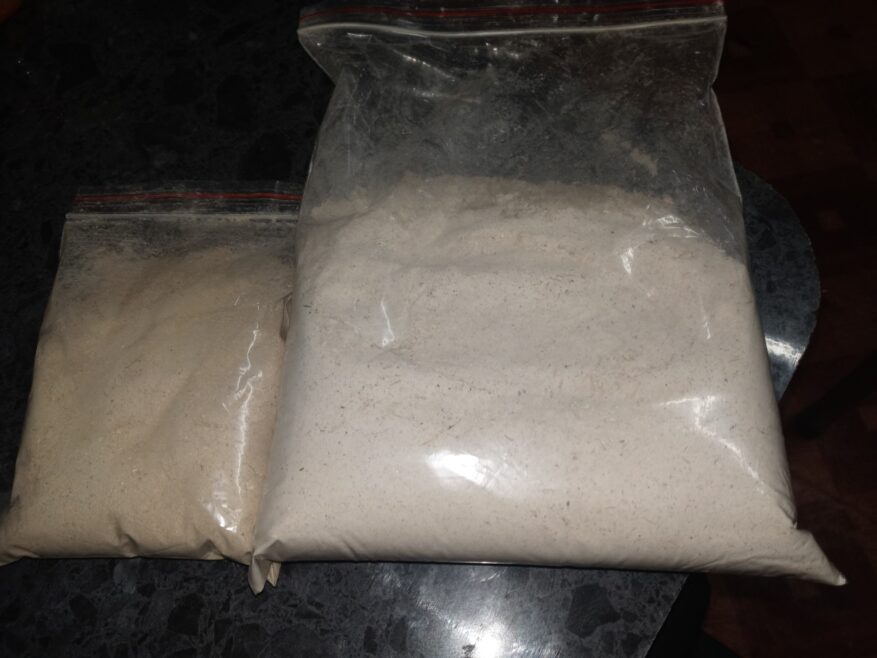
Veiuto Manuofetoa circulated Facebook images purporting to show a kava product adulterated with an unknown white powder.

The post, which has since gone viral, claimed the additive was not traditional kava and urged others to be cautious.

Manuofetoa claimed the substance had a strange taste and lacked the characteristic flavour of kava.

He suggested that the adulteration was a clear sign that some sellers were prioritising profit over public safety.

He also advised consumers to be cautious of kava that looks unusually fine, has a strange smell, or shows signs of being mixed with other substances.

Kava, a traditional drink made from the root of the piper methysticum plant, is a cornerstone of Tongan social and cultural life.

The potential adulteration of the sacred beverage has caused significant alarm, amplified by the rapid spread of the initial warning on social media.

The public is encouraged to report any suspicious kava products directly to local health authorities.

Auckland Airport customs nets five meth couriers in major pre-summer crackdown

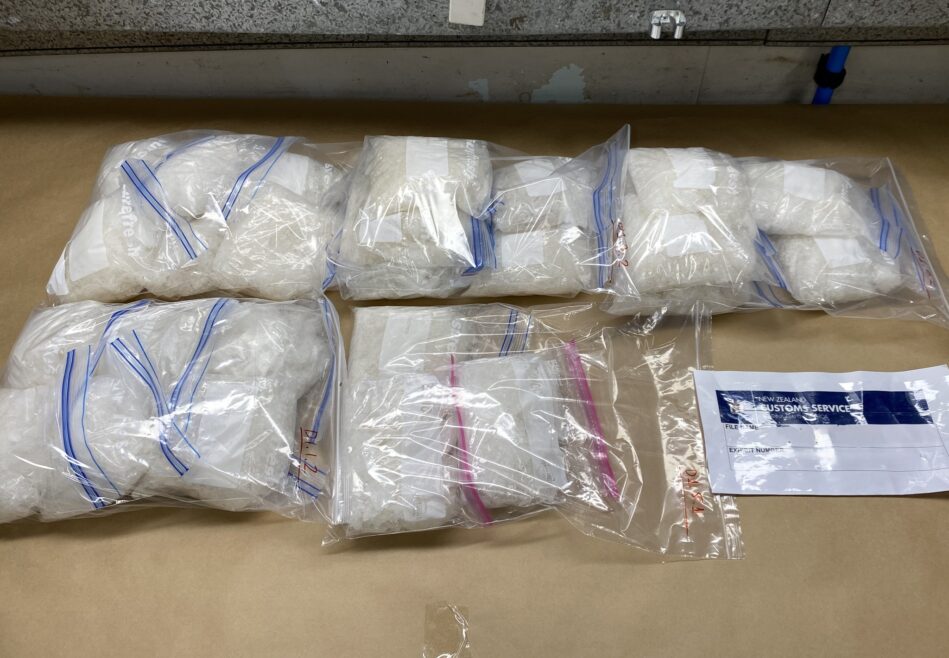
Auckland, NZ – In a significant pre-holiday blow to international drug trafficking, Customs officers at Auckland International Airport have intercepted five methamphetamine couriers in just over a week, seizing millions in illicit substances.

Customs officers at Auckland International Airport have caught five methamphetamine couriers in just over a week.

The crackdown began on November 2 with the seizure of nearly 30 kilograms of methamphetamine from three United States nationals. This week, the streak continued with two more high-volume interceptions.

On Monday, November 10, a 32-year-old US national was arrested after an inspection revealed his two suitcases contained 36 vacuum-sealed packages.

The haul, an estimated 19 kilograms of methamphetamine, has a potential street value of up to $5.7 million.

The previous day, officers uncovered a more clandestine smuggling attempt.

A 69-year-old French national, travelling from South Africa via Hong Kong, was found carrying a hollowed-out wooden box disguised as a book titled ‘Apologise, Forgive, Forget’.

The prop concealed just under two kilograms of methamphetamine, worth approximately $594,300.

Customs Auckland Airport Manager, Paul Williams, issued a stern warning to criminal networks.

“Criminal networks are actively targeting New Zealanders by pushing their products here for profits. They keep sending packages, and we keep seizing them. We have every intention of continuing to catch drug couriers heading into a busier summer season.”

The back-to-back seizures signal both a persistent threat from international drug syndicates and a heightened, successful enforcement effort at the border.

New report underscores Tongan diaspora’s size—double the home population as calls for voting rights grow

Nuku’alofa– Tonga heads into its November 20 general election under rules that exclude its vast overseas population, even as new figures and international warnings underscore a stark reality: more than twice as many Tongans live abroad as in the kingdom.

Photo/Kaniva Tonga News

An estimated 200,000 Tongans reside in Australia, New Zealand, and the United States, compared to just 110,000 living in Tonga. Despite their economic importance—sending millions in remittances annually—the diaspora has no legal right to vote in national elections.

A new report by the International Monetary Fund (IMF) this week confirms Tonga’s rising “outward migration,” warning that the trend is weakening the country’s potential economic growth. It comes amid renewed calls for diaspora voting rights, including fresh demands to allow Tongans working in Australia and New Zealand under seasonal labour schemes to participate in national elections.

This follows revelations that Tonga is considering a review of its electoral system after next week’s polls.

Electoral Commissioner Pita Vuki acknowledged that a review of the electoral system is likely after the polls, citing concerns about declining turnout and structural weaknesses. He confirmed that 64,700 voters are registered for this year’s election, up from 60,000 in 2021, reported RNZ.

It remains unclear whether the review will include consideration of legalising voting rights for Tongans living in the diaspora.

The debate over voting rights comes amid a deepening “brain drain.” Government reports for 2024 and 2025 show thousands leaving for better wages abroad, leaving 861 civil service positions vacant this year alone.

As we recently reported, Tonga’s Ministry of Health was facing a severe staffing crisis, with Vaiola Hospital losing 45% of its nursing workforce since the COVID-19 pandemic. The hospital’s Matron, Akesa Halatanu, said the decline was mainly due to overseas work opportunities and personal reasons.

Advocates say the exclusion of overseas Tongans from voting is indefensible.

ʻOfa Guttenbeil-Likiliki, director of the Women and Children Crisis Centre, reportedly said that Tonga has gone through 14 years and four elections since the 2010 reforms without any move to amend the Electoral Act.

She told RNZ that around 5,000 Tongans working in Australia and New Zealand under labour schemes are being “deprived of their basic human right to vote,” adding that the issue affects the entire diaspora, whose financial contributions are vital to Tonga’s economy.

In 2021, ABC News reported calls from Tongan lawyer Leilehua Faʻonevai in Australia urging Tonga to allow its citizens abroad to vote. She argued that Tongans in Australia play a crucial role in supporting the kingdom’s economy through remittances and should have a voice in national elections.

Global Tongan Footprint

Recent census data shows that more than 200,000 Tongans now live in Australia, the United States, and New Zealand—excluding those in other parts of the world. Official figures indicate that the United States recorded 78,871 people of Tongan descent in its 2020 Census, while Australia reported 43,465 in 2021.

New Zealand’s 2018 Census listed 82,389 people of Tongan ethnicity, with more recent estimates suggesting the number has grown to around 97,824.

The US figures include individuals of full or partial Tongan ancestry.

Significant communities are concentrated in Utah and California in the United States, New South Wales in Australia, and the Auckland region in New Zealand—underscoring the global reach of Tonga’s population beyond its borders.