Home Blog Page 405

‘How come the party loses election to stay in power?’ supporters’ questions startle PTOA leaders; accusing them of being ‘power hungry’ during Tongatapu 4 meeting last night

A man took the PTOA leaders to task for losing the premiership election in 2019 saying Popua and Pātangata villages had been disadvantaged by the loss.

A PTOA Party supporter asks the Party Leaders why did they lose the election to stay in power

He said plans designed to repair and fill their roads did not go as planned after the new government took over.

The man, whose name was not introduced before he took the microphone in a hall in Popua last night,  accused the Party MPs of being power-hungry and causing chaos within the party

He wanted answers during the meeting as to why the Party was defeated after all the only thing for them to do was to nominate a Prime Minister to allow them to continue on running the government.

“How come did it happen?” the man emotionally asked the meeting who was attended by the Party Leader Semisi Sika, Tongatapu 4 MP Mateni Tapueluelu and some of the Party’s MPs as well as the supporters of the Party from the villages.

He said after Democratic Leader Akilisi  died members of the Party “began vying for the premiership”.

The man said the Party leaders made who was going to be our next Prime Minister a focus of attention and forgot their duty to protect the power they were holding to continue on running the government.

He said the current Prime Minister was elected to Parliament because he ran as a candidate for the PTOA Party.

“Why didn’t you vote for him to become the Prime Minister because after all you will all become his Cabinet ministers?” the man asked. .

Another woman echoed the man’s concerns during the meeting and demanded answers from the Party.

The number of attendants as well as reactions in support of MP Tapueluelu last night was huge.

Tongatapu 4 MP response

The Tongatapu 4 MP Mateni Tapueluelu responded with an account of what he claimed was what was discussed in a meeting between him and late ‘Akilisi in which the then leader revealed to him his plan to resign as Prime Minister before he died.

Tapueluelu, who was at one stage seen visibly tearful, said he then sought advice from the then Acting Attorney General ‘Aminiasi Kefu.

He said the legal process for  ‘Akilisi to follow before he could resign was documented and he handed it to ‘Akilisi in April 2019 and that was the end of it. ‘Akilisi did not resign. He died in New Zealand on September 2019.

As Kaniva News reported last year, Tapueluelu claimed people who were very close to ‘Akilisi at the time but were not Members of Parliament or Party members gave the late leader of the democrats  wrong advice to stay in the premiership until his death.

Tapueluelu said if ‘Akilisi’s resignation had happened according to plan, the veteran democratic pioneer would have been able to assist  a smooth transition of power and make sure the party still won the following premiership election.

Tapueluelu, in his response during the meeting last night, did not mention anything about claims his move to challenge Tu’i’onetoa’s being nominated by the PTOA to be the Deputy Prime Minister before the 2019 premiership election triggered a row which many believed it opened an opportunity for the noble MPs to approach some of the PTOA MPs urging them to join them in setting up a new party.

The People’s Party was then set up with strong memberships which included five PTOA MPs. They also won the premiership election of 2019.

Sika’s response

Party Leader Semisi Sika told the meeting last night he called a meeting after ‘Akilisi’s funeral and burial services and they agreed that Sika would be their next Prime Minister.

But in a followed up meeting it became clear to him some of the Party MPs had different plans about the premiership election candidates.

He said in one of their meeting the name of Pohiva Tu’i’onetoa, the current Prime Minister and the then Party’s Minister of Finance was nominated as the candidate for the premiership.

Sika said at one stage he told the Party to remove his name from the list as long as they were still standing together to win the premiership election.

Another version of why PTOA lost the election

As Kaniva News reported last year, Former PTOA  Cabinet  Minister Dr Tu’i Uata alleged that MP Tapueluelu wanted to become Deputy Prime Minister before the 2019 premiership election, even though the Party decided that that position must be given to Dr Tu’i’onetoa, the current Prime Minister.

Dr Uata claimed Tapueluelu’s persistence to have the post had enraged Dr Tu’i’onetoa who was already satisfied with being nominated as Deputy Prime Minister.

He said  Hon. Tu’i’onetoa advised them in a meeting after the death of ‘Akilisi to stand together to make sure they won the next premiership election to fulfill their late leader ‘Akilisi’s four-year term.

Dr Uata also said Dr Tu’i’onetoa scolded Hon Tapueluelu during that meeting, accusing him of being bad-mouthed and two-faced.

Dr Tu’i’onetoa finally left the Party before he reportedly approached by the Nobles to form the People’s Party, for which he won the Premiership.

Dr Uata alleged a last-ditch effort to bring back Hon Tu’i’onetoa to the Party before the premiership election failed because Hon Tapueluelu refused to join them in a reconciliation meeting planned to be held with Hon Tu’i’onetoa.

At the time Kaniva News  contacted Tapueluelu for comment.

Tu’i’onetoa supports Dr Uata

Hon Tu’i’onetoa told Kaniva News at the time Dr Tu’i Uata was correct when he said Tu’i’onetoa told members in the first PTOA meeting after ‘Akilisi’s death to stand together and leave everything as it was so they could win the premiership election and complete ‘Akilisi’s terms.

He said he did this because he respected ‘Akilisi.

“I told them let’s not rock the boat,” PM Tu’i’onetoa said.

“Let’s create a constitution for us to follow so that we are organised.”

Hon Tu’i’onetoa said they did not believe in him so he told them he quit.

He said he told them he has been through the same failed scenario before and he did not want to go through it again.

He said he told the Party before he left they would row about who would have the power and would end up in disarray.

Charles Piutau poised to finally complete Tongan switch

This RNZ.co.nz story is republished with permission

Former All Black Charles Piutau’s long-held dream of representing Tonga could finally become reality at the upcoming Olympic Sevens qualifier in Monaco.

Players with dual eligibility can switch their international allegiance by participating in Olympic qualifying events provided they had a passport for the second country and have completed a stand down period of three years.

Piutau played the last of his 17 tests for the All Blacks in 2015 and first stated four years ago that he would love to represent his Tongan heritage.

Tonga sevens coach, Tevita Tu’ifua, said after a couple of false starts the signs are promising that a number of former All Blacks and Wallabies stars could pull on the red jersey in June.

“That’s a dream for me, to be able to have that opportunity to be given to those guys who have been playing for the All Blacks or the Wallabies that are based over in Europe, to have the opportunity if they change their mind to make themselves available for the ‘Ikale Tahi, this is the opportunity for them.”

Tonga have had previous success using the Olympic loophole, with Cooper Vuna, Atieli Pakalani and Nafi Tuitivake all switching their allegiance from Australia and New Zealand via the sevens route.

A former Tonga Under 20 representative, Piutau had been set to debut for Tonga at the Oceania Sevens in Fiji two years ago. The Bristol Bears fullback completed all his paperwork but didn’t receive the green light to take the field until a few days before the tournament kicked off.

“It was very short notice that we received a reply from World Rugby – it was on the second day of the tournament week we got the green light from World Rugby,” explained Tonga sevens coach Tevita Tu’ifua.

“So Charles was just too late to come from Europe to Fiji, as you have to play 50 percent of the tournament. This opportunity for this tournament is an opportunity for Charles and even Malakai Fekitoa and the like. There’s quite a few of them that are based up there.”

Former New Zealand sevens player Sam Vaka made it onto the field in Suva and Tu’ifua and hoped European-based stars like Piutau and Fekitoa could follow in his footsteps.

“He arrived in Fiji on the second day of the tournament. He played in more than 50 percent of our games so now he’s eligible so it’s just a dream and I hope that the players we are working on we will be able to change their mind have the opportunity to take it on and to represent our country.”

Players switching their allegience only need to feature in half of a team’s matches at the Olympic qualifying event, and would then be eligible to play for the ‘Ikale Tahi 15-a-side team.

Tevita Tu’ifua played 15 tests for Tonga, representing the kingdom at the 2003 and 2007 Rugby World Cups. The former national sevens star said if a few high profile players can switch their allegiance to Tonga it could lead to a seismic shift in international rugby.

“It will be massive for Tonga: for the people and also for the rugby itself and that’s why I think (former ‘Ikale Tahi coach) Toutai Kefu started the pushing through of the players in the list we are working on,” he said.

“And still behind the scenes Toutai is still pushing through and communicating with the players and hopefully we will get a few numbers and be able to give them the opportunity.”

Fiji police probe alleged sex abuse against Methodist Church

By Christine Rovoi, of RNZ.co.nz. This story is republished with permission

Fiji Police are investigating allegations that a member of the Methodist Church clergy sexually assaulted 14 boys while serving on an outer island.

A Methodist church in Fiji.
A Methodist church in Fiji. Photo: Facebook / Methodist Church in Fiji and Rotuma.

Police said the alleged incidents happened on Levuka, Ovalau, in the south of the country.

Police spokesperson, Ana Naisoro, said the latest alleged acts were committed between 2018 and this year.

“There is a report being investigated by Levuka Police,” she said. “The 14 victims are boys and juveniles.”

This is not the first time a member of the clergy in Fiji has been accused of sexually abusing children.

Just last year, the Catholic Church was rocked with allegations of sexual abuse against boys at a school decades earlier.

A man had claimed he was molested by a priest at the school when he was a student there.

The head of the Catholic Church warned any priests found to have abused children would be severely dealt with.

Archbishop Peter Loy Chong said he empathised with the victims of sexual abuse “with their hurt, anger, trauma and feelings”.

“I empathise with the pain that victims and their families have experienced and continue to experience”.

“On behalf of the church, I express our remorse for past failures and extend our sincere regret and deep sympathy to the victims of sexual abuse. The church apologises for any abuse perpetrated by clergy or religious workers.

“Sexual abusers have failed the Sixth Commandment – you must not commit adultery.”

Archbishop Peter Loy Chong.
Archbishop Peter Loy Chong. Photo: Supplied/Archdiocese of Suva

In July last year, Archbishop Chong met with leaders in the Archdiocese of Suva to address the issue.

He said the church in Fiji is committed to dealing with allegations of sexual abuse against minors by priests and religious workers.

The archbishop said the church would work closely with the arms of the law to ensure that justice is served at all levels.

He said the church would also provide pastoral care to the victims and their families.

More than a dozen priests in Fiji’s Central Eastern region underwent a Safeguarding and Training Workshop in Suva.

According to Archbishop Chong, the workshop focussed on the topic of sexual abuse against minors by priests and religious workers.

Methodist head warns against sexual misconduct

Meanwhile, the Methodist Church is yet to take any action against the clergyman at the centre of the latest allegations of sexual abuse.

The head of the church, the Reverend Ili Vunisuwai, said they would first await the outcome of the police investigations.

Speaking at this week’s retreat for church ministers and divisional heads, Vunisuwai said he would act once a report was received from the superintendent on where the alleged incidents happened.

“These are still allegations and if the reports say to be sexual assault, then we will take serious actions,” he said.

“The church is clear cut on our code of ethics. We will not condone such acts in our church.”

Vunisuwai said concrete evidence had to be produced to the Standing Committee, then the next cause of action would be decided upon.

“The normal procedures of the church begins when a report comes in from the Divisional Superintendent, that is my channel of procedure on how the person will be dealt with,” he said.

From left, Methodist Church president Reverend Ili Vunisuwai, vice-president Apisalome Tudreu, Prime Minister  Frank Bainimarama, and former church presidents Dr Epineri Vakadewavosa and Tevita Banivanua,
From left, Methodist Church president Reverend Ili Vunisuwai, vice-president Apisalome Tudreu, Prime Minister Frank Bainimarama, and former church presidents Dr Epineri Vakadewavosa and Tevita Banivanua, Photo: Facebook/Fiji govt

Vunisuwai, who has only been in the job for a week, said he has his work cut out for him.

He was the former General Secretary and was elected by the church’s Standing Committee – via a secret ballot – on 24 February.

The Reverend Iliesa Naivalu has been elected as the new General Secretary while the Reverend Semisi Turagavou is his deputy.

His induction service was held on Sunday at the Centenary Methodist Church in Suva.

Outgoing President, Epineri Vakadewavosa, said the church was living in perilous times.

Reverend Dr Vakadewavosa said it was imperative for the church to fulfil its role in bringing people into God’s kingdom.

Archbishop Chong and Prime Minister Frank Bainimarama were among those who attended the ceremony.

Vunisuwai said the violation of ethical practices such as sexual assault would be dealt with severely by the Methodist Church of Fiji and Rotuma.

He urged ministers to abide by the church’s code of conduct, no matter the circumstances.

The church is very clear on its ethical stand on that and we stand against any sexual issues because we do not condone those types of issues, he said.

“I am thankful to the church and the Standing Committee for putting their trust in me to lead the church into the new year along with the responsibilities bestowed upon me.

“We are letting our young ministers to take note of the code of conduct that will be part of my visitation into the 59 divisional levels and circuits.”

This is to raise awareness on sexual issues and code of conduct, Vunisuwai said.

Standoff brings USP operations under scrutiny

This RNZ news is republished with permission

The ongoing stand-off between the University of the South Pacific’s host country Fiji and its governing body, the USP Council, has put the regional institution’s future under scrutiny.

USP Theatre
USP Theatre Photo: USP

The latest crisis came to a head three weeks ago when the whistleblowing vice-chancellor and president, Pal Ahluwalia, and his wife were sent packing by Fijian authorities over accusations the couple breached provisions in their work permits.

The government claimed the Ahluwalias’ conduct was ‘prejudicial to peace, defence, public safety, public order, public morality, public health, security, or good government of the Fiji islands’ as stated under the Immigration Act.

On 3 February in the dead of night, police and immigration officers descended on the couple’s Suva home. They were whisked away to Nadi International Airport and put on the next flight to Brisbane early the next day.

Many have expressed how this is not only legally questionable but everything happened at such high speed, there was no consultation, let alone due process.

The couple have completed 14 days’ of Covid-19 quarantine in a Brisbane hotel and are now left to contemplate their future.

In a statement issued on February 24, Chancellor and Nauru President Lionel Aingimea said he had invited Ahluwalia to Nauru.

University of the South Pacific (USP) vice-chancellor and president Pal Ahluwalia.
University of the South Pacific (USP) vice-chancellor and president Pal Ahluwalia. Photo: USP

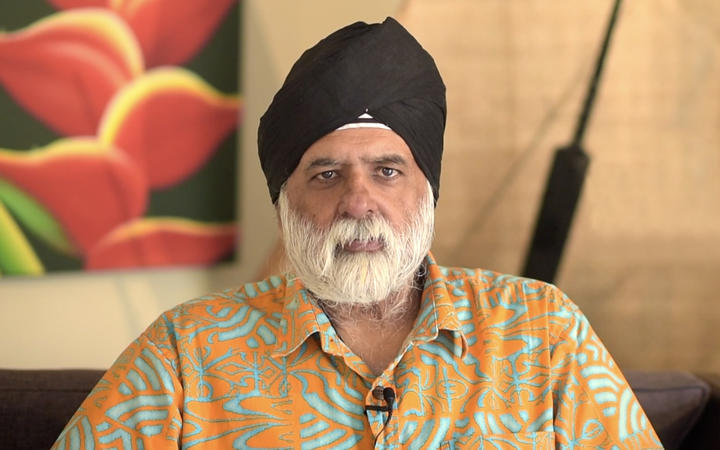
Who is Pal Ahluwalia?

Ahluwalia was appointed Vice-Chancellor and President in June 2018 but he did not take up the role until November when the 10-year tenure of his predecessor Rajesh Chandra ended. Chandra was seen to be close to the government.

Ahluwalia arrived in Fiji from the United Kingdom’s University of Portsmouth where he was Pro Vice-Chancellor.

Prior to that, the Canadian-born academic was Pro Vice-Chancellor and Acting Deputy Vice-Chancellor at the University of South Australia.

He has a PhD in Politics from Flinders University in South Australia and a Master of Arts from the University of Saskatchewan in Canada.

His main research interests are in the African studies, social and cultural theory, in particular, post-colonial theory and the processes of diaspora, exile, migration, and the complexities of identity formation.

In 2018, Ahluwalia said the USP had an opportunity to become a truly world-class institution.

He had said the university’s next phase of development should be to continue to build on its reputation for research that has the potential to change lives in the region.

Ahluwalia has yet to accomplish this. Less than three years into the job, he has been forced off the main Laucala campus and out of Fiji.

Many close to the university feel Ahluwalia was a target since his exposure of financial mismanagement at the premier regional institution: losses which he claimed ran into the millions of dollars.

In May 2019, Ahluwalia alleged in a paper to the USP Council of serious mismanagement and abuse of office, involving his predecessor and other senior members of the university.

He also questioned the contract renewals of at least 11 senior members of the university staff including the payments of professional and development leave.

Forensic accountant BDO Auckland was engaged to investigate the allegations. But since November 2019, the report has not been made public amid calls for the council to do so.

However, a subcommittee was set up to look into the BDO Report’s recommendations.

For those who have viewed it, the report appears to make no clear reference to any outcome of possible breaches as outlined by Ahluwalia.

Instead, it only reported that four remuneration mechanisms at the USP were collectively exploited, leading to ‘instances of significant cash leakages’ over a number of years.

The BDO report, paid for by taxpayers of 12 Pacific island countries and USP student fees, is yet to be released for full disclosure on the allegations of the breaches.

In March 2020, Ahluwalia was suspended by the Executive Committee led by Pro Chancellor Winston Thompson and investigated for ‘material misconduct’.

Following weeks of protests by students and staff, Ahluwalia was reinstated by the council.

Thus began the stand-off between the council and Thompson and Co, most of them appointed by the Fijian government. Thompson himself a former diplomat.

Calls were then made for the removal of Thompson and Chair of the Audit and Risk Committee, Mahmoud Khan, who were accused of impeding the work of Ahluwalia.

Chancellor and Nauru President, Lionel Aingimea, did not mince his words when in June 2020, he labelled Thompson’s convening of a Council Executive Committee in Suva as “appalling”.

Lionel Aingimea
USP Chancellor and Nauru President, Lionel Aingimea. Photo: Nauru Government

Fast-forward a year and the man who exposed the alleged corrupt practices at the USP has been removed. Not by his employer, the USP Council, but by the Fijian government.

Dr Giulio Masasso Tu’ikolongahau Paunga has been appointed acting VC and president.

Many agree that Ahluwalia’s deportation has plunged the university into the biggest crisis of its 50-year history.

The deportation has also resurfaced questions about Fiji’s suitability as the host nation for USP due to its political instability and the lack of civil rights in the country.

Samoa has already put itself forward as an alternative host. Prime Minister Tuila’epa Aiono Sa’ilele Malielegaoi announced on February 12 that Apia is willing to provide a new home for the USP.

But how did the university get to this?

USP campus in Fiji
Pro-Chancellor, Winston Thompson Photo: USP

What is the USP?

The University of the South Pacific is an intergovernmental organisation and public research university with locations spread throughout a dozen countries in the region.

The USP was established in 1968 by the British who allowed the education system to follow its qualification system of the Commonwealth of Nations.

Its main campus is located in Suva which also serves as the university’s administrative centre. It also has two other satellite campuses in Fiji: Labasa and Lautoka.

The Alafua campus in Samoa hosts the School of Agriculture and Food Technology. The Emalus campus in Vanuatu is the location for the School of Law and the Nuku’alofa campus in Tonga holds the Institute for Education.

There are other centres in the Cook Islands, Kiribati, Marshall Islands, Nauru, Niue, Solomon Islands, Tokelau and Tuvalu.

The USP is owned by the governments of 12 Pacific island nations – the Cook Islands, Fiji, Kiribati, Marshall Islands, Nauru, Niue, Samoa, Solomon Islands, Tokelau, Tonga, Tuvalu, and Vanuatu. Other members of the governing council include New Zealand, Australia and student representatives.

Its first vice-chancellor was Kiribati leader Taneti Maamau.

While the USP Council is the governing body, the VC is responsible for the daily affairs of the university.

Despite its multi-campus nature, the USP is not a university system but a single university with several branches across the Pacific region.

The USP has also produced graduates who have played important roles in the Pacific. Its alumni include Cook Islands Prime Minister Mark Brown; Elizabeth Iro – World Health Organisation (WHO) Chief Nursing Officer; Ludwig Scotty a former President of Nauru; Bikenibeu Paeniu former Tuvalu PM; the late ʻAkilisi Pōhiva former Tongan PM; Joe Natuman former Vanuatu PM and Solomon Islands women’s activist Alice Pollard.

USP Pro-Chancellor, Winston Thompson
Winston Thompson Photo: USP

Clean-up or cover-up?

Interestingly enough, when the issue of Ahluwalia’s removal was raised in Fiji’s parliament three weeks ago, it was ruled out by the Speaker on the grounds that it was not a matter of national importance.

Fiji has the most students at the USP and has never failed to point out that it also contributes the most funds.

The scale of the reputational damage to the regional institution is enormous and raises serious questions about the broader, long-term impacts on Pacific unity, academic freedom, respect for human rights and the rule of law.

The government is adamant the USP needs a ‘clean-up’ against corruption: Prime Minister Frank Bainimarama had used this tune to justify his 2006 coup.

But his critics claim the FijiFirst government is now increasingly linked to the ‘cover-up’ at USP.

They say the lengths the government has gone to remove Ahluwalia show it has ‘lost the plot’.

Unions, civil society groups and political parties have also condemned the deportation.

Not the office of the Human Rights Commission in Fiji.

It has come under fire for its silence since Ahluwalia’s removal on February 4: Commissioner Ashwin Raj is an appointee of the Attorney-General.

More than three weeks after the deportation, Raj has called for an independent investigation into all issues arising out of the USP.

He said the investigations should include complaints raised by staff and students on the ongoing governance issues at the university.

Raj said these should also include grievances against Ahluwalia.

But more deafening has been the silence from the university’s major donors Australia and New Zealand: both countries have expressed concern about the situation at the USP but fell short to condemn Ahluwalia’s treatment by the Fijian authorities.

Are the political expediency and geopolitical priorities at play here? Do the region’s main partners still stand for the rule of law and human rights? Or have Wellington and Canberra surrendered their values for political profits?

Two weeks ago, Winston Thompson and Mahmoud Khan were referred to the university’s Executive Committee over allegations of misconduct against the senior members of the USP.

The committee will also look at written responses and provide recommendations to the USP Council by March 30.

It is not clear what the breaches are but the council, which met recently, said the investigation is to allow the process to take its course.

For his part, Ahluwalia has vowed to continue in his efforts to reform the university and his primary obligation remained with the students.

It’s probably the only thing on his mind as the USP Council is yet to decide on his fate.

USP's Suva campus
USP’s Suva campus Photo: wikicommons

Tongan missionaries ‘in hiding’ in PNG as angry looters target Asian shops after death of ex-PM Michael Somare

A group of Tongan missionaries of the Church of Jesus Christ of Latter-day Saints (LDS) in Papua New Guinea has gone into hiding in a church in Lae as unrest and violence erupted in the country on Monday, March 1.

Photo of looters at Gordon, a suburb of Port Moresby, the capital city of Papua New Guinea. Photo / Nigel Kutan (Facebook)

The chaos came after days of mourning following the death of the nation’s longest serving Prime Minister Sir Michael Somare.

Somare, 84, known as the “father of the nation,” died after a short battle with pancreatic cancer. He was a key leader in wresting the Pacific nation’s independence from Australia.

Police faced a mob at what appears to be a road in front of the LDS church in Lae, a Facebook live video seen by Kaniva News showed.

Shootings were overheard as hundreds of people fled the scene before they stopped and attempted to reorganise themselves.

It was alleged the shootings came from Police who were trying to disperse the mob.

The crowd were attempting to rob a nearby Chinese shop, it has been claimed.

The lootings and chaos in Gordon as well as in Eastern Boroko in Papua New Guinea were also caught on camera and shared to Facebook.

Tongan President ‘Isileli Fatani of the LDS Mission in Lae, the second largest city in PNG, who was in a building few meters away from the scene, said the situation “was terrifying”.

Sir Michael Somare, 84, died of pancreatic cancer on Friday. He was Papua New Guinea’s premier for a total of 17 years.

He said he was just arrived at their accommodation after driving down the road seeing people looting shops and businesses and fighting in other parts of the country.

He was overheard telling one of the missionaries to lock the gate.

He said they were hiding inside the church property while he was livestreaming the incidents.

He was also overheard asking one of the PNG missionaries at the property whether it was safe for them to leave the church and move to town.

Motive behind the chaos

Fatani claimed the motive behind the attacks was a reaction by the locals after the death of Somare.

“He was a Prime Minister they loved most,” Fatani said.

His video had racked up 1,300 comments and 1,400 shares within 10 hours after it was published to Facebook this afternoon.

In a post on Facebook a PNG commenter said the operations of the Asian businesses during a public holiday set in memory of Somare disappointed the locals.

“If all the PNG citizens can heartedly respect the great loss of our Founding Father Grand Chief Sir Michael Thomas Somare and the Prime Minister of the Day through NEC Declare Public Holiday today, which government law or order will these so called Asians be following or governed by?” the post read.

“I would suggest let there be a looting. Police must not deter any looting because these Asians must respect PNG law, respect our country’s Father’s mourning.

“Permitting looting will put a complete stop for any shop to operate.

“Let’s all respect our legendary father for the last time because he will never be seen again till we meet again in paradise.”

Michael Somare

The Pacific Islands Forum Secretariat has remembered Somare.

In a statement it said: “It was with deep sadness that I received the news of the death of the Grand Chief, Sir Michael Somare, the founding father of Papua New Guinea and a warrior of the Pacific.

“Sir Michael’s passing leaves many bereft. He was the most humble of Leaders who always held his people at heart. His effortless lifelong charisma and humility drew people from all walks of life.

“He will be remembered for his profound vision and leadership as Papua New Guinea joined newly independent nations at the Forum Leaders table. In hosting the Forum Leaders and welcoming the region to his nation, he reminded all of the need to guard our unity as one regional family closely– even as he set to work leading Papua New Guinea into its unique role as part of the Pacific, and of Asia.”

Somare was PNG’s longest-serving prime minister, in three separate terms, for 17 of the country’s 45 years of independence.

Covid-19 cases ‘have gone to work when they shouldn’t have’ – PM

This RNZ story is republished with permission

Police will get involved if people are breaching the rules of self-isolating, says the prime minister, as Auckland is locked down after confirmed community cases did not follow the guidelines.

Photo: RNZ / Richard Tindiller

Auckland has moved to alert level 3 for seven days from 6am today, and the rest of the country to level 2, after the government became concerned about the number of exposure events.

Prime Minister Jacinda Ardern said this afternoon that regular check-ins are being done to make sure those who have been asked to stay at home, are staying at home.

Close contacts are in daily telephone contact, and if they can not be contacted, door-to-door visits may be considered. Ardern asked employers to make sure those who need to be isolating do not come to work.

“Despite our best efforts to date, recent cases have gone to work when they shouldn’t have,” Ardern said.

It was also confirmed today that genomic sequencing linked the latest community cases of Covid-19 in Auckland to the second family in the South Auckland cluster.

Dr Ashley Bloomfield said the genome sequencing showed cases “M” and “N” were not casually connected – this was a direct link which narrowed down the chain of transmission.

Joseph Parker defeats Junior Fa after going the full 12 rounds

This RNZ story is republished with permission

Joseph Parker has won the biggest bout in heavyweight boxing in this country for years, beating Junior Fa in Auckland tonight.

Joseph Parker (L) v Junior Fa, Heavyweight boxing. Joseph Parker v Junior Fa at Spark Arena in Auckland, New Zealand on Saturday February 27, 2021. © Mandatory photo credit: Andrew Cornaga / www.Photosport.nz
Photo: PhotoSport / Andrew Cornaga

The bout went the full 12 rounds, with Parker finishing ahead on all three judges scorecards – 119-109, 115-113, 117-111 – to collect a unanimous points decision.

The former WBO world champion went into the fight ranked third with that organisation, while Fa was ranked fifth.

The fight was the first between the two South Aucklanders in the professional ranks. They fought four times in amateur boxing, winning two fights each.

Earlier, David Nyika started his professional career with a bizzare first round knockout win over Auckland’s Jesse Maio.

The two-time Commonwealth Games gold medallist, who has qualified for this year’s Tokyo Olympics, collected victory less than 30 seconds into the fight.

Nyika connected with an unintentional punch to the back of head as Maio ducked a right hook. Maio went to his kness before being counted out by the referee.

Covid-19: Auckland back to alert level three after one new community case revealed

This RNZ’s story is republished with permission

Auckland will move to alert level three for a week at 6am tomorrow morning after two new Covid-19 community cases announced this evening could not be directly linked to earlier cases, the Prime Minister has confirmed.

The rest of the country will move to level two.

Watch the PM’s latest briefing live:

A sibling of a Papatoetoe High School student, who was a casual plus contact of the recent Auckland community cases, tested positive for Covid-19.

Director-General Ashley-General said the new case is a 21-year-old man. Since then, his mother has also tested positive for Covid-19, but three other people in the family have tested negative.

Ardern said the link to the high school could provide a straightforward link, but in this case it had not since the student previously tested negative.

Genome sequencing is underway. Ardern said officials strongly assumed this case will be linked to the cluster.

“However, as we all know so well, if what we cannot immediately link a case person to person, what we call an epidemiological link, that is a significant issue and one we need to act on.”

She said the second cause of concern was because the person was possibly unknowingly infectious for as long as a week without isolation.

“There are a number of high risk locations involved with this case,” she said, including a supermarket, a gym, and the Manukau Institute of Technology.

Given the time the that has passed by for the onset of symptoms, “we may well have close contacts who already infected”.

She said Cabinet met this evening and made the decision Auckland will move to alert level three for seven days, while the rest of the country will go to level 2.

Ardern said they were assuming this case had the more infectious variant of the virus.

Aucklanders are asked to stay at home, in their bubbles other than for essential movement. Those who can work from home are asked to do so. If you go outside, maintain physical distancing. Children are asked to stay home from school in Auckland, although for essential worker parents who need to be at work, they will be open.

Supermarkets, pharmacies, petrol stations, and primary produce stories can remain open. Ardern urged people not to rush to supermarkets.

Businesses that normally operate on face-to-face basis are now asked to move to non-contact methods like click and collect or online ordering, she said.

Public venues will be closed, including playgrounds, libraries, cinemas, gyms, pools and markets. Gatherings outside people’s bubbles is prohibited with the exception of groups of 10 for wedding services, funerals and tangihanga. Public health measures will still need to be maintained in these events.

All sports games will need to be cancelled, including tomorrow’s Auckland Round the Bays.

Inter-regional travel will be restricted. Those who are vulnerable with pre-existing conditions and older people are encouraged to stay at home where possible and take extra precautions where possible.

Aucklanders are asked to wear masks when they leave their house.

From 6am tomorrow, the alert level changes will kick in.

“Some will ask whether we should have stayed in level 3 from the 14 February right up until this day today. That was not what the evidence required and therefore it was also not the advice we were given.”

She said with more than 100,000 tests since the community case on 14 February, wastewater testing showing up negative, Papatoetoe High School mass testing and stringent contact tracing and isolating measures, it was not deemed necessary at the time to extend alert levels.

“But there is no doubt that a contributing factor to the issue we are now facing is that the guidelines and rules have not always been followed.”

“We just need to hang in there,” she said.

Papatoetoe High School was due to reopen this Monday after having to close for cleaning and contact tracing when the first student of the recent cases tested positive on 14 February.

The new case reported today developed symptoms on Tuesday 23 February, and is regarded as being potentially infectious from Sunday 21 February.

The person was tested yesterday and the result was received this afternoon.

The high school student sibling had returned three recent negative tests and is asymptomatic, the ministry said.

Public health officials are undertaking interviews to help establish how this new case was infected.

The household has five people and testing is now underway, the ministry said, with results expected this evening.

Genome sequencing is also underway and expected later tonight.

Locations of interest

A number of locations of interest, which will be available on the ministry’s website, will be updated progressively from this evening.

Four have been identified so far:

  • Hunter Plaza (26 February) 2.55pm – 5pm
  • Burger King Highland Park (25 February) 8pm-9pm
  • Your Health Pharmacy (23 February) 2.45pm – 3.50pm
  • Pak n Save Manakau (21 February) 5.30pm – 6.40pm

For up-to-date information on testing locations in Auckland, visit Auckland Regional Public Health Service’s website and all testing locations nationwide, visit the Healthpoint website.

The ministry is urging people to only call Healthline if they were potentially exposed.

  • If you have symptoms of the coronavirus, call the NZ Covid-19 Healthline on 0800 358 5453 (+64 9 358 5453 for international SIMs) or call your GP – don’t show up at a medical centre

Covid-19: One new community case with link to Papatoetoe High School

This RNZ story is republished with permission

A sibling of a Papatoetoe High School student, who was a casual plus contact of the recent Auckland community cases, has tested positive for Covid-19.

Papatoetoe High School on Thursday 18 February.
Papatoetoe High School. (File image) Photo: RNZ / Kate Gregan

The Ministry of Health confirmed the case in a statement this evening.

The new case developed symptoms on Tuesday 23 February, and is regarded as being potentially infectious from Sunday 21 February.

The person was tested yesterday and the result was received this afternoon.

The high school student sibling had returned three recent negative tests and is asymptomatic.

Public health officials are undertaking interviews to help establish how this new case was infected.

The household has five people and testing is now underway, the ministry said, with results expected this evening.

Genome sequencing is also underway and expected later tonight.

A number of locations of interest, which will be available on the ministry’s website, will be updated progressively from this evening.

Additional information will be provided in an update tonight, the ministry said.

For up-to-date information on testing locations in Auckland, visit Auckland Regional Public Health Service’s website and all testing locations nationwide, visit the Healthpoint website.

  • If you have symptoms of the coronavirus, call the NZ Covid-19 Healthline on 0800 358 5453 (+64 9 358 5453 for international SIMs) or call your GP – don’t show up at a medical centre

New street name honours Tongan family in Auckland

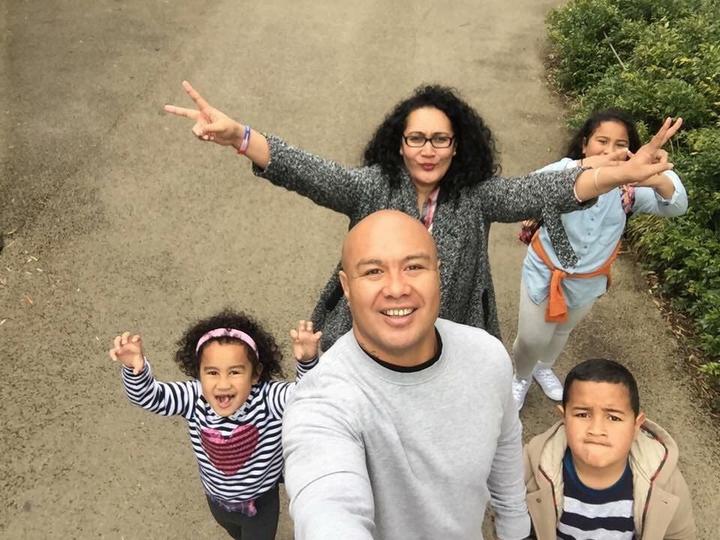
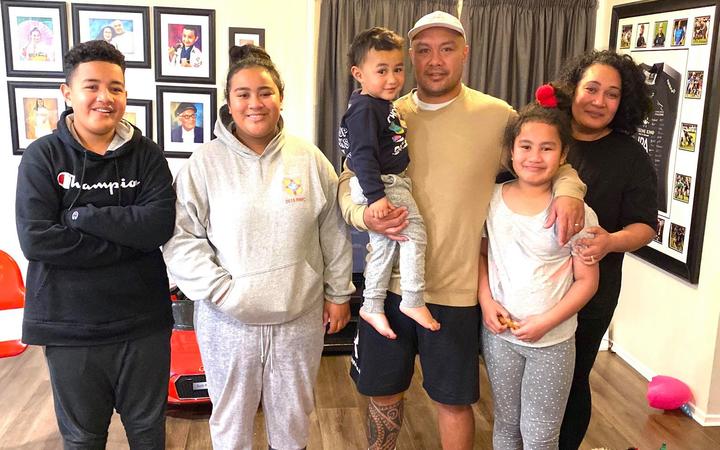
A new street at the Mt Roskill Suburb, Auckland has been named in honour of Tēvita ‘Ofanoa and his family.

New street names honour people, place and connection. Photo/Roskill Development

Two other new street names were Baitful Lane and Herenga Way.

Roskill Development webpage said the new names were decided after huge supports from the community.

Named as Ofanoa Lane, the website said: “The Ofanoa whanau lived for 20 plus years on Freeland Avenue. Dad Tevita Ofanoa was a well loved and respected member of the Roskill community having been the Mt Roskill Intermediate caretaker for many years. The family environment that he and his wife rovided included caring for many of the children that grew up in Freeland Avenue. They had an open-door policy, and all were welcome. Tevita and his wife were immigrants from Tonga, whose family has worked hard and achieved many things in their chosen paths”.

Baitul Lane: “Named after the small Islamic Centre, Baitul Mukarram Musalla, which has existed for 5 years at Roskill South shopping centre. The Islamic Centre represents the Islamic community located in the local area. ‘Baitul’ means house, and therefore draws reference to the new development”.

Herenga Way: In te reo Māori, ‘herenga’ means connections or ties. It demonstrates Mt Roskill’s connections between its people, as it is the connections that make up a community”.

“We recently asked for the community’s help in naming three new roads in Roskill South, and the feedback was fantastic! It was a privilege to read the heartfelt stories and meanings behind many of the submissions, and creating a shortlist for the Local Board to approve proved quite a challenge. Submissions that were unsuccessful this time will still be considered for future roads/laneways, and we thank everyone who took the time to send through their suggestions.”