Tonga Tourism Association (TTA) said the organisation has never questioned Tourism Minister Akosita Lavulavu’s decision to reinstate Tonga Tourism Authority Board (TTAB) and its $1.5 million budget allocation, a letter from TTA to Kaniva News says.
Tonga Tourism. Photo/Kalino Lātū (Kaniva Tonga).
TTA was responding after Lavulavu warned the organisation and told it not to try to push her into doing something that would breach tourism rules.
Opposition Party Leader Sēmisi Sika said he was afraid the Minister’s insistence on reinstating TTAB saying she has no power to defer the reinstatement appears to show Lavulavu did not understand the Cabinet’s “ultimate power and normal practice” procedures.
In a letter to Kaniva, TTA said: “Ko homau fatongiaa koe kole moe fokotu’u fakakaukau atu pe ki he ‘Eiki Minista”.
In English, this means:
“Our responsibility is to ask and suggest ideas to the Minister”.
TTA’s response comes after its president Saia Moehau asked Lavulavu to delay reinstating TTAB because of the impact of coronavirus pandemic on Tonga’s tourism businesses.
As Kaniva News reported previously, the president also asked the Minister to divert the TTAB budget of $1.5million Pa’anga to help struggling tourism operators.
“We need as much financial help as we can get to allow all our tourism products to remain ready and operatable once borders are opened in order to maintain positive and healthy tourism growth”.
The independent body for tourism business operators in Tonga said it has received the Minister’s response and it agreed.
TTA’s response came after Vava’u Whale Watching operators criticised the Minister’s denial of their requests to defer their licencing payment of $3,500 until borders open saying she was “out of touch with reality”.
The Minister’s response
Lavulavu told TTA there was no way under the law she can defer reinstating TTAB with its allocation of $1.5 million budget, a copy of the Minister’s letter seen by Kaniva News says.
The Minister said there were unlawful decisions made by the Ministry before and she did not want that happened again.
Lavulavu accused TTA and said: “The Association is now urging a Minister to make the same unlawful decision again which has caused the earlier court case. The court case has settled. The AGO gave the green light, and I have moved to reconstitute the Board”.
“You will understand that we must all comply with the law regardless of our own view”.
The Minister said she was aware of the effect of the COVID-19 pandemic but that cannot change her decision.
“Yet that is no reason for us to put the law aside”, the Minister said.
“Our own personal interest and wants will not justify violating our laws”.
She said she could not do anything concerning the TTA’s requests until the law was amended.
Opposition disagrees with Lavulavu
Opposition Leader Sika has taken on the Minister’s response.
The Former Acting Prime Minister and Minister of Tourism claimed Cabinet ministers have ultimate power (“mafai aofangatuku”) when it comes to situation like the TTAB controversies.
He said if Lavulavu was being urged to reinstate the TTAB because of the law, but she was willing to defer it, she has power to stop hiring new employees or creating new positions to be filled.
Sika said this was known in Cabinet as “hiring freeze”
“It is normal practice for Cabinet Ministers to do that. Ministers also have power to freeze votes or budgets but must be justified”, he said.
Sika said Lavulavu has a good justification to freeze the $1.5 million budget for TTAB because of the impact of the COVID-19 and how it crippled Tonga’s tourism industry.
Sika also said the Minister has power to “reallocate” the budget.
“The government is now doing that reallocation by taking money from other votes to help fund the Prime Minister’s new roading project”.
“That power has been vested in Cabinet Ministers”.
Sika said Lavulavu’s letter replying to requests from TTA showed she was evasive “fakaloea” about the fact her decision could be seen as thoughtless.
“She should use her intelligence and wait while the country is being disabled” by the pandemic from making profits through tourism businesses.
As Kaniva News reported last week, it took the Minister about a year before she reinstated the TTAB last month, something her critics believed it should have set a precedent for her to keep on deferring the reinstatement until borders open.
FAKAMATALA FAKATONGA
Na’e taukave’i ‘e he Ministā Takimamata’ Akosita Lavulavu ‘ene tauhi ki he lao’ ‘o tupu ai ‘ene toe fokotu’u ‘a e Poate Takimamata fo’ou ‘o fakapa’anga ‘aki ‘a e $1.5 miliona ‘i he uhouhonga ‘o e poliō ‘a e ngaahi pisinisi takimamata’ ‘i Tonga tupu mei he Koviti 19. Na’a’ ne pehē koe’uhi ko e lao’ kuopau ke ta’ele’eia leva ‘ene fokotu’u ‘a e poate takimamata’ pea ko ia ai ‘oku ‘ikai ke ne tali ‘a e fokotu’u ange ke toe toloi atu’ tatau ai pe a’u ki he Koviti 19. Ka kuo pehē ‘e he taki Fa’ahi Fakaanga’ ‘oku’ ne manavasi’i pe ‘oku mahino ko ā ki he MInisitaa’ ni ‘a e founga ngāue ‘a e Kapineti’. Pehē ‘e Semisi Sika’ ‘oku mo’oni e lao’ ia ka ‘oku ‘i he Kapineti ‘a e mafai aofangatuku ki he ngaahi tu’utu’uni hange ko ‘eni ko e fetukuaki ‘i hono ‘ave fu’u patiseti $1.5 miliona ki he Poate Takimamata lolotonga ‘oku mate ngūngū ‘a e pisinisi ko ia’. Na’e pehē ‘e Sika ‘oku ‘i ai ‘a e me’a ko e Hiring Freeze ‘oku ngāue angamaheni ‘aki pe ia ‘e he Kapineti pea ‘oku mafai ki ai ‘a e kau minisitaa’. ‘A ia ko hono ta’ofi hano toe fakangāue’i ha kau ngāue fo’ou pe ko hano toe fokotu’u ha ngaahi lakanga fo’ou. Ua ki ai ‘oku mafai aofangatuku pe ‘a e kau minisitaa’ ki hono to’o ha patiseti mei he vouti ‘e taha ‘o ‘ave ia ki ha vouti ‘e taha pe ‘oku ngāue’aki ‘i he Kapineti ‘a e lea reallocation pe ko e fakamahamaha ‘o ha patiseti pe vouti. ‘A ia kapau ‘e ‘ai ‘a e fakakaukau ko ‘eni ki he patiseti mo e kau talēkita fo’ou ‘a e poate takimamata’ ‘e peheni – ‘ oku mafai ‘a Akosita k ene tu’utu’uni ke ‘oua na’a toe fokotu’u ha ngaahi lakanga fo’ou pe fakahu mai ha kau ngāue’aki fo’ou hange ko e kau talekita poate fo’ou’. ‘Oku ne toe mafai foki ke ne tu’utu’uni ke fakatatafe ‘a e patiseti $1.5 miliona ki he poate ‘aki ‘a e ‘uhinga lelei he ‘oku lolotonga faingatāmaki ‘a e sekitoa taki mamata he loka ‘a e kau‘āfonua’. Pehē ‘e Sika ‘oku mahu’inga ‘a e ngaahi founga ngāue ‘a e Kapineti ko ‘eni’ koe’uhi he ‘oku’ ne ‘oange ai ‘a e faingamālie ki he kau minisitaa’ ke nau ngāue’aki honau ‘atamai lelei mo fakapotopoto ‘i he taimi ‘o e faingata’a’.
A Supreme Court judge has signed an affidavit allowing a son to return to his late father’s share in a family block of land in Ha’amea, Liahona.
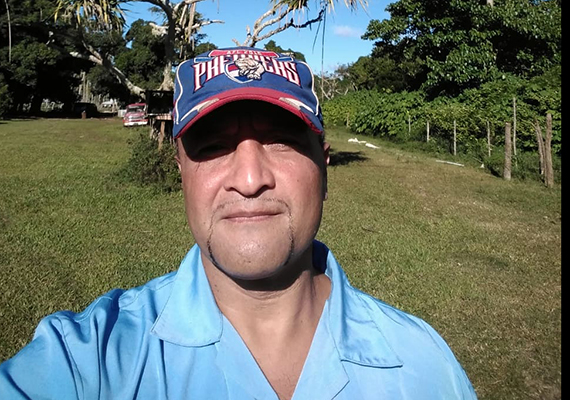
Douglas Wight selfie taken in Ha’amea. Photo/Supplied
Judge Laki Niu signed the affidavit in November 2020 showing that a Letter of Administration was submitted by Douglas Wight’s late mother Kalolaine Wight.
Douglas said he took the affidavit to the Ministry of Lands and Survey before he met the Minister Lord Ma’afu about it. He claimed the Minister told him the affidavit has allowed him to occupy his late father Fred Wight’s land.
A copy of the affidavit seen by Kaniva News appears to show that at the time of Kaloliane’s death she “properly entitled to own” Lease number 2984 C (one quarter share) and a Letter of Administration.
The block of land at Lord Lasike’s estate has been the subject of a recent family dispute after Douglas and his cousin Raymond Wight were at odds. Douglas was evicted from the land after Raymond took him to court.
Douglas claimed he lost the court case because he did not have his late mother’s Letter of Administration at the time.
But after contacting Lord Lasike recently he was given a copy of his mother’s Letter of Administration in which he submitted it to court.
He told Kaniva News this week he has moved in with his family and now staying in Ha’amea.
“We are so happy that finally I had fought a good fight”, he said.
“I let go everything that happened to me in the past”.
Four brothers
His father Fred died in April 1992 in Ha’amea, eight years before his wife Kalolaine died in East Palo Alto, San Mateo in May 2020.
As Kaniva News reported previously, the original right to the block of land had been passed into the hands of four brothers. They were William Wight (William), Charley Wight (Charley), Fred Wight (Fred) and Harry Wight (Harry).
The lease was then transferred to Charley, Fred and Harry. Charley and Fred died before Harry. On their deaths no one applied for Letters of Administration or claimed their interests in the lease.
Throughout their lives the four brothers were close and there was no evidence of any disagreements arising between them. Each brother had a roughly equal area of Ha’amea for his use, a court document said.
On Harry’s death one of his sons, Raymond Wight was granted Letters of Administration of Harry’s estate and he claimed the lease and the right to occupy the land.
Eviction order
However, Douglas, Fred’s only child, occupied the land.
Raymond sought an order evicting Douglas from the land and also for the payment of damages for unlawful occupation.
In 2012, Douglas was deported from the United States and returned to Tonga.
He asked Harry for permission to live on Ha’amea and did so for a time in what was known as the Hut. Douglas said that he told Harry that he had a claim to Ha’amea. Harry rejected the notion. Disagreements arose between them and Douglas was told to leave.
In late 2014, Harry needed medical treatment in the United States. On about 10 October 2014 he signed an authority to his nephew Sione Fatu Wight (Sione) to care for Ha’amea and the cattle that were on the land. Sione is a son of William.
Harry went to the United States in late 2014. Douglas returned to Ha’amea and again lived in the Hut.
In July 2015, Harry signed what purported to be a will in which he expressed a desire to leave all of Ha’amea to Raymond, a court document said.
About October 2015, Raymond realised that Harry was not going to return to Tonga and gave Douglas permission to move into the main house.
Harry died on April 12, 2016 in the United States. No application for Letters of Administration of his estate was made at that time.
Change in attitude
There was then a significant change in Douglas’s attitude towards Raymond and Sione. Without permission, Douglas cut down trees and slaughtered cattle on Ha’amea.
In February 2017, Raymond came to Tonga and started legal action to evict Douglas from Ha’amea, but he withdrew that action because he had not applied for Letters of Administration.
He returned to the United States but returned in June 2017 when another cow went missing and Douglas disconnected the water lines.
Raymond has established a right to administer Harry’s estate and therefore he ordered that Douglas must leave Ha’amea immediately.
Douglas was also ordered to pay Raymond TP$100 damages and his legal costs.
By One News / TVNZ and is republished with permission
Travel between New Zealand and Western Australia has been paused after a Covid outbreak in Perth.
Perth, in Western Australia. Source: istock.com
“New Zealand health officials are in contact with their Australian counterparts and are completing a risk assessment,” Minister for Covid-19 Response Chris Hipkins said.
Hipkins said the pause was “set out in our Trans-Tasman bubble protocols”.
“A flight due to leave Perth for New Zealand later tonight will not take off following Western Australia’s decision, and any New Zealanders affected are asked to follow the advice of Western Australian authorities.”
Air New Zealand said in a statement those on the cancelled flight – NZ176 from Perth to Auckland – are being given the option to rebook, put their flight into credit, or receive a refund if they have purchased a refundable ticket.
“There are no Air New Zealand services to or from Perth tomorrow. We expect to be able to provide further clarity on the impact to Sunday’s services tomorrow afternoon,” Air New Zealand said in the statement.
The government’s decision to pause travel comes after Western Australia premier Mark McGowan confirmed in a press conference shortly before 7pm NZT that Perth along with the Peel region would enter a three-day lockdown tonight after a hotel quarantine outbreak led to community transmission.
Western Australia heading into sudden lockdown after Covid-19 outbreak
McGowan said the lockdown is a necessary measure after two people, including a man who stayed in the hotel and completed quarantine before flying to Melbourne, spent days in the community while infectious.
“I know this is hard to take and I wish we didn’t need to be doing this,” McGowan told reporters.
“But we can’t take any chances with the virus. We just can’t.”
A new governing body for Tongan rugby league should be in place within six weeks.
The Court of Arbitration for Sport (CAS) this week dismissed the Tonga National Rugby League’s (TNRL) appeal against its expulsion from the International Rugby League in March last year, after a long-running battle over governance, money and a threatened player boycott.
An invitational Tongan team upset Australia in November 2019. Photo: Photosport Ltd 2019
IRL Secretary General Danny Kazandjian was pleased with the decision but saddened it had got to this point.
“It was completely unnecessary that it had to go to court” he said.
“…the factual record shows unequivocally that, at every stage of this disagreement or dispute, we held out olive branches to the former Tongan Rugby League organisation (TNRL), attempting to work collaboratively with them and unfortunately at every stage the record is clear that they rejected those overtures.”
A panel of three arbitrators, from the USA, Australia and Canada, concluded the expulsion was justified after the “TNRL’s refusal to cooperate with or to participate in the IRL’s investigation and consultation processes.”
The panel said the TNRL did not comply with its membership duties and failed “to consider or adopt any of the good governance recommendations made to it”.
Danny Kazandjian said the situation in Tonga was “unique” and different to other instances of player boycotts in Lebanon and Fiji because there was a formal complaint issued by another IRL member.
“The difference with the Tongan case is there was a formal complaint that was issued by one of our members (the Rugby Football League) and when that happens we are constitutionally obliged to process the complaint.
“…the circumstances that led to TNRL’s suspension in September 2019 were numerous but the record shows that we attempted to cooperate and collaborate with them to prevent a suspension from occuring but they, as they did at every stage after that, took an adversarial position.”
International Rugby League Global Operations Manager, Danny Kazandjian. Photo: IRL
The Asia-Pacific Rugby League Confederation last year endorsed the bid by a rival body, Tonga Ma’a Tonga Rugby League (TMTRL), for full IRL membership, which has the support of the current Tongan players and coach.
If TMTRL still had the support of the regional confederation, it could be confirmed as the new governing body in Tonga by early June, Kazandjian said.
“The process is that the regional confederation, in this case Asia Pacific Rugby League, their board would recommend a member for IRL, then our Board would assess that application and recommendation. If it found favour with it it would then pass it on to the general assembly and the full members would vote on it.”
Members would then have four weeks to respond to the written resolution, with a majority support required to omit a new member.
“The constitutional process itself would probably take about six weeks if it started today. APRL’s got a Board meeting on Friday, IRL’s got a Board meeting on the 29th of April, so we expect this matter to be discussed at both of those meetings.
“APRL had previously recommended TMTRL as a member…now it’s up to APRL to consider whether they want to re-recommend that application to IRL.”
TMTRL Chairman Semisi Sika was President of the Tonga National Rugby League when the Board was dissolved by a court order in 2016 for “financial mismanagement”.
Semisi Sika. Photo: AFP
Kazandjian said the IRL already has ethics rules to restrict who can become become an Officer, and it was up to TMTRL to elect its own representatives.
“The President of TNRL was a non-executive position and in fact when the Board previous to the Board that was led by Mr Koloamatangi was in place…Mr Sika was not removed from the Presidency by the Tongan courts so we don’t really make any comment on his ceremonial position.
“It’s up to the Tongan rugby league community to determine who their leaders are and he’s been elected as the independant chairman so that’s up to them.”
The IRL has recently said it will now work with the local rugby league community to move the game forward.
“The expectations of the Tongan people are, naturally, very high and we want to work with the clubs, with the government, with the national team to ensure that we can put this unfortunate and unnecessary episode behind us and move forward towards a World Cup that is bearing down on us very quickly.”
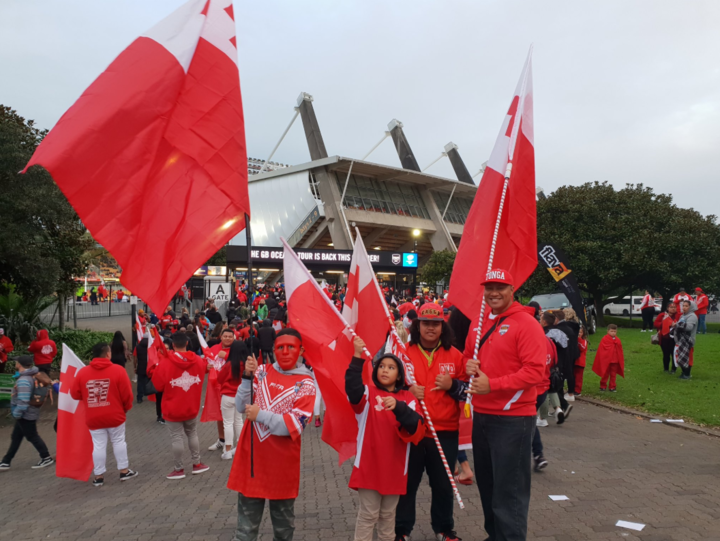
Tongan supporters outside Mt Smart stadium ahead of the rugby league game between Mate Ma’a Tonga and the Kiwis. Photo: RNZ / Tom Furley
The Tongan national team has been “hamstrung” by the ongoing governance dispute, Kazandjian said, and the hope is now all energy can be put towards preparing for the World Cup later this year.
“This result with CAS now clears the runway, as it were, for everybody who has got Tonga’s best interests at heart with the World Cup in the short term at least, to work together to ensure that the team is as prepared as possible…there’s been a great outpouring of belief that this matter is over from that group of people so they can all move forward.”
The family of Sitela Fungavaka is considering a civil suit against the Ministry of Transport and the Government of Tonga after a fake driving licence was given to a handicapped driver allowing him to drive a vehicle and killed the 76-year-old mother last year.
(L-R) Prime Minister Pōhiva Tu’i’onetoa and Tourism Minister Akosita Lavulavu
A family spokesperson in New Zealand has confirmed this to Kaniva News.
It is understood the family were only became aware of the driver’s fake driving licence after it was reported on Kaniva last week.
We were told the deceased’s husband has forgiven the driver and his family while they were attending her funeral last year.
“But issuing a fake driving licence to the driver is a different issue and I will talk to dad about it,” she said.
As we reported last week, the 21-year-old handicapped driver, Siolosi Hu’akau, said he did not know about the traffic rules because he did not sit any driving tests before his license was given to him.
“He admitted to Police that he was not aware of the speed limits because he did not obtain his driver’s licence validly – it was given to him over the counter through his mother”, the judgement document read.
It said the prisoner “was speeding and driving in a manner dangerous to the public”.
In sentencing Hu’akau, the Lord Chief Justice Michael Whitten said: “In relation to the Hu’akau’s driver’s licence, having regard to his physical and mental handicaps (particularly that he has the ‘mind of a child’), it is extremely regrettable that he was ever allowed to drive a motor vehicle in the first place”.
Mr Whitten said Hu’akau should not be permitted to drive a motor vehicle on a public road again.
“I therefore order that the Defendant be permanently disqualified from holding or obtaining a driver’s licence”.
Hu’akau was sentenced to three years’ imprisonment with the last 12 months suspended with conditions.
MV Ashika tragedy
In 2009, the government’s MV Princess Ashika sank and 74 people were killed as a result after passengers, mostly women and children, were tapped below deck in the country’s worst maritime disaster.
The Government-owned Shipping Corporation of Polynesia was ordered to pay $1.4 million in fines. The government also paid TOP$80,000 each as compensation for some families.
Some of the Shipping Corporation’s top officials including the captain and the former head of the Shipping Corporation of Polynesia were sent to jail because of their part in the doomed ferry disaster.
The Prime Minister Pohiva Tu’i’onetoa and his Transport Minister Akosita Lavulavu were contacted for comment.
A rugby player who lived a colourful life has been sent to jail for one year and three months for possession of illicit drugs.
But the judge said his sentence was fully suspended for a period of three years with condition that he must not commit an offence punishable by imprisonment during the three-year period of his suspension.
Semisi Fakava was charged with possession of 0.81 gm of methamphetamine on 17 February 2019. He pleaded guilty to the charge. When he was arrested Police also found syringe and a test tube in his possession. He was with two girls in a vehicle in Kolofo’ou at the time of his arrest.
Previous convictions
The court was told Fakava had previous convictions in the Magistrate court for possession of illicit drug.
He was also convicted in the Supreme Court twice for possession of illicit drug and dealing with a forged document and obtaining money by false pretence. He escaped imprisonment in both cases.
The court was told Fakava did not commit any other criminal offence since the Supreme Court dealt with those two cases.
Playing in New Zealand
Fakava went to New Zealand on a one year contract to play in a rugby club in which it was renewed for another two years.
While in New Zealand he had a partner and he had a child with her. She applied a permanent residence permit for Fakava in which it was approved in 2008.
But things changed after Fakava had a problem with drinking as well as problems with other girls. He was caught driving under the influence of alcohol in a car that belonged to another person.
His partner left him taking the child with her, and she had Fakavaa’s permanent residence in New Zealand cancelled before he returned to Tonga in 2011. That was after he had two other children to two other women in New Zealand as well.
In Tonga
In Tonga he continued working for a copier servicing company and also still playing rugby.
In 2015 Fakava got married again and he applied for and got his New Zealand permanent residence permit which allowed him and his new wife and their child to go to New Zealand.
“But then problems arose because your previous partner and the other 2 women who had children to you all sued you for maintenance. Your wife who had not known about those women and your children with them, also left you and took the child with her. She also claimed maintenance from you,” the court judgement says.
Educational background
The court was told Fakava went to Tonga High School and Tonga College and he completed form six level before he attended the university of the South Pacific in 2004 studying a computer course.
An Australian company took him to Australia on a six-month course to learn and work in repairing photocopiers.
“You completed that and returned to Tonga in 2005 and worked for Pac Trade in servicing their copiers and computers. At the same time, you were playing rugby for the Toa-Ko-Ma’afu rugby team”.
In an attempt to change his life around he enrolled at the Sia’atoutai Theological College in 2020. He said he would like to continue to do that this year.
In suspending his sentence Judge Niu said he suspended it for three years “so that you will be sure to keep yourself free of any drug, and be sure not to commit any other offence, for those 3 years”.
FAKAMATALA FAKATONGA
Neongo e fakalusa mo e toutou mo’ua he fakamaau’anga’ ki mu’a he faito’o konatapu mo e tohi nima kākā ke ma’u ai ha pa’anga’, ka ne kei meesi pe ‘a e fakamaau’anga lahi’ o tautea malu’i angelelei ta’u tolu ‘a Semisi Fakava hili hono ma’u mo e faito’o konatapu mefi kalami ‘e 0.81 ‘i Fepueli 2019. Na’e ma’u fakataha ia mo ha ongo tamaiki fefine. Ko e tangata’ ni ‘oku hange ko e paloveape ko e Matangi lelei to ki he la mahaehae. Sai ‘ene ako he ne ‘i Tonga Hai mo ‘Atele, ‘osi mei he foomu ono’ pea to’o koosi ‘i he USP.’Oku taleniti va’inga ‘akapulu. Ma’u e faingamalie va’inga ‘i he kalapu ‘i Nu’u Sila pea mali ai ma’u mo ‘ene pepa. Ka koe’uhi ko ‘ene palopalema mo e kakai fefine kehekehe pe pea iku fanau ki ai ha ongo fefine ‘e toko ua pea ne ngauekovi’aki ‘a e kava malohi tapu, ne iku ‘o mole ai ‘ene pepa nofo Nu’u Sila hano launga’i ia ‘e he mali’ pea foki ki Tonga. Ne toe mali ‘i Tonga pea iku ‘ave ia ki ‘Aositelelia ha faingamalie ako ngaue mahina ono. Ne toe iku ‘o ne feinga ‘o ma’u ‘ene pepa Nu’u Sila ‘o folau ai ki Nu’u Sila mo hono mali hono ua. Ka ne iku palopalema hono ‘ilo ia ai ‘e he mali ‘uluaki mo ‘ene kakai fefine ne na fāfā’ele ki ai’ ‘o tangi tauhi’i. Ne iku motu ai mo hono mali hono ua’ pea iku foki ai ki Tonga ‘o hoko atu ‘ene mo’ui’aki ‘a e faito’o konatapu’. Pea ‘i hono ma’u ko eni kuo’ ne pehe kuo fai e feinga ke liliu pea kuo ‘osi lesisita ke hu ki he ako’anga Tohi Tapu Sia’atoutai’.
Four different funeral services were expected to be held in Vava’u this week after the MV ‘Otuanga’ofa docked at the Puatalefusi wharf this afternoon Wednesday 21.
One of the four deceased taken away from the wharf. Photo/Supplied
The inter-island ferry brought the deceased from various places in Tongatapu including Niua Toputapu.
Among them was a church minister and teacher Rev Sione Hautau Taufa.
He was the Free Wesleyan Church superintendent in Niua Toputapu.
People from around Tonga’s teaching and church communities have expressed their shock and sadness at the sudden death of Hautau.
They took his death into heart not only because of their special connections but the fact that people who have professions and chose to serve the two Niuas – Niua Toputapu and Niua Fo’ou, have hearts of gold.
These were people who vowed to walk extra mile to make sure government services, good education and religious teachings reached the two islands which are regarded as the most remote islands in the world. Normally a vessel and an aircraft from Tongatapu arrives at the Niuas once a month with passengers, goods for the shops, petrol and mail.
“We were anointed together (with Hautau) during the Free Wesleyan Church conference 1999 and he was a friend at the church’s mission. Love his wife Meliame, the children and the kāinga. May God gives you tranquility and calm through this very difficult time of mourning. Rest In Peace Sione Hautau,” a heartfelt tribute posted to Facebook by Rev Dr Nasili Vaka’uta.
Samoan Independent MP, Tuala Tevaga Iosefo Ponifasio, has confirmed he will join the Faatuatua i le Atua Samoa ua Tasi (FAST) party following more than a week of post-election deliberations.
The Samoa Observer reports the decision comes hours after the paper revealed that as part of his negotiations with both parties, Tuala had asked HRPP leader Tuilaepa Sa’ilele Malielegaoi to stand down, as a condition of the party securing his vote.
Tuala’s announcement, and creation of an additional parliamentary seat last night leaves Parliament in a 26-26 deadlock.
Samoa Independent MP, Tuala Tevaga Iosefo Ponfasio, Photo: Social Media
Parties are only given 45 days after election day to form a government.
The villages of Mauga, Patamea, Samalaeulu and Saleaula gathered at Samalaeulu and hosted an ava ceremony for Tuala.
The decision was met with loud applause and cheers from the constituents gathered.
The constituency will formally present Tuala to FAST on Friday this week.
The creation of an additional parliamentary seat
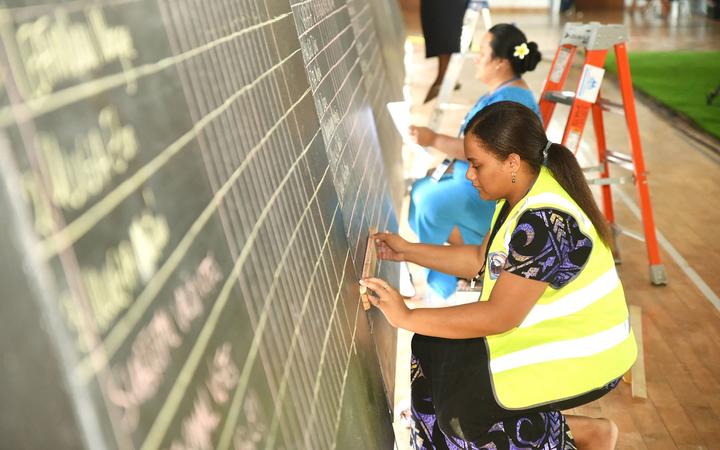
Votes being tallied during the general election in Apia (file photo) Photo: AFP or licensors
Samoa’s Head of State has declared that an additional seat has been added after an article in the country’s constitution, regarding female representation, was activated.
Article 44(1A) requires that a minimum of 10 percent of Parliament’s seats be occupied by female members.
In a public notice last night the Electoral Commission Office announced that the Article had been activated because the election results had not met the 10 percent threshold. Rather, “Only 9.8 percent of the women membership was achieved after the general election”.
The extra seat was allocated to the female candidate who came closest to winning an electorate seat.
In the current circumstances the new seat has gone to the former chair for the Parliamentary public accounts committee, Aliimalemanu Alofa Tuu’au, who represents the Human Rights Protection Party (HRPP).
She is the sixth woman to be sworn in for the new Parliamentary term.
The 2021 general election result means six women will take seats in the new 52 seat Parliament.
Tonga National Rugby League (TNRL) has been dismissed permanently from International Rugby League (IRL) after the decision was upheld by a Court of Arbitration for Sport (CAS) verdict yesterday.
Speaker Lord Fakafanua also the president of Tonga Ma’a Tonga National Rugby League
The TNRL was expelled from the International Rugby League (IRL) in March last year, after a long-running battle over governance, money and a threatened player boycott.
CAS confirmed on Tuesday the resolution of the IRL’s Board to expel the TNRL from its membership had been upheld, after a two-day hearing was held in December.
The President of the IRL’s appointed rugby governing body Tonga Ma’a Tonga (TMT), Lord Fakafanua, told Kaniva News this morning he was “relieved” at the verdict.
Asked what TMT next move will be, he said: “This is a matter for the board to decide however, the biggest priority is preparing a team for the next international fixtures”.
The 2021 Rugby League World Cup is expected to be held in England between 23 October 2021 and 27 November 2021.
The IRL has sole responsibility for deciding which organisation controls IRL’s games in Tonga.
This means any local rugby league governing body which wanted to become a member of the IRL must apply to the IRL for membership status.
TMT is now the sole governing body recognised by IRL.
Lord Fakafanua said he would welcome it if TNRL and TMT were merged.
“TNRL is a separate entity with Mate Ma’a Tonga. I would welcome the restoration of TNRL and Mate Ma’a Tonga on the international stage but this is a conversation that must be initiated between TMT and TNRL”.