Commentary – As the countdown begins for the Pacific Nations Cup 2025, Tonga’s national rugby union team, ‘Īkale Tahi, is preparing for a high-stakes opener against traditional rivals Manu Samoa on August 23 at Teufaiva Stadium in Nuku’alofa.
This match marks the beginning of a pivotal campaign not only for regional pride but also for qualification to the Rugby World Cup 2027.
With Fiji and Japan already qualified, Tonga must finish among the top three of the remaining teams—Samoa, USA, and Canada—to secure a direct ticket to Australia.
However, Tonga enters the tournament under pressure following a disappointing European tour last year, where they suffered nine losses out of ten matches.
Their sole victory came against Canada, the lowest-ranked team in the competition.
Coach Tēvita Tu’ifua faces mounting scrutiny as fans call for a strategic overhaul in coaching and player selection.
Tonga’s current world ranking of 19th reflects the urgency for improvement, especially with the team’s performance under the spotlight in front of a home crowd.
The clash with Samoa will be a litmus test for Tonga’s resilience and readiness.
With the Pacific Nations Cup running from August 22 to September 20, this edition promises to be historic, culminating in a U.S.-hosted finals series that could redefine Pacific rugby’s global standing.
Tonga has taken a bold step toward reinforcing its democratic foundations with the launch of its first-ever Latimer House Dialogue, which opened this week by Speaker of the Legislative Assembly, Lord Fakafanua.
Lord Fakafanua: Latimer House Principles Vital for Tonga’s Evolving Democratic System. Photo/Fale Alea ‘o Tonga
Addressing a distinguished gathering of parliamentarians, judges, public officials, and civil society leaders at the Fa’onelua Convention Centre, Lord Fakafanua underscored the importance of the Latimer House Principles as “an overarching framework to strengthen governance, particularly in nations like the Kingdom of Tonga, by setting standards for effective and accountable democratic systems.”
The two-day event, hosted in partnership with the Commonwealth, marks a pivotal moment in Tonga’s ongoing efforts to uphold the rule of law, institutional independence, and ethical leadership.
The Speaker of the Legislative Assembly, Lord Fakafanua, officially inaugurated the dialogue, emphasising the importance of the Latimer House Principles in promoting democratic values, institutional independence, and human rights.
“They serve as an overarching framework to strengthen governance, particularly in nations like the Kingdom of Tonga,” he said, referencing Tonga’s unique status as the Pacific’s only remaining constitutional monarchy.
Dr. Elizabeth Macharia of the Commonwealth Secretariat likened democracy and the rule of law to woven mats—cultural heirlooms built through collective effort.
“Through open and respectful dialogue, we can strengthen understanding and unity between the three branches,” she said.
Day one featured sessions led by distinguished experts, including Mr. Peter Boshier, former Chief Ombudsman of New Zealand; Mr David Blunt, former Clerk of the New South Wales Parliament; and Mr Paulo Kautoke, veteran Tongan economist.
Topics included the separation of powers, judicial independence, and parliamentary oversight.
Tomorrow’s sessions will delve into ethical leadership, judicial appointments, and accountability mechanisms, culminating in group discussions and recommendations to enhance Tonga’s governance systems.
This inaugural dialogue underscores Tonga’s commitment to democratic reform and transparent leadership, building on the foundations laid by the 2010 constitutional changes.
Tonga remains ranked 95th out of 183 countries on the global corruption index, a position it has held since 2011 due to the failure of previous governments to respond to information requests from Transparency International, Deputy Prime Minister Dr Taniela Fusimālohi has revealed.
Seputy Prime Minister Dr Taniela Fusimalohi
Speaking at yesterday’s press conference, Dr Fusimālohi said the international anti-corruption watchdog had repeatedly sought data from Tonga to assess its transparency and governance standards.
However, successive administrations reportedly ignored or declined to provide the necessary information, resulting in the country’s stagnant and damaging position on the index, Fusimālohi said in Tongan.
The Corruption Index Measures
Tonga received a score of 3.1 on a scale ranging from 0, which represents highly corrupt, to 10, which represents very clean. Its neighbouring country, Samoa, was ranked 69th with a score of 3.9.
New Zealand topped the list, ranking number one with a score of 9.5, indicating a very clean public sector.
The Corruption Perceptions Index (CPI), compiled by Transparency International, evaluates public sector corruption across countries using expert assessments and opinion surveys.
Key indicators include bribery, misuse of public funds, abuse of office for personal gain, and the government’s ability to prevent corruption.
It also considers excessive bureaucracy, nepotism in civil service appointments, financial disclosure laws for officials, whistleblower protections, influence by vested interests, and public access to government information.
Transparency International, which operates in over 100 countries, describes itself as a global movement working to end the injustice of corruption.
Its annual rankings are based on perceived levels of public sector corruption, informed by expert assessments and opinion surveys.
The revelation comes amid growing international scrutiny.
Trump Administration Warning
The United States recently included Tonga in a list of 36 countries that could face travel restrictions if they fail to meet specific governance and transparency benchmarks.
The U.S. government has alleged that some of these countries are involved in “widespread fraud.”
Tonga is currently working on a formal response to the U.S. warning, with a deadline set for next month.
Allegations of excessive travel spending have rocked Tonga’s political landscape, with claims that three former Cabinet Ministers received a combined total of up to $8 million in travel allowances—$5 million, $2 million, and $1 million, respectively, during the tenure of the former Hu’akavameiliku administration.
Former PM Hu’akavameiliku
Concerns raised during yesterday’s government press conference highlighted the large amount allegedly received by three former ministers, while 25 per cent of Tonga’s population continues to struggle below the poverty line.
The revelation adds a dramatic twist to the already contentious increase in the government’s travel budget, which rose more than 60 per cent from $13 million to $21 million under former Prime Minister Hu’akavameiliku’s leadership.
Budget Boost for Diplomacy
The budget hike was previously defended in Parliament by then-Minister of Infrastructure, Seventini Toumoʻua, who claimed the increase was necessary due to the extensive overseas duties required of Cabinet Ministers.
Hu’akavameiliku could not be reached for comment.
However, he had previously justified the spending by stating that international travel was essential for negotiating foreign aid and grants on behalf of Tonga.
More than 50 percent of Tonga’s annual budget relies on foreign donors.
Kaniva News understands that some government travel from Tonga was funded by overseas partners who hosted the meetings for which the travel was intended.
However, critics, including current Minister of Police Piveni Piukala—who was in Opposition at the time—challenged the legitimacy of the increase, alleging that it was not properly brought before Parliament for approval.
Piukala and others also expressed concern over the disproportionate allocation, especially when only $1 million was budgeted to address poverty, which affects approximately 25 per cent of the population.
Former Cabinet Minister ‘Etuate Lavulavu
The controversy intensified when the former Minister of Lands was seen arriving in Australia with his wife and a delegation, claiming the trip was to address land issues for Tongans living abroad.
While some Tongans overseas were pleased with the opportunity to address their land needs, the online community criticised the trip as an unnecessary expense borne by taxpayers.
Millions Spent, Poverty Ignored
The allegations were raised with Deputy Prime Minister Taniela Fusimālohi during a press conference yesterday in Nukuʻalofa.
Former Cabinet Minister ʻEtuate Lavulavu, who also operates the Kalonikali Tonga newspaper, claimed he has evidence that one Minister received up to $5 million, another received $2 million, and a third received $1 million from their travel packages.
Lavulavu also claimed that these amounts included a 40 per cent increase added on top of the standard allowance.
Two former Ministers allegedly spent about three months overseas, travelling from country to country, Lavulavu claimed.
He expressed concern not only about the significant spending of taxpayers’ money, but also about the financial struggles many people are currently facing.
He asked Fusimālohi whether the allegations were true.
Responding, Fusimālohi did not answer Lavulavu’s question directly. Instead, he stated that the government’s travel budget has often doubled—or exceeded—the allocated amount, as shown in official budget documents.
He also remarked that it is not advisable for Ministers to seek luxury while carrying out their official duties.
Shincheonji Taekwondo Team, All Members Win Prizes Again at International Competitions.
‘2025 Park Chung-hee Cup International Open Taekwondo Competition’ 4 Golds, 7 Silvers, 14 Bronzes… A Great Achievement of All Members Winning Prizes.
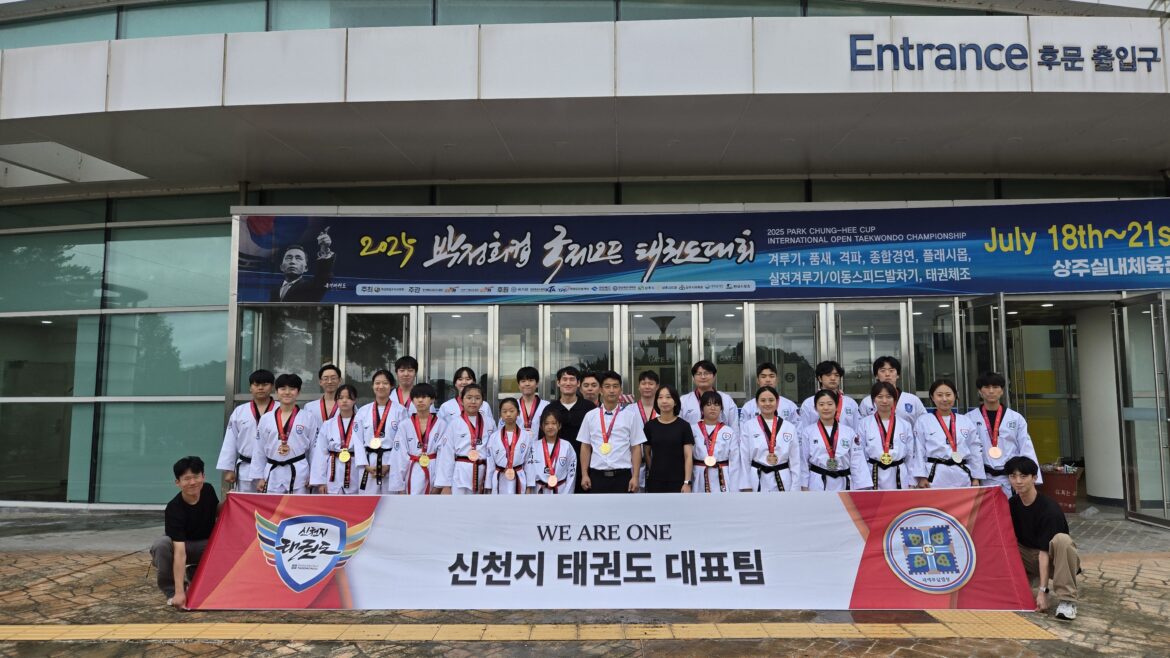
The Shincheonji Taekwondo team participating in the ‘2025 Park Chung-hee Cup International Open Taekwondo Competition’ is taking a commemorative photo. This competition is an international taekwondo competition held at the Sangju Indoor Gymnasium in Gyeongbuk from the 18th to the 21st.
Following the Kim Un-yong Cup, All Members Win Prizes for Two Consecutive Competition Proving Their Skills on the World Stage.
The Shincheonji Church of Jesus, the Temple of the Tabernacle of the Testimony (Chairman Man-hee Lee, hereinafter referred to as Shincheonji Church of Jesus) Taekwondo Team once again proved their skills on the international stage by winning prizes at the ‘2025 Park Chung-hee Cup International Open Taekwondo Competition’.
The ‘2025 Park Chung-hee Cup International Open Taekwondo Competition’ was hosted by the Park Chung-hee Cup Organizing Committee and co-hosted by the Gyeongbuk Taekwondo Association and the Sangju City Taekwondo Association. Approximately 4,200 athletes from 18 countries around the world, including Korea, the United States, and France, participated in a heated competition at the Sangju Indoor Gymnasium from the 18th to the 21st. The competition consisted of various events such as comprehensive competition, breaking, poomsae, kicking, and actual sparring, and evaluated the participants’ skills in a three-dimensional manner.
The Shincheonji Taekwondo team had a total of 25 athletes participate in the official poomsae individual competition held on the 19th, and despite the short preparation period, they displayed dazzling skills through focused training and persistent effort. As a result, they achieved the feat of winning 4 gold medals, 7 silver medals, and 14 bronze medals, with all of them winning awards.
In particular, this competition was also notable as an opportunity to enhance the cultural and diplomatic status of the Republic of Korea. The performance in the international competition held in Korea, the home of Taekwondo, is evaluated to have left a strong impression on domestic and international participants.
Lee Jun-wi, who won the gold medal, said, “Although we did not have enough training time, we tried to focus as much as possible within the given time,” and added, “I am grateful that our efforts led to good results.”
Coach Kim Deok-hoon of the national team said, “As this is an international competition, many excellent domestic and foreign players participated and competed at a high level,” and added, “I am proud that the players demonstrated their skills without wavering. Based on this competition, we will systematically prepare a training system and strategy so that we can participate with more people and improved skills next year.”
On the 19th, Shincheonji Church of Jesus Taekwondo team player Bae Do-won, who participated in the ‘2025 Park Chung-hee Cup International Open Taekwondo Competition’ held at the Sangju Indoor Gymnasium in Gyeongbuk, is demonstrating his Poomsae in the individual event of the official Poomsae. This competition is an international Taekwondo competition held in Sangju, Gyeongbuk from the 18th to the 21st.
In addition to this Park Chung-hee Cup, the Shincheonji Taekwondo national team also achieved outstanding results in which all participants won awards at the ‘2025 Kim Un-yong Cup International Open Taekwondo Competition’ held in Busan earlier this month. At that time, 12 people participated and 2 won 1st place, 4 won 2nd place, 5 won 3rd place, etc., and the entire team won medals, continuing the record of winning consecutive awards in international competitions.
In addition, at the ‘2024 Mungyeong World Taekwondo Festival’ held last year, 5 out of 18 participants won medals, and the team has been achieving excellent results in domestic and international competitions every year, establishing itself as a national team with both skills and stable team management.
Shincheonji Church of Jesus actively carries out talent development and healthy community activities in various fields such as sports, culture, and arts as well as faith, and plans to continue to realize healthy lives and social contributions through sports in the future.
The long-awaited Siaosi Brown Dialysis Centre in Veitongo is expected to begin operations in November 2025, according to Tonga’s Minister of Health, Dr ʻAna ʻAkauʻola, who made the announcement during a press conference held in Nukuʻalofa this afternoon.
Conceptual design of the centre
This marks a major milestone for Tonga’s healthcare system, as the country has never had a dialysis facility before.
Patients suffering from chronic kidney disease have long been forced to seek treatment overseas, often in New Zealand, Australia, or the United States.
Dr ʻAkauʻola said the new centre will allow many of these patients to return home and receive life-saving dialysis treatment locally.
The dialysis centre, named after Siaosi Brown, a Tongan man who passed away in the U.S. in 2017, was funded and supported by the Siaosi Brown Dialysis Board based in Utah.
The centre will initially operate with five dialysis machines located near Vaiola Hospital in Tongatapu, with services expected to be free of charge for qualifying patients.
During the press conference, Dr ʻAkauʻola also clarified the vetting process used by the Ministry of Health to determine which patients are eligible for government-funded medical evacuation overseas.
She emphasised that the Health Committee, composed of doctors from various departments, maintains a high standard in its assessments.
Even when Ministers or the Prime Minister refer patients to her, she said she still forwards them to the Committee, whose decisions are final.
While the centre is expected to offer free dialysis services, it remains unclear whether any fees will be introduced in the future.
According to Tonga’s Health Services Regulations, the Minister of Health has the authority to waive or exempt fees on humanitarian grounds.
The opening of the dialysis centre is seen as a beacon of hope for hundreds of Tongans suffering from chronic kidney disease, and a significant step toward improving healthcare access in the Kingdom.
The Minister of Public Enterprises, Piveni Piukala, has delivered a scathing assessment of Lulutai Airlines, revealing that deep-rooted engineering workforce issues have plagued the national carrier since its inception.
Minister of Public Enterprises Piveni Piukala
Speaking after Civil Aviation suspended the airline’s operations over maintenance concerns, Piukala said the move was long overdue, citing years of non-compliance, understaffing, and a revolving door of temporary engineers that compromised safety and reliability.
The suspension on Saturday, which disrupted domestic flights for four days, marks a critical turning point in the government’s oversight of Tonga’s aviation sector.
Piukala has publicly thanked the Civil Aviation Authority this afternoon for suspending Lulutai Airlines’ operations, citing long-standing maintenance issues and repeated non-compliance with aviation safety regulations.
“This is not a sudden issue,” Piukala said in Tongan. “The problems that led to last week’s suspension have existed since Lulutai’s inception.”
He revealed that Lulutai’s financial struggles have severely impacted its operational capacity, including its ability to maintain a stable and qualified engineering workforce.
“Engineers were hired just like on a temporary basis, often leaving for better opportunities overseas” he said.
He described the situation in Tonga as a lack of continuity that has compromised safety.
The Minister also linked the December crash of the Saab 340 aircraft to the airline’s history of non-compliance, describing it as part of a troubling pattern.
He confirmed that the last formal warning from Civil Aviation was issued in April, and one of the key reasons for the recent suspension was the understaffing of Lulutai’s mechanical department.
Piukala emphasised the need for structural reform and strategic planning within the airline, including better incentives for staff appointments and long-term retention.
He said the government is committed to ensuring that national air services meet international safety standards and serve the public reliably.
The government has advertised the sale of shares and the operation of Lulutai, with the deadline for bidders extended until next week.
Tonga’s Minister of Police, Piveni Piukala, has raised alarms over suspected organised crime involvement after a shipping container mysteriously disappeared from the wharf.
Minister of Police Piveni Piukala
The investigation was launched following a complaint from a customer who alleged his container was lost while in port.
Minister Piukala revealed that the case was serious enough for him to personally engage the Head of the National Security and Intelligence Unit.
“I believe this is part of an organised crime,” he stated, emphasising that Tonga is battling a deeply entrenched criminal network exacerbated by systemic corruption.
Expressing his disbelief at the incident, the Minister highlighted the stringent protocols required for releasing a container from the wharf.
“It’s not just one person who signs it out—it involves multiple authorities, including the shipping agency, Customs Ministry, Port Authority, and Stevedores,” he said in Tongan.
“For someone to remove a container without leaving a trace through this entire process is beyond reason.”
Describing the case as potentially the “tip of the iceberg,” Piukala suggested that the disappearance may be linked to a broader criminal operation exploiting weaknesses in the system.
Minister Piukala previously stated that the biggest problem authorities face in securing the wharf is the lack of strategic procedures and strict rules controlling entry and exit. He noted that certain areas should be highly restricted but remain accessible to unauthorised individuals.
This case follows last year’s report in which five men were found guilty of theft, abetment to theft, and receiving stolen property after over 300 cartons of meat were stolen from a container belonging to Star Fish Company in Ma’ufanga.
In that case, one of the accused, a security guard, allegedly received payments over several months in 2022 to ignore suspicious activities.
The public has been urged to report any suspicious activity as investigations continue.
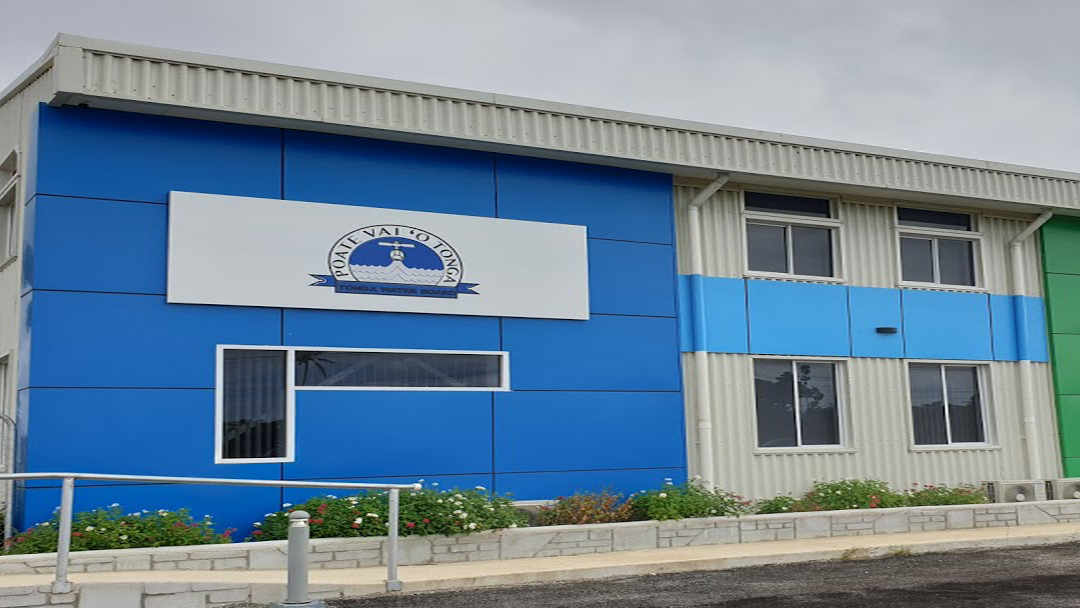
The Chief Executive Officer (CEO) of the Tonga Water Board (TWB), Sione Tutulu Finau, has been dismissed from his position, along with two other senior officers.
The decision was reportedly made following the release of an Auditor’s report, according to the Minister for Public Enterprises.
While the details of the report have not been disclosed, Minister Piukala stated that the TWB board of directors acted immediately upon receiving the findings, despite Finau’s contract being set to expire next month.
Minister Piukala also said the post was already being advertised.
The dismissals are part of a broader government review initiated by the Eke administration, which came into power after campaigning on promises of reform and accountability.
The review has already led to significant changes across several government-owned enterprises, including the restructuring of Lulutai Airlines and the termination of former CEO Poasi Tei’s contract.
In addition to leadership changes, the government has implemented reforms to reduce salaries and side benefits across various public board entities, signalling a shift toward cost-efficiency and transparency.
This included the revocation of former board members whose terms had been extended by the former interim government in December, despite their contracts being set to expire in March 2025.
Vavaʻu 15 MP Sāmiu Vaipulu has launched a defamation lawsuit against Toula Town Officer Kavamone Toʻia over allegations made on Facebook that he misused parliamentary district funds.
MP Samiu Vaipulu (L) and Toula Town Officer Kavamone To’ia
Vaipulu is seeking TOP$10,000 in damages.
The legal action, filed in the Lower Court, follows a social media post in which Toʻia accused the deputy prime minister of embezzling public money meant for constituency development.
Vaipulu’s Lawyer, Dr Viliami Uasikē Lātū, argues that the claims are false and have harmed his reputation, according to a court document purportedly presenting the charges, seen by Kaniva News.
Toʻia was commenting on a status posted by the Neiafu Town Officer, Vava Lapota, on July 7.
Dr Latu, stated that Toʻia’s comment was malicious, provocative, and aimed at defaming Vaipulu.
The comment has discredited the MP and caused emotional distress, the legal document shows.
It is alleged that To’ia posted the following comment in Tongan: ‘Kau hoo foii poini mea maulalo mooni… oku ikai teke sio kihe Kai pe he fkfofoga ae paaga vv 15-he-Tau-kihe Tau… koe Ofisa Kolo Toula eni. Tali atu hoo tohi… pea oku ou iloii oku ikai koho hingoa totonu eni… kuo mau fiemau ha Fakafofonga foou ki vv 15… alu kihe lotu keke mau Maama mooni…’ a post accusing the MP of misappropriation of funds and calling for a new MP for Vavaʻu 15 Constituency.