Thursday, February 26, 2026
Home Blog Page 93

Tongan boxer gets massive opporunity at world title

Taupo will make history on the 5th of April as Ironfist Promotions will host two-division world champion Lani Daniels (Ngāti Hine/Ngāpuhi) to defend her IBF Light Heavyweight title against Tongan-born New Zealander Nailini Helu at the Taupo Event Centre.

This is a historic fight on so many levels including being the first major World title fight to happen outside of Hamilton, Auckland and Northland, the second world title fight to happen between a Maori and Pasifika, and Nailini Helu becoming the first female Tongan to fight for a world title. This fight is also a rematch as the two first back in 2018 when Lani Daniels successfully defended her New Zealand national (NZPBA version) light heavyweight title.

Taupo is no stranger to boxing as it hosted the North Island Golden Gloves Championship for decades before the competition moved to Tauranga. Nuki Boxing Gym has hosted multiple events over the years in Taupo to add to the busyness of amateur boxing.

Nigel Elliott of Ironfist Promotions will be the sole promoter of this fight, with this being his second world title that he is promoting and over 20 professional boxing fights in his promoting career. He has promoted multiple significant events in his boxing career including four of Lani Daniels’s fights, including her world title defence against the Nigerian Bolatito Oluwole, and other boxers including top 10 WBO Ranked Gunnar Jackson, World title contender Andrei Mikhailovich, Liam Messam, former top 3 IBF Ranked Jerome Pampellone, World Title contender Alrie Meleisea, top 10 WBA ranked Sequita Hemingway and more. 

Elliot is hoping to connect with the local iwi and businesses to get this event happening as world title fights are high risk and incredibly expensive to promote, especially in a small country like New Zealand.

Lani Daniels has been on fire, being on her seventh long winning streak since April 2022. She won her first world title against Alrie Meleisea in May 2023 for the IBF World Heavyweight title. She went on to successfully defend it before winning her second world title for the IBF World Light Heavyweight title in December 2023 against now the current IBF World Middleweight champion Desley Robinson.

Daniels has held onto the Light Heavyweight world title for over 410 days, climbing closer to Joseph Parker’s first WBO World Heavyweight title record of 476 days. However, if you combine both of her titles, she has held both for over 612 days. England-born New Zealand Citizen Bob Fitzsimmons holds the record for most world titles by a New Zealander with four world titles across three weight divisions with a combination of 3267 days.

Daniels’s opponent Nailini Helu made her professional boxing debut in April 2016. Right from the beginning, she was deemed as someone destined for greatness in boxing. However, she faced significant setbacks, losing to some of New Zealand and Australia greats including IBF World title contender Alrie Meleisea, IBF World Middleweight champion Desley Robinson, retired WBO World Light Heavyweight champion Geovana Peres, and Lani Daniels. Helu began having a major comeback after taking a four-year hiatus, winning the South Pacific (PBCNZ version) Super Middleweight title in August 2022 and in August 2024, both against Tinta Smith. The title wins gave her a significant boost in the rankings, now being ranked 6th in both Boxrec and the IBF. Helu will make history by becoming the first Tongan female to fight world a world title, making this the second Maori vs Pasifika world title fight.

The undercard will feature a variety of combat sports including Amateur, Corporate, and professional boxing, tag team kickboxing with a possible 4 man kickboxing tournament. 

There will be a total of four professional boxing fights including Michael Reynolds from Paraparaumu who is getting assistance from Peach Boxing in Auckland. He will be taking on Brisbane boxer, Faavesi Isaako in a lightweight fight. Putāruru boxer Jadene Tredaway will take on Palmastern North Boxer Tania Barnett in a Super Lightweight fight. And finally, the local hometown hero Cole Campbell who represents Nuki Boxing gym in Taupo will take on Herewaka Katipa from Hamilton in a Crusierweight fight, both making their pro boxing debut.

The event will be streaming live on YouTube under the Ironfist Promotions account. Tickets will be on sale at Eventfinda on the 1st of February. Corporate tables can be purchased at Nigel@ironfistpromotions.co.nz

World title event promoted by Nigel Elliott Ironfist Promotions

April 5th at Taupo Events Centre

IBF World Light Heavyweight title 10×2 minute rounds

New Zealand/Maori Lani Daniels vs New Zealand/Tongan Nailini Helu

Lightweight 4×3 minute rounds

Australian Faivesi Isako vs New Zealand Michael Reynolds

Super Lightweight 5×2 minute rounds

Putaruru Jadene Treadaway v Palmerston North Tania Barnett 

Crusierweight 4×3 minute rounds

Taupos Cole Campbell vs Hamilton Herewaka Katipa

‘Dying young’: Meal timing, drinking water while in 16-hour fasting, a life-saving advice, says Tongan physical therapist  

Following a regimen that includes sticking to a specific meal schedule, engaging in a 16-hour fasting window, and ensuring adequate water intake could lead to significant health benefits, says a Tongan physical therapist. 

47-year-old Stanley Lotima

Sione Takataka, also known as JT Takataka, made the comment amid growing concerns about Tongans dying young from chronic diseases such as diabetes, high blood pressure and heart disease.  

Takataka has been working as a private physical therapist in Nuku’alofa for about a decade, and his practice has become one of the most sought-after therapy centres in the kingdom. 

Kaniva News has closely monitored Takataka’s streaming videos and has observed that his rehabilitation intervention program significantly aids individuals in taking control of their lives, especially after experiencing a stroke or while facing the risk of one.

Two types of reports indicate a concerning trend of young Tongans dying from chronic diseases.

One source is the official statistics provided by health providers, including Tonga’s Ministry of Health. The other source comes from social media, where reports about young individuals dying regularly have become increasingly common.  

Official statistics 

More than 80 percent of deaths in Tonga are attributed to Non-Communicable Diseases, according to a report by the ABC.  

In November last year, the World Bank approved a US$30 million grant to help Tonga meet the growing challenge of non-communicable diseases, such as diabetes and heart disease. 

The grant under the project Health Enhancement and Resiliency in Tonga (HEART)  was intended to benefit all Tongans, especially more than 15,000 people residing in Vava’u and the Niuas, where service delivery capacity will be expanded. 

“Non-communicable diseases are a significant health issue in Tonga,” former Minister of Finance Tiofilusi Tiueti, said when receiving the grant.   

Social media reports 

We use unofficial statistics here to refer to the number of deaths that are not officially recognized by the government but have been reported on social media, as noted by Kaniva News. 

Most recent deaths are individuals in their late 40s to late 50s. 

When Kaniva News inquired about those deaths on Facebook, unofficial responses mostly attributed them to heart attack, obesity or diabetes.  

On average, we observe reports of one or two deceased individuals announced on our Facebook news feed by their families each week.  

Based on this informal data, there is a growing consensus among the Tongan online community that Tongans now have a low life expectancy. 

Tonga’s life expectancy, or the number of years a person can expect to live, was 72 in 2022.  

Therapist’s advice 

Takataka, who operates his gym at Teufaiva Park in Nuku’alofa, is known for assisting locals with stroke and obesity recovery. 

Sione Takataka (standing) assisting a woman during her rehabilitation process

Individuals experiencing stroke symptoms such as foot inflammation and pain have reported relief after participating in Takataka’s fitness sessions. 

In his latest video streaming seen by Kaniva News, Takataka consulted with a person named Stanley Lotima.  

He said Lotima was 47 years old.  

Takataka said that Lotima initially weighed 157kg and is experiencing leg pain, which he said was a common indication of blood clots. His weight is risky, Takataka said.

He aimed to reduce Lotima’s weight by 10 kilograms as fast as he could.

He said that Lotima’s current conditions could also be an early indicator of a potential stroke. Stroke cuts off blood supply to parts of the brain, killing some cells. They are common and can affect people of all ages, but many patients survive if they receive prompt treatment, according to the BBC.

Takataka told viewers that he was discussing with Lotima the solution to his illness, which is his gym’s “16:8 Intermittent Fasting” programme.  

16:8 Intermittent Fasting

The programme means the patient has to fast for 16 hours from the evening until the next day.  

They have to choose a certain starting time, like 6pm, and fast until 10am the next morning.  

During this timeframe, the patient must not eat anything apart from drinking water or coffee without sugar.  

He said that in Lotima’s case, he can eat whatever food he likes as long as he keeps to the timeframe and fasts on a regular basis.  

He said they would look at the type of food he should eat later.  

He also advised Lotima to squeeze lime or lemon fruits into his food or drink them without sugar during his fast.

In other streaming videos viewed by Kaniva News, Takataka mentioned that people could consider filling their plates with 80 percent vegetables and 20 percent of different foods they prefer. 

Takataka’s advices are supported by other academic research.  

“Eating a high calorie diet can lead to weight gain and obesity. But the health consequences of diet depend partly on when in the day meals occur”, an article by the National Institute of Health said.  

Consuming food during periods of usual inactivity, such as nighttime for humans, may contribute to weight gain, it said.  

“This suggests that obesity results in part from a mismatch between meal timing and the natural day-night cycle, or circadian rhythm.  

“But the mechanisms by which this happens aren’t fully understood”. 

All Blacks back David Havili the new Crusaders captain

By rnz.co.nz and is republished with permission

All Blacks utility back David Havili is the new Crusaders Super Rugby captain.

David Havili of the Crusaders

All Blacks back and new Crusaders captain David Havili. Photo: PHOTOSPORT

Havili takes over from All Blacks skipper Scott Barrett, with the Crusaders coach Rob Penney deeming it too demanding for the lock to hold both roles.

Scott Barrett (Captain) of the Crusaders.
Chiefs v Crusaders, DHL Super Rugby Pacific, FMG Stadium Waikato, Hamilton, New Zealand on the Saturday 23 February 2024. Copyright Photo: Jeremy Ward / www.photosport.nz

Scott Barrett (Captain) of the Crusaders. Chiefs v Crusaders, DHL Super Rugby Pacific, FMG Stadium Waikato, Hamilton, New Zealand on the Saturday 23 February 2024. Copyright Photo: Jeremy Ward / www.photosport.nz Photo: Jeremy Ward

“It’s very humbling. I was pretty blown away when Penney approached me,” Havili said.

“This is certainly the proudest moment I have had for a while. The Crusaders are all about community and I love this team.”

Penney is confident Havili will become a great captain.

“We’ve already seen Davey prove himself in this role over the last couple of years, he’s a man that cares deeply about the team and their way forward. He is going to be exceptional,” Penney said.

Havili has played 128 games for the franchise since debuting in 2015. He was named vice captain in 2020 and has long been part of the Crusaders leadership group.

The 30-year-old, who plays mostly in the midfield, also captained his provincial side Tasman to victory in the 2019 and 2020 NPC seasons.

He has captained the Crusaders on a temporary basis before years when Barrett was unavailable for selection.

Returning to Crusaders training week after his fifth All Blacks end of year tour, Havili will lead the franchise next Friday in their first pre-season game against the Blues at Kirwee Rugby Club.

The son of former Nelson Bays rugby representative Bill Havili, David was born in Nelson, but raised in nearby Motueka.

David Havili of the Crusaders

Photo: PHOTOSPORT

Havili was called into the All Blacks for the 2017 Rugby Championship squad as an injury replacement and made his test debut against Argentina in Buenos Aires scoring his first try on debut at the 81st minute.

He has played 30 tests for the All Blacks scoring nine tries.

Remembering violent Tonga eruption three years on

By Iliesa Tora of rnz.co.nz and is republished with permission

First person – On 15 January 2022, the Hunga Tonga-Hunga Ha’apai undersea volcano erupted. It was the most powerful volcanic eruption since Krakatoa in 1883, and triggered a devastating tsunami which killed three people.

The tsunami waves devastated the small islands of ‘Atata and Mango, forcing the communities on both islands to relocate to the main island, Tongatapu, and the third largest island, ‘Eua.

RNZ Pacific journalist, Iliesa Tora, was in Nuku’alofa on the day of the eruption. This is his story.

This is our story – the days before

Sea currents beginning to build around the open sea swimming pool area at the Fasi Ma'ufanga waterfront on 14 January 2022.

Sea currents beginning to build around the open sea swimming pool area at the Fasi Ma’ufanga waterfront on 14 January 2022. Photo: Iliesa Tora

Some pieces of volcanic stones or 'soata' washed up on the Nuku'alofa waterfront on 14 January 2022.

Some pieces of volcanic stones or ‘soata’ washed up on the Nuku’alofa waterfront on 14 January 2022. Photo: Iliesa Tora

Our family, and the rest of Tongatapu, Ha’api and ‘Eua, had observed volcanic eruptions from Hunga Tonga – Hunga Ha’apai site since early December 2021. They were similar to the submarine eruptions we experienced between 19 December 2014 and 28 January 2015. Reports from the Tonga Geological Services stated that the eruptions had added a circular area of land, over 100 metres in elevation, at a spot south of and about midway along Hunga Ha’apai island’s length.

This new island initially grew as an isolated third island, before eventually it joined and became part of Hunga Ha’apai. The new land had a surface about 1.5 to 2km in diameter. The new island grew until it was only a few hundred meters from Hunga Tonga island. But those eruptions were much smaller than the ones we witnessed in December 2021.

In the early days of January 2022, my wife Asinate and our son Samuela noticed changes occurring in Ha’amoko, where we lived. This was about a 10-minute drive from central Nuku’alofa and four minutes to the beachfront.

We noticed strange smells, similar to mangrove swamps with stagnant water.

During the week of 9 to 14 January we were advised, via radio, that acid rain had been observed on some of the smaller islands in the Ha’apai Group, near the volcano. The acidic rain had damaged plants and burned water tanks and pipes.

On the morning of 14 January, our family were woken by a strong sulphurous smell that enveloped our house. My wife and I thought it was from the drainage system that we had created to take used water from the kitchen sink to our small taro plantation. However, Samuela noticed the same sulphurous smell on the road, when he walked to the shop.

A radio announcement from the Tonga Meteorological Services around midday stated there was a tsunami marine warning for coastal areas of the Tonga islands.

The statement said: “Volcanic Cloud Imagery at 9am local time had indicated the current volcanic eruption activity that has been erupting in the Hunga-Tonga & Hunga Ha’apai Areas.”

“One of the signs of a volcanic eruption is the smell of sulfur in the air. It has been noted this morning (around 7am to 8am) that a strange sulfurous odor can be smelt in the air. This sulfurous smell is like the smell of silt clay (kele) from mangrove sites and fanga’uta lagoon areas.

“Acid rain is also a possible result from this eruption and sulfurous smell. So, it is advised that the people should be careful in collecting rainwater during rainy periods today as it may affect our health and environment.”

We were curious to find out and see for ourselves what was happening, and drove towards the Nuku’alofa waterfront. As we drove alongside a popular swimming spot along the Fasi Ma’ufanga area we noticed something happening within the open sea swimming pool area. When waters flushed into the area the levels went high, but when the waters receded the whole pool area dried up.

Further towards the Taufa’ahau Wharf a strong water current was building, with circular movements we could clearly see. We also noticed there were volcanic stones or ‘soata’ in Fijian washed up around the swimming pool area.

I livestreamed the event on my Facebook page, as an awareness piece and warned of the incident unfolding before our eyes.

That evening our Fijian Methodist Church group in Nuku’alofa were scheduled to visit a female member who was partially paralysed. She lived with a Fijian family along the Sopu coastline, looking out to ‘Atata Island. During the visit we sat half-scared, half-curious as we watched what the happening out at sea that night.

The red skies seen from the Nuku'alofa waterfront on 14 January 2022.

The red skies seen from the Nuku’alofa waterfront on 14 January 2022. Photo: Iliesa Tora

As the sun slowly dropped over the horizon, a shade of red stretched from the sky to the ocean. Lightning flashed across the sky, starting about 4pm and continuing into the night.

Tongan police officers were going around the coastline and sending people home.

Three years later, we remember the events of 15 January 2022, even though we have moved across the seas to Wellington.

Three years later, we remember the events of 15 January 2022, even though we have moved across the seas to Wellington. Photo: Iliesa Tora

15 January, 2022

Volcanic clouds cover the skies over Tongatapu at around 5pm on 15 January 2022, as the Hunga Tonga - Hunga Ha'apai volcano started erupting.

Volcanic clouds cover the skies over Tongatapu at around 5pm on 15 January 2022, as the Hunga Tonga – Hunga Ha’apai volcano started erupting. Photo: Iliesa Tora

The next morning it appeared as though the eruptions had died out. So, we decided to do some work outside the house and began mowing our lawn. Reassuringly, Tonga Met had cancelled the tsunami marine warning for some parts of Tonga.

We took a break at lunch until about 4.15pm. We went back to cleaning our compound when suddenly a deafening blast shook the ground and everything around us. We were still reeling and confused when a second explosion sounded. We looked up to the heavens; we saw black clouds had almost covered the whole of Tonga.

My journalist instincts awakened and I grabbed my camera and jumped into the car. With Asinate and Samuela joining me, we headed for the waterfront to take photos and video of what was happening. As we were driving we heard a third and fourth eruption.

At the Tuimatamoana market the Saturday vendors were running to and fro. People were shocked, unable to believe what was happening. I stopped the car next to the fish market and as I held up my camera towards the Fafa Island Resort, I noticed the waves rising almost to the same level as coconut trees on the island.

I knew this was going to be bad so I jumped back into the car, turned the ignition on, rammed the accelerator and dashed off towards home. We were about 1,000 metres away when the first tsunami waves hit the wharf, as we heard shouts from where the waterfront was, with vendors running away to safety.

We made it to the house and only stopped to throw some clothes into two bags. We grabbed our nephew, who was at home, jumped back into the car and headed towards a tsunami evacuation spot around the Pili area. Along the way pieces of volcanic stones came falling down, hitting the car roof followed by acid rain.

The roads were jam-packed as people tried to get to safety.

I livestreamed the event as we drove towards Pili, letting family members, friends and viewers know that we in Tonga were being hit by a tsunami and volcano eruptions.

Internet connections died about 30 minutes later and as the night arrived and darkness enveloped Tongatapu, we were all praying. Along with five other families, including six young children, we took shelter at a Fijian family’s house in the Pili area. It was not until Sunday morning, 16 January 16, when we finally saw the awful damage that the eruptions and tsunami had done.

The day after

A fishing boat ends up on the road in front of this bookshop in Ma'ufanga, Tongatapu on 16 January 2022.

A fishing boat ends up on the road in front of this bookshop in Ma’ufanga, Tongatapu on 16 January 2022. Photo: Iliesa Tora

Volcanic ashes cover this car in Pili, Tongatapu on 16 January 2022.

Volcanic ashes cover this car in Pili, Tongatapu on 16 January 2022. Photo: Iliesa Tora

Young Samuela Tora cleans up the verandah at home on 16 January 2022.

Young Samuela Tora cleans up the verandah at home on 16 January 2022. Photo: Iliesa Tora

Volcanic ashes cover our rooftop in this 19 January, 2022 photo, following the eruptions on 15 January.

Volcanic ashes cover our rooftop in this 19 January, 2022 photo, following the eruptions on 15 January. Photo: Iliesa Tora

As daylight came, we decided to go and see what had happened in the aftermath of the eruptions and tsunami.

Grey was the colour of the day, as volcanic ash and sand covered everything including rooftops, roads, trees and cars. A drive through the villages towards the sea revealed more of the same. When we reached the main waterfront area, we saw damaged houses and fishing boats, which had been washed up on the roads.

Prime Minister Hu’akavameiliku Sioasi Sovaleni had sought approval for shops to open that Sunday morning, and declared a state of emergency. Everyone had to buy bottled water because their drinking water tanks were contaminated by the acid rain and volcanic ash.

Later, we gathered with the other Fijian families, at the Pili house where we had taken refuge, to offer prayers of thanks for our survival. We knew our families on the mainland would be worried about us, as all communications had been cut by the eruptions.

We have since moved to Wellington, New Zealand, and both my wife and son are still nervous when they feel the earth tremors or earthquakes here.

Although we would never want to experience an eruption like that again, there were lessons to be learned from it. The biggest lesson was that we need to be prepared and take tsunami warnings seriously. Many Pacific Islanders have a tendency to take such warnings for granted, but for anyone who experienced the 15 January eruption, that has probably changed.

The stories of both loss and survival from that day will hopefully be retold for generations to come, so we will always be ready for the next natural disaster.

Man charged after Tu‘ungafasi’s death  

A man has been charged after a father died in October last year. 

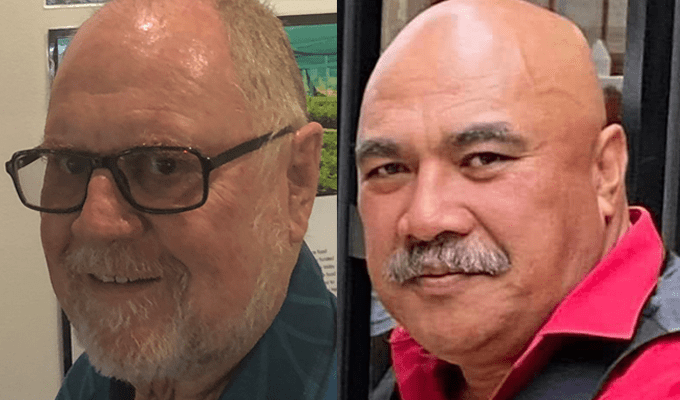
Penisimani Tu’ungafasi (inset).

As Kaniva News reported at the time, Penisimani Tu‘ungafasi died after a double cab ute crashed into what appeared to be a tree at a roadside in Pelehake. 

He apparently died at the scene before his body was rushed to the hospital. 

Speeding and weather conditions were believed to be contributing factors in the crash. 

Two individuals involved in the crash had been hospitalized, facing critical injuries that require immediate medical attention. 

Local media reports said Manase Maile, 27, of Fātumu, had recently been accused of driving recklessly, causing Tu’ungafasi’s death.  

He has been charged with that offence.

Tu’ungafasi was reportedly working at the Fua’amotu airport before the fatal crash occurred. 

He was survived by his wife and children.   

Prisoner dies at Hu‘atolitoli prison  

A prisoner has reportedly died at His Majesty’s largest prison in the kingdom last month.  

Hu’atolitoli prison

Local media have identified the deceased as Peau La’iafi. 

Media sources alleged the 39-year-old died of a heart attack.  

Others, however, claimed that the deceased was a victim of foul play.  

We have contacted the Prisons’ CEO, Sēmisi Tapueluelu, for comment.  

We asked him to clarify the conflicting information we had about La’iafi’s death. 

We also requested Tapueluelu to confirm whether this was La’iafi who was sentenced in relation to the death of Manu Crewe of Pelehake in 2017.  

A court decision said La’iafi was sentenced along with two other men after they became aware that Crewe had sexually assaulted the daughter of one of the men.  

Court document shows Crewe admitted to the offence.  

During a night of heavy drinking, a heated altercation broke out involving Crewe, La’iafi, and the men. 

The tension escalated, resulting in a violent confrontation.   

Crewe sustained serious injuries during this incident and was subsequently taken to the hospital, where he succumbed to his injuries shortly after arrival. 

Country’s second most powerful police officer, Jevon McSkimming, suspended amid probe

By rnz.co.nz and is republished with permission

The second most powerful police officer in the country has been suspended, pending the outcome of a criminal investigation.

RNZ/Reece Baker

Jevon McSkimming had been in the running to become the new Police Commissioner. Photo: RNZ / REECE BAKER

Deputy Commissioner Jevon McSkimming is being investigated by the Independent Police Conduct Authority and the New Zealand police.

The nature of the allegations against McSkimming cannot be reported.

In a statement from his lawyer on Tuesday, McSkimming confirmed he had been suspended since before Christmas on full pay, pending a criminal investigation.

“He remains on full pay, pending a criminal investigation. When any police officer faces an investigation of this nature, they are typically suspended from duty,” the statement said.

“Mr McSkimming is cooperating fully with Police and looks forward to the investigation being concluded swiftly, after which he expects to resume his duties as Deputy Commissioner.”

McSkimming was one of the final two candidates for New Zealand’s top cop job last year, with Richard Chambers eventually appointed Police Commissioner.

McSkimming was promoted to statutory deputy commissioner in 2023 on the recommendation of then-prime minister Chris Hipkins.

The role comes with a higher pay packet and status than standard deputy commissioners.

Late last year he was overseeing road policing and operational services, which include strategy, media and communications, risk and assurance, and firearms regulation and reform.

During his appointment process, it was noted he had a “relatively unique career path”, working at police headquarters since 2010 across a range of areas: strategy, service delivery, resolution, financial planning, arms admin, ICT and infrastructure.

McSkimming joined the police in 1996 and worked on the frontline in Auckland and Southland.

He has also been responsible for large restructures – as well as managing police IT systems, property portfolio, vehicles, and launching the 105 non-emergency number.

Woman arrested after stabbing near Glenfield Mall

By rnz.co.nz

The police have made an arrest in the Auckland suburb of Glenfield, after a man suffered a minor stab wound to his hand on Tuesday afternoon.

Armed police in Wellington. Generic image of armed police.

File pic Photo: RNZ / Angus Dreaver

Officers responded to the incident on Glenfield Road just before 2pm.

A woman was arrested a short time later.

Inspector Mike Rickards said the offender fled the scene towards nearby Glenfield Mall.

“Our staff, who were armed as a precaution, responded and located the woman near a store inside the mall,” he said.

“Our staff take these sorts of incidents seriously and moved quickly to resolve this matter without further incident.”

Police said the individuals were known to each other and there were no ongoing risks to the public.

The man would receive treatment for his injury.

Pacific’s most popular baby names in 2024

By Mary Afemata of rnz.co.nz and is republished with permission

The most popular Pacific baby names for 2024 in Aotearoa have been revealed, with Kaia topping the girls’ list and Malakai leading the boys, according to data from the Department of Internal Affairs (DIA).

Baby portrait

In 2024, 59,199 births were registered with the Department of Internal Affairs. LDR has compiled the top Pacific baby names for boys and girls in New Zealand. Photo: Siobhan Kelly Photography

Local Democracy Reporting received the list of all the baby names registered last year from the DIA.

Using this data, an unofficial list for 2024 – which is not sanctioned by the department – focused on names associated with Polynesia, Melanesia, and Micronesia, while separate from Māori names, unless there was an overlap.

The official Māori baby names for 2024 will be released closer to Matariki, as the DIA works closely with Māori to establish clear criteria for identifying Māori names.

However, the department has not yet created an official list of Pacific baby names and does not have this initiative planned for 2025.

Kaia is the most popular girl’s name, with 85 registrations, while Malakai is the leading boy’s name, with 57.

Kaia, of Hawaiian origin, means “the sea”, while Malakai, the Tongan and Fijian form of Malachi, means “messenger of God.”

Manaia ranked second among the girls and occupies the eighth spot on the boys’ list.

In Sāmoan, Manaia means “beautiful” or “nice”, and it is also connected to Māori mythology.

Leilani, the third most popular girl’s name, is also of Hawaiian origin and means “heavenly garland of flowers” or “heavenly child.”

Other popular Pacific names for girls included Malia, Kiana, Mele, and Kehlani.

For boys, Koa is the second most popular name, meaning “brave,” “bold,” or “warrior”, and refers to the native Hawaiian koa tree. Kai, the third most popular name, also of Hawaiian origin, means “sea” or “ocean.”

Other popular names included Sione, Keanu, Te Ariki and Ariki.

Overall, the top baby names in New Zealand for 2024 were Isla for girls and Noah for boys.

Noa, a Pasifika variation of Noah, also made the list of top Pacific boy names for 2024.

Tauanu’u Nick Bakulich, chair of the Māngere-Ōtāhuhu local board, shared his name Nicholas with 22 newborns last year and provided his thoughts on the unofficial list.

“It’s probably a sign of the times. The names are a lot more contemporary now, as opposed to once upon a time when it was almost close to 100 percent biblical names. It’s the modern age we live in.”

The name Hawaiki, given to 26 baby boys last year, refers to the ancestral Polynesian homeland and is of Māori origin, although its Polynesian roots can be debated.

Atarangi, the 10th most popular baby girl name, is also a Māori name with ties to the Cook Islands.

Tauanu’u acknowledges this discussion: “Yeah, leave that to the academics. It’s an interesting conversation.”

Māngere-Ōtāhuhu Local Boardchair Tauanu'u Nick Bakulich (left), and Sāmoan language expert Lemoa Henry Fesulua'i, comment on the unofficial list of top Pacific baby names for 2024.

Māngere-Ōtāhuhu Local Boardchair Tauanu’u Nick Bakulich (left), and Sāmoan language expert Lemoa Henry Fesulua’i, comment on the unofficial list of top Pacific baby names for 2024. Photo: Auckland University / Auckland Council

Sāmoan language expert Lemoa Henry Fesulua’i, senior leader for engagement and partnerships in the Office of Pacific Advancement at

Auckland University of Technology, commented on the biblical names that made the top 10.

“Initially, there are a lot of biblical names, a lot of transliterations names like Malakai is Malachi. Sione’s John, Mele’s Mary in Tongan. [There’s] a lot of Tongan names.”

Lemoa says there is a significant presence of Tongan in the Pacific baby names and, a mix of original or indigenous names, floral names, and gender-neutral names.

“A lot of the names I’ve mentioned at first glance, like the royalty names, seem like a reclaiming of their identity as noble.

“If there’s 24 Mele, 35 Malia, and 36 Sione, it’s either biblical or a namesake, just to revive their name, even though they’ve given me short versions.”

Lemoa recalled his late mentor, known as Mele, whose full name was Melengalenu’u. In many Pacific Islands, especially Samoa, names hold significance as a connection to identity, which goes beyond just the Western concept of a birth certificate.

“The name itself has always been an Indigenous approach, a concept passed down from our ancestors to connect the young to the land, their identity, and their surroundings.

“People are now opting for the originality of ancestral names, reclaiming their identity. It’s about connecting with who we are, where we come from, and the legacy of our ancestors.

“From a linguistic point of view, these names are definitely Pacific. They follow a pattern -consonant-vowel or vowel-consonant structures. It’s how we know the cultural distinctions between us,” Lemoa explains regarding the unofficial list.

Dr Polly Atatoa Carr.

Dr Polly Atatoa Carr underscores the importance of collecting high-quality ethnicity data. Photo: Supplied / University of Waikato

Polly Atatoa Carr, associate professor of population health at Te Ngira (Institute for Population Research) at the University of Waikato, commented on the absence of an official list for Pacific names.

“Identity is such an important part of ourselves, our families, and our children growing up. If we are not, from the very beginning, collecting high-quality ethnicity data and representing our Pacific families appropriately, we miss the chance to celebrate them.

“Knowing that we have high-quality ethnicity data – even when it comes to baby names – is crucial. We need to ensure that we are counted appropriately.”

The Department of Internal Affairs registered 59,199 births in 2024, including 19,404 unique names. Parents are encouraged to register their baby’s name within two months of birth.

Parents are encouraged to register their child's name with the Department of Internal Affairs within two months of birth.

Parents are encouraged to register their child’s name with the Department of Internal Affairs within two months of birth. Photo: Siobhan Kelly Photography

Most popular Pacific baby girl names for 2024

Kaia – 85

Manaia – 37

Leilani – 35

Malia – 35

Kiana – 29

Mele – 24

Kehlani – 16

Tiare – 16

Noa – 15

Atarangi – 13

Most Popular Pacific baby boy names for 2024

Malakai – 57

Koa – 48

Kai – 47

Sione – 36

Keanu – 34

Te Ariki – 34

Ariki – 27

Manaia – 26

Tai – 16

Kainoa – 15

LDR is local body journalism co-funded by RNZ and NZ On Air.

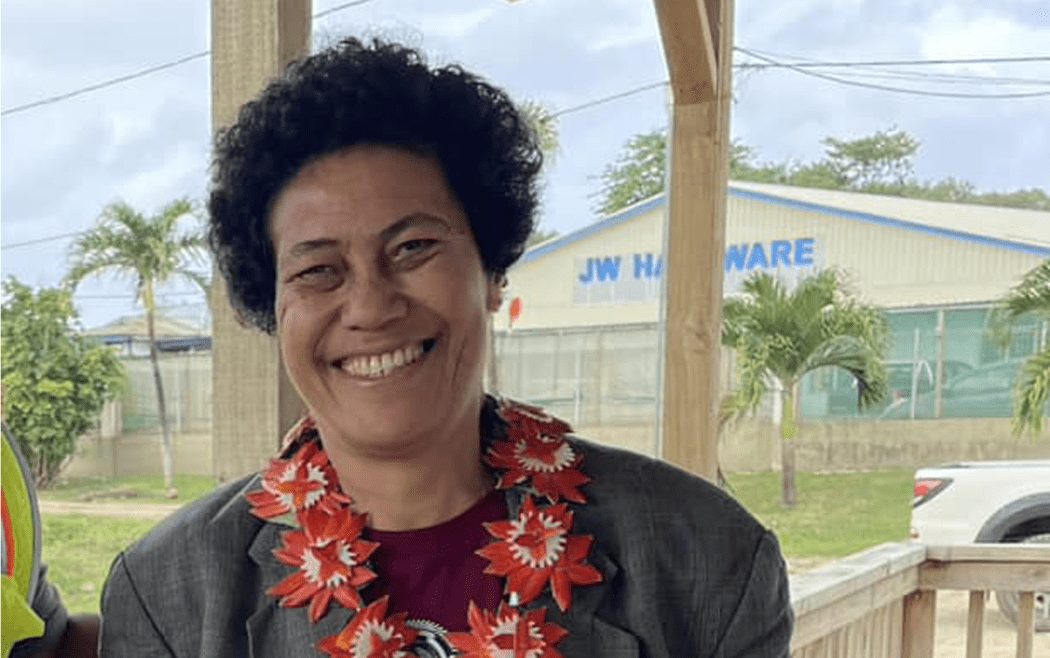
Supreme Court quashes Public Service Commission decision to fire director Magdalena Fifita 

Tonga Supreme Court has quashed a Public Service Commission (PSC) decision to dismiss director Magdalena Tafa Fifita from the Ministry of Tourism due to an alleged conflict of interest.

Magdalena Fifita

It follows a legal challenge brought by the victim.  

Fifita was charged with a serious breach of discipline. 

The PSC had also intended to report her to the Tonga Police for investigation.  

Fifita was dismissed as Director of the Ministry of Tourism on 9 January 2024. 

Until then, she had been employed in the Tonga Public Service for 24 years. 

That career culminated in her working for the Ministry and taking on the role of director in September 2019. 

She was dismissed after revelations that she, as director of the Ministry, had offered a contract to a company named Matapa Services.

Fifita’s daughter owns that company.

The company had been paid approximately TOP $55,000.00 through the contract to provide courses and training as well as catering services to the Ministry in 2022-2023.

Statement of claims

The statement of claims stated that Fifita had never been given a copy of the complaint.  

As such, she could not answer the allegations before the charges were laid.

This amounted to a denial of her right to be heard, the court document says.  

“The PSC did not allow Ms. Fifita to be heard before they laid the charges against her and as such the decision maker was biased and the decision to charge, fundamentally unfair and an abuse of power”, it said.

The Ministry of Tourism’s former CEO, Sione Mafi, was never spoken to during the inquiry regarding the accusations, even though Fifita identified him as a relevant witness.

The court was told that Fifita disclosed her apparent conflict of interests to Mafi before he agreed to offer the contract in question.  

She was reported in the court document as saying in court that “…she was aware of the conflicting interests due to the consultancy ownership by her husband as a co-owner, however, declared to the CEO, Mr. Sione Moala-Mafi and received his endorsement”.

Statement of defence

The statement of defence argued that the CEO Report demonstrates that Fifita was interviewed and so was given the right to be heard.

It also argued that interviewing former CEO Mafi was not a mandatory requirement as Regulation 5 (2) (j) only requires “any statements from witnesses” and they need not be included if not gathered.

Further, there was sufficient material placed before CEO Takau, by Fifita for him to come to the view there was no need to take a statement from the former CEO.

The trial was held on 13 November 2024, with submissions taking place the following day.

Mafi gave evidence for Fifita.

Simione Sefanaia, Chairman of PSC, CEO Kioa of PSC, Franz Tu’uhetoka and CEO Takau all gave evidence for the Defendant.

In his conclusion, Justice Cooper quashed the decision to charge Fifita with 27 Charges of serious Breach of Discipline. 

He also rejected the decision to dismiss Fifita from the Ministry of Tourism and the intention to report her to the Tonga Police. 

He said the costs are to be subject to further hearing on a date to be agreed upon.