Saturday, April 4, 2026
Home Blog Page 103

Tongan mother remembers son mistakenly shot dead by Auckland police on 16th anniversary 

A Tongan mother solemnly reflects on the life and legacy of her son, who was tragically shot and killed by police in Auckland.  

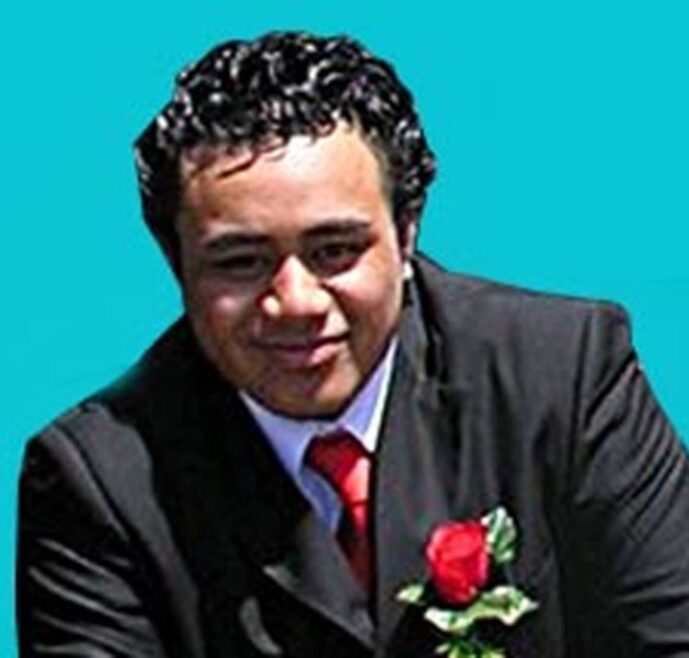
Halatau Naitoko was shot by police in January 2009. Photo / Supplied

Young dad Halatau Ki’anamanu Naitoko, 17, was mistakenly shot on January 23, 2009, on Auckland’s Northwestern Motorway as officers tried to stop gunman Stephen McDonald, who had gone on a shooting rampage. 

About four years later, police announced Naitoko’s family would receive a total of $225,000 in compensation. 

The compensation includes $100,000 for hardship and suffering, $25,000 towards legal costs, and $100,000 already paid to the family shortly after the 17-year-old’s death. 

The Naitoko family’s lawyer, Colin Pidgeon QC, said at the time that after a lengthy analysis by a leading expert in Bill of Rights law, they had decided to make a claim and settled on the sum of $1 million.  

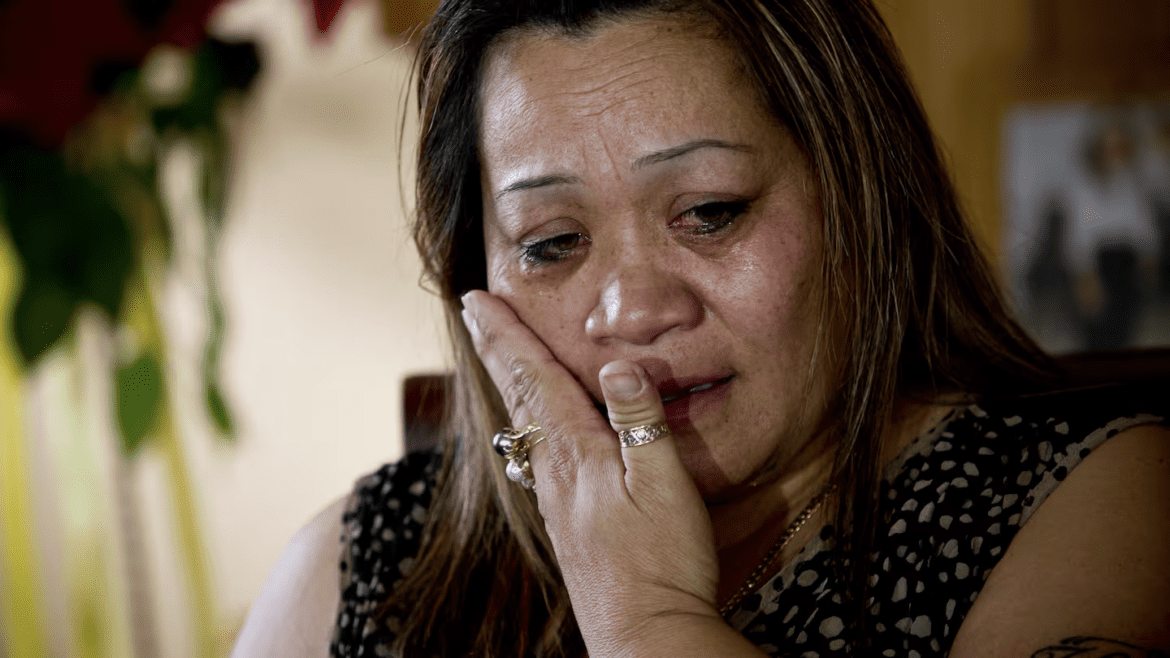
As she commemorates the 16th anniversary of his passing, ‘Ivoni Fuimaono shares memories of his son.  

“Wish you were here my son, 16 years today I miss you”, she wrote on Facebook. 

His funeral was reported to have been attended by more than 1,000 mourners, including then Police Minister Judith Collins, Police Commissioner Howard Broad and numerous politicians.

Ivoni Fuimaono, mother of Halatau Naitoko, mistakenly shot dead by police in 2009. Photo / Dean Purcell

Mourners were told Naitoko worked hard to help feed his brothers and sisters.

The young courier driver was a loving and devoted father to his two-year-old daughter, mourners heard.

Seven-year jail term for Vava‘u man who attacked two men with a machete 

A man who had caused serious injuries to two victims with a machete has been sentenced to seven and a half years in jail.  

After being granted a suspension on specific conditions, he will only serve a reduced sentence of four years and six months in prison. 

Tevita Matangi, 32, was found guilty of one count of causing grievous bodily harm to Mateaki Hafoka.  

He was also found guilty of one count of causing grievous bodily harm to Sikuvea Fifita.  

The court was told that an altercation involving the machete broke out among the trio at a residence in Talau. 

At one stage, Matangi, armed with the machete, attacked Hafoka and Fifita.  

Hafoka was injured while he was trying to disarm Matangi.   

They struggled and his arm was struck by the machete before he could reach Matangi’s hands, the court was told.  

Fifita, who received the more severe injuries while he also attempted to remove the machete from Matangi, collapsed before he was rushed to Vava’u’s Ngu hospital.  

He was later transferred to Vaiola Hospital in Tongatapu.  

Justice Bishop suspended Matangi’s final three years of his sentence on the following conditions: 

a) not commit any offence punishable by imprisonment; 

b) report to the probation office within 48 hours of his release from prison and thereafter as required by his probation officer; 

c) complete a course on alcohol, drug awareness and life skills as directed by his probation officer. 

 “Failure to comply with the said conditions may result in the suspension being rescinded, in which case, the Defendant will be required to complete the balance of his prison term. 

“Subject to compliance with the above conditions and any remissions available under the Prisons Act, the Defendant will be required to serve 4 years and 6 months in prison”. 

Tongan man jailed for indecent assault

A man has been convicted and sentenced to imprisonment following a serious indecent assault against a victim. 

He made a late guilty plea to two counts of indecent assaults.  

The original charges included several counts of rape, but the complainant resiled from her statement.  

The evidence submitted on oath to the Court about the alleged incidents was, therefore, said to be all false.  

The Lord Chief Justice Malcolm Bishop KC then said he would proceed based on the evidence before him.  

Mr Bishop took into account a presentence report filed by the Probation Office.  

The report detailed the accused’s upbringing, personal history, and factors relating to the offence, along with their recommendation. 

The Probation Office concluded its report by stating that a custodial sentence is inevitable given the circumstances and emphasizes the Defendant is the sole breadwinner for his family. 

For Count 1 on serious indecent assault, Mr Bishop imposed a sentence of 12 months imprisonment with the final 3 months suspended for 2 years on the following conditions: 

a. He must not commit any offence punishable by imprisonment 

b. He must report to the probation office within 48 hours of your release from custody 

c. He must complete a life skills awareness course at the direction of the Probation 

Officer within your 1-year suspension period. 

18. For Count 2 on serious indecent assault, the Judge imposed a sentence of 12 months imprisonment with the last three months suspended on the same conditions and concurrent to 

He further ordered under section 119 of the Criminal Offences Act that nothing in these proceedings shall be published in a written publication to the public or be broadcasted in the Kingdom that shall reveal the identity of the parties. 

Trump demands an apology from bishop who asked him to ‘have mercy’ on LGBTQ+ people and migrants 

President Donald Trump is calling for an apology from a bishop who recently urged him to show compassion towards LGBTQ+ individuals and migrants.  

The bishop’s comments, made during Trump’s inauguration, emphasized the importance of mercy and understanding for marginalized communities. 

Referencing Trump’s belief that he was saved by God from assassination, the Right Rev. Mariann Budde said, “You have felt the providential hand of a loving God. In the name of our God, I ask you to have mercy upon the people in our country who are scared now.”  

In response, Trump, who frequently emphasizes his Christian faith in public discourse, expressed his discontent and demanded that the bishop retract his statements. 

After he returned to the White House, according to an Associated Press report, Trump said, “I didn’t think it was a good service” and “they could do much better.” But later, in an overnight post on his social media site, he sharply criticized the “so-called Bishop” as a “Radical Left hard line Trump hater.” 

“She brought her church into the World of politics in a very ungracious way. She was nasty in tone, and not compelling or smart,” said Trump, a Republican, adding that Budde didn’t mention that some migrants have come to the United States and killed people. 

For about a decade, Trump managed to secure the support of many evangelical and conservative Christians.  

Robert Jeffress, pastor of an evangelical megachurch in Dallas, has been a staunch supporter of Trump since his first campaign for president and is sticking by him even as rivals like South Carolina Sen. Tim Scott and former Vice President Mike Pence tout their Christian faith. 

“Conservative Christians continue to overwhelmingly support Donald Trump because of his biblical policies, not his personal piety,” Jeffress told The Associated Press via email. “They are smart enough to know the difference between choosing a president and choosing a pastor.” 

However, Trump’s critics saw some of his behaviours as un-Christian and often seemed at odds with teachings espoused by Christ in the Gospels. 

This included after he was recently found liable for sexually abusing a New York woman in 1996 and was indicted in a criminal case related to hush money payments to a porn actress. 

As Fiji announces HIV outbreak, UNAIDS echoes calls for a non-discriminatory approach  

The Government of Fiji has declared an HIV outbreak in response to a sharp increase in reported newly diagnosed cases during 2024. 

A targeted 90-day containment plan will speed up immediate, high-impact interventions while the HIV Surge Strategy approved last September will guide the AIDS response until 2027.

UNAIDS will continue to support the generation of strategic information, technical planning, program innovation and resource mobilisation as Fiji implements short- and longer-term plans to prevent new infections and ensure people living with HIV benefit from life-saving services. For these strategies to work, those most vulnerable to HIV infection must be able to safely access the information and care they require. They should also play a leading role in the design and delivery of those services.

“Prioritization of HIV by the Government is critical for not only the people of Fiji, but the entire Pacific,” said Eamonn Murphy, Regional Director of UNAIDS Asia Pacific and Eastern Europe Central Asia. “Rising new infections in Fiji put the entire Pacific region at risk. Political will is the essential first step. There must also be community leadership and regional solidarity to ensure these strategies work.” 

As Minister for Health and Medical Services, Hon. Dr. Ratu Atonio Lalabalavu noted yesterday, there were 1093 newly-reported cases from January to September 2024. This is three times as many as there were in 2023. According to the Ministry, reported cases have increased nine-fold over the last five years. The rapid rise in newly-diagnosed cases met the national criteria for declaring HIV a national outbreak.

Preliminary Ministry of Health numbers show that among the newly-diagnosed individuals who are currently receiving antiretroviral therapy, half contracted HIV through injecting drug-use. An additional concern is that over half of all people living with HIV who are aware of their status are not on treatment.

“Fiji has the second fastest growing HIV epidemic in the Asia and the Pacific region. These data do not just tell the story about a lack of services,” Mr Murphy explained. “They indicate that even when people know they are HIV-positive, they are fearful to receive care. There must be a deliberate effort to not only strengthen health systems, but to respond to the unique needs of the most affected populations, including people who use drugs. Perpetuating prejudice against any group will slow progress. We must work together to make it safe and easy for people to access the information, services and support they require. In the words of Minister Lalabalavu ‘discrimination and stigma will only serve to make our current situation worse’.”

The HIV Outbreak Response Plan calls for a combination of prevention approaches including the introduction of harm reduction programs for people who inject drugs. Since the sexual transmission of HIV remains a significant factor, other key approaches are condom distribution and pre-exposure prophylaxis or PrEP. (PrEP is treatment taken by an HIV-negative person to reduce the risk of contracting HIV if they are exposed.) Through the Australian Government’s Indo-Pacific HIV Partnership, UNAIDS is supporting Fiji to scale up these comprehensive prevention approaches. 

The United Nations in Fiji recognizes the Government’s decisive leadership in addressing the HIV epidemic and reaffirms its commitment to supporting the national response.

“The declaration of an HIV outbreak and the launch of high-impact interventions, such as needle syringe programs and PrEP, mark a critical turning point in Fiji’s efforts to combat the epidemic,” said Mr. Dirk Wagener, United Nations Resident Coordinator in Fiji. “We commend the Hon. Minister for Health and Medical Services for his bold leadership in taking this pivotal step. The Joint UN Team on HIV, with UNAIDS as its Secretariat, stands ready to provide coordinated and sustained support to ensure the success of these strategies and to protect the most vulnerable.”

The HIV Surge Strategy includes tactics for Fiji to achieve the Global AIDS Strategy targets—95% of all people living with HIV aware their status, 95% of diagnosed people on antiretroviral therapy, and 95% of people on treatment achieving a suppressed viral load. People who attain viral suppression through treatment adherence and monitoring will live normal healthy lives and a person with an undetectable viral load cannot pass on the virus through sexual intercourse. This is known as Undetectable equals Untransmittable (U=U). 

“HIV treatment is effective. It not only keeps people living with HIV healthy, but can help prevent new infections,” explained Renata Ram, UNAIDS HIV Adviser in Fiji. “Every Fijian has a part to play by making our homes, communities, schools, workplaces and places of worship, spaces that support and care for people rather than shame and exclude them.”

Delays in Cabinet lineup appointment means Eke’s only five months to operate in full force with his July budget highly tight 

COMMENT: The delays in the Cabinet appointment have resulted in Prime Minister Eke losing a crucial month of operation since the public service began on January 6. 

The nation is currently awaiting the appointment of the Cabinet lineup, which was anticipated yesterday. However, this has yet to occur.

Meanwhile, the new government faces another significant challenge as it is expected to navigate the complexities of the current budget, which the previous administration structured.  

Most of these budget allocations do not align with the new administration’s policies and priorities, creating a gap between their ambitious plans and the financial framework they inherit.  

Eke, a finance and economic expert, was instrumental in criticizing the current budget when it was introduced into the House before it was approved in June last year.  

As a standard practice, Tonga’s annual budget must be approved by the House in June for the period from July until June of the following year.

The Parliament usually closes in November.  

So, the remaining time means Eke needs to squeeze 12 months it supposes to prepare and implement the budget to less than just 10 months. This means he can only fully enforce his policies within about five months, from July to November.  

As a result, the new government must be very busy finding ways to either adapt the existing budget to better suit its objectives or devise a set of new financial initiatives.  

However, these proposed measures are anticipated to encounter significant pushback from the Opposition bench within the House, which may complicate implementation of the government’s plans and hinder progress on key priorities.  

Royal appointments 

Under the constitution, the king is required to appoint Cabinet Ministers upon the recommendation of the Prime Minister.  

However, this procedure has now been increasingly shown to pose challenges to the efficient functioning of the government.  

The monarch appears to have exercised his constitutional authority in a manner that undermines the Prime Minister’s prerogative to select his Cabinet lineup independently.  

This action constitutes a significant affront to the principles of democracy and compromises the autonomy of a Prime Minister who has been duly elected by the majority of the House. 

Tonga’s 2010 political reform meant that the king would rule under the prime minister’s advice, not vice versa.  

The late King George V, who was instrumental in implementing the democratic reforms, indicated in an interview with a New Zealand journalist in 2008 that these reforms necessitated a transfer of executive power from the monarchy to the populace.

He was asked during the interview about his role as a monarch under this new democratic system.  

As part of his response, King George V said: 

“The difference in future is that I shall not be able to exercise any of my powers at will. All sovereign powers must be exercised solely on the advice of the Prime Minister on most things and in the traditional matters, the law lords”.   

Lack of transparency  

Eke has faced significant criticisms lately due to his insufficient communication about the developments in his meetings aimed at nominating his Cabinet lineup.  

Observers have expressed concern that the public remains largely in the dark about the decisions and the rationale behind them, fostering a sense of distrust and frustration among constituents seeking transparency in the governmental process.  

Many have called for more regular updates and more precise explanations of the selection criteria and discussions taking place during these important meetings. 

Critics have expressed concerns regarding Eke’s genuine commitment to his transparency policy. They particularly noted that the Members of Parliament who supported his candidacy in the premiership election identified this policy in the media as a fundamental element in the review of government ministries, especially the outgoing Cabinet.

One significant challenge Eke encounters is the need to unify the MPs of his political faction. The fact that they are a mixture of people’s independently elected MPs and noble MPs not chosen by the constituents presents a significant issue for Eke.

The difficulty of dealing with this diverse composition has proven to be a barrier in the past, especially its lack of legally binding provisions within the legislation. This hampers Eke’s ability to achieve timely agreements and complicates his efforts to address the diverse interests of all his MPs.

Tributes flow for two children killed in Tongatapu car crash

Tributes are pouring in for two children who tragically lost their lives in a car crash in Tongatapu.

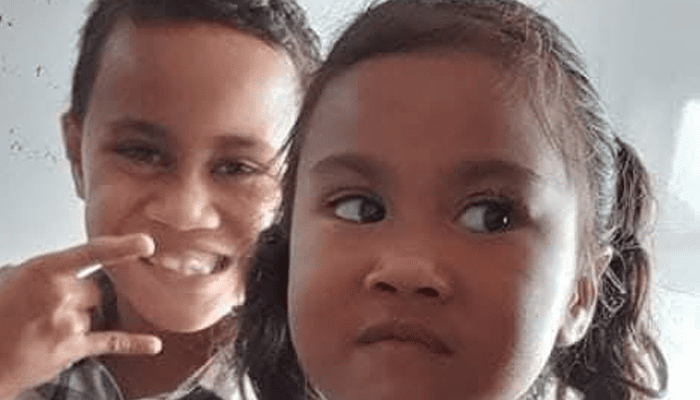
Two siblings died in an accident on a HIhifo road. Photo/Supplied

Reports claimed a massive vehicle accident occurred on Hihifo road at Hōfoa yesterday.

The details of the fatal incident are still unclear.

Police have yet to comment.

The community is coming together on social media to remember the children’s vibrant spirits and the joy they brought to those around them.

Many shared heartfelt messages and memories, expressing their sorrow and condolences to the families affected by this heartbreaking incident.

One heartfelt tribute on Facebook expresses deep sorrow, stating, “It’s truly heartbreaking to learn about the tragic loss of the children who died in the crash.

“Their lives were just beginning, and it’s unimaginable that such a tragedy could take them away so suddenly”, another wrote in Tongan.

“My thoughts and prayers are with their families during this challenging time.”

“Sending my love and prayers to both parents during these very hard times of their lives.”

“May you rest in peace, babies.”

Tongan women laughing in disbelief after realizing they allegedly met wrong body at funeral home 

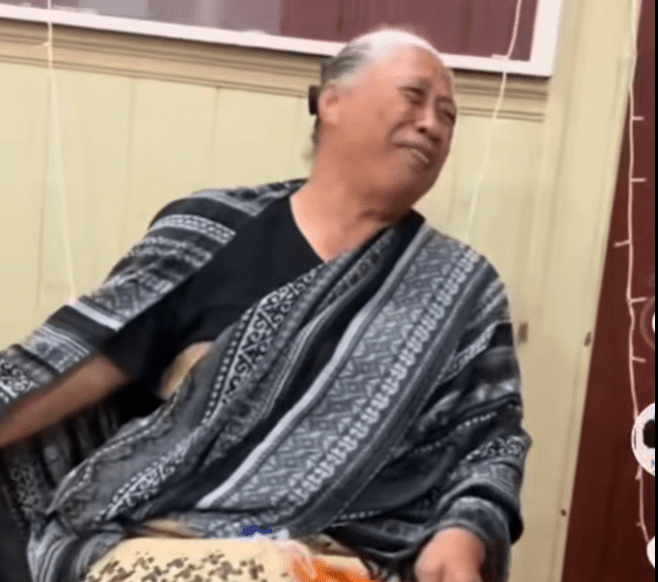
UPDATED: A group of Tongan mourners finally discovered they were gazing at the wrong deceased in a room at a funeral home. 

The encounter was captured on camera and shared on Facebook. 

Kaniva News was unable to verify the authenticity of the footage. 

The funeral complex seemed to have been hosting multiple funerals simultaneously, creating a confusing atmosphere that mistakenly led the group to enter the wrong room. 

The details of the incident are still unclear.  

The footage showed one woman, who goes by the name Lisa Vaenuku Mahe, stepping out of the room with amusement as she learned of the mishap that had just unfolded. 

Another woman in the footage was overheard making a conscious effort to stifle her laughter as she watched the women reminiscing about the drama with playful banter in another room.  

One of the women said in Tongan: 

“O fai he tangi laulau mo e ‘uma”.  

This translates into English as:

We went and lamented and kissed.  

Va’enuku was overheard saying, “Sio mai e kaume’a ko ee mei mu’a ki he’eku tangutu. Mahalo nau pehe ‘e nautolu pe ko hai au?”. 

Lisa Mahe Va’enuku

This translates into English as:  

Those at the front looked at me. Perhaps they were wondering, who am I?” 

The streamed video has gained significant attention on Facebook, having been shared over a hundred times by various users.

Its widespread sharing has also sparked an engaging conversation, accumulating more than a hundred comments from viewers who are sharing their thoughts and reactions.

The footage has ignited a lively and interactive discussion among viewers, exchanging playful banter and engaging in spirited debates.

How Trump’s birthright citizenship revocation order may affect Tongans in the USA if courts could not block it?  

President Trump’s executive order banning birthright citizenship of babies born to many temporary residents of the United States could affect thousands of Tongans living in that country.  

As the order currently faces a series of legal challenges that may ultimately lead to a court battle, various experts have begun to analyze and share their insights on the potential consequences of this situation.

The decision could affect not just those who are in the country illegally but also those babies born to women living legally, but temporarily, in the United States — such as people studying on a student visa or workers hired by high-tech companies.  

These babies will not automatically be recognized by the federal government as U.S. citizens if the father is also not a permanent resident. 

Trump told federal departments, according to a Time report, “to deny the right known as birthright citizenship from children born to mothers and fathers in the country unlawfully. Under his order, it would also deny citizenship to children born to parents in the U.S. on work or study visas, tourism visas, or when neither parent is a U.S. citizen or permanent resident. The order could impact who is granted passports, social security numbers, and certificates of citizenship. If it stands, the changes would go into effect on Feb. 19”.

Reuters’ report on the matter said: “Trump’s order declared that individuals born in the United States are not entitled to automatic citizenship if the mother who was in the country unlawfully and the father was not a citizen or lawful permanent resident. It also declared citizenship would be denied to those whose mother was in the United States lawfully but temporarily, such as those on student or tourist visas, and whose father was not a citizen or lawful permanent resident”. 

A report by the New York Times said that there are serious questions about how Trump makes the move since the citizenship of babies born in the United States is documented in a two-step process. 

“First, the state or territorial government will issue a birth certificate confirming where and when the birth took place. The birth certificate does not include any information about the immigration status of the baby’s parents. 

Second, when that baby (or the parents, on the child’s behalf) applies for a passport, the birth certificate showing that the baby was born on U.S. soil is enough to prove citizenship. No other documentation is required”. 

If birthright citizenship were to be limited or eliminated, many Tongan newborns in the States could face uncertainty regarding their citizenship status.  

This is because most of their parents who have just arrived in the States were on temporary visas such as student and work visas and visiting visas. 

There were reports of about 10,000 undocumented Tongans in the States.   

This change could affect their children’s legal rights and access to education, healthcare, and government services.  

Tongans in the USA 

There are approximately 78,871 Tongans in the United States. 

A 2014 study of Tongans in the country by Amy Cooper found that “From 2001 through 2010, an annual average of 300 Tongans obtained legal permanent residence in the United States; most were immediate relatives of Tongans already living there”. 

It also said: “During those same years, more than 3,000 Tongans were admitted annually as temporary workers”. 

The report also mentioned that many Tongans came to the United States via a Mormon Church initiative, which offered immigrants “student and work visas and the chance for Tongans of marriageable age to meet spouses.”

Eke officially appointed PM of Tonga

Dr ‘Aisake Valu Eke has been officially appointed prime minister of Tonga by King Tupou VI at the Nuku’alofa Royal Palace.

King officially appoints Dr ‘Aisake Eke as Prime Minister of Tonga.

He replaces former Prime Minister Hu’akavameiliku, who suddenly resigned last month.

The king is also expected to appoint Eke’s Cabinet Ministers shortly.

The king was overseas shortly after Parliament elected Eke in December.

His Majesty returned to the kingdom last weekend and made the official assignment this morning.

Dr Eke attained his first degree in Economics from the University of the South Pacific (USP) in the 1980s and his doctorate from the University of Southern Queensland in 2013.

He had been the chief executive officer of the Ministry of Finance and National Planning for over 10 years.

He was first elected to Parliament as an independent in 2010 after the constitutional and democratic reforms.

From a political perspective, Eke could be perceived as a leftist, demonstrating support for the founder of the Democratic Party of the Friendly Islands, Paati Temokalati ‘a e ‘Otumotu Anga’ofa (PTOA), Samuela ‘Akilisi Pohiva.

Pohva consistently advocates for enhanced social and economic equality, endorsing socially liberal principles such as the CEDAW convention and advocating for limiting the king’s authority within the executive branch of government. Pōhiva had long campaigned for Tonga to become a democracy, which came to fruition in 2010 after the late King George V willingly relinquished his executive power.

In October 2011, Eke joined other MPs to protest against Parliament allowing large allowances for members on sick leave overseas.

He believed that MPs should not spend more public money on themselves when the economy was weak. He was one of eight MPs who voted against the increased allowances.

In January 2014, he was appointed as Minister of Finance.  He subsequently kept that position in the incoming government of Prime Minister Pōhiva.

In March 2017, he abstained during a parliamentary vote concerning a motion of no confidence against the Pōhiva government, which ultimately necessitated his resignation. Following this event, he lost his parliamentary seat in the election held in 2017.