A mysterious viral outbreak is overwhelming some hospitals in China and prompting people to wear face masks again.
Videos on social media appear to show medical units struggling with large numbers of patients.
Parents were seen holding sick children amid long queues in paediatric care late at night.
Many are drawing similarities with the early dark days of the Covid pandemic five years ago from its start in the city of Wuhan.
According to local news reports, a little-known virus called human metapneumovirus (HMPV) has been blamed. It normally causes a mild cold-like illness, including fever, a cough, runny nose and wheezing.
In severe cases, HMPV can lead to bronchitis or pneumonia, particularly in children.
The virus spreads through respiratory droplets and close physical contact, making it highly contagious in crowded settings.
The World Health Organization highlighted the increase in cases in a November bulletin, noting that respiratory infections had been on the rise since October.
In response, China’s National Disease Control and Prevention Administration launched a pilot monitoring system aimed at identifying and managing pneumonia of an unknown origin. This initiative is designed to improve tracking and response to the surge in winter-related respiratory infections.
Although social media is filled with claims of overcrowded hospitals, no official reports suggest that the situation is critical. However, the NCDPA acknowledged a notable rise in respiratory infections between December 16 and 22.
The ongoing pneumonia outbreak is particularly concerning for vulnerable groups, including young children and the elderly.
Meanwhile, WHO has urged China to share data on the origins of the global Covid-19 outbreak in 2020 which led to an estimated seven million deaths.
One person has died, and another was taken to hospital with serious injuries following a crash in Karaka overnight.
Police attend the scene of the crash in Karaka overnight. (Source: 1News)
Emergency services were called to the intersection of Walters Road and Blackbridge Road about 8:50pm after reports that a car had hit a bank.
“One of the occupants sadly could not be revived by first responders and died at the scene, while the other was transported to hospital in a serious condition,” police said.
The serious crash unit attended the scene, and the circumstances of what happened are under investigation.
(AAP) A man has been charged with the rape and sexual assault of a female airline crew member in Fiji on New Year’s Day.
The coral coast south of Viti Levu, Fiji (file image). (Source: istock.com)
A police official in the Pacific island nation on Saturday confirmed a man has been charged with the alleged rape and sexual assault of a 21-year-old member of a Virgin Australia flight crew.
The man is facing one count of each offence and is due to appear in Nadi Magistrates Court on Monday, according to local and Australian media reports.
In the early hours of January 1, a group of Virgin Australia flight crew members were celebrating in Nadi, on the western side of Fiji’s main island Viti Levu.
One crew member was allegedly robbed and another was allegedly sexually assaulted after going to a nightclub in the town, which is the international gateway to Fiji’s most popular tourist destinations.
The suspect “will be produced in court on Monday” after being taken into custody on Wednesday, Acting Police Commissioner Juki Fong Chew said in a statement quoted by Reuters and the ABC.
Virgin Australia declined to comment when contacted by AAP.
AAP has contacted the Fiji Police Force and the Fiji Tourism Department.
Earlier this week, Tourism Minister Viliame Gavoka said the incidents were “regrettable”.
“Our thoughts and concerns are with them and for their health and well-being,” he said in a statement on social media.
Where to get help for sexual violence. (Source: 1News)
On Thursday, Fiji Police said they were questioning a suspect known to them about the sexual assault.
Fears for tourism industry
Locals have been worried that the incident and another in December – when seven tourists including four Australians fell ill after drinking cocktails at the five-star Warwick Fiji resort – could negatively impact the tourism industry.
Hosanna Kabakoro, the founder of the indigenous-led South Pacific Foundation which provides clean water access to rural and maritime communities in Fiji, said locals felt awful for the victims of the alleged crimes.
“The general feeling here in Fiji is that everyone feels so bad for the victims,” Kabakoro told AAP.
“We feel awful that they had a terrible experience while visiting Fiji.
“It’s definitely the topic of discussion today here in Fiji, but generally, people are surprised that it happened here in Nadi.”
The NGO founder said the western coastal town was known for being a very safe place and reassured visitors it was one of the safest places to go out at night in the Pacific.
Tourism is one of the largest contributors to Fiji’s wealth, accounting for about 40% of the nation’s gross domestic product, according to the Australian government.
“For a country that’s as small as Fiji, that does rely as heavily on tourism as Fiji does, everyone is worried,” Kabakoro said.
“People rely on tourism here, whether you work for a resort, whether you’re a vendor, whether you’re a wedding planner, a makeup artist, a food or vegetable supplier.”
Kabakoro, who was born and has lived in Fiji for most of her life, said the Pacific destination continued to be a welcoming place.
“We are safe. We are hospitable. We are accommodating,” she said.
Local Fijian MP Ketan Lal said the incidents were deeply concerning.
“Such incidents tarnish Fiji’s reputation as a safe and hospitable destination and highlight the urgent need for a thorough investigation and justice for the victims,” Lal said on social media.
The Virgin crew members stayed in their hotel near Nadi International Airport after the incidents and the airline sent support staff to Fiji.
They were due to return to Australia at the end of the week.
Alcohol poisoning was suspected as the cause of the mysterious illness affecting the seven tourists in December, some of who were admitted to hospital.
However, a toxicology report later found the pina colada mixtures they were served did not contain illicit substances or methanol.
President-elect Donald Trump has publicly voiced his concerns over the decision to lower U.S. flags to half-staff for days, including his inauguration on January 20.
Trump perceived this act as a move that overshadowed the celebration of his inauguration, which he believed should be a moment of national pride and unity.
It is customary to lower the national flag when a US president dies.
Trump perceived this act as a move that overshadowed the celebration of his inauguration, which he believed should be a moment of national pride and unity.
Trump, who has announced plans to attend Carter’s memorial service in Washington on 9 January, took issue in a Truth Social post on Friday with the flags remaining in the mourning position during his swearing-in ceremony.
He argued that the sombre gesture was inappropriate for the occasion, suggesting it detracted from the significance of the day when he was officially taking office as the 45th President of the United States.
“The Democrats are all ‘giddy’ about our magnificent American Flag potentially being at ‘half mast’ during my Inauguration,” Trump reportedly said.
“They think it’s so great, and are so happy about it because, in actuality, they don’t love our Country, they only think about themselves.”
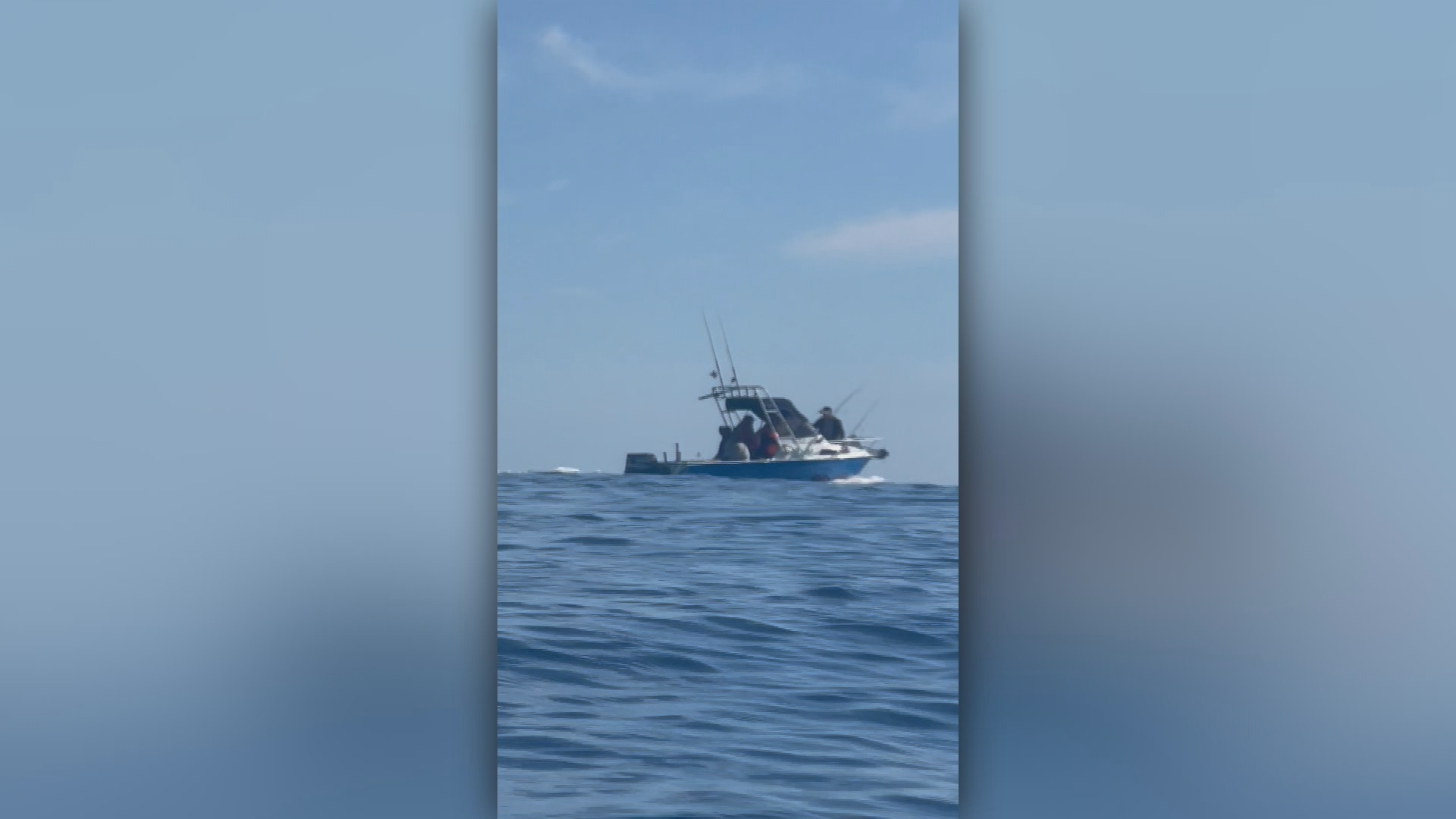
Swimmers say they chased away a boatload of fishers from Goat Island, north of Auckland.
Call for help after suspected illegal fishing inside NZ’s oldest marine reserve
A group of swimmers say they disrupted suspected illegal fishing inside the protected Goat Island Marine Reserve north of Auckland, prompting the Department of Conservation to call for the public’s help.
The group from Leigh Swimming were in the water at the Reserve last Sunday.
“We came around the corner and at the back of Goat Island saw fishermen with lines in the water fishing in our precious marine reserve,” said swimmer Kaye Mueller.
A smaller group of swimmers swam up to the boat and called out those on board.
“I think they were quite surprised to see swimmers around the back of the island. They were almost in shock, I think,” a swimmer who did not wish to be identified told 1News.
“‘No, no, you can’t fish. You’ve got to put that fish back. This is a marine reserve’.”
She said the fishers started pulling up their lines and prepared to leave. However, one of the swimmers didn’t want them to leave with their catch. They estimated there were up to a couple of hundred fish on board, many of them undersized.
“One of our group did get on board and was very angry that these people were fishing,” she said.
“He got their chilly bin off them and tipped the fish overboard.”
Footage filmed by Mueller shows some of the swimmers leaving the boat and heading back to shore with the chilly bin in tow.
Swimmers with a chilly bin taken from a boat of fishers in Goat Island Marine Reserve. (Source: Supplied / Kaye Mueller)
She was doubtful the fishers were simply looking to put food on the table.
“Not 200 undersized fish,” she said. “Sure, get one or two or whatever to feed the family, but not just wholesale harvesting like that.”
Mueller contacted the Department of Conservation (DOC) following the incident.
‘Pretty shocking’
Goat Island Marine Reserve north of Auckland. (Source: 1News)
Marine scientist Nick Shears, who works at Goat Island for the University of Auckland, called the standoff “a pretty shocking incident – the scale of it, the number of fish”.
But he said cases like this are not unheard of.
“We do have poaching occurring within the marine reserve periodically. DOC do their best with the resources they have to patrol the reserves.”
He said Goat Island Marine Reserve – the oldest in the country – plays a vital role in science and conservation.
“It’s a fully no-take marine reserve. No one is allowed to take anything. And it’s one of the few areas on our coast which is like that,” he said.
“So it means the fish here are able to thrive. They’re not continually being chased and harassed by fishermen. So it allows the ecosystems to naturally recover.”
A Department of Conservation sign. (Source: 1News)
In a statement, DOC said it was investigating the incident and could not provide details.
DOC issued a call for the public to be its “eyes and ears”.
“People are our greatest resource when it comes to managing marine reserves,” a spokesperson said.
Anyone who sees illegal or suspicious activity has been urged to report it with supporting evidence – such as vessel names, registration plates, and descriptions of the boat and people involved – to DOC.
DOC also called on people not to put themselves at risk by intervening when they see illegal fishing.
But the group from Leigh Swimming were undeterred and said if a similar incident happened again, they would try to record better evidence.
Mueller called the Goat Island area the group’s “blue backyard”.
“We just love it, so we want to preserve it and make sure that people respect that.”
Unlock this article by subscribing to Kaniva News Premium
Funding Kaniva Tonga journalism every year is great value on a weekly basis. Make a bigger impact today, and protect our independence long term. Please consider annual support
OR
Buy This Article
Unlock this article and gain permanent access to read it. Unlock credits cost: 1 Available credits: N/A
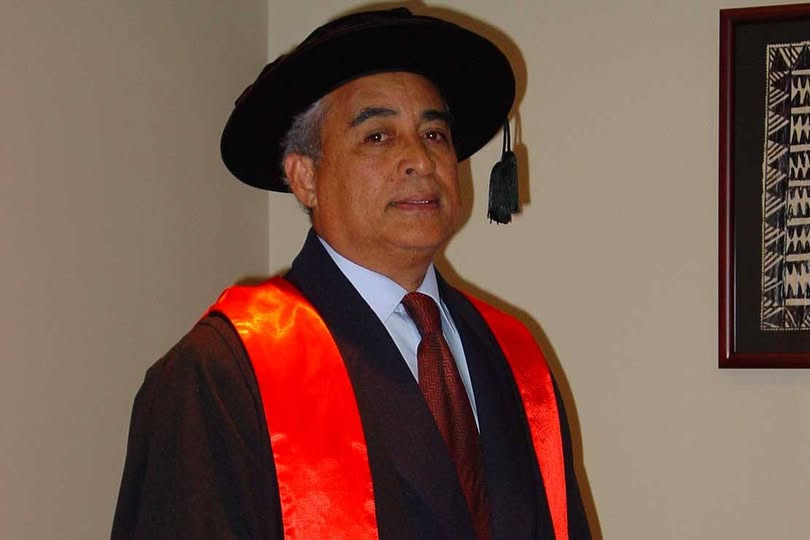
A Tongan health physician who characterized the significant rise in cancer rates within the Pacific region as a “hidden epidemic” has been promoted to professor.
Professor Sunia Foliaki
Professor Sunia Foliaki was promoted from the rank of associate to full professor by Auckland’s Massey University, effective January 1, 2025.
The promotion underscored the significance of his contributions to the health field and the urgent need for greater awareness and action regarding cancer prevention and treatment in the Pacific.
Dr Foliaki reportedly said cancer is one of the region’s biggest killers, but little is known about it and efforts to understand it are under-resourced.
“Cancer is the probably second-leading cause of death, and what’s concerning to me is I’d probably say that at least just over a third of these cancers are very, very much preventable, affordable, but people are dying from these,” he told a previous interview with RNZ Pacific.
His doctoral dissertation addressed the significant gap in global research regarding asthma’s prevalence and time trends in the Pacific region.
The study aimed to explore the underlying causes of asthma and evaluate the effectiveness of various control measures employed over time.
Dr Foliaki was awarded $300,000 from the Health Research Council in 2015 to look into the palliative health care of Pacific people in New Zealand.
“Sunia is a very talented Pacific health researcher and a highly deserving recipient. His work will contribute to improved health in Pacific people in New Zealand. It is urgently needed given the significant health inequalities Pacific people face”, said Professor Jeroen Douwes, the director of the Centre for Public Health Research, after the fellowship award.
A woman attempting to smuggle meth-soaked clothing through Auckland Airport is among three alleged drug couriers arrested this week in operations that netted drugs worth more than $10 million, authorities say.
Methamphetamine soaked clothing (Source: Customs Service
The 59-year-old was arrested last night when border officers allegedly discovered clothing items stiff with absorbed methamphetamine in her baggage.
The estimated weight of the suspected meth found, including the clothes, was 6.87kg.
Over the past two days, Customs officers have seized an estimated 27kgs of meth from two separate smuggling incidents.
Auckland Airport customs manager Paul Williams said the unrelated incidents highlighted ongoing attempts to exploit the busy holiday travel period.
“Day three into the new year and Customs has already stopped approximately NZ$10.2 million worth of methamphetamine from causing harm in our communities,” he said.
“This is a result of the hard work of our frontline officers, supported by intelligence and targeting experts who have been working throughout the holiday season to identify and stop potential drug couriers.”
Canada flight linked to first seizure
The woman’s arrest followed a seizure on Wednesday where officers discovered 20.44kg of methamphetamine from a suitcase, which allegedly arrived on a flight from Toronto.
An estimated 20.44 kilograms of methamphetamine was found concealed in a suitcase (Source: Customs Service)
“A 33-year-old man and a 39-year-old man arrived in Auckland on a flight originating from Toronto, Canada, on Wednesday January 1,” a spokesperson for the agency said.
“Customs officers conducted questioning and a search of their baggage, and the 33-year-old was found in possession of an estimated 20.44 kilograms of methamphetamine in his checked-in suitcase.
“The bag tag on this suitcase was linked to the 39-year-old man.”
An estimated 20.44 kilograms of methamphetamine was found concealed in a suitcase (Source: Customs Service)
The two men are due to appear in Manukau District Court today charged with importation of a Class A controlled drug. The 33-year-old will also be charged with possession for supply of a Class A controlled drug.
Woman arrived on flight from Honolulu
In the other unrelated seizure of methamphetamine in the past week, Customs said the woman arrived on a flight from Honolulu, Hawaii.
The woman was referred to border officers for questioning.
“Customs officers also searched her baggage and found clothing that was stiff to the touch. Border testing indicated the presence of methamphetamine, which had been soaked into the clothing,” a spokesperson for the agency alleged.
“The woman was arrested and charged with the importation and possession for supply of a Class A controlled drug.”
She is due to appear in the Manukau District Court today.
A judge has ordered that President-elect Donald Trump will be sentenced on 10 January in his hush-money case in New York – less than two weeks before he is set to be sworn in as president.
The hearing is scheduled 10 days before Trump’s inauguration ceremony in Washington DC on 20 January.
Judge Juan Merchan signalled he’d sentence Mr Trump to a conditional discharge, in which a case is closed without jail time, a fine or probation, and that the president-elect could appear in person or virtually for the hearing.
A spokesperson for Trump did not immediately respond to a request for comment.
Advertisement
The case stems from Trump being convicted in May of 34 felony counts of falsifying business records related to a $130,000 payment to adult film star Stormy Daniels.
Trump’s defence had argued the case would hang over him during his presidency and impede his ability to govern.
The Judge had been advised there were several measures he could employ that could assuage Mr Trump’s concerns about being distracted by a criminal case while serving as president that fell short of the “extreme remedy” of overturning the jury’s verdict.
Mr Trump had initially, and unsuccessfully, argued the case against him ran afoul of a Supreme Court ruling on presidential immunity in his first motion to dismiss the case.
In July, the country’s top court ruled that presidents have broad immunity from criminal prosecution for “official actions” they take while in office.
However, last month Justice Merchan ruled Trump’s hush money conviction was valid.
His sentencing on 10 January will make him the first felon to serve in the White House.
The president-elect was initially scheduled to be sentenced on 26 November, but Justice Merchan pushed the date back after Trump won the presidential election.
Unlock this article by subscribing to Kaniva News Premium
Funding Kaniva Tonga journalism every year is great value on a weekly basis. Make a bigger impact today, and protect our independence long term. Please consider annual support
OR
Buy This Article
Unlock this article and gain permanent access to read it. Unlock credits cost: 1 Available credits: N/A
The MP for Tongatapu 2 Dr ‘Uhilamoelangi Pingi Fasi has raised alarming claims about evidence of dishonesty within government ministries.
Dr ‘Uhilamoelangi Fasi
In Tongan he said “ko e ngaahi fakamo’oni ko ia’ ‘oku fu’u fakailifia ‘aupito ia ‘i he’eku sio ki ai ‘i he fehū’aki holo ‘a e ngaahi me’a ta’efaitotonu ‘i he loto’i potungāue”.
In English, he said: “Those evidence are quite alarming in the way I look at it and how dishonesty pervades the ministries”.
MP Fasi mentioned the Ministry of Education in particular.
The former head of the Ministry’s Examination Unit commented during an interview with a US-based Tongan podcaster.
It comes in the wake of the new government’s vow to review all ministries as part of its to-do list within its first month in office.
As Kaniva News reported this week, Dr Fasi has been provisionally nominated as the Minister for Education, according to a leaked preliminary document.
MP Fasi used the Tongan proverb “Matamata Lelei Fakafa’itoka”, which literally translates to “beautiful like a cemetery,” to articulate the troubling circumstances. However, he did not provide further details about the dishonesty claims.
The proverb figuratively means something may appear attractive or pleasant on the exterior but hide a darker reality inside.
MP Fasi claimed that the ongoing development of new infrastructure at the Ministry has attracted a sense of intrigue and appreciation among the public.
However, he pointed out a significant concern regarding the state of affairs within the classrooms.
Despite the investment in modern facilities, he alleged that the learning environment has become chaotic, with issues such as inadequate resources, lack of organization, and ineffective classroom management disrupting the educational experience for students.
He is worried that the gap in educational outcomes raises important questions about the balance between improving school facilities and the quality of teaching and learning.
MP Fasi said that Tongan education has achieved great results in the past, which has made it outstanding in the Pacific. He feared that past successes would be at risk without equal attention to school improvements and effective teaching.
The Ministry of Education could not be reached for comment.
The former Minister of Education Hon Hu’akavameiliku responded to accusations made against him in Parliament about complaints about his leadership. He claimed that his government operated within the framework of the constitution.
He challenged the Opposition to pursue legal action against him if they had any evidence of wrongdoing.
Unlock this article by subscribing to Kaniva News Premium
Funding Kaniva Tonga journalism every year is great value on a weekly basis. Make a bigger impact today, and protect our independence long term. Please consider annual support
OR
Buy This Article
Unlock this article and gain permanent access to read it. Unlock credits cost: 1 Available credits: N/A
Tonga’s Prime Minister Designate is expected to arrive in New Zealand this weekend to meet King Tupou VI for his appointment as Tonga’s new Prime Minister, according to reports.
Dr ‘Aisake Eke
The constitution stipulates that the king must appoint the Prime Minister elected by the majority of the Parliament.
Dr Eke was elected last month after the former Prime Minister Hon Hu’akavameiliku resigned ahead of his vote of no-confidence motion.
According to Radio New Zealand Pacific, “King Tupou VI has asked Eke to meet him in New Zealand this weekend to receive royal approval for his appointment”.
It is understood that the king is currently in Auckland after departing Tonga last week for medical checkups.
“This is strange; I have never heard of a prime minister having to travel overseas to receive the King’s approval,” Veteran Tongan Journalist Kalafi Moala was reported by the radio as saying.
As Kaniva News reported, an unofficial preliminary list for the new Cabinet has emerged, revealing that three nobles have been nominated, while the remaining proposed ministers consist of Members of Parliament from the People’s bench.
Meanwhile, the public is left in the dark, with no clear information from the new government regarding the nominations for ministerial positions.