Saturday, February 28, 2026
Home Blog Page 122

New weather radar to ‘save people’s lives’ in Tonga

By Tiana Haxton of rnz.co.nz and is republished with permission

A new weather radar installed at the at Fua’amotu Airport is expected to empower Tonga to issue crucial early warnings, reducing the impact of severe weather on vulnerable communities.

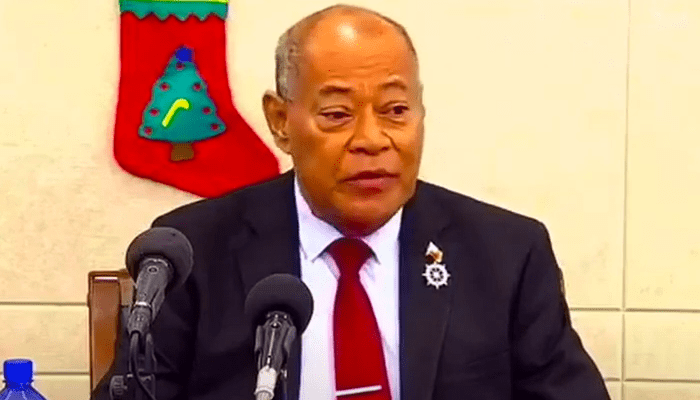
Tonga's Minister of Meteorology Fekitamoeloa Katoa 'Utoikamanu said the installation of the radar will save lives.

Tonga’s Minister of Meteorology Fekitamoeloa Katoa ‘Utoikamanu said the installation of the radar will save lives. Photo: Supplied

The NZ$4 million weather radar, funded by the New Zealand government, was launched by the UN Secretary-General António Guterres and NZ Deputy Prime Minister Winston Peters late last month.

Tonga’s Minister of Meteorology Fekitamoeloa Katoa ‘Utoikamanu said the installation of the radar will save lives.

“Technology investments are a part of our fight against [natural] disasters, and this new radar system does provide us with the critical data that is needed to anticipate and respond and to ensure that we do save people’s lives,” she said.

Schools in the Kingdom will greatly benefit from the early warning system, according to the principal of St Andrews School.

Losana Latu said the new radar gives staff more confidence they will have enough notice to safely evacuate students in time during natural disasters.

She said having early notice will reduce panic amongst students and staff, allowing them to better respond during emergencies.

“As the principal of the school it is my responsibility to ensure the safety of the children and staff of my school.

“We have to make sure during any disaster, no child is left behind.”

‘Utoikamanu said children were Tonga’s “most valued possessions” and the government’s investment in their education resilience is very important.

The project is a pilot, part of a $20 million Weather Ready Pacific Program, which is aimed at strengthening the Pacific’s ability to prepare for extreme weather events.

Peters said the radar represents a major step in their commitment to Pacific Island nations.

“We’re delighted to be here for the commissioning of this valuable new installation following the announcement of funding for this work when we visited in February.

“The radar will provide Tonga with the ability to give communities critical early warnings and mitigate the impacts of high-risk weather.”

The New Zealand MetService also provided construction and training support.

Secretariat of the Pacific Regional Environment Programme (SPREP) director general Sefanaia Nawadra said the radar was just the first step of the rollout of the Weather Ready Pacific Program across the entire region.

“Through this initiative, I’d like to assure you of the commitment of the region to implement early warning systems for all, so no one is left behind,” he said.

“So that we are better ready for all the weather impacts we will continue to experience.”

Auckland Muslim schools in lockdown after threat

By rnz.co.nz and is republished with permission

A threatening email to an Auckland schools reinforces the error of the Government’s recent decisions, the Federation of Islamic Associations (FIANZ) says.

Al-Madinah School. Auckland

Photo: Supplied / Google Maps

Al-Madinah School and Zayed College, both on Westney Road in Māngere, were in lockdown after being sent an email with a threatening video.

A third Auckland Islamic school, Iqra primary school in New Lynn, was not in lockdown but was on restricted access Monday after the threat to Al-Madinah.

Al-Madinah Assistant Principal Amjad Ali told RNZ a video was sent to the school’s principal at 11pm on Sunday.

It featured a man showing guns in a car and randomly shooting, he said.

It wasn’t filmed at the school, but police recommended going into lockdown.

Zayed College for Girls in Auckland.

Zayed College for Girls. Photo: Supplied / Google Maps

The Federation of Islamic Associations (FIANZ) said it was particularly concerned about the well-being and trauma of the students, staff, parents and wider community.

The threat could have been made to a church, synagogue, community centre, women’s refuge, or shopping centre, the organisation said in a statement.

It reinforced their concerns about recent political decisions regarding the recommendations of the Royal Commission into the mosque terrorist attacks.

“We urge the Right Honourable Prime Minister to reconsider the decision of his Lead Coordination Minister regarding the most important recommendation of the Royal Commission: to establish a dedicated and purpose-specific national security agency.

“Threats like this demonstrate why we need to have a strategic approach for our national security.”

The group also queried withdrawal from other Royal Commission recommendations, the “vitriol” around firearms reform, and the need to teach young people how to identify and counter disinformation.

Schools take caution

Al-Madinah school was advising students to stay at home and it would be in lockdown until further notice.

The state integrated area school has primary and secondary age pupils from Year 1-13.

Zayed College said on its website that it was also closed Monday as a matter of caution following the threat to Al-Madinah.

It initially went into lockdown, but all staff and students had since safely left the school, commissioner Linley Myers said.

“A very big thanks to the staff involved for their calm and responsive support.

“I will update you later today on plans for tomorrow when we know more,” Myers said.

Zayed College said it was the first Islamic College for girls in New Zealand, it was a state integrated special character Islamic secondary school for girls Year 7 – 13.

Police said they were notified of the email at 7.15am Monday.

They were investigating the email “of a concerning nature” sent to staff at Al Madinah School.

“Police are in attendance at Al Madinah School and enquiries are under way to determine the circumstances surrounding the email.”

IQRA School in Auckland.

Iqra School. Photo: Supplied / Google Maps

Iqra School principal Leanne Chartrand said on the school’s website that the school was open on Monday and was not in lockdown, but did have restricted access.

“We are on alert currently in the event of an emergency due to another school in South Auckland receiving threats.

“We have very good practises in place and the staff will be on alert to ensure our children stay safe.”

Precautionary safety measures were being taken, she said.

Auckland bus drivers threaten to stop work after attack by passenger

By rnz.co.nz and is republished with permission

Auckland bus drivers are pushing for a stop work meeting to discuss their safety after a fellow driver was punched in the face on Saturday morning.

Rajnish Trehan was attacked by a passenger who refused to pay his fare when he was driving the number 18 bus in the Auckland suburb of Avondale on Saturday 7 September 2024.

Auckland bus drivers are pushing for a stop work meeting to discuss safety after Rajnish Trehan was punched in the face by a passenger. Photo: Supplied

Roskill depot-based Rajnish Trehan was hit by a man who wouldn’t pay, he required hospital care for stitches and emergency dental work.

Tramways Auckland union president Gary Froggatt told Morning Report members were now pushing for a stop work meeting, which he acknowledged would cause disruption across the city.

“I don’t want to do that if we can avoid it but we can’t let this go on… bus drivers are concerned about their ongoing safety.

“We’re being pressured by our members (for the meeting) and I think the time has come that we have to do that.”

He said they were talking to management first before confirming a stop work meeting which would see union members taking time off during their shift.

Froggatt said they wanted a full investigation by WorkSafe into the attack on Trehan.

And he said they were disappointed by the company’s response, with Trehan taken back to the depot where his wife picked him up and took him to hospital.

“She took him into Auckland Hospital where they put some stitches in his chin and then they had to go out to Middlemore Hospital to have the tooth fixed.”

Froggatt said there had been a quieter period of violence towards bus drivers, particularly after most were sent on a de-escalation course.

However, the frequency of events was starting to increase again, he said.

“It does happen and it’s starting to happen more frequently just recently.”

He reiterated the need for security screens.

“We’ve been talking about this for some time.

“We’ve got to the stage where we’ve seen some samples of what the bus companies and Auckland Transport are looking at.”

While new buses would come fitted with screens, it would take some time to retrofit the 2000-odd existing buses, Froggatt said.

Emergency protocols followed

Kinetic, which owns bus company NZ Bus, confirmed Trehan notified the operations centre about 10am Saturday that he had been assaulted by a passenger.

“As per our emergency protocols, our team immediately notified the police and ambulance service and sent out our support team to assist Mr Trehan and ensure he was safe and well looked after,” a spokesperson said.

“The health and wellbeing of our people is very important to us, and we are assisting police with their investigation.”

Police are investigating the assault, and want to hear from anyone who saw what happened.

Auckland Airport baggage handler Kimela Piukana sentenced for methamphetamine scheme

By Craig Kapitan, the NZ Herald

A former high school prefect and deputy head boy turned corrupt baggage handler has lost his bid for a discharge without conviction for participating in an organised crime syndicate that smuggled hundreds of kilograms of methamphetamine into New Zealand by exploiting a loophole in Auckland Airport’s security.

Māngere Bridge resident Kimela Kolo Piukana, 24, was initially alleged to be part of a group of airport workers who, on several occasions in 2021, were tasked with secretly removing illicit drug shipments stowed aboard Malaysian Airlines flights from Kuala Lumpur and Air New Zealand flights from Los Angeles.

“The drugs were subsequently driven off airport grounds and on-supplied to other members of the syndicate,” court documents state.

As part of his guilty plea in June, the Crown conceded he was no longer alleged to have physically removed the drugs from the aircraft. He instead was sentenced for acting as an intermediary between key members of the syndicate, passing along messages via texts.

That concession reduced his culpability, defence lawyer Ben Mugisho said late last month as he asked Justice Michele Wilkinson-Smith for a discharge without conviction. He noted his client had never been in trouble before his arrest in November 2021 after a lengthy undercover police and Customs investigation dubbed Operation Selena.

Piukana had been a university student before dropping out in 2017 to look after his ailing father, Mugisho said, explaining that after his client’s father died Piukana came under the bad influence of a man who was more intricately involved in the meth import conspiracy. That other man, who has also pleaded guilty, has interim name suppression as he awaits sentencing.

Piukana pleaded guilty in June to participating in an organised criminal group, which carries a sentence of up to 10 years’ imprisonment.

The admission of guilt came a week and a half before he was set to go to trial in the High Court at Auckland among multiple co-defendants, including alleged kingpin Nigel Iuvale. Seven others followed suit with their own guilty pleas one week after Piukana, leaving only Iuvale and baggage handler Tungane Manuel to go to trial. Jurors found both men guilty last month.

Nigel Iuvale appears in the High Court at Auckland, where he was found guilty of co-ordinating the smuggling of methamphetame into the country. Photo / Jason Oxenham

Piukana is the first of the group to have been sentenced.

Police alleged at the time of their arrests that the group had either successfully smuggled or tried to smuggle roughly 500kg of methamphetamine. While the cost of methamphetamine can fluctuate, that amount has been described by police in prior drug import cases as having a value of between $50 million and $90m in New Zealand – considered one of the most profitable meth markets in the world.

“This type of offending is highly concerning not only because of the harm drugs are doing to the community, but the ability to place unchecked items into aircraft … threatens the integrity and security of air travel,” Detective Inspector Paul Newman said at the time of the arrests, estimating an influx of 500kg of the drug on to the underground market would have caused “around $550m in community harm … particularly in vulnerable communities”.

Piukana’s lawyer said his client has ambitions of someday becoming a personal trainer, but a conviction on his record may serve as a barrier. Crown prosecutor Ruby van Boheemen argued against a discharge without conviction, pointing to the seriousness of the charge.

“If those in charge of the syndicate didn’t have members at every level, that syndicate wouldn’t be able to function,” she said, adding the consequences of a conviction wouldn’t be “out of all proportion” to the seriousness of the crime – the standard by which discharge without conviction requests are considered.

Justice Wilkinson-Smith described the offending of Piukana and his co-defendants as “a level of corruption unusual to New Zealand” and as “damaging to New Zealand’s reputation”.

The judge rejected the suggestion Piukana had been ignorant to what was going on when he passed along the messages.

“You must have had a very good idea of what was occurring,” she said, adding that even if he didn’t know the exact amount of methamphetamine being imported he would have been aware it was a commercial quantity. “You knew what was happening and you helped. You gave real assistance.

“You were at best wilfully blind.”

But the judge also noted his young age at the time of offending and his prospect for rehabilitation, allowing for a 25% discount from the starting point of two years and three months suggested by the Crown. An additional 15% reduction was applied for his guilty plea, as well as two months for the time he was under strict bail conditions awaiting trial.

She settled on a sentence of seven months’ home detention.

The judge said the co-defendant who pulled Piukana into the scheme “should be ashamed”.

“You are, however, an adult,” she said. “You were capable of being better than this, and you are capable of being better than this in the future.”

Craig Kapitan is an Auckland-based journalist covering courts and justice. He joined the Herald in 2021 and has reported on courts since 2002 in three newsrooms in the US and New Zealand.

Tongan man in US charged after rugby coach beaten with umbrella loses sight in one eye

By Pat Reavy, KSL.com. Additional information by Kaniva News

A Tongan man in Draper, Salt Lake City has been charged with attacking a coach with an umbrella at a rugby tournament.

A fight that broke out during a rugby tournament in Salt Lake City resulted in a coach losing sight in one eye after being assaulted by a man with an umbrella, according to police. (Barbra Ford, Shutterstock)

Takes Mafileo Vakapuna, 39, was charged Thursday in 3rd District Court with aggravated assault resulting in serious injury, a second-degree felony.

A tournament by the Utah Rugby Academy was held at the Salt Lake Regional Athletic Complex, 2280 N. Rose Park Lane, on July 27. A fight broke out at one of the games, and a coach tried to break it up, according to charging documents.

“During the altercation, Vakapuna struck (the coach) multiple times with an umbrella. (The coach) lost consciousness and use of his right eye from the altercation,” the charges allege.

The coach needed to have surgery on his eye, and more than two weeks after the incident was still unable to see out of it, according to the charges.

Police reviewed cellphone video of the attack and talked to one witness who saw the coach being hit “multiple times with an umbrella. (The coach) fell, and Vakapuna continued hitting (him) on the ground with an umbrella,” the charges say.

A fierce battle between Fiji and Tonga settles in a draw

Photo credit: OFC Media via Phototek

After Samoa set the Group A pace in the day’s first game, both Fiji and Tonga were keen to hit the ground running similarly fast, resulting in both Teams trying to find their rhythm.

The game settled down after the opener, courtesy of the hosts.

Surrounded by defenders, forward Uliana Vuniyayawa latched onto a bouncing loose ball in midfield, keeping her composure to bury past Temaleti Taufa’ao, prompting rapturous screams from the stand.

Buoyed by the lead, it was a matter of time before Fiji added a second. Sisilia Tuvou Kuladina, who was the youngest player at last month’s inaugural OFC Women’s Futsal Nations Cup, backed up her brilliant goal on the court to double her country’s lead in the 39th minute. Much to the anticipation of the crowd, she stood over free kick about 35 yards out and launched an unstoppable drive past the Tongan goalkeeper.

If Fiji had the momentum going into half time, Tonga were determined to take it back after half time. 

It began with Cienna Filimoeatu’s through ball to Kuria Malohifo’ou. She looked to have held onto the ball a touch too long, but her shot was too powerful for Melania Keresoni to properly block, and so Tonga looked to have found a way back into the game. 

Tonga then found an equaliser four minutes later. Tyra Bagiante, who had looked dangerous up front for Tonga all game, confidently slotted home after being released it. 

Losing the lead so quickly seemed to dent Fiji’s confidence, as Tonga looked more assured on the ball, although they were unable to convert this into a lead.

Bravery from Temaleti Taufa’ao kept the score at 2-2, taking the ball off Teonila Levuiciva’s toes after the winger latched onto a Kuladina through ball, only for the Tongan goalkeeper to deny Fiji.

Bagiante thought she was through for a winner in 75th, but Keresoni was quick off her line to deny the Tongan striker.

Fiji looked to have secured the win in the 78th minute through Grace Lakavutu. The substitute’s outside of the boot finish from close range sparked wild celebrations from the Fijian bench.

But Tonga weren’t finished yet.

Malohifo’ou found the back of the net for the second time in the half, equalising the score and closing out the goal-scoring opportunities for both teams as the match ended in a 3-3 draw.

Fiji: 3 (Uliana VUNIYAYAWA 25’; Sisilia Tuvou KULADINA 39’; Grace LAKAVUTU 79’)

Tonga: 3 (Kuria MALOHIFO’OU 49’, 84; Tyra BAGIANTE 53’)

Quake rattles Tonga

UPDATED: A 6.0 magnitude earthquake that struck Tonga today Sunday 8 has been reported on social media.

The tremor, which struck at 10.39am, was 10km deep 170km East of Tongatapu, Tongan Met Service said.

The above magnitude is provisional and may be increased or decreased as more seismic data becomes available.

Tongatapu residents described its intensity as “moderate”.

“Ki’i lulu leka pe he ko e Sāpate” said Parliament Deputy Chief Clerk Dr Sione Vikilani. He was saying that it was just a minor tremor because this is Sunday.

There have been no reports of damage or casualties.

No tsunami advisories have been issued.

The report comes after a magnitude-6.9 earthquake occurred northeast of Tonga at around 12.29pm on Aug 26.

The epicenter of that earthquake was approximately 72 km (45 miles) west of Pangai.

The tremor occurred at a depth of about 107 km (66 miles), and moderate-to-strong shaking was probably felt throughout Tonga.

What you need to know about the draft English and maths curriculums

By John Gerritsen, Education correspondent

Should a five-year-old be able to count to 10 and accurately describe shapes?

Stylised illustration of maths student struggling to climb ladder

Photo: RNZ

The draft Year 0-6 English and Year 0-8 maths curriculums expect they will be able to do that, and more, after six months at school.

The curriculums are out for consultation and the government is rushing to introduce them next year.

The Ministry of Education (MOE) says the drafts are designed to be much clearer than the previous document, especially in terms of what children should learn at each year level.

They also include guidance for teachers – suggestions of what they should teach and how.

Underpinning both documents is the “science of learning”, which the MOE says is basically a well-sequenced approach to teaching that ensures children master one skill or area of knowledge before moving on to the next.

A big change in the English curriculum is a nation-wide shift to “structured literacy” as the approach for teaching children in Years 0-3 to read.

Focused on teaching children to decode words and understand the sounds represented by letters and groups of letters, it has emerged triumphant from the so-called “reading wars”.

The move to structured literacy began under the previous government and most schools spoken to by RNZ are enthusiastic about its effectiveness.

It means families can expect to see young children learning to read from books that emphasise particular sounds with sentences like “Can Nan nap?” and “Nat taps on a pot”.

The draft English curriculum also includes more of a focus on punctuation, grammar and spelling than the current document.

That has led University of Auckland associate professor Aaron Wilson to describe it as more a literacy curriculum than an English curriculum.

Meanwhile, the maths curriculum is aiming for significant acceleration in what children learn in the subject that is without doubt New Zealand education’s weak spot.

Initial testing indicated just 20 percent of Year 3 children and 22 percent of Year 8s would meet its expectations, a sharp contrast to the current curriculum where 82 percent of Year 4s and 42 percent of Year 8s are at the level expected of them.

Julia Novak from the MOE told RNZ the new curriculum would be more explicit about ensuring young children mastered the basics of maths so they had the skills and knowledge they needed by Year 8.

“They are seeing fractions sooner than they were before … using addition, subtraction, multiplication and division a little sooner than before,” she said.

Both the English and maths curriculums specify what children should be learning each year they are at school.

That is a big change from the current system of broad curriculum levels that cover a number of year levels.

For example, curriculum level four applies mostly to children in the final year of intermediate school, Year 8, but children in Years 6, 7, 9 and 10 could also be working at that level.

The curriculums also include guidance for teachers on what they should teach and how.

For example the English curriculum advises teachers of Year 4-6 to “teach students to segment words into syllables and phonemes” when covering spelling and to “teach spelling every day”.

Ellen MacGregor-Reid from the MOE said the advice built on the Common Practice Model developed under the previous government.

She said it was aimed at ensuring teachers were using proven approaches to teaching, increasing consistency between schools, and reducing teacher workloads.

“It’s not about taking away teachers bring things to life in an exciting way. It is about providing that clarity about across all of this learning at different year levels, what is important to teach,” she said.

What do teachers think?

Teachers and principals agree the curriculum needs to change.

Many welcomed the increased specificity about what to teach and when, but some worried it might go too far and restrain teachers’ professional judgement.

They also warn that the government is moving too fast. Consultation on the drafts was open for just four weeks and schools are expected to start using the documents from the start of next year.

Principals say that is totally unrealistic.

Minister of Education Erica Stanford has been at pains to reassure teachers.

She said there was no expectation that schools would use the curriculums perfectly from day one next year and there would be more teacher training and resources to help them.

But she said the government needed to crack on with the changes – too many children are struggling with reading, writing and maths and change has to start now.

Also of concern to teachers is the shift to year-by-year achievement expectations.

They say children develop at different speeds, especially in the early years, and expecting all children of a certain age to meet particular benchmarks is not realistic.

Is literacy and numeracy really as bad as the government says?

National studies of children’s achievement show the percentage of children achieving at the curriculum level expected of them declines as they get older and curriculum expectations increase.

By the time they were finishing Year 8, generally the final year of intermediate or primary school, 47 percent of children were at the expected curriculum level in reading and 42 percent were at the expected level in maths.

The Council for Educational Research, which conducted the research with the University of Otago, said there had been no real change in Year 8 children’s maths achievement over the past 10 years.

They also tested children against the draft maths curriculum and found that only 22 percent of Year 8s met its expectations.

The government headlined that figure when announcing the results earlier this year, and principals are still angry about it, saying the government misrepresented the facts to create a sense of crisis.

However, the OECD’s international PISA tests of 15-year-olds shows a steady decline in New Zealand teens’ scores in reading and maths with this country most-recently ranked 10th in reading and 23rd in maths in the 2022 round of tests.

The tests found 21 percent of New Zealand 15-year-olds were reading at the lowest level – meaning they struggled with all but the simplest reading tasks – and in maths 29 percent performed at the lowest level.

Meanwhile secondary schools are warning that too many students, especially among Māori, Pacific and poor communities are failing new NCEA reading, writing and numeracy tests designed to ensure teens leave school with basic literacy and numeracy.

In May about 55,000 teens attempted the tests with pass rates of 59 percent in reading, 56 percent in writing, and 46 percent in numeracy.

A second round of tests will be held in September.

While the new curriculums raise the bar for what is expected of children, it is not a given that they will raise achievement.

Stanford is confident that improvement will happen quickly, especially in maths.

Certainly the changes should scoop up any schools or teachers that have been neglecting reading, writing and maths or teaching those subjects badly.

But teachers warn they need ongoing professional development and good resources for years to come to ensure any improvements stick.

No metadata

Pacific Nations Cup: Fiji beats Tonga 50-19 to top Pacific pool

By Iliesa Tora, of rnz.co.nz and is republished with permission

The Flying Fijians have topped the Pacific pool of the Pacific Nations Cup 2024 series, following a big 50-19 win over Tonga in Nuku’alofa on Friday.

Crown Prince Tupouto'a and around 4000 Tongans watched the battle, the highlight of 100 years of rugby celebrations, marking the first time the two countries met in a Test match in 1924.

Crown Prince Tupouto’a and around 4000 Tongans watched the battle, the highlight of 100 years of rugby celebrations, marking the first time the two countries met in a Test match in 1924. Photo: Screengrab / RugbyPass TV

That means they go to the semi-finals in Tokyo next weekend, meeting up with either Japan or the USA, in the Asia pool.

Manu Samoa will join them as the runner-up from the Pacific.

Fiji captain Tevita Ikanivere, who also scored a try in the game, said they had to cut out indiscipline to get the win.

He said they had to get back to upping their discipline, after they had let Tonga into the game midway in the first half.

“We spoke about discipline because towards the back end of the first half we dropped and let Tonga into the game,” he said.

“We had a bye week last week and worked hard towards this game, knowing that Tonga will be tough playing on their home ground.”

His Tongan counterpart and ‘Ikale Tahi captain, Ben Tameifuna, said they fought hard and thanked his warriors for staying in the game.

“It’s always hard playing against our Fijian brothers,” he said.

He said the young side is on a learning curve and will only get better.

“This is the stepping stone for us as Ikale Tahi,” he said.

“Our focus is giving our young boys the opportunity for putting their hands up. It’s a whole new experience for these new guys and it is good to expose them to the opportunity now.”

Tonga's Crown Prince Tupouto'a meets Fijian captain Tevita Ikanivere before the match.

Tonga’s Crown Prince Tupouto’a meets Fijian captain Tevita Ikanivere before the match. Photo: Tonga Rugby Union

The Flying Fijians held on with an early 19-0 lead in the first quarter of the game to claim another Tongan scalp, in the countries 95th Test match in 100 years.

Three quick tries within that time saw the side lead the home team, who suddenly came alive after that as Fiji were reduced to 14 players.

Iosefo Masi, captain Ikanivere and flanker Elia Canakaivata had their names on the scoresheet early.

In the end Masi and Canakaivata had claimed two tries each, from their team’s total of seven tries.

Fijian centre Adrea Cocagi charged into lock forward Harison Mataele in a ruck and was yellow-carded, leaving Fiji with 14 players mid-way through the game. That was later upgraded to a Red card, for 20 minutes.

Tonga attacked from the ensuing penalty and flyhalf Patrick Pellegrini’s chip over the Fijian defense saw inside centre Fetuli Paea pick up and dived over. Pellegrini converted as Fiji led 19-7.

Then when the Fijians were still trying to recover from that shock outside centre Fine Inisi finished off a good movement from the Tongans inside the 20 minutes mark. Pellegrini had floated a chip kick over the Fijian defense again after a good scrum win and the conversion saw the home side close to gap to 19-14.

Tonga had Fiji under pressure and won a number of penalty calls, pinning the Fijians inside their 22 metre zone.

A penalty and scrum in front of the posts saw Tonga’s Pellegrini dummy and dive over to score, levelling the scores at 19-all.

Fiji were back to 15 players with replacement player Inia Tabuavou took the field close to halftime.

Putting Tonga under pressure the Fijians won a lineout penalty and Canakaivata crashed through near the sideline, with Caleb Muntz converting as Fiji led 26-19 at the halftime mark.

'Ikale Tahi captain Ben Tameifuna ready to lead his side out against Fiji.

‘Ikale Tahi captain Ben Tameifuna ready to lead his side out against Fiji. Photo: Tonga Rugby Union

Second half battle

Referee Agnus Gardiner kept a tight control of the game, but let the teams run at every opportunity.

It was a tighter battle at the resumption of the second half, as both teams battled it out for possession and the advantage.

Fiji finally got the chance when Muntz stepped up to take a shot at goal to give his side a 29-19 lead after 15 minutes.

Then replacement Tabuavou finished off a sevens style Fijian move, dragging tacklers with him over the line.

Muntz converted and at 36-19 it looked as if the Tongans were going to be shut down again.

With around 300 Fijians cheering for them, the visitors then slowly took control of the rest of the game.

Fijian Drua captain Ratu Meli Derenalagi crashed his way through for his try after having come up short just a few seconds earlier, with Muntz converting for a 43-19 lead.

Winger Vuata Karawalevu dotted down twice on both sides of the field but the TMO ruled a knock-on and a forward pass in the build up to his final runs.

But Iosefo Masi claimed an intercept and raced away untouched to score under the crossbar and in between the posts, reading a Tongan set move from a scrum. Muntz’ conversion saw the Fijians lead 50-19.

Crown Prince Tupouto’a and around 4000 Tongans watched the battle, the highlight of 100 years of rugby celebrations, marking the first time the two countries met in a Test match in 1924.

The win was also a great birthday present for Fijian captain Ikanivere, who celebrated his birthday today. A special cake gifted by members of the Fijian community was presented to him after the game to celebrate the special day.

Both Fiji and Tonga will head to Japan on Monday, the Fijians playing in the semi-finals while Tonga meets Canada in the fifth place play-off.

Fijians at Teufaiva Park.

Fijians at Teufaiva Park. Photo: Supplied

More mental health support for Tonga and Vanuatu through Ngalu Fānifo initiative

By Christina Persico, RNZ Pacific bulletin editor, and is republished with permission

The Pacifika Medical Association (PMA) has partnered with Australia to improve mental health and wellbeing in Tonga and Vanuatu.

A young person with short hair looks into the sunset.

Photo: Unsplash / Traveler Geek

The Ngalu Fānifo project aims to strengthen the capacity of health and community providers to provide mental health care.

PMA president Dr Kiki Maoate said this project will follow on from the work PMA emergency response teams – or PACMAT – have delivered in both Tonga and Vanuatu.

PACMAT was deployed following the Hunga Tonga-Hunga Ha’apai volcanic eruption and tsunami and following Cyclones Kevin and Judy in Vanuatu.

Vanuatu’s Ministry of Health Curative & Hospital Services director, Dr Sereana Natuman, said the Ngalu Fānifo project represents “a significant step forward in our commitment to enhancing mental health services across the country”.

“We are confident that the Ngalu Fānifo initiative will lay the groundwork for a sustainable and community-centered approach to mental health in Vanuatu, ultimately leading to healthier and more resilient communities.”

PMA chief executive Debbie Sorensen said their Ngalu Fānifo team have just returned from their inception visits to both countries.

“The response from community through to ministerial level has been incredibly positive, stressing the need for mental health and wellbeing support that is family-centered, community-led and culturally-anchored.

“PMA will work in collaboration with health ministries, health providers, and community and faith-based NGOs (non-government organisations) in Tonga and Vanuatu, to co-design training pathways, and support the implementation of new, sustainable mental health models of care.”

The World Health Organisation (WHO)’s Regional Framework for the Future of Mental Health in the Western Pacific 2023-2030 said over 215 million people suffer from mental health conditions in the Western Pacific Region.

It quoted the 2019 Global Burden of Disease report, which said disability-adjusted life years (DALYs) attributed to anxiety and depressive disorders, schizophrenia, Alzheimer’s disease and other forms of dementia, and self-harm increased significantly in the region from 1990 to 2019.

The Framework said since the release of the 2013-2020 action plan, some progress in advancing the mental health agenda had been observed.

“As of 2020, all member states in the region who responded to the Mental Health Atlas survey had a stand-alone or integrated mental health policy or plan.

“However, the transition towards community-based care remains disappointingly slow.

“Mental health promotion and prevention programmes and activities have increased, but it is unclear whether this increase has translated into concrete impact.”

Where to get help in Aotearoa New Zealand:

  • Need to Talk? Free call or text 1737 any time to speak to a trained counsellor, for any reason.
  • Lifeline: 0800 543 354 or text HELP to 4357
  • Suicide Crisis Helpline: 0508 828 865 / 0508 TAUTOKO (24/7). This is a service for people who may be thinking about suicide, or those who are concerned about family or friends.
  • Depression Helpline: 0800 111 757 (24/7) or text 4202
  • Samaritans: 0800 726 666 (24/7)
  • Youthline: 0800 376 633 (24/7) or free text 234 or email talk@youthline.co.nz