Home Blog Page 147

Warning over hairless felines with ‘exaggerated’ features that are being bred in the UK despite serious health issues

By Matt Strudwick of Mail Online

Hairless ‘Bullycats’ with ‘exaggerated’ features are being bred in Britain and are gaining a ‘disturbing following’ on social media. 

The ‘unnatural’ sphynx-like breed have short bowed legs and heavily wrinkled skin as experts warn about the ‘horrifying’ growing designer fad

The ‘unnatural’ sphynx-like breed has short bowed legs and heavily wrinkled skin – much like a bully dog – as experts warn about the ‘horrifying’ growing designer fad despite the felines likely to go on to suffer serious health issues. 

Cat lovers are being warned not to buy them and to boycott the breed as they will ‘endure lives blighted by suffering’.

It is thought the so-called Bullycat originated in the US but it has now made its way across the Atlantic with the trend building a ‘disturbing following’ on social media sites such as FacebookTikTok and Instagram

Animal welfare charity Naturewatch Foundation sent a clear message to those looking to buy a cat: ‘If you’re thinking about getting a cat, don’t buy into these harmful designer fads.’

The foundation said: ‘It’s shocking to see that these poor cats are starting to appear in the UK. 

‘We’ve seen increasingly extreme breeding practices in the dog world in recent years, and it appears unscrupulous people are now turning their attention to exploiting cats in the same way, all in the pursuit of greed and social media likes. 

‘Bullycats are an animal welfare disaster unfolding before our eyes and this kind of breeding is just cruel.’

Dr Dan O’Neill, associate professor of companion animal epidemiology at the Royal Veterinary College (RVC), said it was ‘heartbreaking’ to see cats now going under the same suffering as dogs by humans fascinated by ‘extreme body shapes’. 

‘Bullycats are likely to suffer similarly shortened lives to those reported from a recent RVC VetCompass paper in Sphynx cats that lived just 6.7 years compared to an average of 11.7 years in cats overall,’ he said.

‘Deliberately selecting for disease mutations, such as hairlessness that leads to sunburn, dwarfism that leads to mobility issues and joint pain, and folded skin that leads to lifetimes of skin infections means that many Bullycats will endure lives blighted by suffering.

‘The advice to anyone thinking of acquiring a cat or a dog is to always put the welfare of the animal first and to stop and think before acquiring an animal with an extreme and unnatural body shape that does not exist commonly in nature.’ 

A RSPCA spokesperson told MailOnline they were ‘very concerned’ about the recent trend of Bullycats saying it ‘could cause them serious welfare issues’.

‘These exaggerated Sphynx cats are bred with very short legs which could put a strain on their joints, and they also appear to have excess skin folds making them vulnerable to skin conditions which can cause a great deal of discomfort, the charity warned.

‘Such ailments could also result in trips to the vet leaving owners with costly vet bills too.

‘These Sphynx-like cats are also bred to have only a fine covering of downy hair and some may not have eyelashes or whiskers.

‘This lack of fur can leave cats vulnerable to harmful ultraviolet light, cause difficulties keeping warm and means they won’t be able to use their hair and possibly their whiskers to explore their environment.

‘The lack of a fur coat also means they need to be regularly washed as oil can accumulate on their skin.

‘There could also be further health issues associated with these cats being bred from a limited gene pool.

We understand that their emerging presence on social media may fuel a demand for these kinds of cats but we would urge fellow cat lovers to consider adopting the many rescue cats in our care instead of buying from a breeder.

‘We would also urge breeders to prioritise the health and welfare of any animal over the way they look.’

Flights and trains canceled in Tokyo area as a strong typhoon swerves nearby

TOKYO (AP) — Flights and trains in the Tokyo area were canceled Friday, and people were warned of strong winds, heavy rains and potential flooding and mudslides as a typhoon swerved near Japan on its way further north in the Pacific Ocean.

Typhoon Ampil was forecast to reach the waters near Tokyo in the evening then continue north, bringing stormy conditions to the northern Kanto and Tohoku regions early Saturday. It had sustained winds of 162 kph (101 mph) with higher gusts Friday morning and was moving north at 15 kph (9.3 mph), the Japan Meteorological Agency said. Ampil was not expected to make landfall and would weaken to a tropical storm by Sunday.

Tokyo’s Disneyland, usually open until 9 p.m., was closing early at 3 p.m. because of the typhoon. Yamato Transport, which makes Amazon and other deliveries in Japan, said no deliveries will be made in the Tokyo and nearby affected areas Friday and Saturday.

The Shinkansen bullet trains running between Tokyo and Nagoya were halted for the entire day, according to Central Japan Railway, a common response to typhoons here. Bullet trains serving northeastern Japan and some local Tokyo trains were suspended temporarily or switched to a slower schedule.

Image

Bea Ortiz stars as Spain beats Australia 11-9 for gold in women’s water polo at the Paris Olympics

Dozens of departing and arriving flights were canceled at Tokyo’s two airports, Haneda and Narita, as well as at Kansai, Osaka and Chubu airports. The flight cancellations affect some 90,000 people, according to Japanese media reports. Several highways may also partly close to traffic.

Airports and train stations had been packed Thursday with people moving up their plans to avoid disruptions from the typhoon. Friday was drizzly and windy in Tokyo, although the intensity varied. Traffic and crowds out on the streets were sparse, mostly because of the Bon summer holiday period, not just the weather. Stores remained open.

Officials warned people to stay away from rivers and beaches and to be wary of winds strong enough to send objects flying.

“We foresee extremely fierce winds and extremely fierce seas,” said Shuichi Tachihara, JMA chief forecaster.

Japanese TV broadcasts showed Hachijo residents boarding up windows. Ampil moved past Hachijo by midday, as it headed northward. Store shelves for bread and instant noodles were empty.

Tonga motorcade practice ahead of Pacific Forum

Motorcade drills had been conducted in Nuku’alofa this morning in preparation for the upcoming Pacific Islands Forum (PIF).

Convoy of motorcade in Nuku’alofa said to be part of a drill session for the upcoming PIF meeting. Photo/Filo ‘Akau’ola (Facebook)

The Hu’akavameiliku government will host the 53rd PIF after next week from August 26 – 30.

Photos and videos uploaded and shared on Facebook this morning showed a motorcade convoy, including police motorcycles and luxury government vehicles with ministerial registration plate numbers, travelling in Nuku’alofa.

One caption said “longolongo kātoanga” meaning, feeling that a big event is about to happen.

About 1000 guests are expected to attend.

A security buffer is expected to be established in Nuku’alofa around areas like the newly constructed prefabricated container housing spots, hotels where delegates will stay and Tonga High School auditorium, where most of the summit events will be held.

Yesterday, Prime Minister Hu’akavameiliku announced that the Australian government has donated 25 double-cab police vehicles to be used during the meeting. It is understood two minibuses were also donated, bringing the total value of the donation to TOP$3.6 million.

He previously posted photos of refab houses at Pātangata where some of the guests will stay saying they would be completed before the meeting.

Commissioner of Police Shane Mclennan previously said a delegation of six officers arrived in the kingdom from China’s Shandong Province to see what assistance they could provide to help Tonga police deliver the PIF leaders’ meeting.

At the time, it was confirmed that China was willing to donate police vehicles and motorbikes to Tonga—much like it has in the Solomon Islands—to help ensure the event ran smoothly.

Australian authorities had criticised China’s offer at the time saying it was part of its policing push into the Pacific.

At this stage, it is unclear what assistance China has offered Tonga for the meeting.

Earlier this week, a meeting to discuss arrangements for the PIF, including organising liaison officers and drivers to assist the leaders, was held at the Tanoa International Dateline Hotel.

A panel and discussion were hosted by the Australian High Commission office during that meeting.

Preparation drill at the Fua’amotu International Airport ahead of the Leaders summit

Unrest in New Caledonia, membership applications by US territories, dwindling banking services, and a homegrown climate finance fund were among the topics dominating ministers’ meetings with senior policymakers from the region, according to a report by RNZ.

Founded in 1971, the Pacific Islands Forum includes Aotearoa New Zealand, Australia, Federated States of Micronesia, French Polynesia Tahiti, Kiribati, Nauru, Niue, Palau, Republic of Marshall Islands, Sāmoa, Tuvalu, and Vanuatu.

The 53rd Forum’s theme is Transformative, Resilient, Pasifiki: Build Better Now.

Family that won record $44m Lotto prize playing since 1987

By rnz.co.nz and is republished with permission

An Auckland family are still in shock after winning Lotto NZ’s largest ever prize of $44.67 million last weekend.

On Saturday night it looked as though the win was first equal with the $44.06m claimed in 2016.

However, it emerged the family had taken out the top spot by playing 10 lines of the same numbers, each with a different Powerball number.

It meant in addition to winning $44 million with Powerball, they also won 10 shares of Lotto first division – a total of $666,670.

The family, who wish to remain anonymous, have been playing since Lotto began in 1987, and have been using a combination of special numbers on their ticket for the last few years.

After watching Saturday night’s draw, the woman texted her daughter telling her one person had won the jackpot.

“Then when I was looking at the numbers I thought ‘do you know, I think I might have a few of these.’

“I texted my daughter again to say I thought we had won something, and the more I looked at the numbers, the more familiar they looked.

“I’d forgotten my password for my MyLotto account so I had to reset it before I could check,” she said.

Once she logged in, the virtual draw played, and her numbers circled one by one until her entire ticket turned blue, and the winning music playing.

“I was in complete shock. I said to myself ‘I don’t believe it!’ You never think it’s going to happen to you, so it’s hard to get your head around.

“I told my daughter, and then I called my son to tell him.

“He didn’t believe me, so I had to send them both a screenshot to prove it,” she said.

“We all jumped on a group video call, and we just kept saying ‘no way, it can’t be real, we don’t believe it.'”

The next day, the family met up and went out for dinner to celebrate.

“It was surreal, we could hear people in the restaurant talking about the $44 million prize, and I can remember saying in a hushed voice ‘if only they knew,'” the son said.

The family will take some time to let the magnitude of their win sink in before making any major decisions, but have a few ideas.

“We’re a hard-working family but my children owning their own homes has always been just out of reach, so first of all, I’d like to get them into homes of their own, which will be really special,” the woman said.

A family holiday would also be planned.

“I’ve only ever been overseas on a work trip, so we’re looking forward to a family holiday,” she said.

The family have been involved in fundraising events within their community in the past and would continue to give back, the winner said.

They are the 14th Powerball winners so far this year.

‘More military planes than birds’: US militarisation in Guam; self-defence or provocation?

Eleisha Foon, RNZ Pacific Senior Journalist, and is republished with permission
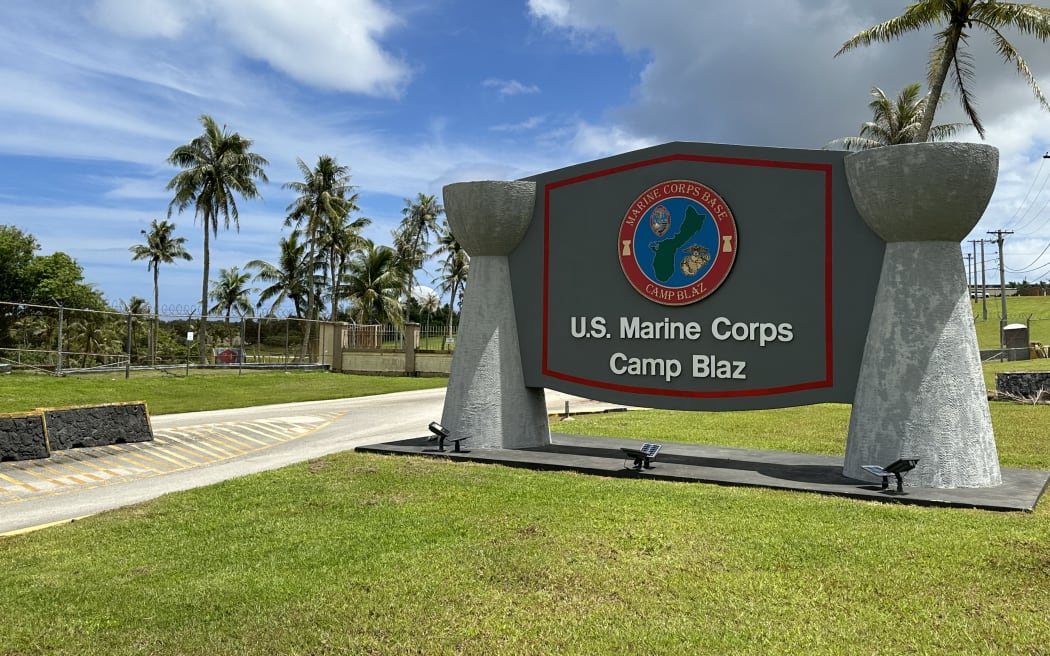
US Marine Force Base Camp Blaz.

US Marine Force Base Camp Blaz. Photo: RNZ Pacific / Eleisha Foon

The United States’ plans to expand and bolster its military prowess in Guam has gripped the undivided attention of geopolitical observers, as the leader of the Western world tries to solidify its defences against perceived hostility from its enemies.

But for ordinary people living in the US territory – which locals tongue in cheek call a “military recruiters paradise” – geopolitics is the least of their concerns.

For Guamanians, and the indigenous Chamorro people, who are landowners and veterans, news the US is forging ahead with proposed missile testing on the island to boost its military capability only “raises suspicion…because things just aren’t adding up”.

The federal government is spending $8.7 billion dollars on the missile testing system in what has been described by critics in Washington as an arms race with China.

Long-range missiles are set to be tested in Guam twice a year for a decade, starting in December.

On top of that, 5000 troops will be transferred from Okinawa in Japan to Camp Blaz in Guam by the end of the year.

It is part of the Pentagon’s plan led by the Missile Defence Agency (MDA) to build a shield, known as a 360-degree defence system, to protect Guam.

“It is terrible that in today’s world, under the flag of a country which is supposed to stand for very high ideals of democracy, we are the tip of America’s spear,” a Chamarro historian, Dr Michael Bevacqua, told RNZ Pacific.

“Fundamental decisions about the safety of our families, children, the safety of our island, whether we are a target, these things can be made without our consent, it is the opposite of democratic participation. It is frustrating, it is frightening,” he lamented.
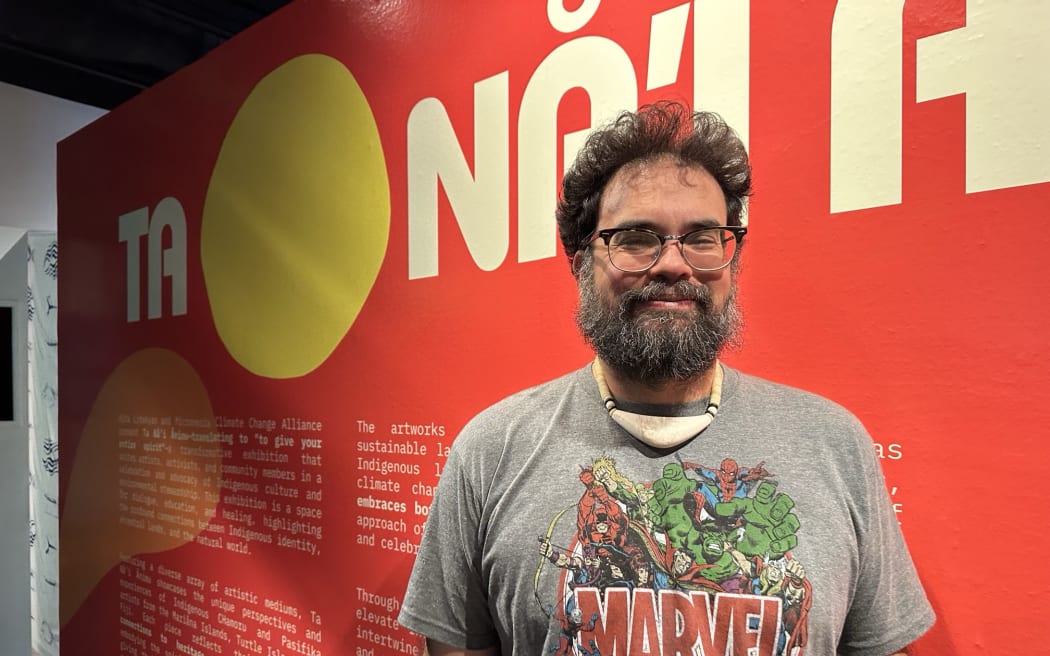
Guam museum curator Dr Michael Bevacqua. August 2024

Dr Michael Bevacqua Photo: RNZ Pacific / Eleisha Foon

The MDA, however, has a different perspective and say the defence system is comparable to Israel’s Iron Dome.

“We’re talking about launching missiles in order to stop bad missiles that are filled with explosives or possibly other things from hitting the island,” Mark Wright, the agency’s public affairs officer explained.

“This would be a contingency, of course, but it’s [the] most remote part of the US territory, and it needs to be protected.”

But Guamanians know first-hand that living alongside the military comes at a cost.

Military activity means the “drinking water is contaminated, housing is under pressure…there are more military planes than birds, [on the island] and the threat of a missile attack is as common as a party invitation,” Bevacqua said.
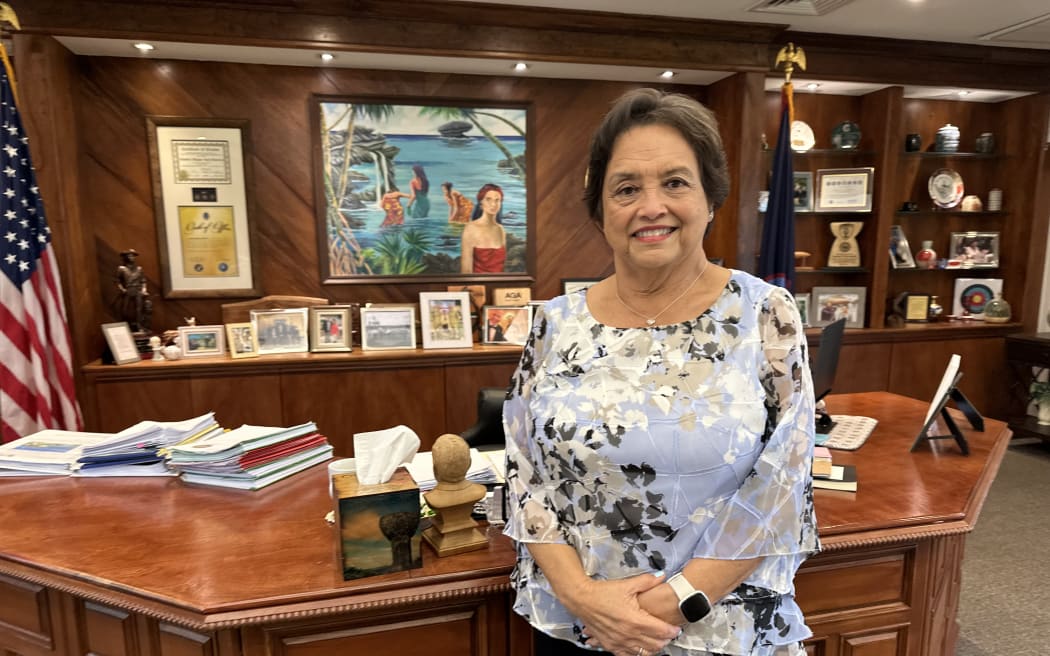
Governor Lou Leon Guerrero. August 2024

Governor Lou Leon Guerrero Photo: RNZ Pacific / Eleisha Foon

Striking a balance

The US owns 30 percent of the land in Guam. It is used for three bases by the navy, military and air force, which Chamorro activists describe as living in a “hyper-militarised reality”.

According to one New Zealand academic, the Washington-Guam relationship “remains incontrovertibly imperial-an arrangement [the US] exploits to manage the frictions that inevitably arise in America’s security alliances with sovereign nations”.

But Guam’s government recognises it needs the US onside and view the rapid militarisation as nothing more than the sign of the times.

Governor Lou Guerrero told RNZ Pacific it was about striking a balance between working alongside the US military and the indigenous Chamorro people as or “measures to maintain peace in our island”.

“I know exactly the challenges of militarisation but if the US get up and leave right now, we would be worse off. I certainly don’t want to be under Chinese rule,” she said.
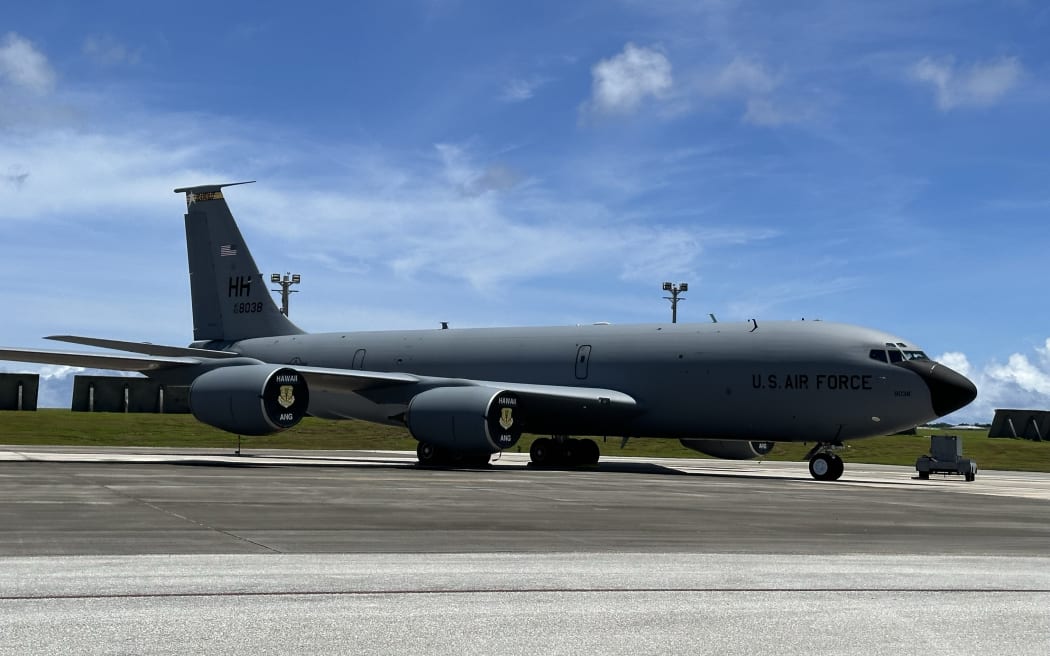
US Air Force Boeing KC-135R Stratotanker.

US Air Force Boeing KC-135R Stratotanker at the Andersen Air Force Base in Guam. Photo: RNZ Pacific / Eleisha Foon

But while the Governor believes the US military was protecting them from Beijing, her chief adviser on military and regional affairs, Carlotta Guerrero, is still trying to reconcile with the ramp up.

“Personally, I hate the idea that we are going to have a 360-missile defence system going up, and what that is going to mean, and what that is going to look like, and what that is going to do.”

MDA’s Wright said they are working closely with allies, such as Japan and Australia, on missile defence architecture and systems “to figure out more effective ways that we can use missile defence to defend our various homelands and islands in that area”.

‘We should have more say’ – veteran

Guam has experienced many conflicts, including being colonised by the Spanish during the 16th and 18th centuries, and during the Pacific War in World War II that took place on Guam in the Mariana Islands between Japan and the US.

Its history is saturated in conflict and partially points to why Chamorros have the highest enlistment rate for the US military.

Although Guam has its own government, the island is held at the mercy of the US federal government and Congress.

People born in Guam are US citizens who cannot vote for the US president and whose only senator in Congress is a non-voting member.

While, many Guamanians and Chamorro RNZ Pacific spoke to view the US as their liberator and were “proud to be American citizens”, there were others who felt differently.
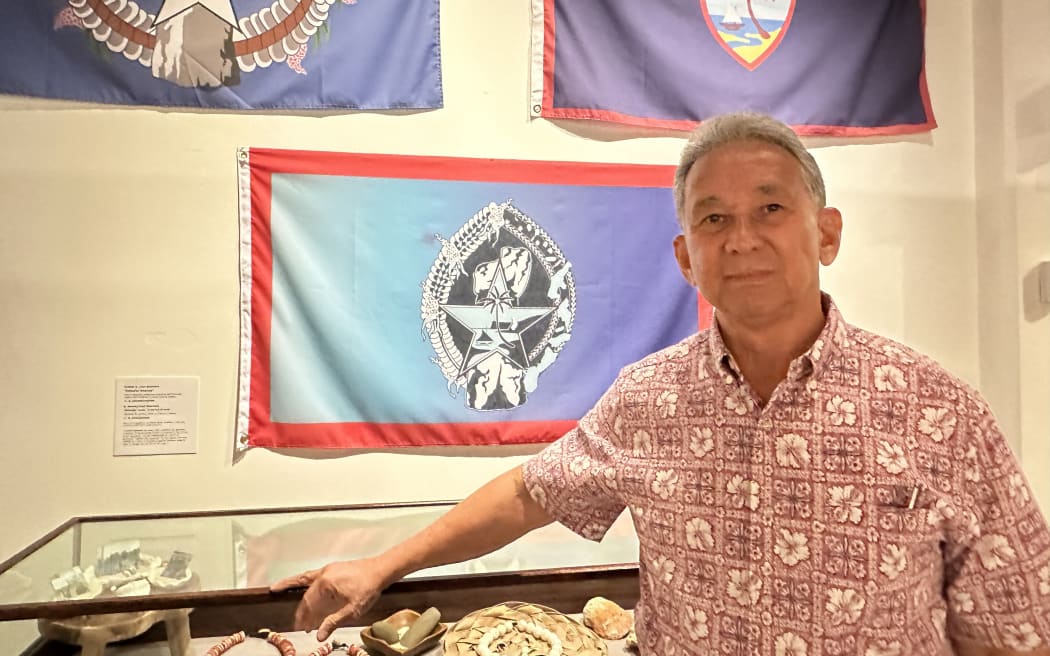
Tony Ada, Guiam landowner and veteran

Tony Ada, Guiam landowner and veteran Photo: RNZ Pacific / Eleisha Foon

Tom Ada, a Chamorro veteran and a Guam legislator, said although he was “pro-military”, the lack of information about missile testing and “inconsistencies” in the MDA report provided to the public, gave him cause to be “suspicious”.

“I think we should have more say in what the military does out here.”

Another veteran, the founder and president of the Pacific Association of Radiation Survivors, Robert Celestial, proved Guam was subjected to nuclear exposure between 1940-1960, which Celestial said the federal government tried to cover up until he discovered unclassified documents online.

“I believe the majority of my people have been indoctrinated from the time the US Navy took control of Guam. My people have been brainwashed.”

Celestial said many of his members had died due to cancers related to nuclear exposure. He had been battling for over two decades to have Congress approve nuclear compensation which the island was never eligible for, but it expired without an extension in June.
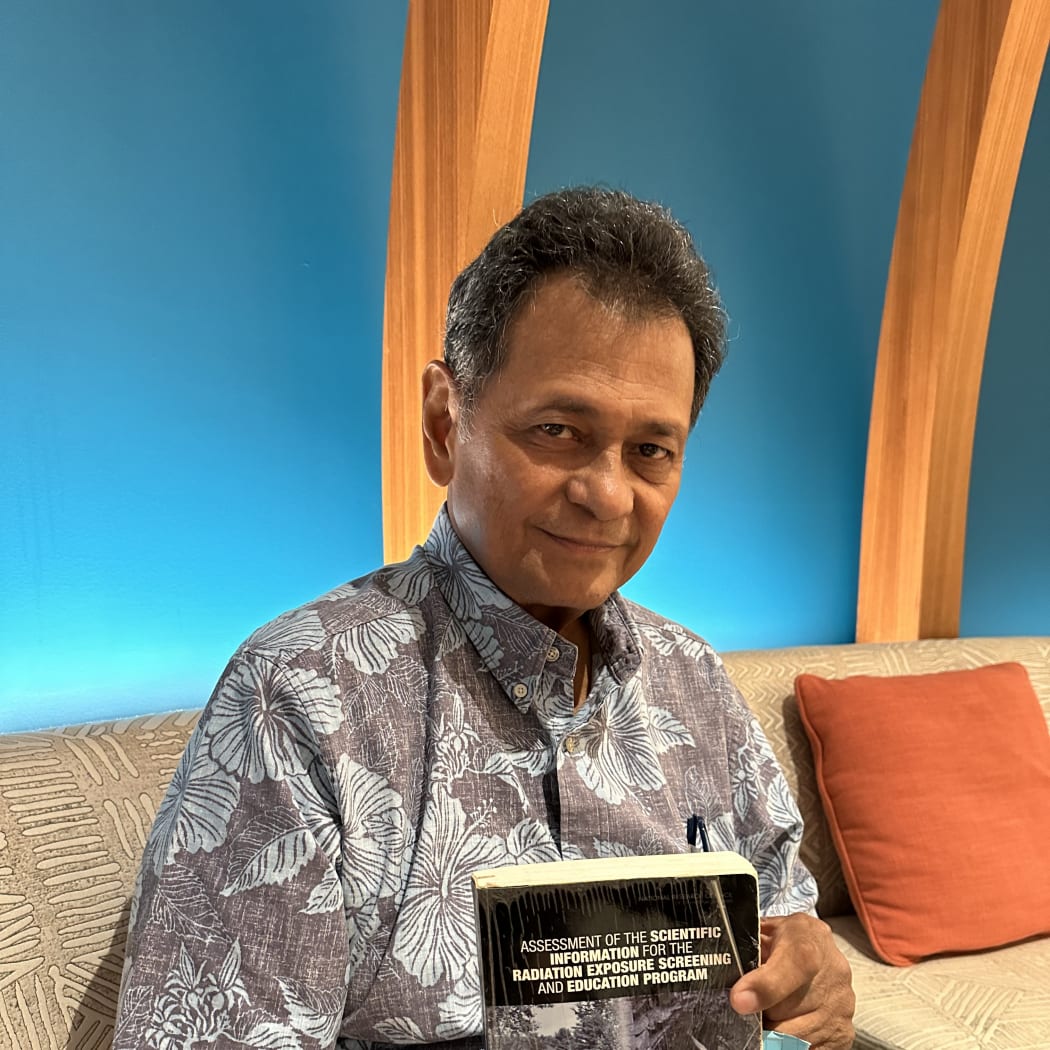
Robert Celestial - Atomic Veteran, PARS President

Robert Celestial, army veteran and Pacific Association of Radiation Survivors president. Photo: RNZ Pacific / Eleisha Foon

Military build-up ‘not adding up’, says activist

Activists protesting the military activity on the island have called for an end to militarisation, raising concerns the presence of the troops has done more harm than good.

Chamorro activist Monaeka Flores was making sure the voices of fishermen and landowners are not forgotten.

“The military say there is no harm, there is no significant impact.

“However, they are going to require land restrictions, they are going to require a lot of people coming here to do this military work. It is not adding up.”

She said the island still had not reconciled with previous impacts caused by the military presence and the impact of nuclear fallout on Guam in the 1940s through 1960s.

Flores’ demand is simple: leaders must act.

“Our people did not even know that they were being exposed to Agent Orange nuclear radiation. And so, we really do have to assess this incoming project as something that is going to cause a lot of harm, and how can we anticipate more harm if we haven’t reconciled with the harms that we’re still facing?” Flores said.

“The threat of nuclear war is very real,” she said, adding “The leaders need to rise for diplomacy instead of building up forced projection in the Pacific that only provokes tension, provokes conflict and stokes war,” she said.
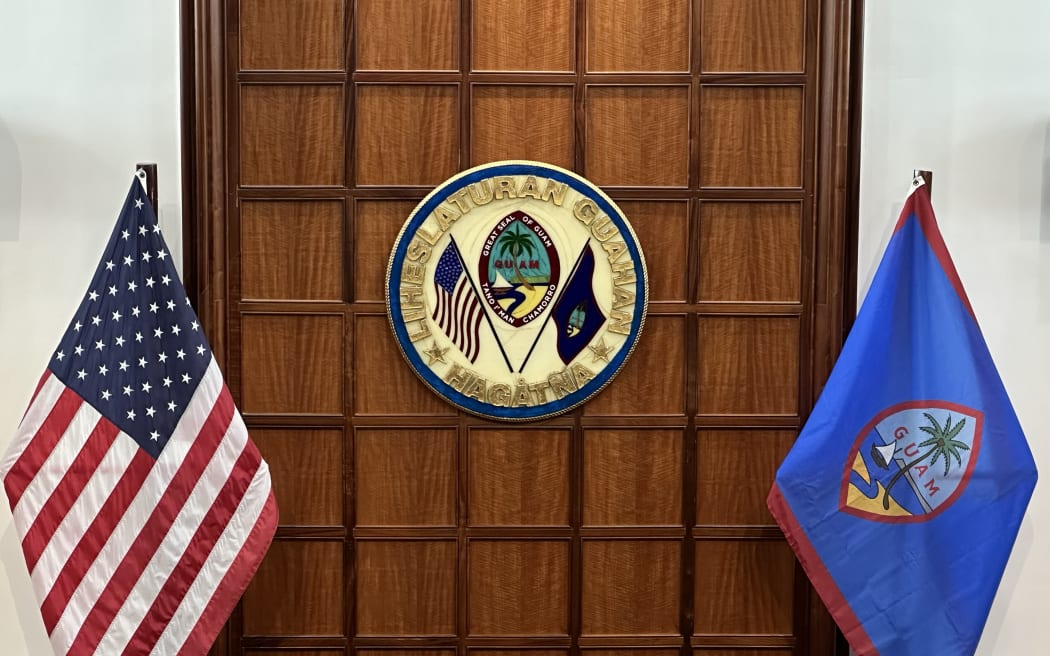
Guam Legislature generic

Guam Legislature generic Photo: RNZ Pacific / Eleisha Foon

Unprecedented militarisation

A former US Congressman for Guam and currently the Pacific Island Security Centre chair, Robert Underwood, calls the advancement of military activity “historic and comparable to what happened in the immediate period before World War II”.

“[It was] unprecedented and created great and dynamic change in Guam since that time, [and] that is what is occurring today, particularly in connection with this proposed missile defence system,” he added.

Underwood said the island was the largest known storehouse for nuclear weapons in the world.

“They have diverted airfields in the Northern Marianas, they have a diverted airfield in Palau, they are setting up a radar system there. There’s conversation about expanding the runway in Yap [in the Federated States of Micronesia]. These are areas they anticipate that [if] there is going to be a conflict, they have a place to put their assets, so that all their assets won’t be here in Guam.”

Underwood said the role of the government of Guam was to arm individual citizens regarding these activities and Governor Guerrero had been “inadequate” in that regard.

“The issue is, how do individual people in Guam get the capacity to understand what is going on around them? And is their government empowering them in coming to an informed conclusion.”

Leeland Bettis, who works alongside Underwood, said the military’s use of words says it all: “There’s a very specific sort of framing for the military uses, which is that what they are doing is to establish deterrence. They always say, ‘but if deterrence fails, we must be ready to fight’.”
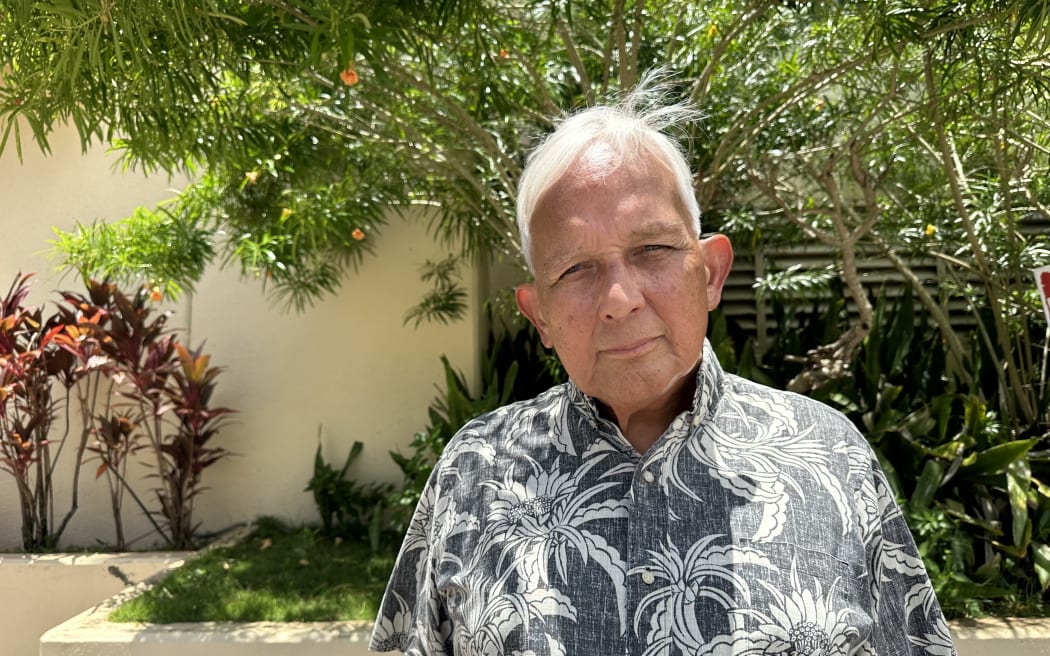
Robert Underwood

Robert Underwood Photo: RNZ Pacific / Eleisha Foon

Threats are real

Governor Guerrero maintains China is a ”very real threat” and that Guam would never be truly independent because without the US they do not have their own defence forces to protect their island, which she said, “attracts conflicts”.

People have learned to live alongside the military and have accepted that if it was not America then it would be someone else, Washington has no doubt that would be China, she added.

During RNZ Pacific’s visit to Guam, many attempts were made to secure an in-person interview with the US Navy, Military, Air Force and Joint Region Marianas Commanders.

All our requests were declined because their commanders were “off island”.

Some written statements were provided from the Marines which helped confirm some information about the defence architecture planned for Guam, but many questions were also left unanswered and referred on to Joint Region Marianas.

The Air Force, however, did provide an interview about life on base, but refused to comment on any military expansion and missile testing on Guam.
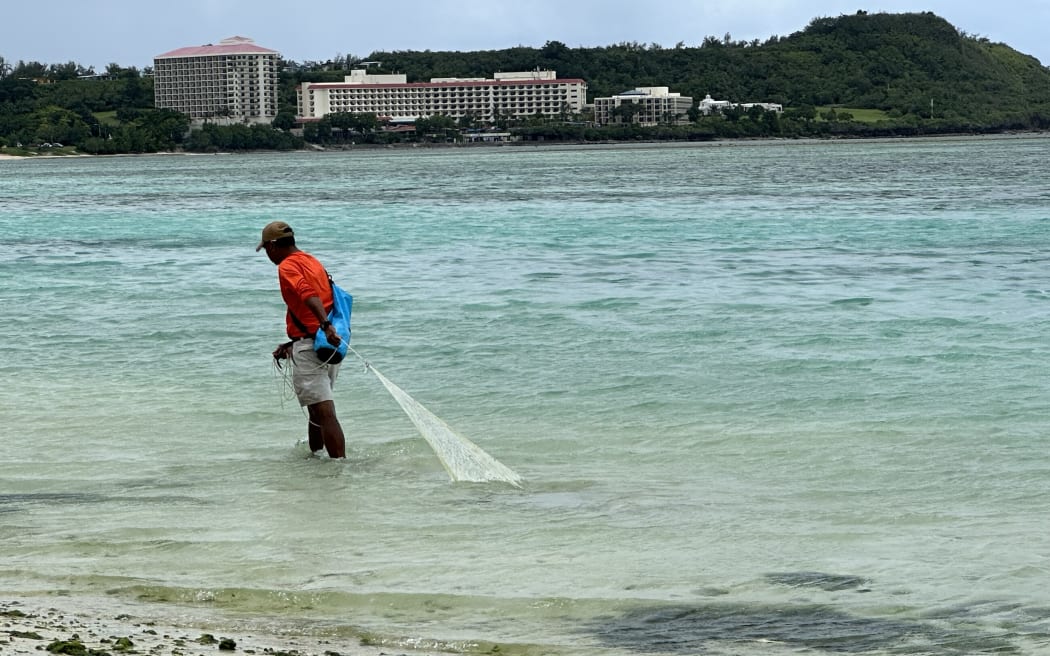
Guam fisherman generic

A Guamanian fisherman. Photo: RNZ Pacific / Eleisha Foon

Tonga Customs officer arrested following substantial illicit drug allegations

Tonga Police have reportedly apprehended a Customs officer on suspicion of involvement with illicit drugs.

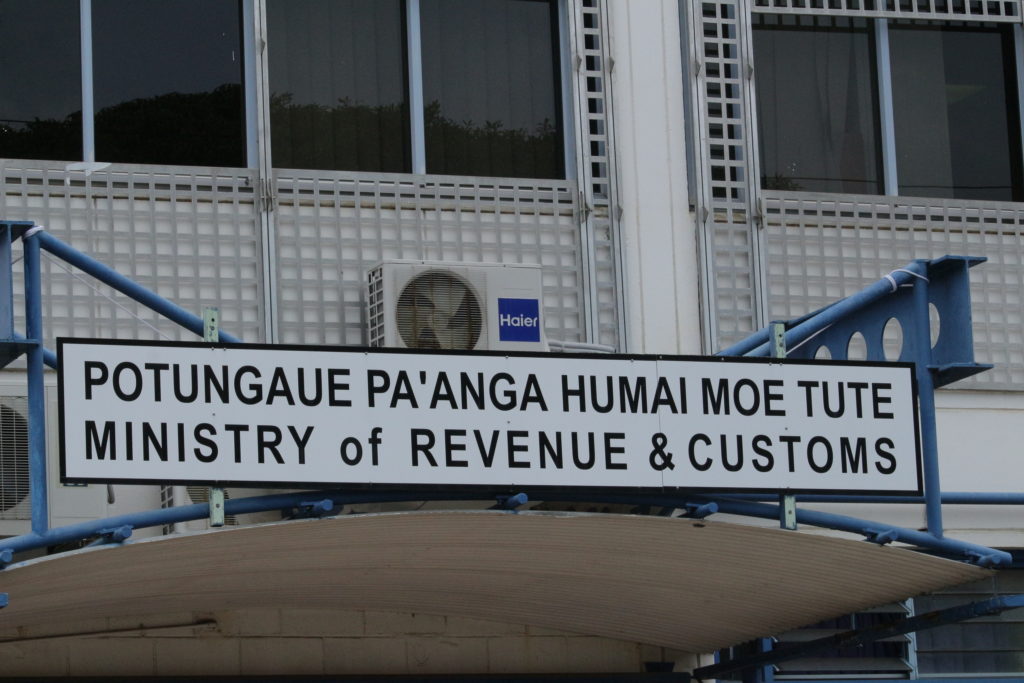
Ministry of Revenue & Customs. Photo/Kalino Lātū

Acting Commissioner of Police Tevita Vailea reportedly confirmed the arrest to local media but made no further comment as the investigation was ongoing.

The news comes in the wake of reports on social media this week that a customs officer had been arrested after a container containing illicit drugs was allegedly released from authority.

No further details were available.

Last week, a prison officer at Hu’atolitolu prison was arrested while more officers were under investigation following seizure of illicit drugs and drug paraphernalia at the prison compound.

Last week’s arrest of the Customs officer follows the 2019 arrest of a Senior Customs Officer after a major drug bust at Kuini Salote Wharf.

In that incident, former Senior Customs Officer Paula Naitoko was later found guilty of importing a substantial amount of methamphetamine and firearms concealed in a box from the United States.

He was imprisoned for six years before he passed away in jail last year.

A recent public debate in Parliament rejected a suggestion that the death penalty be used to deter drug offenders.

Tonga has been combatting a growing drug problem for the past several years, leading to the Speaker of Parliament, Lord Fakafanua, calling for a debate on the topic, ‘Capital punishment is the best deterrent for illicit drugs offences.’

Kyiv says military office set up in Russia’s Kursk

Ukraine is conducting its largest incursion into Russian territory since the war began.

At the same time, the Ukrainian military is outnumbered and under-equipped.

Al Jazeera’s The Take speaks to experts on whether Ukraine’s latest operation could signal a change in the direction of the war.

US to provide Ukraine with additional security packages

White House national security spokesperson John Kirby says the US will provide Ukraine with additional security packages in the coming days, he told MSNBC in an interview.

Kirby’s comments, which he did not elaborate on, come after the office of Ukrainian Defence Minister Rustem Umerov said earlier today that he spoke with his US counterpart Lloyd Austin about the situation on the ground and Ukraine’s defence needs.

At least two killed in Russian attacks in Kharkiv, Ukrainian authorities say

At least two people have been killed and seven others injured after Russian-guided bomb attacks in Kharkiv, local authorities said.

Oleh Syniehubov, the regional governor, said on Telegram that the attack hit a civilian enterprise in the Kupiansk district.

One more employee was injured, he added.

Regional police also said on Telegram that six people, including a 12-year-old child, were wounded in the Zolochiv village when Russian forces dropped two bombs.

Ukraine’s continuing incursion has played to its strengths: Movement, tactical innovation and the ability to exploit small successes to bigger achievements.

Ukraine has also managed to leverage the limited resources it has and a picture is now emerging of new arms used in novel ways that have caught Russian forces off-guard and kept them off balance.

Meanwhile, the world awaits Russia’s response.

Tongatapu woman given suspended sentence for meth possession

A Tongatapu woman arrested and charged with possessing methamphetamine has escaped a prison sentence.

Meth users could be forced into crisis centres under the new plan.(ABC News Breakfast)

Miss Siena Li was sentenced in the Nuku’alofa Supreme Court by Judge Nicholas Cooper for smashing a pipe used to smoke drugs and possession of 0.08g methamphetamine, a Class A drug.

The court was told that Miss Li was arrested in a car, outside the Kiwi tyre shop, Ha’ateiho, on March 2, 2024 at approximately 3am that morning.

She was seen disposing of the pipe when the police arrived at the location after receiving a tip-off.

She was searched, and the bag of methamphetamine was recovered.

She was arrested, charged and committed to the Supreme Court.

On 6 August 2024, she appeared for arraignment and entered her guilty pleas.

Miss Li did not wish for a pre-sentence report but rather to be sentenced straight away.

Miss Li has a previous conviction, but the Crown made clear that it was not for illicit drugs, though it was not known what the precise nature of the conviction was.

She was sentenced to six months’ imprisonment, fully suspended for two years on the following conditions:

  1. To report to probation no later than 2pm, August 7, 2024;
  2. Miss Li must be placed on probation;
  3. To complete a drug rehabilitation course; Perform 40 hours Community Service Order; and
  4. Miss Li must not commit any offence punishable by imprisonment.

Drugs and paraphernalia to be forfeited and destroyed.

Tonga news in brief: New Ha’apai airport runway lights; Tatofi Nuku’alofa concerts; Cable ship repair underway; Japan firefight trucks donation

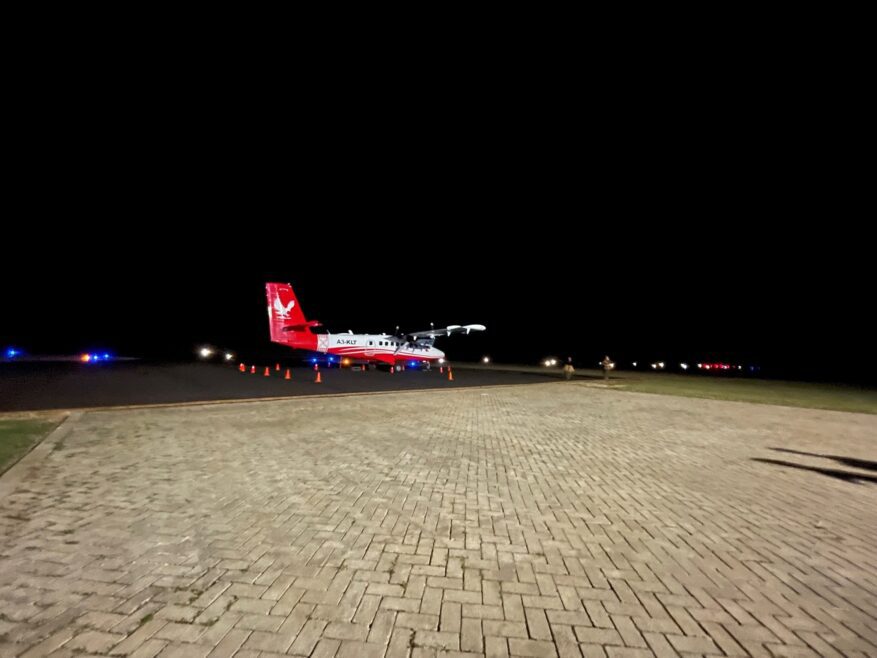
The new runway lights at Sālote Pilolevu Airport in Ha’apai were officially activated and inaugurated by Prime Minister Hu’akavameiliku and Australian High Commissioner to Tonga HE Brek Batley.

New runway lights switched on for Ha’apai Airpor. Photo/PMO Office Tonga

The Australian Government funded this $1.8 million project, which was carried out by Tonga Airports Limited in partnership with the Australian airport lighting company, Valupa.

With these newly installed lights, the Ha’apai islands will be more accessible at any time, facilitating critical medical evacuations and boosting tourism opportunities.

This development follows an incident in 2015 where a Real Tonga Airline flight at Ha’apai airport nearly ended in tragedy, reportedly due to differences in the interpretation of the aircraft airspeed indicator by the pilot and co-pilot.

According to the report at the time, the pilot’s airspeed indicator suggested it was time for takeoff, but the co-pilot’s instrument indicated otherwise, causing the plane to swerve and nearly hit the airport fence.

Josh Tatofi concerts in Nuku’alofa

Renowned Tongan-Hawai’i based and Grammy-nominated musician Josh Tatofi is set to perform a free concert in Tonga next Tuesday evening, August 20, at the ‘Atele Indoor Stadium.

The event is a segment of Tatofi’s South Pacific tour, encompassing visits to American Samoa, Samoa, Australia, and New Zealand.

The concert is made possible thanks to the generous support of corporate sponsors such as Friends Cafe, Five Star, Tonga Tourism Authority, Tonga Communications Corporation, Tali’eva, Office Equipment, and Tonga Water.

The Nuku’alofa concert admission is complimentary, offering local enthusiasts an exclusive opportunity to enjoy Tatofi’s live music performance.

US$1.9 million grant for firefighting trucks from Japan

Tonga Fire & Emergency Services will receive firefighting trucks donated by the government of Japan.

It includes two pumper trucks, two water tanker trucks, and three pickup trucks, totaling a US$1.9 million grant.

The Prime Minister Hu’akavameiliku signed the NPGA grant at his office in the St. George Government building in Nuku’alofa this morning

This grant was announced by Japan’s Prime Minister Fumio Kishida during a summit meeting with PM Hu’akavameiliku on the sidelines of the 10th Pacific Islands Leaders Meeting (PALM10) held in Tokyo last month. 

Internet cable repair service underway

The Cable Ship Lodbrog, working to fix Tonga’s damaged fibre optic cable, has identified part of the cable which was damaged apparently by a recent earthquake.

Reports said the ship has found the northern end of the damaged cable and is currently attempting to locate the southern end attached to Tongatapu. 

The repairs to the domestic telecommunications submarine cable are expected to be completed by this Friday, August 16.

A spokesperson for the Ministry of Communication  previously said it appeared the cable had been broken by a recent earthquake near the Hunga Tonga Hunga Ha’apai volcano.

It was detected 73-96 km from Tonga’s main island of Tongatapu and northwest of Haapai islands.

The Ministry has a spare section of cable about 60km long which it hopes will cover the damage.

“If not, we have to wait to give time to manufacture new cables”, the Ministry said.

What you need to know about Auckland City Mission food parcel meth ‘lolly’ contamination

By rnz.co.nz and is republished with permission

People are urged not to eat meth-laced pills disguised as white lollies that ended up in food parcels because they could be lethal.

Meth-laced lollies given to Auckland City Mission

Meth-laced lollies given to Auckland City Mission. Photo: Supplied / Auckland City mission

Pills of methamphetamine disguised as Rinda-brand pineapple lollies were discovered in parcels handed out by Auckland’s City Mission on Tuesday.

Each contained three grams of meth, which is up to 300 regular doses.

If you’re affected, here’s what you need to know.

Symptoms

Drug Foundation’s Ben Birks Ang said they were concerned there could be more pills disguised as lollies out there.

People who have consumed them reported a bitter, chemical taste.

Anyone who may have tried one of these lollies and noticed an unpleasant taste, should spit it out and seek immediate medical help – call 111.

Ang said people who may have consumed the drug should look out for chest pain, racing heart, seizures, loss of consciousness.

It was not possible to get high from touching meth but people who tasted it, even spitting it out quickly, were likely to have felt an impact, he said.

People can also call the National Poisons centre on 0800 764 766.

What are the symptoms?

Food Parcels

Anyone who has received a food parcel from the Auckland City Mission recently is being asked to check to make sure it does not contain the meth-laced lollies.

Any such lollies should be kept securely out of reach of children.

Anyone who received a food parcel with Rinda brand pineapple lollies is asked to contact police on the 105 phone service quoting the file number 240813/5919, or through Crime Stoppers anonymously on 0800 555 111.

Drugs

The Alcohol Drug Helpline offers confidential, free support for anyone concerned about drug use. Call 0800 787 797, or text 8681, to speak with a trained counsellor.

High Alert offers anonymous reporting of unusual or unexpected effects of drugs through a page on its website.

The Level offers information about drugs.