Tuesday, March 3, 2026
Home Blog Page 166

Police warn parents after Tongatapu missing 12-year-old girl located

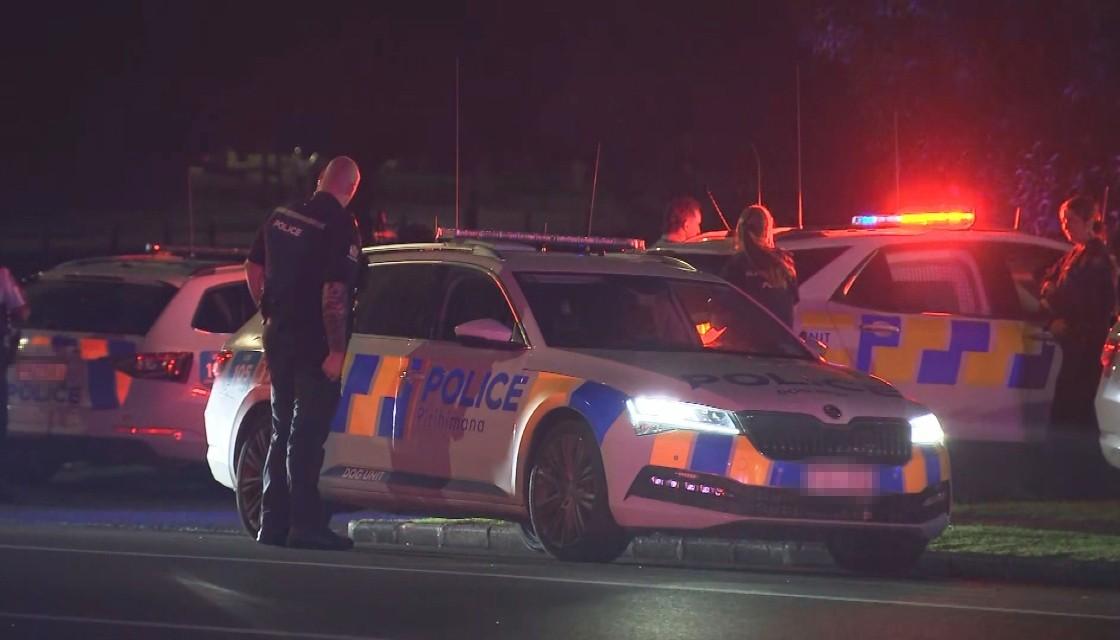
The police are urging parents and children to be vigilant, following what appeared to be an abduction of a girl in eastern Nuku’alofa yesterday.

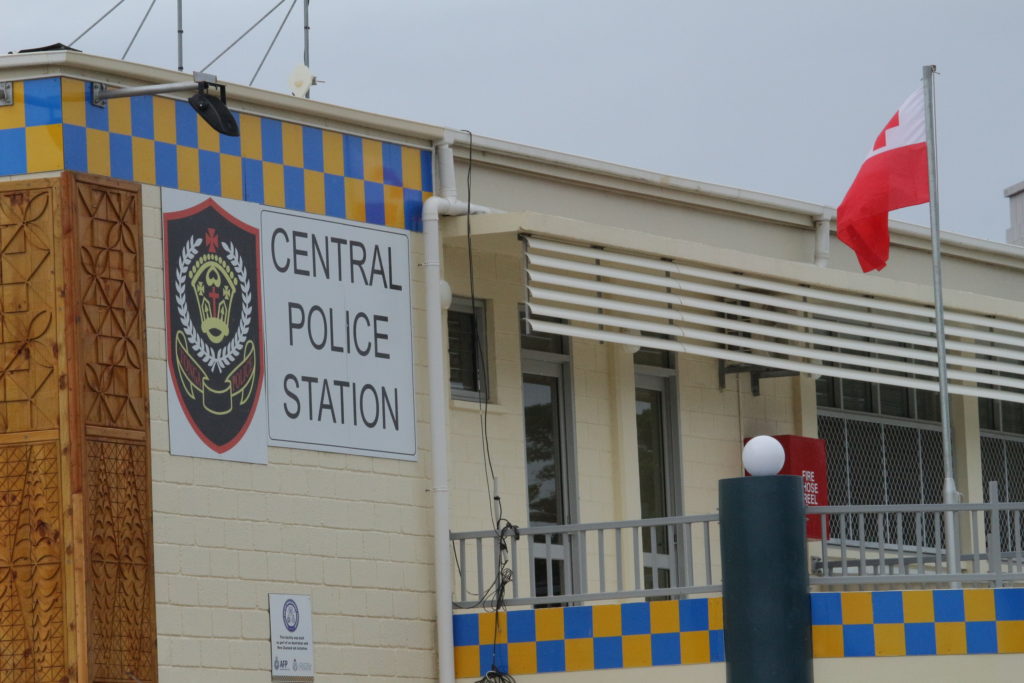
Nuku’alofa Central Police Station. Photo/Kalino Lātū

According to report by a family member on Facebook last night, two men appeared to have coerced the 12-year-old into a car, as she was at a swimming spot nearby.

Police said this evening the girl was located and returned to her parents safely.

It did not say whether there was any physical contact between the apparent abductors  and the girl, but it said “the Police are looking to establish the reason for the minor’s action”.

“Tonga Police responded to a report of a missing 12-year-old girl from Fangaloto last night, 10 January 2024, after going for a swim”, the police said in a statement.

It said the young girl was found in the early hours of today, 11 January 2024, and has been returned safely to her parents.

Meanwhile, Tonga Police is reminding parents and guardians to be more alert for the safety of their children.

“It is also wise to always remind children to never talk to strangers and not to accept anything offered by anyone other than their parents and to alert the police should you or your child feel unsafe in any situation.

To report a crime or for assistance from police, call us on 922 or 740-1630 or 740-1632”.

Since she has been found, Kaniva News has removed her name and photo from this article. 

“. 

Desperate search for 12-year-old Tongatapu girl last seen getting into silver car with two men

EDITOR’S NOTE: The girl has been found, Kaniva News has removed her name and photo from this article. 

The police are urging parents and children to be vigilant, following what appeared to be an abduction of a girl in eastern Nuku’alofa yesterday.

According to report by a family member on Facebook last night, two men appeared to have coerced the 12-year-old into a car, as she was at a swimming spot nearby.

Police said this evening the girl was located and returned to her parents safely.

It did not say whether there was any physical contact between the apparent abductors  and the girl, but it said “the Police are looking to establish the reason for the minor’s action”.

“Tonga Police responded to a report of a missing 12-year-old girl from Fangaloto last night, 10 January 2024, after going for a swim”, the police said in a statement.

It said the young girl was found in the early hours of today, 11 January 2024, and has been returned safely to her parents.

Meanwhile, Tonga Police is reminding parents and guardians to be more alert for the safety of their children.

“It is also wise to always remind children to never talk to strangers and not to accept anything offered by anyone other than their parents and to alert the police should you or your child feel unsafe in any situation.

To report a crime or for assistance from police, call us on 922 or 740-1630 or 740-1632”.

Sex education: Govt accused of ‘conspiracy-based thinking’

By rnz.co.nz and is republished with permission

The union representing primary school teachers says there still has not been any consultation or guidance from the Government over planned changes to the sex education curriculum, a few weeks out from the school year starting.

As part of National’s coalition agreement with New Zealand First, the curriculum will be refocused on “academic achievement and not ideology, including the removal and replacement of the gender, sexuality, and relationship-based education guidelines”.

The guidelines were introduced in 2020 by then-associate education minister Tracey Martin, who was a New Zealand First MP.

NZEI Te Riu Roa president Mark Potter said they had been developed by specialists in that area, as well as educational professionals, and were designed to be age-appropriate for each stage of children’s growth.

“We’re very worried that they seem to think there’s something that needs to be changed. And we’re not seeing what they’re trying to fix at this stage. We don’t understand why they need to do this,” he said.

Potter said schools already consulted with communities on sex education on an annual or biannual basis, and some parents who were uncomfortable speaking to their own children about sexuality education were happy to leave it to schools.

“They just want to know what is being said to the children. So if something is said to a child, at least the parent knows when the child follows up with a question to their parents when they get home.

“Most commonly, what schools do is if the child asks a question that’s actually really one we’d be expecting older children to be looking into or exploring, that’s where teachers will say ‘that’s something you need to ask your parents about’. Because at that stage, the school is not ready to talk to a child at that age about that area.”

He believed the change was coming from some areas of the community who were putting pressure on schools and the ministry.

“A lot of it is very conspiracy-based thinking, and lots of claims about what schools are supposed to be doing that they just aren’t. Some very untrue statements being made about what children being taught. So we are wondering, who are they pandering to with this kind of move?”

During the election campaign, New Zealand First leader Winston Peters campaigned against “woke ideology” in schools, while National leader Christopher Luxon said sexuality issues should be dealt with in the home, by parents.

In December, after becoming prime minister, Luxon revised his answer, saying the guidelines had been variously interpreted by schools, which had parents concerned.

“All we’re asking for is, because we’ve been caught between curriculum, we want a well defined curriculum agreed to by experts that actually makes sure that the content is age-appropriate, that parents have been consulted, and importantly that parents have an ability to withdraw from the education as well,” he said.

Labour’s education spokesperson Jan Tinetti said parents already had the option to withdraw their children from classes.

But she said the removal of the guidelines, particularly on issues like consent and relationships, was a concern and risked damaging young people.

“We already know that in that area, that young people are facing some serious challenges. There’s way more access to pornography through the internet now than what has ever happened before. And young people get their understanding of sex sometimes, sadly, from those sources.”

She said the Government’s reasoning was “dangerously close” to culture war rhetoric.

“I was really concerned during the election campaign, that I was told by a candidate that we’re just trying to ‘trans-ify’ kids. What on earth does that even mean? I hadn’t even heard of the ‘woke gender curriculum’, I had to look it up, and saw that it was something that was an imported culture war. That really concerns me. Our kids are beyond that.

“We have a really good curriculum in this country. The guidelines are not the curriculum, they are adding to how we can make sure the curriculum is taught well. They are not compulsory, but they are absolutely superb.”

Both Potter and Tinetti said schools have already developed their curricula for 2024, which would have been developed with their communities.

But schools would need time to make the changes, and consult with parents in time for 2025. The sex education changes did not make it into the Government’s 100-day plan.

Potter said so far, there had been very little indication from the Government on what it wants changed in the guidelines, given the coalition agreement also called for a replacement.

“We will be expecting a grown up conversation around what is needed. We want to make sure that politicians don’t interfere with the curriculum where they don’t belong. And what we’ll be looking to see is that there’ll be supporting professionals and developing an inclusive education system for all children,” Potter said.

Lulutai’s new aircraft reported grounded as customers’ complaints about services intensify

Lulutai airline’s newly purchased aircraft was reportedly grounded today, a source has  told Kaniva News.

Lulutai De Havilland Twin Otter

We contacted the airlines chief executive Poasi Tei for comment and asked him to confirm whether it was true the Twin Otter had been grounded and why.

Source said engineers were called to look at the Twin Otter, apparently for mechanical issues.

The incident comes after several complaints about the Lulutai services had been shared on social media, including Kaniva News

The news comes in the midst of an ongoing investigation conducted by staff from Australia and the Tonga’s Civil Aviation Division (CAD) to determine the cause of the 36-seater Saab 340 aircraft accident, at Fua’amotu Domestic Airport a month ago.

It is understood the investigators want to find out if the damage is consistent and aligns with the insurance company’s coverage claims policy.

As we reported previously there were complaints of travel chaos caused before Christmas after the Saab 340 struck a cement block  on landing at the Fua’amotu domestic airport.

Flight passengers were then forced to take the inter-island ferries.

The airline has three aircraft including the Saab 340, Y12 Harbin  and the Twin Otter.

It is understood the Y-12 plane was only fixed last week. It was grounded after it veered off the runway during its take-off run on ‘Eua island in July last year and was later hit by a tow tractor at the Fua’amotu domestic airport.

The new 18-seater Twin Otter was forced to fulfil all the inter-island services among ‘Eua, Ha’apai, Vava’u and the Niuas after the Saab accident.  

The Prime Minister, who is the chairman of the Lulutai board of directors said two pilots had been accredited to fly the Twin Otter 16 hours a day. He said each pilot flew the plane for eight hours a day in an attempt to cope with the high-demand on the domestic routes during the Christmas holiday season.

The Prime Minister also recently said the Lulutai airlines was struggling to  find another aircraft after an attempt to lease or buy another aircraft. He said none was available and a deal with the Fiji airways to assist the situation had proven fruitless.  

Complaints

A New Zealand-based Tongan resident said this afternoon she was booked to fly from Ha’apai to Tongatapu tomorrow (Thursday, January 11) but was informed today by the Lulutai that her flight had been cancelled.

She was told to stay in touch.

On Lulutai’s Facebook accounts some passengers vented their frustrations and raised their anger directly with the airlines after being told their flights had been cancelled.

One ticket holder wrote: “Why did you guys cancel the Wednesday flight??? I’m in Ha’apai and I’m leaving on Wednesday night back to NZ. There should be some kind of compensation with these kind of rescheduling”.

Another wrote: “I should start swimming. They are known for their no communication and all of a sudden flights are cancelled. We planned before time and yet still cancelled. Just be ready for cancelled flight when you come. Because travelling in Tonga it’s about who you know”.

The national airline also appears to lackof online public relation tips and strategic communication services  to  facilitate its services and reduce customer complaints help them contact its office directly.

Most of the complaints said e-mails and calls to the Lulutai office went unanswered.

“Hello Lulutai Airline Ltd, can you please let me know how I can buy ticket to Vava’u on April 20? Will be much appreciated”, a commented wrote on Luluta’s Facebook account.

One commenter wrote: “I’m gonna go to Haapai in July and afraid of this happening!! How will you get to  (Nuku’alofa) now? Or is there another flight you can take?”

PM Hu‘akavameiliku’s response fails to completely answer questions raised by Lulutai’s inter-island Christmas Day services

COMMENTARY: Prime Minister Hu’akavameiliku has still not completely answered questions raised about the legality of the government airline’s Christmas Day passenger flights.

Prime MInister Hu’akavameiliku

The national airline was accused of breaching the Christmas Day trading ban after reports it conducted passenger flights on Christmas Day.  

Businesses and trading services are illegal in the kingdom on Sunday, Christmas Day and Good Friday.

As Kaniva News reported previously, the Neiafu town officer had protested at the Vava’u police station after the police arrested his son for illegally swimming in the sea on Christmas Day.

Vāvā Lapota told the Neiafu police it was unfair for them to arrest and charge his son while at the same time they did not arrest Lulutai’s management for breaching the Christmas taboo by operating between Vava’u and Tongatapu.

The Police did not answer Lapota’s concerns about Lulutai, Lapota told Kaniva News.

A broadcaster asked the Prime Minister during a press conference last week to clarify the rules for Christmas Day and whether it fell within the confines of the Sunday taboo laws.

In his response, Hon. Hu’akavameiliku said Christmas Day was a public holiday.

In Tongan he said: Ko e Kilisimasi ko e Public Holiday.

The broadcaster also asked:

So flight services are allowed on that day?

In Tongan the broadcaster asked: ‘A ia ‘oku ngofua pe fefolau’aki holo ia ai?

The Prime Minister did not answer that question directly and appeared to hesitate before he said:

“A provisional permit was issued to Lulutai in case there was any doubt, but according to our schedule Christmas Day is a public holiday. Sunday is Sunday,” the Prime Minister said.

In Tongan, the Prime Minister said: Na’e toe ‘ave pe ngofua provisional ia kapau ‘oku doubt. Ka ko e fakatatau ko ē ki heetau schedule ‘atautolu Christmas Day is a public holiday.

Ko e Sapate ia ko e Sapate.

The Prime Minister, who is also the Minister of Police, did not say that under the existing law,  business services are illegal on Christmas Day just like Sunday.

His revelation raised the issue of why a permit was issued if the flights were allowed by the law.

This appeared to contradict his claim that Christmas Days was just a public holiday, implying businesses are allowed.

The Prime Minister also appeared to have ignored the contradiction in the fact that when his Police officers in Vava’u arrested the town officer’s son, they warned people at the beach that Christmas Day must be treated just like Sundays.  

However, Section 6 of the Public Holidays Act grants an exemption which allows the sale of bread, fresh milk, fresh fish and fresh meat, but no later than noon.

The law says:

“Suspension of Business on Christmas Day and Good Friday Order

Made by Her Majesty in Council on 22nd December, 1937.

In exercise of the powers vested in Her by the Public Holidays Act and with the advice of Her Privy Council Her Majesty Queen Salote Tupou, D.B.E., is pleased to order, and it is hereby ordered that Christmas Day and Good Friday being days specified in section 2 of the Public Holidays Act shall until further notice be days to be observed throughout the Kingdom as days on which business (other than the sale of bread, fresh milk, fresh fish and fresh meat) shall be suspended in terms of sections 3 and 4 of the said Act.”

The law goes on to say:

“No person shall be compelled to make any payment or do any act upon any of such public holidays which he would not be compellable to make or do upon a Sunday and the making of such payment and doing such act on the day following such public holiday shall be equivalent to payment of the money or performance of the action on such holiday.”

You can also find the law by clicking on this link.

The law sets out the rules for closing businesses:

“It shall be lawful for Cabinet by Order from time to time to direct that all stores, shops and other places of business in all towns throughout the Kingdom or in any one or more of such towns as may be specified in the order shall be and remain closed upon any one or more of the days specified in Section 2 hereof or upon any such special day or days as Cabinet by Order shall appoint to be kept as public holidays.

There shall be excepted from the operation of the last preceding section —

(a) the sale of any drugs or medicines;

(b) the sale of bread, butter, fresh milk, fresh meat, fresh fish and ice not later than noon;

(c) the sale of refreshments in any ice cream stores, tea or refreshment rooms;

(d) the sale of any article required for the burial of a dead body.”

You can also get access to the Public Holidays Act by clicking on this link.

As we reported previously, most of our concerned readers are well aware of Clause 6 of the constitution, which bans any commercial activities on Sunday. However, there is no mention of the Christmas Day and Good Friday in the constitution and this is where most of the confusion came from.

It must be noted that Clause 6 clearly refers to an exceptional law.  That exception refers to the Public Holidays Act, sections 2, 3, 4 and 6 as well as the Suspension of Businesses on Christmas Day and Good Friday regulations which are mentioned above.  

The constitution says that the Sabbath Day to be kept holy:

“The Sabbath Day shall be kept holy in Tonga and no person shall practise his trade or profession or conduct any commercial undertaking on the Sabbath Day except according to law; and any agreement made or witnessed on that day shall be null and void and of no legal effect.”

You can access to this clause of the constitution by clicking on this link.

Opposition charges

The Prime Minister has been accused by the Opposition of showing nepotism towards his former Cabinet Minister Poasi Tei by appointing him as chief executive of the airlines shortly after Tei was convicted of electoral bribery and dismissed from Parliament. 

The Opposition also accused the Prime Minister , who is also the Chairman of the airline of using public money to invest in the airlines without submitting any reports to the Parliament. 

Policewoman who drowned at Laulea beach laid to rest

The Tonga Police force said their last goodbyes to Officer Selomiti Tufui, who’s life was cut short after a tragic incident at a notorious Tongtapu beach.

Selomiti Tufui

As Kaniva News reported last week Selomiti’s brother Mione Tufui had posted a video which appeared to show the victim’s body was pulled from the water and being carried out on a stretcher.

“I love you Selomiti”, he said.

The police said this afternoon that the 22-year-old police constable entered Tonga Police on the September 12, 2020 as a Police Recruit in Recruit Wing 48.

On  January 29, 2021, she became a Probationary Constable and was confirmed to a Police Constable on September 21, 2022.

The police did not release any details about Selomiti’s cause of death.

“It’s with a heavy heart that we write this post. Today, 9 January 2023, Members of Tonga Police along with families, loved ones, and friends of Police Constable Selomiti Tufui laid her to rest from time to eternity at Mala’e Loma, Lapaha”, a police statement read.

Selomiti was working at the Mu’a Police Station until her tragic passing on New Year’s Day.

“Tonga Police offers its heartfelt condolences to Constable Tufui’s parents and families over her tragic loss for it is indeed a great loss to our Tonga Police family. Police Constable Selomiti Tufui’s courage and devotion to serving and protecting our community will always be remembered”.

Laulea beach is one of the most dangerous places in Tonga to go swimming due to powerful rip currents and waves that are known to sweep people out to sea.

In 2018 Viliami Vaka’uta, 24, was presumed dead after he attempted to save her wife in the water.

‘Inoke Mapaleve Mo’unga, 32,  of Kolonga drowned at the beach after  visiting there with his wife and friends.

In 2012   Catholic priest, Father Mikaele Mateo , 37, died at Laulea Beach while helping to rescue his five young nephews who were swept out to open sea by the strong currents.

Breakthrough for Tongan students

By Illiesa Tora of rnz.co.nz and is republished with permission

The New Zealand government has accepted Tongan students who pass the Tonga Form Seven National Examination to enroll directly into its education system, Tonga’s Prime Minister Hu’akavameiliku Siaosi Sovaleni has confirmed.

Tongan studetns who pass their final year secondary school examination can directly enter NZ education system. Photo: RNZ Pacific / Eleisha Foon

Speaking at a press conference in Nuku’alofa on 5 January, Hu’akavameiliku said that its was great news and something that local students should take to heart and work on.

He said Auckland University previously offered enrollment to Tongan students who pass the Form 7 examination.

That has now been accepted by the New Zealand government, he said, adding it is the result of discussions held over the last 24 months.

He was updating the results of the Form 7 exams and congratulated students who have passed and thanked parents and teachers for the successful results.

Results released by the Ministry of Education shows that a 83 percent pass rate was achieved in 2023, which was an increase of 20 percent from the 63 percent in 2022.

The Niuafo’ou High School and Niuatoputapu High School jointly topped the local schools with a 100 percent pass rate, followed by Takuilau College on 92 percent, Tonga High School (91 percent) and Tonga College (89 percent).

Tonga College recorded the best improved result, scoring the 89 percent pass rate compared to 33 percent they had recorded in 2022.

Vava’u school Saint Peter Channel, which had students sitting the Form 7 exam for the first time last year, recorded a pass rate of 78 percent.

Hu’akavameiliku, who is also the Minister of Education and Training, said there were a lot of students who passed with distinctions – those that had a pass rate of with 83 percent or more.

El Niño bites in the Pacific

By rnz.co.nz and is republished with permission

Some Pacific nations are feeling the bite of El Niño through dry conditions, while others in drought get relief through above average rainfall.

The southern Cook Islands has received below average rain for the last six months, despite rain last week.

Meteorological Service director Arona Ngari said dry conditions are affecting the whole of the southern group, including Rarotonga.

“What is normal for us is about 100 to 200 millimetres of rainfall per month, but that has actually gone well below 50 percent of the norm,” Ngari said.

The met office had asked the community to conserve water, he said.

In Fiji, Nadi received less than a third of its normal December rain and Suva had received half of the average.

Fiji Meteorological Service acting director Bipen Prakash said even though there had been some rain, it was still significantly less than was normally expected for December – the peak wet season month.

“We expect this trend to continue,” Prakash said.

“We expect that generally we will have drier than usual months ahead, we may get a bit of rainfall every now and then with passing troughs of low pressure or tropical cyclones.”

Although there had been significantly less rain it had not yet been called a drought ,which, he said, was a decision that involved multiple stakeholders.

NIWA meteorologist Ben Noll said over the last three months Fiji, Tonga, New Caledonia, the Southern Cook Islands and Wallis and Futuna, experienced the driest conditions, while other Pacific nations were experiencing below average rain.

But island groups along the equator, such as Kiribati – which had been in a drought – had now experienced above normal rainfall.

Kiribati Meteorological Service’s Ueneta Toorua said all four manual weather stations, including the capital and Tarawa Island, recorded above normal rainfall for the month of December 2023.

“There is a high chance that groundwater and water tanks have been recovered from high rainfall over the last few months,” the Kiribati met office chief officer said.

“But noting that rainfall has been significantly low over the last three years, it might also take a while to fully recover, especially in islets where freshwater and water catchments facilities are limited.”

Toorua said above average rainfall was expected to continue over the next three months.

‘Feeling the effects’

NIWA’s Noll said El Niño had so far behaved closely to what had been expected.

“We were anticipating that some of the islands off the equator in the South Pacific, as well as some of the islands in the northwest Pacific, would experience below normal rainfall or a higher chance for below normal rainfall and that has come to fruition.

“There are definitely several islands that are probably feeling the effects of low rainfall over recent months as well as maybe building water stress in some of those islands due to the low rainfall.”

So far, there had been three tropical cyclones this season, with severe tropical cyclone Lola arriving in October before the official start of the cyclone season.

Noll said big El Niño events in 1982/83 and 1997/98 also had early starts to the season.

More cyclones are predicted for the Pacific during El Niño.

He said it was important for the Pacific to be prepared for more cyclones, with the majority reaching the Pacific in February and March.

“We’ve been about a month now, as of early January, without a cyclone.

“However, cyclone season does run through the end of April in the region.

“There may be a renewed risk for cyclone activity toward the end of the month and that is certainly something that all Pacific islands will need to remain vigilant about.”

Noll expected the El Niño conditions would last until at least May.

“There can be a lag between when the ocean moves into neutral and the atmosphere starts to behave in a more of a neutral manner, so it wouldn’t surprise me if conditions in the Pacific Ocean in the atmosphere did maintain an El Niño-like flavour into the middle part of 2024,” he said.

Supreme Court rejects Parliamentarians’ call for judicial review, but says House still has internal procedure to resolve dispute

The Supreme Court has declared that it has no jurisdiction to hear an application for judicial review of the Speaker of Parliament’s actions.

Tonga Parliament. Photo/Tonga Parliament

Judge Cooper, presiding, said the House had not exhausted all of its own options and could use contempt procedures to resolve the dispute over the handling of a vote of no confidence in the Prime Minister.

The judge said this would avoid an abuse of the doctrine of the separation of powers, under which no part of the government can interfere in the independent functioning of another.

On September MPs Dr. ‘Uhila-moe-iangi Fasi, Mateni Tapueluelu, , Dr. ‘Aisake Valu Eke, Paula Piveni Piukala, Kapeli Lanumata, Dr. Taniela l. Fusimalohi and  Mo’ale Finau filed an application to bring judicial review proceedings against the decision of the Lord Speaker of Parliament, Lord Fakafanua and the Legislative assembly.

This followed the tabling of a motion of no confidence in the Prime Minister on September 5, 2023.

The plaintiffs argued that:

They were denied their right to debate the motion on a vote of no confidence in the Prime Minister, which amounted to a breach of Clause 62 (2) of the Constitution.

The defendants broke their oaths to uphold the Constitution they were obliged to take pursuant to Clause 83 of the Constitution; and

That upon the vote on the Motion not to debate the vote of no confidence, unelected members voted, contrary to Clause 51 (6)

The defendants challenged the plaintiffs’ jurisdiction to bring the application for judicial review. They argued that the alleged breaches to clauses 62 (2) and 83 were in reality not breaches of a discrete provision of the Constitution and that what was alleged amounted to asking the Court to look into the internal proceedings of the Legislative Assembly. They said this would be impermissible, a limitation all parties accepted was the state of the law.

The plaintiffs argued that Clause 62 of Constitution provided for the Assembly to make its own Rules of Procedure.  In so doing it must be implied that they were bound to follow those rules.

If there was a breach of the Rules this meant there had been a breach of the Clause 62 of Constitution.

They further argued that Rule 84F dictated that if a motion had been received, it was for the Lord Speaker to then table it for debate.

In his summary of the case, Judge Cooper said the plaintiffs relied on Clause 62 (2) (b) of the Constitution, to argue that proposing the Motion for the vote of no confidence in the Prime Minister, required Members of the House to debate that Motion. If there was no vote, the Rules have not been followed and so have been breached. This meant the Court had the jurisdiction to review that decision of the House to not debate the vote of no confidence in the Prime Minister.

“The argument needs to be seen in the light of the doctrine of separation of powers and the delicate balance that needs be struck, in this case, between judiciary and Legislative Assembly,” the judge said.

“The separation of powers doctrine protects the liberty of the citizen by preventing the concentration of power in, and pursuant abuse of power by, any one branch.”

The judge said Parliament had not explored all the options available to deal with an alleged  breach of Parliamentary rules. This would avoid  a situation in which one sphere of the government could be seen to be interfering in another’s sphere of governance.

He said Parliament  could invoke the process of  contempt.

“Acts amounting to contempt of Parliament, according to Halsbury’s Laws Of England, Volume 98 (2018), Privileges of Parliament include ” disobedience of rules or orders of the House…”

“I conclude a Court must step back and let all rules and mechanisms for internal dispute within the Legislative Assembly be allowed to play out, so as to maintain their own sphere of governance.”

The judge said going down this route might help strengthen the doctrine of Ministers being accountable to Parliament, a key point where Privilege, responsibility and good governance intersect. It also highlighted that there was no clear mandate that a court ought to proceed with such an inquiry.

Judge Cooper dismissed the Plaintiffs’ action and ordered them to pay the costs of the Defendants of the hearing.

Citing an earlier case, he said: “It would be impracticable and undesirable for the High Court of Justice to embark on an inquiry concerning the effect or the effectiveness of the internal procedures in the High Court of Parliament or an inquiry whether in any particular case those procedures were effectively followed.”

Dubai regulator issues warning against Validus scheme

Validus has never been licenced to provide financial services or make financial promotions, the Dubai’s financial services regulator has warned.  

The alert comes after the New Zealand’s Financial Markets Authority (FMA) has made a permanent stop order that applies to Validus International LLC (Validus), Validus-FZCO, and associated persons of Validus, using the FMA’s powers under the Financial Markets Conduct Act 2013 (the Act).

The company employs a points system, which requires members to convert their points into a crypto currency which can be subsequently exchanged into currency.

It appeared that this was the first time the Dubai authority has issued a scam alert relating to the multi-level marketing scheme since the promotion of Validus in the Tongan community included saying the company was based in Dubai.

As Kaniva News has reported previously, Validus has made inroads into the Tongan community in New Zealand and has established a foothold in Tonga despite warnings that its activities resemble those of a pyramid scheme.

As we reported last year, some die hard Tongans in New Zealand and Australia flew to Dubai to attend a big function there by the company.

Photos and videos shared to Facebook showed some Tongans with backdrop logos of Validus and Tongan flags at the event.

Following the regulatory fraud warnings from New Zealand, Australia and Belgium, Validus collapsed last year in April.

Validus abandoned most of its social media profiles in November 2023. Instagram is still active as of December 23rd, but appears to be on marketing autopilot.

The Dubai authority said last week Validus-FZCO is not located in the Dubai International Financial Centre (DIFC).

“ It is not, and have never been, licenced by the DFSA to provide Financial Services or make Financial Promotions in or from the DIFC”, it said.

This included Validus related entities cited by the DFSA include VMarketing, Team Validus, Vewards and V-Connect.

These brands are not licenced or in any way authorised by the DFSA, and they are not located in the DIFC.

Validus is a Dubai-based MLM crypto Ponzi scheme, it said.

Total Validus victim numbers and how much they’ve lost remains unknown.