Please subscribe to unlock this content. Enter your email to get access.
Opposition MP Māteni Tapueluelu said he was saddened by what appeared to be Speaker Lord Fakafanua’s disregard for some important advice from the former Chief Justice that he should have followed while he conducted last week’s vote of no confidence motion.
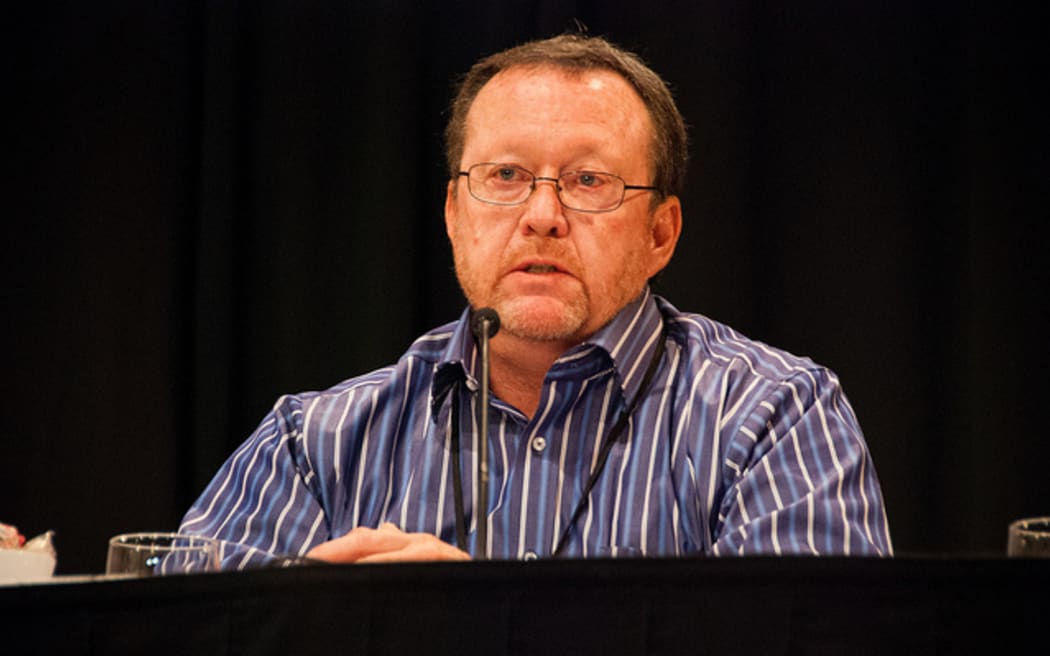
Mateni Tapueluelu
Hon. Tapueluelu was referring to a Supreme Court decision in which he was recently granted leave to sue the Parliament in relation to an alleged illegal pay rise.
He said the former Chief Justice Whitten found that the Parliament had failed to make its decision for the pay rise according to the Rules of Procedure of the Legislative Assembly number 79 which said that reports by the Standing Committees regarding the pay rise must refer to Parliament for “debate and vote”.
Instead, the Parliament’s resolutions in response to the reports were communicated to the Members in the form of circulars delivered to their homes for them to tick and sign their names to express agreement. The circulars were neither a motion nor a resolution, the judge said.
Hon. Tapueluelu said he strongly believe the Speaker Lord Fakafanua had made the same mistake last week when he did not allow the House to debate the 46 motions and their corresponding responses read out as part of the vote of no confidence in the Prime Minister.
He said the Assembly’s rule 62 (2) said that “A motion shall be put forth with without debate – (a) if the Speaker or the Chairman is of the opinion that a question has been sufficiently debated.”
Motions vs circulars
Hon. Tapueluelu argued that the 46 motions and their corresponding responses from the Prime Minister which were read out in the House could not be regarded as debates. They were just like questions and answers.
He said this meant that after the reading the Speaker should have used rule 62 (2) (a) which pointed out that the 46 accusations and the corresponding answers from the Prime Minister must be “sufficiently debated” until the Speaker was satisfied the issues had well been clarified before he put it into a ballot.
“What really concerns me is that although we and the court could interpret the rules and constitution differently, it is the court which normally has the final say. The court has already made its decision on the same rules 62 (2) about a motion in Parliament”, Hon Tapueluelu told Kaniva News.
He said the court has already made its recommendation on rule 62 and reminded the Parliament that a “motion must be debated”.
“If we look at Justice Whitten’s decision, the problem with the circulars is that no MP can debate or speak and express his opinions on what message provided in the circulars before the Speaker could make his conclusion.
“In my view, it is the same scenario which applies to the vote of no confidence motion. Last week, no one was allowed to speak and express his opinion in the House regarding the 46 motions and answers. It was just the clerks who spoke and read out the motions and they were not MPs,” Hon Tapueluelu said.
He also said that rule 48 provides the right of MPs to reply.
Rule 48 (1) says “A member who has made a substantive motion shall have a right of reply”.
Tapueluelu said: “All 10 of us MPs who submitted the motion of no confidence were not allowed to reply”.
Ten-minute promise
He said the Speaker told the House the day before the no confidence motion was balloted that he would allow MPs to debate the accusations and the corresponding answers for 10 minutes each.
“That’s rule 38 (1) (a) under which a member may speak for no more than 10 minutes during a debate”, Tapueluelu said.
This meant a Member could speak more than one time, but for no longer that 10 minutes.
That 10 minutes promise for a chance to debate on the motions and answers was not given before the MPs voted on the no confidence motion.
After the reading of the motions, and while the Opposition members were expecting a debate, the Prime Minister moved for the Speaker to let the House ballot on his vote of no confidence.
While the Opposition opposed the Prime Minister’s ballot move some of them began raising some issues they claimed were inaccuracies in the Prime Minister’s 46 response, but they were immediately warned by the Speaker that they were not allowed to debate those issues. He said they were only allowed to show their opinion on the Prime Minister’s motion for a ballot.
“So where is the chance for us to debate then?” Hon. Tapueluelu asked.
Secret meeting not representative
He said the “secret meeting” between the Speaker, the Prime Minister and Hon. Eke before the House returned to finalise the vote of no confidence session on Wednesday appeared to be a move by Lord Fakafanua to justify his second decision to withdraw his promise for the House to debate the 46 responses from the Prime Ministers.
As we reported earlier this week, most of the 10 Opposition MPs, who submitted the vote of no confidence motion were unaware of that special meeting.
The Chief Clerk told us yesterday that the controversial meeting between the Speaker, the Prime Minister and Tongatapu 5 MP Eke on Wednesday was a normal way of meeting used when an MP had something to raise with the Speaker.
She said the details of such meeting would not be released during Parliamentary sessions in order to allow MPs to feel confident in raising any issues with the Speaker.
Hon. Tapueluelu weighed in and said MPs could meet with the Speaker at any time. However, he said he wanted to make it clear that the Speaker’s meeting with Hon. Hu’akavameiliku and Hon. Eke was part of an important issue which was currently being debated in the House and it should have been declared by the Speaker right at the beginning when the House returned from lunch.
“The other thing is that that meeting was not representative as there were 10 of us altogether who signed the motion,” Hon. Tapueluelu told Kaniva News.
Hon. Eke submitted the motion because according to the law only one MP could lodge the submission, but the 10 MPs all contributed to the content of the motions, he said.
By Lydia Lewis, of RNZ.co.nz and is republished with permission
A former intelligence and defence policy analyst Paul Buchanan says some Pacific Island nations are “acting to stay in line with China” over Japan’s Fukushima treated nuclear wastewater release.
Buchanan told RNZ Pacific this is “[to] keep that pipeline open to them when it comes to developmental assistance”.
As China continues to ban all seafood from Japan, the Fukushima issue has “become more of a geopolitical and diplomatic problem than a scientific one”, he said.
The release started on 24 August and is expected to last decades.
The nuclear wastewater is treated to remove harmful radionuclides, then diluted before being released off the coast of Japan in an effort to decommission the defunct Fukushima Daiichi nuclear power station.
Buchanan, who is the director of 36th Parallel Assessments (NZ), put much of the opposition from the region down to “ignorance” or acting to “stay in line with China”.
“The MSG, as well as the Pacific Island Forum, have one eye on China and the other eye on Japan,” he said.
In a speech in June, PIF secretary general Henry Puna acknowledged the elevation of security-driven partnerships and development co-operation with the region.
An emphasis on regionalism and strengthening strategic leverage as a Pacific collective has been drummed home at most PIF events.
On the Fukushima issue, Puna said Pacific leaders are committed to holding Japan “fully accountable” should anything go wrong.
This week’s Forum Foreign Ministers meeting is set to be an opportunity for members to discuss a collective position, a Pacific Island’s Forum Secretariat spokesperson said.
But the region is very much still divided on the matter.
Vanuatu’s deputy prime minister Matai Seremaiah, left, and MSG director general Leonard Louma at the opening of the 22nd MSG Leaders’s Summit Foreign Ministers’ Meeting in Port Vila. 21 August 2023 Photo: RNZ Pacific / Kelvin Anthony
‘No cause for concern’
The Melanesian Spearhead Group (MSG) – made up of Fiji, the FLNKS of New Caledonia, Papua New Guinea, Solomon Islands and Vanuatu – opposed Japan’s release into the Pacific Ocean, though not all leaders of the sub-regional grouping have the same view on the issue.
Fiji’s leader Sitiveni Rabuka continues to maintain his position, saying the science stacks up.
The Pacific and its people “have been victims of false assurances”, MSG Secretariat director-general Leonard Louma said recently.
“The scourge of the health effects, of once-touted negligible effects of nuclear activities, continue to beset us to this day,” Louma said.
The International Atomic Energy Agency’s comprehensive report on Japan’s plan said it would have a negligible radiological impact on people and the environment.
Japan maintains the release is safe.
The Tokyo Electric Power Company said results from daily testing show radionuclide levels are below limits set by Japan’s Nuclear Regulation Authority.
Buchanan agrees there is a “very reasonable” anti-nuclear sentiment.
“That goes back to the French testing days, the American testing days and the destruction that they wrought on small island states,” he said.
“That all is true and it is reasonable. But here’s where they run afoul of science. The science simply points out … there is no cause for concern in the South Pacific.”
Dr Paul Buchanan, director of 36th Parallel Assessments which is a non-partisan, non-governmental geopolitical risk and strategic assessment consultancy, from a South Pacific perspective. Photo: Supplied/ 36th Parallel Assessments
Buchanan said no issues of sovereignty are going to accrue, as Japan is discharging the water into its own coastal waters.
He said in doing that Japan was not breaching any international treaties either.
“It’s easy to sit in the South Pacific and criticise Japan because there will be no harm accrued because of that,” Buchanan said.
Condemning Japan’s plan is an easy way out for the MSG, “to appear to be on the side of China”, he said.
‘Generalised anti-nuclear sentiment’
It could take around ten years for the tritiated water to reach any Pacific Island, if at all, according to ocean current projections.
But even then, the tritium levels will be so low it will not be able to be measured, TEPCO told RNZ.
Buchanan said activists and governments right across the Pacific seem to be allowing “generalised anti-nuclear sentiment” to take control over their rational selves.
He said this simply is not an abuse of nuclear privilege and there is no cause for concern in the South Pacific.
“Unfortunately, I would say that this is born more of ignorance, than of rational concerns about the spillover effects of this treated water, and may actually hang on to lingering historical distress of the Japanese,” Buchanan said.
“The Japanese have not ingratiated themselves to people with their whaling activities.
“And so you have a combination of anti-Japan sentiment with anti-nuclear sentiment, all against the backdrop of Japan’s behaviour in World War II, up to the present day when it comes to issues like whaling.”
Hypocrites
UK, China, South Korea, France and Canada all release tritium into the sea, nuclear experts in the UK told media on the UK Science Media Centre panel.
“This happens all over the world and has been happening all over the world for decades,” Portsmouth University environmental science professor Jim Smith said.
“I would say it would be hypocritical of them to oppose this release.”
Smith has studied radiation at Fukushima and Chernobyl. In theory, you could drink the water from the pipeline at Fukushima, he said.
He said the Sellafield site in the UK releases about seven times more H-3 (tritium) than Fukushima will each year.
“In 2019 alone, the UK emitted about the same amount of tritium as in all the tanks at Fukushima,” he said.
Smith said Canada would have “certainly” emitted more than in all the tanks at Fukushima, which is to be emitted over 30 years.
The Kori plant in South Korea is listed as emitting 91 TBq which is about four times higher than the Fukushima release, but not as high as the Bruce plant in Canada.
“And France emits more than ten times the tritium, in one year, as in all the tanks at Fukushima,” Smith said.
He said the same was likely to be true of China and the US.
“If the ALPS-treated water is safe, why is it being stored?,” he asked, adding “All nuclear reactors emit tritium”.
Smith said there has been no evidence of harm to people or the environment following these operations.
Japan on ‘horns of a dilemma’
With arguments for and against strewn across the backdrop of a chequered colonial and warring past, Buchanan wants people to put their faith in the experts at the IAEA, UN and the Japan Nuclear Regulation Authority.
“That might help encourage non-experts in the world to be aware of their bias and ignorance.”
He said Japan has science on its side, but “for a variety of reasons, environmental and then strictly strategic if you will”, there are significant numbers of people that oppose the release.
“No amount of science is going to convince them otherwise,” he said.
A Tongan medical health specialist with links to anti-vaccination protests and a group founded by Destiny Church leader Brian Tamaki has attacked Prime Minister Chris Hipkins, saying many lives may have been saved if his government told the public ”the truth” about the side effects of Covid-19 vaccines.
Reactions from listeners were mixed. Some commenters were suspicious and asked why she made the allegation during the run-up to the election.
Dr Moala claimed the Labour government and the Medical Council of New Zealand had forced doctors to lie to the public that the vaccines had no side effects.
Moala was referring to a recent statement by Hipkins saying that Covid-19 vaccines were not “compulsory” and the people were given the freedom to choose whether they vaccinated or not.
Moala described Hipkins’ statement in Tongan as: “‘A ia ko e fu’u loi ‘aupito pe foki ‘eni”.
In English this translates as: “This was of course an absolute blatant lie”.
She said political leaders had lied too much.
“We grew up and used to expecting our leaders to tell the truth, but now they used to tell lies”.
“When I think about their lies. It may have been okay if not many people had died from Covid vaccines.”
The registered doctor alleged Covid-19 vaccines had caused human hearts to swell, a symptom of a disease she said was known as “myocarditis” and it had killed young children and athletes.
Moala said the Prime Minister never considered the people who had lost their jobs because they did not want to be vaccinated of their own volition.
She said: “Nurses and doctors who lost their jobs because they were unvaccinated have yet to retain their jobs. Pharmacists, health workers, they are still unable to return despite Labour lying the mandate is over. That’s not true”.
The criticisms came as health experts this afternoon were warning the new COVID-19 variant might already be in New Zealand, but say it’s a variant of interest and not of concern yet.
Moala claimed that at one stage the government through the Ministry of Health and the Medical Council of New Zealand wrote and prohibited (“tapu”) all doctors from advising the public about the side effects of the vaccines.
She alleged the doctors were told to advise the public that the Covid-19 vaccines were safe and they would work just like Panadol tablets.
Moala has links to anti-mandate groups the Freedom and Rights Coalition and New Zealand Doctors Speaking Out with Science (NZDSOS).
She previously protested in the Freedom & Rights Coalition’s anti-government marches against Covid-19 lockdowns.
She was a candidate for Wellington City Council, and in her candidate statement, according to Stuff, she described herself as a public health expert, who “loathe(s) poor decision-making that violates people’s health, rights, and freedom”.
On Facebook, Moala sometimes tags Destiny Church leaders Brian and Hannah Tamaki in her Facebook posts about the Freedom & Rights Coalition. The self-styled Bishop Tamaki founded the Freedom and Rights Coalition.
The Broadcasting Standards Authority dismissed claims by Doctors Speaking Out with Science that a television broadcast in 2021 about the then new Pfizer vaccine was inaccurate.
In 2021 Stuff reported that 6500 doctors had signed an open letter supporting vaccination while Doctors speaking Out had 64 members.
Moala told RTTI that all vaccines had good and bad effects.
“But we weigh up the balance of good and bad effects of the vaccines”, she said.
“We all know that there are side effects of vaccines as we had been immunised previously for polio, rubella and meningitis. They all have side effects.
“But we doctors here in New Zealand were prevented from telling that to people”.
Moala claimed that on December 23 the Ministry of Health changed its stance on vaccine side effects and “urgently alerted family doctors to start telling the public that there were side effects of the vaccines, and it caused the heart to swell, which was the Myocarditis.”
“We are talking about the agenda and the leaders’ lying like Prime Minister’s Hipkin’s lying, saying the people were not forced. After all, people who did not immunise lost their jobs and businesses were closed”.
She claimed the Labour Party had been lying for a long time and their interest in people was their votes only.
“When the Leaders are lying and never tell the people the truth there were consequences. As I have just explained there were children and athletes who were healthy, but they suddenly collapsed and that because they had heart swelling or myocarditis,” Moala claimed.
She warned listeners to be wary of the coming election in October and such lying that comes from the leaders.
“This is a religious war as Satan was trying to take away many lives,” she claimed.
She then invited her co-hosts Dr Ana Mesui to share her experience with those who could not understand about Covid vaccines.
Mesui , an Associate Clinical Director for Pacific at ProCare Health, said most of her patients at the time did not want to be vaccinated.
“But it’s their own decision”, she said.
“But the narrative from the government at the time, just like what Ate has said, it (the vaccines) was 100 percent” safe, Mesui said.
She said no vaccines in the world were 100 percent safe.
“There is always a risk for everything”.
“So what I saw with some of my patients some of them have a rash, pains, drowsiness and heart diseases – rapid heartbeat.
She said the only response from the doctors in New Zealand were that the vaccines were 100 percent safe.
“So we are in an environment we are seeing people dying unexpectedly we turned to the government as we are relying on them and they said we did not force you”.
“But we know a lot of Tongan kāinga they did not want to vaccinate, but they had financial obligations for their families,” implying that prize draws , shopping vouchers and cash giveaways offered to people, schools and charities were an incentive to get vaccinated.
The RTTI programme showpresenter Setita Tu’i’onetoa, who said she chose not to get vaccinated, credited the doctors for what she described as “revealing the truth to the people”.
The one-sided show racked up 882 comments, 52 shares and 260 reactions.
One asked Moala whether she favoured a particular political party.
She mentioned Freedom New Zealand, Brian Tamaki, Vision New Zealand and Alfred Ngaro.
Kaniva News has contacted the Prime Minster’s Office and the Medical Council of New Zealand for comments.
Please subscribe to unlock this content. Enter your email to get access.
The Parliament’s Chief Clerk said a controversial meeting between the Speaker, the Prime Minister and Tongatapu 5 MP Dr ‘Aisake Eke on Wednesday was a normal way of meeting used when an MP had something to raise with the Speaker.
She said during the Parliament’s session for the vote of no confidence last week the Speaker met with several MPs on various occasions.
She said the details of such meeting would not be released during Parliamentary sessions in order to allow MPs to feel confident in raising any issues with the Speaker.
Chief Clerk Gloria Pōle’o was responding after Kaniva News asked the Speaker, Lord Fakafanua, for comment on what we described as a “secret meeting” between him, the Prime Minister and Tongatapu 5 MP Dr ‘Aisake Eke on the day the House was about to ballot the Prime Minister Hu’akavameiliku’s vote of no confidence motion.
Pōle’o denied the accusation raised by the public against the Speaker.
She said Lord Fakafanua was neutral and his responsibility was to direct the Parliament’s operation according to his interpretation of the Constitution and the Assembly’s rules.
“However, not all MPs, media organisations, the people and the Lord Speaker could agree on the same interpretation at all times”, Pōle’o said in Tongan.
Pōle’o confirmed the meeting in question had occurred. She said she attended it. However, she refused to answer any of our queries which were sent to the Speaker.
As we reported yesterday, we asked the Speaker whether the meeting in question was on the agenda. We also asked him who organised and called his meeting with the Prime Minister and Hon. Eke.
We asked him why he did not declare the special meeting when the House returned after their lunch break since the vote of no confidence motion was livestreamed.
We told the Speaker that the Prime Minister’s surprise revelation of that meeting during the House session without giving any details had sparked suspicion and speculation among the public that he was taking sides with the Prime Minister.
Some Democratic (PTOA) supporters interpreted the meeting differently and accused Dr Eke of betraying the Opposition.
Dr Eke was called to the meeting after he submitted the vote of no confidence in the Prime Minister.
Not all MPs, especially the Opposition, were informed about the meeting.
As we reported yesterday, the Speaker was made aware in that meeting that the Prime Minister would move in the House to have his vote of no confidence balloted without a debate.
Since Dr Eke had joined the meeting in question the Prime Minister used it as an excuse in the House to silence the Opposition from arguing that they should be given an opportunity to respond to his answers to the motion of no confidence.
MP Piveni Piukala told the Prime Minister he could not use a meeting held outside Parliament as a defence.
The Opposition argued that the Prime Minister was trying to prevent them from clarifying his responses – which they deemed misleading – for fear that the public might find out more about the truth of his responses.
The Speaker eventually allowed the Prime Minister’s motion for a vote which was carried by 17 – 10.
Pōle’o also confirmed that Parliament was postponed yesterday until further notice to allow the Opposition to file their legal action against the Speaker over his decision not to allow them to debate the Prime Minister’s responses.
A controversial meeting outside Parliament session hours showed the Speaker was previously made aware of the Prime Minister’s intention to move to ballot his vote of no confidence without giving the Opposition the chance to debate it.
The meeting was held after a 223-page report of accusations and responses from the Opposition and Prime Minister Hu’akavameiliku was read out to the House as part of a motion for a vote of no confidence in the Prime Mnister.
Hon. Hu’akavameiliku defeated the motion by a 14 – 11 vote.
Tongatapu 5 MP Dr ‘Aisake Eke submitted the motion of no confidence with 46 accusations against the Prime Minister. It was supported by 10 MPs.
Most of the Opposition MPs were unaware of the special meeting as they were away from Parliament during lunch time.
Dr Eke told Kaniva News he joined the meeting after the Prime Minister came to him inside the House at the MP’s seats and told him the Speaker wanted to meet with him in his office.
He said the Prime Minister told him the Speaker had something important he wanted to discuss with him.
“I then went with the Prime Minister to the Speaker’s office”, Dr Eke said in Tongan.
He said most of the Opposition MPs had yet to return from their lunch at the time so he had no time to consult with them about the meeting.
“I went to the meeting, but I determined that I must return to our MPs and consult with them about the meeting and would also return to the Speaker and tell him about our MPs’ opinion”, Dr Eke also said.
He claimed that once he and the Prime Minister arrived at the office the Speaker told them he wanted them to agree on what they were going to do after the reading out of the reports of the vote of the no confidence.
Hon. Eke said the Prime Minister told the Speaker some MPs in the government bench wanted to debate, but he stopped them because he wanted the House to ballot the vote of no confidence motion.
Hon. Eke said the Speaker then asked about his opinion.
“I told him if that is the government’s decision I think it would be nice to go ahead with the ballot”.
Hon. Eke claimed the Speaker advised him that when the House returned for session at 2pm, he would direct the MPs on what to do next, and he would leave it for Hon. Eke to move for the House to have the ballot and the PM agreed he would second the motion.
“That’s the end of the meeting”, Hon. Eke told Kaniva News.
He said when he returned and advised the Opposition MPs about the meeting and what had been agreed, the MPs said they wanted to debate the responses from the Prime Minister.
Hon. Eke said he went back to the Speaker and told him the Opposition wanted to debate before the ballot.
He claimed the Speaker said he understood their position, but advised Hon. Eke to inform the Prime Minister about it.
Hon Eke went to the Prime Minister and told him about the Opposition’s decision. He claimed the Prime Minister told him that when the House met he would move for the Speaker to ballot the motion.
Kaniva News has contacted the Speaker for comment.
We asked him whether the special meeting was on the agenda. We also asked him who organised and called his meeting with the Prime Minister and Hon Eke.
We also asked him why he did not declare the special meeting when the House returned after their lunch time since the vote of no confidence motion was livestreamed. We told him the Prime Minister’s revelation during the House session that there had been a meeting about the ballot without giving any details had sparked suspicion and speculation among the public that he was taking side with the Prime Minister.
Some commentators on social media also accused Dr Eke of betraying the Opposition and the Prime Minister of influencing the Speaker because of the lack of information releasing to the public at the time.
We have also contacted the Prime Minister for comment.
We asked him who organised and called the meeting.
We also asked him why he did not wait until the House returned for the afternoon session and let them know about his intention to ballot without debates.
As Kaniva News reported this morning, the Parliament postponed “until further notice” to allow Opposition MPs time to work on legal action against the Speaker.
MP Māteni Tapueluelu told Kaniva News the move was urgent and he and other MPs wrote to the Speaker and let him know they needed to file the legal action against him immediately.
The dispute centred on Clause 62 (2) of the Constitution , which says: “Any member of the Legislative Assembly may, in accordance with its rules of procedure – (a) introduce a Bill in the Assembly; (b) propose a motion for debate in the Assembly; or (c) present a petition to the Assembly, and it shall be dealt with in accordance with the Assembly’s rules of procedure.”
The Opposition believes the Assembly’s procedures and the Constitution clearly stipulate that they had the right to debate the motions after they were read out but the Speaker had blocked it.
By Iliesa Tora of RNZ.co.nz and is republished with permission
Fiji lost a game they could and should have won as Wales survived a late onslaught to take out their Rugby World Cup encounter, 32-26, in Bordeaux.
It could’ve gone Fiji’s way right at the end. Veteran Semi Radradra could not hold on to a floating long pass from replacement Juisova Tuisova and knocked on with 10 metres to go.
Radradra had only one player to beat but lost the ball as he went to take it.
That moment and referee’s decisions appeared to count against the Flying Fijians.
English referee Matthew Carley disallowed two tries from Fiji, with Eroni Mawi and Mesake Doge piling over in each halves.
Flying Fijian head coach Simon Raiwalui said the referee worked against Fiji.
“Respect their work but there were calls he made that worked against us,” said Raiwalui.
Captain Waisea Nayacalevu was understandably disappointed when he spoke to the media after the match.
“I am proud of my boys,” he said.
But it was the fired up Fijians who took the game to the Welsh in the last 20 minutes of the game and scored two tries, through replacements Doge and Tuisova.
The Welsh then displayed delaying tactics at the restarts after both Fiji’s second half tries as they took their time walking back to halfway, and their efforts were booed by the crowd.
Former Fijian sevens player Seva Waisega said both teams played well but Fiji left it too late.
“It was a great game from both teams. There are some decisions that we totally disagree with,” he said.
“Great comeback from the Fiji team but I think it was a little bit too late,” he said.
Even former Fiji 7s coach Ben Ryan shared his disappointment on X, formerly Twitter.
“Rugby is so inconsistent,” he said.
Wales edge first half
Wales led 18-14 at half-time.
Wales managed to hang on as the Flying Fijians turn on the heat in the first spell.
Some questionable calls by Carley saw Fiji losing what looked like a sure try to prop Eroni Mawi who dived over Welsh tacklers beside the post as Fiji looked to regather the lead.
While fans thought that was a sure try, Carley and the TMO team ruled otherwise, saying that the ball was knocked on the try line.
Wales struck first points through flyhalf Dan Biggar straight after kick-off after the Fijians were penalised.
The Flying Fijians attacked right back and drove towards the posts but were penalised for holding the ball on the ground a second time.
Biggar kicked for touch and from the ensuing lineout, winger Josh Adams dotted down in the corner after he was standing out wide.
Biggar and Teti Tela missed their attempts after as Fiji started putting together some phases.
Captain Nayacalevu picked the bouncing ball off the ground after a Fijian attack, and bust his way through the defence to score his side’s first try.
Half-back Frank Lomani converted and Fiji closed the gap to 8-7.
Another good Fijian attack saw flanker Lekima Tagitagivalu run over for his side’s second try which was converted by Lomani.
Biggar kicked another Welsh penalty before big George North ran a straight line and took the ball following a Welsh attack, running in untouched for his try.
Fiji were hard on attack again with Mawi diving over the Welsh tacklers only for the referee to rule a knock-on.
Close second half
Wales’ Loius Ress Zammit got on the scoreboard early in the second spell and Biggar’s conversion put the side ahead 25-14.
Fiji started putting some phases together and worked their way towards the tryline.
However, lanky No.7 Lekima Tagitagivalu was sin-binned for 10 minutes after infringing in the tackle-ruck situation, and Wales mauled their way to the tryline with Elliot Dee scoring.
Biggar’s ensuing conversion saw them lead 32-14.
With prop Liam Williams off the field for 10, the Fijians attacked again.
Tuisova barged his way across before Doge also crashed over.
Tela converted Tuisova’s try as Wales led 32-26 with time almost up.
Then the Fijians made one last attack, Tuisova then firing a long pass out wide to Radradra, who spilled it forward in the last action of the game.
The fast paced, hard-hitting, ethralling match was labaled by the commentators as an instant Rugby World Cup classic.
The statistics show how good Fiji were in some aspects of the game.
For example, Fiji carried the ball over 652 metres against Wales’ 378.
The Flying Fijians made 174 runs, compared to Wales’ 81; gained carries 88 metres over the gain line against Wales’ 46; and made 169 passes compared to 108 for Wales.
The Fijian forwards dominated in the rucks battle, winning 130 over Wales’ 40.
Fiji now prepares to face Australia next week in a must win game they want to get out of the group stages of the competition.