Saturday, April 4, 2026
Home Blog Page 20

Tonga should heed Fiji’s warning on drug cartels buying off authorities

Commentary – As Tonga continues to battle the spread of illicit drugs, a warning from Fiji offers a serious reminder: international drug cartels command vast financial resources—enough to bribe key law‑enforcement officials with what experts describe as mere “pocket change.”

Amit Chand, the chief executive of MSG Logistics, warned that drug cartels operating million‑dollar narco‑submarines can easily afford to bribe law‑enforcement officers in Fiji.

He told a recent counter‑narcotics consultation in Suva that placing the wrong people in sensitive positions poses the greatest threat to the country’s anti‑drug efforts.

Fiji faced a major surge in drug‑related operations this year, beginning on 15 January 2026 when police seized 2.64 tonnes of cocaine during a large‑scale raid in Vatia.

The haul—valued at more than FJ$1.1 billion—was linked to a sophisticated trafficking route involving a semi‑submersible “narco‑sub” arriving from South America, leading to multiple arrests including four Ecuadorian nationals.

Around the same period, authorities intercepted another 2.6‑tonne cocaine shipment valued at approximately $780 million, also traced to a suspected narco‑submarine operation in the remote Vatia region. Six men—four Ecuadorians and two Fijians—were charged after police intercepted cocaine‑laden vehicles and raided a vessel at Vatia Wharf.

Their comments focused on Fiji’s policing risks, but the concerns mirror issues now confronting Tonga’s border‑security systems.

Cases echo regional concerns

The parallels became clearer after 58‑year‑old Mosese Katoa, a senior Customs officer, was recently sentenced to four years’ imprisonment—two years suspended—for importing prohibited firearms, failing to declare goods, and attempting to bribe a colleague with a $50 payment to avoid the scanning of a crate later found to contain rifles, shotguns, a pistol and thousands of rounds of ammunition.

In another major case, Tevita Kolokihakaufisi, an officer at the National Reserve Bank of Tonga, was jailed after 15 kilograms of cocaine were discovered in his office in 2024.

These incidents are among several high‑profile cases in which government officials, including police, Customs staff and prison officers, have been dismissed or imprisoned for their involvement in illicit drug activity.

United Nations and NZ Sound Alarm

According to the UN Office on Drugs and Crime, corruption is a critical enabler of the drug trade, with traffickers routinely using bribes to law‑enforcement and customs officials to move illicit goods and evade accountability.

Such collusion—where officials accept payments or look the other way—creates fertile ground for organised crime to operate, a warning highly relevant to Tonga’s ongoing struggle against drug trafficking and local drug abuse.

A report released last year by New Zealand’s Ministerial Advisory Group on Transnational, Serious and Organised Crime warned that corruption linked to organised crime is accelerating across New Zealand and the Pacific.

Chairperson Steve Symon said insider threats are rising, with criminal networks infiltrating border agencies and spreading into sectors such as law, accounting and immigration.

He noted that drug‑transshipment routes through the Pacific pose a growing danger, describing emerging cases of corrupted officials in the region as “the canary in the mine” for New Zealand, illustrating how easily drug traffickers can exploit government insiders to facilitate their operations.

Former ‘Īkale Tahi half‑back Manu Vunipola has died

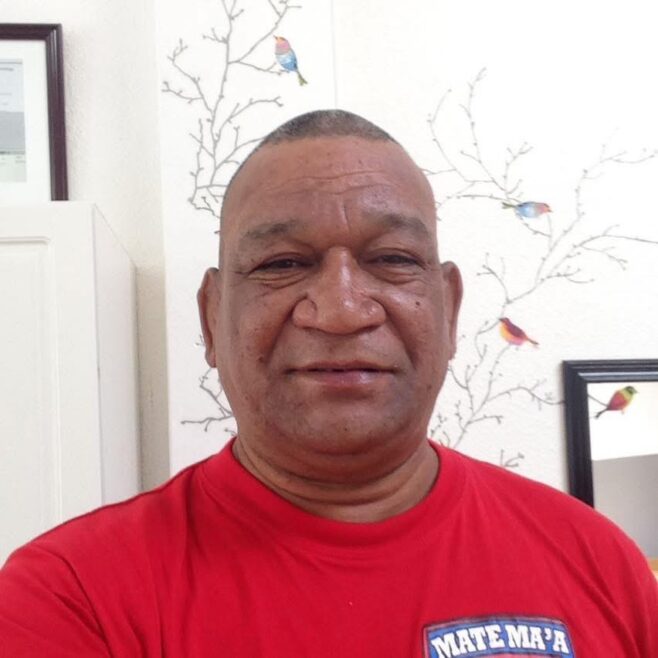
Former ʻīkale Tahi half‑back Manu Vunipola, uncle of England international players Mako and Billy Vunipola, has died.

Manu Vunipola

Details surrounding his death remain unknown.

Manu, 59, was born in Kolomotu‘a and became a key figure in Tongan rugby, serving for many years as a national scrum‑half.

He debuted for Tonga at the 1987 Rugby World Cup, appearing in the match against Wales in Palmerston North on 29 May 1987.

He later represented Tonga again at the 1995 Rugby World Cup, playing against France and Scotland in Pretoria.

His international career concluded with his final Test cap against Fiji in Nuku‘alofa on 26 June 1999.

Beyond his playing career, Vunipola also contributed to the national programme as a Tonga sevens coach in the early 2010s.

Rugby ran deep in his family: he was the brother of fellow Tonga internationals Elisi (fly‑half) and Feʻao Vunipola (hooker), and the uncle of Feʻao’s sons Billy and Mako, who went on to become prominent players for England.

News of Vunipola’s passing has prompted tributes across the rugby community, reflecting on a player who represented Tonga across three World Cup cycles and helped shape one of the Pacific’s most influential rugby families.

Further details are expected as family and officials confirm arrangements in the coming days.

No overseas rugby contract without Fiji approval — A protective step Tonga has urgently needed

Fiji’s decision to block players from signing any overseas rugby contract without formal approval from the Fiji Rugby Players Association (FRPA) and Fiji Rugby Union (FRU) has sent a clear message across the Pacific, spotlighting welfare concerns long faced by Tongan athletes.

Pacific rugby reforms intensify as unions act to protect players from unsafe or exploitative overseas deals.

The announcement comes amid renewed scrutiny across the Pacific, following several high‑profile cases demonstrating how Pacific Island players remain vulnerable to unsafe conditions, financial insecurity and coercive contract practices overseas.

The urgency of the issue intensified after the 2025 concussion incident involving Tongan league forward Eliesa Katoa, who required brain surgery following a head knock in a Test match.

An NRL investigation found serious failures in the management of Katoa’s head injuries, including inadequate communication between medical staff and breaches of concussion protocols after he suffered multiple head knocks and later required brain surgery.

As a result, four Tongan officials—including the head doctor, assistant doctor, and head trainer—were issued breach notices and banned from NRL and ARLC competitions for two years, with a formal warning given to the medical assistant.

Across professional rugby—both union and league—Pacific Island players from Tonga, Samoa and Fiji continue to report mounting pressures from overseas clubs.

Wealthy teams, particularly in France’s Top 14 competition, have been accused of discouraging Pasifika players from joining their national sides during international windows, including major tournaments such as the Rugby World Cup.

These pressures often come with implied or explicit warnings that prioritising country over club could place a player’s livelihood at risk.

At the same time, deep financial and resource disparities between Pacific unions and major European or NRL clubs leave many players with little choice but to put their professional contracts first.

Smaller unions, including Tonga, are unable to offer comparable income or long‑term security, resulting in players withdrawing late from national squads simply to protect their economic survival.

These patterns have created a system in which Pacific players often feel they must choose income over identity, health and long‑term welfare.

Fiji Implements Mandatory Contract Vetting

In a landmark policy shift, the Fiji Rugby Union (FRU), working with the Fiji Rugby Players Association (FRPA), has introduced a mandatory vetting process for every Fijian player—professional or age‑grade—considering an overseas contract or scholarship.

The move aims to prevent Fijian players from signing exploitative agreements that jeopardise their health, finances, or long‑term prospects.

FRU CEO Koli Sewabu outlined the scale of the problem:

“We have seen cases where players are injured, and clubs stop payments because they are not playing. Too many players are suffering abroad due to loopholes in contracts that were not properly reviewed before signing.”

Under the new system, no player may sign an overseas deal without FRPA review and FRU approval.

The Fiji Rugby Union’s new player‑protection framework introduces strict measures to safeguard athletes signing overseas deals. Under the policy, all contracts must be submitted to the FRU, which will forward them to the Fiji Rugby Players Association (FRPA) for legal and welfare review. Players must lodge their documents two to three weeks before visa processing, and no contract may be signed until the vetting process is fully completed.

The system also tightens control over player representation, allowing only FRPA‑registered agents to act on behalf of Fijian players. Registered agents will be held accountable for any misleading or exploitative contract arrangements.

To further protect welfare, the FRU requires all contracts to clearly outline housing, transportation, medical insurance, and fair salary provisions. A deal is considered valid only after FRPA approval and the FRU CEO’s signature on the official Player Release Form.

The FRU and FRPA have also issued a strong warning after reports that some professional players have been arranging overseas contracts for others. They stress that players cannot act as agents, and only licensed intermediaries may negotiate transfers. Officials warn that bypassing the system could leave players without legal or financial protection if problems arise abroad.

Taufatofua shares heartwarming family moment after flag-bearing return at 2026 Winter Olympics

Tongan Olympian Pita Taufatofua has delighted fans once again—this time not from an Olympic stadium, but from home.

Pita Taufatofua. Photo/File photo

In a Facebook post this morning, Taufatofua shared a photo of himself with his sister and nephew, captioned:
“Back home and explaining to my sister and nephew about that time I carried the Olympic flag and didn’t drop it!”

The light‑hearted post comes just days after Taufatofua returned to the headlines for his appearance at the 2026 Winter Olympics, officially opened on February 6, 2026, in a historic dual ceremony across Milan and Cortina d’Ampezzo.

During the Opening Ceremony, he carried the Olympic flag as a “messenger of peace,” joining a group of global representatives selected for embodying unity and Olympic values.

Taufatofua’s role in the 2026 ceremony adds another chapter to his remarkable Olympic journey.

He first captured worldwide attention at the 2016 Rio Olympics, where he appeared bare‑chested and wearing a traditional taʻovala as Tonga’s flag bearer—a moment that became a viral sensation and an iconic Pacific representation on the world stage.

Although he was eliminated in the first round of the taekwondo competition in Rio, his Olympic journey was far from over.

He stunned audiences again at the 2018 PyeongChang Winter Olympics, competing in cross‑country skiing and placing 114th out of 119 in the 15km freestyle event—still earning admiration for braving the cold in his cultural attire.

Pita Taufatofua at home sharing the story with his sister and nephew about the moment he carried the Olympic flag without dropping it.

He went on to make a third Olympic appearance in 2020, walking alongside fellow Tongan taekwondo athlete Malia Paseka during the Opening Ceremony, further solidifying his status as one of Tonga’s most recognisable and versatile athletes.

While Taufatofua did not compete in the 2026 Winter Games, his presence as a flag‑bearer once again brought pride to Tongans worldwide.

Media coverage has highlighted him as a recurring symbol of Pacific identity, perseverance, and global representation.

Government empowers police to move on homeless and beggars

The Government has unveiled a nationwide expansion of police powers allowing officers to issue “move‑on orders” to rough sleepers, beggars, and people exhibiting disorderly or intimidating behaviour in any town centre across the country.

The government has confirmed it will give police the power to issue move-on orders – not just in Auckland, but all town centres across the country.

Justice Minister Paul Goldsmith and Police Minister Mark Mitchell announced the new powers during a briefing in Auckland, describing the measures as a response to community concerns about safety and the visibility of homelessness.

Goldsmith said the policy is not aimed at punishing hardship, rejecting claims that the changes criminalise poverty.

Under the new rules, police will be able to instruct individuals — including those as young as 14 — to leave an area for a specified time – up to 24 hours – and distance determined by the officer if they are deemed to be causing disruption or posing a risk to public order.

The orders specifically target behaviours such as aggressive begging, rough sleeping in high‑traffic areas, and conduct considered threatening or disorderly.

They will also apply to individuals obstructing entry to a business, breaching the peace, begging, rough sleeping, or engaging in behaviour that suggests an attempt to inhabit a public place.

The move comes despite recent data showing that offences related to public order, health, and safety have fallen significantly compared with a decade ago.

The Government’s approach also appears to contrast with earlier statements from the Police Minister expressing reluctance for police to be the primary agency handling homelessness in Auckland’s central city, calling instead for social agencies to “step up” and take greater responsibility.

Goldsmith defended the scope of the policy, saying it responds to ongoing concerns raised by businesses, residents, and local authorities. He insisted it would help restore confidence in public spaces without unfairly targeting people experiencing homelessness. Mitchell echoed this view, saying the orders provide police with a clearer legal tool to deal with behaviour that makes the public feel unsafe.

However, the consequences for defying a move‑on order are severe. Those who refuse to comply could face fines of up to $2000 or imprisonment for up to three months, raising concerns among advocacy groups about criminalising people who may already be in crisis.

The Government maintains that the measures strike a balance between compassion and community expectations, while critics argue the policy addresses visible symptoms of homelessness rather than root causes such as unaffordable housing, mental health gaps, and inadequate support services.

As the legislation rolls out nationwide, town centres across New Zealand can expect a greater police presence and a sharper focus on street behaviour — setting the stage for renewed debate over how best to respond to homelessness and social distress.

UK weighs historic move to remove Andrew from royal line of succession

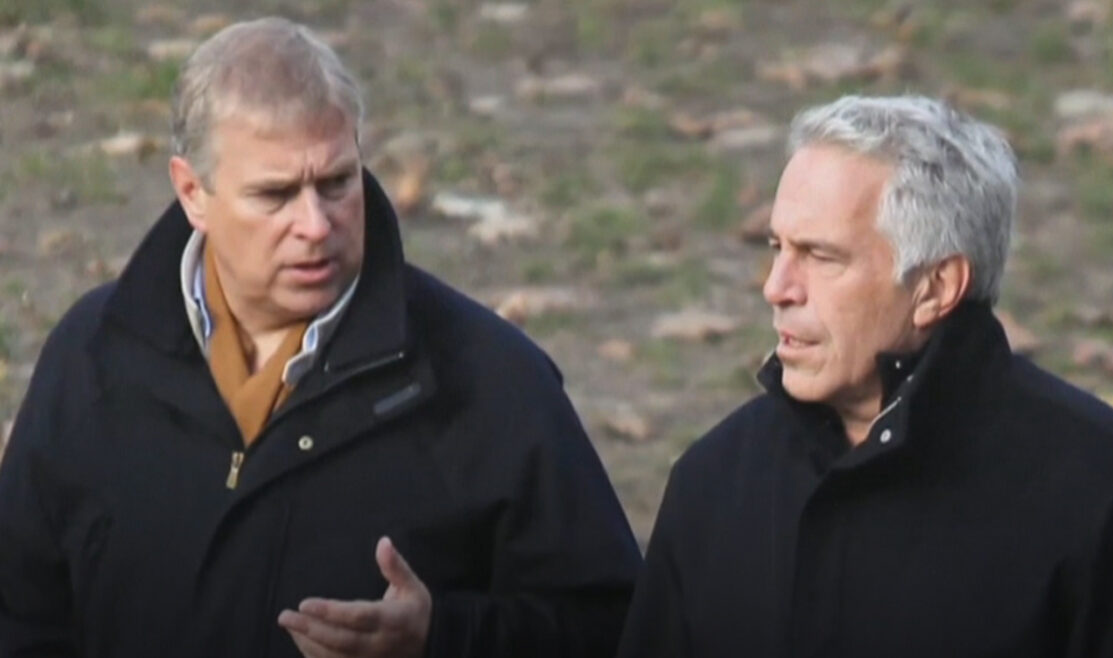
The UK government is weighing the possibility of introducing legislation that would formally remove Andrew Mountbatten-Windsor — formerly known as Prince Andrew — from the royal line of succession, following his recent arrest and an intensifying police investigation into alleged misconduct in public office.

Andrew Mountbatten‑Windsor, formerly Prince Andrew, whose ties to Jeffrey Epstein remain under police investigation.

Andrew, who remains eighth in line to the throne, continues to be legally eligible to become King despite having been stripped of his princely titles and facing ongoing scrutiny over his long‑standing association with the late convicted sex offender Jeffrey Epstein.

On Friday (local time), police conducted a second search of Andrew’s former home, one day after his arrest and nearly 11 hours in custody. He was detained on suspicion of misconduct in public office relating to claims that, while serving as a UK trade envoy, he shared sensitive information with Epstein.

Investigators are also questioning former members of his close protection unit, with the Metropolitan Police urging them to report anything they “saw or heard” that might assist in the inquiry into Epstein-linked activities. Police say the widening probe includes reviewing allegations involving flights connected to Epstein and the possible movement of trafficked individuals through UK airports.

Andrew, who turned 66 on the day of his arrest, denies any wrongdoing in relation to his associations with Epstein.

Government reconsidering earlier stance on legislation

Until recently, the British government had argued that passing a law to alter the royal line of succession would not be an appropriate use of parliamentary time. However, that position has now shifted.

Chief Secretary to the Treasury James Murray confirmed that the government is reassessing the need for legislation and is “not ruling anything out,” though any formal action would only be taken once the police investigation has concluded.

The move would require an Act of Parliament, as well as agreement from the other Commonwealth realms where King Charles III is head of state — a process constitutional experts warn would be “really complicated.”

A spokesperson for Buckingham Palace said such matters were “purely for Parliament” and that the Palace would not interfere with any legislative process.

Public and political pressure increases

Public support for removing Andrew from the line of succession is significant. A YouGov poll conducted immediately after his arrest showed that 82% of respondents favour his removal.

Multiple senior politicians, including Defence Minister Luke Pollard, have indicated that preventing Andrew from being “a heartbeat away from the throne” is the right course of action, regardless of the investigation’s outcome. Pollard said the government and Buckingham Palace have been working together toward this end, though any formal steps must wait for the police process to finish.

Labour MP Rachael Maskell has also reiterated calls for Andrew to be stripped of all royal roles and responsibilities, saying the country must be left with “Andrew the citizen” — fully accountable under the law.

A rare and historic move

Removing a royal from the succession line through legislation would be highly unusual. The last comparable instance occurred in 1936, following the abdication of King Edward VIII.

With investigations deepening and political will shifting, Andrew’s position in the line of succession is now more uncertain than ever. The government is expected to decide its next steps once police complete their inquiry, signalling that a historic constitutional change may be on the horizon.

Why Former Prince Andrew Lost His Royal Titles

Former Prince Andrew was stripped of his royal titles after years of controversy driven by his close association with convicted sex offender Jeffrey Epstein and a series of damaging allegations. His friendship with Epstein — including evidence that he shared official trade documents while serving as a UK envoy — fuelled public and political pressure on the monarchy.

Andrew also faced sexual assault allegations from Virginia Giuffre, who said she was forced to have sex with him as a teenager. Although he denied the claims, he later settled the civil lawsuit out of court. These allegations, resurfaced repeatedly through legal filings and Giuffre’s later memoir, intensified scrutiny.

His credibility suffered further after a widely criticised 2019 BBC interview, which led him to step back from public duties. As pressure mounted to protect the Crown’s reputation, King Charles III initiated a formal process to remove Andrew’s remaining titles, styles, honours, and royal privileges. He was also required to leave his long‑time residence at Royal Lodge.

Despite denying wrongdoing, Andrew’s continued ties to Epstein, conflicting accounts about their relationship, and the gravity of the accusations ultimately led Buckingham Palace to conclude that revoking his princehood was necessary to safeguard the monarchy’s integrity

QSC Committee denies claims of unpaid contractors amid centenary preparations

The Queen Sālote College (QSC) Committee has issued an official statement refuting recent allegations circulating on Facebook that contractors engaged in college projects have not been paid for weeks.

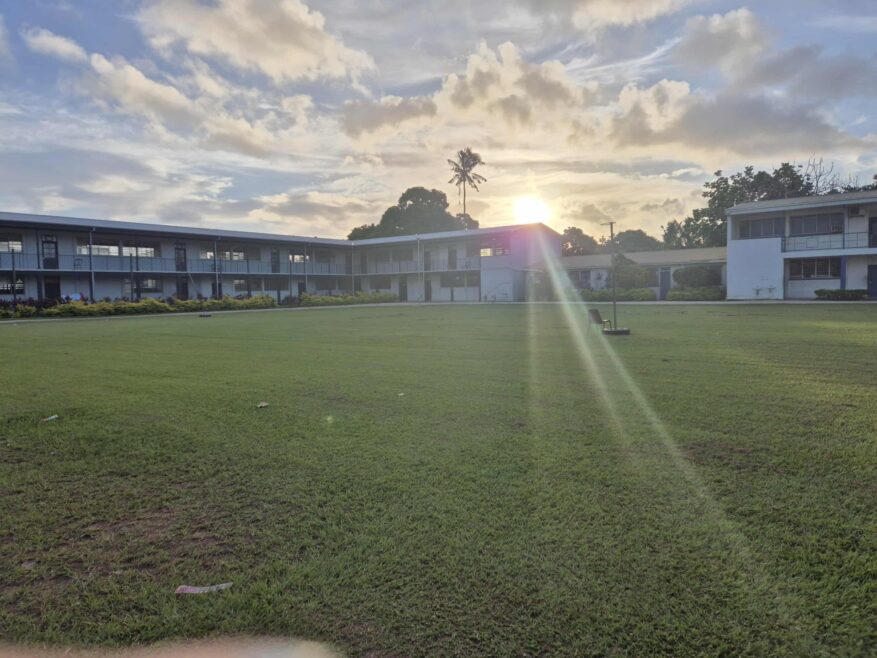
Queen Salote College campus, where preparations continue ahead of the centenary celebrations.

The online claims quickly triggered debate, with some highly committed former students defending the allegations while others sided firmly with the complainants.

According to the Committee, all QSC contractors have been fully paid according to the agreed contracts and arrangements.

In a firm response, the Committee emphasised that “ALL CONTRACTORS HAVE BEEN PAID IN FULL,” and clarified that every payment has been “properly completed” as stipulated in the contractual agreements.

The Committee advised the public, including former students and community members, to exercise caution when consuming unverified information shared on social media.

They stated that any claims not released directly by the contractors themselves or by the QSC Committee should not be trusted, urging people to rely solely on official channels for accurate updates.

Complaints Spark Online Debate

The Committee’s statement follows multiple posts made on Facebook in recent weeks by individuals claiming to be workers on the QSC building project.

Some alleged they had not received payment for weeks, with a few stating they had families to support and were struggling financially while awaiting wages.

The controversy quickly triggered debate across online Tongan community spaces, raising concerns about worker welfare and transparency surrounding the college’s centenary projects.

Significance Amid 100-Year Anniversary

The timing of the allegations is particularly notable as the College marks its 100-year centenary this year — a milestone of major cultural and historical significance.

The building project at the centre of the dispute is reportedly one of the key memorial initiatives planned to commemorate the three‑day anniversary celebration scheduled for March 12–15.

The Committee’s statement aims to reassure stakeholders, alumni, and the wider public that the college’s centenary preparations remain on track and that financial obligations to contractors have been honoured.

Videos of teen NRL sensation Heamasi Makasini go viral in Tonga, drawing comparisons to Jonah Lomu

Videos and images of Wests Tigers young gun Heamasi Makasini have surged across Tongan Facebook groups this week, with supporters enthusiastically sharing clips of his explosive runs and labelling the 18‑year‑old as one of the most exciting prospects to emerge in years.

Wests Tigers rising star Heamasi Makasini, whose explosive performances have Tongan fans sharing his highlights across social media.

Footage taken from playing fields — alongside highlights from recent trial matches — is being widely reposted, with many Tongan fans celebrating his raw power, acceleration and instinctive attacking style.

Several online groups have described him as an “attacking prodigy,” with some commenters even likening his barnstorming carries to the legendary Jonah Lomu, whose impact on world rugby remains iconic in Tonga and beyond.

Makasini, standing 192cm tall and weighing 105kg, has quickly become one of the brightest young talents in the NRL system.

His breakout 2025 debut earned him early “rising star” recognition, but it was his dominant 2026 pre‑season performance — including a hat‑trick against the Roosters in a trial match — that ignited a new wave of excitement across the Tongan community.

Clips of his performances have spread rapidly, with many Facebook pages posting slow‑motion replays of his fend‑offs, line breaks and powerful finishes.

Supporters are praising his combination of size, speed and confidence — traits they say echo the style of Tonga’s most celebrated sporting figures.

“Every time he runs, defenders bounce off him. This is Lomu‑level stuff,” wrote one commenter in a popular Tonga supporters’ group.

Others say Makasini represents the next generation of elite rugby league talent emerging from the Tongan diaspora, noting his potential to become a major figure for both the Wests Tigers and the Tonga national team.

With the 2026 season approaching, fans are eagerly anticipating what he will deliver next — and whether his rising profile will translate into international honours.

For now, however, his highlight reels continue to dominate online spaces in Tonga, where supporters are praising not just his talent, but the growing pride he brings to the kingdom.

As one fan wrote in a post shared hundreds of times:
“Tonga’s future is already here — and everyone can see it.”

Tonga Police issues urgent reminder on domestic violence as new survey reveals alarming levels of abuse

Tonga Police has issued a fresh public alert on domestic violence, posting a new advisory to its official Facebook page today, urging families to recognise the seriousness of violence within the home and to report incidents early.

The notice, titled Domestic Violence Is a Crime,” reinforces that abuse of any form remains a prosecutable offence and stresses the need for collective community action to keep families safe.

The advisory outlines six key forms of domestic violence: physical assault, verbal and emotional abuse, threats and intimidation, sexual abuse, financial control or deprivation, and damage to property. Police reiterated their zero‑tolerance stance, promising firm action against offenders and prioritising the protection of victims.

The public message comes at a critical time, following the release of new data that paints a stark picture of the scale of violence occurring in Tongan homes.

According to the Women and Children Crisis Centre (WCCC), findings from Tonga’s 2024 Multiple Indicator Cluster Survey (MICS) reveal that 86.1% of children aged 1–14 experienced physical punishment and/or psychological aggression from household members within the previous month.

Meanwhile, 33.68% of women aged 15–49 reported suffering physical, sexual, or psychological violence from an intimate partner in the past year.

WCCC says these figures expose not only widespread abuse but deeply rooted attitudes that continue to normalise violence. The survey found 23.6% of women and 14.5% of men believe a husband is justified in beating his wife under certain circumstances. Overall, 38.1% of respondents agree it is acceptable to beat a woman in some situations.

“These are not just statistics – they are reflections of daily pain and fear endured by our women and children,” said WCCC Monitoring & Evaluation Advocate Soana Pongi.

The Police advisory, posted just hours after the WCCC statement, includes practical guidance for those needing help. Members of the public are urged to report incidents immediately to 922, reach out to trusted family or community leaders, and take action early to prevent further harm.

Police say they issued today’s reminder because many cases remain unreported, and the harm caused—especially to children—can have long‑lasting effects on wellbeing and relationships. The advisory reinforces the national message: “Safe Homes. Safe Communities. Safe Tonga.”

With both law enforcement and frontline advocates calling attention to the escalating problem, authorities are urging the public to take domestic violence seriously and to support efforts to break what they describe as a cycle of silence, fear, and generational trauma.

Eleven arrested as Police dismantle dark web drug import network

Auckland, NZ – A nine‑month police investigation has uncovered what authorities describe as a sophisticated drug‑importation and distribution ring using the dark web to smuggle large quantities of illicit substances into New Zealand.

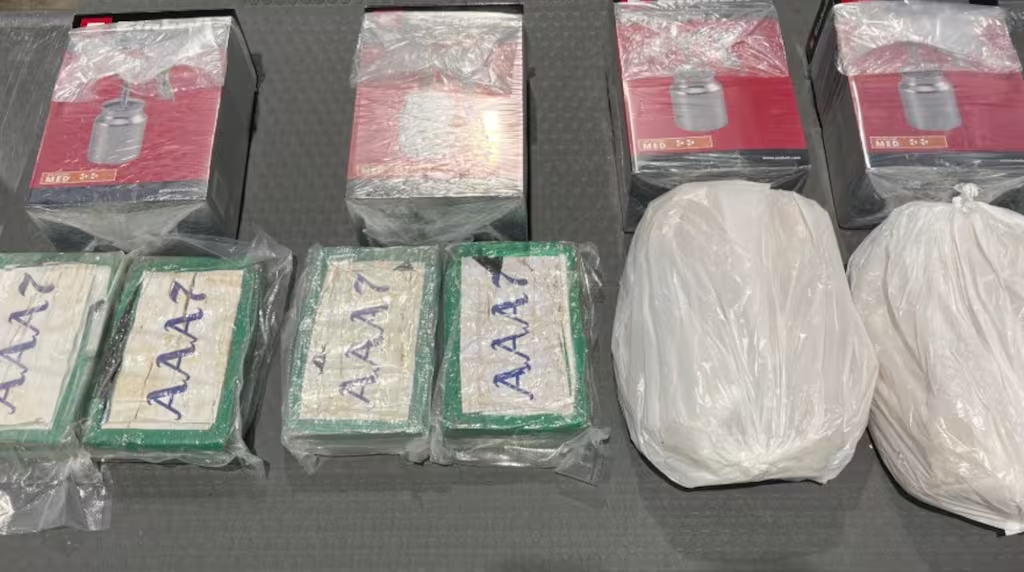
Cocaine seized during Operation Solana (Source: NZ Police )

Operation Solana — led by the National Organised Crime Group — culminated in coordinated raids across Auckland and Hamilton on Thursday and Friday, resulting in the arrest of 11 people.

The operation targeted an alleged network involved in sourcing and supplying methamphetamine, cocaine, MDMA and ketamine.

Police executed 16 search warrants, seizing significant quantities of drugs alongside approximately $500,000 in cash and three firearms, one of which was a 3D‑printed weapon.

Investigators say the group relied on encrypted messaging platforms, anonymous online marketplaces and cryptocurrency services to obscure their identities and financial trails.

Detective Senior Sergeant Jason Hunt said the inquiry began after investigators identified a local syndicate suspected of using anonymous dark‑web trading sites to conduct illegal activity.

“We have established this group allegedly imported and distributed these controlled drugs across the country,” Hunt said.

Police believe the drugs were shipped from multiple overseas sources, including the UK, Europe and the United States.

Working with New Zealand Customs and international agencies — among them US and European law‑enforcement partners and the Australian Border Force — authorities intercepted more than 200 kilograms of controlled drugs offshore before they could reach the network.

Additional quantities of methamphetamine, cocaine, MDMA and ketamine were discovered during the execution of this week’s search warrants.

The 11 arrested individuals, aged between 24 and 42, were expected to appear in the Auckland District and Hamilton District Courts today.

They face a raft of charges, including the importation, possession and supply of Class A, B and C drugs, unlawful possession of firearms and participation in an organised criminal group.

Hunt said Operation Solana demonstrated the growing capability of police to track offending in encrypted and anonymous online environments.

“Offending on the dark web is not invisible,” he said. “These arrests send a clear message: If you are importing or dealing drugs through the dark web, we will find you, and we will hold you to account.”