Tonga National University (TNU) is finalising a new Bachelor of Oral Health (BoH) program in collaboration with the Ministry of Health’s Dental Division, marking a significant step in advancing dental education in the Kingdom.
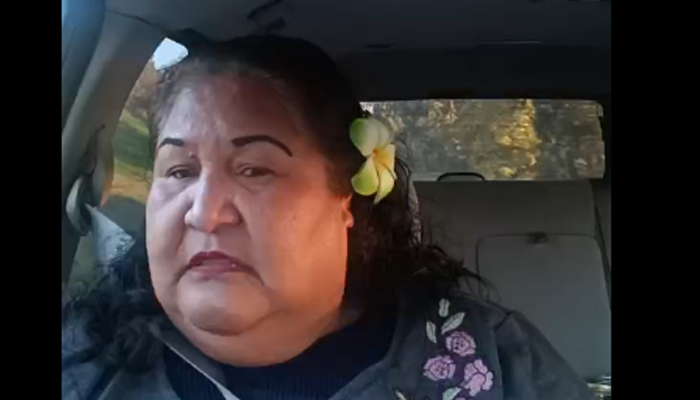
L-R: Ministry of Health’s Dental staff who currently work on the new Bachelor of Health (BoH) Program, Dr. Na’ati Fakatava, Dr. Susitina Piukala, TNU Vice-chancellor, Dr. Giulio Masasso Paunga and Dr. Sisilia Fusi Fifita.)
It follows our recent report that the university is in the process of completing curricula to offer a BA programme in Tongan language and culture.
This week, TNU Vice-Chancellor Dr Giulio Masasso Paunga was briefed on the program’s progress, which is now in its final stages of development with input from the Tonga Qualification and Accreditation Board (TQAB).
The new degree is expected to launch in 2026 under the Faculty of Nursing and Health Sciences (FNHS).
Key stakeholders, including Manila-based Dental Training Coordinator Dr Susitina Piukala, Principal Dental Officer Dr Na’ati Fakatava, and Chief Dental Officer Dr Sisilia Fusi Fifita, attended the discussions.
Dr Paunga expressed gratitude for the collaborative efforts, particularly acknowledging overseas Tongan experts like Dr Piukala for their contributions.
“In addition to the active effort by the Dental Team, the University is very grateful to our dedicated Tongan experts overseas like Dr Susitina Piukala with unwavering spirit of helping Tonga from afar,” Dr Paunga said.
Dr Fifita described the meeting as “constructive in strengthening collaboration and aligning institutional efforts to support the ongoing development and eventual formal recognition of the Bachelor of Oral Health program.”
The Dental Division praised TNU’s commitment to the initiative, which aims to address oral health workforce needs and improve dental care accessibility in Tonga.
Although more than a month has passed with the government reluctant to detail the US demands—which could trigger a travel ban against Tonga—the Eke administration has now issued a statement that appears to confirm sustained concerns about the seriousness of the US requirements.
Dr Taniela Fusimalohi
Acting Prime Minister Taniela Fusimalohi, when pressed during a press conference this afternoon, said the American conditions are complicated and demanding, revealing that authorities are still finalising Tonga’s official response. Yet he continues to withhold the details of the demands.
His response follows June’s memo signed by Secretary of State Marco Rubio and sent to U.S. diplomats working with 36 countries, including Tonga.
The memo stated that governments of listed nations were being given 60 days to meet new benchmarks and requirements established by the State Department.
The memo identified varied benchmarks that, in the administration’s estimation, these countries were failing to meet. Some countries had “no competent or cooperative central government authority to produce reliable identity documents or other civil documents,” or they suffered from “widespread government fraud.”
Others had large numbers of citizens who overstayed their visas in the United States, the memo said.
Other reasons included the availability of citizenship by monetary investment without a requirement of residency and claims of “antisemitic and anti-American activity in the United States” by people from those countries.
The memo also stated that if a country was willing to accept third-country nationals who were removed from the United States or enter a “safe third country” agreement, it could mitigate other concerns.
Warning Gains New Weight
A month after Prime Minister Eke called the US demands “seriously alarming,” Acting PM Fusimālohi’s tone signals that the Tongan government’s unease persists.
In Tongan, Fusimālohi said: “Ikai foki faingofua e ngaahi conditions oku ‘omai ‘e ‘Amelika ke fai ki ai ‘a e ngaue mo e ngaahi tu’utu’uni ko e ‘omai ke tau fai pau ki ai.”
This translates into English as – The conditions set by the United States are not easy to meet, as they require actions and decisions that we are obligated to follow precisely.
Fusimālohi, however, sounded optimistic about the response efforts.
He said the Crown Prince and the Ministry of Foreign Affairs were actively working on it, fully aware of the deadline, and doing their best to meet it.
The Chairman of the Whole House Committee, Lord Tu’ilakepa, faced criticism from the government for remarks perceived as disrespectful, biased, and malevolent after allegedly suggesting that Acting Prime Minister Fusimālohi should “wear women’s clothing” in the House.
Chair of COmmittees of the Whole House Lord Tu’ilakepa (L), Acting Prime MInister Taniela Fusimālohi and Minister of Police Piveni Piukala
The exchange in Parliament yesterday followed intense debates over the government’s energy roadmap and the revelation that there had been no previous plan to forecast or provide foresight for one of the government’s most important resources.
Fusimalohi addressed the roadmap and feedback from the Speaker of the House, Lord Fakafanua, using traditional lea heliaki (figures of speech) to illustrate his points.
Comparing Australian energy support to an “arranged marriage” where Tonga had yet to provide the “bridegroom,” and describing electricity pricing inconsistencies in Tongan as ngatupetupe (shaky), his heliaki drew a sharp rebuke from the Chair.
House Erupts Over Dress Comment
Interrupting Fusimalohi, Tu‘ilakepa criticised his rhetorical style, accusing him of ‘changing things too much in the House’ (“lahi aupito ho‘o fulihi ‘etau me‘a he fale‘ ni”).
The Chair then escalated his remarks, stating he had considered ordering Fusimālohi to stop wearing coats to the House and wear women’s clothing instead. He said in Tongan: “Toe si’i pea u tu’utu’uni ke ‘oua te ke toe kote mai ka ke kofu fakafefine mai ki he fale ni.” The comment prompted immediate backlash.
Minister of Police Paula Piveni Piukala swiftly intervened, urging Tu’ilakepa to hide what was in his heart – (“fakapulipuli’i hifo ho loto”), implying the Chair harboured malice toward the government bench.
Piukala argued the Chair’s language crossed into personal insult, telling Tu’ilakepa in Tongan – ‘Oku ‘ata ki tu’a ho’o ‘ai ke ke siosio lalo’i ‘a e palēmia’. This translates into English as – The public may take it as if you were belittling the Acting Prime Minister.
Piukala reminded Tu’ilakepa of his neutral role, urging him to stop lecturing MPs and simply moderate debates.
Denial of Bias Claims
Tu’ilakepa ordered Piukala to stop and warned that if he had to issue a third warning, he would eject him from the House.
The Chair apologised for what he had said about two of the MPs, but he did not identify them.
He told them to speak nicely (“me’a lelei mu’a”).
He also asked one of them to refrain from speaking in English.
He apparently told Fusimālohi to stop using what he had described as the kind of language they used to speak in their youth, in Parliament.
“‘Oku ‘ikai ke u filifilimānako au. Ke mea’i lelei pe,” he said, which is in English, I am not showing favouritism. He continued in Tongan saying – You knew that well.
“‘Oku ‘ikai pe ha’aku vā ‘aku ia mo e feitu’u’na”, he said, which translates as, I have no problem with you.
He argued that the Minister of Police misrepresented his actions as malicious, even though they were not.
He reminded them of the requirement for decorum in the House.
Commentary – The recent scam that cost Tonga Power Limited $270,000 paʻanga serves as a stark reminder of the growing threat of cybercrime in Tonga.
The fraudsters impersonated a legitimate supplier, convincing the company to transfer funds meant for wind turbine equipment into a fraudulent account, according to the Minister of Police Piveni Piukala.
This incident did not come to light until the actual supplier followed up about the missing payment.
This is not the first time Tonga has fallen victim to such attacks. Just weeks earlier, ANZ Bank Tonga faced criticism from Chief Justice Malcolm Bishop KC for failing to protect a customer from a $244,500 scam.
Despite the bank confirming the fraudulent nature of the email with the customer, it did not take immediate steps to secure the victim’s account, allowing cybercriminals to drain a significant sum.
The situation becomes even more alarming when considering the recent hack of Tonga’s National Health Information System. Cybercriminals breached the system, stole sensitive patient data, and demanded a US$1 million ransom.
Although Tonga refused to pay, the attackers still leaked some of the stolen information onto the dark web, exposing countless individuals to potential harm.
Time to Strengthen Cyber Protections
This attack, along with the scams targeting Tonga Power and ANZ customers, underscores a critical issue: Tonga’s cybersecurity infrastructure is not yet equipped to handle the escalating sophistication of global cyber threats.
These incidents point to several urgent needs. First, there must be comprehensive training for employees in both the public and private sectors to recognise phishing attempts and other fraudulent schemes.
Second, banks and businesses must implement stronger security measures, such as real-time fraud monitoring and multi-step verification for large transactions.
Third, Tonga should consider establishing a national cybersecurity task force, possibly with support from regional partners like Australia and New Zealand, to enhance its ability to prevent and respond to cyberattacks.
Finally, public awareness campaigns are essential to educate citizens on how to protect themselves from online scams.
The bottom line is clear: cybercrime is a growing global problem, and Tonga is increasingly in the crosshairs.
The country can no longer afford to be reactive—it must take proactive steps to strengthen its defences.
Without urgent action, the next cyberattack could be even more damaging.
The question is no longer if another attack will happen, but when—and whether Tonga will be prepared to face it. The time to act is now.
An Auckland man has been sentenced to prison for two vicious assaults, including a brutal attack that left a Taiwanese tourist with knocked-out teeth and stolen passports, and a separate violent robbery of a petrol station attendant.
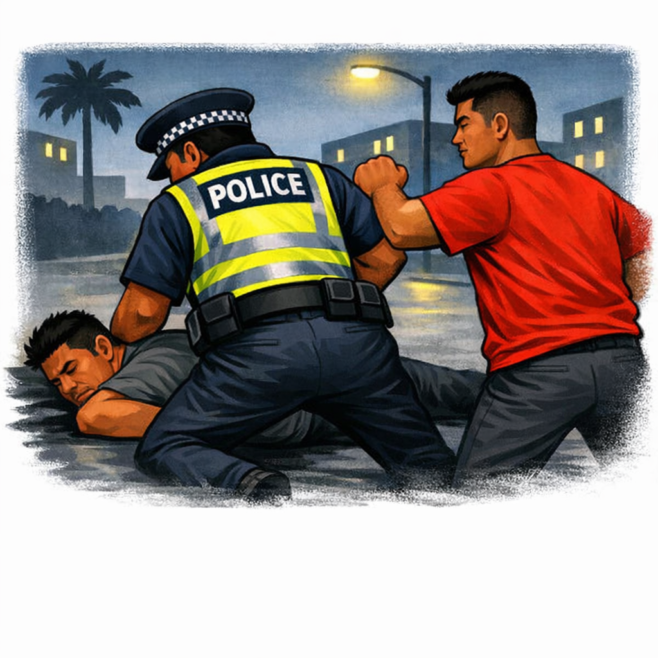
Fonuamotu Manuha’apai, now 20, followed the Taiwanese visitor along Mission Bay’s Tamaki Drive in January last year, demanding money before kicking him to the ground, punching him in the face, and stealing his bag containing $800, an iPhone, and family passports, as reported by the NZ Herald.
The victim lost two front teeth and suffered severe dental damage.
In a March incident, Manuha’apai punched a Mobil attendant, then kicked him three times in the face as he lay unconscious, stealing his phone.
The worker suffered a concussion, a broken finger, and lasting trauma.
Manuha’apai pleaded guilty to wounding with intent to cause grievous bodily harm, theft, and aggravated robbery.
Judge Maxwell condemned the attacks as “cowardly and unprovoked,” noting the lasting physical and psychological harm inflicted on both victims.
The sentencing highlights growing concerns over violent street crime in Auckland, with authorities urging heightened vigilance among tourists and workers.
Manuha’apai admitted charges of wounding with intent to cause grievous bodily harm, theft, and aggravated robbery.
His defence counsel stated he expressed profound remorse and a commitment to rehabilitation.
The court heard prosecutors describe the attacks as exceptionally violent, leaving victims with lasting psychological trauma.
Judge Maxwell imposed a prison term of 3 years and 3 months, acknowledging mitigating factors including the offender’s young age and early admission of guilt.
New Zealand police arrested 27 people in a major drug bust, seizing 743kg of meth and cocaine at Auckland Airport, targeting corrupt baggage handlers in a transnational syndicate crackdown.
A joint Police-Customs investigation has unravelled a major transnational organised crime syndicate working with local gangs to import significant quantities of methamphetamine and cocaine into New Zealand.
The joint Police-Customs investigation, codenamed Operation Matata, uncovered an elaborate scheme where drugs were smuggled through unaccompanied baggage on international flights, with at least 15 current and former airport workers allegedly involved in bypassing security protocols, Detective Inspector Tom Gollan said.
The investigation has had two separate termination phases. The latest, on Wednesday, has seen nine people facing serious criminal and drugs charges.
This follows an earlier 18 arrests on 24 June 2025 in the first phase.
In total 15 current and former baggage handlers employed by airline baggage handling agencies at Auckland International Airport were charged, Police said.
During the course of the investigation, Customs working alongside US authorities, seized 631 kilograms of methamphetamine and 112 kilograms of cocaine, stopping it from getting into our communities.
Putting it into perspective, this seizure would have provided nearly every Kiwi roughly six doses of methamphetamine each.
On Wednesday, Police and Customs investigators executed 19 search warrants across the Auckland region.
“Make no mistake, this investigation has exposed and disrupted a significant threat to New Zealand,” Detective Inspector Tom Gollan, of the National Organised Crime Group says.
“Police will allege the group’s operation involved placing unaccompanied bags on international flights, which were then covertly removed on arrival in Auckland by corrupt baggage handlers to avoid security protocols.”
Since the beginning of this year Police and Customs working closely with overseas law enforcement partners have disrupted and intercepted multiple drug shipments bound for New Zealand.
Flights have originated from Kuala Lumpur, Bangkok, Santiago, Honolulu, Los Angeles, San Francisco, and New York.
Customs Investigations Manager Dominic Adams says New Zealand’s volume of legitimate trade and travel means the risk of criminal infiltration is very real.
“In tandem with the Police and our international partners and industry stakeholders, Customs is continuing to protect communities from the organised criminal groups who are attempting to exploit our international supply chains.
“These individuals are abusing their positions of trust to carry out crime, which not only affects New Zealand’s reputation as a safe place to do business but poses a dangerous threat to the wider community by bringing extremely harmful drugs into New Zealand.
“These arrests send a clear message that Customs and our agency and industry partners are tackling this issue head on, and a potential criminal conviction awaits those who choose to subvert the supply chain for their own gains.”
Detective Inspector Gollan says the most recent seizure was 50 kilograms of methamphetamine smuggled aboard a flight from Malaysia on 18 June 2025.
“It will be alleged one of the arrested individuals gained unauthorised airside access at Auckland International Airport and was observed piloting a baggage cart towards the aircraft,” he says.
“The man’s attempts were thwarted by a swift and coordinated response from Police, Customs and other agencies.”
Wednesday’s search warrants located approximately $150,000 in cash.
“Law enforcement continues to work with airport authorities and other companies to stamp out insider threats, making it difficult for criminal enterprises to operate in that environment,” Detective Inspector Gollan says.
“Multiple investigations over the last few years, reaching back to Operation Selena, means that we have a very good understanding now of any nefarious activity occurring around the arrival of planes and the deplaning of luggage.
“This knowledge has led to multiple arrests of baggage handlers and those people sitting over the top of them as controllers.
“Work done to make the airport more resilient to this criminal behaviour has forced organised crime groups to modify the way they operate making them more vulnerable to discovery.”
Detective Inspector Gollan says this work continues.
“These syndicates operate for profit only, disregarding the misery these drugs would bring to communities across New Zealand.
“This is particularly the case with methamphetamine and these organised crime groups are intent on feeding the addiction of our people in vulnerable communities, of which saw meth consumption double in July last year.”
A magnitude 5.2 earthquake struck Tonga at approximately 2.34pm local time today.
According to seismic data, the quake occurred at a depth of 14 kilometres, with its epicentre located 80 kilometres east of Nukuʻalofa, the capital of Tonga.
Tonga Met Services have confirmed that there is no tsunami threat resulting from this earthquake.
While tremors may have been felt in parts of Tongatapu and nearby islands, there have been no immediate reports of damage or injuries.
Residents are advised to remain alert and follow updates from Tonga’s geological and disaster response agencies.
This follows a separate incident last night, when tsunami waves reached Tonga’s shores after a powerful magnitude 8.8 earthquake struck off Russia’s Kamchatka Peninsula. T
The Niua islands recorded a 30-centimetre wave, while other parts of Tonga, including Vava’u, Ha’apai, ‘Eua, and Tongatapu, experienced waves between 5 to 10 centimetres.
The National Tsunami Warning Centre issued a warning for yesterday’s tsunami alert shortly after the Russian quake, advising residents to move away from coastal areas.
The warning was cancelled at midnight after the threat had passed.
This morning, Acting Prime Minister Dr Taniela Fusimalohi addressed Parliament, confirming that no damage was reported across any of the islands.
He noted that the wave in the Niuas was observed by local residents along the coast.
Authorities urge residents to stay informed and follow official guidance during such events.
Legendary reggae band UB40 featuring Ali Campbell is set to make a triumphant return to the Pacific, with Tonga included in the highly anticipated Kingston Calling 2026 summer festival tour.
Ali Campbell, the legendary voice of UB40, returns to the Pacific with Kingston Calling 2026 – bringing timeless reggae hits to Tonga, New Zealand, and Samoa.
The iconic reggae band UB40 previously graced the stage in Tonga in March 2006.
Next year’s tour will span eight premier outdoor venues across New Zealand, Tonga, and Samoa in January and February 2026.
Presented by Mai FM and Fabrik, the tour features Ali Campbell, the unmistakable voice behind UB40’s global hits like Red Red Wine, Kingston Town, and (I Can’t Help) Falling in Love.)
With over 70 million records sold and 50 UK chart hits, UB40 remains one of the most iconic reggae bands in music history.
This marks the first time since 2019 that UB40 featuring Ali Campbell will perform in Aotearoa New Zealand, and their return to the Pacific is expected to draw thousands of fans from across the region.
Backed by a powerhouse nine-piece touring band, the group promises an authentic UB40 experience that original fans and new listeners alike won’t want to miss.
The tour’s grand finale will take place at the Bowl of Brooklands in New Plymouth, New Zealand, on Saturday, 14 February 2026, a venue renowned for hosting world-class acts in its stunning natural amphitheatre.
Tonga’s inclusion in the tour is a major highlight for local music lovers and the broader Pacific reggae community.
Dates and venue details for the Tonga show will be announced soon, along with a stellar line-up of Aotearoa’s favourite artists joining the tour.
Tickets go on sale Thursday, 7 August at 7pm, with pre-sales opening Wednesday, 6 August at 7pm.
Fans are encouraged to subscribe to the New Plymouth Events and Venues database to receive early access codes.
While Tonga’s tsunami warning has since been cancelled, Thursday’s evacuation efforts revealed a repeated pattern of fleeing residents’ efforts being crippled by severe traffic jams and long queues.
Arrow 1: Vehicles are queuing in the correct lane, waiting in heavy traffic. Arrow 2: An oncoming vehicle is forced to veer closer to the queued cars to avoid a vehicle driving in the wrong lane. Arrow 3: A car is seen driving on the wrong side of the road, near the footpath, in an attempt to bypass the traffic.
Unconfirmed reports suggest waves reached Tonga’s remote northern Niuas islands late Wednesday. Authorities have yet to confirm these claims.
The tsunami alert triggered by an 8.8-magnitude earthquake off Russia’s eastern coast led to desperate drivers spilling onto footpaths and even into opposing lanes—repeating chaos seen in past emergencies.
A Facebook video appeared to show a vehicle driving in the opposing lane while traffic queued on the correct side.
When an oncoming vehicle approached, it was forced to squeeze toward the queued cars, pushing the original vehicle further onto the footpath of the wrong lane. Kaniva Newswas unable to confirm the authenticity of the video or determine when it was taken.
Local journalist Faka’osi Maama described the chaotic scenes during a PMN Tonga radio show: “Cars were barely moving—some drivers resorted to using footpaths just to get through.”
He admitted to doing the same, adding: “I had to drive on footpaths too to reach my stranded passengers in Fanga. I apologize, but there was no other way.”
Reports reveal that many in Tongatapu’s coastal areas began fleeing even before official warnings.
World Bank Flags Congestion Crisis
The evacuation struggles echoed last year’s challenges, when World Bank staff observed severe traffic bottlenecks during a tsunami evacuation.
Deputy PM Taniela Fusimalohi previously said that World Bank staff were in Tonga to advance plans for a bridge connecting Nuku’alofa with eastern Tongatapu via Folaha and Siesia – a critical project to ease traffic congestions.
With Pacific-wide alerts now canceled, questions linger over Tonga’s ability to manage mass evacuations amid recurring traffic crises.
Tongan travellers remain stranded in Vietnam after suspending trips to Cambodia and Thailand due to a violent border conflict that left dozens dead.
Jason Heimuli and his group visiting the Marble Mountains and the oldest pagoda and temple in Da Nang City, Vietnam, before border tensions disrupted their travel plans. Photo/Supplied
Despite a ceasefire agreement reached earlier this week, safety concerns persist, prompting cancellations and delays for the tourists from the kingdom.
Jason Heimuli, a Tongan tourist currently in Vietnam, told Kaniva News that his group had planned to visit Cambodia and Thailand as part of a one-month holiday.
However, escalating violence along the border forced them to abandon their travel plans. “We are worried otherwise we will get injured, so it was safe to cancel it,” Heimuli said.
Heimuli had previously shared on Facebook that they were visiting Singapore before arriving in Vietnam.
He said they were near the Vietnam-Cambodia border when they received warnings from the Australian government advising residents to avoid travel to conflict zones.
“We were trying to return and wait in the city,” Heimuli said.
The conflict, which lasted five days, resulted in at least 43 deaths—mostly civilians—and displaced nearly 300,000 people.
While a ceasefire was brokered during a meeting in Malaysia, Heimuli expressed doubts about its durability.
According to Al Jazeera, the ceasefire was described as “immediate and unconditional,” with reports suggesting U.S. President Donald Trump’s economic pressure played a role in the negotiations.
However, Thailand has since accused Cambodia of launching fresh attacks, allegations Cambodia denies.
Why Are Thailand and Cambodia Fighting at the Border?
By Kaniva News, adapted from BBC
Deadly clashes erupted last Thursday along the Thailand-Cambodia border, reigniting a long-standing territorial dispute.
The conflict stems from a century-old disagreement over border demarcation, intensified in 2008 when Cambodia attempted to register an ancient temple in the disputed area as a UNESCO World Heritage Site. Sporadic violence has occurred since, with tensions escalating in May after a Cambodian soldier was killed.
On Thursday, both nations offered conflicting accounts of the violence. Thailand accused Cambodia of deploying drones and rocket launchers, damaging civilian infrastructure. Cambodia claimed Thai troops violated a prior agreement by advancing on a sacred temple and initiating fire.
Both sides have since imposed border restrictions and increased military presence.
The situation remains volatile, with international observers urging restraint and dialogue.