Home Blog Page 242

Indonesia parliament ratifies criminal code that bans sex outside marriage

By Ananda Teresia

Indonesia’s parliament approved a criminal code on Tuesday that bans sex outside marriage with a punishment of up to one year in jail, part of a raft of legal changes that critics say undermine civil liberties in the world’s third-largest democracy.

The new code, which will apply to Indonesians and foreigners alike, will also prohibit cohabitation between unmarried couples. It was passed with support from all political parties and despite warnings from business groups that it could scare away tourists and harm investment.

However, the code will not come into effect for three years to allow for implementing regulations to be drafted.

Currently, Indonesia bans adultery but not premarital sex.

The laws also include bans on black magic, insulting the president or state institutions, spreading views counter to state ideology, and staging protests without notification.

Critics said the new laws can be used to police morality in the world’s largest Muslim-majority nation, which has seen a rise in religious conservatism in recent years.

Maulana Yusran, deputy chief of Indonesia’s tourism industry board, said the new bill was “totally counter-productive” at a time when the economy and tourism were starting to recover from the pandemic.

“Hotels or any accommodation facilities are like second homes for tourists. With the ratification of this criminal code, hotels are now problematic places,” he said.

Decades in the making, legislators hailed the passage of the criminal code as much needed overhaul of a colonial vestige.

“The old code belongs to Dutch heritage … and is no longer relevant now,” Bambang Wuryanto, head of the parliamentary commission in charge of revising the code told lawmakers.

Opponents of the bill have highlighted articles they said were socially regressive, will curb free speech and represent a “huge setback” in ensuring the retention of democratic freedoms after the fall of authoritarian leader Suharto in 1998.

Responding to the criticism, Indonesia’s Law and Human Rights Minister Yasonna Laoly told parliament: “It’s not easy for a multicultural and multi-ethnic country to make a criminal code that can accommodate all interests.”

Threat to LGBT community

Legal experts said that an article in the code on customary law could reinforce discriminatory and sharia-inspired bylaws at a local level, and pose a particular threat to LGBT people.

“Regulations that are not in accordance with human rights principles will occur in conservative areas,” said Bivitri Susanti, from the Indonesia Jentera School of Law, referring to existing bylaws in some regions that impose curfews on women, or target what are described as “deviant” sexualities.

The new laws will also include more lenient sentences for those charged with corruption.

The morality charges have been partially watered down from an earlier version of the bill so that they can only reported by limited parties, such as a spouse, parent or child.

The government had planned to pass a revision of the country’s colonial-era criminal code in 2019 but nationwide protests halted its passage.

Lawmakers have since diluted down some of the provisions with President Joko Widodo urging parliament to pass the bill this year, before the country’s political climate heats up ahead of the presidential elections scheduled for early 2024.

The public response to the new code has been muted so far, with only small protests held in the capital.

– Reuters

NZers fall victim to scammers at a record rate, latest figures show

By RNZ.co.nz

New Zealanders have lost a record $9 million in internet scams in just three months.

The government’s cyber security agency CERT NZ said the number of scams rose 3 percent in the three months ended September, compared with the previous quarter, but the financial loss was up 128 percent.

The agency said it was the highest quarterly loss since record keeping began in 2017, with businesses just as likely as individuals to fall victim.

CERT director Rob Pope said the spike in losses was concerning, but hoped it would inspire people to be more careful about their security online.

“While it’s easy to be overwhelmed by the large total loss figures, our data shows that most people are losing between $100 and $500, which is a real sting in the pocket for most of us,” Pope said, adding there were 12 reports of losses of more than $100,000.

“We want New Zealanders to take notice of these numbers and use that as motivation to do some quick, simple actions that will stop them, and their whānau, from being the next targets.”

The latest report indicated one of the reasons behind the large losses was an increase in unauthorised money transfer, unauthorised access and scams involving buying, selling and donating goods.

Other types of incidents, such as phishing, had corresponding declines.

“As we come into the holiday season, New Zealanders will be looking online for bargains and scammers know it,” Pope said.

“We’re asking everyone to be cautious when they’re shopping online or perusing online marketplaces and be suspicious of anything that seems too good to be true.”

Two-factor authentication was regarded as one of the best ways to stop unauthorised access to social media and bank accounts.

The agency offered a number of tips to stay safe on its website.

Pope said scammers typically tried to instil victims with a sense of fear and urgency as a way of getting people to quickly part with their money or personal information.

“And our advice to anyone is when you’re confronted with this type of situation, where they’re trying to pressure people to make a decision, or urging people to pay something over or give their details, feel, think and act.

“So if it doesn’t feel right, don’t respond to the urgency or the fear situation. Just think about it,” he said, adding the best course of action was to terminate the communication, without touching any part of the message.

Covid-19 update: 34,528 new cases, 418 hospitalised over past week

‘Oku taupotu ‘i lalo ha fakamatala fakaTonga

There have been 34,528 new cases of Covid-19 and 40 deaths of people with the virus over the past week, the Ministry of Health says.

As of Sunday midnight, 418 cases were hospitalised and 10 were in intensive care.

Of the 40 people with the virus who died, two were from Northland, 14 were from Auckland region, four were from Waikato, one was from Bay of Plenty, four were from Lakes, one was from Hawke’s Bay, three were from MidCentral, three were from Whanganui, one was from Wellington region, one was from Nelson Marlborough, three were from Canterbury, two were from Southern.

One was in their 40s, three were in their 50s, two were in their 60s, eight were in their 70s, 21 were in their 80s and five were aged over 90. Of these people, 16 were women and 24 were men.

The seven-day rolling average of new cases is 4926, compared with 3863 the previous week.

Last week, immunologist Dr Anthony Jordan said it was important for people to plan ahead and be prepared in case they caught Covid-19 over the Christmas break.

Te Pūnaha Matatini physicist and contagion modeller Dr Dion O’Neale said Christmas gatherings and social events over the next few weeks would bring increased opportunities for the virus to spread, but the summer holidays which followed could help to bring case numbers down since people were not at work or school.

Last week, the Ministry of Health reported 27,076 new Covid-19 cases and 58 deaths.

FAKAMATALA FAKATONGA

Ko e keisi fo’ou ‘e 34,528 ‘o e Koviti’ ‘i Nu’u Sila he uike kuo ‘osi’ pea ko e mate ai ‘e toko 40, fakatatau ki he Potungāue Mo’ui’.

A’u mai ki he tu’uapō Sāpate’ ko e keisi ‘e 418 ne tākoto fale mahaki pea 10 ai ne ‘i he intensive care.

‘I he toko 40 ko eni ma’u ‘e he vailasi ka kuo nau mate, koe ua mei Northland, 14 mei he  Auckland region, fa mei Waikato, taha mei he  Bay of Plenty, fa mei he Lakes, taha mei he  Hawke’s Bay, tolu mei he  MidCentral, tolu mei he  Whanganui, taha mei  heWellington region, taha mei elson Marlborough, tolu mei Canterbury, pea ua mei he  Southern.

Fakatatau ki he ta’u motu’a ko e taha ‘i he ta’u 40t, tolu ‘i he 50t, ua ‘i he 60t, valu ‘i he 70t , 21 ‘i he 80t pea toko ‘i he 90t, kakai fefine ‘e toko 16 pea 24 tangata.

Kuo ‘avalisi ‘ene ‘ene vilo mai ‘a  e vailasi ‘i he ‘aho ‘e fitu ‘o e uike’ ko e keisi ‘e 4926 fakahoa ia ki he 3863 uike ki mu’a.

I he uike kuo osi ne pehe ‘e Dr Anthony Jordan ko ha imiuniolosisi, ‘oku mahuhinga ki he kakai ke nau palani ki mu’a na’a ma’u kinautolu ‘e he Koviti ki mu’a ‘i he Kilisimasi.

Pehē ‘e  he fisisi mei he Te Pūnaha Matatini pea ko e motela ‘eni ki he pipihi ‘a e mahaki ko  Dr Dion O’Neale e hoko e ngaahi fakataha’anga ‘ihe Kilisimasi ke ne omeia ha faingamalie ange ki he mafola ‘a e vailasi’.

No tsunami alert for Tonga after strong quake felt in Niuatoputapu

A strong earthquake was felt in Tonga’s northern island of Niuatoputapu this morning.

The 6.7 magnitude had a depth of 10km.

It was initially registered at magnitude 6.9 by the US Geological Survey, but since downgraded to 6.7.

“No tsunami threat and no action are required”, the Tonga Met Services said.

The earthquake had also struck Samoa and people were reportedly told to move inland as a precaution in case of a tsunami.

RNZ reporting on Samoa quake later said the “tsunami watch has been cancelled for Samoan low-lying coastal areas after a 6.7 magnitude earthquake struck”.

In 2009, an 8.1 magnitude earthquake generated a tsunami that killed nine people on Niuatoputapu, and 149 in neighbouring Samoa.

Princess warned to stay away from politics after she makes “two-legged devils” comments

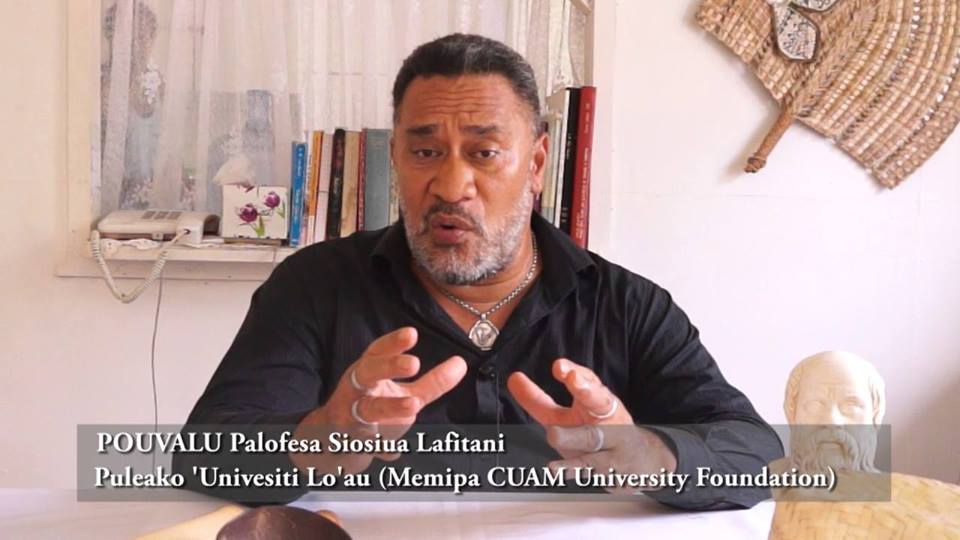
A senior Tongan academic has warned Princess Pilolevu not to become involved in partisan politics.

Professor Siosiua Lafitani’s warning came after the Princess made remarks which have been interpreted as an attack on the PTOA.

Princess Salote Pilolevu Mafile’o Tuita

“’Oku ‘ikai toe ha’u ‘a e hou’eiki mo e fale ‘alo ke nau omai ‘o kau ‘i ha Tu pe kau ‘i ha PTOA”, Prof Lafitani said.

In English this translates as “the chiefs and the royals should not join either Tu or PTOA”.

The Princess made the controversial remarks while attending an event organised by a small group of Tongan royalists, who call themselves the Tu Family. The event was streamed online.

Based in Australia, the recently formed group claims their mission was to protect the King and his House.

The group is widely known for its members’ attacks on the PTOA Party through its streamed videos and Facebook comments.

The attacks also drew personal responses and criticisms from PTOA supporters.

In her speech, the Princess said in Tongan that Tu’s responsibility was “to chase away all the little two- legged devils in all countries. Please forgive people who opposed the Tu family”.

In Tongan she said: “Ke tuli ‘a e fanga ki’i tevolo ve’eua kotoa pe he fonua kotoa pe. Fakamolemole fakangata mo e kakai ‘oku tu’u tau mai ki he famili Tuu”.

The Democrats (PTOA) said the Princess’s comments appeared to be targeting them.

Professor Lafitani said the involvement of chiefs or members of the royal family would cause huge damage to the country.

King and royal protections

The Professor said the king and the royals were already protected by the constitution and traditional ha’a or clans led by the king’s chiefs and matāpules.

Professor Siosiua Lafitani

The Professor believed the PTOA and Tu were free to operate according to their own agendas, but any involvement of the royals and taking side with any of them was unacceptable.

The PTOA’s online followers said the Princess’s speech was disrespectful because the PTOA had a huge number of followers and its leaders and supporters included top scholars, church minsters and respected community leaders in the kingdom and abroad.

Professor Lafitani’s comments aligned with comments made by some independent online commentators.

They said the Princess’s speech put her in a position where she could be seen as being prejudiced towards some of her people. This provided an opportunity for the commoners to criticise and personally attacked her. Some said it reminded them of how “the princess illegally took the TP$90 million dollar grant from China” and used if for her Satellite Company, Tongasat.

The PTOA supporters said their agenda to democratise the government had been approved by the king before the 2010 political reforms. They said the current government was an outcome of their push which dragged on for many years, led by their long-time democratic campaigner, the late ‘Akilisi Pohiva.  They said the Princess should refrain from trying to play down their campaign for more democracy for Tonga because it was for the good of the country as a whole.

Princess Pilolevu is the king’s sister and has often acted as regent to the king in his absence. Her husband, Lord Tuita, was one of the king’s nobles. 

For more information

Appeal Court dismisses Tongasat’s appeal to present evidence from former gov’t ministers

Captured documents reveal Russia’s plan to annex Ukraine in ten days and kill its leaders

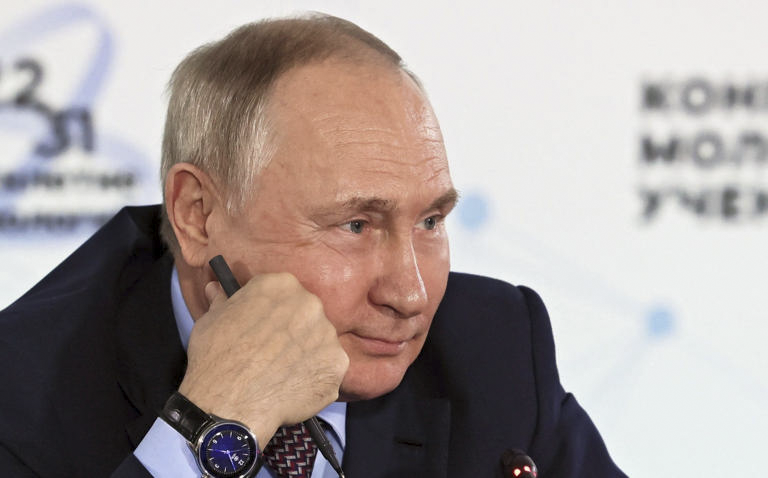
Russia planned to seize Ukraine within ten days and kill its leaders, according to new documents apparently signed off by Vladimir Putin.

The leaked plans, revealed by the Royal United Services Institute for Defence and Security Studies (Rusi), show that Russia aimed to have annexed the country by August.

Russia intended to capture Ukraine’s airfields, water supplies, central bank and parliament as Ukrainian officials either fled or were captured “as a result of the speed of the invasion”.

The Kremlin created a “kill list” of Ukrainians that should be killed or suppressed.

According to Rusi, the plan was known to few in Russia’s military and unit commanders did not receive orders to invade until hours before.

Plan to use Belarusian airborne units

The invasion was meant to begin with a “massive missile and airstrike campaign” against Ukrainian military targets.

Critical infrastructure including railways and power stations would not be targeted as these were imperative for seizing full control of the country.

Russia also planned to use Belarusian airborne units to help in the capture of the Rivne and Khmelnytsky nuclear power plants, Ukraine’s intelligence community believes.

Officials planned to register the entire population by going door to door, noting if they should be eliminated or whether they were likely to collaborate.

They would divide them into four categories: Those who should be killed; those in need of suppression and intimidation; those considered neutral who should be encouraged to collaborate and those prepared to collaborate.

People would be processed through filtration camps.

Russia also intended to coerce the cooperation of local authorities and regional governors, with the Federal Security Service directed to capture local officials.

As time progressed, plans were proposed to “re-educate” Ukrainians by importing teachers and other officials from Russia.

Tongan disaster victims wondering about reconstruction

By RNZ.co.nz

Questions have been asked in the Tonga Legislature about the lack of progress in relocating and rehousing the hundreds of people made homeless by the January eruption and tsunami.

The Tonga Government had committed to building more than 300 houses, creating new villages, rebuilding roads, not only for the most recent victims but the people still suffering in the wake of devastating cyclones in 2014 and 2018.

No caption

Photo: Twitter / Dr Faka’iloatonga Taumoefolau

Our correspondent in Tonga, Kalafi Moala, says the government had planned to relocate four entire villages wiped out by the tsunami, but the work to house thousands of victims from Cyclones Ian in 2014 and Gita in 2018 are incomplete.

“There are people, since January of this year, that have been living in temporary quarters, whether it’s in the hallway of a church or in tents. they are living there with their families, their children, having been promised that they will be relocated, that here will be new homes built for them. And that hasn’t happened.”

The worst hit area has been Ha’apai, which bore the brunt of Ian in 2014, was smashed by Gita in 2018 and was the epicentre of the eruption and tsunami.

“So they have been deeply affected by those two cyclones before as well as the eruption and tsunami. The question is some of the reconstruction that has started for restoring damages from Cyclone Ian – they haven’t been finished and even from Cyclone Gita and now there is a third disaster that has happened.”

Moala said there have been accusations of corruption with a number of the companies that lined up for the funding provided for the reconstruction work, having folded.

Tonga calls for more unity in tuna conservation efforts

By Koroi Hawkins, RNZ Pacific Journalist

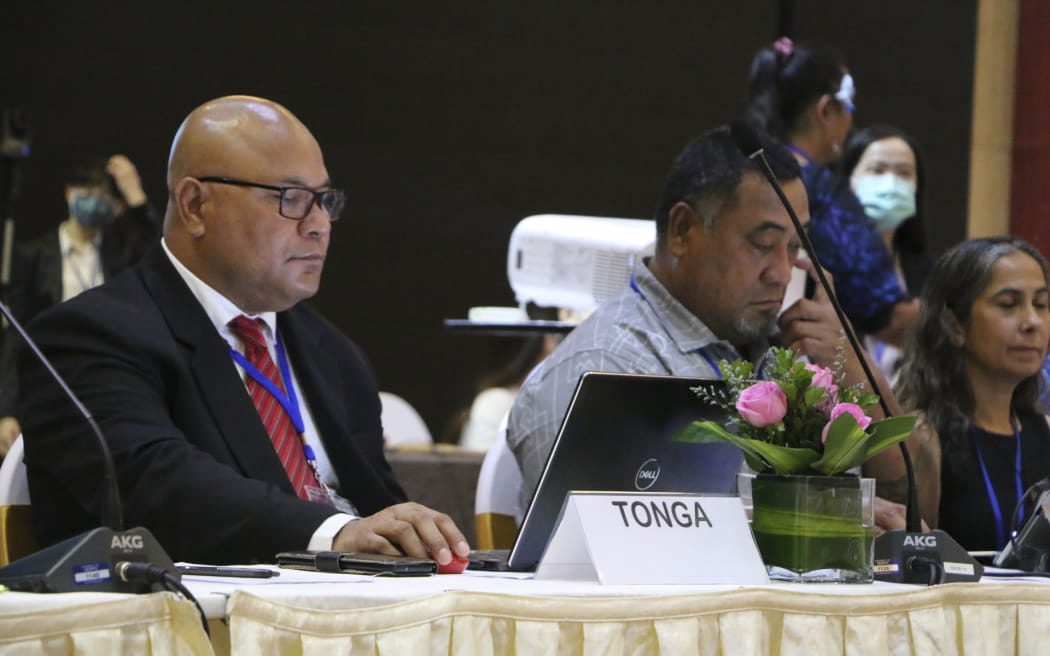
The head of Tonga’s delegation to the Pacific Tuna Commission meeting underway in Vietnam is calling for more unity and cooperation as delegates haggle over the management measures for the multi-billion dollar fishery.

The chief executive officer of the Tonga Ministry of Fisheries, Tu’ikolongahau Halafihi, is attending this year’s meeting of the Western and Central Pacific Fisheries Commission (WCPFC) – the regional fisheries management organisation responsible for tuna – in Da Nang, Vietnam.

There are 26 countries and participating territories in the commission comprised of the resource owning island countries and the foreign fishing nations whose fleets travel thousands of kilometres to fish in the tuna-rich waters of the Pacific.

And they do not always see eye-to-eye.

Dr Halafihi said his country’s tuna fishery, though small compared to other Pacific nations, is crucial to the livelihoods of Tongan people and government revenue.

“This is very important for us, it is the main fisheries for us in terms of volume and value. Tuna fisheries supports food security and also supports the economy of Tonga,” he said.

Annually, on average, Tonga’s tuna fishery brings in $10 million pa’anga – about $US4.2 million.

Tu’ikolongahau Halafihi said this is based on Fresh-On-Board prices which is a lower value as the buyer has to bear all costs and risks of the goods from the port of shipments.

“FOB value, let’s say that is the local value for that, but the exact value for tuna for the exporting of tuna is much, much higher but that is the value we use for calculate the exports,” said Dr Halafihi.

Longline is the main method of fishing in the country – and while there are two local companies, most of the vessels operating in Tongan waters are Chinese and Taiwanese boats registered and working out of Fiji with locals often employed as crew.

The commercial species mostly targeted is the South Pacific albacore one of the more at-risk tuna species in the region.

According to a WCPFC report on the status of the stock in February this year there has been no stock assessment of South Pacific albacore since 2015.

The commission’s Scientific Committee report reiterated the great concern for the stock expressed in earlier reports if recent catch effort levels are maintained.

Its projections indicated the risk of South Pacific albacore stock falling to an undesirable level is more than 20 percent under a business as usual scenario.

Dr Tu’ikolongahau Halafihi - chief executive officer for the Tonga Ministry of Fisheries at the 2023 WCPFC meeting in Da Nang, Vietnam. 28 November 2022

Dr Tu’ikolongahau Halafihi – chief executive officer for the Tonga Ministry of Fisheries at the 2023 WCPFC meeting in Da Nang, Vietnam. 28 November 2022 Photo: RNZ Pacific/Koroi Hawkins

‘Main message is solidarity and cooperation’

Tu’ikolongahau Halafihi said Tonga and other Pacific Islands need to work together with the countries who come to fish in their waters to protect the resource for future generations.

“I think the main message from here is solidarity and cooperation, working together because we can’t manage the resources by ourselves, we have to work together.

“National, regional and also international we have to work together, some kind of collective effort in order for us to manage the resources” Dr Halafihi said.

The Western and Central Pacific Fisheries meeting resumes today with some of the measures before the commission including tuna harvest strategies, addressing some of the atrocious labour conditions in the fishery and sharply-contested shark conservation measures.

This regional fisheries management organisation, also known as the Pacific Tuna Commission, has a unique consensus approach to most if not all of its decision-making.

The approach is a double-edged sword as it promotes universal compliance at the expense of stronger conservation measures.

It is also expected today that the commission will officially announce its first-ever woman Executive Director in former commission chair, Rhea Moss-Christian, of the Marshall Islands who will take over from long-serving Tuvaluan executive Feleti Teo next year.

The other candidate who contested the role was Cook Islands Lara Manarangi-Trott, also a highly experienced fisheries expert and compliance manager for the Western and Central Pacific Fisheries Commission.

All of the Pacific Tuna Commission meetings and deliberations are closed to mainstream media.

RNZ Pacific senior journalist Koroi Hawkins is in Vietnam covering the Western and Central Pacific Fisheries Commission meeting. His trip was made possible by the Forum Fisheries Agency.

Some newlyweds only last two weeks before seeking divorce, Justice Minister tells House

Some marriages in Tonga are lasting only two weeks.

The revelation that some couples only stay together for a fortnight came from the Minister of Justice, Samiu Kuita Vaipulu, who told Parliament recently that the number of divorces had risen.

Wedding rings

The news came as Tonga’s wedding season approaches.

Many families plan throughout the year for a wedding in the weeks leading up to Christmas and relatives and friends fly in from overseas for the celebration.

Tonga has also been a popular wedding destination for some overseas visitors.

However, the statistics show that all is not well with Tonga’s newly married couples.

Hon. Vaipulu told Parliament that court figures showed that some Tongans re-married after seven years together.

However, instead of waiting for seven years before looking for a new spouse, some couples waited only weeks.

According to the statistics some couples split less than 28 days of the marriage. This included marriages which had been registered with the government, but were waiting for letters of confirmation from Church ministers who conducted the weddings.  This meant some couples divorced before the letters confirming their marriage arrived.

The Minister told Parliament that when he was working as a lawyer he increased his legal fees for divorce applications from TP$300 to TP$1000, but people still paid his fees.

Hon. Vaipulu told the House the statistics for 2020/2021 showed the number of divorces by couples aged between 20 and 30 rose from 205 in the previous year to 245.

MPs expressed their concern at the figures, with one saying he had thought that Christianity and better education should help decrease the rate. 

Child marriage concern

The number of underage or child marriages, with 68 weddings in 2020/21, also caused concern.

The phenomenon of underage marriages in Tonga has been a major concern for several years. While parents can give their consent for the marriages to make them legal, the widespread view is that young people should finish school and not marry until they are of legal age.

In 2017 women’s advocate Vanessa Heleta told RNZ there were 56 child marriages in 2015 and 51 in 2016.

“It’s really saddened my heart. I don’t think it’s right. This day and age we should not encourage child marriages,” she said.

Pregnancies led to such marriages, and young girls were even pressured to get married if they were simply seen or perceived to be with boys, she said.

In 2016 Kaniva News reported Deputy Speaker of Tonga’s Parliament, Lord Tuʻiʻāfitu as saying that he was shocked by child marriage in the Kingdom.
He said that in the previous three years 183 child marriages had been recorded in Tonga.

He said the Parent Consent Act 1926, which gave parents power to allow their children to marry, was “embarrassing.”

UNICEF has condemned the practise of child marriages, saying they interfered with a girl’s development with early pregnancy and social isolation, interrupting her schooling, limiting her opportunities for career and vocational advancement and placing her at increased risk of domestic violence.

Suspect still on loose after assault, robbery at San Mateo laundromat

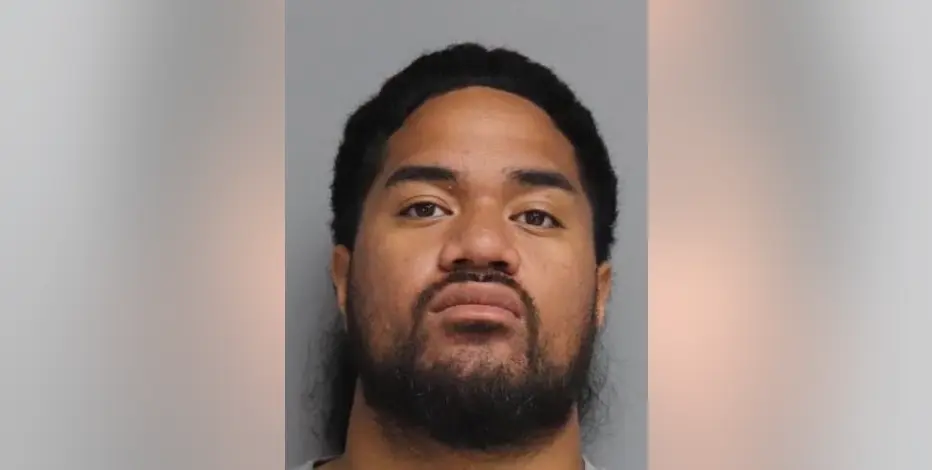
San Mateo Police said Tevita Taunaholo, 25, is wanted for his role in two separate attacks on Oct. 16 that happened at the Shoreview Laundromat. His brother Mosese Taunaholo was already arrested in the incident along with a third man, Philimon Lauaki.

Authorities said Mosese Taunaholo walked into the laundromat and brandished a handgun at the first victim. Taunaholo directed the man to go outside, but he raised his hands in the air and refused Taunaholo’s demand, authorities said.

SEE ALSO: College student hospitalized after being struck by alleged drunk driver in San Mateo

Taunaholo then punched the victim and forcefully carried him outside, San Mateo police said.

Taunaholo’s brother, later identified as Tevita Taunaholo, joined and they both allegedly attacked the victim until he became unconscious.

Police said once the victim was unconscious, the Taunaholos rifled through his pockets and took his belongings, including the keys to his vehicle.

The brothers allegedly assaulted a second man, who arrived at the laundromat separately and is unrelated to the first victim.

They also stole the keys to the second victim’s vehicle.

The brothers fled the scene in the victims’ vehicles.

The victims were taken to a local hospital and one of them was discharged. The other remains hospitalized.

RELATED: El Cerrito laundromat thief caught on video

Hours after the incident, San Mateo police learned that the first victim’s stolen vehicle was at Southland Mall. Hayward police officers observed Mosese Taunaholo entering a bathroom and subsequently going into a bathroom stall. Shortly after, he was detained by Hayward police.

Officers located three wallets and a replica handgun inside the bathroom stall where Taunaholo was hiding.

He was booked into San Mateo County Jail on charges of attempted murder, assault with a deadly weapon with great bodily injury, kidnapping, possession of a stolen vehicle, vehicle theft, committing a felony while on release, and conspiracy.

Upon further investigation, officers identified two additional suspects in the cases, Philimon Lauaki and Tevita Taunaholo.

Lauaki was arrested in Oakland, while Tevita Taunaholo remains at large.