Home Blog Page 250

Lord Chief Justice rejects Lavulavu’s request to stand down from his second bail hearing

An application by disgraced former politician ‘Etuate Lavulav for Lord Chief Justice Whitten to recuse himself from hearing his second bail application has been dismissed.
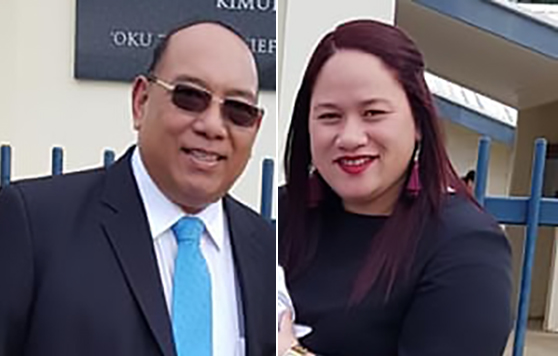
(L-R) ‘Etuate Lavulavu and ‘Akosita Lavulavu

Lord Chief Justice Whitten, presiding, told the Court of appeal that Lavulavu had not proven that there were grounds under which he should stand down.

On June 4, 2021, Lavulavu and his wife, who was then a Cabinet Minister, were convicted of three counts of obtaining a total of TP$558,600 by false pretences.

On 30 June 30, 2021 , they appealed against their convictions.

On July 2,  2021 they were sentenced to six years imprisonment with the final year of Mrs Lavulavu’s sentence being suspended for two years on conditions. They appealed against their sentences and filed an application for bail. The application was dismissed by Judge Whitten.

On July 7 this year the couple filed a second application for bail.

On July 29 Mr Lavulavu filed an application for Lord Chief Justice Whitten to step down  and not hear the application.

Mrs Lavulavu did not join in the recusal application.

Mr Lavulavu claimed that the judge should not hear the second bail application because he had a conflict of interest and/or might actually or presumably be biased against him.

He based his claim on the fact that the judge had presided over civil proceedings between the  ‘Unuaki ‘o Tonga Royal Institute and the Lavulavus and the Auditor General.

He also cited the fact that the judge had heard and refused the first bail application.

He also cited the fact that the judge had communicated with the Commissioner of Prisons in relation to a recent leave of absence granted to Mr Lavulavu.

The judge said the original civil proceedings began before he took up his office in Tonga. He case managed the proceeding until it was almost ready for trial, but  did not make any rulings in relation to any of the issues in dispute or in respect of Mr Lavulavu.

The second claim regarding the two bail applications was also dismissed. The judge said the first application was under-prepared. The second appeal contained a far more developed set of arguments.

“If there are more developed arguments or other arguments to be considered on the second bail application, then my refusal of the first could have no impact on my consideration of the second,” the judge said.

The third grounds concerned communications between the judge and the Commissioner of Prisons.

On June 4, 2022, Lord Chief Justice Whitten wrote to the Commissioner of Prisons, Semisi Tapueluelu, to say that he had been told that Lavulavu had attended a meeting at the offices of the Port Authority in relation to a company by the name lnter Pacific Limited.

“I bring this to your attention, in case you were not aware, as Mr Lavulavu is currently supposed to be serving a prison sentence,” the judge wrote.

“Could you kindly explain the basis upon which Mr Lavulavu was granted a leave of absence for this purpose? My reading of the Prisons Act, and the purposes specified for a leave of absence, such as medical examination, assessment or treatment; to attend an educational or training course; to participate in paid employment or community service; or compassionate purposes, makes it difficult to see how a business meeting might fall within the last of those prescribed, namely, ‘any other purpose as the Commissioner thinks fit ‘.”

Tapueluelu said Lavulavu had been granted a leave of absence for a medical assessment and to meet with his legal counsel.

“His state of health is deteriorating according to specialist Dr Sione Latu,” the commissioner wrote.

“Based on your email we issued a revocation order of his LOA and he was escorted back to Tolitoli Prison on the same day.

“I talked to the Ports authority Chief Executive Officer Mr ‘Alomailesini about Mr Lavulavu ‘s involvement in this official meeting. He asserted that it was not a board meeting nor an official meeting. It was a ten-minute follow-up on any debt owed by PAT to IPL. Mr Lavulavu ‘s presence was simply to inquire of the debt owed by IPL to him to pay for his appeal.

“Mr Lavulavu did not breach his LOA conditions.”

The judge said it was not clear why Lavulavu had to visit the Ports Authority simply because he claimed that Inter Pacific owed him money.

“One would have expected such matters to be dealt with by further correspondence or telephone and by Inter Pacific ‘s own lawyer,” Lord Chief Justice Whitten said.

“It is not clear why a “Revocation Order” of Mr Lavulavu’s leave of absence was issued upon receipt of my enquiry if the reason for him being at the Ports Authority was known to the Prison in advance and had been approved.”

“The text of the emails clearly states that the purpose of those communications was to inquire of the Commissioner of Prisons about Mr Lavulavu’s leave of absence but more importantly how the Commissioner of Prisons exercised his discretion under S. 46 of the Prisons Act in relation to the granting of a leave of absence.

“The significance in the current context was that where applications for bail pending appeal are made, the availability of a leave of absence during the relevant period could be a relevant consideration.

“Therefore, in my view, those exchanges do not contain any expression on my part which reflect any prejudice or affect my ability to impartially consider and determine the second bail application.

“Accordingly, the third ground also fails.

“The application for recusal is dismissed.”
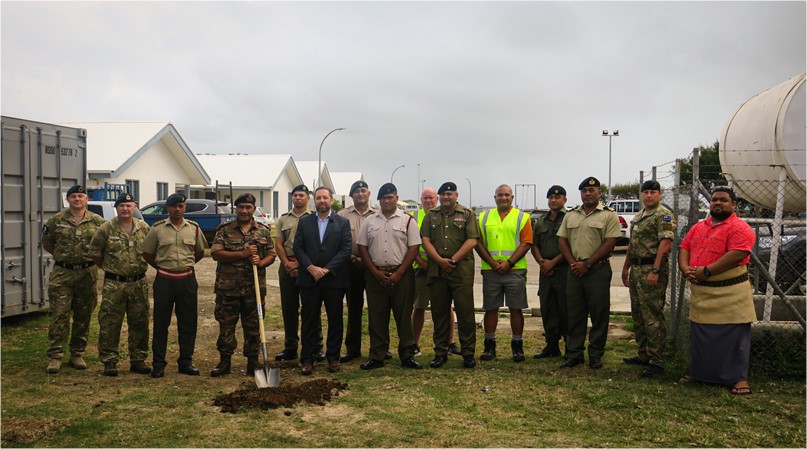
Construction begins on NZ leadership centre in Tonga

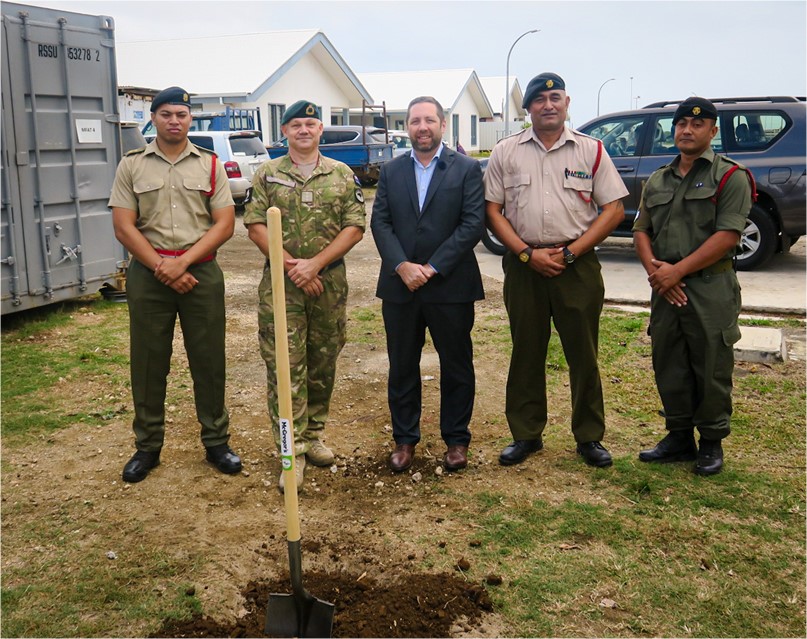
Construction of Tonga’s Pacific Leadership Development Centre at His Majesty’s Armed Forces (HMAF) Masefield Naval Base, Nuku’alofa, has begun.

The Leadership Centre is funded by a joint New Zealand Defence Force (NZDF) and New Zealand Ministry of Foreign Affairs and Trade (MFAT) initiative and will provide a location for HMAF leadership training, meetings and talanoa (conversation).

The $NZ5.2 million centre will incorporate a fale-inspired conference centre, and classrooms and staff facilities. Construction is expected to be completed by the end of 2023.

The HMAF Leadership Centre is the second of four centres that the NZDF and MFAT are funding in the Pacific region.

“The first, the Kumul Leadership Centre at Murray Barracks in Port Moresby, Papua New Guinea opened in April and the Papua New Guinea Defence Force has been making full use of it since then,” said Lieutenant Colonel Gordon Milward, Programme Principal for the Pacific Leader Development Programme (PLDP).

The final two centres will be built in Fiji and Vanuatu, in support of the Republic of Fiji Military Forces and Vanuatu Mobile Force.

The Leadership Centres are a component of the NZDF-led and co-MFAT funded Pacific Leader Development Programme which commenced in June 2019.

The programme supports the military forces of Fiji, Tonga and Papua New Guinea, and the Vanuatu Police Force, in the development of bespoke leadership frameworks and the delivery of different levels of leadership training for their personnel.

Lieutenant Colonel Milward said that the number of personnel who are completing leadership training was increasing rapidly.

“Over the past three years the NZDF has supported the training of about 2500 leaders across all four nations, with 327 of those being in Tonga, ranging from Lead Self through to Lead Organisation levels.”

Each nation’s Leadership Framework is based on the NZDF Leadership Framework, but incorporates each nation’s specific values and culture.

The NZDF provides advanced design, development, delivery and facilitation training support for each nation’s leadership programme through a team of six NZDF Institute for Leader Development personnel based at Trentham Military Camp.

Senior uniformed NZDF personnel, with the role of Technical Advisor – Leadership Mentors, will also be seconded to each country for a period of three years.

“As a result of the programme, Tonga, New Zealand, Papua New Guinea, Vanuatu and Fiji are collaborating for an exciting and innovative future in leader development that will be of increasing benefit for all five nations,” Lieutenant Colonel Milward said.

Axed border testing leaves NZ flying blind on new Covid-19 variants – experts

‘Oku taupotu ‘i lalo ha fakamatala faka-Tonga

New Zealand is on the back foot in preparing for new Covid-19 variants now requirements for international arrivals to test have ended, health experts say.

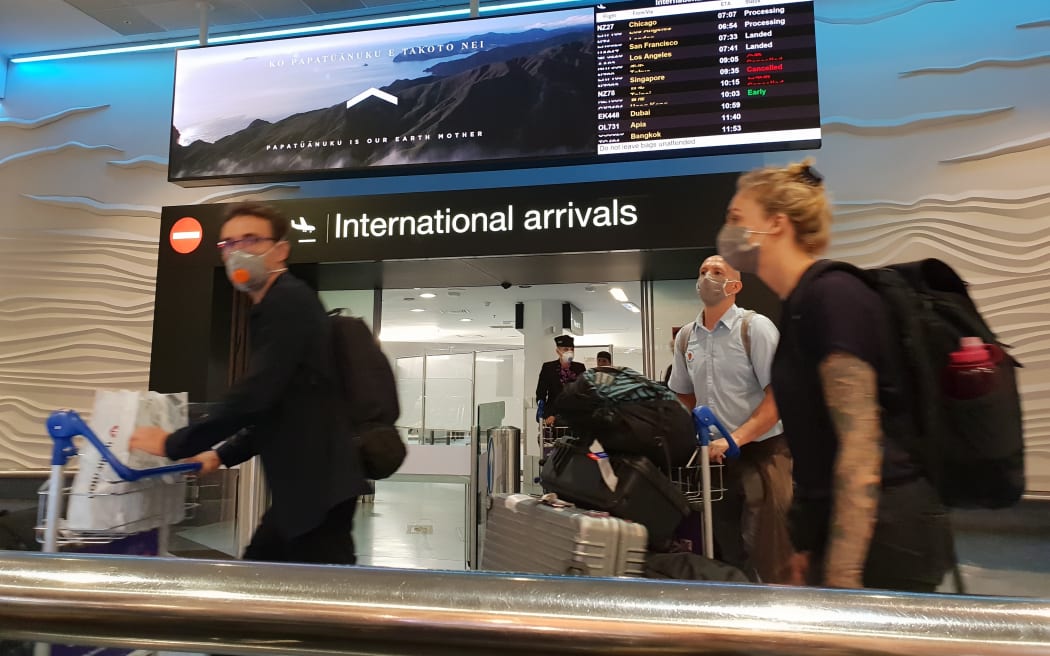
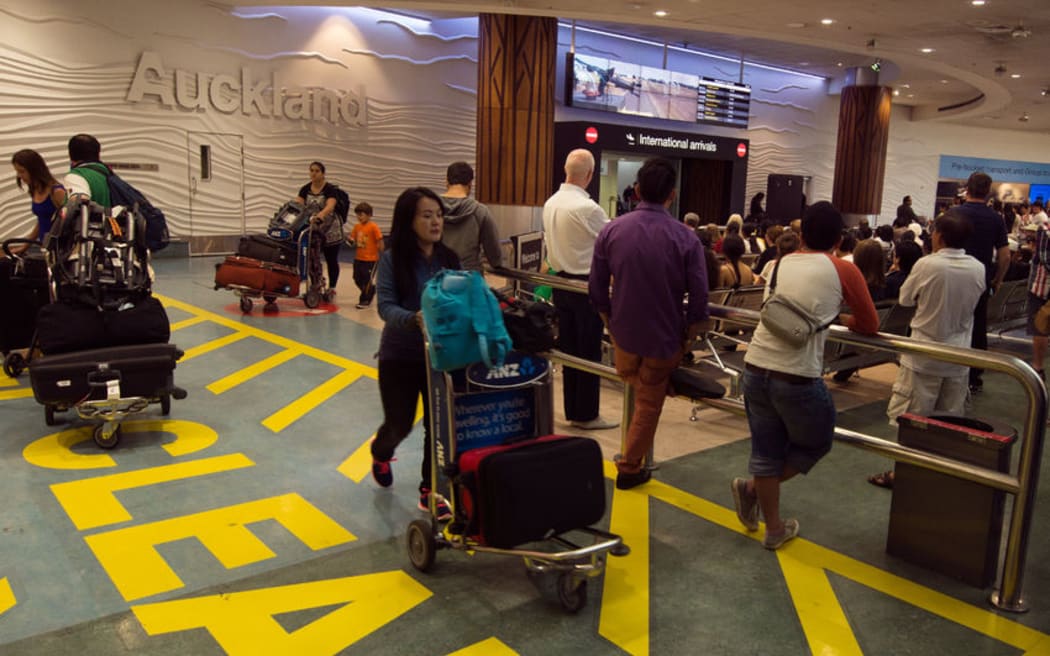
International arrivals are no longer required to test for Covid-19. Photo: RNZ / Liu Chen

Prior to the change in border rules, which was implemented on 12 September, international travellers needed to complete rapid-antigen tests (RATs) on the day they arrived in New Zealand or the day after, and again five or six days later.

Now arrivals are encouraged to test, but it is not a requirement.

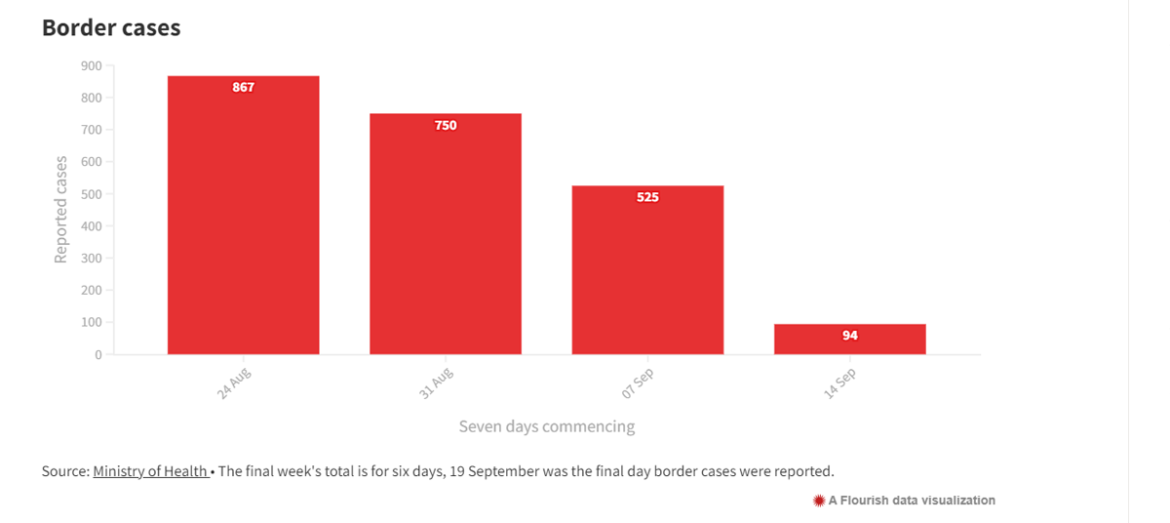
A Flourish data visualization

In the week prior to the removal of the requirement to test there were 525 border cases.

This plummeted to 94 reported cases in the six days after the new rule came into effect. Although it was possible some border cases had been counted as community cases in Ministry of Health data, due to changes in the way data was being gathered.

University of Auckland microbiologist Siouxsie Wiles said while the reported numbers were murky due to reporting changes, it was doubtful only 94 people out of almost 70,000 travellers who arrived in New Zealand, had Covid-19.

“I’m not a statistician, but that seems highly unlikely, versus a change in our protocol to require people to be tested.”

Wiles said border testing provided an early warning system of new variants entering New Zealand, and without this, variants would spread in the community before being noticed.

“We’ll be reliant on the tests that have been done in the community, or more increasingly the wastewater testing, looking for variants.”

A Ministry of Health spokesperson said arrivals are still given rapid antigen test kits on arrival and encouraged to test and report their results by phone.

“People returning from overseas who return a RAT result that is positive are encouraged to get a PCR test from a community testing centre or healthcare provider and tell the person who does their test that they have been overseas in the last seven days.”

But the spokesperson said the ministry would not report border cases separately to community cases anymore.

It was not just the public who would not know how many cases are border related. Environmental Science and Research (ESR) professor Mike Bunce said border information was no longer included with samples sent for genomic sequencing.

He said this was because the dismantling of the Covid-19 Protection Framework meant an Air Border Order which had allowed ESR to get data from customs was no longer available.

01 February 2022, Mecklenburg-Western Pomerania, Greifswald: Medical technical assistant Denise Dittmar pipettes swab samples from test centers and prepares them for further examination in the automated machine in the PCR laboratory

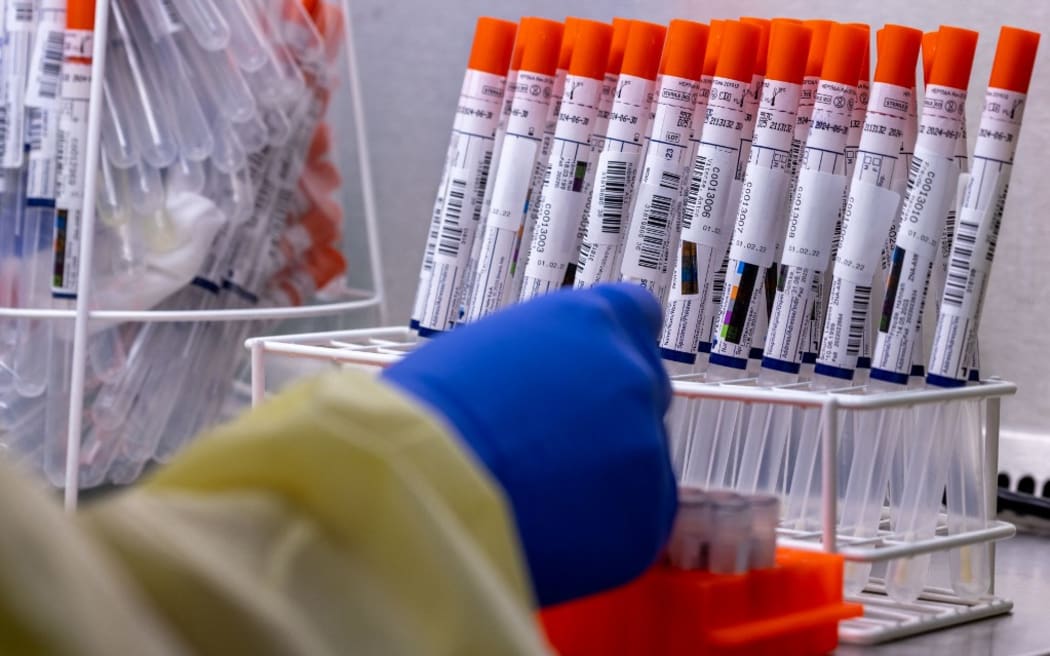
Covid-19 samples being tested in a lab. Photo: AFP

In the last batch of samples sequenced there were 275 samples identified as border cases. But he would not know how much this had reduced since the testing requirement was dropped until the next fortnightly reporting was collated.

Bunce expected the numbers identified as border cases had dropped, due to the “soft compliance” approach of relying on health providers to collect the information.

“It’s not a big kicker at the moment,” he said, because Covid-19 variants in the community matched those detected at the border.

“However if something new turns up, I would say we’ve softened one part of our surveillance system”.

If the number of samples identified as border cases drop to about 20 it would not be enough samples to determine the proportion of each variant entering the country.

“We’ve just got an underpowered data set,” Bunce said.

University of Auckland researcher David Welch had also been working with genomic sequencing of Covid-19 samples. Welch was critical of the decision to drop border tests.

He said a system requiring people to tell health providers they had travelled overseas in the past seven days was too “ad hoc”.

“There’s always been a three-pronged approach to gathering samples,” he said. One was from hospital cases, so scientists could see if a certain strain of Covid-19 caused more severe cases.

The second was community samples, to see what was circulated. And border samples were the third prong, and gave health specialists an early warning system for what variant might hit the community in two to four weeks time.

“We are losing one leg of the stool.”

Auckland Airport arrivals

Arrivals to Auckland Airport (File photo). Photo: 123RF

The information from border cases provided a two to four week headstart he said, and had allowed modellers to predict when a new variant might set off a wave of cases.

FAKAMATALA FAKATONGA

Kuo faingatātamaki ‘a Nu’u Sila ‘i he teuteu ko ‘eni ki he fōtunga kehe fo’ou ‘o e Koviti 19 tu’unga he kuo ngata ‘a e fiema’u ia ke tesi ‘a e kau folau tū’uta fakavaha’apule’anga’, ko e lau ‘eni ‘a e kau mataotao he mo’ui’.

Ki mu’a ‘i hono liliu ‘a e tu’utu’uni ki he kau’āfonua’, ‘a ia na’e fakahoko ‘eni ‘i he ‘aho 12 Sepitema’, na’e fiema’u ki he kau folau fakavaha’apule’anga k eke nau fakakakato ‘a e tesi rapid-antigen (RAT) ‘i he ‘aho a’a nau tū’uta ai ‘i Nu’u Sila’ pe ‘aho hili ia’, pea mo e ngaahi ‘aho ‘e nima pe ono ki mui ai’.

‘I he lolotonga’ ni ‘oku fakalotolahi’i ken au tesi ka ‘oku ‘ikai ko ha fie ma’u (likaemeni pe requirement). 

‘I he uike ki mu’a pea to’o ‘a e likaemeni ki he tesi’ na’e ‘i ai ‘a e keisi kau’āfonua (border pe pōtā) ‘e 525.

Na’e mahiki ‘eni ki he keisi ne lipooti ‘e 94 ‘i he ‘aho ‘e ono hili ‘a hono kamata ‘o e lao fo’ou’. Neongo na’e ‘i ai ‘a e faingamālie na’e ‘i ai ‘a e ngaahi keisi pōtā ‘e ni’ihi na’e lau ia ko e ngaahi keisi komiunitī ‘i he ngaahi fakamatala fakasitētistika pe taata (data) ‘a e Potungāue Mo’ui’.

Na’e pehē ‘e he maikolopaiolosisi mei he ‘Univēsiti ‘o ‘Okalani’ Siouxsie Wiles lolotonga na’e  tu’u fehu’ia ‘a e ngaahi fika tupu mei he ngaahi liliu kuo lipooti, na’e ta’epau ‘a e kakai ‘e toko 94 mei he mei toko 70,000 ‘o e kau folau ne tū’uta ‘i Nu’u Sila, ne nau ma’u ‘a e Koviti 19.

‘Oku ‘ikai ko ha setisitieni au, ka ‘oku ngali mā’olunga ‘a e tui ‘e ‘ikai hoko, fakahoa ki ha liliu ki he’etau polotokolo (protocol – tu’utu’uni kuo tali ke muiaki) ne fiema’u ai ‘a e kakai ke tesi.”

Pehē ‘e Wiles na’e fakaai ‘e he tesi ‘i he pōtaa’ ha fakatokanga ki ha fōtunga kehe fo’ou kuo hū ki Nu’u Sila, pea ka ‘ikai ‘eni, ‘e mofele ‘a e velieni ‘i he kominitii’ ki mu’a pea nau fakatokanga’i.

“Te tau fakafalala pe ‘i he ngaahi tesi ne fakahoko ‘i he kominitii’, pe ko hano toe fakalahi ‘o e ngaahi tesi ‘i he vai’uli tuku ange (wastewater) ke kumi e velieni pe fōtunga kehenga’.  

Ko e kakai kuo nau foki mei muli pea positive ‘a honau tesi RAT ‘oku fakalotolahi’i ken au tesi PCR mei ha senitā tesi kominitī pe fakaai ‘o hono tokangaekina ‘o e mo’ui mo tala ki he toko taha ‘oku’ ne fai ‘a hono tesi’ na’a nau ‘i muli ‘i he ‘aho ‘e fitu kuo hili’”.

Ka na’e pehē ‘e he matāpulelea’ ‘e ‘ikai toe lipooti ‘e he potungāue ‘a e ngaahi keisi he pōtaa’ ‘o kehe mei he ngaahi keisi he komiunitii’.

‘Oku ‘ikai ko e kakai pe ‘e ‘ikai ke nau ‘ilo ko e keisi ‘e fiha ne tupu mei he pōtaa’. Pehē ‘e he palōfesa he Environmental Science and Research (ESR) professor Mike Bunce kuo ‘ikai toe fakakau ‘a e fakamatala ki he pōtaa’ ia ‘i hono ‘ave kef ai hano genomic sequence.

I he ngaahi semipolo ne toki fakahokohoko’ ko e 275 ai mei he pōtaa’. Ka ‘oku ‘ikai ilo ko e fiha ai kuo fakasi’isi’i ‘i he ngaahi fiema’u tesi ko ia kuo holo’ ki mu’a ha maau ‘a e lipooti ‘i he uike ‘e ua ka hoko’.

Kapau e holo ‘a e lahi e semipolo kuo ma’u’ lolotonga e holo ‘a e keisi he pōtaa’ ki he 20 nai ‘e ‘ikai fe’unga ‘a e ngaahi semipolo ke fakafuofua ai ‘a e poloposio ‘o e velieni ‘oku hū mai ki he fonua’.

Na’a’ ne pehe ko e founga ko ia ‘oku fiema’u ai ‘a e kakai’ ke nau tala ki he ngaahi va’a ki he mo’ui na’a nau folau ki muli ‘i he ‘aho ‘e fitu kuohili’ na’e fu’u fakataumu’a pe ia ki he me’a ko ia’.

Ko e fika ua ko e ngaahi semipolo fakakomiunitii’, ke tau sio ko e ha me’a kuo tau lava ‘o vilohi’. Pea ko e fika tolu ai ko e semipolo mei he pōtaa’, pea ‘oange ai ki he kau taukei makehe ‘o e Mo’ui ha fakatokanga kei taimi ka ‘i ai ha toe valieni ‘e t1o ‘i ha uike ‘e ua pe fā ki mu’a.

Boxing: Joseph Parker knocked out for first time as a pro by Joe Joyce

By RNZ.co.nz

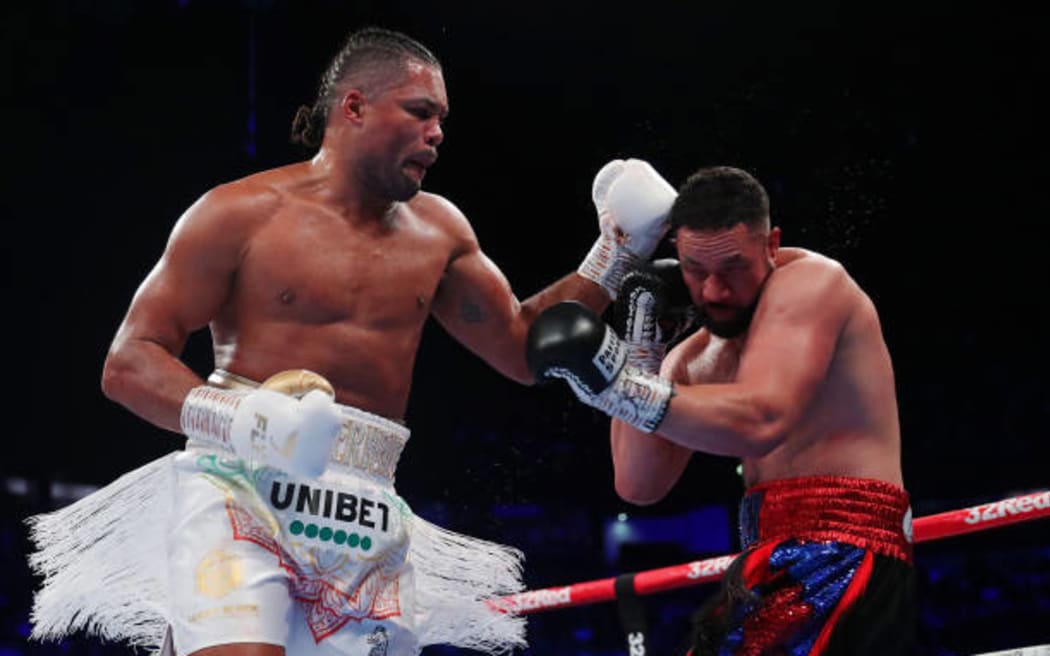
Kiwi heavyweight Joseph Parker has been knocked out by Englishman Joe Joyce in the 11th round of their bout in Manchester this morning.

Parker did his best to match Joyce’s aggression in the earlier rounds, but it was to no avail. Joyce was well ahead on all three cards when the KO happened – the first time Parker has been knocked out in a professional fight.

Joyce came out firing in the 11th round, with some agression from Parker in the previous one seeing Joyce unlock his last reserve of energy and floor Parker with a left hook.

Speaking after the bout, Joyce said it took “everything I’ve got” to win the fight.

Joyce is now the WBO interim heavyweight world champion and will have the chance to take on Oleksander Usyk for the undisputed crown.

Joe Joyce punches Joseph Parker during the Vacant WBO Interim World Heavyweight Championship fight between Joe Joyce and Joseph Parker at AO Arena on September 24, 2022 in Manchester, England. (Photo by Alex Livesey/Getty Images)

Joe Joyce punches Joseph Parker during the Vacant WBO Interim World Heavyweight Championship fight between Joe Joyce and Joseph Parker at AO Arena in Manchester, England. Photo: Getty Images / Alex Livesey

Comancheros gang president to stay behind bars after being deemed high risk

By RNZ.co.nz

The Comancheros gang boss has been denied parole for a second time in four months because he is still considered an excessive risk if released.

Comanchero Motorcycle Club president Pasilika Naufahu has been denied parole for a second time in four months. File photo. Photo: RNZ / Dan Cook

Pasilika Naufahu appeared before the Parole Board on 12 September, and was again refused early release after he first became eligible for parole on 11 May.

The 35-year-old was sentenced to 10 years in prison in February 2021 for participating in an organised criminal group, conspiring to deal in a Class B controlled drug, money laundering, unlawful possession of ammunition and assault.

His sentence was later reduced to nine years and three months by the Court of Appeal.

The Comanchero Motorcycle Club president told the board he had done everything he possibly could in prison to show he was a responsible citizen.

Naufahu continued to deny his involvement in drug dealing and confirmed he would continue to be involved in the gang, although he claimed he would obey any orders made by the Parole Board.

Board chairman Sir Ron Young said it was pointed out that Naufahu had the responsibility of caring for young children, and that appeared to conflict with the fact of his significant involvement in money laundering and conspiracy to supply drugs.

“The idea of him as a supportive father and husband is completely inconsistent with his desire to continue on in the Comancheros gang and the prospect of further offending if released.”

The 501, who was deported to New Zealand in 2016, was arrested after raids across Auckland in April 2019, resulting in more than $3.7 million in assets being seized including luxury cars, motorbikes, high-end luggage and jewellery.

Naufahu had been a sergeant-at-arms for the Comancheros in Australia, where he had had a high level of involvement in the gang, together with his brother. He had a number of convictions in Australia, including for violence.

Young said the board was convinced Naufahu remained an undue risk and could not be released.

“We are satisfied he is at high risk of re-offending given his past, given his personality, and given his involvement in the Comancheros gang.”

A psychologist considered a special treatment programme for violent offending would adequately meet Naufahu’s rehabilitative needs.

Naufahu, however, believed he had been treated seriously unfairly and he would not be transferred to another prison to complete the programme.

“He did not think in any event that programme would be helpful for him because he did not consider he was a violent person and so that would be essentially a waste of time for him.”

Young said the board was confident the programme recommended was the appropriate risk-based treatment for him and hoped he would undertake it with an open mind.

“We can see no reason why he cannot transfer prisons to undertake that programme and we hope that can happen as soon as reasonably possible,” Young said.

“Given he is currently at high risk of re-offending and without any further rehabilitative programmes it is difficult to see the way out of prison for him before his sentence end date.”

Naufahu, who has a statutory release date of July 2028, would be seen again by the board before the end of December 2023.

Murder trial of Tongan man in Auckland aborted after week of evidence

The jury in the murder trial of Alec Junior Moala has been discharged, and a new trial will have to be held.

Sosaia Vaitohi (left) and Methuselah Talakai (right) are on trial for murder in the High Court of Auckland, accused of killing Alec Moala in May 2021. Photo / Brett Phibbs

Sosaia Vaitohi and Methuselah Talakai appeared in court charged with the alleged murder of Moala, 31, on May 23, 2021.

They had been on trial since last week in the High Court at Auckland before Justice Mathew Downs yesterday called off the trial, which had been scheduled to last three weeks.

Prosecutors have alleged Vaitohi was the gunman and Talakai was the driver early on May 23 last year when Alec Junior Moala, 31, died outside an Ōtāhuhu home from multiple shotgun wounds.

A report by the NZ Herald said: “The bad blood between Moala and the defendants had started the day earlier, after Talakai went to the same home for a drug deal set up by Moala’s cousin that fell through, Crown prosecutor Chris Howard told jurors last week. The cousin, Chanelle Mafileo, was slapped by Talakai as he demanded money from her, the prosecutor alleged during his opening address”.

It said Moala got into a heated phone exchange with the defendants about the slap after he arrived at the property hours later, prosecutors said.

“But defence lawyers Anoushka Bloem, who represents Vaitohi, and Julie-Anne Kincade, KC, who represents Talakai, have said their clients were not at the property when Moala was shot”.

Gov’t forced to honour guarantee on failed $18 million project loan after road contractors fail to pay up

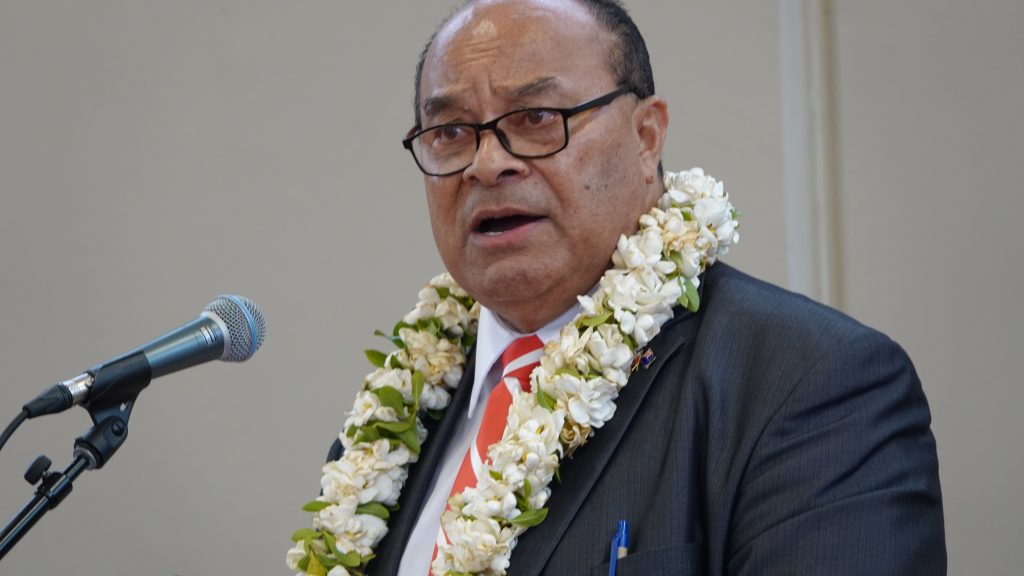
Prime Minister Hu’akavameiliku says negotiations are in progress with the bank as part of the government’s attempt to repay a multimillion loan debt it guaranteed by putting the assets used as security on sale.  

Dr Pōhiva Tu’i’onetoa. Photo/Kalino Lātū

He was responding to questions raised in Parliament asking him to explain the repayment of the $18 million loan to fund what appeared to be a failed government roading project.

Hon Hu’akavameiliku did not deny claims that the bank, apparently the Tonga Development Bank had pursued legal actions against some of the debtors which failed to repay their loans.

The government acted as a guarantor for the debtors namely the state-owned Lulutai airlines, and three other privately owned companies the former government contracted to build new roads under the toppled Prime Minister Pōhiva Tu’i’onetoa’s failed multimillion roading project.

The three privately owned companies included the Island Dredging, the Inter-Pacific Limited and the City Engineering and Construction Limited.

READ MORE:

The project was stopped at the end of 2021 after Tu’i’onetoa was ousted from power after losing the premiership election.

The controversial project attracted strong criticisms and backlash from the public after the Tu’i’onetoa government was accused of designing the tendering process so the contracts would be given to its friends including Cabinet Ministers’ closed family members.

Critics also blasted the former government for what appeared to be favouritism and nepotism involved in the way the projects were distributed. The roading project was a three-year plan set to run from 2020 until 2023.

Critics predicted at the time that the project could collapse and the multimillion loan would end up being paid by the taxpayers.  

Ministry to operate quarries

Hon Prime Minister Hu’akavameiliku said the government has yet to pay any money to the bank.

Hon Hu’akavameiliku

He said the negotiation included a proposal for the bank to allow the Ministry of Infrastructure to operate some of the quarries, the assets granted in guarantee, to pay back the loan.

The revelation comes after the former Minister of Finance and MP for Tongatapu 5 Dr ‘Aisake Eke asked the government in Parliament whether the borrowers still paid their loans according to their agreements with the bank.

Dr Eke reminded the government that if the borrowers failed to pay the loan the government has a legal obligation to repay it.

Dr Eke said these companies owed a total of $18 million pa’anga to the bank.

The Prime Minister did not directly answer Dr Eke’s query about the borrowers’ obligation to pay back their loans. He said he could not go into details because the loan now involved legal actions.

As Kaniva News reported last year, the government reached an in principle agreement to sell the national airlines to the privately-owned Flyniu airlines.

The government said at the time the Lulutai airlines was available to be purchased and it was looking for buyers and companies with interests in operating the flight services.

Tonga police release more details into crash that claimed two lives

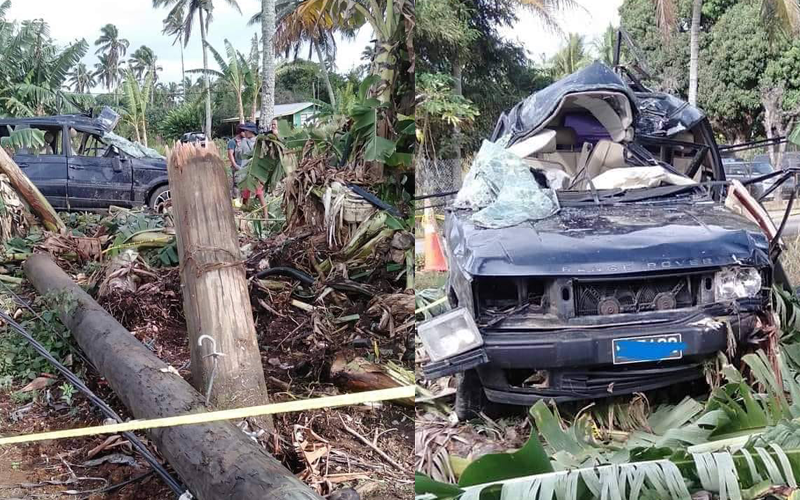
Tonga police have provided a few more details surrounding the fatal crash that claimed the lives of two young adults yesterday.

The car collided with a power pole killing a teenage girl and an adult man

It has confirmed the deceased were a 19-year-old female teenager from Pātangata and a 28-year-old man from Veitongo, who was the driver.

Police said the five people, two men and three women, aged between 19 and 28, were consuming alcohol before the crash.

The two men were first drinking at the Reload Bar and had picked up the three women from Fasi when the bar closed before returning to Lapaha where they continued to consume alcohol.

“Although they were intoxicated and it was curfew time, they decided to go to Vaini to get some drugs”, the police said in a statement.  

It said the two men got into an argument while on their way and given the high speed used, the driver lost control of the vehicle causing the crash.

The car collided with a power pole.

“The 3 surviving the crash include a 28-year-old male from Lapaha, 21-year-old female from Fasi, and a 21-year-old female from Sopu.

“There were leftover beers found in the vehicle.

“Tonga Police is looking to strengthen its strategies relating to Road Safety and Crime Prevention through strict enforcement, in particular, at targeted locations, in addition to outreach programs to raise awareness in our communities”.

Four new cases of monkeypox in New Zealand

The Ministry of Health is reporting four new cases of monkeypox in New Zealand.

Monkeypox vesicles on a hand (file image).
Monkeypox vesicles on a hand (file image). (Source: istock.com)

The cases were all reported in the past seven days, and are all people who have returned from overseas travel.

“Three are isolating in the Auckland region, and one in the South Island, following a positive test result,” the ministry says.

“Significantly, in all four cases, there is no current evidence of community transmission and public health staff have assessed the risk of transmission from the cases as low.”

It takes the total number of cases reported in New Zealand to nine.

The Ministry of Health is moving from reporting each individual case to providing weekly updates every Thursday.

“We continue to advise anyone who will have close physical or sexual contact while overseas, or with people who’ve recently been overseas, to be mindful of monkeypox symptoms and the health advice,” the ministry says.

“According to the World Health Organization’s 21 September 2022 report, the number of monkeypox cases reported globally peaked in mid-August and the numbers of cases in Europe and the Americas are declining.”

Deported criminals to start arriving in Tonga after borders reopen, says PM

The government has invited proposals from private sectors to address problems faced by criminals who arrived in Tonga after serving their time in either Australia, the United States or New Zealand.  

Air New Zealand

This was according to Prime Minister Hon Hu’akavameiliku who said the government had been notified of the returning of more people who committed crimes back to Tonga after the kingdom had recently lifted its border restrictions.

The controversial diplomatic policy has been the source of ongoing concerns in Tonga with many wanted to know whether it was fair for these overseas countries to send their problems to Tonga.

The Prime Minister had acknowledged in the House that these deportees were being sent to Tonga where they had little to no links to after serving their sentences in foreign countries where they had spent most of their life times.

“They could not speak Tongan. They did not know their families here in Tonga it is a huge challenge to send these people to a place like this,” the Prime Minister said.

The revelation comes, after it was reported last year that the New Zealand government would fund a rehabilitation centre in Tonga for criminals it deports there.

The approved TOP$28,000 was expected to go towards funding a new centre run by Tonga’s Dare to Dream Foundation, which has been providing support for people deported to the Kingdom for years.

The centre would provide cultural and language skills.

That move comes after Tonga criticised New Zealand and Australia over their controversial deportations of Tongan convicts, many of whom have spent little time in the Kingdom.

Henrietta McNeill, who researches criminal deportations to the Pacific at the Australian National University, said the rehabilitation centre was a positive move but believes accommodation and cultural skills will need to be complemented by mental health, drug and alcohol treatment.

She added that Australia and New Zealand needed to provide more support for people serving jail sentences before they are deported to the Pacific.

“There are opportunities to do at the very minimum things like language classes, so it isn’t quite as tough as it would otherwise be on arrival,” reported ABC radio.