Home Blog Page 253

Repatriation of precious artefacts taken by Europeans from Tonga begins

The process of repatriating significant artefacts and cultural items taken from Tonga as long ago as three centuries has begun, a Tongan scholar says.
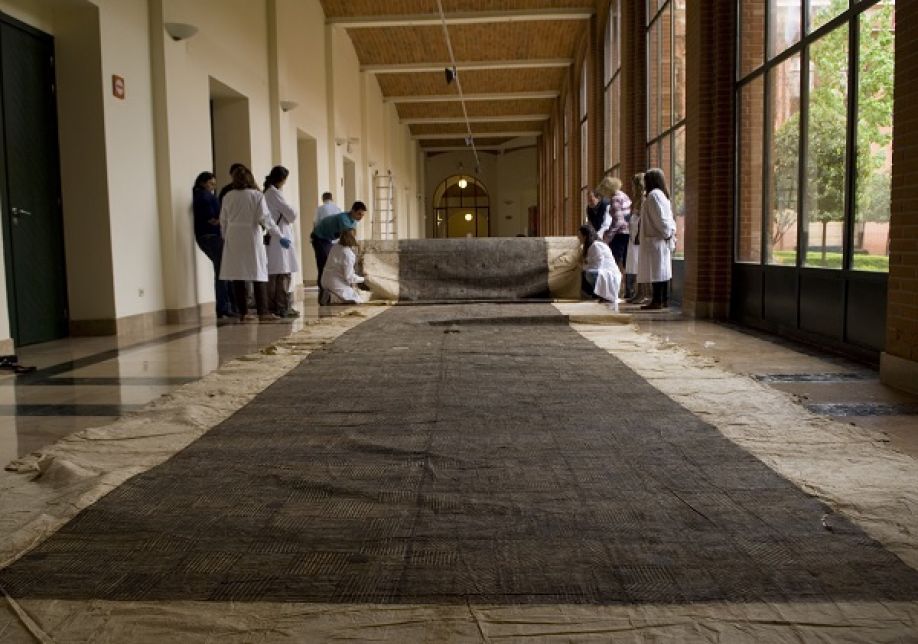
​A 229 years old ngatutā’uli lau nima in the Museo de America museum in Madrid, taken from Vava’u by the Spanish explorer Aljandro Malaspina. Caption/Photo/Prof ’Ōkusitino Māhina.

Anthropologist Professor Tēvita Ka’ili has asked academics who have carried out research in Tonga to return any items they might have taken.

“They can either physically return the objects or share digitised photos of the items on the internet”, he says.​

Ka’ili said he made the move in the wake of a United States law known as the Native American Graves Protection and Repatriation Act (NAGPRA). It provides for the ownership or control of Native American cultural items such as human remains and objects excavated or discovered on Federal or tribal lands.

Ka’ili believes the US law could be applied to Tonga, describing it as a “nga’unu fo’ou” or new development.

He says people had the right to see and keep cultural properties in their local museum.

Items that could be returned included items dating to the 17 th and 18th centuries when European explorers arrived in Tonga. 

Among the items were clubs, baskets, ngatu and fine mats at the national museums in Australia, New Zealand and the UK as well as the royal Palātavake (comb) which was said to have been preserved at the Museo de America museum in Madrid, Spain.

It is understood some international museums were reluctant to release some items.

In 2020, the government of the Netherlands created new guidelines to determine requests for the return of colonial-era artefacts from its former colonies.

The Dutch believed “most of these artefacts are right now the property of a museum”.

“If we value the respect of common principles of our democracies, such as property, we have to have a process to say whether the artefact should be returned or loaned and what the provenance is, because that’s the rule of law.”
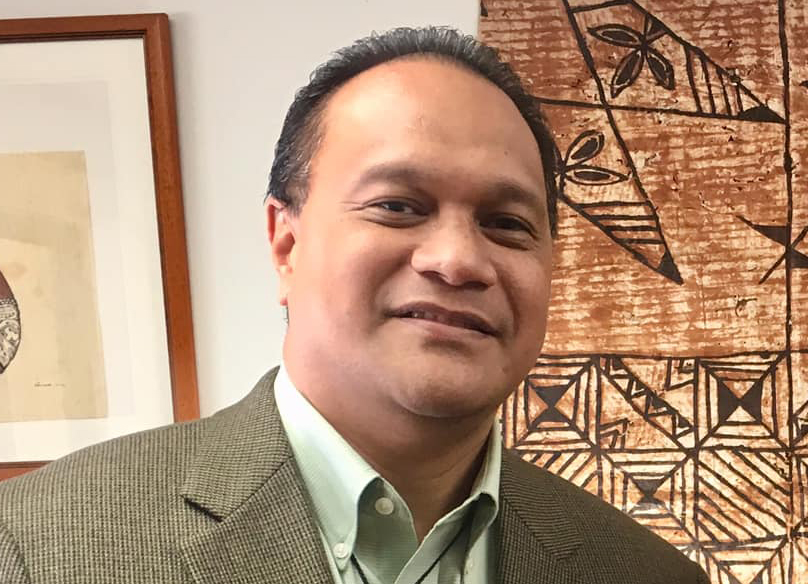
Anthropologist Professor Tēvita Ka’ili has asked academics who have carried out research in Tonga to return any items they might have taken.

Ka’ili said he wrote to Professor Richard Michael Moyle of Auckland University, who researched several aspects of Tongan music and cultures in 1970s, and shared his views about the repatriation law.

“I told him he should make a digital repatriation of all the photos he took in Tonga,” Ka’ili said.

“Professor Moyle was really happy to do it.”

The photos shared by Moyle on Facebook were mostly people he interviewed or who posed for photos during events or meetings while he was in Tonga doing his research.

The sharing drew strong compliments from the Tongan online community.

Relatives and close family members of those in the picture shared those photos on their Facebook accounts. Moyle also shared some audio files of Tongan composers talking about how they composed their songs.
Tonga’s consulate in Auckland can now approve, print Tongan passports

This story by Kalino Lātū was first published by Pacific Media Network

Tongan passports can now be approved and issued in New Zealand.

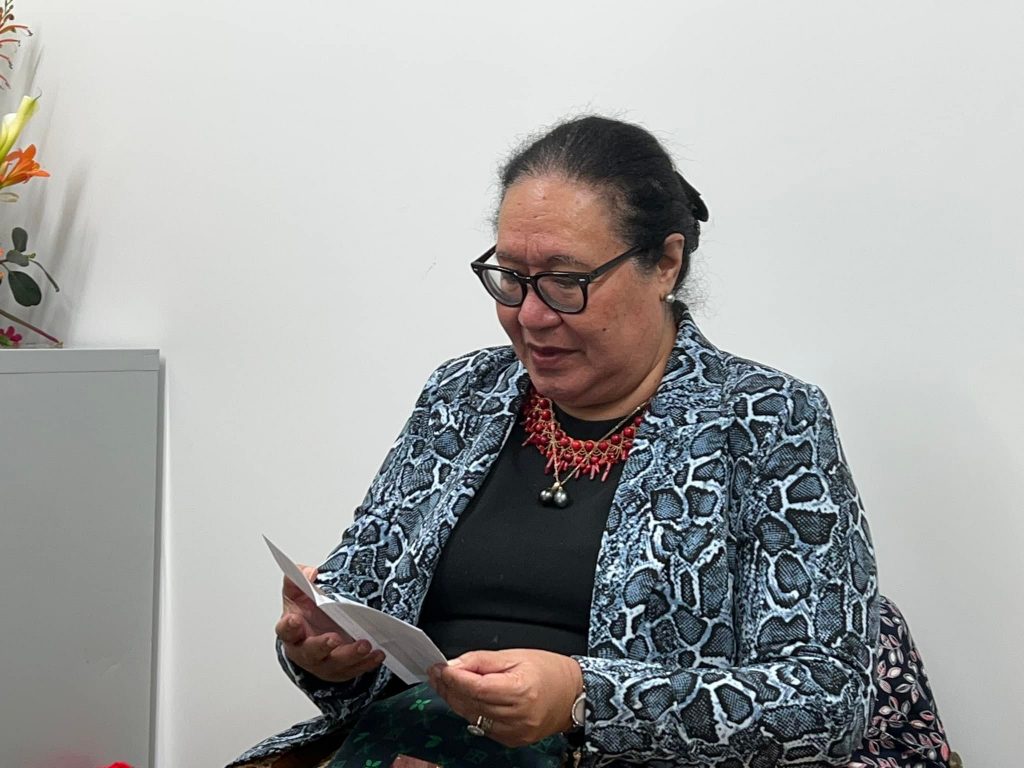
Tonga’s Minister of Foreign Affairs Fekita ‘Utoikamanu. Photo/PMN Tonga (Facebook)

All requirements for a new and renewal passport, or a service related to it, can now be finalised through the consul’s office at ‘Atalanga residence, in Auckland’s Mount Eden.

It is the first time for Tonga to allow the services to be officially conducted outside the country.

The consulate was previously tasked with taking customers’ passport photos and filling their application forms before sending them to Tonga for approval.

The news means, an end to long waits experienced by many in New Zealand before they could get their Tongan passports renewed or replaced in the Kingdom, a process further hindered by Covid travel restrictions. 

Tonga’s Foreign Minister Fekitamoeloa ‘Utoikamanu launched the new initiative on Monday.

Pacific Media Network, Tongan presenter Filipo Motulalo says ‘this is a valuable initiative and it saved a lot of time for Tongans wanting to travel after Covid-19’. 

The Tongan passport currently ranks on the 45th place according to the Guide Passport Ranking Index with visa-free access to 127 destinations.

Tongan passport holders have visa-free access and visas on arrival to countries such as Singapore, the United Kingdom, China and the entire European Union.

However, Tongan citizens require a visa to enter about 102 destinations in the world including New Zealand, Australia and the United States.

No tsunami threat after 5.4 quake strikes off Tonga

The Tonga Meteorological services says it is unlikely a tsunami will affect Tonga after a 5.4 magnitude earthquake was felt in Tongatapu this morning.

It said the quake was 214 km deep but no further details provided.  

However, residents have reported feeling the rattles on Facebook.

It came after a number of quakes reported after the January eruption of Hunga-Tonga Hunga-Ha’apai and the subsequent tidal wave which caused devastation in Tonga and killed people as far away as South America.

The atmospheric shockwave caused by the eruption was felt as far away as the UK.

The caldera of Hunga-Tonga Hunga-Ha’apai is four kilometres wide and drops to a base 850m below sea level. Before the catastrophic eruption, the base was at a depth of about 150m.

The eruption ejected an enormous amount of material, estimated to be at least 6.5 cubic kilometres.

“If all of Tongatapu, the main island of Tonga, was scraped to sea level, it would fill only two-thirds of the caldera,” Professor Shane Cronin from the University of Auckland said.

Solomon Islands opposition claims PM’s office declined request by US vessel

By RNZ.co.nz

The Solomon Islands government’s foreign policy ‘friends to all, enemies to none is hypocrisy at its worst’ according to the Solomon Islands opposition leader.

Matthew Wale’s comments follow reports that a US Coast Guard vessel was unable to enter Solomon Islands for a routine port call because the national government declined a request for it to refuel and provision.

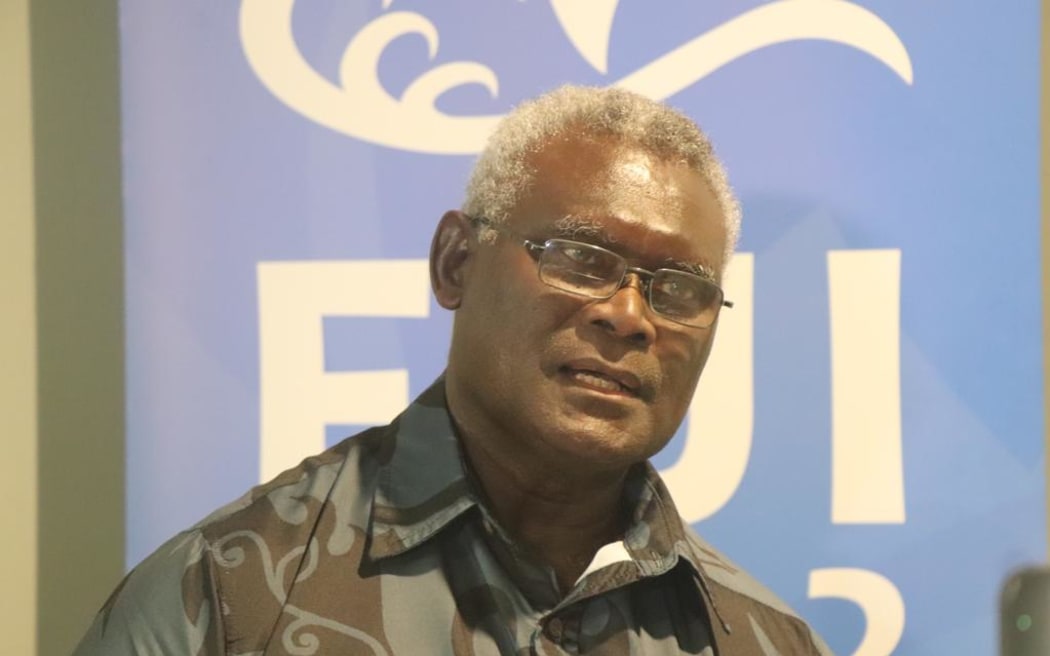
The leader of the Solomon Islands' opposition party, Matthew Wale

The leader of the Solomon Islands’ opposition party, Matthew Wale Photo: Supplied

“Friends to all, enemies to none is clearly a joke, the Prime Minister, Manasseh Sogavare, clearly treats the US and its allies as hostile nations. All our friends must be treated equally,” Mr Wale said.

He said he’s aware that the advice came from the Prime Minister’s Office.

Mr Wale said this advice reflects the Prime Minister’s apparent dislike for the US and its allies.

Solomon Islands Prime Minister Manasseh Sogavare

Manasseh Sogavare Photo: RNZ Pacific/ Lice Movono

The vessel, the USCGC Oliver Henry was on patrol for illegal fishing in the Pacific for a regional fisheries agency when it failed to obtain entry to refuel in Honiara.

A U.S. official said the vessel was unable to enter Honiara for a routine port call because the Solomon Islands government did not respond to a request for it to refuel and provision.

A Coast Guard press officer told Reuters that the vessel was diverted to Papua New Guinea instead.

Nurses plan to leave NZ over residency rules: ‘I can’t wait any more’

By Jean Edwards, RNZ.co.nz and is republished with permission.

Frustrated New Zealand-trained migrant nurses are planning to leave the country because they cannot find an immediate path to residency, just as the government tries to entice foreigners to fill thousands of jobs in hospitals, aged care and clinics.

No caption

Nurses were controversially excluded from the government’s new straight-to-residence Green List and must instead work in the profession for two years first. Photo: 123rf

Recent graduates working in aged care in Tauranga say they are being forced to abandon their dream home because of an immigration policy that means they must wait another two years for residency.

Sandeep Kaur has spent years separated from her two young sons in India while studying for a nursing degree in New Zealand.

She said she was devastated the profession was excluded from super-fast residency visas under the new immigration Green List, months after her graduation late last year.

“I feel really frustrated, I sometimes cry. I did everything to get a good future here, whatever I save I spend it on my study. I’m separated from my kids, it’s just really heartbreaking,” she said.

Kaur and her husband are preparing to move to Australia where she can gain residency quickly and reunite her family.

“I really don’t want to leave New Zealand because I really love this country. I spent a beautiful six years of my life here.”

Another Tauranga nurse, who did not want to be named, said she planned to leave New Zealand for Australia or Canada where she could apply for residency straight away.

“It was my dream country to come to at the beginning, but at the end of the day, you have to think about your career as well. I’ve had enough now. I’ve waited a long time, I can’t wait any more,” she said.

“I still love New Zealand. If the government makes changes tomorrow I will cancel all my plans, I really, really do want to stay here but unfortunately I have no other options left.”

Navneet Kaur came to New Zealand from India in 2015 and spent $60,000 studying towards her Bachelor of Nursing.

She thought a residency application would be straightforward once she qualified, but is now planning to move to Australia with her husband and four-year-old son.

“It’s a really hard decision to move to Australia. My son was born here in Tauranga.

“We don’t want to leave New Zealand, we are being forced to leave New Zealand. It’s totally unfair.”

All three nurses were on student visas finishing their degrees last September, so could not apply under the one-off 2021 Resident Visa scheme.

The nurses said they craved the certainty and other benefits associated with residency, including home ownership and subsidised study.

They warned the residency rules would only make chronic staff shortages worse, with an estimated 4000 nurse vacancies in the public health system.

Immigration Minister Michael Wood said skilled migrants in work-to-residence occupations could count their two years from 29 September 2021.

“The work-to-residence path requires two years’ work in the role ahead of gaining residence which supports addressing the shortages, whereas a straight-to-residence pathway would not require any time in the role before a worker could potentially leave.

“A two-year period ensures a degree of commitment to the role and to New Zealand.

“I continue to monitor and update my colleagues on progress implementing the rebalance, and I will not be afraid to act before the previously signalled review in 2023 if required.”

The government has repeatedly highlighted retention problems as one of the main reasons nurses should be treated differently under the Green List rules, although just four percent of New Zealand-trained nurses left the profession in 2020.

Figures released to the National Party showed just 18 migrant nurses applied to come to New Zealand in the first six weeks of the new residency visa, compared to a monthly average of 57 under the previous critical purpose visa.

Immigration spokeswoman Erica Standford said nurses should be on the straight-to-residence Green List.

“They look for certainty. They don’t want to be mucking around for two years not knowing if they’re going to be able to get their residence.

“It’s a no-brainer for these nurses and that is why they’re leaving.”

Emotions evident at one-year anniversary of historic Dawn Raids apology

By Fīnau Fonua, RNZ.co.nz and is republished with permission

The first official celebration of the New Zealand government’s apology for the Dawn Raids was an emotional affair at the Orakei Marae complex in Auckland.

Government officials, Pacific community representatives and Ngāti Whātua Ōrākei gathered at Ōrākei marae in Auckland for the one-year anniversary of the Dawn Raids apology. Minister for Pacific Peoples Aupito William Sio.

Minister for Pacific Peoples Aupito Williams Sio was among the 200 guests. Photo: RNZ / Marika Khabazi

More than 200 guests, predominately Pasifika, attended the event hosted by Ngāti Whātua Ōrākei. Speeches were delivered by community leaders including Minister for Pacific Peoples Aupito Williams Sio and Defence Minister Peeni Henare.

It’s been more than four decades since the events of the Dawn Raids in the 1970s, and the trauma still lives for many in the older generation, who as children saw their homes raided by police. Aupito Williams Sio was one of them.

“Those were bad days” Sio said. He was only 12 years old when he saw police threaten and interrogate his father.

“There was a lot of commotion in the early hours of the morning around 4am. As I came out of my bedroom, I saw my dad standing at the doorway with my mum clutching his arm and massaging his back, with those words “onosai, onosai” – “be patient, be patient”, while the policemen were standing there, a number of them shining a torch in his eyes and they had dogs…basically demanding to see passports and demanding to know who was inside the house.

“Suddenly there was commotion outside. We had relatives living in the garage at the time working and the police were chasing them down the creek in the backyard.

“The elders later went down to the Ōtāhuhu police station and asked if they could release them [relatives], and they weren’t released. One of my cousins who was jailed told me that everybody was crying, it was men and women, including a pregnant woman.

“We can talk about it now without the tears flowing so much but it’s still very painful, still hurtful.”

It was called a celebration today, but the hushed emotional atmosphere made the ceremony feel more like an Anzac Day commemoration event.

Watch highlights of the ceremony.

Among the delegations of community leaders were young Pasifika students’ leaders, civil servants and social advocates, all present at the marae to honour the victims of the past. It was clear that last year’s apology by Prime Minister Jacinda Ardern meant a lot to them, bringing closure to many still impacted by a dark period of New Zealand history.

Earlier this year, the New Zealand government allocated $13.7 million dollars with the request of the Ministry of Pacific Peoples for a “Dawn Raids historical package”.

The package, which has drawn criticism from some about the need for the project, aimed to create greater awareness of the Dawn Raids including making historical accounts of the events more available in the education sector. Sio said it was about promoting tolerance, diversity and acceptance.

“I’d like to see us as a nation take it seriously and acknowledge that racism hurts, acknowledge that racism is mana destroying and that fact that this occurred in the 1970s, but our young people today are still talking about it.

“They’re experiencing it in the education system, they’re experiencing it in the workplace and the health system. So today as we pivot towards the future…we need to resolve the issue of racism collectively.

“We’re not a mono-culture nation. We’re a diverse nation emerging like a wave. When you reflect on the Christchurch massacre, it’s [racism] bad. When you reflect on people talking about unconscious bias and inequities, that’s also bad. More has to happen and it has to happen faster.

“It represents how we should learn from our past but also how we should be optimistic for our future.”

Government officials, Pacific community representatives and Ngāti Whātua Ōrākei gathered at Ōrākei marae in Auckland for the one-year anniversary of the Dawn Raids apology.

There was an emotional atmosphere at the one-year anniversary of the apology. Photo: RNZ / Marika Khabazi

Student feels ‘blessed’

The conclusion of the ceremony included the Tuli Takes Flight Scholarship awards ceremony, with scholarships given to over a dozen young Pasifika from high schools and tertiary institutions from around the country.

“Obviously, I feel blessed. Not everyone has this opportunity so I’m just glad that I’m doing my parents and family proud. Hopefully it inspires the next generation to do the same as me or better,” said Moana Foliaki, a med student from the University of Otago.

Michael Taylor, an engineering student from the University of Canterbury, said the awards ceremony was a celebration of the future as much as it was an acknowledgement of the past.

“It’s a very special award. It represents how we should learn from our past but also how we should be optimistic for our future. I’m pursuing a career in science and technology. I believe it’s a step towards shining a light on the potential for Pasifika students to pursue degrees,” Taylorsaid.

“It was a very traumatic event for our ancestors in the past, a lot of hurt and pain still lingering today, but with these awards hopefully you know it’s a step towards making amends and letting us be optimistic for the future of Pasifika people.”

Government officials, Pacific community representatives and Ngāti Whātua Ōrākei gathered at Ōrākei marae in Auckland for the one-year anniversary of the Dawn Raids apology.

The event also included the announcement of several scholarship awards. Photo: RNZ / Marika Khabaz

One dead, one seriously injured after Vava‘u crash

One person has died, and another person is reported to be seriously injured after a two-vehicle crash in Kāmeli this morning.

A third victim reportedly received minor injuries.

Locals who attended the crash helped transport the victims to the hospital.

Neiafu town officer Vāvā Lapota said the crash happened at about 6am this morning at the Halatu’i and ‘Api ko Niuee’s intersection.

The deceased victim’s vehicle appeared to have crossed the centre line before it hit an oncoming vehicle, Lapota told Kaniva News.

It ended up leaning on its roof in a nearly vertical position against a power pole.

Lapota alleged alcohol and speed were factors in the fatal crash.

The third victim was a church steward who returned from a morning church service.

It is understood the cause of the crash was being investigated.

Tonga Health boss denies babies death spike allegations

The Ministry of Health chief executive Dr Siale ‘Akau’ola denies claims there is a recent surging number of deaths of new-born babies in Tonga.

Ministry of Health Chief Executive Dr Siale ‘Akau’ola

Dr ‘Akau’ola said he was aware of the allegations being shared on social media.

He said the Ministry compared this year’s number of deaths to those recorded during the last couple of years. The results suggested a decline in this year’s number of deaths.

He said the number of overall deaths from January to July 2019 was more than 360 while less than 170 deaths were recorded during the same period this year 2022.

He was responding to questions from local journalists during a press conference on Friday.

A journalist said the head pediatrician  Dr Siaosi ‘Aho reportedly said two babies dead, and their mothers were unvaccinated.

Dr ‘Akau’ola told the journalist to confirm her concerns with Dr ‘Aho.

The chief executive’s response came following allegations which had been widely spread on internet by some Tongan Anti-Covid vaccine conspiracy theory Facebook groups.

He said he has yet to receive any complaint from the public regarding any death related matters.

Dr ‘Akau’ola said before a deceased’s body was cleared and released their family agreed with the Ministry to the conditions and results of their deaths.

He believed members of the extended family at some stages made allegations on social media about the cause of deaths.

Dr ‘Akau’ola said there is a legal process available for the public to launch a complaint if they wanted to find out the cause of death.

US President Joe Biden cancels $10k of student loans for millions of borrowers

By RNZ.co.nz

President Joe Biden says the US government will forgive US$10,000 in student loans for many debt-saddled college graduates, a move that could boost support for his fellow Democrats in the November congressional elections but also may fuel inflation.

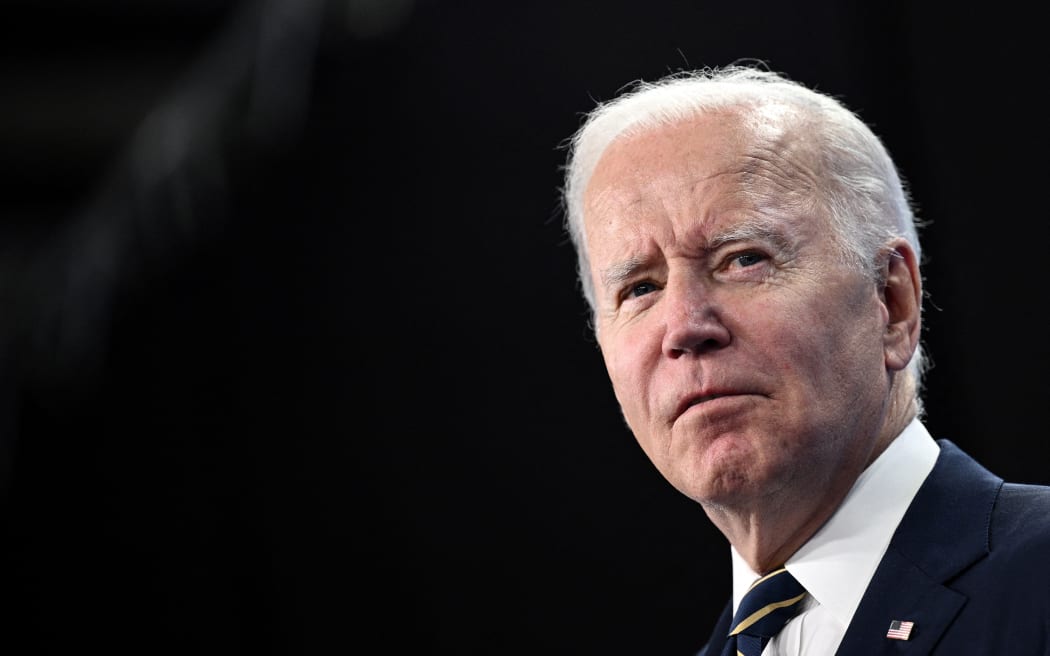
US President Joe Biden addresses media representatives during a press conference at the NATO summit in Madrid, on 30 June 2022.

US President Joe Biden (file photo). Photo: AFP

Cancelling the debt will free up hundreds of billions of dollars for new consumer spending that could be aimed at homebuying, according to economists who said this would add a new wrinkle to the country’s inflation fight.

“Earning a college degree or certificate should give every person in America a leg up in securing a bright future. But for too many people, student loan debt has hindered their ability to achieve their dreams – including buying a home, starting a business or providing for their family,” Education Secretary Miguel Cardona said in a statement.

The White House said the country’s “skyrocketing cumulative federal student loan debt – US$1.6 trillion and rising for more than 45 million borrowers – is a significant burden on America’s middle class.”

Many Democrats had pushed for Biden to forgive as much as $50,000 per borrower, but cheered his action.

Republicans, seeking to regain control of Congress in November, oppose the move, arguing it is unfair because it will disproportionately help people earning higher incomes.

“President Biden’s student loan socialism is a slap in the face to every family who sacrificed to save for college, every graduate who paid their debt, and every American who chose a certain career path or volunteered to serve in our Armed Forces in order to avoid taking on debt,” Senate Minority Leader Mitch McConnell said on Wednesday.

US consumers carry a massive $1.75 trillion in student loan debt, most of it held by the federal government, the result of university tuition fees substantially higher than in most other rich countries.

Repayment pause extended

Biden’s administration will extend a Covid-19 pandemic-linked pause on student loan repayment to the end of the year, while forgiving $10,000 in student debt for borrowers whose income falls below $125,000 a year, or $250,000 for a married couple, the White House said.

The forgiveness could impact eight million borrowers automatically, the Department of Education said, while others would need to apply for forgiveness.

The government is also forgiving up to $20,000 in debt for recipients of federal Pell Grants, some six million students from low-income families, and is proposing a new rule that protects some income from repayment plans and forgives some loan balances after 10 years of repayment, the Education Department said.

Cutting $10,000 in federal debt for every student would amount to $321 billion of federal student loans and eliminate the entire balance for 11.8 million borrowers, or 31 percent of them, a New York Federal Reserve study shows.

Borrower balances have been frozen since the beginning of the Covid-19 outbreak, with no payments required on most federal student loans since March 2020.

Inflation impact

A senior Biden administration official told reporters the student loan forgiveness plan could benefit up to 43 million student borrowers, completely cancelling the debt for some 20 million.

But after 31 December the government will resume requiring payment on remaining student loans that were paused during the Covid-19 pandemic. The official said this move would offset any inflationary effects of the forgiveness. Payment resumptions could even have a dampening effect on prices, the official said.

The White House view contrasts with that of former Treasury secretary Larry Summers, who said on Twitter that debt relief “raises demand and increases inflation. It consumes resources that could be better used helping those who did not, for whatever reason, have the chance to attend college. It will also tend to be inflationary by raising tuitions.”

Moody’s analytics chief economist Mark Zandi sided with the White House, saying the resumptionof billions of dollars per month in student loan payments “will restrain growth and is disinflationary.”

– Reuters

Inflation hitting small businesses hard – report

By RNZ.co.nz

Small business sales have fallen to their lowest level since September last year, as consumers feel the rising cost of living.

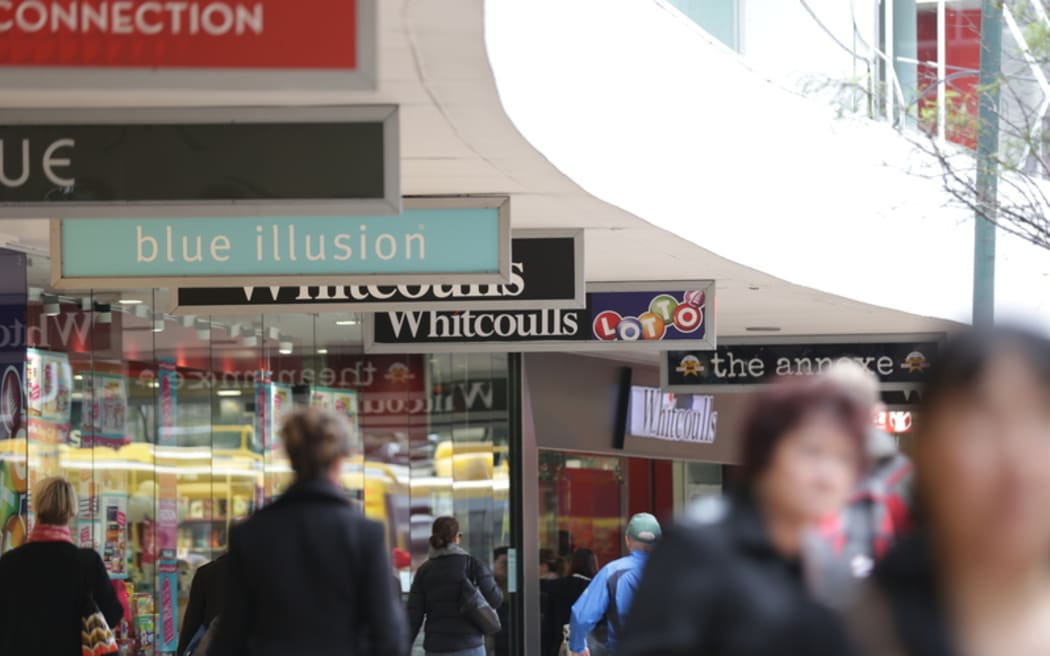
23062016 Photo: RNZ / Rebekah Parsons-King. Busy streets in Wellington.

Inflation is continuing to hit small businesses. Photo: RNZ / Rebekah Parsons-King

The latest Xero small business index shows sales in July fell 1.5 percent year-on-year, down from 4.4 percent growth in June.

At the same time, inflationary pressures continued for small firms, as wage growth was above 6 percent – with construction and hospitality leading the growth.

Xero country manager Bridget Snelling said inflation also meant the fall in sales was much worse than it appeared.

“Inflation in Aotearoa has hit 7.3 percent. This suggests the volume of goods and services sold has actually been much lower and price increases are hiding this real drop in sales.

“We estimate the real sales drop for small businesses is closer to negative 8.8 percent year-on-year.”

Snelling said falling sales and rising wages created pressure for firms.

“For wage growth to be sustainable, we really need to see it matched by high sales.

“We want to be a high wage economy, absolutely, but this is only really going to last if sales can grow and we can match that high wage rate with a growth in sales.

“At the moment small businesses will really be feeling the pinch, still paying high wages but getting less money in the door.”

Snelling said the falling sales was a clear sign that small businesses needed support from people shopping locally.

Small business jobs also continued to grow, with 4.7 percent more jobs in small firms than there were a year ago.

It was the third successive month that jobs growth was above the long term average of 3 percent year-on-year.

“Job growth means more Kiwis are choosing to work in small businesses. We’re in the middle of a significant labour shortage and it’s encouraging to see small businesses are continuing to compete against larger corporations.”