Tributes have been pouring in on social media today in celebration of a former Australian missionary to Tonga’s 100th birthday.
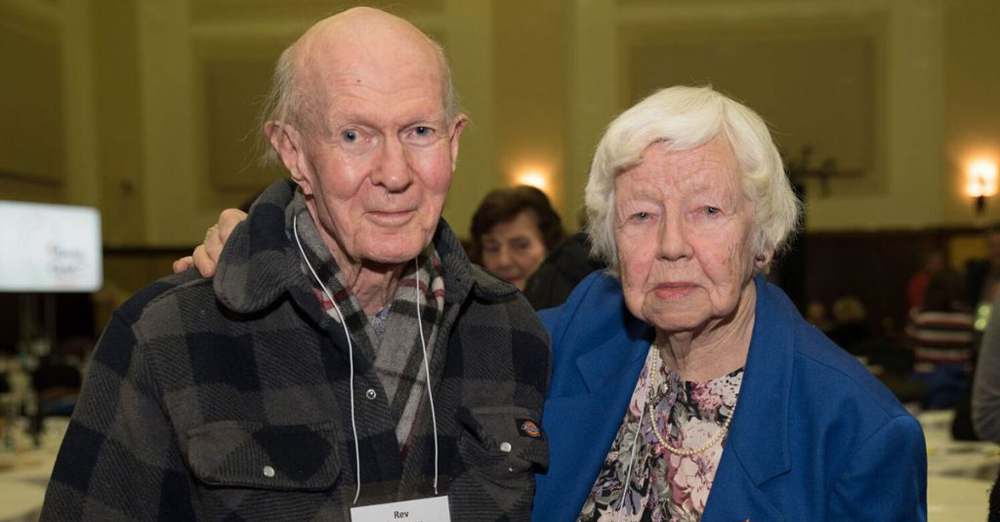
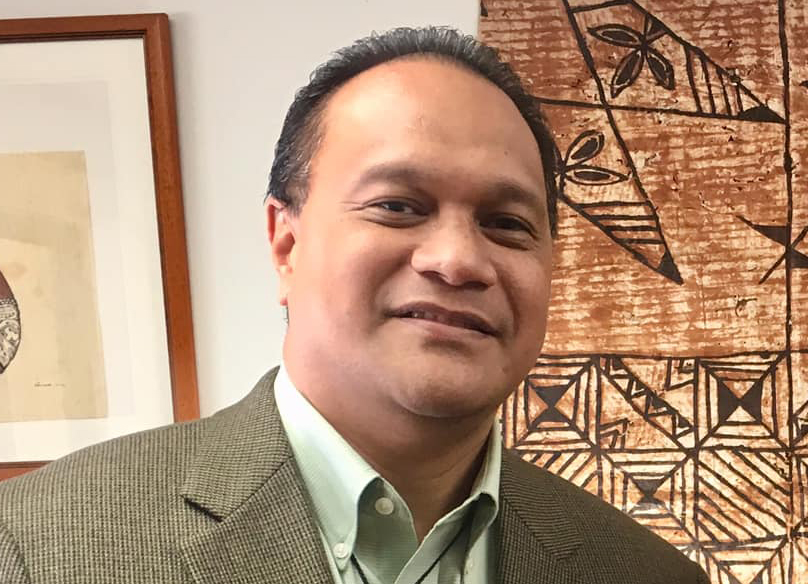
Mr Howard Secomb (L) and wife Janet. Photo/Crosslight Magazine
Mr Howard Secomb was born on July 20, 1922 and had served in the kingdom in the 1950s.
The Talanoa ‘O Tonga news webpage had shared a tribute video on Facebook this morning to celebrate the birthday.
The video clip had since been shared more than 250 times and garnered more than 167 reactions.
“Happy 100th Birthday Howard Secomb. You did a great job in Tonga. God bless”, a commenter wrote under the clip.
“Happy Birthday Howard. God bless you and Janet”, another wrote.
As a Methodist minister Mr Secomb served for 14 years in Tonga, where he was president of the Free Wesleyan Church.
He was also principal of the Tupou College for boys from 1951 to 1963, reported the Crosslight magazine.
Mr Secomb’s wife Janet was born in Tonga and is the daughter of revered Methodist minister Dr Alfred Harold Wood, who was the founding principal of Tupou College.
Janet, 97, is the sister of the former Uniting Church President Rev Dr D’Arcy Wood, who was also born in Tonga and returned to the islands in 2015 to perform the coronation of the current king.
Howard Secomb was a familiar name to many Tongans today since one of the dormitories at Tupou College was named after him.
The Secombs returned to Australia at the end of 1963.
It is believed Mr Secomb was the first Palagi Free Wesleyan church missionary who had served in the kingdom in recent decades to have reached his 100th birthday.
Research that exposes inferior pay rates for Pacific people confirms years of complaints about inequity, the Equal Employment Opportunities commissioner says.
The majority of the Pacific Pay Gap can’t be explained and is likely due to racism or unconscious bias by employers, the study has found.
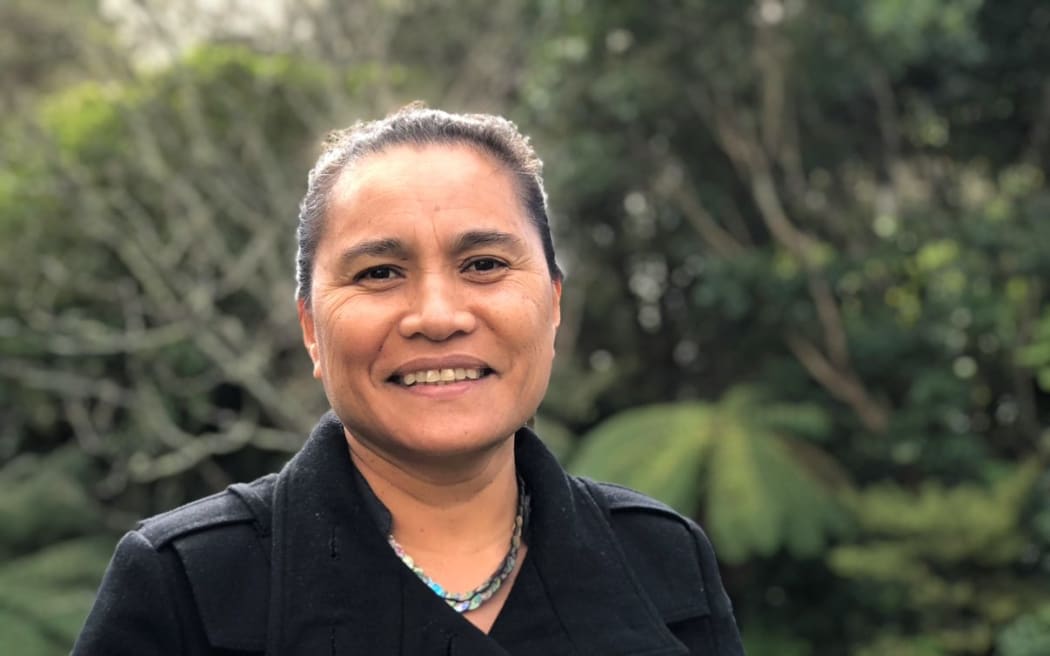
Saunoamaali’i Karanina Sumeo hopes businesses and the government will use the data to bring about meaningful change. Photo: supplied
The Auckland University of Technology research, released today by the Human Rights Commission, analysed the job characteristics, education levels, number of household dependants, and regions where people lived.
For Pasifika men, those factors accounted for only 27 percent of the pay gap, meaning almost three-quarters of the pay gap couldn’t be explained.
For Pasifika women, 61 percent of the pay gap couldn’t be explained.
The Equal Employment Opportunities commissioner, Saunoamaali’i Karanina Sumeo, said the research provided numbers for years of inequity that Pacific people have complained of.
“It is horrifying and it’s the sort of numbers we would really like business to pay attention to in terms of how we go forward and it’s also the sort of data we would like government to pay attention to…
“We are talking about people’s livelihoods; the hardship facing their children.”
She said under the Human Rights Act it was unlawful for employers or anyone acting on their behalf to offer less favourable pay and conditions to some job candidates.
It was a basic human right to be paid in a fair manner, she told Morning Report.
From interviews and surveys Sumeo said Pacific people had made clear they were prepared to complete more training or upskill but despite becoming more productive in their roles they did not receive pay rises.
“You become more expert at your task but the pay doesn’t come with it so we need to align those things together.”
Sumeo said not many Pacific people had the time to network because often they were working two jobs or they were needed at home.
There was also a low union membership rate among Pacific people and this needed to change so they weren’t trying to improve their job situation by themselves.
She was also in favour of legislation for pay transparency so workplaces would be required to collect ethnicity data.
“To take the onus off Pacific people to stand up for themselves and put the duty on our businesses, our employers to do the right thing.”
With Auckland having the bulk of Pacific workers (71 percent) the city’s businesses should have managers who possessed “culture competence”.
She said one example was that a Pacific person found it intimidating to be interviewed by a panel of four people.
Hearing bursts of gunfire on a quiet suburban street was terrifying for residents, a Grey Lynn man says.
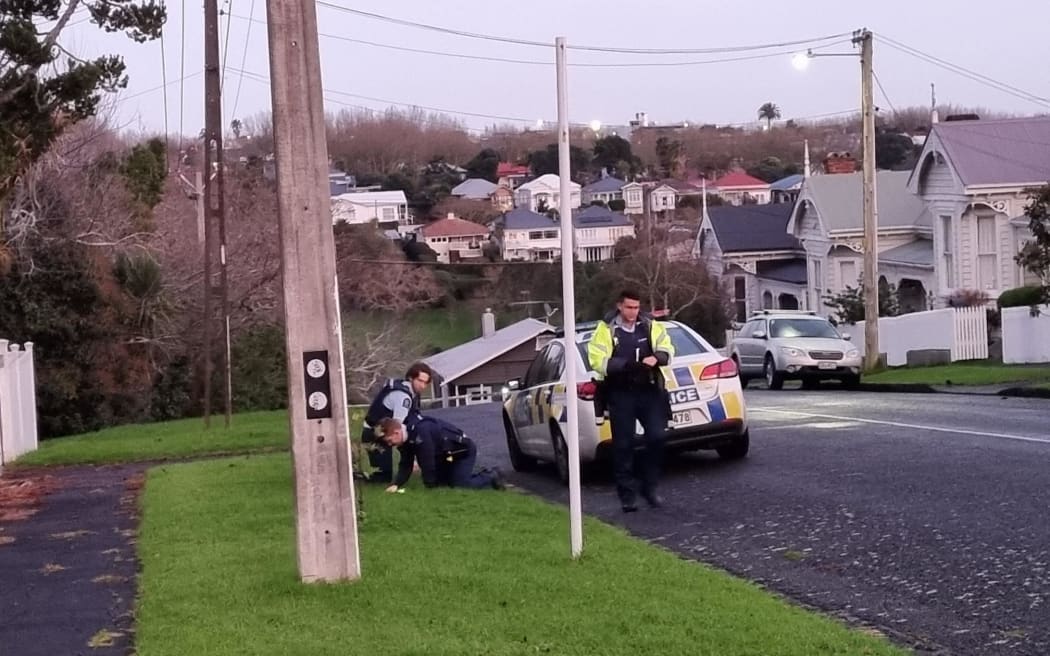
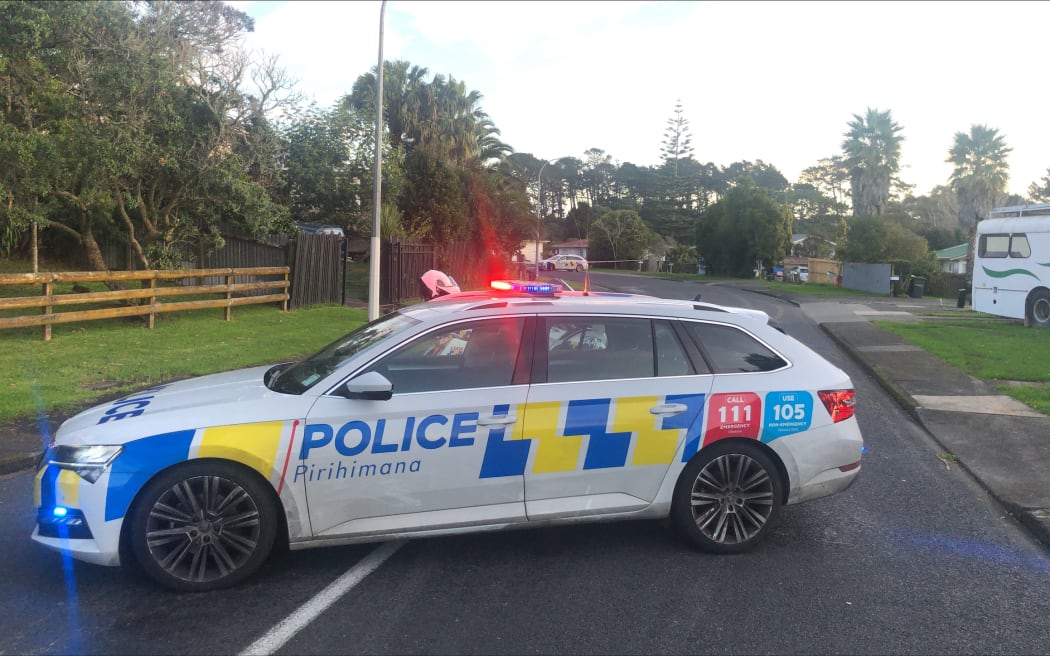
Police at the scene in Grey Lynn this morning. Photo: RNZ / Felix Walton
Auckland police will be making inquiries in Grey Lynn today to make sense of how a man came to be shooting at his own house which was empty.
Armed police swarmed Wallingford Street shortly after 5pm yesterday after being told a man in an agitated state was standing on the street with a gun.
They shot and critically injured the man, who they say pointed his gun at officers when they arrived.
Superintendent Karyn Malthus said the man ignored the police’s instructions.
“Police went forward towards the man and called upon him several times to put down his firearm, however, he raised it towards police staff and was shot at that time. He was shot once.
“We understand that this will be an incredible shock to the community and residents of the Grey Lynn community on what would have seemed like an ordinary Monday night.
“We also want to reassure them that there is no ongoing risk.”
The 32-year-old man is now in hospital.
The man’s neighbour, Graeme Gunthorp, said he and his family huddled in the basement until the shooting stopped.
Gunthorp, who is on the Waitematā Local Board, lives next door to the man who was shot by police and called them after hearing some gun shots.
Once he realised that there were gun shots they bundled their children up and did not want to be anywhere near what was happening outside, he told Morning Report.
His children are aged one and three and the first 10 minutes of being in hiding were shocking, he said, with the children just wanting to be hugged but he needed to stay on the phone to the police.
He heard two clusters of gunshots – an initial burst of six shots and about 10 minutes later, the police warned him there might be further shots and he heard another two.
“I’ve been to a shooting range, I’ve fired guns on a farm but to hear it on a quiet suburban street was pretty shocking.”
Early on in the incident he could hear yelling from the assailant and he was worried abuse was being directed at the neighbour on the other side. He managed to ring all the nearby residents and ensure they were OK.
There have been incidents with the person before but none involving gunfire. He was well known to neighbours and the police, Gunthorp said.
“We’re happy that the police have resolved this, we feel a lot better about the situation and we’ve got to recognise that Auckland is still incredibly safe and Grey Lynn is a fantastic place to live.”
Blowing a conch shell could now be easier than ever for Tongans and could produce more powerful sounds because it can be done through a side attached mouthpiece.
Tu’ifonualava Kaivelata with his attached mouthpiece conch shell. Photo/Kalino Lātū
The accessory was installed on the whorl of the shell close to its end. Traditionally, blowing the conch in Tonga was made through a hole opened at its end point or by the side of the conch but there was no mouth piece attached.
The new attachment had been described as a new height in an attempt to bring back Tongan musical instruments which are either extinct or dying out.
Tu’ikaiveleta’s conch shell with a new mouthpiece. Photo/Kalino Lātū
“It enabled the blower to place the conch shell in a way in which its mouth faced their listeners from the opposite direction”, Kaivelata said.
Normally, the hole for blowing at the end point of the conch means the blower faced the shell’s mouth either up or down or on the left or right hand side of the blower.
“In other words the listeners could not directly see the mouth of the conch in that way and the sound wave will not travel towards listeners if they are at the opposite direction”. Kaivelata told Kaniva News.
He said the mouth of the conch shell should always face listeners who normally stood or sat opposite the blower.
“It is the same idea with what we see in the brass instruments like the trumpet. The mouth is at the front facing listeners from the opposite direction”.
The new mouthpiece also allowed the blower to adjust their lips in a way that could let them release a huge amount of air into the shell, causing it to sound louder, Kaivelata said.
“You can see it is attractive and it makes the conch shell looks fancy”.
Māori conch shell with its mouthpiece on its end point. Photo/Museum of New Zealand
Kaivelata, who was currently running training programmes in South Auckland for young people who are interested in old Tongan musical instruments, said the mouthpiece was his own creation.
“I have looked at other ethnicities and the way they blow the conch and they were the same as the original Tongan method of blowing it through a hole at the end point,” he said.
Extinct traditional musical instruments
Other dying and extinct traditional musical instruments Kaivelata was working on were the fangufangu (panpipe), tuki pitu, mimiha and ‘utete.
Dr Tēvita Ka’ili, a Tongan Professor of Anthropology & Cultural Sustainability at Brigham Young University, Hawai’i, said he and other academic colleagues supported works in progress to revive some of the Tongan musical instruments.
Dr Ka’ili said he knew about Kaivelata’s works to revive the old Tongan instruments and he supported him.
Japanese conch shell with its mouthpiece on its end point. Photo/Wikipedia
“Things are evolving and mostly changing from time to time”, Dr Ka’ili told Kaniva News in Tongan.
He said the good thing about Kaivelata’s works was that it could lead to more innovations and creativities to better the old Tongan instruments.
The conch shell blowing
Will Carleton McKern, an academic researcher of Tongan culture, described the blowing of conch shells by Tongans as “a purely recreational activity”.
‘The shells are of three sizes, each producing a distinct tone, and are usually blown three at a time, producing a minor chord corresponding to the lowest, second and fourth note in the Tongan scale,” he said.
Professor Richard Michael Moyle of Auckland University, who has researched several aspects of Tongan music and cultures, described the conch shell used in the kingdom as “a non-musical device functioning to attract attention to a non-musical phenomenon”.
Moyle said the conch was used nationally as a signalling device on return from successful fishing trips especially for shark and bonito and for announcing various meetings in the village.
“Its use as a musical instrument appears to be confined to cricket matches, where groups of them are blown, always by males, to announce the game and to create and sustain general excitement during the match”.
A new book is expected to share the experiences of a Tongan journalist ordered to attend a royal audience after a story he published infuriated the King.
Sione Tu’itahi. Photo/Supplied
Former Tonga Chronicle reporter Sione Tu’itahi had published a story about the late King Taufa’āhau Tupou IV’s planned international tour, revealing details of flights, destinations and schedules – things the King would not expect to be made public.
Tu’itahi said he felt overwhelmed when he received a message telling him to come to the palace, but he found the courage knowing he had not done anything wrong.
The new book, which is still at the outline stage, will also feature his encounter with the King’s secretary before they entered the palace to meet the king.
Tu’itahi said when he arrived at the palace office, the secretary appeared to have blamed him for releasing the information, making the King angry.
But when the King asked Tu’itahi why he printed the details of the tour, Tu’itahi told him they had been given to him by his royal secretary for publication.
“The king appeared to be angry with me at first but when I told him what had actually happened, he looked at his secretary”, Tu’itahi said in Tongan.
Tu’itahi said the King warned them it was dangerous to publicise such information because some people might use it to target his flight.
Tu’itahi, who was also the former freedom officer for the Pacific Islands News Association (PINA), said while he was working as a journalist, journalism codes of ethics and media freedom were taken seriously.
King Taufa’āhau Tupou IV. Photo/Wikipedia
He said some people did not like him because of his exercising the right to freedom of expression and truthfulness.
“I told them: ‘Kautama kapau te tau toe pikoua kitautolu ‘e pikoua ai pe fonua. (“Guys if we do not do our duty seriously the country will be in danger.)
“We have to wake our leaders up.”
Tu’itahi, a former lecturer at Auckland’s Massey University said he and other former journalists agreed to put their experiences into the book.
The Tongan-based New Zealand health promoter, who was recently appointed the new President of the International Union for Health Promotion and Education (IUHPE), told Te Waha Nui he wished there was a journal in place for retired journalists to share their experiences.
“There were some issues that were in the interest of the journalists. But when time passes and more of such issues happened they became a matter of public interest and we need to share them,” Tu’itahi said in Tongan.
Limapō Hopoate, a Tongan journalist at the Queensland’s 4EP ethnic community radio, said she could not wait to read Tu’itahi’s story in the new book.
“It is always interesting to read about the experiences of our Tongan former journalists because we learn from it. There are not many recorded items which can show such experience from our own Tongan reporters.”
A man is set to appear in Waitākere District Court today charged with murder after the deaths of two people in West Auckland on Friday.
Police cordons at Barrys Road in Glendene after yesterday’s fatal shootings in the West Auckland suburb. Photo: Nick Truebridge
The 27-year-old West Auckland man is facing two charges of murder in relation to the deaths in the Auckland suburb of Glendene yesterday afternoon.
In a statement, Detective Inspector John Sutton said they were not seeking anyone else in relation to the deaths and they believed those involved were known to each other.
Police inquiries were continuing and those in the area would see an increased police presence until tomorrow, he said.
Police have now yet named the victims and say post mortems will be carried out in the coming days.
A man has been taken into custody following a firearms incident in West Auckland that left two people dead this afternoon.
Police cordons off both sides of Barrys Rd in Glendene after the fatal shooting of two people in the West Auckland suburb. Photo: Nick Truebridge
Police said officers approached a Te Atatū Peninsula address and took a man into custody, following a manhunt after the deadly incident in the suburb of Glendene at about 3pm.
A homicide investigation has now underway.
Emergency services were called to the scene this afternoon, with residents reporting the sound of gunfire and screaming.
Cordons were in place on Barrys Rd, and locals had been asked to avoid the area. Police say the cordons will remain in place and there would be a heightened police presence in the area.
Auckland Transport said bus route 162 is being detoured due to the police event and told commuters to expect delays.
“Police understand this was an alarming incident for local residents and we would like to reassure the community that at this stage, we are not seeking anyone else,” a police statement said this afternoon.
“The investigation is in its very early stages and we are still asking any witnesses to contact Police on 105.”
In the wake of the incident a local board member in west Auckland has called for stricter firearms control.
Henderson-Massey Local Board member Peter Chan said he was shocked to hear of the shooting.
Chan said New Zealand needed stricter legislation to control access to firearms and ammunition.
He said the recent spate of shooting cases had been disheartening, and the government needed to take urgent action.
A Tongan man who works in Australia under the Seasonal Worker Programme clung on for 30 hours before finally being rescued.
The 36-year-old worker at a banana farm was one of four men from the farm who went off the coast of Far North Queensland after their boat sank on the way back from a fishing trip to the Great Barrier Reef on Sunday.
The Tongan national was identified by various Tongan sources as Manatu-He-Lotu ‘Asi.
Reports by Australian media said a group of four men set off from Clump Point near Mission Beach on Friday night in a 5.2-metre fibreglass fishing boat.
“Acting Inspector Brett Jenkins said the group consisted of a 24-year-old Mission Beach man who owned the boat, two Vanuatu nationals aged 26 and 31, and a 36-year-old Tongan national”, reported ABC radio.
“About 11:00am on Saturday we believe that the vessel started to take on water and quickly sank somewhere in the vicinity of the Bernard Islands,” Jenkins was reported by the radio as saying.
“Unfortunately they weren’t able to activate the EPIRB on the vessel or don any of the life jackets.”
‘Asi reportedly spent 30 hours in the ocean before he was rescued, reported the Australian 9News Channel.
Authorities described ‘Asi’s finding as ‘finding a needle in a haystack’.
He was taken to a hospital and treated for hyperthermia and exposure.
“He was okay he was very lucky”, a member of the rescue team told the Channel.
Dr Tēvita Ka’ili, Professor of Anthropology & Cultural Sustainability Brigham Young University Hawaiʻi
The app is a digital version of the Tongan Dictionary written by the late Dr Maxwell Churchward, which was copyrighted by the Tonga Government in 1959.
As Kaniva Tonga News reported in 2013, new copyright protection was enacted in the kingdom in 2008. This replaced the 1961 copyright regulations, which were based on earlier British laws.
The app was created by developer Jordan Gardner and is being sold for $4.99 in the Google Play. The Google Play webpage showed the app had been downloaded more than 100 times.
The Google Store did not provide any detail information about Mr. Gardner.
Dr Tēvita Ka’ili, a Tongan Professor of Anthropology & Cultural Sustainability at Brigham Young University, Hawai’i, said he sent Mr Gardner his feedback about the number of spelling mistakes in the app.
He said Gardner was expected to release an updated version of the app.
Dr Ka’ili said he and some colleagues had also written to Dr Pōhiva Tu’i’onetoa, the former Prime Minister of Tonga last year and asked him about the legal status of the app. They also asked Hon Tu’i’onetoa whether Mr Gardner had approached the Tongan Government for a permit to digitise and sell the dictionary.
“I believe the people of Tonga should benefit from any revenues collected from the app because the dictionary was owned by the Government of Tonga”, Dr Ka’ili told Kaniva News.
The academics believed the app should have been created by the Tonga government so that it could generate some revenue for the country.
Kaniva News contacted Tonga’s Attorney General Linda Folaumoetu’i.
We asked Folaumoetu’i whether the Government was aware of the app and the monetising of the Tongan language.
OAKLAND, Calif. – A young couple hospitalized after two Oakland police officers chased a 19-year-old driver, which ended in a crash that killed their 28-year-old cousin has at least two other major problems.
Ina Lavalu and her husband Daniel Fifita
Ina Lavalu, 24, and her husband, Daniel Fifita, 25, each suffered injuries so significant that they can’t immediately return to work.
And they also can’t afford to retrieve their 2018 Volkswagen Atlas from Auto Plus Towing, where their SUV was taken on June 26 at the direction of the Oakland Police Department.
At the end of last week, the cost to get their VW back was $1,200. And the bill is still climbing.
“Auto Plus told them that not only can they not get their stuff, but that they’re going to sell it,” said civil rights attorney Adante Pointer, who has been retained to represent them. “They also won’t give them an itemized bill until the couple pays for the cleanup of the car.”
On top of that, Lavalu and Fifita lost their cousin Lolomanaia “Lolo” Soakai, who was killed during the chase and crash. And they are also caring for seven children – four of whom belong to a relative who recently died.
Without their car, their lives have become even more unbearable. It’s possible that their insurance might cover it, but they haven’t been able to cut through the red tape. Plus, there is a deductible.
“This is a nightmare that continues to get worse,” Pointer said. “They continue to be victimized.”
Auto Plus did not return an email on Thursday seeking comment. Late in the day, Oakland police said in a statement that the couple never reached out for the proper vehicle release form and their Volkswagen was towed as it was a traffic hazard.
However, four hours after KTVU published this story about the couple’s plight, someone at OPD called Pointer to say that Lavalu and her husband could use victim’s assistance money to get their car back. The details weren’t immediately spelled out, but the officer told Pointer that they would “get it done.”
On the night their cousin was killed, Lavalu and Fifita were eating at a taco truck on International Boulevard about 2 a.m. when unbeknownst to them, Oakland police had started chasing 19-year-old Arnold Linaldi in his Nissan 350Z down International Boulevard.
Police have said that Linaldi was involved in an illegal sideshow, but they have not provided details. Linaldi was speeding at 100 mph and his Facebook page shows him in the past driving fast in friends with cars.
The chase ended with Linaldi crashing his car in the middle of International Bouelvard and 54th Avenue, striking parked cars and motorcycles along the way.
One of the parked cars was Lavalu’s Volkswagen.
And one of the motorcycles landed on Soakai, killing him.
Soakai’s mother, who was next to her son, broke her back and had to lay next to her son’s body in the street for a time, without realizing that he was dead, Pointer said.
The two officers did not have authorization to pursue Linaldi’s Nissan 350Z and when the police realized a crash had occurred, they fled the scene without rendering medical aid, two sources told KTVU last week.
Linaldi did not appear to be injured after the crash. While he was arrested on suspicion of gross vehicular manslaughter, the DA has not charged him with any crime. He is out of custody.
Meanwhile, Lavalu and Fifita were taken to Highland Hospital.
The couple left their Volkswagen behind because they were taken away by ambulance.
Their car was left at the scene and eventually towed.
According to the couple, Lavalu’s father went to the scene to get his daughter’s Volkswagen back, but an Oakland police officer refused his request.
Police had let another relative retrieve Soakai’s car from the scene, and police said the family couldn’t take both cars home since the tow truck company had already been called.
IF YOU’RE INTERESTED: An aunt started a GoFundMe page to help with expenses.
EDITOR’S NOTE: This story was updated after Oakland police said the couple could use victim’s assistance money to get their Volkswagen back.