Residents of Tonga take to social media to welcome a plan by the US to open a new embassy in Nuku’alofa.
US vice-president Kamala Harris Photo: AFP
The United States said Tuesday it would expand its diplomatic presence in the Pacific, as it seeks to counter the growing influence of China in a region of intensifying great-power rivalry.
The US Vice President Kamala Harris was expected to officially confirmed the plan “during a virtual address to leaders at the Pacific Islands Forum (PIF) in Fiji” this week on Wednesday.
“The diplomatic push comes amid concerns that China has supplanted the United States as the friend of choice for some Pacific island nations. China struck a security agreement with the Solomon Islands in April despite American objections. And the Chinese foreign minister recently signed several other bilateral agreements during an eight-country tour of the region”, a report by The Washington Post says.
The new diplomatic initiatives come as the United States tries to restore some of its influence in the region, it said.
The commitments included the establishment of another embassy in Kiribati.
“We are significantly stepping up our game in the Pacific islands,” said a senior administration official who spoke to reporters on the condition of anonymity ahead of the vice president’s PIF appearance. The official said the United States is not asking Pacific island nations to choose between it and China.
“We are focusing on our own engagement and our own interests and our own support,” the official said. “Of course contrasts [with China] will be made, and we would like to think that contrast looks favourably on us, where we’ve been a responsible security actor in the region, in fact, in the entire Indo-Pacific, for many decades and have helped to preserve a free and open Indo-Pacific.”
The news has been applauded by the Tonga online community with many saying the move could help resolve long standing issues faced by many who wanted to travel to the US.
These people had to travel to Fiji first at a significant costs to apply at the US Embassy there for their visas but not all applicants were successful.
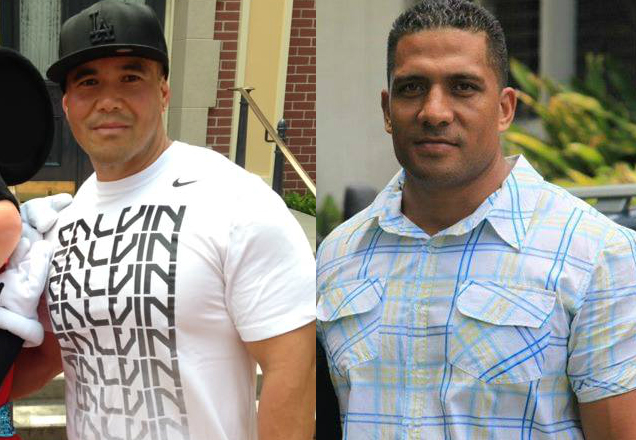
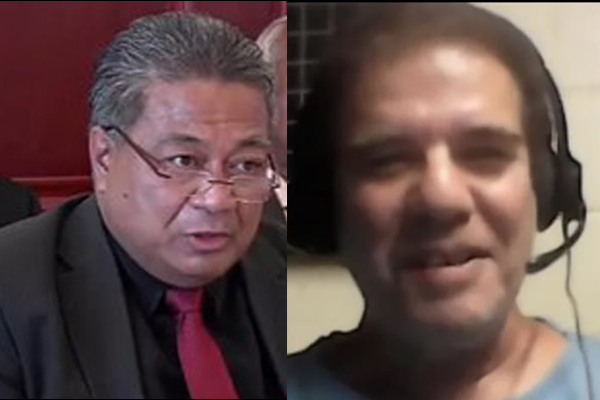
President of the Tonga Body Building Association, Masanao Onedera, has demanded that the president of the Tonga Body Building Federation, Talaiasi Nau, pay $15,400 to settle a long running legal dispute.
Masanao Ondera (L), Talaiasi Nau (R)
Onedera’s lawyers said the Supreme Court had ordered an audit of the Omega Gym, which had been a business venture, jointly owned by Onedera and Nau.
“The said audit found that the Tonga Body Building Federation owed $15,400.64 that was payable to Mr. Onedera for gym equipment bought by him and freight related expenses to ship the gym equipment to Tonga,” Onedera’s lawyers said.
They also demanded that President of Tonga Body Building Federation Talaiasi Nau repay $1590 he took out of the Omega Gym account.
The dispute centres on the ownership of body building equipment after the collapse of Onedera and Nau’s business partnership.
As Kaniva News reported at the time, Nau told a hearing before the Supreme Court that he and Onodera had a 50/50 partnership in the Omega Gym, which was located in Queen Salote Memorial Hall at Nuku’alofa.
Nau said Onodera had terminated the partnership by taking over the management of the gym.
The Tonga Bodybuilding Federation claimed it owned the equipment used in the gym and wanted it to be returned to its possession and control.
Onodera disputed both claims, saying the equipment was his own property and that the partnership with Nau was on an 80/20 basis, with himself having the majority share.
He told the court the partnership was terminated by consent and that the gym was solely his own business.
In August 2016, Nau and a team from TBBF competed in the South Pacific Natural Physique and Fitness Championship in Auckland.
Onodera advised Nau to ask the vice-president of the South Pacific and Oceania for the International Federation of Body Building, Paul Graham, to donate specialised body building equipment to the TBBF.
Graham agreed to donate the equipment to the TBBF, which was made as an affiliate of the IFBB.
Onodera paid for the cost of having the equipment shipped to Tonga from Sydney. He said that because of his investment Grahams and his wife agreed that the equipment would be in his name.
Graham sent a letter saying the equipment was being consigned to the TBBF instead of himself, as was shown on the shipping documents .
He told the court this was done on the advice of Nau who told him it would save custom charges.
“Now I realise it was all to create a way to claim the equipment was owned by TBBF without having spent a penny on getting it to Tonga,” he told the Supreme Court.
However, Nau said: “[Onodera] signed the letter confirming that the equipment belonged to TBBF freely and willingly in order for duty exemption to be obtained and for the equipment to be released to TBBF,.”
Judge Niu, who presided over the case, said he accepted Nau’s evidence. He said the equipment that Onodera sent from Sydney became vested in TBBF by way of gift from Mr. and Mrs. Graham to TBBF, because Onodera was at that moment the agent of TBBF.
A similar set of claims was made about a second set of equipment which Onodera claimed was his, even though it had also been passed through customs as the property of the TBBF. This claim was also rejected by the judge.
However, the judge said he believed Onodera’s claim that the business was divided 80/20 rather than 50/50.
Judge Niu ruled that all the equipment shipped to Tonga was the property of the Tonga Body Building Federation and should be returned to it.
Nau and Onedera agreed to having an accountant look into the business.
In 2020 an account was prepared. The accountants said Nau and Onedera did not agree on the position of the accounts. A face to face meeting was suggested in order to resolve the dispute, but this did not happen.
Onedera’s lawyers have demanded that Nau pay the money they say is owed by July 13. Onedera told Kaniva News he would continue pursuing legal action against Nau.
For more information
Supreme Court rules equipment belongs to Bodybuilding Federation; orders its return
New Zealand High Commissioner, HE Matthew Howell, visits the National Emergency Management Office (NEMO) Warehouse at Matatoa to handover a Grant Contribution Letter confirming funding of TOP$1.3 million from the New Zealand Ministry of Foreign Affairs and Trade (MFAT).
The funding support from MFAT is for the construction of a new NEMO distribution warehouse in Ha’apai as part of Tonga’s recovery phase to the Hunga-Tonga Hunga-Ha’apai eruption and tsunami event in January. The visit to Matatoa on Friday 8 July 2022, was also an opportunity to view prepositioning supplies funded by MFAT for future events.
His Excellency and High Commission Staff, were joined by the CEO of MEIDECC, Paula Ma’u, NEMO’s Director Mafua Vai’utukakau and staff from NEMO.
The new warehouse in Ha’apai will provide a central location for receiving and distributing relief supplies across Ha’apai (population 5,419), to its many small and remote islands. The warehouse will also include a multipurpose room that will be used for various NEMO training and workshop activities. In addition, an Emergency Operations Centre (EOC) communications room will be furnished with communication equipment enabling the EOC to be fully functional in Ha’apai.
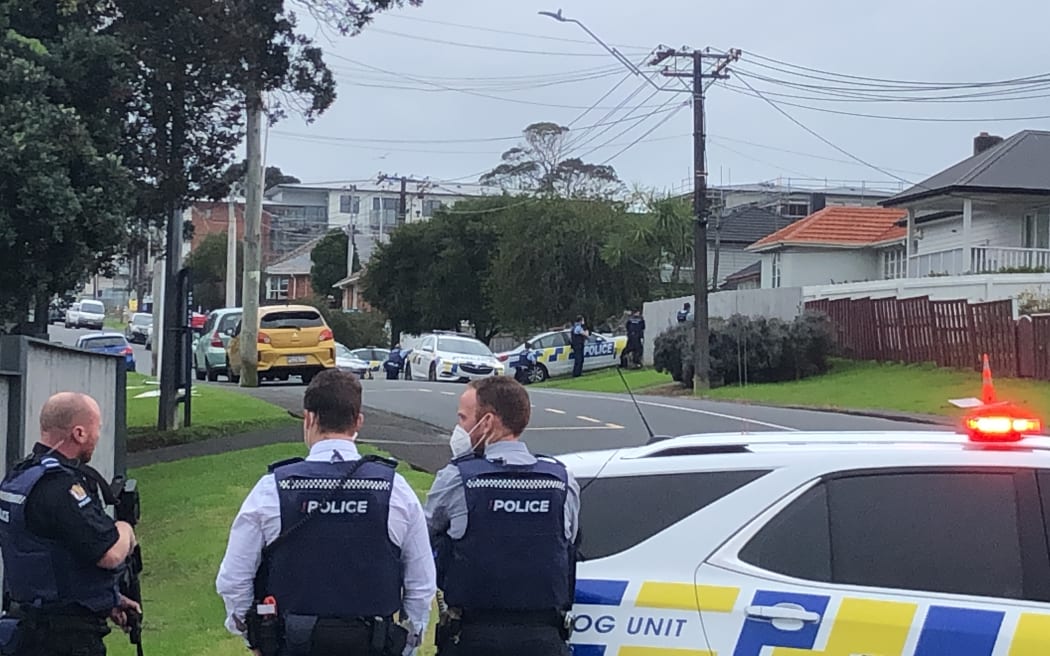
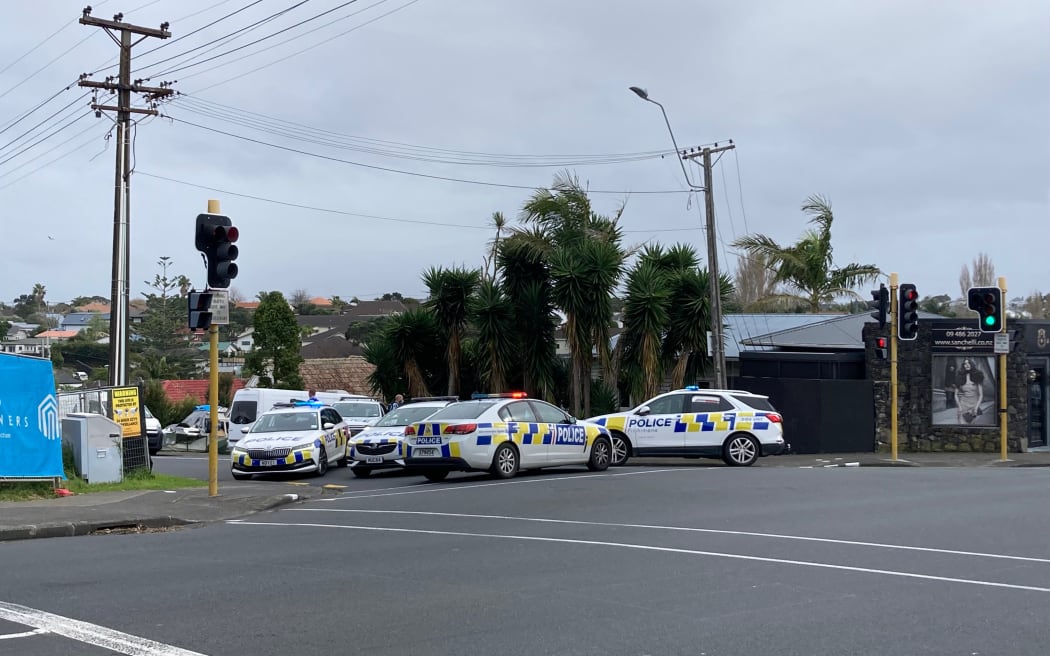
Police are still searching for a person of interest over an incident on Wednesday which saw five schools go into lockdown.
Photo: RNZ / Nick Truebridge
Armed police swarmed an area in Belmont on the North Shore following reports of a man with a gun and spent several hours surrounding a house on Bardia Street.
The house was empty when police entered and commissioner Andrew Coster said no arrests had yet been made.
“We don’t consider that there is any immediate danger to the public but we are pursuing avenues of enquiry and when we can update further on that we will.”
The commissioner believed there was adequate communication between police and the community during yesterday’s incident which saw five schools locked down.
Speculation was rife with students posting to social media and messaging parents varying reports.
“I think the staff dealt appropriately based on the information they had at the time, the schools were happy with the way we communicated with them and indeed their responses were spot on.”
The lockdown saw students as young as five hiding under desks for over half an hour and police have commended schools for their swift response.
Marianne Coldham of Bayswater School said students were not given details on the incident unfolding on Barida St.
The school have consultants on how to deal with shooter situations, she said.
“We do try to keep things relatively calm, keep the kids happy and anxiety low.”
Head of the Auckland Secondary School Principals Association Greg Pierce said the natural instinct for students was to send a message home or to post online.
However, he said the recommendations are that during lockdowns phones stay off and there was no noise or movement.
He said consistency and clear communication with parents was crucial when responding to a potential threat.
“Parents want to go to the school to ensure their kids are safe which is understandable but that doesn’t help the situation.”
He understood the natural instinct for students was to send a message home or to post on social media but this can often lead to false information being circulated.
BNZ has been put on notice for failing to comply with anti-money laundering rules.
Photo: RNZ / Nate McKinnon
The Reserve Bank handed BNZ a formal warning after it did not report the correct location for 50,000 local cash transactions to police between November 2018 and April 2020.
Anti-money laundering and countering of financing of terrorism (AML/CFT) law requires financial service providers to report all domestic transactions worth more than $10,000 to the police and the Reserve Bank.
BNZ discovered a technical coding error in its systems in August 2020, which meant that inaccurate location data was sent to the police.
BNZ self-reported the issue to the RBNZ.
“We can appreciate that design errors can occur,” RBNZ deputy governor Christian Hawkesby said. “This reiterates the importance of reporting entities regularly testing and validating the coding for AML/CFT systems to ensure they are correctly designed.”
There was no suggestion that BNZ was engaged in money laundering activity.
He said a warning was an appropriate penalty.
“The prescribed transaction reporting regime is important for building an intelligence picture across New Zealand’s financial system.
“Unfortunately, these coding errors compromised the quality of the information held by the police.
“We note that BNZ self-reported this issue to us and has worked hard to remediate the issue and provide the FIU with the corrected information.”
A spokesperson for BNZ said it respected the Reserve Bank’s findings and took its AML/CFT compliance very seriously.
“We are continuously reviewing our processes and procedures, working with regulators and other authorities, and investing heavily in this area to build our capability and make ongoing performance improvements.”
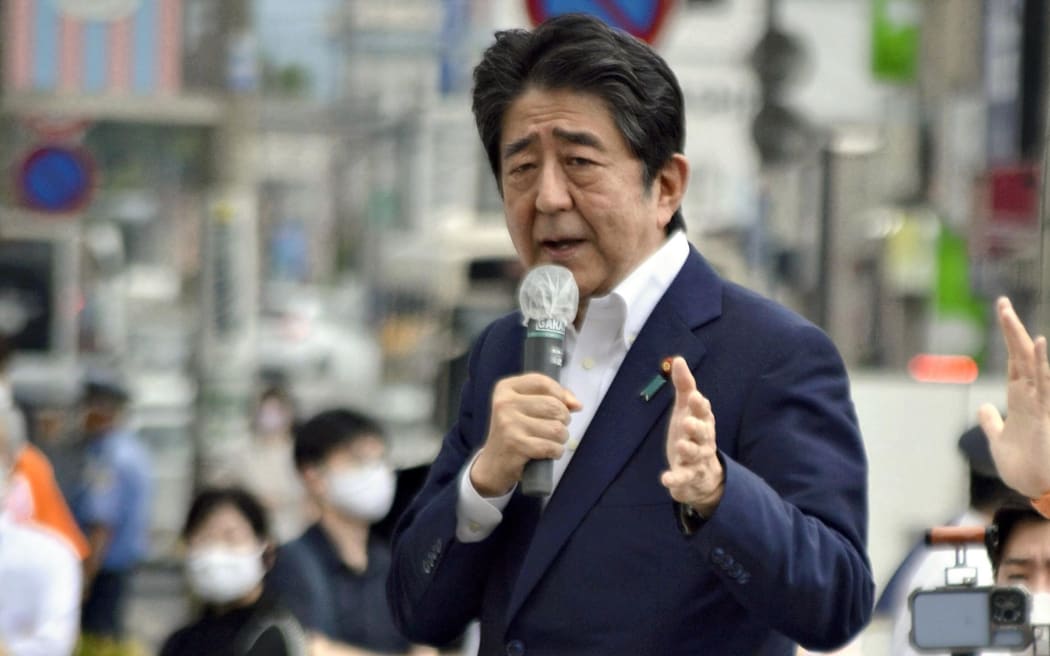
Japan’s former prime minister Shinzo Abe has been taken to hospital after being shot while delivering a speech in the city of Nara in western Japan, a government spokesman has confirmed.
Japanese former Shinzo Abe speaks, just seconds before he is shot. Photo: AFP
Public broadcaster NHK says he appeared to have been shot from behind by a man with a shotgun.
Chief Cabinet Secretary Hirokazu Matsuno said he did not know Abe’s condition. Kyodo news agency and NHK said Abe, 67, appeared to be in a state of cardiac arrest when taken to hospital.
Shots were heard and a white puff of smoke was seen as Abe made a stump speech for a Sunday upper house election outside a train station in the western city, NHK said.
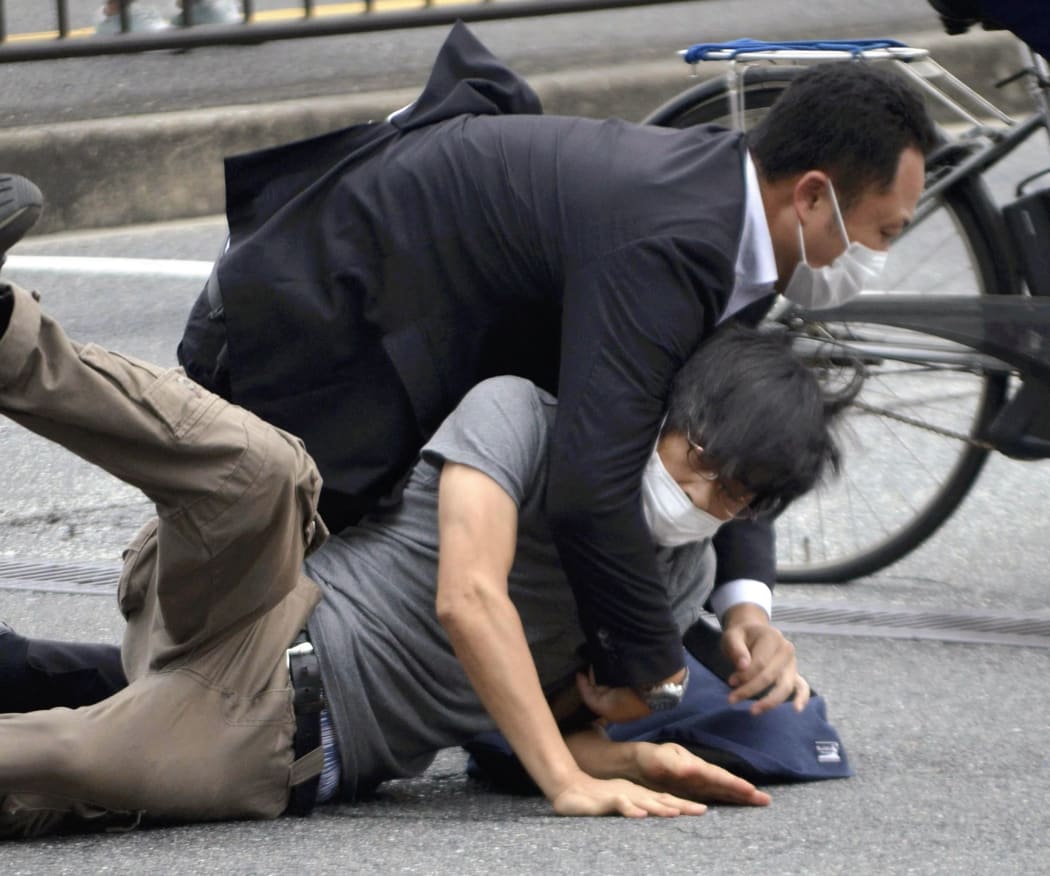
A man suspected of shooting Japanese Prime Minister Shinzo Abe is wrestled to the ground. Photo: AFP
An NHK reporter on the scene said they could hear two consecutive bangs during Abe’s speech.
Matsuno, told a briefing Abe had been shot at about 11:30 am local time, adding, “Such an act of barbarity cannot be tolerated.”
TBS Television reported that Abe had been shot on the left side of his chest and apparently also in the neck.
Abe served two terms as prime minister to become Japan’s longest-serving premier before stepping down in 2020 citing ill health.
But he has remained a dominant presence over the ruling Liberal Democratic party, controlling one of its major factions.
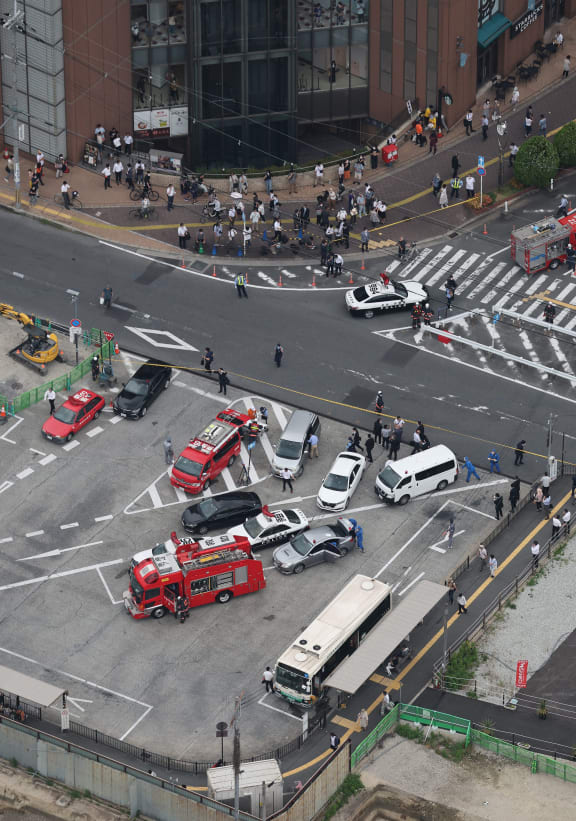
An aerial photo shows the site that former prime minister Shinzo Abe been shot in Nara City. Photo: AFP
His protege, Prime Minister Fumio Kishida, faces an upper house election on Sunday in which analysts say he hopes to emerge from Abe’s shadow and define his premiership.
Abe has been best known for his signature ‘Abenomics’ policy featured bold monetary easing and fiscal spending.
He also bolstered defence spending after years of declines and expanded the military’s ability to project power abroad.
In a historic shift in 2014, his government reinterpreted the postwar, pacifist constitution to allow troops to fight overseas for the first time since World War Two.
The following year, legislation ended a ban on exercising the right of collective self-defence, or defending a friendly country under attack.
Abe, however, did not achieve his long-held goal of revising the U.S.-drafted constitution by writing the Self-Defense Forces, as Japan’s military in known, into the pacifist Article 9.
He was instrumental in winning the 2020 Olympics for Tokyo, cherishing a wish to preside over the Games, which were postponed by a year to 2021 because of the Covid-19 pandemic.
Abe first took office in 2006 as Japan’s youngest prime minister since World War Two. After a year plagued by political scandals, voter outrage at lost pension records, and an election drubbing for his ruling party, Abe quit citing ill health.
He became prime minister again in 2012.
Abe hails from a wealthy political family that included a foreign minister father and a great-uncle who served as premier.
By Rowan Quinn of RNZ.co.nz and is republished with permission.
Flu is dwarfing Covid-19 when it comes to hospitalisations at one of the country’s busiest hospitals.
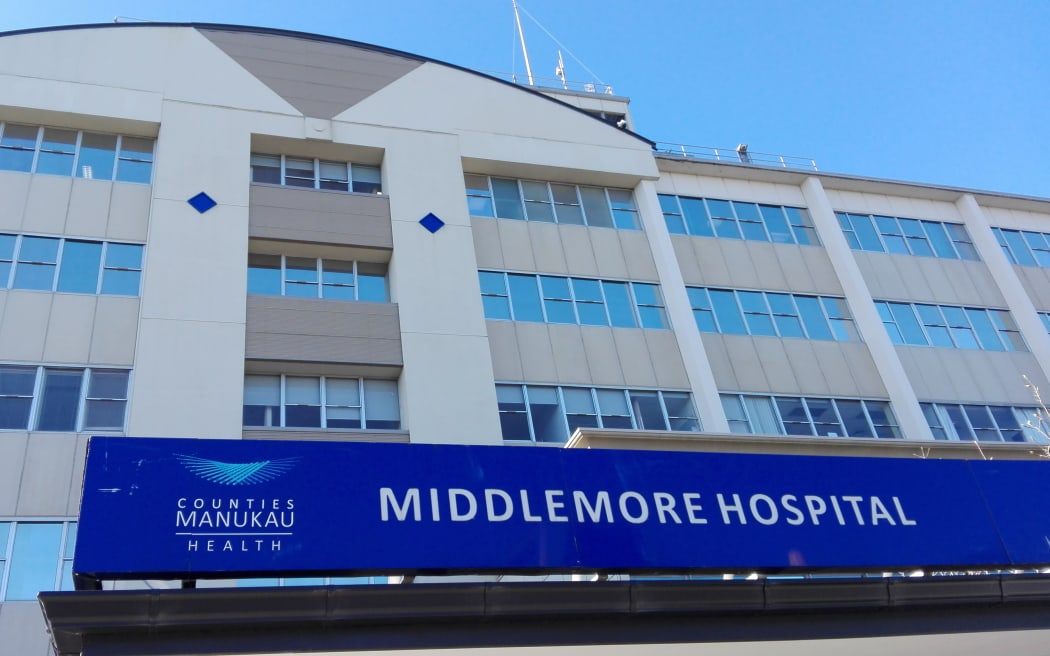
Photo: LDR / Stephen Forbes
Middlemore Hospital keeps some of the most detailed records of viral illnesses in the country, testing every respiratory patient who is admitted to a ward or examined in its emergency department.
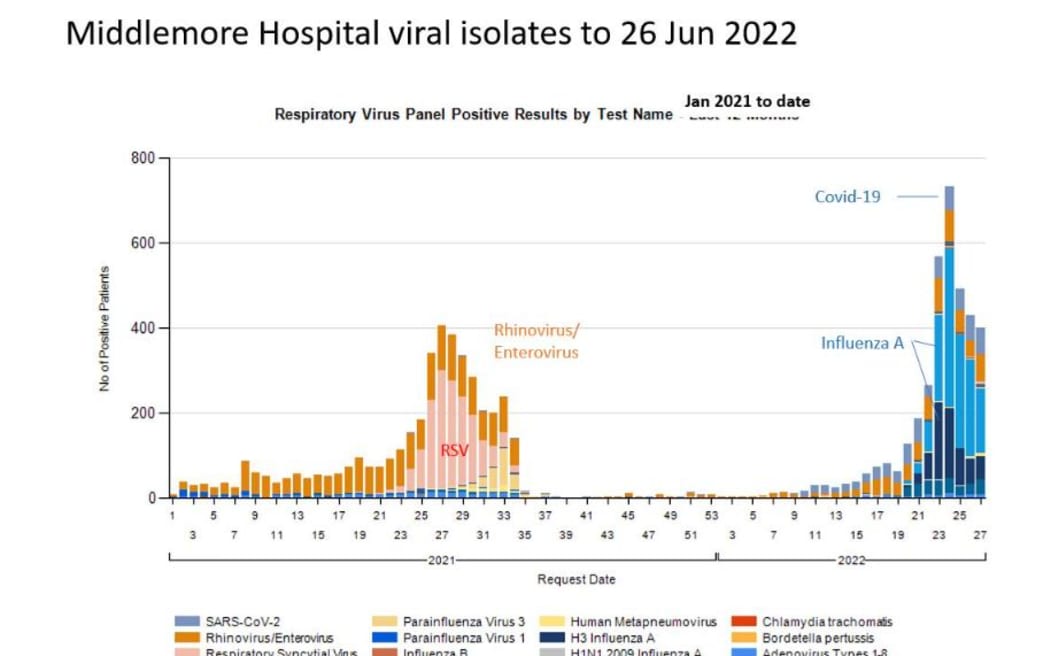
Latest numbers show there are about three times as many flu cases as Covid-19 cases turning up to the hospital.
Te Whatu Ora’s population health director for Counties Manukau, Gary Jackson, said last week about 250 people were admitted with influenza.
There were an average of 10 Covid-19 cases a day being admitted and about 30 flu cases, he said.
Combined with a predicted Covid-19 surge, Jackson worried about the impact on the wider health system.
“Because it is getting overloaded with people who are unwell, the people who are still having their strokes and their heart attacks and their broken legs and so on are going to get delays in treatment … because the system is under such pressure,” he said.
“We get that every winter but this winter it is going to be exaggerated,” he said.
The flu surge was because the influenza strains had not been circulating as much during border restrictions, so people were more likely to catch it now it was back in the community, Jackson said.
In recent weeks the biggest increase was in children under 5, but also in people over 65.
Worry about more Omicron hospitalisations
Covid-19 data modeller Michael Plank said the next Omicron peak could see greater hospitalisations for Covid-19 too.
That was because more people over 70 were catching it than in the first wave, and they were more likely to need hospital level care.
Getting a fourth dose of the vaccine would help keep them safe, he said.
Jackson said even though New Zealand was no longer trying to eliminate Covid-19, people could still try to limit its impact.
“We can decide whether we want to live with it like the UK and get enormous waves and everybody just tries to ignore it and pretend it’s not there, or we can be a bit more clever about it and keep on doing things like wearing our masks and looking after each other,” he said.
“Every time someone avoids getting infected we lower the transmission rate.”
The Tonga government has vehemently denied claims made by three US citizens in Vava’u they had been threatened to pay $11,000 for Covid vaccination requirements.
Deputy and Acting Prime Minister Poasi Tei (L) and Mr Jonathan Brent Estren
The claims included allegation that the Tongan government would confiscate a US chartered aircraft and imprison the operators if they landed in Tonga.
It also claimed that His Majesty King Tupou VI had granted the US nationals approval to bring in a charter flight to Vava’u that would fly them to America.
The claims were made during a social media interview of Mr Jonathan Brent Estren earlier this week by Tongan social media reporter Setita Tu’i’onetoa. Estren is a citizen of the United States of America who has been residing in Vava’u since 2012.
Tonga’s Acting Prime Minister Poasi Tei had denied the allegations as ‘false and misleading’.
“This followed investigations conducted by the Attorney General’s Office here in Nuku’alofa and advice now being made available to Government by the Attorney General, Mrs Linda S Folaumoetu’i”, Hon Tei said in a statement this morning.
Mr Estren had claimed on the video interview that he and his colleagues were being prevented from leaving Vava’u by the Ministry of Health and were being held ransom to pay $11,000 for COVID-19 vaccination shots.
“The reports are not accurate and it is obvious, after checking with all stakeholders involved, that the passengers did not go through the proper procedures and did not get the proper authorization and it is not clear why they are demanding that the plane lands at Lupepau’u Airport, when the only authorized airport of entry, because of the current COVID-19 restrictions, is Fua’amotu International Airport,” Hon Tei said.
“Government has not given them authorization to allow flights from a foreign country to land in Vava’u during these restrictions. If they so wish to continue to proceed with getting a chartered flight they can be advised on the proper procedures to follow.”
The three expats are:
• Mr Estren, who married a Tongan and holds a valid Tongan passport.
• Ms Lee Elle Parker, who was Mr Esren’s spouse. She currently holds a valid Assured Income Visa which expires on April 4, 2024.
• Mr Joshua Charles Moa, who first came to Tonga on a visitor’s visa in 2004 and currently holds an expired Tongan passport.
The Acting Prime Minister stated that the three need to follow proper procedures and processes before they can leave the country.
He denied any claims of government trying to detain them here in Tonga. Investigations have revealed that:
• The three passengers did not accept the conditions of the current State of Emergency here in Tonga. This included the condition put forward by the Ministry of Health to use Fua’amotu International Airport for chartered flights, as this is the only Airport of Entry for all international flights, instead of Lupepau’u Airport in Vava’u.
• there is no mandatory declaration for vaccination to be made in Tonga to-date and thus their claims that they are being forced to vaccinate are false. Vaccination shots are free in Tonga and does not cost $11,000.
• anyone can leave Tonga for any destination as long as they meet travel and COVID-19 requirements of their destination country. If they do not meet those requirements then authorities in Tonga will not allow them to depart.
• Government has not given them any authorization to land a plane in Vava’u during the COVID-19 restrictions. No flight or plane is allowed to enter and land in Tonga without proper authorization granting them to do so.
• Ms Estren and his colleagues are free people in Tonga and are free to leave the country provided they complete all travel requirements. They are not being arrested or kept against their will.
“Hon Tei said the false information presented by the three expats and the social media outlets were damaging to Tonga and her people”.
The new leader of an international health care body has warned Pacific Island peoples that their way of life and the environment in which they live has been severely damaged.
Sione Tu’itahi
The situation was described as one of the factors which has contributed to the Pacific islanders’ alarming rate of health problems in New Zealand.
Tongan-based New Zealand health promoter Sione Tu’itahi, who was recently appointed the new President of the International Union for Health Promotion and Education (IUHPE), said the state of the Pacific island people’s health was devastating.
Tu’itahi, who is the first Indigenous person to hold the position, said it was part of his role in the international body to promote the concept of a healthy planet and healthy human beings.
“The planet is like our own house. We live in our rooms. And if we do not take good care of it it could fall and kill us”, Tu’itahi told Kaniva News in an exclusive interview.
His comment came after Tongan nephrologist Dr Viliami Tūtone said the number of Tongan children orphaned in New Zealand due to their parents dying young because of diabetes-related conditions was expected to grow.
Dr Tūtone said Pacific islanders as young as 40 had died of diabetes, while others ended up on dialysis treatment at Middlemore Hospital.
Dr Tūtone said some Tongan orphans were as young as 10 years old.
“They have no mothers and the number is expected to grow”, he told Kaniva News.
Dr Tūtone said the Ministry of Health’s latest record for June 2022 showed 743 people were on dialysis at Middlemore hospital. He said 447, or 60 percent of those patients, were Pasifika. Breaking down the number for the Pasifika patients he said 184 were Samoans, 114 were Tongans, 88 were Cook Islanders, 31 were Fijians, 24 were Niueans and other ethnicities were six.
A review of evidence about health equity for Pacific Peoples in New Zealand in 2019 showed the Pasifika made up seven percent of the population of New Zealand.
The report by the Pacific Perspectives Ltd, highlighted some social changes which showed that 24 percent of Pacific peoples did not have enough money to meet their everyday needs. It said 40 percent of Pacific peoples reported living in homes that were always cold and 10 percent reported having problems with damp and mould in their accommodation.
Self-care first
Tu’itahi said people must be reminded that their lives were in their own hands.
He said life was a journey which started from left to right.
“When the baby is born, he is on the left side of this journey”, the former Tongan journalist said.
“That’s where life begins, at home, parents and the family and the places where they lived, churches, schools, the plantation, the workplaces and seas.
“On the right side of the journey that’s where you find the hospitals and clinics for people who are sick”, Tu’itahi said.
In other words, living a healthy life started at the left side, not on the right side.
“If we are cautious on the left side we do not need to end up on the right side of the journey,” he said.
He said people should go to hospitals and clinics for necessary needs such as tests for pregnant women and the delivery of their babies and for healthy people to check their health.
Tu’itahi said young people nowadays ended up in hospitals for diseases which might have been avoided if they had looked after themselves.
“They were careless when they started their journey on the left side of life.
“This included eating wrong food, lack physical exercises, abusing of the body, living in unclean environment”.
Tu’itahi said these problems also cost the government huge amounts of money in building hospitals and special medical departments to look after people’s severe medical conditions caused by their lack of good care of their own lives.
“If we rely on the right side of this journey to cure our sicknesses and for the governments to provide us with medical assistance and medication the government could run out of money,” he said.
“Those are the monies that may have helped other important things for us including schools and housings.
“Look at the Covid pandemic. It caused a lot of distress in the health sector and nurses and doctors were affected because of working long hours.
“We also spent a lot of money in researches to get the right medication for the virus.
“If we do not look after our own home, make sure it is warm and clean and safe it will become our own grave”.
Tu’itahi said he was looking forward to working together with the community to improve their health and living.
Asked about his new role, Tu’itahi said he was honoured to take up the role, which was a “huge responsibility,” but which brought the opportunity to share leadership and work with “wonderful leaders” from around the world.