Home Blog Page 279

Pacific health leaders urge govt to boost funding for providers

By RNZ.co.nz and is republished with permission.

Frontline Pacific health care workers are on the clock from dawn to dusk responding to the need in their communities through the Covid outbreak.No caption
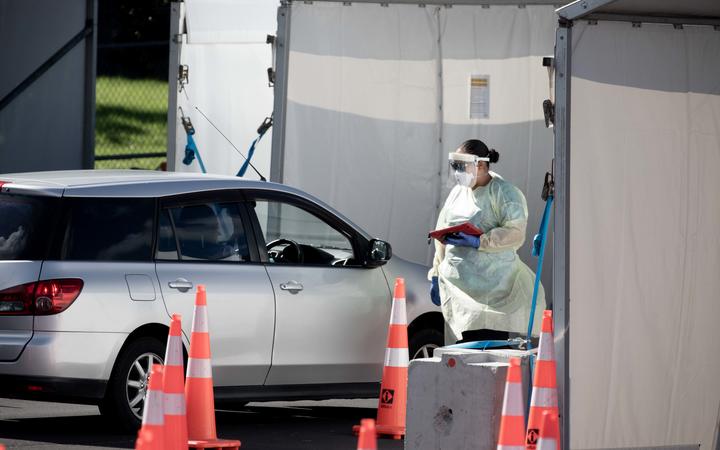
Photo: RNZ/Marika Khabazi

Now a Pacific health leader is calling on the government to pump more funding into Pacific medical providers to help build the support they need to keep going.

The Fono’s Covid-19 welfare manager Europa Kupu said the pressure has been huge.

“We’re working still seven days a week and our front liners are working from morning to evening, just so we make sure we cover all of the referrals we are receiving because they come through the whole day for urgent support. So it is hectic, it is crazy times but at the same time we are kinda used to it.”

Throughout the outbreak Pacific health providers have been there to help.

The Fono chief executive Tevita Funaki said Pacific peoples are facing ‘chronic challenges’ and the government needs to commit to addressing them.

“The key here is actually building the pipeline for Pacific into health careers, no doubt that the pool of Pacific staff available is limited, we need to look at a whole development strategy workforce for Pacific, not just a band aid solution.”

There is a hefty price tag, but Funaki said inequities need to be addressed imminently.  

“In particular around the Auckland providers. We are looking at a total investment of around over 200 million into core capabilities, including infrastructure support and also investment into the workforce.”

He said the Pacific healthcare workforce alone needs to be increased by half among other urgent changes.

Housing is a clear problem too, and when you have Covid-19 you stay home to stop the spread, a task easier for some than others, Funaki said.

“Because of the overcrowded homes, the economic well-being of Pacific around career, pathway and education   – and then looking at the health reform to focus at the inequities when you look at chronic illnesses, Pacific are highly represented there.”The Fono chief executive Tevita Funaki
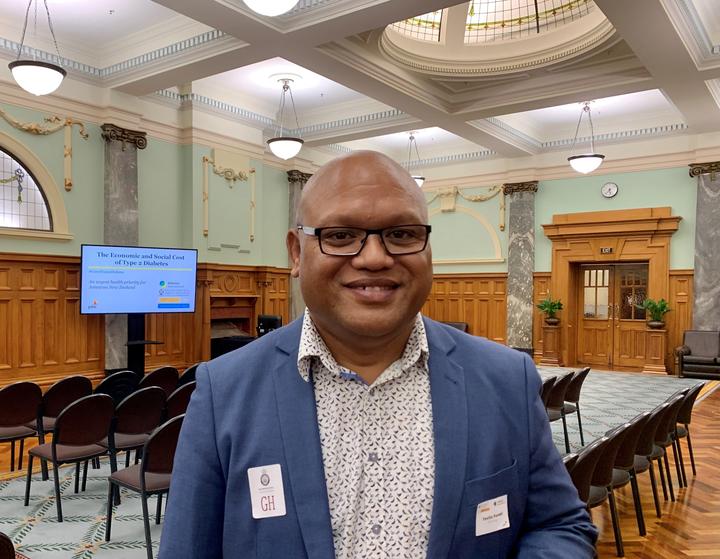
The Fono chief executive Tevita Funaki said inequities need to be addressed urgently. Photo: Dominic Godfrey / RNZ Pacific

It is issues like these that push Pasifika into the “vulnerable” category when it comes to Covid-19.

These inequities have been highlighted before – but Funaki said the government simply cannot look away.

At the height of the Omicron surge in Auckland, Pasifika made up 60 percent of hospitalisations and 50 percent of cases.

“There is no doubt in terms of the significant cases in terms of the Omicron outbreak in comparison to Delta. Even when we are looking from last Friday there were 70,000 infections from what was last year to now. Those are significant numbers and part of that is around the impact of the infectiousness of Omicron.”

But a front line worker in Auckland believes that number is even higher.

“We’re probably just scraping the surface, families that we never engage with as a provider, we’re finding more coming through as new families that we haven’t dealt with before. They are not knowing how they can reach out and who they can turn to,” they said.

Auckland District Health Board recorded 3342 positive Covid cases among its Pacific population, for the week ending on the 27 March, a drop from more than 10,000 two weeks prior.

Covid-19 modeller Michael Plank said it looks like the outbreak has passed through the Pacific population earlier than other groups when looking at case numbers.

But he said Covid-19 is here to stay.

“In the short term relatively high levels of immunity means that cases are coming down but unfortunately that protection that you get from prior infection is likely to be relatively short-lived and so over time that immunity will wane. So the Pacific community and other communities in New Zealand will gradually become susceptible to a second wave over time.”

He wants all community members to keep up mask wearing in the short term and tackle long term issues like ventilation.
Māori dying with Covid-19 because of misinformation – health leader

By RNZ.co.nz and is republished with permission.

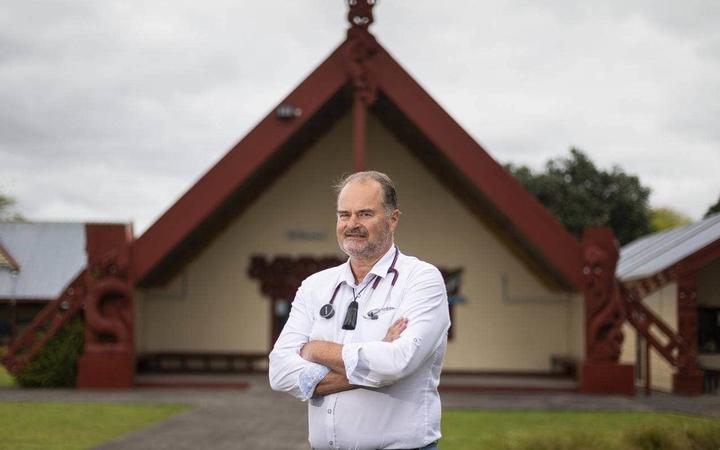
A Māori health leader says a new international misinformation study confirms the alarm many were desperately trying to raise last year about the impact on Māori during the initial vaccine rollout.National Hauora Coalition clinical director Dr Rawiri McKree Jansen

National Māori Pandemic Group co-leader Rawiri McKree Jansen. Photo: STUFF/ Alden Williams

The article in the Journal of the Royal Society Interface shows misinformation makes it harder to stop illness spreading during a pandemic.

It states conspiracy theories spread through communities already distrustful of authority.

It modelled trusting individuals who seek better quality information and take precautionary measures; and distrusting people who reject quality information and have riskier behaviour.

It found major outbreaks cannot be suppressed once the density of distrusting individuals exceeds a certain threshold.

It says its findings highlight the importance of effective interventions to build trust and inform the public.

Māori ‘exposed to a significant amount of misinformation for longer’

National Māori Pandemic Group co-leader Rawiri McKree Jansen said the Māori population was younger, so many had to wait to be eligible to get their vaccine dose.

“They [were] exposed to a significant amount of misinformation for longer.

“That’s created a problem for us in terms of getting the momentum for the vaccination programme into the right place.”

McKree Jansen said the unvaccinated were being hit hardest by the Omicron wave.

As of Friday, only 88 percent of Māori have had their second dose, and 58 percent their third compared with 95 percent and 73 (72.7) percent respectively of the general population.

As of Friday, 355 people have died with Covid-19 and the seven-day rolling average is now 17.

McKree Jansen said Māori were now dying with Covid-19 because of that misinformation.

He said for Māori and Pacific communities it was particularly troubling because those who were dying with the virus were in their 40s, 50s, and 60s, rather than older people in other populations.

He said Māori and Pacific populations should have been prioritised in the vaccine rollout.

The Waitangi Tribunal has released a scathing ruling of the government’s Covid-19 response and vaccine rollout, saying Māori were put at risk.

The tribunal said Cabinet’s decision to go against official and expert advice and not prioritise Māori breached the Treaty principles of active protection and equity.

Misinformation has disrupted families, but is resolvable

McKree Jansen said misinformation had disrupted social and familial connection but he believed it was resolvable.

“We should actually spend the time and the effort to restore relationships with those people that have been affected by it.

“It is being very clear that health services are here to help people.

“I think it is conversations we’ll have within families to restore mana for people who feel that [they have] been belittled, to ensure that people know that they are loved and that they are cared for.”

He said the focus needed to be on learning the lessons and making sure it did not happen again.

“And making sure that when we say we are committed to equity that we do all the things necessary to achieve it.”

Tonga volcano: NIWA scientists to map eruption’s impact on seabed

By RNZ.co.nz and is republished with permission.

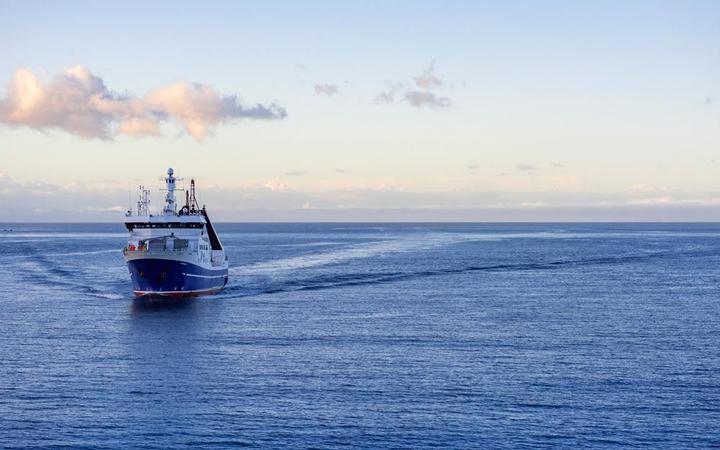
NIWA scientists are set sail to Tonga to survey the seabed around Hunga-Tonga Hunga-Ha’apai volcano in the aftermath of its eruption earlier this year.NIWA research vessel RV Tangaroa is heading to Tonga to assess the undersea impacts of the Hunga-Tonga Hunga-Ha'apai volcano eruption in early 2022.

NIWA research vessel RV Tangaroa is heading to Tonga to assess the undersea impacts of the Hunga-Tonga Hunga-Ha’apai volcano eruption in early 2022. Photo: NIWA / Dave Allen

NIWA’s research vessel, RV Tangaroa, will head over on 9 April to collect video images of the seafloor and another vessel, from British enterprise SEA-KIT International, will conduct further mapping over a month.

NIWA chief scientist of oceans Mike Williams, who is the project leader, predicted they would see massive changes to the underwater landscape around Tonga.

“Before the eruption, much of the volcano was above water but now none of it is and the neighbouring islands of Hunga Tonga and Hunga Ha’apai were reduced in size. We expect similarly dramatic changes to have occurred in the underwater topography.

“Submarine cable breakages show impacts up to 50 kilometres from the volcano caldera, implying changes to the seabed over an area of at least 8000 square kilometres.”

Echosounders – a device which determines the depth of the seabed and detects objects in water – will be used to inform scientists about the thickness of ash deposits and the formation of any new bedforms.

The data will be compared with previous maps to identify areas for sampling, so that further changes to the area, such as impacts to marine life and the seafloor’s chemical composition, can be assessed.No caption

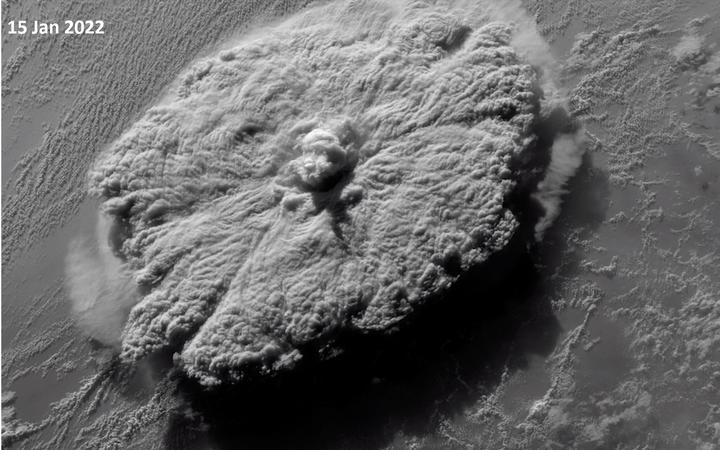
The eruption of underwater volcano Hunga Tonga and Hunga Ha’apai from satellite, on 15 January, 2022. Photo: Supplied / Shane Cronin, University of Auckland

The eruption was unexpected and triggered a large explosion that generated a sonic boom across the world and caused a tsunami that resulted in deaths and damage as far away as South America.

Dr Williams said the lack of knowledge about these types of volcanoes, particularly along the Pacific Ring of Fire, was a risk to society.

The Nippon Foundation – a non-profit organisation based in Japan which has been facilitating projects in the ocean field since 1962 – is funding the project.

Its chairman, Yohei Sasakawa, said NIWA’s research was vital to help protect people from similar natural disasters in the future.

“We hope that this work will help researchers and governments understand and mitigate the risk of future eruptions, which will be of particular benefit to countries that lie within proximity of these threatening natural wonders, like Japan and New Zealand.”

Tonga deputy secretary for lands and natural resources Taaniela Kula said the eruption had catastrophic consequences, and he too hoped the research would help protect nations like theirs.

The research is also supported by The Nippon Foundation-GEBCO Seabed 2030 Project which aims to map the world’s ocean floor by 2030.

Seabed 2030’s South and West Pacific Regional Center head Kevin Mackay said using the knowledge and resources of everyone involved would help build an invaluable picture of the eruption’s aftermath.

“By working alongside and pooling resources with such a multinational team, we’ll be able to gather an incredible amount of information of what happens during eruptions like these, what the impacts are, and how we can be better prepared next time a similar event occurs.”

Expanded flu vaccination campaign begins ahead of winter spread

By RNZ.co.nz and is republished with permission.

The government’s $12 million influenza vaccination expansion campaign kicks off today, with wider eligibility for free doses and a 40 percent increase in supply.Andrew Little

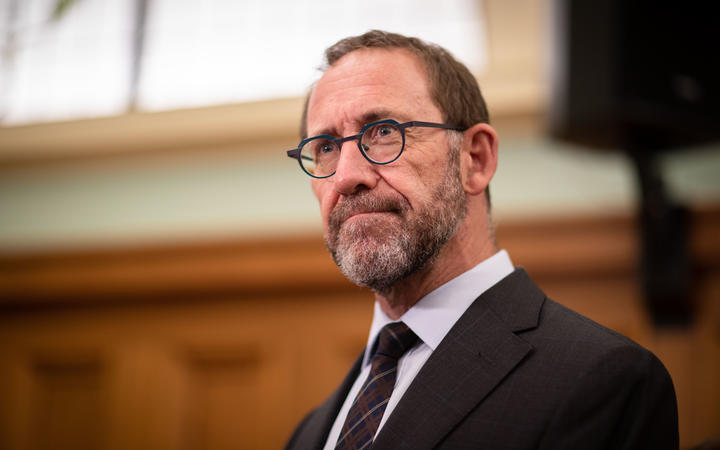
Andrew Little Photo: RNZ / Angus Dreaver

Free vaccines supplied by the government become available today.

Eligibility is expanding to include Māori and Pacific people 55 years and older, estimated to be 39,000 people.

Other people covered includes people aged over 65, pregnant, or with underlying conditions. Employers often also pay to supply flu vaccines to staff.

Health Minister Andrew Little said the number of doses was increasing to 2 million this year, up from about 1.4 million.

He said only about half of those eligible usually took up the flu vaccine, but the virus kills more than 500 people a year in New Zealand, and he urged everyone – especially the most vulnerable – to take it up.

Doctors have been warning this flu season could be particularly bad in New Zealand, with less exposure due to Covid-19 lockdowns meaning a lower level of immunity over the past two years.

With Covid-19 continuing to spread in New Zealand, lower levels of immunity against the flu and other winter illnesses could mean further heightened pressure on the health system.

“We’re looking at ways to increase the vaccination workforce to get flu shots to those who need them,” Little said.

“With the Omicron wave still working its way through the country, we need to protect our most vulnerable from getting the flu as well, and our health system from coming under more pressure.”

The typical New Zealand flu season is around June to August.

The $12 million for expanding the influenza vaccination programme is being funded through the Covid-19 Response and Recovery fund.

David Tu‘itupou: Police seek man wanted in Sandringham shooting

Police are seeking the public’s help in finding a 24-year-old man wanted in relation to a shooting investigation in Auckland.

Auckland police are searching for David Tuitupou in connection to a shooting in the suburb of Sandringham.

Police investigating the shooting incident where seven people were injured in Sandringham last month are appealing for the public’s assistance in locating David Tu’itupou.

A warrant for Tu’itupou’s arrest has been issued for wounding with intent to cause grievous bodily harm with a firearm.

Tuitupou is actively avoiding Police and is known to have ties across Auckland – specifically he is known to frequent the Mount Roskill and Bucklands Beach areas.

Anyone who sights Tuitupou should call Police on 111.

Additionally anyone who has further information on his whereabouts should contact Police on 105 quoting Operation Grizzly.

Information can also be provided anonymously via Crime Stoppers on 0800 111 555.

Police seize meth, cash in Tongatapu arrest

A 35-year-old man has been arrested in a house in Te’ekiu after police seized cash, methamphetamine and drug utensils.

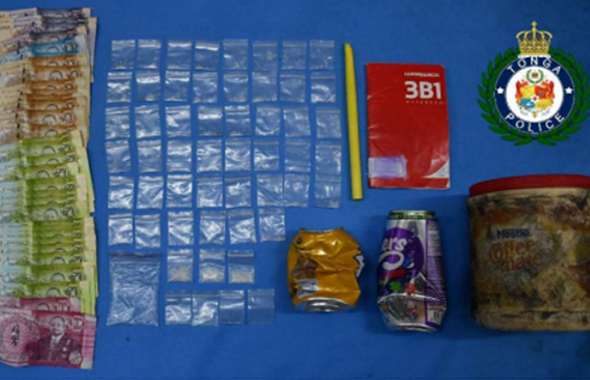
The Police Drugs Enforcement Taskforce seized from his residence 49 packs of methamphetamine (4.31g), $1,500 pa’anga in cash and drug utensils. Photo/Supplied

Police said they arrested the man on March 25 after a search warrant was executed at an address at the village.

The man is expected to appear in court on charges of possession of methamphetamine for supply and possession of drug utensils.

“The Police Drugs Enforcement Taskforce seized from his residence 49 packs of methamphetamine (4.31g), $1,500 pa’anga in cash and drug utensils”, Detective Acting Deputy Commissioner Halatoa Taufa said in a statement.

“The suspect remains in police custody while Police completes work towards the charges against him and to appear before the courts at a later date.

Detective Acting Deputy Commissioner Halatoa Taufa reassures that, “Although we are in the midst of difficult times with the widespread of the COVID-19 pandemic, the Drugs Enforcement Taskforce continues its work to bring before the courts those who are involved in distributing and selling illicit drugs, which is affecting our people and communities”.

 Contact Police on phone 740-1660 or 922 and share any information you may have on drug related offence or activities.

Seven Tongan MPs and Cabinet Ministers on trial for alleged illegal election campaign financing

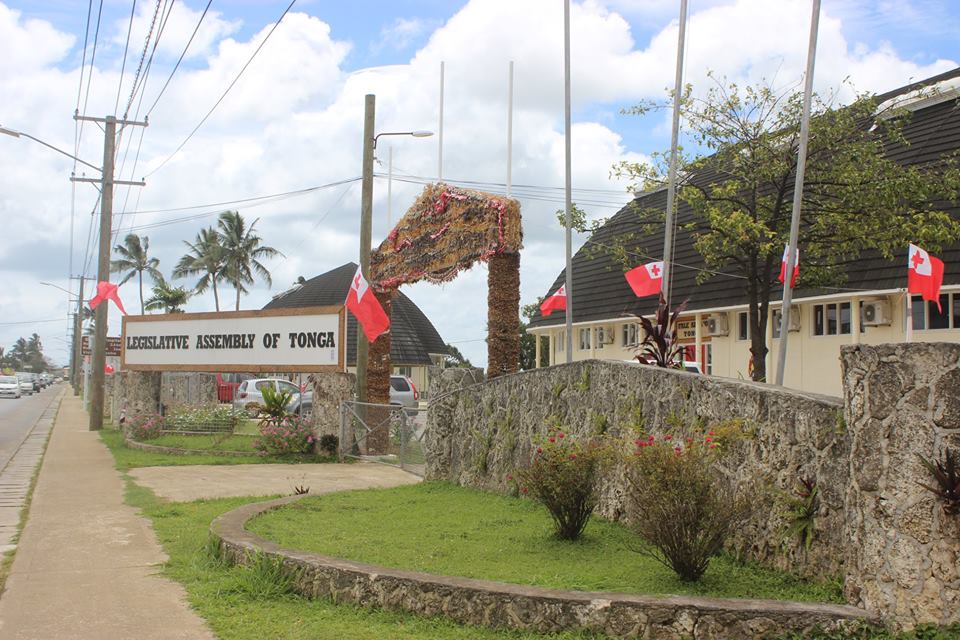
Tonga Parliament. Photo/Tonga Parliament

A former Prime Minister and six other MPs have faced accusation of overspending and bribery allegations after Tonga 2021 general election.

They appeared in court today March 31.

The lawsuits have been brought against them by the PTOA Party.

The accused MPs are Tēvita Puloka of Tongatapu 1, MP Dr Pingi Fasi of Tongatapu 2, Minister of Finance and MP for Tongatapu 4 Tatafu Moeaki, MP ‘Aisake Eke of Tongatapu 5, Minister of Internal Affairs and MP for Tongatapu 7  Sangstar Saulala and former Prime Minister and MP for Tongatapu 10 Pōhiva Tu’i’onetoa.

It is understood witnesses in the alleged illegal financing cases began giving evidence in court today.

Hon Saulala is expected to answer questions from one of the plaintiffs’ legal representatives, his unsuccessful rival candidate Paula Piveni Piukala, tomorrow.  

The elections in November 2021 saw major losses for the PTOA Party included Siaosi Pōhiva, Sēmisi Sika, Māteni Tapueluelu, Mo’ale Fīnau and Losaline Mā’asi.

Cannabis seedlings weeded out of Parliament grounds

By RNZ.co.nz and is republished with permission.

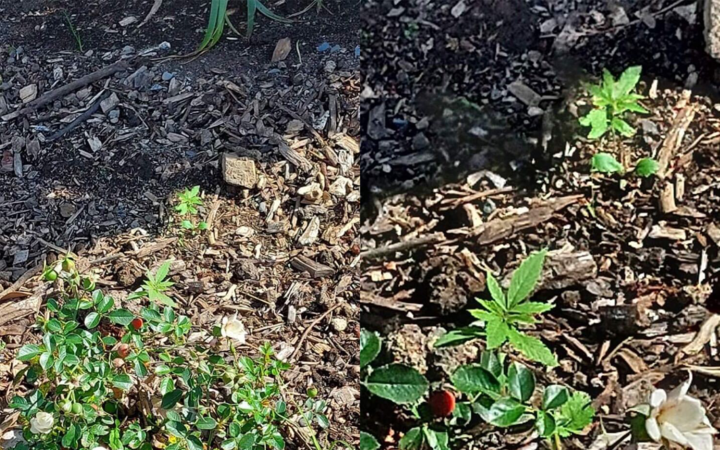
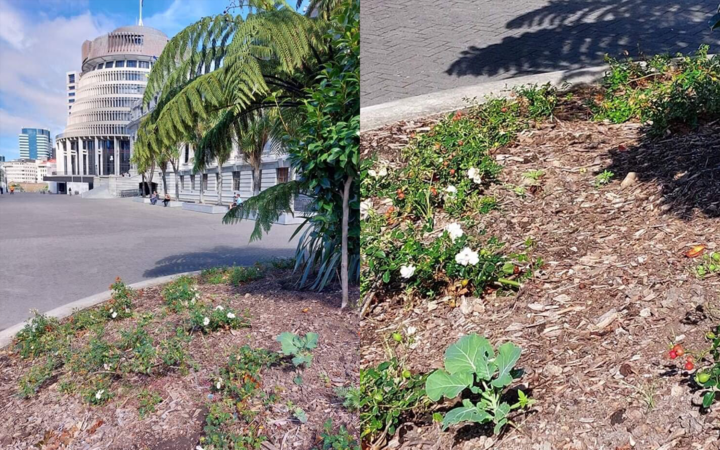
Cannabis seedlings have been found growing in Parliament’s rose gardens today, with a groundskeeper confirming to RNZ that the plants had been raked up and destroyed along with the rest of the green waste.Cannabis seedlings spotted growing in the rose gardens of Parliament grounds

Cannabis seedlings spotted growing in the rose gardens of Parliament grounds Photo: Supplied

A protester who had returned to Parliament grounds today claimed the seeds had been sowed during last month’s 23-day occupation, alongside a range of produce such as tomatoes and fruit trees.

Many of the cannabis seeds had been scattered throughout Parliament, they said, and “many more will likely germinate for years to come”.

A groundskeeper told RNZ agreed some seeds likely remained.

“There were a few cannabis seedlings. A lot of seeds had been scattered around, amongst other things left from the protestors.”

A security guard had not been made aware of the weed, and mused it was “probably the first cannabis that has ever been planted on Parliament grounds”.Cannabis seedlings spotted growing in Parliament grounds garden

Cannabis seedlings spotted growing in Parliament grounds garden Photo: Supplied

The plants were discovered by a Wellingtonian, who wished to remain anonymous, who had posted photos of them online, thinking it was “quite funny”.

He was eating lunch at Parliament when he spotted what he described as “special plants” growing in the Parliament rose garden, along with marigolds and a brassica.

“I may or may not have inhaled back in uni, and so had a fairly good idea of what kind of plants were sprouting just metres away from the debating chamber.

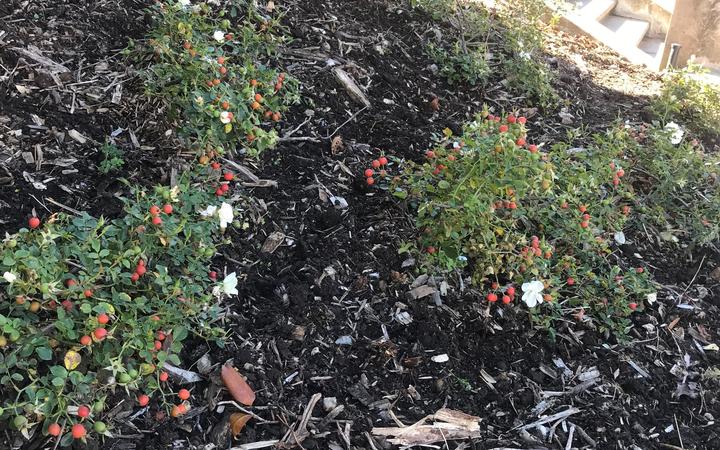
“It is a shame to see them weeded up – although the law is the law, despite 48 percent of voters at the referendum thinking NZ needed a change regarding cannabis laws.”The Parliament grounds garden not long after the weed was weeded.

The Parliament grounds garden not long after the weed was weeded. Photo: Asia Martusia King

When approached for comment on cannabis growing on Parliament grounds Speaker Trevor Mallard replied: “I’ve asked for the weed to be weeded.”

Meanwhile, a man was seen looking for remaining seedlings amongst the dirt, hoping to take a couple home, and was “disappointed” by their swift removal.

A few lingering protestors were unaware of the cannabis, but confirmed they would be looking around to see what else they could find.

Russia ‘is using banned landmines’: Campaign group says anti-personnel devices that failed to deploy were found in Kharkiv

By Andy Jehring of Daily Mail

Russia is using banned landmines that can detect footsteps and kill or injure anyone within a 50ft radius, a report has found.

Human Rights Watch said POM-3 anti-personnel mines that failed to deploy were discovered in the besieged Ukrainian city of Kharkiv (stock photo)

Human Rights Watch said POM-3 anti-personnel mines that failed to deploy were discovered in the besieged Ukrainian city of Kharkiv despite international treaties outlawing their use.

The campaign group said the ‘Medallion’ mines have been deployed by Vladimir Putin’s invading forces.

The devices descend by parachute before burying or fixing themselves into the ground.

A ‘seismic detector’ inside senses if someone is approaching and launches an explosive charge, sending shrapnel flying.

The use of landmines is prohibited by the 1997 international Mine Ban Treaty. Russia is not among the 164 signatories but Ukraine is.

Stephen Goose, director of the group’s arms division, said: ‘These weapons do not differentiate between combatants and civilians and leave a deadly legacy.’

Human Rights Watch said that a delivery canister remnant pictured in Ukraine contained POM-3 mines that failed to deploy properly, with markings indicating that it was produced last year.

Mr Goose added: ‘Countries around the world should forcefully condemn Russia’s use of banned anti-personnel landmines in Ukraine.

‘(It) deliberately flouts the international norm against use of these horrid weapons.’

Biden gets his second booster after his Covid remarks

By Michael D. Shear of New York Times

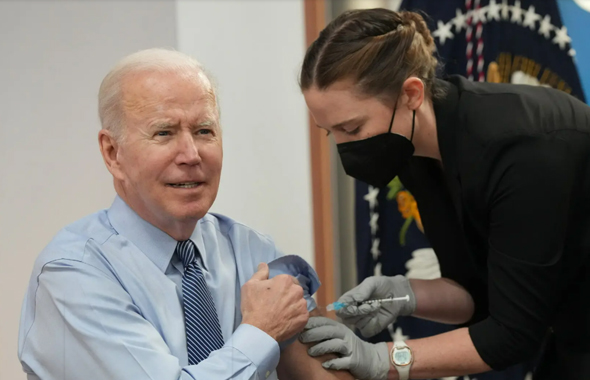
WASHINGTON — President Biden received a second Pfizer-BioNTech booster shot against the coronavirus on Wednesday afternoon, a day after federal health officials cleared an additional booster dose of Pfizer or Moderna vaccines for people over 50 and for many of those who have compromised immune systems.

President Biden received a second booster shot on Wednesday at the White House.Credit…Doug Mills/The New York Times

Officials said that people in those two categories could get another shot at least four months after they received their first booster. Mr. Biden, now 79, received a Pfizer booster in late September.

“We know boosters are critical to providing an additional level of protection,” Mr. Biden said on Wednesday, explaining why he was getting his second booster then. He got his shot after making remarks about the status of the fight against the pandemic, in which he highlighted a new website.

“It didn’t hurt a bit,” he said afterward.

Mr. Biden and his top public health advisers have repeatedly urged people to get fully vaccinated with the initial two-shot regimen required with either the Pfizer or Moderna vaccine. And they have said that everyone should get boosted because the initial vaccination’s effectiveness against infection from the virus diminishes over time.

ADVERTISEMENTContinue reading the main story

In taking the shot, the president is hoping to encourage a population that is already weary of the fight against Covid-19 and over the vaccines. Officials said far fewer people have received booster shots than original vaccinations.

“If you haven’t gotten your first booster, please don’t wait,” Mr. Biden said on Wednesday.

Lawmakers and their staffs on Capitol Hill were informed on Wednesday that they too were now allowed to receive a second booster dose, if they are older than 50 or meet other criteria.

Zachary Montague contributed reporting.

Michael D. Shear is a veteran White House correspondent and two-time Pulitzer Prize winner who was a member of team that won the Public Service Medal for Covid coverage in 2020. He is the co-author of “Border Wars: Inside Trump’s Assault on Immigration.” @shearm