Home Blog Page 289

Princess Angelika thanks Australia for their assistance and support

Tonga High Commissioner to Australia Princess Angelika Tuku’aho has shown her gratitude to Australian authorities for various assistances they donated to Tonga since January 15 fatal tsunami.

FM dinner with Pacific Diplomatic Corps at RG Casey in Canberra 2022.

“Today we mark the one-month anniversary of this unprecedented natural disaster that has struck Tonga – from which it will take years to recover”, a statement said.

The High Commission of the Kingdom of Tonga in Canberra is very grateful to the Government and the people of Australia for all their generous assistance, prayers and love that has extended to Tonga at this very challenging time.  

“Australian Government assistance Tonga is a member of the Pacific family, and Australia is standing by Tonga in its time of need. Australia is ensuring that its assistance directly meets the immediate humanitarian aid and disaster relief needs of the Tongan people and government as a reliable and responsible partner of the Pacific family.

Australian assistance included AU$3 million in humanitarian assistance.

 The Australian Government is in close communication and coordination with the Government of Tonga at all levels, including Ministerial and Prime Ministerial levels – Prime Minister, the Hon. Scott Morrison spoke with Prime Minister, Hon. Siaosi Sovaleni on 19 January.

Tonga’s two Guardian-class Patrol Boats and a landing craft – all Australian gifted – were undamaged and have been used regularly by Tonga since the eruption to check on impacted communities, distribute essential supplies and evacuate people. Australia’s pre-positioned stores with the Tongan Red Cross have been delivered to impacted communities.

Humanitarian relief supplies

Royal Australian Airforce (RAF) has conducted eight aerial surveillance flights to assess initial damage across Tonga; more may follow at the request of the Government of Tonga, As of 15 February, 15 RAF humanitarian assistance flights have landed in Tonga carrying essential supplies and equipment, including family kits, hygiene kits, shelter kits and bedding, water purification tablets, Personal Protective Equipment and cleanup equipment, UNICEF emergency kits and satellite equipment from Telstra. RAF assistance flights have delivered over 130 tonnes of supplies and equipment to date, with more flights likely in the days ahead. HMAS Adelaide, the largest support vessel in the Royal Australian Navy, arrived in Tonga on 26 January carrying humanitarian and medical supplies such as shelter, water purification and hygiene kits, as well as engineering equipment and helicopters to support logistics and distribution. HMAS Adelaide completed contactless delivery of over 80 tonnes of supplies and equipment on 27 January. In total, HMAS Adelaide and Australian assistance flights have delivered more than

210 tones of essential supplies and equipment to date.

Telecommunications

Communications with and within Tonga continue to be significantly impacted as a result of the disaster. Australia’s Department of Foreign Affairs and Trade (DFAT), Telstra and Tongan telecommunications authorities moved quickly and effectively to address the disruption to communications. Basic mobile connectivity is now re-established, voice calls and texts are now operational on Tongatapu, and limited data services are also available through GPRS and 3G. Contact with and within Tonga is occurring through satellite technology provided by Australia and other partners, The Australian High Commission in Tonga has been making available its satellite phones to support official communications by the Government of Tonga. Tonga’s international and domestic communication cables were cut by the eruption and repairing these is a priority. A commercial cable repair vessel has arrived in Tonga and currently working on repairing the international cable. Australia is engaging with the Government of Tonga on connectivity options while the cable is being repaired, including possibly providing antenna and other communications equipment, potentially in collaboration with other partners. Australia is closely supporting Tonga in re-establishing communications with the outside world. This has allowed the Tongan community in Australia (numbering more than 40,000) and elsewhere to communicate with family and friends in Tonga to ensure their safety.

Cooperation with partners

Australia’s Department of Defence has established Operation TONGA ASSIST 22. The Tonga High Commission in Canberra and Australia is closely coordinating its response with partners including France and New Zealand (under the FRANZ agreement), Japan, the United States and the United Kingdom. A coordination hub has been established at Defence’s HQ Joint Operations Command, where liaison officers are embedded from His Majesty’s Armed Forces of Tonga, Fiji, NZ, Japan, France and the UK, and with virtual participation from the United States. Australia is supporting offers of assistance from other members of the Pacific family through logistics and coordination where possible, for example, a contingent from the Republic of Fiji Military Forces left Australia on 9 February for Tonga to assist with the recovery efforts.

People to People

Tonga is also most appreciative for the outpouring of support from the Australian Community, including the Tongan-Australian Diaspora. The community has rallied together in an effort to raise much needed financial support and to collect donations of essentials. These donations are being co-ordinated in each state by the Pili-e-Tauhala Recovery Committees – formed by the Her Royal Highness Princess Angelika Lätufuipeka Tuku’aho, High Commissioner for Tonga. Also, Tonga is grateful for the donation of some urgently needed medical supplies by Med Earth through SmartAid, Equinox and others. As well, Thread Together have donated over 20,000 items of brand-new clothing and footwear. These donations were able to sent to Tonga in the first of a number of containers graciously donated to Tonga High Commission by the Swire Shipping Group. The High Commission is very grateful to the Australian Government, Department of Foreign Affairs and Trade, Australia Defence, the community and all these groups for their generous assistance to Tonga in its time of need.


Police still looking for family missing again after going bush last year

By RNZ.co.nz and is republished with permission.

A warrant of arrest remains for Thomas Phillips, the King Country man who went missing with his three children in Marokopa last year.Missing man Thomas Phillips.

Missing man Thomas Phillips. Photo: Supplied / Police

Phillips failed to appear in court on 12 January, facing charges of wasteful deployment of police personnel and resources following the extensive search.

Waikato west area commander Inspector Will Loughrin said police were trying to establish where Phillips and his three children are.

Police were receiving useful tips from the public as after the events last year people were aware what the family members looked like, Loughrin said.

Covid-19 misinformation fliers breach advertising standards – ASA

By RNZ.co.nz and is republished with permission.

The Advertising Standards Authority (ASA) Complaints Board received 56 complaints about two ads discouraging mask use, and 45 complaints about claims about the children’s vaccine.

An anti-vaccine leaflet delivered to households in Wellington by Voices for Freedom Photo: RNZ / Angus Dreaver

Some complainants were also concerned about suggestions in the ads that the Authority was endorsing their claims.

The board says the ads are in breach of the Advertising Standards Code.

ASA chief executive Hilary Souter said while freedom of expression was protected under the Bill of Rights, that must be balanced with the public health impact of misinformation during a pandemic.

Covid-19 update: 1929 new community cases reported in New Zealand today

By RNZ.co.nz and is republished with permission.

The Ministry of Health is reporting 1929 new community cases of Covid-19 in New Zealand today.

In a statement, the Ministry of Health said 1384 of the new cases are in the Auckland DHBs, with the remaining cases in the Northland (13), Waikato (155), Bay of Plenty (58), Lakes (9), Hawke’s Bay (17), MidCentral (3), Whanganui (11), Taranaki (9), Tairāwhiti (8), Wairarapa (5), Capital and Coast (28), Hutt Valley (50), Nelson Marlborough (60), Canterbury (35), South Canterbury (7) and Southern (77) DHBs.

There are 73 people in hospital with the coronavirus, with one in ICU. Seven of the cases are in Waikato Hospital, with others in Auckland, Rotorua, Tauranga, Wellington, Tairawhiti and MidCentral hospitals.

Yesterday the Ministry reported 1573 new community cases of Covid-19 and said 1140 of them were in Auckland.

There were also 18 cases reported at the border today.

There have now been 26,544 cases of Covid-19 in New Zealand since the pandemic began.

There were 35,903 vaccine booster doses given yesterday, as well as 2274 first doses, 1396 second doses and 1791 paediatric doses.

Nearly 370,000 booster doses were given over the Ministry’s ‘Big Boost’ week, while more than 90 percent of Māori aged 12 years and over in the MidCentral DHB region have now been full vaccinated -the fifth DHB area in Aotearoa to reach this mark.

Since Tuesday, one in every 10 people presenting at the Middlemore Hospital emergency department has tested positive for Covid-19.

Tributes flow for Tongan man killed in Kamehameha Highway crash

Henry Tonga. Photo/Supplied

Tributes are flowing in online for a Tongan man killed in a crash on Kamehameha Highway in Kahuku on Oahu, Hawai’i last week.

Henry Tonga, 26, of Kahuku was driving north on Kamehameha Highway when he hit a woman who was driving from a side street onto Kamehameha Highway going south, local news KHON reported.

The woman’s vehicle lost control, went off the roadway and crashed into a pole.

When the Honolulu Fire Department arrived the woman’s vehicle was on its side. HFD used a battery powered hydraulic rescue tool to get Tonga out of his car. HFD said he was unresponsive.

EMS officials treated them both. Tonga was taken to the hospital in extremely critical condition, and the woman was taken to the hospital in serious condition.

Police reportedly said Tonga was pronounced dead at the hospital.

A post on a sister’s Facebook page read: “This hurts so much (love). My dearest little brother Henry I love you (so much)”.

One comment said: “Deepest condolences sis 😢 Praying God’s angels comfort and strengthen you and your family”

Another person wrote: ” Rest In God Love Henry Tonga until we meet again!”.

” Beautiful and handsome Henry you gone too soon, but I believe God’s have bigger plans for you, love you Hika and Miu”.

Leptospirosis in Fiji: 14 dead, 179 cases confirmed

By RNZ.co.nz and is republished with permission.

While Fijian health authorities are happy Covid-19 cases in the country are on the decline, they can’t say the same for leptospirosis.

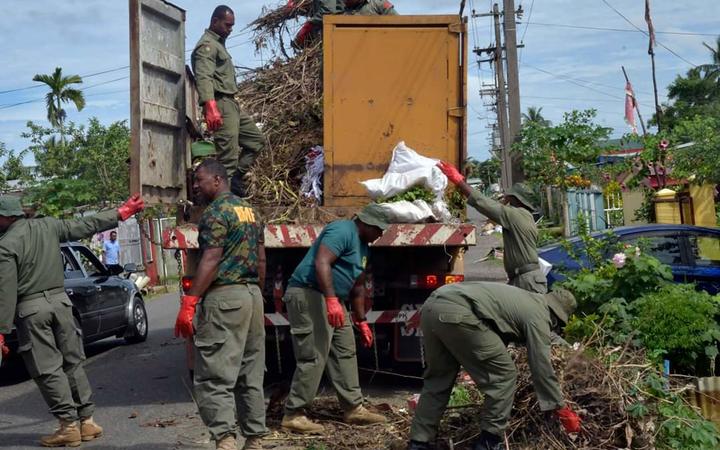
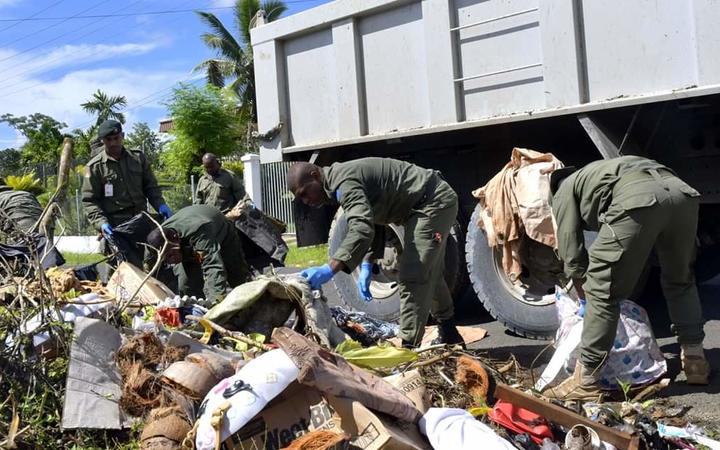
Soldiers help clean up in the capital Suva. Photo: Supplied/Fiji govt

A six-year-old is among 14 people who have died from leptospirosis in Fiji this year.

Health Secretary Dr James Fong said this followed the recent heavy rains and flooding experienced around the country.

He said the remaining 13 deaths involved males aged between 16 and 35 years old.

Fiji recorded 28 new cases of Covid-19 in the community on Thursday – its lowest since this third wave began last November.

The head of Fiji’s Medical Association, Dr Basharat Munshi, is urging the public to boil all drinking water and cover their hands and feet when out in the fields.

“It’s an occupation hazard for farmers, dairy workers and abattoir workers so if you’re a farmer, please wear gumboots and gloves where necessary,” Dr Munshi said.

“If you have any cuts and scratches to cover them up when you go out into the fields.”

Dr Munshi said climate-sensitive diseases such as leptospirosis, dengue fever and typhoid were prevalent during periods of heavy rain and flooding.Dr Basharat Munshi.

Dr Basharat Munshi. Photo: Supplied

It was imperative that members of the public adhere to the health precautions to avoid contracting leptospirosis, Dr Munshi said.

“The symptoms of leptospirosis include fever, muscle pain, headache, red eyes, loss of appetite, nausea, vomiting, dizziness or feeling weak.

“To prevent leptospirosis, people must avoid wading or swimming in flooded waters, wear shoes when walking outside, and keep all food and drink covered and away from rats.”

Dr Fong said 65 of the latest leptospirosis cases were reported in the Central Division, three in the east, 38 in the north and 73 cases recorded in the west.

While leptospirosis case numbers were above expected numbers for this time of the year in the west and central divisions, Dr Fong said there was also an increasing trend noted in the north of the country.

An Emergency Medical Assistance Team (FEMAT) has been deployed to the western interior of Fiji’s main island Viti Levu to address the surge in leptospirosis cases there.

Another team, led by Health Minister Dr Ifereimi Waqainabete is visiting communities on Kadavu Island in Fiji’s east.Soldiers clear rubbish during the LTDD campaign.

Soldiers clear rubbish during the LTDD campaign. Photo: Supplied/Fiji govt

Dr Fong said these areas were difficult to reach and are at risk of a major outbreak of the disease.

“The hospital admission and deaths data indicate that most of the hospital admissions and deaths are in the Western Division,” he said.

“There have been 14 deaths with 12 in the western division, one in the central division and one in the northern division,” Dr Fong said.

“The majority of hospital admissions in the west are from Ba, Nadroga/Navosa, Rakiraki and some parts of Lautoka.

“The majority of admissions in the Central Division have been from Serua/Namosi, Wainibokasi and Tailevu.”

Dr Fong said delays in accessing care had been noted to contribute significantly to those adverse outcomes.

In January last year, Fiji’s Health Ministry announced a leptospirosis outbreak and 10 suspected fatalities.

One in 10 Middlemore Hospital emergency department patients testing positive for Covid-19

The Auckland hospital gives rapid antigen tests to everyone who turns up for treatment, even if they do not have symptoms of the coronavirus.

The Middlemore Hospital emergency department. Photo: LDR

Middlemore Hospital head of emergency department Dr Vanessa Thornton told Morning Report that trend had continued over the week, and the hospital expected that.

“It is slowly increasing, but it will be increasing more dramatically over probably the coming weeks, one would think … as predicted in many of the modelling processes that have occurred, and we have our own epidemiologist that looks on a day-to-day basis and we’re expecting the cases to increase across the next few weeks.”

The number of admissions in general was also expected to rise.

“We may have to reduce some other services in order to cope, but we have a plan in place to cope with this surge going up in the next four weeks” – Middlemore Hospital head of emergency department Dr Vanessa Thornton.

“We do have people presenting with cough fever and it exacerbates their underlying condition, if that makes sense, so it makes their underlying comorbidities more obvious, though they would be sicker than you and I would be with the virus.

“There are few people that are still presenting with … pneumonia, or infection and their lungs, but that’s a much, much smaller proportion than happened in the Delta outbreak.

“They are people who are very, very very short of breath, but we had a lot of those people in intensive care in the last outbreak, which was a much different virus than Omicron.”

The situation for staff was challenging, Thornton said.Dr Vanessa Thornton

Dr Vanessa Thornton Photo: RNZ / Dan Cook

“It’s been challenging for the last two years over this whole period for the staff, from added processes, for example, the PPE you just discussed, and it is very warm in summer … the staff have responded really well to this and had been working very, very hard but it is challenging in this environment.”

As for the wider hospital’s capacity to deal with Omicron, Thornton said: “We have changed all our process to adapt, but it’s challenging. We already had reduced staffing … prior to this and with the illness that’s affecting the community, it obviously affects our workforce as well.

“The challenges in the workforce just add to the pressures from the patients, but Middlemore has been prepared for this.

“We may have to reduce some other services in order to cope, but we have a plan in place to cope with this surge going up in the next four weeks.”

Russia-Ukraine crisis biggest risk to world stability since Cold War – MFAT

By RNZ.co.nz and is republished with permission.

The Ministry of Foreign Affairs and Trade (MFAT) head warns the Ukraine crisis is one of the most significant risks to international peace and security since the end of the Cold War.

MFAT chief executive Chris Seed made the comments to the Parliament’s Foreign Affairs, Defence and Trade Select Committee today.

“We’ve got no doubt that war in Europe of any sort is of no benefit to New Zealand,” he said.

When asked what would happen if sanctions were imposed and Russia retaliated by restricting energy supply, Seed said it would certainly cause disruption, increase oil prices, and affect sharemarkets – all of which would affect New Zealand.

“They’ll wash throughout supply chains, they’ll impact on our ability to trade, we will be in the same boat as any other countries in the world,” he said.

The prime minister has spoken to the president of the European Commission, and Foreign Minister Nanaia Mahuta met with her counterparts in the United Kingom, Australia, Canada, Japan and Ukraine.

Seed said efforts had been made to make a request to speak to the Russian foreign minister.

“We [MFAT] have spoken to the Russian ambassador here, we have sent our colleague ambassador in Moscow, we’ve sent our ambassador from Warsaw to Ukraine,” he said.

“I think there is a clear sense that the situation is of great concern.”

Nasal Vaccines Could Help Stop COVID-19 From Spreading—If Scientists Can Get Them Right

By Jamie Ducharme of Times.com

When SARS-CoV-2, the virus that causes COVID-19, infiltrates the body, it typically enters through the nose or mouth, then takes root and begins replicating.

A volunteer receives the second component of the nasal Sputnik V COVID-19 vaccine at Sechenov University Clinical Hospital No 2 in Moscow on Feb. 15, 2022.
 Artyom Geodakyan/TASS—Getty Images

But what if it could never get a foothold in the upper airways? That’s the promise of nasal COVID-19 vaccines, which are meant to prevent infection by blocking the virus at its point of entry.

In countries like the U.S., where about 76% of people have had at least one dose of the COVID-19 vaccine, nasal vaccines would by default be used primarily as booster shots, and some research teams are studying them specifically in this capacity. But if they’re found to be effective and eventually authorized, they could also give young children and people who fear needles more options.

There’s a long road ahead. While oral vaccines are fairly common, the only nasal vaccine cleared by the U.S. Food and Drug Administration to fight a respiratory pathogen is FluMist, which is used to prevent influenza among people ages 2 to 49. FluMist was in development for decades but was briefly taken off the market due to efficacy issues, which could foreshadow the challenges awaiting vaccine researchers working to create a nasal COVID-19 vaccine.

Still, researchers hope that nasal vaccines may one day do what even the highly effective mRNA vaccines made by Pfizer-BioNTech and Moderna have not: slow transmission enough to bring the pandemic to an end.

Shot-in-the-arm COVID-19 vaccines introduce the body to genetic material from the SARS-CoV-2 virus, teaching the immune system what to do if it’s faced with the real thing. These shots have proven very good at preventing severe disease and death, but less adept at blocking infections—particularly against highly contagious Omicron.

Nasal vaccines could theoretically prevent many infections by conferring “local” immunity where it’s needed most: the nose. If it worked, a spritz would blanket the upper airways with defenses similar to those generated by the body after a brush with the actual virus, says Dr. James Crowe, director of Vanderbilt University Medical Center’s Vaccine Center.

“You get the best immunity to virus pathogens by mimicking, to the greatest extent possible, the actual infection without causing disease,” Crowe says. “Stopping a virus in its tracks, right at the front door, is very attractive.”

If done right, Crowe says, nasal vaccines could be highly effective—but developing them is difficult. They typically use live but weakened forms of a virus, which introduces a “Goldilocks” challenge, Crowe says. Weaken the virus too much and the vaccine won’t work; not enough, and it could overstimulate the immune system, leading to side effects. The balance has to be perfect.https://7cd9edfa3ce1414bf170069917333f85.safeframe.googlesyndication.com/safeframe/1-0-38/html/container.html

The nose is also a very different environment than the deltoid muscle, where shots are typically given. It’s a near-direct line to the brain, which clearly necessitates a different set of precautions, Crowe says.

The upper airways are also built to encounter foreign substances and thus may not respond as readily to a vaccine, says Benjamin Goldman-Israelow, an instructor at the Yale School of Medicine. He co-authored a recent study, which has not yet been peer-reviewed, that examined how mice responded to nasal versus injected COVID-19 vaccines. The research found that mice mounted a stronger immune response when they were injected first and then boosted with a nasal vaccine, as opposed to getting a nasal vaccine alone.

That may be because the upper airways are equipped with natural defenses against invading particles—they’re the body’s entry point for the outside world, after all—and thus do not always respond strongly when first introduced. “By giving that initial priming through the [injected] mRNA vaccine, we educate the immune system, so that by the time we give the intranasal boost, the immune system already knows to recognize this as foreign,” Goldman-Israelow says.

Another rodent study by Yale researchers, published in December, found that mice vaccinated with a nasal flu shot were less likely to catch influenza than those that received an injected vaccine—a finding that may also apply to other respiratory diseases, such as COVID-19. Animal studies from other research teams have also shown promising signs that nasal vaccines may prevent infections, particularly when given as boosters.

Of course, large clinical trials—some of which are underway in other countries—are necessary to know how a product will work in humans. “We cannot draw conclusions about whether a nasal COVID-19 vaccine is going to work or not work until we see the data,” says Dr. Hana Mohammed El Sahly, a professor of virology and microbiology at Baylor College of Medicine.

Already, there have been setbacks. Last year, the biopharmaceutical company Altimmune stopped testing a nasal COVID-19 vaccine candidate due to disappointing trial results.

Nasal vaccines are difficult to get right. In the early 2000s, long before the COVID-19 pandemic, a nasal flu vaccine used in Switzerland was found to be associated with Bell’s palsy, a form of facial paralysis that is typically temporary. By the time that research was published, it was no longer in clinical use.

FluMist, the nasal flu vaccine used in the U.S. and first approved in 2003, hasn’t run into such safety issues, but it was briefly taken off the market due to efficacy problems. The U.S. Centers for Disease Control and Prevention’s vaccine advisory committee did not recommend its use in 2016, citing data that it had been only 3% effective during the prior flu season. A reformulated version of the vaccine returned to market for the 2018-2019 season. In its current form, “it does seem to work, and the data are supportive of its continued use,” El Sahly says.

Still, FluMist is not authorized for people who are 50 and older or younger than 2. It’s also not recommended for immunocompromised individuals and some people who have lung conditions such as asthma. That’s because it contains a live but weakened virus: an effective way to prompt an immune response, but one that can lead to potentially serious side effects in people with underlying conditions.

“It’s a balancing act,” Randall says. “You want the vaccine to be effective, but you don’t want it to really hurt or cause [too much] inflammation.”

Leaps in vaccine science have made it easier, if not easy, to find that balance. The Yale team working on nasal vaccines, for example, created a formula that does not contain an adjuvant (a material often added to vaccines to stoke a stronger response from the immune system) in hopes of reducing side effects. The pandemic also means there’s lots of interest in and money available for developing new vaccine candidates, which hasn’t always been the case.

But creating a vaccine to fight viruses that mutate frequently, like influenza and SARS-CoV-2, will always be challenging. That’s true whether researchers are developing a nasal vaccine or a shot in the arm, Randall says.

“We can ensure that the sequence that we selected is the one that actually ends up in the vaccine,” he says. But there’s no telling whether the sequence in the vaccine will be the one that “Mother Nature throws at us.” Such mismatches explain why the flu shot is far more effective in some years compared to others.

So far, mRNA-based COVID-19 vaccines have held up well against new variants, providing strong protection against severe disease and death. Omicron, however, has been the best variant yet at dodging vaccine-acquired immunity, causing record-shattering numbers of cases and straining the health care system. That underscores the need for a tool that can prevent infections as well as severe disease.

“Really, the goal is to reduce or even eliminate transmission,” says Tianyang Mao, a graduate student at the Yale School of Medicine and co-author of the study on booster nasal vaccines for COVID-19.

Two years into the COVID-19 pandemic, the need is clear. But Yale’s Goldman-Israelow says his team is motivated to create a nasal vaccine not only for this pandemic, but also the next one. Having the technology ready and waiting could significantly strengthen our country’s response the next time a new threat emerges—just as decades of work on mRNA vaccines came to fruition just in time to help with the COVID-19 pandemic.

If nasal vaccines had been available sooner to complement the COVID-19 vaccines we already have, he says, they could have “helped reduce transmission and help prevent the continuation of the pandemic that we’ve seen.”

Covid-19: Fed up Northland nurse defaces anti-vax billboard

By Sam Olley of RNZ.co.nz and is republished with permission.

The nurse, who RNZ has agreed not to name, is increasingly worried about the number of patients she’s seeing who are still unvaccinated for Covid-19.

Te Tai Tokerau only reached the 90 percent first dose milestone last week.

The nurse has noticed a growing number of anti-vaccination signs outside properties and when she saw one erected on public land earlier this month, targeting misinformation at children, she intervened.

“There’s this huge billboard, it’s pretty massive and it’s on public land as you’re coming in. It’s quite a threatening sign especially towards kids sort of saying ‘Covid jab kills our kids’. And that sort of set me off.”

She decided to come back to the site under the cover of darkness.

“I phoned up dad. I said, ‘Can you please get the spray paint out ready to go?'”

The way the message had been painted meant she couldn’t “fix” it, the nurse said.

“So I just went all out and spraypainted the whole thing. So I wore like, you know, a massive hoodie and I wore a Shrek … a Shrek mask.”

The nurse said the protests at Parliament highlight why anti-vax billboards should be ousted.

“They think they are a majority but they really aren’t. They need to know that. They’re not working. They’re just going around putting up signs threatening kids… this is not okay. I don’t have kids but …I deal with children all the time.”

She is particularly concerned that anti-vaccination and Covid-19 misinformation signs are, in her view, becoming more noticeable in Northland, than pro-vaccination ones.

“The anti-vax signs are so much more aggressive, in your face,” she said.

“As soon as you hit Kerikeri up north, especially Cooper’s Beach area, [it’s] just filled with anti-vax, the wrong sort of information, complete misinformation.”

She said “there’s not enough” Covid-19 vaccination signs to get accurate information out.

“We need more people out there,” she said.

In a statement, the police said they “would not recommend such behaviour as it could potentially inflame a situation”.

They said the person doing the spraypainting could be liable themselves for their actions, and billboard concerns should be reported to “authorities”.