Home Blog Page 290

Hospitals consistently understaffed, nurses overworked – report

By Rowan Quinn of RNZ.co.nz and is republished with permission.

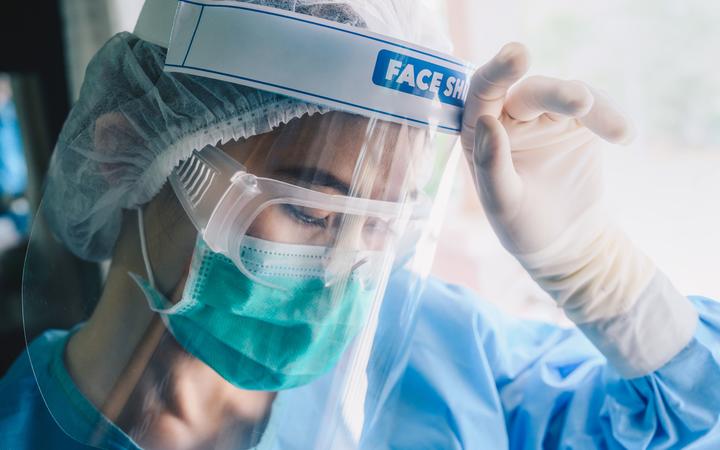
A major independent report has found nurses are overworked and exhausted because of consistent understaffing and that patients are not always getting full care.No caption

(File image) Photo: 123RF

The Safe Staffing review was ordered by Health Minister Andrew Little after pressure from nursing unions.

It found hospitals were regularly short of nurses and that has been made worse because of border closures.

The extra pressures from Covid-19 had taken a significant and lasting toll on the wellbeing of nurses and their whānau, the report said.

“If the number of nurses in the workforce are not increased, it is impossible to achieve safe staffing and positive

work environments with the current demand for care,” the report said.

“Nurses will remain overworked and exhausted.”

The report reviewed the safe staffing programme, Care Capacity Demand Management Programme, put in place 16 years ago to try to measure the number of nurses working versus the number needed.

But the report found that not all district health boards had been following it properly.

Eighty-three percent of nurses said patients did not get full care when understaffed.

Half said they suffered poor mental health when their shifts were understaffed and 41 percent said they were asked to take on extra shifts every week.

The union, NZ Nurses Organisation, said the report was vindication for everything they had been saying for years.

But they said the reality on the ground was actually much worse.

Health Ministry Andrew Little blamed the district health boards for not implementing the safe staffing programme and the National government for failing to take it seriously when it came into office in 2009.

“Since we became the government in 2017, we’ve employed an extra 3621 nurses in DHBs, increased nurses’ wages, made it easier for foreign-trained nurses to settle in New Zealand, and we’ve got recruitment programmes under way,” he said.

However, just last week New Zealand trained migrant nurses who wanted to stay in New Zealand complained they were not able to get residency visas, despite a government plan to give residency visas to nurses from overseas this year.

Little said he agreed there had been a lack of workforce planning for nursing and that the health reforms which ditch DHBs would help to fix that.

“It is critically important that we fix the nursing shortage for the sake of our overworked nurses and to ensure the safety of patients, and our health reforms will make nationwide workforce planning much easier as well as ensuring greater accountability.”

Covid-19: Pacific leaders “prepared” for more cases in Pacific community in NZ

By Eleisha Foon of RNZ.co.nz and is republished with permission.

Despite Pasifika making up about half of the cases in the current Omicron outbreak, community leaders say they’re prepared for what’s to come.

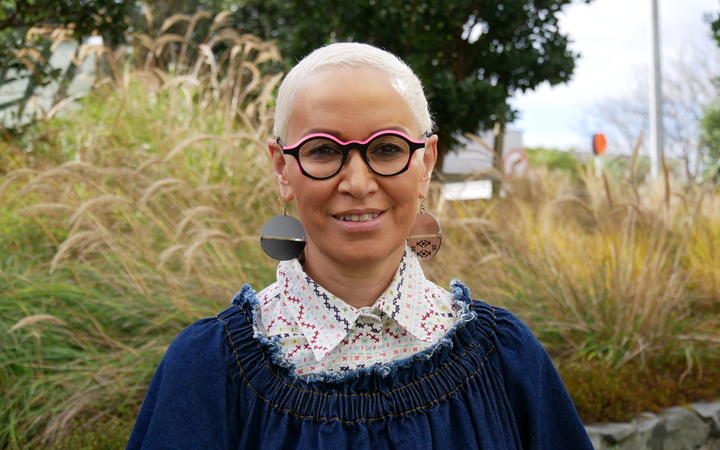
Pasifika immunologist Dr Dianne Sika-Paotonu, of Otago University

But, Pasifika Immunologist Dr Dianne Sika-Paotonu said the actual figure could be much greater, placing further pressure on our health system.

Pasifika people are being told to ready for self-isolation and to help others do the same, after a record number of cases surpassed 1000 yesterday nation wide.

In Canterbury, Tangata Atumotu Trust, general manager, Carmen Collie said they were prepared and ready for what is to come.

Her organisation have been spear-heading mass vaccination events in Christchurch with hundreds of self-isolation packs already handed to families with medical supplies to prepare people for geting omicron.

“Certainly we are prepared in Christchurch, we have been working in preparation for some weeks, if not months. We are working really hard in the boosting space, we are providing them with isolation preparation packs in a number of pacific languages.”

$NZD1.5 million has been made available to Pacific groups across the country, complementing the $2 million announced last year for funding towards boosting vaccine numbers for Pasifika.No caption

Photo: RNZ / Samuel Rillstone

Minister for Pacific Peoples Aupito William Sio said so far more than 100 applications had been received for the first round of funding.

It is expected to help Pacific youth groups, churches and other health organisations get safety messages and life saving information out in at least nine different languages.

He wanted community led initiatives to take charge ahead of the borders opening.

“So far the priorities is to prepare our communities,” he said.

Dr Dianne Sika-Paotonu said boosters, and information must continue to be accessible for our most vulnerable – especially 5-11 year olds.

“So, moving forward we need to ensure that there is an equity focus that reduces barriers but also builds trust for people to ensure they get access to the help, care and services they need. Please get vaccinated, boosted, tested, wear a mask, follow the public health measures and have a plan.”

She said despite Omicron reporting milder symptoms, she asked people take it seriously to slow the spread and to reach out to others to help them do the same.

Covid-19: 1573 daily community cases reported in New Zealand

By RNZ.co.nz and is republished with permission.

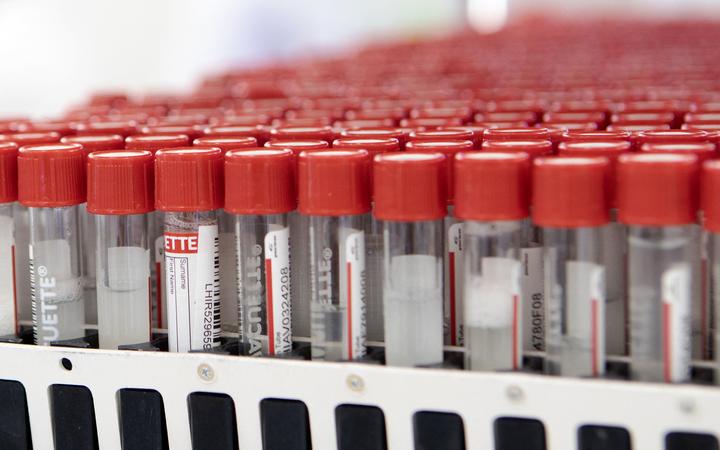
The Ministry of Health is reporting 1573 new community cases of Covid-19 in New Zealand today.Samples of the coronavirus (Covid-19) PCR gargle test are pictured before further examination in the LifeBrain laboratory in Vienna on February 1, 2022.

Samples of the coronavirus (Covid-19) PCR test (file image). Photo: AFP

In a statement, the Health Ministry said there were 62 people in hospital with the coronavirus. None are in ICU.

The Ministry said 1140 of the cases are in Auckland, with the others in the Northland (31), Waikato (143), Bay of Plenty (29), Lakes (35), Hawke’s Bay (2), MidCentral (3), Whanganui (11), Taranaki (8), Tairāwhiti (8), Wairarapa (30), Capital and Coast (20), Hutt Valley (22), Nelson Marlborough (49), Canterbury (7) and Southern (35) DHBs.

There were also 15 cases reported at the border today.

Yesterday’s community case numbers hit 1160.

The total number of Covid-19 cases in New Zealand since the pandemic began is now 24,660.

There were 40,452 vaccine booster doses given yesterday, including 2320 first doses, 1487 second doses and 1677 paediatric doses.

The Ministry said more than 90 percent of Māori aged 12 years and over in the Hutt Valley have now been fully vaccinated -the fourth DHB area in Aotearoa to reach this milestone.

“Since January 22, when the first Omicron case was detected in the community, double vaccinated cases are ten times less likely to require hospitalisation than unvaccinated cases – 4 percent of unvaccinated cases have required hospitalisation and 0.4 percent of fully vaccinated cases have required hospitalisation.”

Tonga Covid outbreak: 56 new cases; urgent building of isolation facility at Hu’atolitoli prison as more inmates test positive

Prime Minister Hu’akavameiliku

Tonga has 14 new cases in the community and 17 new cases at Hu’atolitoli prison.

There are 25 new cases at MIQs which were passengers on flights from overseas.

Prime Minister Hu’akavameiliku said the total number of active cases is 195.

He said on Monday 14 we had 139 active cases and today, Thursday 17, that number rises to 195 active cases. The difference between these two numbers of active cases amounted to 56 new active cases.

The Prime Minister said seven cases had been released from MIQs and six cases had been recovered taking the total number of cases since the outbreak to 208. He said deducting that 13 cases from 208 leaves us with the total number of 195 active cases.

Hon Hu’akavameiliku said all six positive cases previously recorded on Vava’u eventually tested negative.

The Minister of Health Saia Piukala said there are 14 new community cases.

He said the total number of positive cases at Hu’atolitoli prison was 30 and the prisoners contracted the virus through a warden.

He said 11 front line health officials tested positive.

Hon Piukala said the 25 cases from overseas at the MIQs appear to be people who had been at the “tail-end” of their infection.

Hon Piukala said the active cases showed no serious illness except two cases at Mu’a MIQ, with one who suffered a ruptured appendix while the other was having a boil.

Health Chief Officer Dr Siale ‘Akau’ola confirmed during the press conference this morning all passengers arriving from Fiji this week tested negative.

The transmission at Hu’atolitoli prison affected some prisoners and wardens.

The Minister of Prison Samiu Vaipulu said a new facility was currently being built at the prison today to cater for the positive cases.

Hon Vaipulu said two builders who were building the facility tested positive but they were asymptomatic.

The Prime Minister’s press conference this morning was emotional with the Minister of Health and the Minister of Prison trying to compose themselves while trying to respond to some questions from the media.

Fiji church ministers refuse to vaccinate against Covid-19

By RNZ.co.nz and is republished with permission.

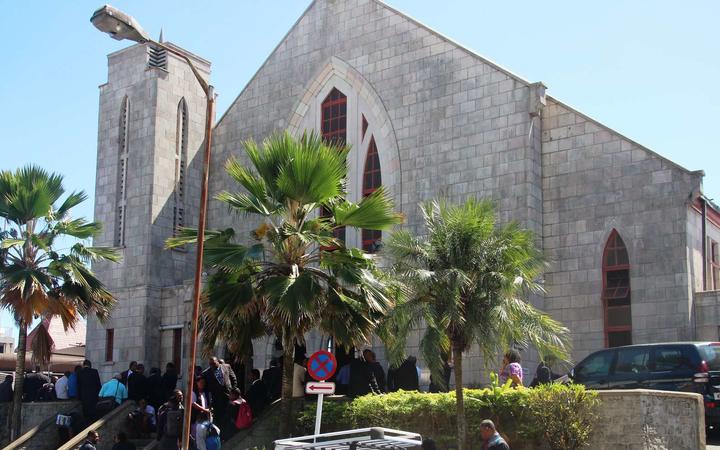
A group of church ministers in Fiji have resigned because they do not want to be vaccinated against Covid-19.A Methodist church in Fiji.

A Methodist church in Fiji. Photo: Facebook / Methodist Church in Fiji and Rotuma.

There has been growing pressure on the clergy to get the injections since the Fiji Government’s ‘No jab, no job’ policy for public servants was announced last June.

The Methodist Church said this week 11 of its pastors had tendered in their resignations.

The church’s secretary, Reverend Wilfred Regunamada, said the ministers were not forced to resign but had done so of their own free will.

“And in between that deadline, the church continued to call and ask them if they had changed their decision,” he said.

“Those who have not changed and made their decision, the church in the various circuits or the divisions that they were in, farewelled them very well. “

Regunamada said the church respected their decision and the vacant positions would be filled by other lay preachers and theology students within the church.

The Methodist Church is the largest Christian denomination in Fiji, with 36.2 percent of the total population (300,000) including 66.6 percent of indigenous Fijians.

In October last year, 10 ministers of the Christian Mission Fellowship Church quit over their refusal to vaccinate.

At the time, Reverend Regunamada the Methodist Church’s secretary for communications and overseas mission, said they had not laid off any of their ministers nor had anyone been forced to resign.

“Currently, we are carrying out awareness for our ministers and they are being given time, until November, to get their vaccines.

“The church’s stand is mainly to ensure the safety of its members which means that its ministers, who are servants of the people, need to be vaccinated first.

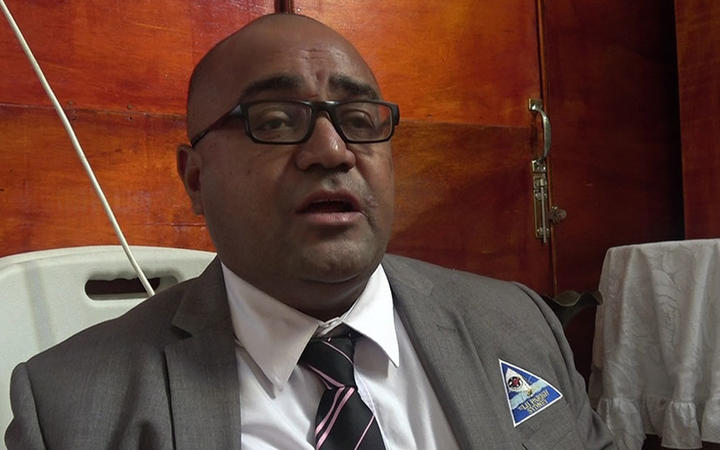
“At the moment, those that have not been vaccinated have been requested not to partake in any church services but have been advised to stay in their own homes and they are still being paid,” Regunamada said.Reverend Wilfred Regunamada.

Reverend Wilfred Regunamada. Photo: Supplied

Remaining 8 percent tough to vax – Govt

Meanwhile, Fiji’s Health Ministry is finding it hard to vaccinate the remaining eight percent of the adult population against Covid-19.

Health Secretary Dr James Fong said they continued to receive requests for vaccine exemption from people with medical comorbidities, particularly Non Communicable Diseases (NCDs).

He said the medical condition of these people require vaccination “and granting the exemption is not an option for any qualified medical person”.

“We have noted how difficult it is to increase our vaccination coverage for the last 8 percent of our adult population, despite the increased risk of severe outcomes in this group,” Dr Fong said.

He said community support was needed to sustain the impact of their efforts.

“While we will continue to do our part to promote and deploy vaccines, we need community support to sustain the impact of our efforts especially to the vulnerable within this 10 percent.”

“It is a grave concern that we continue to receive requests for vaccine exemption from persons with medical comorbidities, especially NCDs.”

As of 14 February 2022, 574,700 of Fiji’s adult population were fully vaccinated, the Health Ministry stated.

The booster dose program began at the end of November 2021. As of 14 February 2022, 91,414 individuals have received booster doses of the Moderna vaccine and 60 people got the Pfizer.

Dr Fong said for the month of February, 175,558 more people have become eligible for booster doses.

“We are targeting to cover all these eligible individuals in the days ahead. Please come forward to get your booster (third dose) vaccine if you are aged 18 or over and it has been at least 5 months since your second dose.”

Fiji has 141 active cases of Covid-19 in isolation while the death toll is at 820.

Experts split on raising age of superannuation

By Kim Moodie of RNZ.co.nz and is republished with permission.

Experts are split over the idea, with some saying it’s time to re-think the eligibility age, while others warn it will only worsen entrenched inequalities.

Deputy Prime Minister Grant Robertson says Labour is standing by its commitment to not raise the superannuation age. Photo: Pool / NZME / Mark Mitchell

Earlier this month, the OECD warned the government it needed to do more to cool down the overheating economy and bring down its debt levels.

Among its recommendations, which included removing obstacles to home affortability and building, the OECD suggested increasing the eligibility age for superannuation from 65, linking it to life expectancy.Brad Olsen

Brad Olsen Photo: Infometrics

Principal economist at Infometrics Brad Olsen said it was worth considering, as New Zealanders were now living longer and spending more time on their super.

“When the current New Zealand super ages were set, people were spending around about 13 percent to 18 percent of their life on New Zealand super.

“Now, they’re spending about 19 percent to 22 percent of their life.

“So, not only are people living longer, but there are more people now who are living on their super for an extended period of time.”

Olsen said the move could save billions of dollars that could be re-directed elsewhere.

But Age Concern’s chief executive Stephanie Clare said there was no reason to change it.

“We know today that some people who reach 65, they actually don’t stop working,” she said.

“They keep working, they love working, they want to work, for any reason. But there are some that can’t work any longer and have been holding out until they get a pension.

“We don’t want this to disadvantage anybody. We want people to have the choice.”

Clare said any changes should be announced a decade in advance, at least, to give people time to save.

Financial Advice New Zealand’s chief executive Katrina Shanks said any changes had to be flexible.

“The big things we need to think about are for those who are in physical jobs, and they can’t work past 65 or currently are struggling to work to 65, what does that look like for them?

“And, what do we have in place to make it more equal for those that have to leave the workplace earlier, because they’re in more physical roles?”

Focus should be on level playing field – academic

Dr Claire Dale, a research fellow in the Retirement Policy and Research Centre at the University of Auckland’s business school, said the government should level the playing field before it even thinks about raising the age.

“Area deprivation and ethnicity impact on life expectancy,” she said.

“Life expectancy at birth is lowest in the most deprived areas. So, your wealth and your ethnicity make a huge difference to your longevity.”

She said lifting the eligible superannuation age without boosting benefit payments would only make it worse for older people who were financially insecure.

“It’s very hard for an older person, if they lose their job, to get another job.

“You just can’t even get an interview, let alone have a hope of changing an employment. That’s going to exacerbate hardship also.”

But Olsen warned without re-considering the eligibility age, the government was sleepwalking into an incredibly difficult situation for younger New Zealanders.

“At the moment, we’ve got around about four workers supporting every elderly person, funding their superannuation,” he said.

“In the future, we’re going to have only two workers supporting every superannuation and paying for that New Zealand super.

“So, it does start to restrict New Zealand’s economic opportunities and where we might put our money. There is a huge opportunity cost involved with the current status of New Zealand superannuation.”

Finance Minister Grant Robertson rejected the OECD’s recommendation, saying the Labour Party will never increase the superannuation age.

“There’s a commitment that we’ve made, a social contract if you will, with New Zealanders to make sure they have dignity in their retirement and support in their retirement.

“I recognise there is a cost associated with that, but that is the priority decision that we make. As an economy I believe we can afford that.”

But the National Party’s finance spokesperson Simon Bridges said the government needed to rein in its spending.

“I hope he doesn’t say I know everything, my borrow and spend model is just fine,” Bridges said.

After the report was released, the National leader Christopher Luxon said the party’s policy to increase the age progressively to 67 from July 2037 remained.

Tongan suspects  identified in 2019 homicide of Kathryn Leavitt in US

Salt Lake Police are  searching for Tongan suspects who are accused of killing 27-year-old Kathryn Blaire Leavitt in 2019.

Leavitt was found shot dead in an apartment at 1211 N. Redwood Road on July 27, 2019 after officers responded to a call of a burglary in process. While en route, officers were told shots had been fired.

A press release on Tuesday (Salt Lake time) said: “SLCPD Homicide Detectives responded to the scene and began conducting a thorough investigation, which resulted in detectives learning the identities of six suspects in the murder of Ms. Leavitt and the obstruction of justice that has occurred since her death.”

The six suspects were identified as the following: 26-year-old Katoa Pahulu, 36-year-old Lachelle Fiefia, 26-year-old Mapilivai Laulea, 22-year-old Sunia Cavazos, 37-year-old Tevita Kofutua, and 41-year-old Timote Fonua.

SLCPD Captain Victor Siebeneck said, “It’s time you come forward. You’ve been running from justice for too long. This is your chance to set the record straight – to tell us what happened and to be the one who does the right thing and to tell us who killed Ms. Leavitt.”

Leavitt was a member of Utah’s Pacific Islander Community and the community has fought for justice in her case since 2019.

Anyone with information on this case should call 801-799-3000 and reference case number 19-137096.

Collections for Tonga continues around Aotearoa

By RNZ.co.nz and is republished with permission.

The Northland Pasifika community in New Zealand is planning on sending three shipping containers to Tonga packed full of essential supplies before Christmas.

Fale Pasifika Manager Johnny Kumitau said the local council is putting money towards the first container.

He is now calling on local businesses in Whangarei to help fund the others to lighten the load for families.

“When something happens everyone comes together, we have a pretty tight Pasifika community right from Dargaville to Kaitaia,” said Kumitau.

Food and water donations will be needed but also equipment to turn the soil and help reignite the agriculture sector decimated in the disaster, said Kumitau.Goods are packed for Tonga by volunteers in Palmerston North.
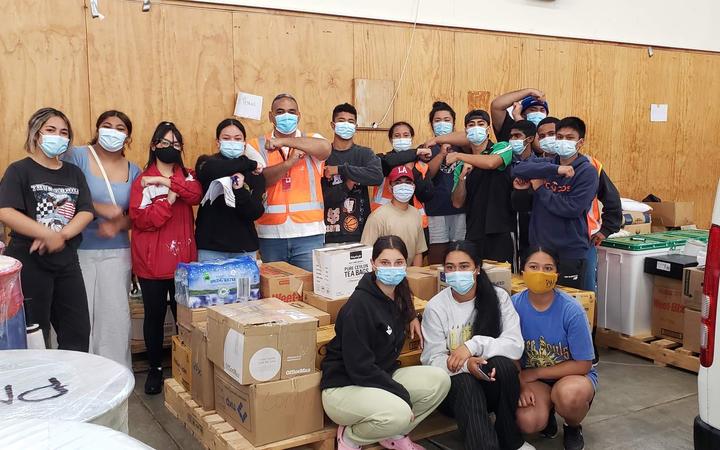
Goods are packed for Tonga by volunteers in Palmerston North. Photo: Nalasikau Halatuituia

“The other thing… probably looking at further down the track to support Tonga is having wheelbarrows and spades to turn the soil, to help with planting down the track, so there is a lot more to this than just food and water,” he said.

Anyone in the Northland region wanting to send essential food and water to Tonga can drop the goods off to F.W.C Tongan Church at 53 Murdoch Crescent Raumanga Whangarei.

Donations from the Central North Island have been loaded into a 40ft container in Auckland. $71,000 worth of essential supplies are packed in drums from families in the central region of New Zealand’s North Island.

Palmerston North Tongan community leader Nailasikau Halatuituia has been co-ordinating the shipment.

He says one drum of essential food costs around $700 to fill, some have been topped up by community donations.

“The drums are packed by families in the central region and sent directly to their families in Tonga, it’s the start of the healing process from here, and also the families in Tonga when they receive those drums it’s part of that connection and solidarity as part of a family and community trying to recovery from this terrible disaster,” Halatuituia said.

One drum should last a family around one month, but many have been sharing food with their neighbours, he said.

“It’s been tough for the communities, but they managed to pull together. The amazing thing is our youth have been volunteering, we’ve had schools donate too.

“Their donations go straight to schools in Tonga for example we got St Peters go to Apifo’ou College, the LAC their donation goes straight to Beulah College in Tonga and we also have donation going to the women’s crisis centre and the disability centre,” he said.Volunteers packing goods for Tonga in Palmerston North.

Volunteers packing goods for Tonga in Palmerston North. Photo: Nalasikau Halatuituia

Youth in the central part of New Zealand’s North Island have been doing the hard yards for Tonga.

Work is also underway to prepare for the future with long term aid plans being worked through.

Most of the small fishing boats were damaged by the tsunami and there is a great need for new boats to be sent, Halatuituia said.

“Boats would enable them to start fishing, in the agriculture sector as well they will need some help to get it up and running again,” Halatuituia said.

The first container to leave the South Island is expected to leave Christchurch on Friday. It will travel to Auckland before heading to Tonga.

Christchurch Tongan Community Secretary Sami Paeahelotu said it will be closed off this Thursday.

Community leaders are looking at sending a second one,” he said.

Meanwhile ten forklifts are expected to be donated to the Aotearoa Tonga relief committee which will be sent in staggered shipments.

Aotearoa Tonga Relief Committee Spokesperson Pakilau Manase Lua said Turners and Growers and Foodstuffs suppliers are gifting three of the forklifts to speed up the unpacking process of essential food when it arrives.

Tongan residents impacted by the violent volcanic eruption and tsunami have reached out to New Zealanders asking if anyone can donate generators, he said.

His team was now looking for PVA 15-30 diesel generators, to send to Tonga.

“We’ve got requests from people on the ground in Tonga for diesel generators, ideally those which are 15-30, so we’re wanting to see if there are any donors out there that are happy to donate some diesel generators, particularly for freezers and fridges and things like that which are essentials,” he said.Goods are packed for Tonga in Palmerston North.
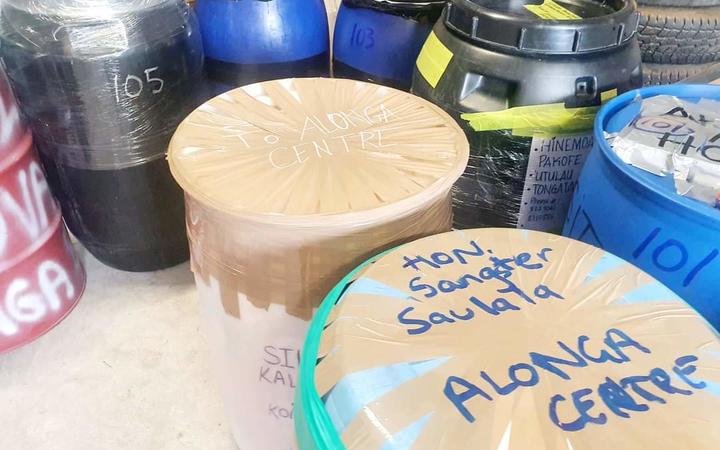
Goods are packed for Tonga in Palmerston North. Photo: Nalasikau Halatuituia

Havelulahi Ma’asi Taukei’aho is a Kanokupolu community leader in New Zealand has been a volunteer at Mt Smart driving forklifts.

“Generators, excavators, loaders, trucks for the rocks. We already sent them food, they said thanks for sending the food and water and things, it’s hard to get contact with them, we keep trying and trying,” Mr Taukei’aho said.

The next Matson shipment bound for Tonga carrying aid containers is scheduled to leave Auckland on Wednesday the 16th of February.

“There are actually areas on the main island Tongatapu, like Kanokupolu out on the western district which were absolutely flattened, people have lost everything, the infrastructure is down, all the power poles and all that, so it will take a lot of time to rebuild, but also on the outer islands which were again swamped by the waters and some people have actually relocated,” Manase Lua said.

Work is underway across New Zealand to gather much needed supplies to support the rebuild, Pakilau Manase Lua said he was overwhelmed by the response so far.

“We’re really fortunate, we were contacted by Turners and Growers who in turn contacted Jenny Salesa one of our co-chairs, they are offering to donate two forklifts, we are in conversations with foodstuffs who have a supplier who is keen to donate a forklift, so we are looking at three so far, it’s been a fantastic response,” Manase Lua said.

New Zealand Tube Mills has donated a further seven forklifts. Labour MP Anahila Kanongata’a-Suisuiki said they “heard our call, our cry for forklifts and he has answered them”.

She said the Tongan workers at New Zealand Tube Mills have been emotional following the news of their employer’s support.

Pasifika make up half of the cases in the current outbreak of Omicron variant

By Susana Suisuiki of RNZ.co.nz and is republished with permission.

Pasifika people are making up about half of the cases in the current outbreak of the Omicron variant in New Zealand.

And New Zealand’s Ministry of Health is urging the Pacific communities in New Zealand to receive their booster vaccination to protect themselves against the Omicron variant.

Ministry of Health Pacific health director Gerardine Clifford-Lidstone said in the past few days, there had been a big increase in the positive cases of Covid-19 in Pacific communities.

“What we’re seeing over the last few days is quite a big increase in the cases for Pacific and we did anticipate, it’s what we’ve seen internationally. At the moment, about 50 percent of the cases are Pacific people and mainly in the Auckland region.”Gerardine Clifford-Lidstone.

Gerardine Clifford-Lidstone. Photo: Supplied

As the country begins phase two of the Omicron response, Clifford-Lidstone said the impacts that Omicron would have on the community was anticipated.

“We’ve been preparing for Omicron and the Pacific community impact of it since very early in January once we realised that this was going to have a significant impact,” Clifford-Lidstone said.

“The risks for Pacific are always going to be very high, and this is mainly because we’ve got higher rates of comorbidities, so long-term conditions. We tend to have multi-generational and multi-family households, and we’re likely to be in employment where there are essential worker roles and face barriers to accessing healthcare.

“Whether it’s Delta or Omicron, these are consistent right across when we’re talking about Covid and the impact on Pacific.”

Clifford-Lidstone said the booster shot would prolong coverage and protection against the variant.

“We’re at 97 percent for the first dose, and for the second dose we’re at 95 percent. But many of these people will now be eligible for the booster shot and, unfortunately, we’re only down at 48 percent across the country.”People line up at a Covid-19 vaccination centre

People line up at a Covid-19 vaccination centre Photo: RNZ / Angus Dreaver

Clifford-Lidstone said the decision to move New Zealand into phase two was about ‘flattening the curve’.

“What we’ve seen now is a lot more widespread community transmission, so it’s reducing the sizes of gatherings, using masks in stores and just generally a different approach to try manage things.”

The impacts of last year’s lockdown have meant fewer Pacific peoples, particularly in Auckland, were getting tested.

Clifford-Lidstone said there was a growing sense of “fatigue” among the community who have spent almost four months in lockdown.

“As I understand, there is an increasing feeling that people don’t want to get tested because they don’t want to be self-isolating,” she said.

“But the thing is, this is the only way that we can get an understanding of how widespread this is and so encouraging people to go and get tested is very important.”

Covid-19 daily community case numbers hit 1160 as Omicron outbreak grows

By RNZ.co.nz and is republished with permission.

There are 1160 new community cases of Covid-19 being reported today.Motorists queue at the Otara testing station after a positive COVID-19 coronavirus case was reported in the community as the city enters a level 3 lockdown in Auckland on February 15, 2021.

Covid-19 testing in Wellington. Photo: AFP

It is the first time the number of daily cases has surpassed 1000.

In a statement, the Ministry said 861 were in the Auckland DHBs, with the remainder in Northland (24), Waikato (73), Bay of Plenty (33), Lakes (5), Hawke’s Bay (15), MidCentral (3), Whanganui (4), Taranaki (9), Tairāwhiti (9), Wairarapa (5), Capital and Coast (32), Hutt Valley (20), Nelson Marlborough (15), Canterbury (8), South Canterbury (3) and Southern (39) DHBs, with two still to be determined.

There are 56 people in hospital with the coronavirus, with none in intensive care. The average age of the current hospitalisations is 65.

There were also 43 cases at the border today, with travellers arriving from India, Japan, Malaysia, Pakistan, UAE, UK and USA.

Yesterday, 744 new community cases of Covid-19 were reported in New Zealand.

There have now been 23,127 cases in New Zealand since the pandemic began.

There were 46,156 booster doses given yesterday, along with 660 first doses, 1406 second doses and 1710 paediatric doses.

More than two million booster doses had now been given, the ministry said.

“Omicron is highly transmissible, but all of us can play our part to slow the spread of the virus, help protect our most vulnerable people from being infected, and ensure our health system is able to manage extra demand for services.”

Milford Track worker case

Meanwhile, a worker on the Milford Track has tested positive for Covid-19.

Guided walking business Ultimate Hikes confirmed one of their staff became unwell on Saturday.

Yesterday, they returned a postive PCR result while isolating in Queenstown.

Ultimate Hikes general manager Noel Saxon said the staff member was a lodge attendant at their private lodge, Glade House.

He said there are roughly 100 guided walkers who are considered casual contacts.

All staff and workers are required to be vaccinated.

Canterbury

Canterbury District Health Board has set up an emergency co-ordination centre to help the region deal with an increase in Covid-19 cases.

There were nine new cases in Canterbury yesterday, bringing the total number of active cases to 20.

In a statement, Canterbury DHB incident controller Helen Skinner said the centre will help local authorities to comprehensively manage Covid-19 risk.

Students in Hawke’s Bay test positive

There are now more than 90 active covid 19 cases in the North Island’s most eastern regions.

There are 15 new cases in Hawke’s Bay, including five students from Taradale High School in Napier.

The school says 87 students have been identified as contacts and need to get tested.

All students are learning from home.

There are now 60 active cases in Hawke’s Bay.

Further north in Tairāwhiti there are nine new cases.

There was a case found earlier at Gisborne Boys’ High School but now the school is back to normal as no new cases have been found there.

There are 34 active cases in and around Gisborne.