Home Blog Page 301

Why didn’t sirens go off before deadly tsunami hit? Disaster Minister’s response unclear

The Minister of Disaster and Deputy Prime Minister Poasi Tei did not directly answer a question asking why tsunami warning sirens did not sound before the powerful waves devastated the kingdom.

Disaster Minister and Deputy Prime Minister Poasi Tei (L)< FM Broadcom Radio Director Katalina Tohi

The Managing Director of Radio FM Broadcom, Katalina Tohi, asked the Minister during Sunday’s press conference to explain whether the sirens were damaged.

“I did not hear the sirens. Maybe Poasi will explain what had happened,” Tohi said in Tongan.

She told the conference it was important for them to be cautious about what they would do and what instruction they should give to people if things like this happened again.

Tohi also said the police had to order people who were at the Nuku’alofa waterfront watching the Hungas’ eruptions to leave and go to higher grounds, meaning the people were unaware a tsunami was coming.

Minister’s response unclear 

Hon. Tei did not answer the question directly, but instead said that when he was assured a tsunami was coming, he immediately called the director of the Met Service and told him to “sound the alarm for evacuation.” He did not say what happened to the siren and whether the alarm he was referring to was meant for the sirens.

The Minister said he was at his home on the day of the tsunami when he heard the explosion from the Hungas. He did not mention hearing any sirens.

Our correspondent in Tongatapu said no sirens were heard even when the waves started flooding Nuku’alofa in the afternoon. He said the sirens were allegedly damaged.

He said the government’s tsunami warnings were announced on the radio.

Sirens could have forewarned residents

Critics believed a siren warning might have helped warn some residents in time to flee to higher ground. An earlier warning might have given them time to take provisions with them. This would have been especially helpful on the islands of ‘Atatā and Mango.

Local reports said that about six hours before the tsunami hit Tongatapu on Saturday, January 15, people lined up at the Nuku’alofa waterfront, which is 65km from the Hungas, to watch an unusual swirling of the water. The same unusual activity was seen in the waters around Mango the same morning.

A report from Kanokupolu, which was the hardest-hit town in Tongatapu, said a tsunami hit the town before the deafening explosion was heard from the Hungas.

Many believed if the sirens had been working, they could have been sounded ahead of the shockwaves striking the islands.

Local media who interviewed the Mango evacuees after they arrived in Nuku’alofa yesterday revealed the survivors were uninformed and they did not mention hearing any sirens.

Many said the tsunami happened so quickly and suddenly that they were “absolutely unprepared”.

Children warn parents 

Some parents said before the tsunami hit they were busy with their normal preparation of food and cooking for the following day, which was Sunday. They only became aware of the deadly waves coming after their children called at them to look at the sea.

Some said they were confused when they heard people yelling at them to run.

They said when the first explosion was heard the big waves had already crashed in the middle of the village, destroying houses and trees.

They found their first high ground to take refuge, but the waves were so big they had to keep running into the bush before they felt safe.

Fear of famine

There was a fear of a possible famine in Tonga after the tsunami caused significant damage and wiped out some towns and islands. It also blanketed the whole of Tongatapu with a thick layer of volcanic ash.

Most plantations are dying while families are struggling to clean up the dust brought inland by one of the world’s most powerful volcanic eruptions.

Dead animals

Meanwhile, the public is being warned to keep away from places which are littered with animal carcasses drowned in the tsunami. Locals have been left retching over the putrid smell of rotting cows and pigs.

Work to remove the animal remains are in progress in Tongatapu, especially in the town of Kanokupolu.
N95 masks ruled out for public as mask policy updated

The government is tightening its rules for mask use under the ‘red’ traffic light setting.

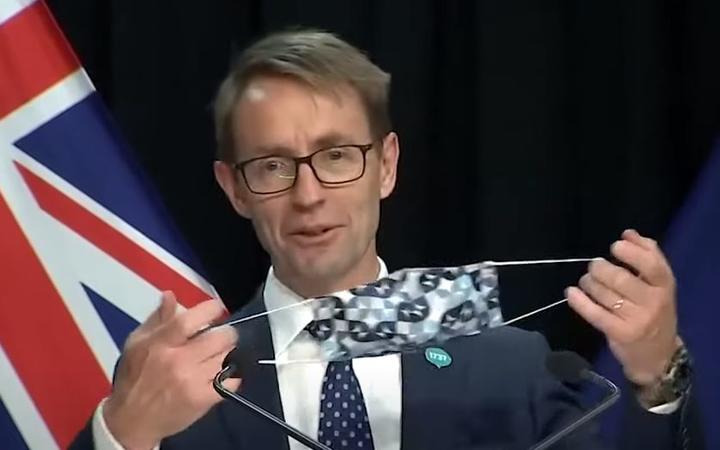
Ashley Bloomfield with a mask.
Director-General of Health Dr Ashley Bloomfield says a three-layer cloth mask is acceptable for the public. Photo: RNZ

Prime Minister Jacinda Ardern said under the red setting, masks must now be worn at food and drink businesses, close proximity businesses, events and gatherings. The same exceptions for when people are eating, drinking or exercising still apply.

She said the changes do not apply to non-public facing workplaces, swimming pools, and gatherings where people have the exclusive use of the premises.

Face coverings must now also be “an actual mask”, the prime minister said during her post-Cabinet briefing.

“That means no more scarves, bandanas, or as some of us may have seen from time to time, t-shirts pulled up over the face, for example.”

All workers legally mandated to be vaccinated must also now wear a medical-grade mask, for example type 2R or level 2 mask or above, while working in public-facing roles. This includes the widely available blue medical grade disposable masks.

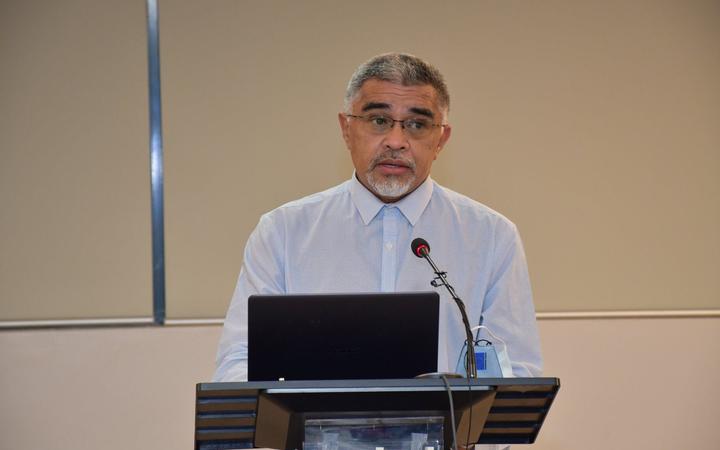
Director-General of Health Dr Ashley Bloomfield who also attended the briefing said the government was not recommending the use of N95 masks for the general public.

This was partly because they were expensive and may not be easy to access for some people.

He said for the general public, a three-layer cloth mask was acceptable.

Ardern added that this was guidance rather than a rule.

School students Year 4 and up are already required to wear a mask. For consistency they will now need to wear a mask while on Ministry of Education-funded school transport services and public transport.

Ardern said the science has been updated and these changes will help save lives and give time to get more of the population boosted.

The Ministry of Health will be updating guidance on masks, including how to safely reuse masks that can be reused, and how to ensure the best fit.

Covid Response Minister Chris Hipkins has defended the recommendation that people use disposable surgical or medical grade masks, saying it is an issue of practicality.

“We are using in N95 masks in those higher risk settings, such as healthcare workers, those who are working at the border,” he told Checkpoint.

“We’ve got to make sure that people can comply and we know that those paper masks – the medical grade masks – they’re readily available from the supermarket … so people can actually use them.”

Hipkins said he would have more to say soon on mask supply and mask use in schools.

“We’re also making sure we’re working with community organisations, food banks and others to make sure that masks are available to those who might not otherwise be able to access them.”

Baby and teen among latest Covid-19 deaths in Fiji

By RNZ.co.nz and is republished with permission.

A baby and a teenager are among the latest deaths from Covid-19 being reported in Fiji.

They were among 11 new deaths reported today which raised the national tally since the start of the pandemic to 779.

no caption
Photo: 123rf.com

Fiji’s Government also confirmed 987 new cases over three days, with 240 of them in the 24 hours to 8am on Monday.

In this latest third wave, 135 people have recovered from Covid-19 in Fiji, but the Health Ministry said there are 2,575 active cases still in isolation.

Health Secretary Dr James Fong said of the latest cases, 656 of them were recorded on 22 January, 81 on 23 January, and 250 cases reported on 24 January.

He said 859 cases were in the Central Division, 62 in the West and 18 cases in the North.

“Overall, there have been 61,898 cases recorded, with 68 percent of the cases from the Central Division, 28 percent from the Western Division, 1 percent of the cases from the Eastern Division and 3 percent from the Northern Division,” Dr Fong said in his virus update on Monday night.

Of the Covid-19 deaths reported from 13-23 January, Dr Fong said five deaths were reported in the Central Division, three from the west, two from the east and one from the Northern Division.

He said two of the deceased were below the age of 18 years old “who both had pre-existing conditions from birth that contributed to the severity of their sickness and deaths.”

The rest of the victims were aged between 50 and 83, he said.

Dr James Fong.
Dr James Fong. Photo: Fiji govt

“The remaining individuals were at a higher risk of severe disease due to their ages or underlying medical conditions,” Dr Fong said.

He said five of the people who died were not vaccinated, one had only received his first dose, three were fully vaccinated and two were not eligible for vaccination.

The four-month-old infant from the Western Division was brought to a remote nursing station on 13 January in a severely weakened state, Dr Fong said.

“He was medically assessed and stabilised by the attending medical staff and a Covid test was done, which was noted to be positive.

“He passed away before he could be transferred to Lautoka Hospital, despite the resuscitation efforts of the attending medical staff.

“Records show that the infant had been born with medical complications and was lost to follow-up.”

Dr Fong said the 15-year-old boy was admitted to the Suva Colonial War Memorial Hospital (CWMH) on 17 January.

“He had a significant pre-existing medical condition that contributed to the worsening of his Covid-19 complications. He died on January 19 and was not vaccinated.”

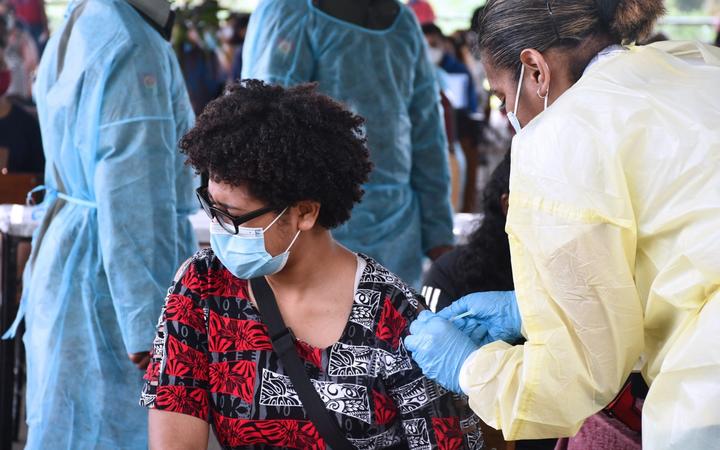
Medical worker in Fiji administering a  vaccination.
Photo: Fiji Government Facebook

Dr Fong said the deaths of the two children with underlying health conditions were sad reminders that as cases increased to very high numbers in the community, “our most vulnerable are at higher risk of being infected and suffering from severe disease”.

“We know that severe disease is rare in children, but this risk increases should they have significant underlying health conditions.”

Dr Fong said the ministry was not able to determine the full impact of coronavirus on a person with severe co-morbidities who had tested positive and died.

He said this could be because many of these deaths are occurring at home or people are presenting very late to the hospitals.

“Trying to work out to what extent did Covid-19 cause the death and to what extent co-morbidities causing the death is not easy. When you talk about expensive- we’re talking about the expense in terms of money and in terms of time taken to run one test.

“We have also recorded 756 Covid-19 positive patients who died from other serious medical conditions unrelated to Covid-19; their doctors determined that Covid-19 did not contribute to their deaths, therefore these are not classified as Covid-19 deaths.”

Dr Fong said there were 169 Covid-19 patients in hospital, with 78 of them in the central division, 70 in the west and 21 in the eastern division.

Fiji has had 61,968 cases of Covid-19 since March 2020, with 61,898 reported since April 2021. There have been 58,856 recoveries.

Covid-19 update: 25 new community cases, including 10 of Omicron

By RNZ.co.nz and is republished with permission.

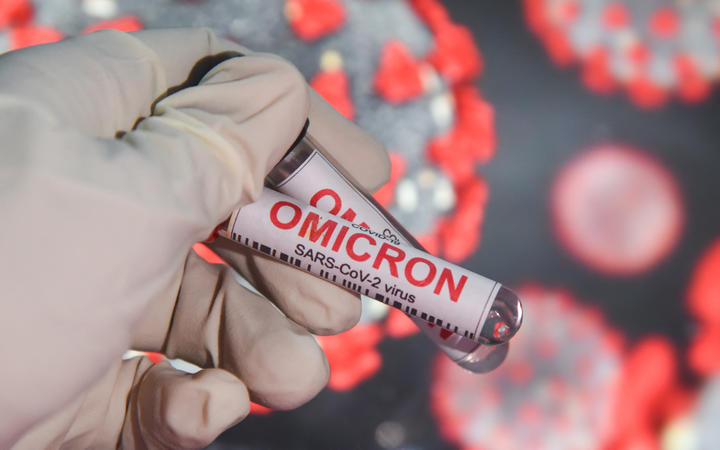
There are 25 new cases of Covid-19 in the community today, including 10 confirmed Omicron cases.

Vector virus, bacteria, cells 3D rendering on blue background. Coronavirus 2019-nCov novel coronavirus concept. Covid-19
Photo: 123RF

In a statement, the Ministry of Health said the new cases are located in Northland (1), Auckland (18), Bay of Plenty (2), Lakes (2), MidCentral (1) and Nelson Marlborough (1).

It said there are two Omicron cases in Tauranga.

“Both cases are in the same household and are isolating at home. Case investigations are ongoing but, at this stage, there are a limited number of exposure events associated with these cases.”

The ministry said one Omicron case was in Nelson Tasman and are a household contact of a previously reported case. They were already isolating when they tested positive.

And another case in Palmerston North that is a household contact of a previously reported case was also already isolating when they tested positive.

The last six Omicron cases reported today are in Auckland – all have been linked to events on 15 and 16 January.

The ministry revealed that a case from the January Omicron cluster also attended a second private event in Auckland during their infectious period.

“The exposure occurred on the evening of (Sunday) 16 January at the Pukekohe Indian Hall in Auckland.

“Auckland Regional Public Health Service believe a large number of people attended this event. Anyone at this location at the relevant times is asked to get tested immediately, and self-isolate until a negative result has been returned.”

Further locations of interest have also been identified across Auckland and the Nelson Tasman region and will be published on the Ministry’s website as they are confirmed, the ministry said.

To date, there are 29 community cases of Covid-19 associated with the January Omicron Cluster, all are in isolation.

“Public health officials are continuing to manage Omicron cases in the community through rapidly isolating cases and contacts, contact tracing, and testing in order to slow the spread.”

At the border, there are 37 new cases today.

There are also 10 people with the virus in hospital today – five in North Shore, two in Auckland, one in Middlemore and two in Rotorua.

The average age of those currently hospitalised is 62.

Prime Minister Jacinda Ardern is due to lay out a blueprint for how the country will handle the three planned stages of a widespread outbreak of the Omicron variant tomorrow.

At its update yesterday, the ministry announced that there were 25 new community cases, including eight Omicron cases.

There were also 50 new cases identified in managed isolation.

More to come…

Antiviral medications may not be available until after Omicron peak

‘Oku taupotu ‘i lalo ha fakamatala fakaTonga

Antiviral medications ordered by the government may not be available until after the peak of the Omicron outbreak – if they get approval.

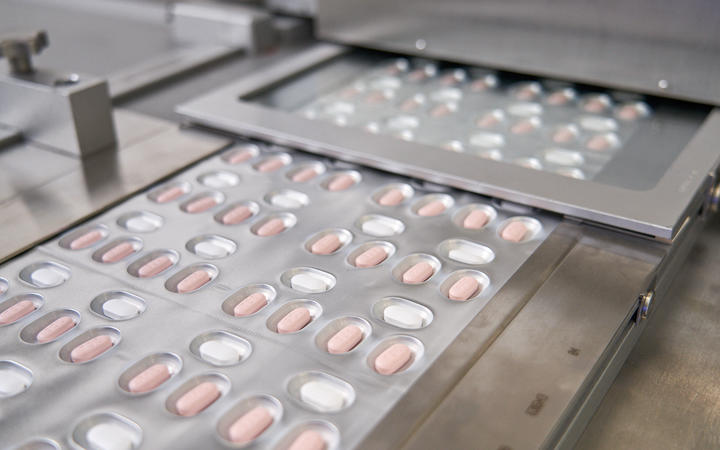
Pfizer in the making of its Covid-19 antiviral pills, Paxlovid, in Freiburg, Germany in 2021.

Pfizer in the making of its Covid-19 antiviral pills, Paxlovid, in Germany in 2021. Photo: Handout / Pfizer / AFP

The government announced last year it had advanced purchase agreements for 60,000 doses each of Molnupiravir, manufactured by Merck Sharp & Dohme (MSD), and Paxlovid, made by Pfizer, but neither is approved for use here yet.

The new antivirals have been hailed as a game changer for Covid-19 if given in the first five days of infection and are aimed at those most at risk of getting very sick or developing complications.

Overseas trials found Pfizer’s Paxlovid cut the chance of hospitalisation by 89 percent.

In New Zealand, Paxlovid is still going through the Medsafe approval process, while MSD has not yet sought approval for Molnupiravir.

Royal NZ College of GPs medical director Bryan Betty said the approval process must happen as quickly as was safely possible.

“The sooner we have the ducks lined up and approval … the better off we’ll be,” he said.

But even if the drugs arrived too late for this outbreak, they would still be invaluable in winter when cases could rise again, he said.

The 120,000 doses on order may not be enough and the government should consider ordering more, he said.

The Ministry of Health said Pfizer had just submitted more data for approval and it was likely that would be considered by its expert advisory group in mid-February.

If it was then approved, it would be well in advance of the timeline for supply, a ministry spokesperson said.

That was expected to be April.

Paxlovid was approved under emergency use rules in the United States last month.

FAKAMATALA FAKATONGA

‘Oku lava ke ma’u ‘a e fo’i’akau ‘enitivailolo ki he Koviti ki he kakai ‘oku nau puke he vailasi.

Ko e fo’i’akau ko eni ke folo ia ‘i loto ‘i he ‘aho nima ‘o ‘ene kamata ‘asi’. ‘Oku fakafuofua ‘e a’u ki he taha miliona e kakai ‘e lava ken au faito’o heni’.

Mei lahi foki e kakai Pasifiki mo Mauli ‘oku ‘i ai honau ngaahi mahaki tauhi kau ki heni mo e kau Kiwi matu’otu’a ange’ pea ‘e lava ke lahi ange faingamalie ken au mate mei he Koviti’.

Fakatatau ki he Potungaue Mo’ui kuo ‘osi fakamo’oni’i ‘a e tokoni ‘a e faito’o kona fakangofua (drugs) ke ne fakasi’isi’i ‘a e tokoto fale mahaki mo e mate’.

The three anti-virals available are Nirmatrelvir with ritonavir (branded as Paxlovid), Molnupiravir (branded as Lagevrio) and Rremdesivir, an infusion treatment (branded as Veklury).

Ko e Paxlovid ‘oku fa’u ia ‘e he Faisa. Na’e pehe ‘e ha lipooti ‘a e New Zealand Herald na’e fa’u ‘eni ke ne fakasi’isi’i ‘a e fakatu’utāmaki ‘e ala fakatokoto ai ‘i fale mahaki pe mate ‘i he vailasi ‘e ala a’u ki he pēseti ‘e 86.

Ko e tafa’aki kovi ‘o e faito’o’ ni ‘e kau ai ‘a e ongo’i mamatea, fakalele, lahi ange ‘a e toto mā’olunga mo e langa ‘a e uoua’. Ko e ngaahi ola ‘eni kuo taku ‘o pehē ‘oku tō lotoloto pe.

Lolotonga ‘a e hoko ‘a e huhu malu’i ko e to’omotafi taha ia ke ne malu’i ‘a e Koviti 19, ‘oku fakaai ‘e he antivirual ha ngaahi faito’o malu’i hono ua kia kinautolu ‘oku tu’u he tu’unga fakatu’utanaki.

Kuopau ke ma’u ‘e he kakai ‘a e faka’ilonga ‘o e Koviti pe tesi positive he Koviti pe ‘i ai ha taha honau fale’ ne ma’u ‘e he Koviti’ kae lava ke toki ma’u ha’ane fo’i’akau ‘enitivailolo.

‘E lava ke ma’u foki ‘e he kakai ‘a e ‘enitīvailolo ko ‘eni’ kapau kuo ma’u ‘a e mahaki tauhi hangē ko e kanisā, mahaki’ia ‘a e ma’ama’a pe halanga mānava’, mafu hangē ko e mahaki ki he halanga toto mo e lumetiki, konisenitolo, suka pe mahaki’ia ‘a e kofuua’, ne ‘osi ‘ave kinautolu ki ha tokangaeikina’anga mahaki tuunga ‘i hano tesi positive kinautolu ‘i he Koviti’.

‘E lava ke ma’u ‘a e pelesikulipisini ko ‘eni mei he toketā fakafamili’ pe ‘e lava pe ma’u ‘ikai ha pelesikulipisini.

List of Auckland Omicron-related locations of interest grows

By RNZ.co.nz and is republished with permission.

A number of close contact Omicron-related locations of interest in Auckland and Nelson have been added to the Ministry of Health’s website today.

No caption

Photo: AFP

Several Auckland locations have been listed as requiring people to get tested immediately and on day five if they were exposed at the specified time.

  • Shivani Restaurant in Papatoetoe on 16 January between 12pm and 1pm.
  • A private event at Pukekohe Indian Hall on 16 January between 6.45pm and 10.45pm.
  • Auckland Rose Park Hotel in Parnell between 12am on 14 January until 12.30pm on 15 January. Also at Rose Park Hotel from 4.30pm on 15 January until 10am on 16 January.
  • Tarka Indian Eatery at Mission Bay on 14 January from 4pm until 5pm.
  • Bus 120 [Stop 5564] Don Buck to Constellation Station Auckland on 20 January from 6.30am-7.30am.

In Motueka, anyone who was at Greenwood Health Motueka on 21 January between 11.40am and 1.45pm is asked to isolate, get tested immediately and then again on day five.

Other suspected Omicron locations of interest where people should monitor themselves for 10 days after being exposed to the site and get a test if symptoms develop include Nelson Airport Terminal Building, Event Cinemas in Westfield Albany and Rainbow’s End in Manukau.

For an up to date list of all locations of interest check the Ministry of Health’s website.

The Ministry of Health said that to date, there are 19 community cases of Covid-19 associated with the January Omicron cluster and all are in isolation.

Fiji will not lift Covid-19 restrictions – MOH

By RNZ.co.nz and is republished with permission.

Health authorities in Fiji say they will not advise the Government to lift Covid-19 restrictions out of fear of a resurgence of infections.

This comes amid 16 deaths and close to 350 new cases reported in the community last weekend.

Health workers wait for residents for their dose of AstraZeneca vaccine outside a vaccination center in Suva, after Fiji announced plans to make the coronavirus vaccine compulsory for all workers as it battles a runaway outbreak of the Delta variant.
Health workers wait for residents for their dose of AstraZeneca vaccine outside a vaccination center in Suva, after Fiji announced plans to make the coronavirus vaccine compulsory for all workers as it battles a runaway outbreak of the Delta variant. Photo: AFP or licensors

Fiji’s Health Secretary Dr James Fong says the spike in cases was experienced after a few health measures were relaxed in November last year.

“Our biggest worry remains compliance to the informal setting, especially among the informal dwellings where we may have some problem with providing oversight over the Covid-safe measures.

“They remain the most significant areas of risk and the most significant areas of transmission that can happen,” Dr Fong said

Fiji had reopened its borders to international travellers on December 1st with more than 70-thousand tourists expected to arrive at Nadi Airport by the end of this month.

Anyone who is in the high-risk group and develops any Covid-19 symptoms is strongly advised to get tested, said Fong.

He said the 16 deaths were recorded between 28 December 2021 and 20 January 2022, with 12 deaths reported in the Northern Division, two in the Central Division and two in the Western Division.

Fong said the deaths in the north from December 2021 to mid-January 2022 were being reported on Sunday because of a delay in the issuance of Medical Cause of Death Certificates.

“All were at higher risk of severe disease due to their ages or underlying medical conditions.

“Fourteen of the people who died were not vaccinated, while two were fully vaccinated,” he said.

“These were people who were over the age of 50 or had significant underlying medical conditions (non-communicable disease). And even more sadly, 14 of the people who died were not vaccinated.”

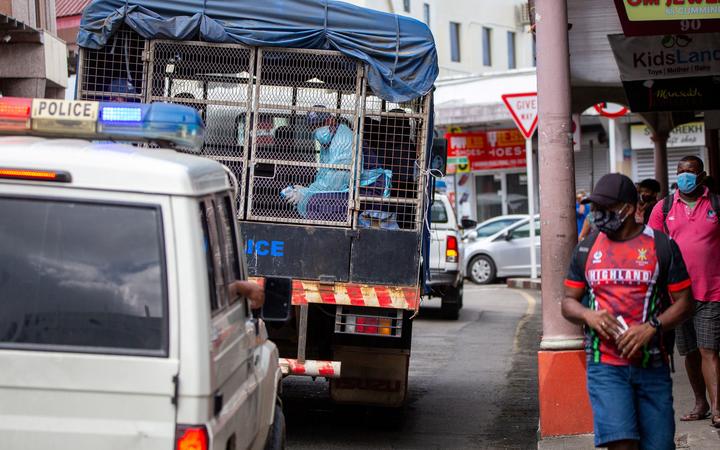
Police on patrol as they enforce face mask protocols in Fiji's capital Suva, amid a worsening outbreak of the Delta variant of Covid-19 in the Pacific nation.
Police on patrol as they enforce face mask protocols in Fiji’s capital Suva, amid a worsening outbreak of the Delta variant of Covid-19 in the Pacific nation. Photo: AFP or licensors

Fong also said the presence of two or more NCDs such as heart disease, kidney disease, diabetes, obesity and hypertension, at the same time, had been a predominant contributor to severe outcomes in all the waves of Covid-19 in Fiji.

Fiji learning from other countries

Fong said Fiji had learnt from other countries that had made similar moves, only to experience a resurgence in cases.

“Unfortunately, we have seen that done before by many countries only to be followed by a resurgence of the virus,” Fong said. “In Fiji we had the same experience.”

UK Prime Minister Boris Johnson announced in the English Parliament last week the lifting of all Covid-19 measures introduced to combat the Omicron variant.

Johnson said this included compulsory mask-wearing on public transport and in shops, guidance to work from home and vaccine certificates – from next week.

Johnson also told the House of Commons that the legal requirement on people with coronavirus to self-isolate would be allowed to lapse when the regulations expired on 24 March, and that date could be brought forward.

Supported by cheers from some on the Conservative side of Parliament, the UK leader announced an immediate end to the need for pupils to wear masks at secondary schools.

British media had also reported that although it had been expected that Johnson would announce the end of work-from-home guidance and the need to show a certificate proving vaccination or a recent negative Covid-19 test to enter some venues, the immediate lifting of mandatory mask rules came as a surprise to some.

No caption
Photo: Fiji govt

Call for proactive measures to avoid emergencies

Meanwhile, a World Health Organization official in the Pacific said proactive and strict measures need to be taken to avoid Covid-19 emergencies.

Sean Casey said countries like Fiji could not afford to let their guard down as the spread of the Omicron and Delta variants remains rampant in the communities.

Individual measures are the best way to avoid severe impacts, Casey said.

He said Fiji and many other countries are now in a situation where they have to live with the virus.

“We really want to avoid lockdowns,” Casey said. “They have a massive impact on society. They are temporary measures.

“The transmission will still happen. Many of the deaths that we are seeing in Fiji on a regular basis are people who are older, who have not been vaccinated, and who don’t seek care. A lot of the deaths are happening at home.”

Casey said the majority of the deaths in Fiji are in the high-risk category.

He urged Fijians that strict adherence to personal Covid-19 safety measures is “very important during this third wave.”

Students in Year 8-13 in Fiji had returned to school on Monday after schools were closed since April last year.

The Health Ministry said 92.6 percent of Fiji’s adult population were fully vaccinated. 40,820 children aged 12-17 had received both doses of the Covid-19 vaccine.

Fiji has had 60,931 cases of Covid-19 since March 2020, with 3,136 active cases in isolation. The death toll is at 768.

..
.. Photo: Facebook/Fiji govt

Concern about psychological trauma amid Tonga’s recovery

By RNZ.co.nz and is republished with permission.

As Tonga’s recovery from the recent volcanic eruption and tsunami ramps up there is concern for the psychological and emotional wellbeing of survivors.

According to the government 84 percent of the population has been impacted, with assessments of the widespread destruction still being conducted.

Two Tongans and a British national were killed during the disaster.

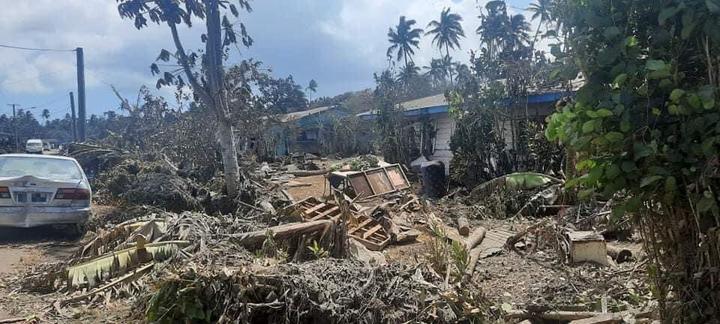
Ash and debris covering houses and a road in Nuku'alofa, Tonga.
Photo: Consulate of the Kingdom of Tonga

RNZ Pacific’s Tonga correspondent Kalafi Moala said while the recovery is building up steam a lot of people are till visibily shaken.

“For example near here, where there were homes in the waterfront that were destroyed, when you go over to inspect the place you see people that are just staring. With looks in their faces not only of disappointment but it is a look of hurt,” he said.

French aid

A French navy is to ship relief supplies to Tonga following the volcanic eruption and tsunami.

The Red Cross in Noumea has readied 21 pallets which the patrol vessel La Glorieuse will deliver to Nukualofa.

The 10 tons of goods include tents for about 100 families, hygiene kits, solar-powered lights as well as masks.

A coordinator Vincent Lepley has told the local broadcaster as Tonga is Covid-19 free, no staff will be sent.

He says the delivery will be made within the French partnership with New Zealand and Australia as well as Tonga’s Red Cross.

Help from Fiji on the way

The first contingent of 51 Fiji soldiers are still awaiting approval from the Tongan Government to assist New Zealand and Australia in their relief efforts in the Kingdom.

The Fijians arrived in Brisbane last Saturday to join Australia’s Defence Forces deployment to Tonga.

Fiji army commander Major-General Ro Jone Kalouniwai says the group consists of engineers, medics and other specialists.

He says they will carry out rehabilitation and further assessments in Tonga.

The Fiji military said the soldiers had completed Covid-19 tests and isolation requirements before heading to Australia.

“Looking at the damage and the things that happened in Tonga so far, we are going engineer heavy so we taking a lot of plant operators, we are looking at construction workers, civil engineers and also medical staff. The rest are all part of the manpower that can assist these specialists’ engineers in the work they are doing,” he said.

Volunteers needed

12 shipping containers bound for Tonga have been fully packed with food and water by Aotearoa Tonga Relief Committee volunteers.

13 additional containers are being sent to Auckland’s Mt Smart Stadium today.

The drop off points for the public remain closed as the hundreds of drums already onsite need loading.

Committee Co-chair Jenny Salesa says volunteers worked until 10pm last night.

But she says more man power is needed for the final push today, with packers expected to work until midnight.

Alt text:
The Aotearoa Tonga Relief Committee is coordinating shipping containers at Auckland's Mt Smart Stadium to be filled with donations, including emergency supplies from family in New Zealand to relatives in Tonga.
Photo: RNZ / Lydia Lewis

All volunteers must be fully vaccinated.

Auckland Tonga collection looking to other parts of NZ

By RNZ.co.nz and is republished with permission.

Frustration is mounting among Tongans in New Zealand desperate to send critical supplies back home.

There is currently one drop off center at Auckland’s Mt Smart Stadium, but it is closed today so officials can ramp up Covid measures and volunteers can pack the supplies already there ready for shipment on Wednesday.

Aotearoa Tonga Relief Committee Secretary Pakilau Manase Lua said the team is working on get shipping containers elsewhere in the country.

10-year-old Ariana Ekuasi delivers a message to her grandmother in Tonga
10-year-old Ariana Ekuasi delivers a message to her grandmother in Tonga Photo: RNZ / Lydia Lewis

He said people are feeling anxious, “and fair enough because our committee is called the Aotearoa Tonga Relief Committee, and rightly so they are saying what about the rest of Aotearoa not just Auckland, so we are trying to arrange containers to get out to the region.”

Lua said the team will work into the night, packing more than a dozen containers.

“So altogether about 1000 drums. Given the demand and people who are still looking for drums we could do with another eight to ten containers all up or even more.”

Lua expects the Mt Smart gates to be open for drop offs again tomorrow with strict Covid-19 measures in place.

NZ resident gets life sentences for multiple murders in Fiji

By RNZ.co.nz and is republished with permission.

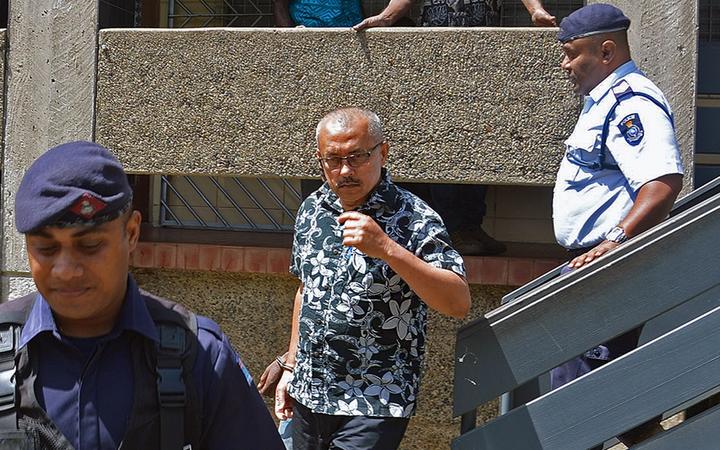
The Fiji-born New Zealand resident found guilty last week of murdering five people has now been handed life sentences for each victim by a Fijian judge.

Mohammed Raheesh Isoof of Christchurch had killed an elderly couple, their daughter and her two children in the Nausori Highlands in August 2019.

Muhammed Raheesh Isoof.
Muhammed Raheesh Isoof. Photo: Supplied

In his ruling, Justice Thushara Rajasinghe said Isoof betrayed the trust of his friends by murdering them.

Isoof will also serve a minimum of 20 years for the attempted murder charge of an 11-month-old girl.

Meanwhile, Sangeeta Devi held her daughter Samaira Kumar – the girl found alive by police at the scene of the crime – tightly outside the Nadi International Airport terminal last Thursday as they prepared to return home to Australia.

Devi told journalists she was at peace as the High Court in Lautoka had convicted the man accused of killing her parents, her older sister, and her two nieces.

Samaira was the 11-month-old toddler discovered among her family’s dead bodies.

..
Photo: Supplied

Isoof, 65, a bus driver in NZ was convicted by the High Court in Lautoka last Wednesday and handed the life sentences for the deaths two days later.

“I am leaving the country with my daughter, knowing that my family is finally resting in peace,” Devi said.

“I am very happy that something has finally happened. It has been two years and we have all been waiting. It’s not just me but my family and friends abroad.”

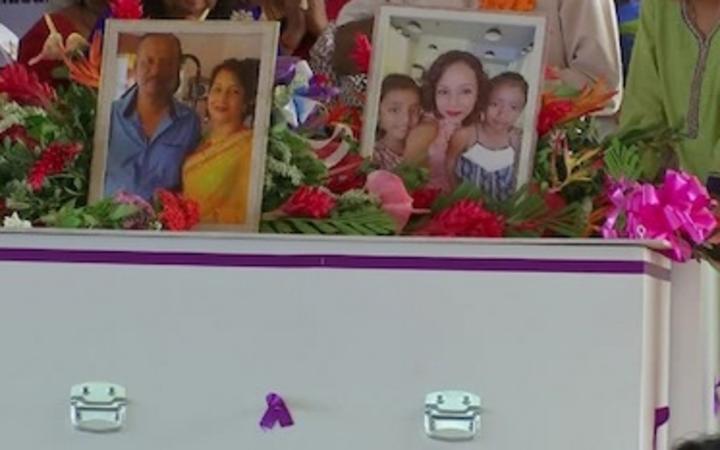
The bodies of Nirmal Kumar, Usha Devi, Kajal, Sana and Samara Singh were all found on the edge of a cliff in the Nausori Highlands.

Devi said her daughter always reminded her of her precious family members who perished in an untimely manner.

“I took my daughter back to Australia after what transpired in 2019. She is three years old now and has no memory of what happened.

“It is only me and my younger sister, Rangeeta, who are left in the family and we will work hard to give our children the best love they deserve.”

Devi said she and her sister got themselves matching tattoos in memory of their late family members.