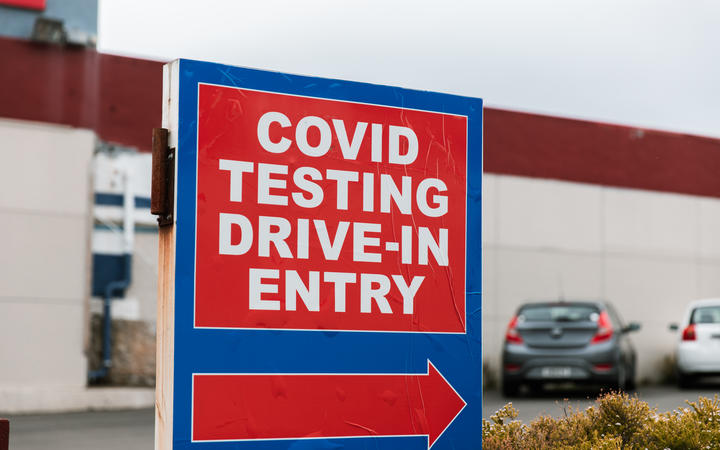
There are 146 new community cases of Covid-19 in New Zealand today.
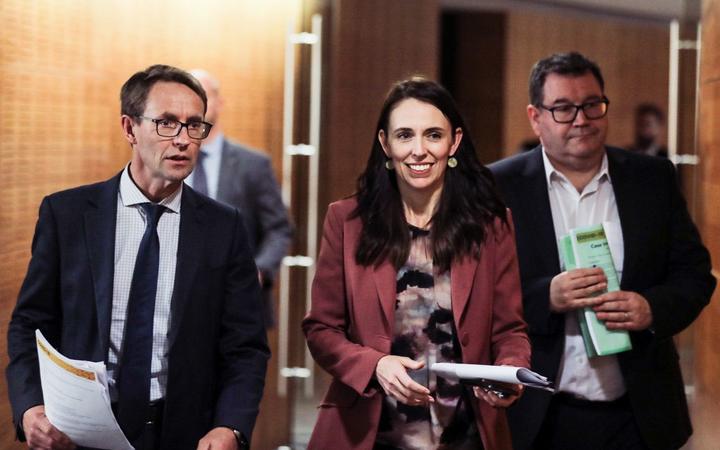
(File image) Photo: RNZ / Samuel Rillstone
Today’s cases include 124 in Auckland, 14 in Waikato, four in Bay of Plenty and one in the Nelson/Tasman region who was reported yesterday but officially added to the tally today.
The Ministry of Health said there are 83 cases in hospital, including nine in intensive care. Two are in Waikato and the rest in Tamaki Makaurau. Five of the Auckland cases are in ED or assessment units.
There are also three cases in MIQ recent returnees.
Director-General of Health Dr Ashley Bloomfield said modelling this morning shows hospitalisation and ICU bed usage had levelled off in Auckland.
OP-ED It is now apparent that the nobility MPs are the kingmakers in the run for the premiership election after it appeared interim Prime Minister Pōhiva Tu’i’onetoa and his interim Minister of Education Siaosi Sovaleni would face each other on the election day.
Siaosi Sovaleni (L), Pōhiva Tu’i’onetoa
Kaniva News has learnt four MPs have indicated their support for Tu’i’onetoa while 11 MPs have indicated their support for Sovaleni.
The noble’s representatives are now the kingmakers.
This means Tu’ionetoa needs all nine Noble MPs, while Sovaleni will only need to get the support of two of them so he can be elected Prime Minister and form the new government.
King’s wish
The strong public support for the king’s recent calls for the people, after he reprimanded the Tu’i’onetoa government, to be wise and voted into Parliament only the best candidates has now become a duty for the nobility MPs.
In deciding who to choose as the new Prime Minister, they must ensure they do not ruin the results of the people’s votes on November 18 which brought a highly regarded group of MPs with strong academic and business backgrounds into Parliament.
Tu’i’onetoa’s records
Tu’i’onetoa was re-elected and retained his Tongatapu 10 seat in what many believed was the result of his controversial development policy which allowed building of new wharves, installation of new water tanks, building new weaving houses and sealing almost every roads in his constituency with tar. The policy was mostly restricted only to Tu’i’onetoa and his Cabinet Ministers’ electorates.
Critics believed this policy was one of the many failures of Tu’i’onetoa to uphold fairness in the way he distributed the country’s wealth and opportunities.
Many believed he should not be re-elected Prime Minister given his dodgy record in the past two years he has been leading the country. He has been accused of repeatedly lying to the public and abusing female journalists.
He has been the subject of continuing criticism over apparent cronyism in the awarding of road building contracts and his repeated refusal for months to deal with convicted criminal and Cabinet Member ‘Akosita Lavulavu.
Tu’i’onetoa was criticised heavily for his attempts to operate the government like a Christian church, especially his failed national fasting campaign to protect Tonga from Covid. Despite his national prayer services, and fasting the kingdom reported its first coronavirus infection last month after a passenger travelling from New Zealand tested positive. The media later revealed he and his Cabinet ministers’ spouses were paid from the people’s tax money when they went on tour to the outer islands as part of the fasting campaign.
Perfect choice
Critics believe Sovaleni is the perfect choice to replace Tu’i’onetoa given the fact he was the MP with the highest number of votes compared to the rest of the MPs. He received 84 percent of his constituency’s total votes.
Veteran publisher and journalist Kalafi Moala told Kaniva News he believed Sovaleni’s high vote tally put him in the perfect position to be Tonga’s new Prime Minister.
“To me it is a simple issue of numbers, plus he has a much better record than Tu’i’onetoa or any of the potential PM candidates,” Moala said.
“Some of the nobles are still trying to play politics, talking to both sides. I think, though, that in the end they will support whoever has the greatest number of People’s Reps support”.
When asked about the potential candidates Moala said: “There are two candidates – Siaosi Sovaleni and Pohiva Tu’i’onetoa”.
“Apparently there are five (which includes Tu’i’onetoa) who have indicated their support for him.
“There are 11 who have indicated their support for Sovaleni, without any horse-trading.
“Based on the general mood here and public conversations going on, Sovaleni seems to be the “preferred choice”.
Interim Prime Minister Pōhiva Tu’i’onetoa’s lead in his constituency after the November 18 election increased by three votes after election officials recounted over 1306 votes.
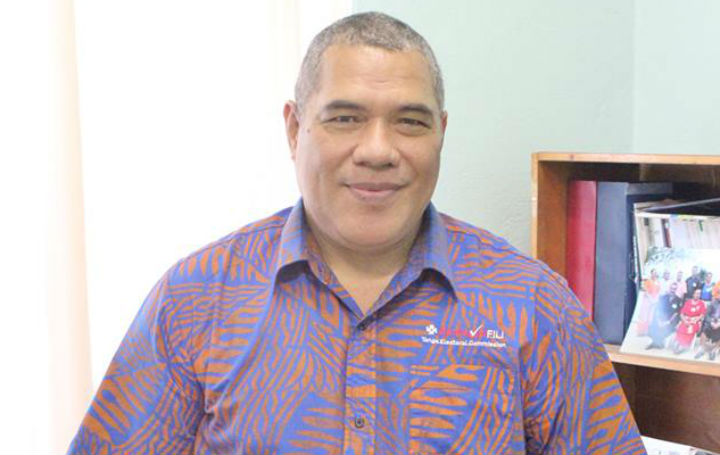
Supervisor of Election Pita Vuki. Photo/KanivaTonga news
The Election Supervisor updated the results on the government’s website this afternoon and Tu’i’onetoa’s previous total votes changed from 1303 to 1306 while votes for the runner-up Kapeli Lanumata was dropped by four votes.
“On Thursday 25 November 2021, the Electoral Commission received letters from candidates of 5 constituencies, seeking a recount of the results of the General Parliamentary Election for their respective constituencies”, the Election Supervisor Pita Vuki said.
“This included Siaosi Vailahi Pohiva for Tongatapu 1, ‘Akanete Lauti for Togatapu 5, Paula Piveni Piukala for Tongatapu 7, Kapelieli Militoni Lanumata for Tongatapu 10 and Tevita Lavemaau for ‘Eua 11”.
Candidates are allowed within one week from the declaration of the poll to request recounting.
“Recount of Tongatapu 1 and Tongatapu 5 commenced on Friday, 26 November 2021. The recount of ‘Eua 11 was completed on Saturday, 27 November 2021. As announced yesterday, Monday 29 November 2021, there were no changes as to the winning candidates of those three constituencies”.
The recount for Tongatapu 7 and Tongatapu 10 resumed on Monday, 29 November 2021 and the result of the recount is as follows:
It said there were no changes to the winning candidates of those five constituencies that applied for a recount and these are the final results of the General Parliamentary Elections, 2021.
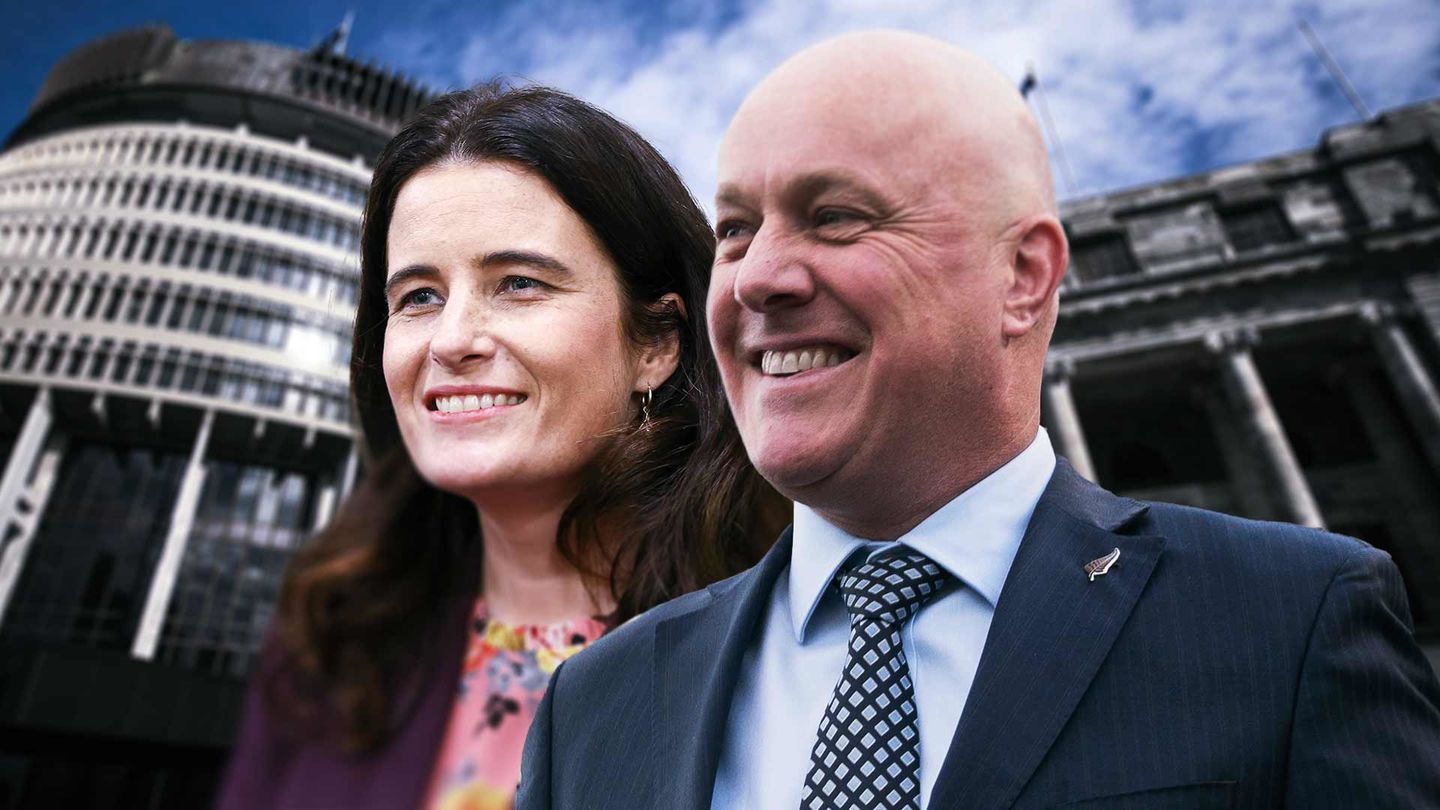
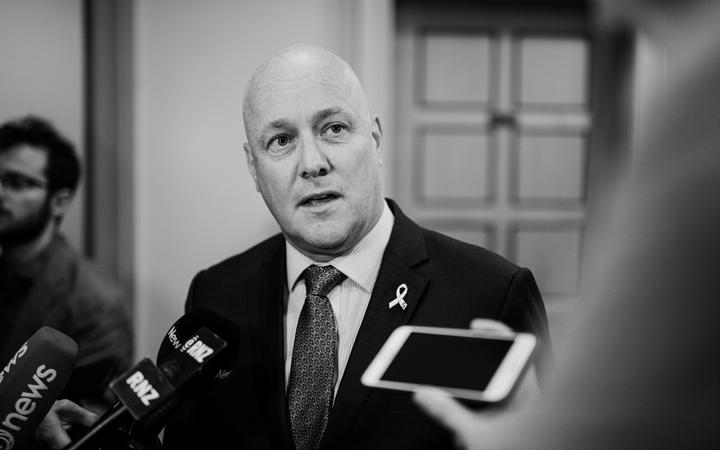
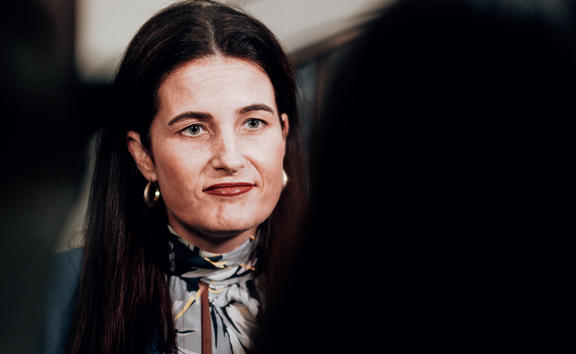
Former Air NZ chief and MP for Botany Christopher Luxon has become the National Party’s new leader, and Nicola Willis the deputy after MPs voted this afternoon.
Luxon says it is an “incredible privilege and honour to be elected leader of the National Party”.
It was an uncontested leadership decision, he says.
“John Key has not been asked to get involved in this or talk to any MPs and he didn’t.”
He says he and Nicola Willis, who has been elected his deputy, will “be a formidable team”.
“We are the reset.”
He also thanked Willis for joining him in the leadership team, his wife and children for their support, and to his caucus colleagues.
He says he has known Nicola Willis for a long time and they are good friends and their skills are complementary.
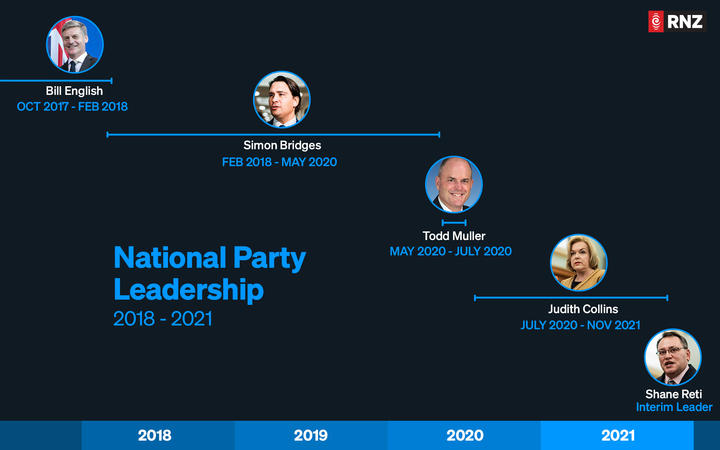
Luxon thanked Judith Collins for her service during “a very difficult period” for the party, and said today they are putting the events of the past four years behind them.
“I don’t want to really talk about what’s happened in our past, what I can tell yo is the bottom line is we have an uncontested leadership selection and we’ve come together as a team.
“New Zealand is over it, the National Party members are over it, and the caucus is over it. So we want to turn the page and go forward together.
“We are going to do things differently from here on through. It’s very clear from today and you’ve watched this contest be different from previous contests, that actually we’re turning the page, we’re putting the baggage aside, we’re trusting each other, we’re doing that work…”
Luxon says he is not interested in things like leaks and he does not feel like he will need to watch his back.
There is a role for everyone in his caucus and there is very important roles for former leaders like Collins and Bridges, he says.
No positions have been set as yet. Luxon says he has yet to talk to leaders from other parties.
Having a team backing them up with complimentary skills is important, he says.
“We want to build a team based on talent and merit and performance and that’s what we’re going to do going forward.”
Conversations in the past few days have been about strategic issues around where the party goes and unifying, he says.
Luxon says his faith has often been misrepresented and protrayed very negatively.
“What I can tell you is that my faith is actually something that has grounded me, it’s given me context and put me into context with something bigger than myself but I want to be very clear, we have seperation between politics and faith, people shouldn’t be selecting an MP because of their faith and they shouldn’t not be selecting an MP because of their faith.”
He says he is here to represent all New Zealanders.
His background is about leading large complex organisations and solving problems, getting results and doing that through people. “That’s what this job is about.”
“You can’t plan anything in politics I learnt.”
He loves country music, water skiing and is an extravert who knows how to lead people, he says.
Willis says she is a mother to four, has a “hard head but a soft heart”.
Looking ahead and on the current government
Photo: Getty Images/supplied
He says to the 400,000 odd voters who moved away from the party that “National is back”.
New Zealand is at a critical crossroads as it grapples with the pandemic, he says.
“New Zealand needs an alternative now more than ever to take us in the right direction because frankly, the country is heading the wrong way.”
He says the government is very good at delivering PR “but woeful at delivering much else”.
“I think Jacinda Ardern is a fine communicator but the reality is we need much more than that at this point in time. We need a leader and we need a government that’s actually going to get things done.”
There is a big difference between words and presenting a vision, getting it done, he says.
He feels very confident in his caucus against Labour person-by-person.
He commented on how because of the government’s policies there will be a million Kiwis missing a Christmas dinner this year because they cannot get home, and that farmers are not villains.
“Over 100 days in lockdown, Aucklanders are still utterly confused and directionless.
“Nice ideas and good intentions don’t pay the rent or the mortgage, educate our children, keep us healthy, keep us safe from crime and gangs, improve our mental health, lower our emissions or keep us united.”
He says growing our economy and raising productivity are the single biggest thing we can do to improve the lives of New Zealanders.
“And the National Government I will lead will be a government of action.
“We will bring the tide back in and lift all boats.
“We need to seize the tremendous opportunities we have, rather than squander them.
Luxon says restructuring healthcare while we are dealing with a pandemic isn’t the smartest thing.
“In this country where we have issues around inequality and inequity, we need to really identify and target the people that need real targeted interventions and able to put them on a pathway where they can be independent and not dependent on the state.”
They want to make sure they build more houses in a sustainable way, he says.
Luxon says the biggest problem in New Zealand is that there isn’t a productive enough economy.
Kiwis are not generating high enough income, he says, investing in education is part of building this.
“We want to see a more productive economy that drives higher incomes and wages, we need to seriously address our education challenges, I don’t think the average New Zealanders understands how poorly we have have been performing in education.
“We need to think deeply about mental health and irrespective of political party that’s an issue for every New Zealander, that is touching every New Zealander. We need to think very deeply about how we manage emissions as we go forward and we need to think primarily about how we build and develop infrastructure.”
They are committed to the targets made around emissions targets.
Luxon says Māori did incredibly well under previous National governments including treaty settlements.
“We believe in an inclusive country and we’re going to take it from there.”
What happened today
Just before a caucus meeting this afternoon where the party was set to vote on the leader, his main rival and former party leader Simon Bridges tweeted his support for Luxon.
Covid-19 Response spokesperson Chris Bishop, who had been raised as a possibility in initial speculation about the leadership, also backed Luxon.
Just half an hour into the 3pm caucus meeting, the National Party revealed through a statement that Luxon had become the new leader and Willis the deputy.
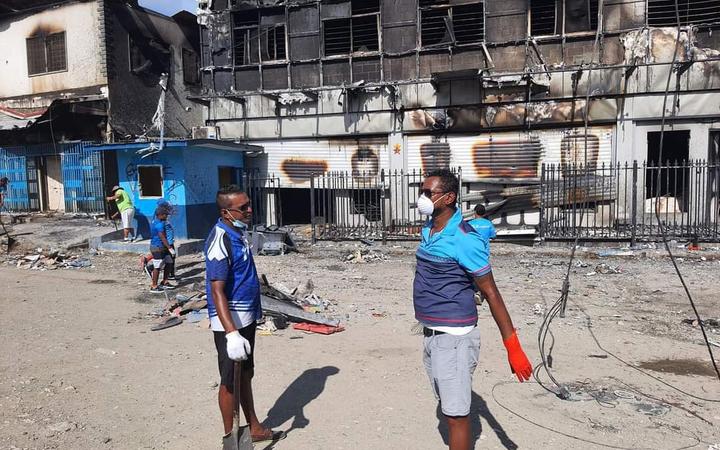
With no plans to evacuate their citizens from Honiara, the international community is closely monitoring the situation in the Solomon Islands following a week of political unrest.
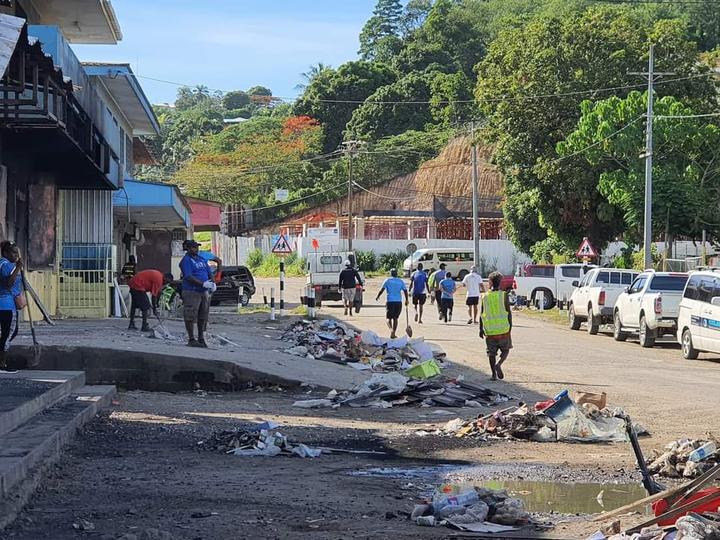
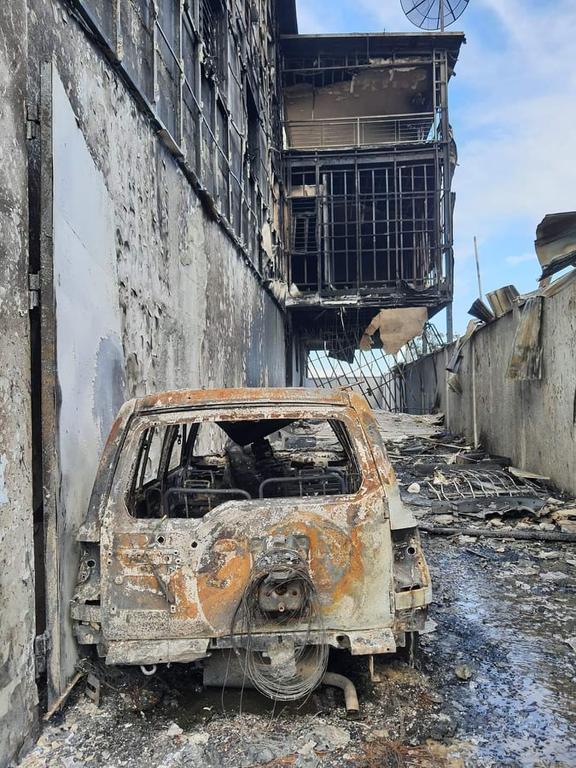
Members of the Fijian community in Honiara help BSP staff clean up. The bank was one of nearly 60 businesses torched by protesters last week. Photo: Supplied/Fijian community, Honiara
There’s an air of calm across Honiara this weekend.
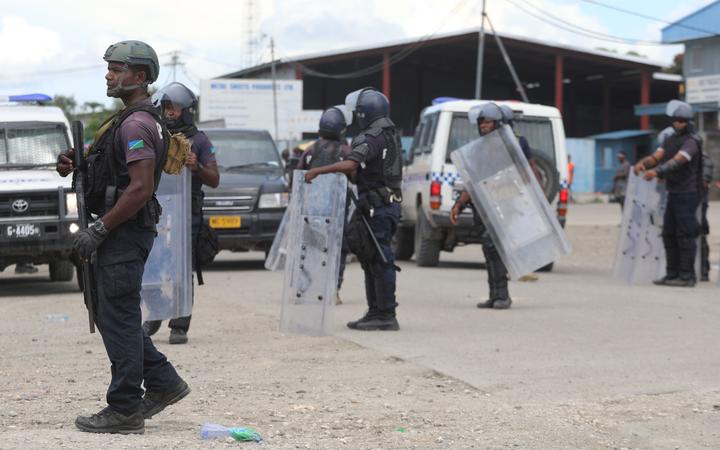
Resident Claire Percel puts it down to the arrival of Australian and Papua New Guinea defence forces to help the local police.
She said the reinforcements have “really helped the situation but we’re still nervous”.
“Roadblocks now set up in key locations and I’ve seen them check vehicles. Local businesses have started cleaning up the streets and removing the burnt vehicles.
“I managed to get out of the house today for a grocery shop and visit some family. Was a really good change of scenery. I took my kids with me, was a very difficult conversation trying to explain why this happened,” Percel said.
There was rioting and looting across the capital following a protest at Parliament on Wednesday calling for the Prime Minister Manasseh Sogavare to stand down.
Mr Sogavare has since said he will not resign.
The tension escalated on Friday when more than 100 protesters reached Sogavare’s residence, throwing rocks while police with riot shields fired tear gas to disperse the crowd.
Australia and Papua New Guinea have deployed their defence force personnel to help the local police control rioting anti-government protesters.
Australian Prime Minister Scott Morrison said the Solomons reached out to his government for help. But he added Canberra was monitoring the situation in Honiara.
New Zealand officials are in contact with their citizens in Honiara and are aware that the travel plans of some have been disrupted.
A spokesperson from the Ministry of Foreign Affairs and Trade said the government has not yet received a formal request for assistance from the Solomon Islands government.
.. Photo: Supplied/Fijian community, Honiara
“We are not activating evacuation plans at this stage but remain in contact with relevant partners on the ground and are monitoring events closely.
“The New Zealand High Commission is providing Safe Travel advice to New Zealanders in Solomon Islands, including to follow the instructions of local authorities.
“New Zealanders in Solomon Islands should not rely on New Zealand government-assisted departures in an emergency,” the MFAT spokesperson said.
Fijians safe, govt says
Fiji’s government said its citizens in Honiara are safe.
Fiji’s consul-general to the Solomon Islands, Atueta Balekana, assured family members of the 400 Fijians living in Honiara their loved ones are safe.
.. Photo: Supplied/Fijian community, Honiara
The only unfortunate incident for the Fijian community in Honiara, he said, was the torching of one of its members’ shops.
Balekana also said a former Fijian soldier working as a caretaker at one of Honiara’s biggest hotels was confronted by rioters.
However, the couple who own Oceanic Marine Equipment Ltd are safe and the security officer had sought the aid of hotel employees that were loyal to the Honiara-based Malaitans to protect the property.
“We have issued an advisory for all Fijians in the Honiara vicinity not to get involved in the rioting and to leave them as they are,” Balekana said.
“We have not come up with an evacuation plan as yet, but if things escalate we would have to resort to one.
“At this stage, we do not expect the situation to escalate any further as security forces have stepped in to control the situation.”
Balekana said the Fijian community’s contribution to the Solomon Islands’ development is widely respected and “we do not think that we are under any threat”.
“The Solomon islanders treasure our relations but it is good to always approach these situations with caution.”
Balekana said more than 45 Fijian citizens worked in Honiara, while there were more than 300 Fijians married to Solomon islanders.
Unrest forces workers home
Rotuman Kaitu Aisake arrived in Honiara in 2019.
Aisake said he immediately adjusted well to life in the Solomon Islands. He welcomed the locals and the lifestyle.
The recent events in the city took Aisake by surprise. He grew up in Fiji and had experienced political unrest.
Aisake said his office was among several businesses torched and looted by angry protesters on Friday.
Employees have been told to remain at home until further notice.
“The riots have always been politically motivated and they’ve always been targeting the township and industrial areas.
“The advice has always been consistent: just stay home. We will not return to work until the security situation can be confirmed that it is okay.”
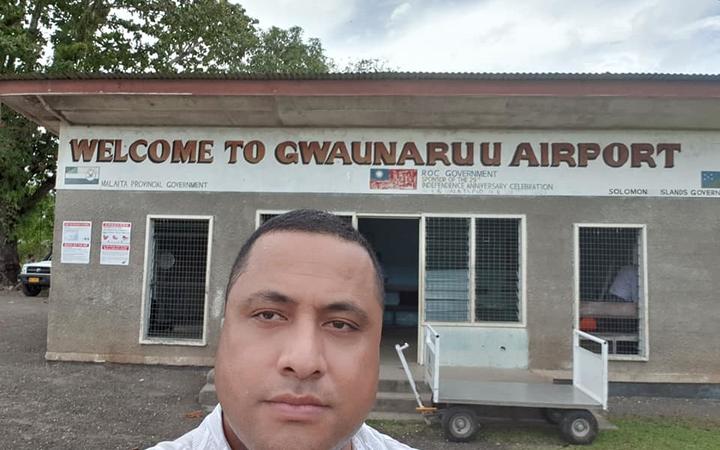
Kaitu Aisake during a visit to Malaita Island. Photo: Supplied
Aisake warned the political unrest in the Solomons has plunged the country further into “darkness”.
“This already had a huge impact without the lockdown. Our communities have already been deeply impacted. Unemployment, crime rates have gone up so socially everything is dysfunctional.
“The bright side is that we’ve managed to keep Covid out of our borders but now with this, this rioting – whichever way you try to look at it, the impact is really bad though.”
Aisake hopes the arrival of security forces from Australia and Papua New Guinea helps stabilise the volatile situation in Honiara.
Tough times ahead, says ex-NZ resident
Former New Zealand resident John Wopereis said it’s been a “tough week for everyone”.
He moved from Nelson to the Solomon Islands four years ago.
Wopereis said the events that took place in Honiara took his family and friends by surprise.
“This all happened so suddenly. We didn’t have anytime to prepare our families with food or gas – with businesses being burned, there’s a bank branch that got burned too.
“Hundreds of Solomon Islanders unemployed. Where are they going to get their money to feed their families? In a couple of weeks, it’s going to get very bad because there’s going to be a shortage of everything. There’s nothing left.”
He said the unrest may have started as “something political but spiralled out of control”.
Wopereis said people are taking advantage of the conflict with majority of them violating the laws.
Former Nelson resident John Wopereis and his family in Honiara. Photo: Supplied/John Wopereis
“People are not respecting what is being asked of them so whether or not we did have a lockdown or not, I think it’s just gone totally out of control. It’s very sad because it’s not only men, it’s children too. I’ve seen kids walking around with batteries, with cartons of soft drinks. It’s total chaos.
“I do feel that the Solomon Islands will bounce back from this. The events that unfolded really exposed a lot of underlying societal issues in the country that the nation can learn from and build back better.”
Meanwhile, an Air Kiribati crew are stranded in Honiara after arriving hours before the conflict started on Wednesday.
Pilot Captain Salote Mataitini said she was concerned at the escalating unrest in the country.
Mataitini and a colleague had only arrived in Honiara from Tarawa when the protests began.
She said their flight to Brisbane later that day was cancelled but they are now both safe in a hotel.
“I guess as a pilot you are really calm in stressful situations, I guess once I get back to Tarawa I will think about this experience.”
The Air Kiribati crew will leave Honiara in two weeks.
There are 134 new community cases of Covid-19 reported in the community today.
In a statement, the Ministry of Health said the new community cases are in Northland, Auckland, Waikato, Bay of Plenty and the Nelson/Marlborough regions.
“We are also advising of two additional cases in Nelson-Tasman region. This brings the number of cases in the region to three. Due to a technical error, these three confirmed cases in Nelson-Tasman will be officially included in our figures tomorrow,” the ministry said.
There no additional cases to report today in Hawke’s Bay, Lakes, Taranaki, MidCentral, Wairarapa, or Wellington.
Seventy-one of today’s new cases are yet to be epidemiologically linked to the current outbreak.
Today there are 89 cases in hospital – 15 in North Shore, 36 in Auckland, 34 in Middlemore, three in Waikato and one in Rotorua. Of these cases, 56 are not vaccinated or not eligible to get vaccinated.
There are also nine cases in ICU or HDU.
That brings the total number of community cases in the current outbreak to 8431.
Northland
There is one new case in Kaitaia. Public health interviews are underway to identify a link.
Auckland
Today, there are 116 new cases. Health staff are now supporting 3844 people to isolate at home, including 977 cases.
Waikato
Of Waikato’s eight new cases four are in Te Kūiti, one in Huntly, one in Hamilton, one in Ngāruawāhia, and one in Te Awamutu.
Five of today’s cases have been linked to previous cases and the remaining three are under investigation.
There are six pop-up and dedicated testing sites operating across Waikato today in Hamilton, Ngāruawāhia, Ōtorohanga, Thames and Te Kūiti.
Health staff are assisting 118 cases to isolate at home.
Bay of Plenty
For the nine new cases in the region, one is in the Whakatāne district, three are in Tauranga, and five are in the wider Western Bay of Plenty.
All are close contacts of previously reported cases and were already isolating at home when they tested positive.
On vaccinations, there were 40,972 total doses administered yesterday – including 6213 first doses, 11,862 second doses and 21,431 booster doses. To date, 92 percent of eligible people in New Zealand have had their first dose and 86 percent are fully vaccinated.
Power Play – Political novice Chris Luxon goes into tomorrow’s caucus vote the odds-on favourite to take the National Party leadership.
Chris Luxon represents the chance for a fresh start, Jane Patterson writes. Photo: RNZ / Dom Thomas
The shock of Judith Collins’ kamikaze takedown of rival Simon Bridges has been sinking in for MPs over the weekend; their anger is undiminished even as they regroup to choose a new leader.
Former leader Bridges – who was unceremoniously ousted by Todd Muller in the run up to the 2020 election – has publicly indicated his interest; Luxon, in contrast, has stayed mum, but both MPs have been personally lobbying their colleagues.
The message coming through is the preference for a fresh start, over experience with a fair amount of baggage. There is also a view Luxon could have a better shot at uniting a caucus riven with distrust and resentment after its most recent bout of self-flagellation.
Whoever gets the job will not have much time to celebrate; they will have a much more pressing task to bring the caucus together into some semblance of unity to lurch into the Christmas break and, if the summer goes to plan, have some time away from Parliament.
Nicola Willis Photo: RNZ / Dom Thomas
It’s not just the leader to consider – the choice of deputy can balance out geography, ethnicity, gender, or bring warring factions together.
The party’s rules basically leave it up to the caucus to decide how to run the contest, stating only that if a vacancy arises “the Parliamentary Section shall appoint a leader to fill such vacancy”.
Leadership contests can sometimes be run on a ‘ticket’ – a candidate for leader alongside their preferred deputy – but there are no publicly declared pairings in this case. More likely is once the leader is elected, that will dictate who steps up for deputy. A combination of Luxon and Wellington-based Nicola Willis has been floated.
If truly convinced he cannot win, Bridges may endeavour to use his leverage to secure the deputy position and finance role – a Bill English to Luxon’s John Key.
The machinations are largely playing out away from the direct view of the media, with MPs choosing to limit any further damage in the short time available to make this crucial decision.
Parliament is in recess but tomorrow, National Party MPs will return for a 3pm special caucus meeting where they will elect their fifth leader in four years.
The royal family have lost everything stored in a house at their Tufumāhina dwelling after a devastating fire.
The house at Tufumāhina royal dwelling was engulfed by a devastating fire. Photo/Facebook
Photos of the skeleton of the burnt out building is all that remains on after the fire took hold at around 9pm on Saturday night.
Reports said a passerby noticed fire coming out of the house and called the emergency services.
As Kaniva News reported on Sunday, the firefighters who responded to the report of the blaze had to break down locked gates so they could reach the scene.
The blaze is being investigated but the authority reportedly said there was no evidence of arson. However, the local media report have quoted other sources who believed the fire was caused by an electrical fault.
The house was unoccupied at the time of the blaze.
The royal property was normally guarded by His Majesty’s Armed Forces.
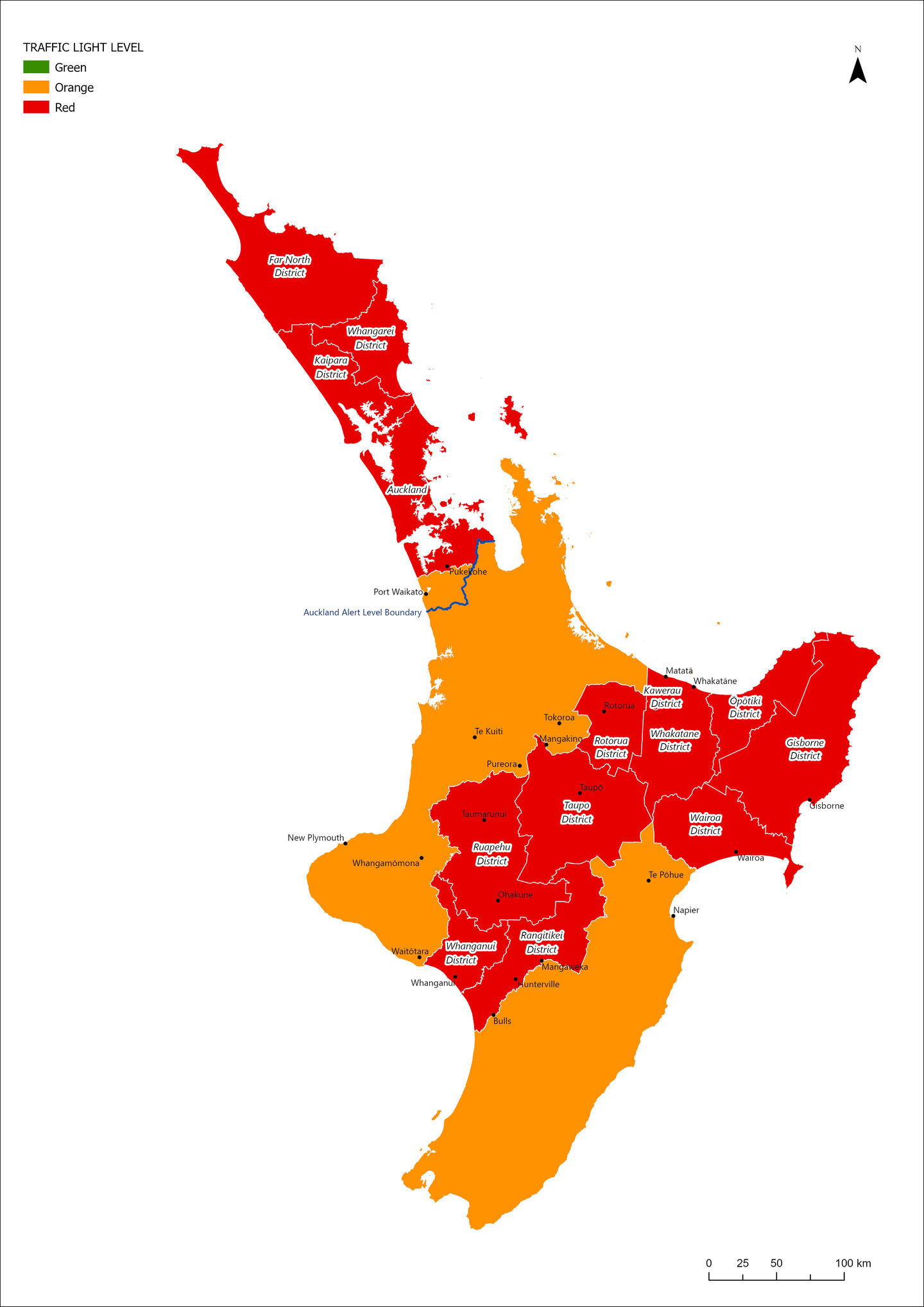
Speaking after the Cabinet meeting this afternoon, Prime Minister Jacinda Ardern confirmed that all of Northland would join the Auckland region in red, along with Taupō, Rotorua Lakes, Kawerau, Whakatāne, Ōpōtiki, Gisborne, Wairoa, Rangitīkei, Whanganui and Ruapehu districts.
All other regions would be in orange.
Watch the briefing again here:
Ardern was joined at the briefing by the Director-General of Health Ashley Bloomfield and Finance Minister Grant Robertson.
She said New Zealand was now in the “strongest position to move forward” to the new system, which would replace the “sudden lockdowns and restrictions of alert levels”.
“Other than the existing Auckland boundary, which lifts on January 17, there will be no new restrictions on travel between regions.”
She said the vaccine passes would allow vaccinated New Zealanders to do many of the things previously treated as high risk, regardless of which colour setting each area was in.
“Like safely going to bars and restaurants, getting a haircut, and going to a concert or the gym. In Auckland, it means seeing friends and family indoors again,” she said.
For Auckland, she said: “You can now see family and friends again in their homes, and use the bathroom inside. Luxury. If you are unvaccinated you can gather with others but the gathering limits are lower across each of the levels.”
She said life for the unvaccinated would be more restricted. “That is the best way that we can ensure that the unvaccinated are protected too.”
Factors considered in determining the regions’ settings include vaccination rates, the state of the health system, testing, contact tracing and case management capacity, as well as the rate and effect of Covid-19 transmission, she said.
She said at every colour setting, there were three key things to remember – having your vaccine pass with you, wearing a mask, and scanning in wherever you go.
“At orange, the big change here for parts of the country which will enter into this setting is that for the vaccinated and where vaccine passes are used, there are no gathering limits.
“People can gather again safely. At red, it will feel a lot like level 2. Your vaccine pass lets you go everywhere but number limits of 100 will apply to most activities.”
She said the policing of the vaccine passes would be about “supporting compliance at venues, ensure that they’re able to operate the vaccine pass safely. It won’t be operating at borders.”
Ardern said as we enter the next phase, be kind to each other.
“Everyone, and I mean everyone is doing their best. There will be challenges ahead, we’ll continue to see cases in places we haven’t so far, but we will get through just like we did last time and just like we will this time, together.”
Cabinet will review these settings and provide an update on 13 December.
The next update by ministers will be on 17 January, and will continue on a fortnightly basis.
Photo: Supplied
No region expected to be in green over summer
On moving into the green setting, Ardern said that was not anticipated to happen “during this transition phase”.
Ardern said the way the criteria have been applied at this point are different from where it will be in future.
She confirmed there will be no one in green before the New Year.
“Keep in mind the Auckland boundary only lifts in the middle of December so we do expect that the country will be in either orange or red settings through that period.”
She said it was unlikely that any region would go from orange to red in the next two weeks because vaccination rates would not go down.
The ability to check that everyone entering the South Island is either double vaccinated or tested also factored into the decision to move the island as a whole to orange, she says.
It was revealed today that Tairāwhiti iwi have urged Rhythm and Vines owners and management to cancel this year’s festival over concerns it could cause a Covid-19 outbreak in the region.
Meanwhile, Stuff is reporting that more than 3000 people have signed an online petition urging the organisers of the Gisborne festival to cancel the event because of the same concern.
It comes as the Tairāwhiti DHB, which includes Gisborne, has one of the lowest vaccination rates in the country.
Ardern said it was up to those festivals to decide how to go ahead, which is part of why the government set up an insurance scheme for large events like that.
“There are festivals in the south that will for instance be able to go ahead, but in some regions we are in a transition where there is uncertainty and that is what that support mechanism is all about.”
Ardern said she did not think the regions would be very surprised about the levels they would go into. “These are preventative measures.”
One of the advantages for New Zealand was there had been a good spread of vaccination across the country, she said.
The new system would also help lift vaccine rates as well as help protect, she said.
Ardern said for the most part people found to have Covid-19 away from their usual place of residence, they will have a place they can isolate.
“If they need extra supports to isolate somewhere else, the public health unit can work that through with them.”
Photo: RNZ / Samuel Rillstone
Transition support for businesses
A new transition payment, of up to $24,000, will soon be available for businesses, particularly those in Auckland, Waikato and Northland.
The one-off payment will be activated through the Resurgence Support Payment (RSP) system criteria and be available on 10 December.
This payment will be $4000 per business plus $400 per FTE up to a cap of 50 FTEs – a maximum payment of $24,000.
Treasury has estimated the likely total cost of the payment to be between $350 million and $490m.
The affected revenue period for the Transition Payment will be set between 3 October and 9 November, and must be compared to a typical week in the six weeks prior to 17 August.
Robertson said they were moving away from the broad based economic supports provided under the alert level system because most businesses would be able to operate at almost full capacity under the new framework.
“On Friday the final Wage Subsidy and RSP opened for applications. These will still open, and pay out even though we are moving to the new framework, in addition to the transition payment.
“Support to be off work while isolating or to take leave while waiting for test results, currently provided by the Leave Support Scheme (LSS) and the Short Term Absence Payment, will remain available under all levels of the traffic light system.
“However, the LSS will move to a weekly payment rather than fortnightly under the new system, reflecting the changed isolation period.”
If it is deemed necessary, targeted support would only be available under the red setting of the new system because businesses that operate vaccine passes have no significant restrictions at orange and green, he said.
Cabinet has also agreed to change the rules so recently acquired businesses can access the RSP.
The rules required the applicant to have been operating as a business for at least one month before 17 August so businesses acquired after July 17 have not been eligible for any payment.
“The test will now be that the business itself must have been in operation for at least one month prior to August 17 and the business must be carrying on the same or similar activity as before the change in ownership,” Robertson said.
“The revenue decline test also needs to be amended to allow the applicant to use the revenue received by the previous owner over the comparator period in order to demonstrate the necessary revenue decline during the affected period.”
The change will come into effect on 10 December and recently acquired businesses would then be eligible for RSPs made on and after 29 October.
Omicron variant
The advance of the new Covid-19 variant, Omicron, was also on the agenda with cases spreading to several countries over the weekend, including Australia, Belgium and the UK.
“At this stage we have no cases of the Omicron variant in New Zealand but the developing global situation shows us why our approach of ongoing caution at the border is needed,” Ardern said.
On Saturday night, Covid-19 Response Minister Chris Hipkins announced that New Zealand will ban travel from nine southern African countries from the following day in an effort to curb the potential spread of Omicron.
Only New Zealand citizens are allowed to travel here from those countries and they will also be required to stay in managed isolation for a 14-day period and undergo testing.
“Omicron is a reminder of why we need a response that lasts and carries us through the pandemic,” Ardern said.
“We already had a strong system in place and the ability to move swiftly to make it stronger still. This is a reminder of the risk that still exists at our border.”
She said it was unclear at this stage exactly what risk Omicron posed.
Bloomfield said what was being looked at was whether any additional protections werre needed at the border to reduce the likelihood of getting the new variant in New Zealand.
“It’s really just looking to keep it out while we learn more about it.”
Ardern said the borders have always been used as a means of protection, and that will continue as we see the new variant emerge.
“We will continue to review whether or not any other countries need to be added to our very high risk country list as well.”
The variant has also not changed the advice on boosters, she said.
Police commissioner Andrew Coster says it is too early to say whether the West Auckland shooting today is gang related.
Watch the news briefing back here:
Police Commissioner Andrew Coster said police have had to deal with serious events over the past 24 hours, including a West Auckland shooting today and an officer being struck by a fleeing vehicle last night while deploying road spikes in New Lynn.
A man has died after the shooting with police in West Auckland, and there are now four officers in hospital as a result of both incidents. Two have serious injuries.
The house was engulfed in flames when police arrived.
They tried to engage the man to disarm over 30 minutes but he became increasingly agitated and aggressive, he said.
Residents of neighbouring properties were evacuated, he said. A police dog and “distraction devices” were also deployed.
“The situation escalated further when the man fired at police and officers returned fire, incapacitating him,” Coster said.
“Our staff delivered first aid to the man, but tragically, he died at the scene.
“Our people come to work everyday to keep people safe and this is the last thing we want.”
Police engaged professionally and were very patient, Coster said. “I couldn’t ask for more.”
Two officers suffered moderate injuries and a third officer has more serious injuries but is stable and undergoing surgery.
The injuries officers sustained were on parts of their body not covered by body armour.
Coster said when he heard multiple officers had been injured; “my heart sank, it is not what we want for our people.”
The staff involved directly today were from the Armed Offender Squad.
The man who died is still being formally identified by police and next of kin are being notified.
Coster said there was nothing to suggest today’s incident was gang related but it was still early days to determine that.
Police now have a critical incident investigation underway, and the Independent Police Conduct Authority and WorkSafe have been notified.
“We’re trying to piece together the man’s actions today and understand how events unfolded,” Coster said.
He said these events reflect the level of tensions in some communities.
“This has been a very challenging time for staff particularly in this district.”
Police were concerned about the increase in violence and they were actively working on this, he said.
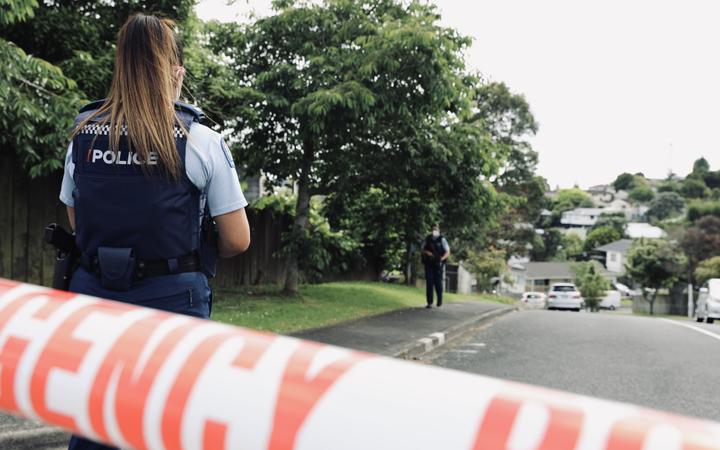
Police at the scene in West Auckland this morning. Photo: RNZ / Marika Khabazi
New Lynn incident
Regarding the event last night on Great North Road in New Lynn, Coster said police responded to a burglary call at about 11pm.
“Staff in the area noticed a suspicious vehicle which did not stop when signalled to pull over. Police did not pursue the vehicle but another police unit deployed spikes before the fleeing vehicle at the intersection of Fruitvale Road and Great North Road.”
This was about 1.5km away from where the burglary took place, he said.
About 11.10pm, the fleeing officer struck the officer that deployed the spikes.
“In a cowardly act, this driver did not stop to render assistance and the officer sustained serious injuries.”
The car then crashed into a power transformer a short time later and the people in the car fled the scene.
Multiple investigations are underway.
The officer has undergone surgery today and is doing well, Coster said.