Monday, April 6, 2026
Home Blog Page 323

All Blacks fall to Ireland in Dublin

By RNZ.co.nz. Republished with permission

The All Blacks have been beaten 29-20 by Ireland in Dublin, their third defeat to the Irish in their last five tests.

The All Blacks led 10-5 at halftime.

Ireland scored three tries to the All Blacks two and kicked several penalties to secure the nine point win.

Ireland’s New Zealand born wing James Lowe scored the first try of the test, while hooker Codie Taylor, who was yellow carded in the first half, and wing Will Jordan scored tries for the All Blacks.

It’s the All Blacks first loss of their Northern Tour.

Ireland dominated most aspects from start to finish with another superb performance against the All Blacks.

Ireland, who had never beaten New Zealand until five years ago, were hammered 46-14 in their last clash two years ago but tries from Lowe, Ronan Kelleher and Caelan Doris delivered a thoroughly deserved victory.

“Such a special feeling having a full crowd back, we waited for it for so long,” man-of-the-match Doris said in a pitchside interview.

After the first full house at the Aviva Stadium in 21 months tried to drown out the Haka with a rendition of ‘The Fields of Athenry’, Ireland responded by showing their intent to play the kind of fast-paced rugby that hit Japan for 60 points last week.

They were not afforded the same kind of space and it was the All Blacks who came closest to opening the score through the electric Will Jordan before Codie Taylor’s yellow card for a high tackle on Johnny Sexton handed the hosts the initiative.

That was to be New Zealand’s last attack for most of the half as Ireland took advantage with ruthless precision, going for the corner rather than the sticks with the resulting penalty and when their pack could not quite make it over the ball was spun out wide for Lowe to score against his native New Zealand.

Ireland remained camped in the All Blacks half, even when the visitors returned to their full complement of players, and somehow wound up trailing 10-5 at the break

After Tadhg Furlong had a try disallowed, New Zealand took the lead out of absolutely nowhere.

Dalton Papalii broke from the back of a lineout into a gaping hole in the Irish defence and Taylor was beside him to finish.

Ireland again came within inches of scoring just before the break, this time through Sexton, but the resolute All Blacks went into halftime ahead having make 160 tackles to Ireland’s 37 in the first 40 minutes.

The onslaught continued in the second half and the dam broke when hooker Kelleher’s 44th minute try levelled the score.

The early defensive effort was taking its toll on New Zealand, who also lost first-five Beauden Barrett to a head injury in the first half, and Ireland flanker Doris broke through to add a third try shortly afterwards.

Sexton’s first conversion of the day and a quick additional penalty put the hosts 20-10 in front before Jordan’s 17th try from 11 caps set up a tense final 20 minutes.

But Ireland stood firm with replacement first-five Joey Carbery knocking over three late penalties, one from the halfway line, before the packed house erupted on the final whistle.

Reuters/RNZ

PM should heed warnings from the Cabinet Manual and Roman poet as election approaches

COMMENTARY: Writing 2000 years ago, the Roman poet Juvenal famously asked: “Quis custodiet ipsos custodes?”

The phrase translates from Latin into English as  “Who will guard the guardians?” It is generally used to raise the question of how to control the actions of people in positions of authority.

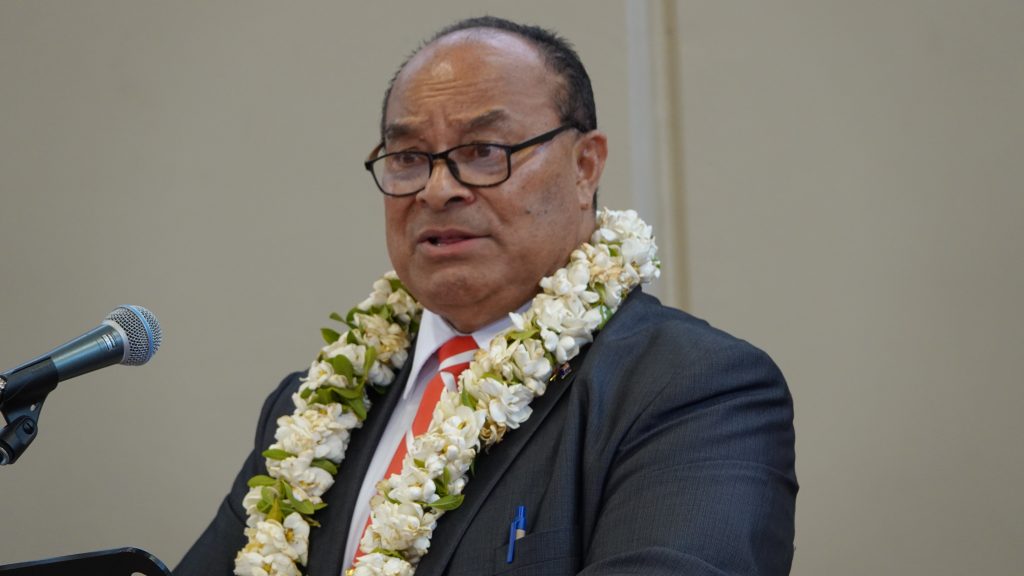
Prime Minister Pōhiva Tu’i’onetoa. Photo/Kalino Lātū (Kaniva Tonga)

If people have power, who will keep them accountable and ensure that there is no conflict of interest or taint of corruption in government or politics? Or even the faintest hint of such things, for mere suspicion is enough to taint a government and its leaders.

The Roman poet and his question came to mind this week after Prime Minister Pōhiva Tu’i’onetoa appeared on his official Facebook livestream with Radio FM 87.5 and shifted his previous justification about conflict of interest from claiming there was nothing in the Tongan law to stop it into saying that Cabinet Members giving a contract to someone or a member of their family were okay if they were the suitable people to do the job and that  the due process allowed it.

No doubt he thought it’s timely to raise this issue again before next week’s election in case the electors continue to be troubled by the stink that hangs over the disbursement of funding and jobs in the Prime Minister’s much vaunted road programme.

READ MORE:

Our readers will be aware that the contacts invariably went to friends of the government and people with close ties to it.

The financial fall out has still to be accounted for.

However, the Prime Minister has apparently forgotten that there is indeed a law which specifically prohibits this from happening.

The official Manual of His Majesty’s Cabinet (2016, revised edition) says quite clearly in  paragraph 93:

“Ministers must ensure that no actual or reasonably perceived conflict exists (or appears to exist) between their public duty and their private interests. Private interests that could give rise to conflicts could include, for example, a Minister’s business interests, a Minister’s family’s interests, association with non-public bodies, receipt of gifts or fees. Appearances can be as important as reality in conflict of interest issues and must be considered in establishing acceptable behaviour.

It goes on to say in paragraph 95:

“In practical terms, Ministers should ensure that any possible conflict of interest is promptly addressed. The Chief Secretary and Secretary to Cabinet should be kept informed and the Prime Minister advised. If in doubt about the appropriate course of action, Ministers should consult the Prime Minister or Chief Secretary and Secretary to Cabinet.”

This is all well and good, but what happens when the conflict of interest- or even the appearance of it – stems from the actions of the Prime Minister and the Cabinet itself? Or as Juvenal asked, who is keeping an eye on those in power and who can control them?

In paragraph 96 the manual warns: “There is a somewhat grey boundary between conflicts of interest and corruption. The association between the two means that great care must be taken by Ministers and officials to deal openly with any conflicts of interest.”

These are warnings that Hon. Tu’i’onetoa should read carefully. He has been very vocal recently in trying to defend his government again from the claims that he was practising favouritism after he declared publicly that his government only prioritised the needs of constituencies of Cabinet Ministers because they were the ones who supported the PM and the government’s policies.

It is clearly improper for the leader of the government to indulge in such practice. His duty is to provide for the needs of all the people fairly. The payments for these projects come from a national budget funded by overseas donors and all the people in Tonga. It was not only funded by the people in the Ministers’ constituencies.

Hon. Tu’i’onetoa said the rest of the MPs who were not Cabinet Ministers and did not support his Cabinet did not support his multi million roading project either, so that’s why the roads in these constituencies were not repaired.

Clearly the Prime Minister has failed to grasp the fact that the MPs were not elected to all become ministers according to the Tongan political system. The MPs who were not selected to government remain in parliament as lawmakers. This means they have no right to hand out favours or government contracts as they see fit, or any obligation to blindly support the government.

The Prime Minister should also remember that his job is to rule for the benefit of all Tongans and for the good of the kingdom, regardless of whether they voted for him, or support his policies.

So let him open his copy of the Cabinet manual and turn to page 27, where he will find the reminder he needs of how he is supposed to behave.

Let him also remember that today, when we ask who will control those in power we have an answer: The voters.

——————– FAKAMATALA FAKATONGA ———————–

Kuo toe hā mai mei he palēmia’ ‘a e palopalema ko e feheke’aki ‘ene faka’uhinga’ ‘o ‘ikai ke pau ki ha me’a. Na’a’ ne fai lahi’i ‘eni ‘i he keisi ‘a Akosita Lavulavu’. ‘Uluaki ‘ai ‘ene fo’i faka’uhinga, pea fakatonutonu atu ngali ‘o ne ‘ilo kuo’ ne hala’ pea hiki leva ‘ene fakatonuhia’ ki he toe ‘uhinga ia ‘e taha koloa pe ke fakatonuhia’i ‘ene tōnounou’. Na’e ‘uluaki fai e tipeiti mo ia he conflict of interest pe ko ‘ene foaki filifilimānako mo hono pule’anga’ ‘a e ngaahi sēvesi mo e faingamālie mei he pule’anga’ ki honau fāmili pe tautonu kau ai mo honau ngaahi vāhenga ‘i ha founga ne mātu’aki fehu’ia lahi. Ko ‘ene tali na’e ‘omi tonu ki he Kaniva’ he ‘aho ko ia’ ne ne fakamamafa’i ‘o pehē na’e ‘ikai ha lao ia ‘e maumau’i. Ka ko e me’a ke ne manatu’i’,  ‘oku ‘i ai pe lao ia ki ai he founga ngāue ‘a e Kapineti’ pe ko e Cabinet Manual peesi 27. Uike kuo ‘osi’ kuo ne liliu ‘ene fakamamafa ko ia’ ‘o pehē kapau ‘oku ‘atā pe ia he founga ngāue pe due process pea ‘oku sai pe ia. Ka ne ‘osi fehu’ia ‘a e founga ngāue due process ‘a e pule’anga’ heni pea ne lāunga lahi ai ‘a e kau piti ki he ‘ū konituleki ko eni’ ‘o pehē ne ‘ikai pe fea hono ‘ofa ‘o e ngaahi ngāue’. Hanu mo e ngaahi vāhenga kehe’ tautefito ki Tt 1 mo Tt 2 ko e mata ia e fonua’ hono li’ekina kinaua’. Ko e fatongia ‘o e pule’anga’ ke ne vahevahe taau e ngāue’ ‘i Tonga kotoa pe ‘oua ‘e hala ha vāhenga tu’unga he pehē tokua ‘oku ‘ikai poupou ange honau fakafofonga’. ‘Uhinga hala lahi ‘aupito ia he me’afua ‘o e pule lelei (good governance) pe fakamaau totonu pea mo hono  fakatonuhia’i ki he kau totongi tukuhau e to’o fatongia ‘oku fai ma’a kinautolu (accountability). Ko e me’a ‘eni ‘oku ui ko hono fakapolitikale’i e ngaahi fatongia tefito ki he kakai ‘o e pule’anga’. ‘Oku tānaki tukuhau tatau pe ngaahi vāhenga ‘e 17 kae filifilimānako e pule’anga’ ni hono tanu honau ngaahi hala’ mo e ngaahi langa fakalakalaka ‘oku’ ne fai’. Ko e pehē ko ē ‘e toki hoko atu kia kinautolu he toenga ta’u ka hoko’ ko e fo’i kemipeini fakapolitikale ia pea ‘oku hala ia ke fakapolitikale’i ‘a e kaveinga ‘o e vahevahe taau o e koloa fakafonua’. Kaekehe, ko e Cabinet Manual pe tu’utu’uni Kapineti ke muimui ai e kau minisitaa’ ‘oku’ ne fakatokanga mamafa ki he kau minisitaa’ ke fakamama’o mei he Conflict of Interest. ‘Oku te’eki ai pe ke mau sio atu kuo ‘i ai ha fo’i faka’uhinga lelei mo ‘ēfika ‘e taha ‘a e palēmia’ ‘e ‘omai ke ne fakatonuhia’i’aki ‘ene founga filifilimānako ‘i hono tufotufa taau ‘o e ngaahi monū’ia mei he pule’anga’ ki he kakai’. Feheke’aki ai pe he taimi kotoa.

Covid-19 update: 175 new community cases reported in NZ

By RNZ.co.nz. Republished with permission.

There have been 175 new community cases reported in New Zealand today, with 93 people now in hospital.

There was no media conference today. In a statement, the Ministry of Health said there were 159 cases in Auckland, two in Northland, and eight in Waikato.

Nine of the 93 cases in hospital are in intensive care.

Close to 60 percent – 50 cases – of those in hospital with Covid-19 are either unvaccinated or not eligible. Eight cases in hospital are fully vaccinated.

Earlier today, the Health Ministry confirmed there had been a positive case reported in Taupō.

It said the person’s four household contacts were being tested today.

There were also five cases in Taranaki added to the total, although these were part of the six Stratford cases revealed on Thursday night.

The ministry did say there are five other close contacts of the Stratford cases – three have returned negative results, including two people who had been in Wairarapa, and results on the other two are pending.

The one Taranaki case who had been admitted to Taranaki Base Hospital for Covid-19 related reasons has now been discharged and is at home isolating with the five remaining cases.

The two new Northland cases have clear links to known cases.

Seven of the eight new cases in Waikato are known contacts and public health staff are today investigating the remaining case to determine any links to known cases.

Four of the cases are from Hamilton, three from Ōtorohanga, and one location is yet to be confirmed.

There were also two new cases of the coronavirus in managed isolation today.

There were 201 new community cases reported in New Zealand yesterday, with 185 reported on Thursday.

There have now been 5371 cases in the current community outbreak and there have been 8121 cases in New Zealand since the pandemic began.

The Health Ministry said there were 22,951 vaccine doses given yesterday, including 6343 first doses and 16,608 second doses.

It said there were 3333 people isolating at home in Auckland, including 1655 cases.

Covid-19 update: 201 new community cases in New Zealand today

There are 201 new community cases of Covid-19 in New Zealand today, including 15 in Waikato, one in Taranaki, four in Northland and the rest in Auckland.

No caption
Photo: RNZ / Samuel Rillstone

The six cases of Covid-19 in Stratford reported last night – five of which will be added to tomorrow’s total – have sparked a renewed push for people there to get tested and vaccinated.

Iwi in the Far North are disappointed by the government’s decision to move Northland down to alert level 2 overnight despite seven new cases there being announced yesterday.

Teachers could be fined if they try to turn up to class next week without being vaccinated.

And hospitals are making final efforts to see whether unvaccinated workers will change their mind before they have to be stood down from their jobs next week.

Sika’s PTOA team rejects Tt 7 majority poll favouring Piveni Piukala as candidate; nominates independent Sangstar Saulala instead

The Democrats’ (PTOA) Core Team disregarded a strong majority survey by Tongatapu 7 voters preferring PTOA candidate Paula Piveni Piukala to run for the electorate in next week’s general election.

Paula Piveni Piukala

The Core Team clashed over Tongatapu 7’s preference before they agreed to nominate independent candidate Sangstar Saulala to be their candidate.

The Core Team’s decision came after its leader Sēmisi Sika attempted to keep all members happy by contacting Saulala.

In a copy of what had been said to be the Core Team’s e-mail exchanges seen by Kaniva News the members were told their nomination for Tongatapu 7 was Piveni after a survey showed he was preferred by the majority of the constituency.

It appeared some Core Team members immediately opposed the survey result. It also appeared that some were still holding a grudge against Piveni after he took side with defected Siaosi Pōhiva and his brother Saia Piukala and formed up the new PTOA party known as PTOA People’s Board or Poate PTOA ‘a e Kakai’ early this year.

Interestingly, the Core Team members still agreed to nominate Siaosi as their candidate for Tongatapu 1 and Saia Piukala as their candidate to run for Vava’u 14.

Piveni, who was already nominated by the People’s PTOA Board as their candidate for Tongatapu 7, was vocal in criticising some of the Core Team members for their part in losing the government in 2019 after the death of the late Prime Minister and PTOA founder ‘Akilisi Pōhiva.

E-mails

A copy of the e-mails seen by Kaniva News read in Tongan: “Na’a’ ku fokotu’u atu ke tau fai ‘aki pe a Piveni ‘o makatu’unga ko e loto o e kakai (savea).  Neongo oku tau lotomamahi kotoa he ngaahi uesia lahi oku ne fakahoko moe paati a Siaosi ki he kau poupou pea nau tukuhifo kitautolu moe poate pea nau faka’ikaii’i mo situ’a mei he tataki ‘a e poate pule ‘a e PTOA.    Neongo ai ia, ka ko Piveni a e fili a e kakai mei he toko 3 na’e talamai ‘e he kakai o Tongatapu 7 oku nau falala ki ai”.

PTOA Core Team Leader Sēmisi Sika

The e-mail also revealed Saulala agreed the Core Team could nominate him as their candidate while Saulala would still run as an independent candidate.

In Tongan the e-mail read: “ Ne fetu’utaki mai a Sangster ‘o ma talanoa pea ne tali fiefia ‘a ‘eku fakaafe ke tau ngaue fakataha ma’ae paati PTOA pea ke hoko ko e fakafofonga ma’a Tongatapu 7 ma’ae PTOA neongo ‘e lele tau’ataina pe”.

Saulala and PTOA

Saulala was elected into parliament in 2014 as PTOA MP. However, he later broke away and voted  for the then Prime Minister Lord Tu’ivakanō rescuing the noble-led government from being defeated in a Vote of No Confidence tabled by the PTOA party.

Critics believed Saulala’s nomination by the Core Team just a week before the election was a dangerous move by the Democrats as it could split the PTOA voters. The split will mean that the two PTOA factions will be fighting for the same vote while the independent candidates could see this as an opportunity for them to gain more votes.

As we reported previously, Tonga will go to the elections next week with the opposition strategically weakened by a split in the PTOA Party.

The PTOA  – the Democrats who were led to two election victories by the late ‘Akilisi Pōhiva – have split into two groups.

It appears the two PTOA factions were trying to sort out their differences recently but what has actually been seen by the public now was that the solution they have come up with could cause them more troubles than good in next week’s elections.

PM insults Opposition Leader over Vuna wharf queries; Sika says Tu‘i‘onetoa’s response ‘lying, deplorable’  

Prime Minister Pōhiva Tu’i’onetoa has disparaged the Opposition Leader Sēmisi Sika and accused him of being troublesome.

Dr Pōhiva Tu’i’onetoa. Photo/Kalino Lātū (Kaniva Tonga)

He berated Sika and described his attitude in Tongan as attempting to disrupt what had been organised for the country.

Tu’i’onetoa said it was humiliating for him to see Sika and the PTOA party in disarray.

In a very strongly worded e-mail in Tongan, the Prime Minister described the  Opposition Leader as was out of step with his party and being unable to make up his mind.

The Prime Minister warned Sika to be careful otherwise his indecisiveness would cause him trouble.

Tu’i’onetoa accused Sika of having an unclear vision for the PTOA.

E-mails / arguments

The Prime Minister’s outburst appeared to have been provoked by Hon. Sika’s e-mails to him including one in which he asked Hon. Tu’i’onetoa to clarify and update him on the new construction seen at Vuna wharf shores recently.

Sika reminded Tu’i’onetoa that the king had warned his government that business services should be given to private sectors.

Opposition Leader Sēmisi Sika

Sika argued that this area of the wharf should be reserved for tourist activities only and there was no need for the government to operate businesses there including night markets.

Hon. Tu’i’onetoa told Hon. Sika the construction was approved by the Cabinet in 2016 after an agreement with the Ports Authority to include a night market for businesses to operate there and pay fees to help pay Tonga’s loan from China.

READ MORE:

He said the Ministry of Finance had estimated that these businesses could collect $300,000 a year to help pay for the loan.

Vuna wharf was funded from the multimillion loan from China to rebuild Nuku’alofa after the 2006 riots and the destruction of the capital.

Deplorable / lying

Hon. Sika forwarded the Prime Minister’s response to him to Kaniva News and described it in Tongan as degrading and deplorable.

Reponding to Tu’i’onetoa, Sika accused the Prime Minister of lying that he attempted to wipe out the Tourism Board, when he was the Minister of Tourism.

He asked the Prime Minister to calm down and stop being so emotional.

He asked Tu’i’onetoa to stop being hateful and let them talk in a good spirit for the benefit of the country.

The Prime Minister is no stranger to attacking his critics and media personally.

In March Sika accused Tu’i’onetoa of lying about him when the Prime Minister was interviewed about why the government did not repair damages to the roads after recent heavy raining and flooding.

Early this week Tu’i’onetoa was accused of attacking a female journalist who was trying to do her job and asked him during a press conference to give a financial statement about the government’s Covid-19 response budget.


Covid-19: 185 new community cases in New Zealand

By RNZ.co.nz. Republished with permission.

There are 185 new community cases of Covid-19 reported today, including 25 in Waikato and eight in Northland, the Ministry of Health says.

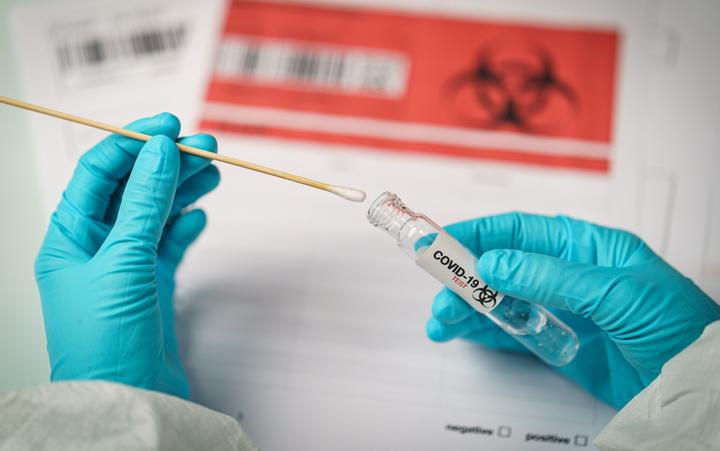
Hand holding COVID-19 swab collection kit, specimen sample testing process.
Photo: 123RF

There are also 84 people in hospital, including 10 in intensive care.

There were no new cases at the border.

On Wednesday, the ministry reported 147 new cases in the community; 131 in Auckland, 14 in Waikato, and two in Northland.

– more to come

Fiji reopens international borders

By RNZ.co.nz. Republished with permission.

Fiji has reopened its international borders after Covid-19 closed them more than 18 months ago.

From today, only fully vaccinated diplomats, returning Fijian residents, permit holders and those approved by the Covid-19 Risk Mitigation Taskforce will be allowed in.

Prime Minister Frank Bainimarama said fully vaccinated tourists from travel partners including New Zealand, Australia, the UK and the United States can enter Fiji from 1 December.

Nadi International Airport in Fiji.
Nadi International Airport in Fiji. Photo: Supplied/Fiji Airports

Fiji’s Health Ministry said the quarantine protocols to support international travel have been “adjusted to take into account the increasing protection gained by having fully vaccinated persons travelling with other vaccinated persons to highly vaccinated destinations.”

“This will involve less stringent conditions with more priority given to the testing protocols that ensure early identification and isolation of positive travellers,” said Health Secretary James Fong.

“From the 11th of November, we will be transitioning Border Quarantine Protocols to Border Risk Reduction Protocol for all travellers coming in from Travel Partner Countries.

“This will involve a three-day stay in a hotel with a test to be done on day 2. A negative result will allow for discharge into the community on day 3.

“From the 11th of November, incoming travel will be restricted to diplomats, returning residents, permit holders and those approved by the Covid-19 Risk Mitigation Taskforce.

“Our Border Risk Reduction Protocol Processes will be trailed during this time and further refined in preparation for December 1st when tourists can start arriving in Fiji,” Dr Fong said.

Approvals to home quarantine will be extremely limited during this pilot phase, he said.

Dr Fong said changes to domestic travel quarantine protocols will be announced on Friday once the vaccination coverage data in Vanua Levu and some of the maritime islands are received by the ministry.

Four more deaths

Four people have died from Covid-19 in Fiji and there are 58 new cases reported since Tuesday.

This brings the total number of active cases to 813 while the death toll is now at 679.

The four victims were aged between 50 and 75, with three of them dying at home and one at a hospital.

“We have also recorded 578 Covid positive patients who died from serious medical conditions they had before they contracted Covid-19; these are not classified as Covid deaths,” said Dr Fong.

There were 52,285 cases since the April outbreak this year, with 52,356 cases since the pandemic started in March last year, he said.

Dr Fong also said 88.7 percent or 548,456 of the adult population were fully vaccinated and 22,117 children aged 15-17 got both jabs.

“With borders opening, we anticipate our testing numbers to increase from local and international repatriates as well as visitors entering the country.”

Women shave heads to support candidate as two withdraw from Tonga election

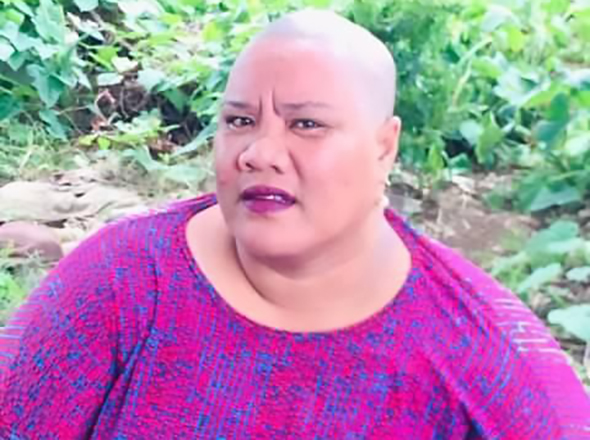
Some women shaved off their hairs to show solidarity with their Tongatapu 7 candidate Paula Pīveni Piukala whose head was shaved entirely.

Profile photo on Losaline Fehoko Pakalani Matauvave Facebook.

One of the undated video clips which has been widely circulated on social media, features a man shaving off a woman’s hair.

A caption under a profile photo on Facebook by the name Losaline Fehoko Pakalani Matauvave, said:

“Just for you brother Paula Piveni Piukala”.

Another woman by the Facebook name known as Brian O’Driscoll Jr has her profile photo with her hair being shaved off.

Piukala, was the PTOA People’s Board party candidate.

Meanwhile, two candidates have pulled out of the election candidate list.

‘Ālani Ramsay declared yesterday he withdrew to support MP Sēmisi Fakahau who was running for Tongatapu 8.

Paula Piveni Piukala. Photo/Kalino Lātū

Ramsay was a candidate for the PTOA People’s Board party for Tongatapu 8 while Fakahau was a member of the PTOA Core Team led by MP Sēmisi Sika.

Lawyer Sione Fonua who was running for the People’s Board party withdrew previously.

Profile photo on Brian O’Driscoll Jr. Facebook

That brings down the number of candidates being registered for the General Election on November 18 from 75 to 73.

Over 64,000 voters are expected to cast their votes in about two weeks time.


How do NZ’s vaccinated teachers have those hard conversations with their anti-vax colleagues?

By Paul Heyward of ‘The Conversation’. Republished with permission

The news that all staff members at a small King Country school were still unvaccinated a week out from the government’s November 15 mandatory deadline underlines how challenging the weeks ahead might be.

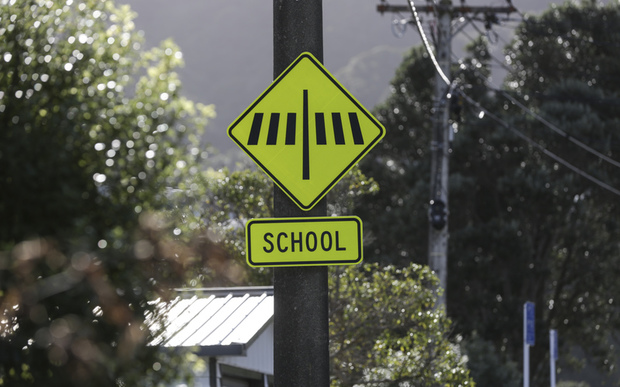
06072016 Photo: Rebekah Parsons-King. School sign near Ngaio School.
Photo: RNZ / Rebekah Parsons-King

Next Monday marks the day teachers will need to have received at least one dose of the Covid-19 vaccine if they want to continue to work with students in a face-to-face learning environment.

It will also be the day educational leaders find out with some certainty who their vaccine-hesitant colleagues are, and when the career pathways of many committed educators will come to a crossroads.

With it looking likely some schools will face significant staff shortages, the teaching profession now has to seriously wrestle with how to demonstrate the value of manaakitanga to all colleagues, including the unvaccinated.

The code of responsibility

As a fully registered teacher (as well as an academic) I will be free to teach in New Zealand schools, alert levels allowing, because I am double vaccinated. But I know that is not the case for some of my very talented and committed colleagues who have refused the Pfizer jab.

I can only imagine the professional identity crises these colleagues must be experiencing.

I’m thinking of those teachers who sincerely believe they are honouring their commitment to society – espoused in the Teaching Council of Aotearoa New Zealand (TCANZ) Code of Professional Responsibility – by standing up for the human rights of New Zealanders to bodily autonomy.

I’m thinking of those teachers who passionately believe they are honouring their commitment to society by displaying the ethical integrity to stand up to a power they believe is misleading the public.

I’m thinking of those teachers who believe they are “walking the talk” of a critically reflective practitioner by refusing to be vaccinated.

And I’m thinking of my own commitment to those teachers as my professional colleagues, notwithstanding my fundamental disagreement with their anti-vaccination beliefs.

Teaching as an ethical activity

The TCANZ guiding document for teachers – Our Code, Our Standards – outlines the ethical commitments of all teachers. The council recognises that for the code to be “owned”, the professional commitments should not be seen as a list of prescribed rules.

Rather, it is a set of agreed aspirations that encourage collaborative conversations between practitioners about the ethical nature of their work.

There is no doubt the vaccine mandate will demand some of the most ethically challenging conversations teachers from both vaccination camps will have in their professional careers.

However, that’s no reason to shy away from collegial awkwardness. One of New Zealand’s pre-eminent educational thinkers, the late Ivan Snook, believed teaching is an innately ethical activity as it involves close personal relationships, not least between colleagues.

Snook also provides us with some wise guidance on how we might go about these challenging discussions. He addresses the fundamental tension teachers face when trying to persuade others to take a on a point of view they believe is demonstrably rational.

Snook frames this tension as the “conflicting obligations to respect the learner’s state of mind and also move her towards a more adequate understanding and a more enlightened practice”.

An ethic of care

As colleagues in discussion with those who disagree with us on the vaccine mandate, we must be ready to respect the ethical integrity of alternative viewpoints, while providing rational alternatives based on reputable scientific evidence.

Nor should we decry those who distrust authority. As Snook argues, a major task of educators is to help others come to understand the importance, and limitations, of all authorities.

It is my hope that over the next few months we will see the code truly become “our code” as it guides vaccinated and unvaccinated teachers to have these respectful conversations about what it is to be a critically reflective, ethical teacher in a society in the grip of a global pandemic.

But if the code is to guide teachers through these difficult conversations it needs to be used with care. If it’s simply a weapon of entrenched positions there is nothing to be gained.

Educational philosopher Nel Noddings said conversations of this complexity need to happen within an “ethic of care” that is sensitive to the relationships in which we must all continue to live.

In the spirit of whanaungatanga, I encourage my vaccinated and unvaccinated colleagues to be courageous and use the code to discuss the vaccine mandate within such an ethic of care.

Let us decide together what that is, and what it means to be an ethical teacher in Aotearoa New Zealand in this watershed moment for our profession.

*Paul Heyward is Head of Initial Teacher Education, University of Auckland. Disclosure statement: I have publicly commented on the development and implementation of the Teaching Council Document ‘Our Codes, Our Standards’ in the media.